Fiscal Policy and Public Debt 
Eugenia Correa 
Economics Faculty, UNAM 
12th International Post Keynesian 
Conference 
Kansas City, Missouri 
September 25–28, 2014
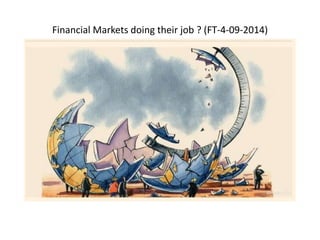
Financial Markets doing their job ? (FT-4-09-2014)
Key Ideas on LAC-Fiscal Policy 
at the WC 
• Stabilization through Fiscal Consolidation as a 
condition for Growth; 
• Which means, abandoning fiscal stimulus policies 
• Increase in public debt in local currencies 
• Privatizations 
• Decentralization 
• Reduction and focus of Subsidies 
• Increased Tax revenue by VAT
Key ideas in Fiscal Policy for LAC, today 
• Fiscal discipline to avoid volatility, high inflation 
and devaluations that marked the 1980s and 
1990s. (IMF, WB, OCDE, etc) 
• Moderate Fiscal Stimulus during a prolonged 
slump (debates about its size and duration) 
• Created strong ceiling (fiscal superavit, descend 
public debt in local currency) during growth 
periods, for eventual stimulus in long slump 
• The conventional view is still that expansionary 
fiscal policy could stimulate the economy, 
• Country risk rating based on sound fiscal policies
How Have Fiscal Policies Evolved? 
• Privatization and PPP 
• Capital and Income Concentration 
• For developing countries, also: 
• - no BC loans to Government 
• - growing rent transfers 
• - dollarization (total or partial) / off-shore 
credit circuit 
• - Fiscal consolidation and Austericy Policies 
• - Changes in Financial Structures: decline of 
Public Banks.
WC vs Now 
• Stabilization Policies 
• Reduction of Expenditure, 
except for debt service 
• (Temporary) Increase in 
revenues, by 
privatizations and non-income 
taxes 
• Only sound fiscal policies 
can improve a country´s 
rating - linked to the 
interest rates of private 
foreing debt 
• Long term Sustainability of 
public accounts 
• Transparency of public 
accounts 
• Privatization of Public Services 
and parts of public 
administration 
• Goverment Debt Ceiling 
• Privatization in Education and 
Health 
• Only responsable fiscal 
policies can improve the 
rating, call contry risk. That 
was no-linked to the interest 
rates of private foreing debt
LAC comprise a large region, with 
different pasts and institutions, so 
LET US SEE WHAT HAPPEN WITH 
THE SO CALL “PINK” COUNTRIES
Debate: 
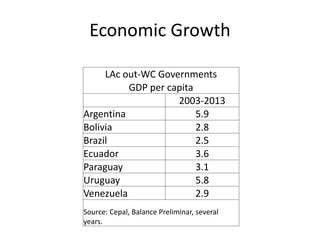
• Some South America governments in 00s 
abandoned Neoliberal Policies towards 
Growth with Stable Public Policies. 
(Argentina, Bolivia, Brazil, Ecuador, 
Paraguay, Uruguay and Venezuela) 
• Those governments called “Pink South 
America’ countries” have moved away from 
IMF policy supervision. Which means less 
fiscal policy constraints? 
• Lets take a look …
Economic Growth 
LAc out-WC Governments 
GDP per capita 
2003-2013 
Argentina 5.9 
Bolivia 2.8 
Brazil 2.5 
Ecuador 3.6 
Paraguay 3.1 
Uruguay 5.8 
Venezuela 2.9 
Source: Cepal, Balance Preliminar, several 
years.
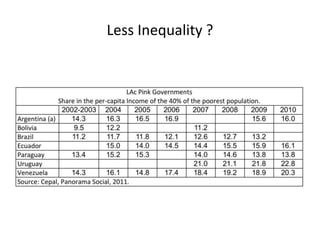
Less Inequality ?
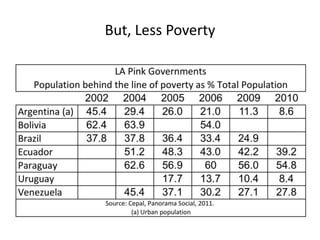
But, Less Poverty
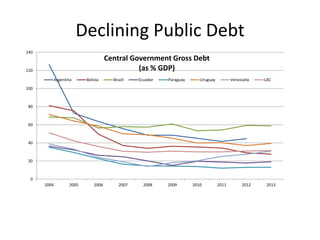
Declining Public Debt 
140 
120 
100 
80 
60 
40 
20 
0 
Central Government Gross Debt 
(as % GDP) 
Argentina Bolivia Brazil Ecuador Paraguay Uruguay Venezuela LAC 
2004 2005 2006 2007 2008 2009 2010 2011 2012 2013
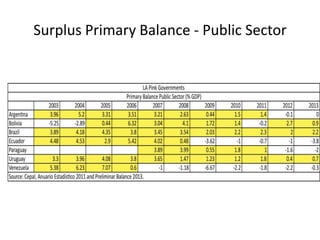
Surplus Primary Balance - Public Sector
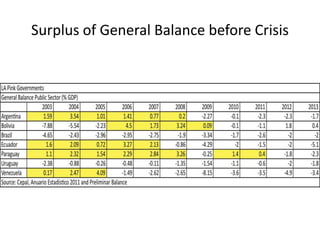
Surplus of General Balance before Crisis
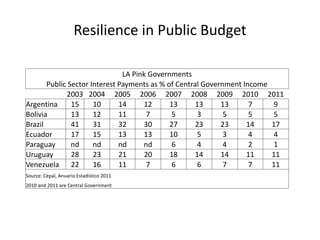
Resilience in Public Budget 
LA Pink Governments 
Public Sector Interest Payments as % of Central Government Income 
2003 2004 2005 2006 2007 2008 2009 2010 2011 
Argentina 15 10 14 12 13 13 13 7 9 
Bolivia 13 12 11 7 5 3 5 5 5 
Brazil 41 31 32 30 27 23 23 14 17 
Ecuador 17 15 13 13 10 5 3 4 4 
Paraguay nd nd nd nd 6 4 4 2 1 
Uruguay 28 23 21 20 18 14 14 11 11 
Venezuela 22 16 11 7 6 6 7 7 11 
Source: Cepal, Anuario Estadístico 2011 
2010 and 2011 are Central Government
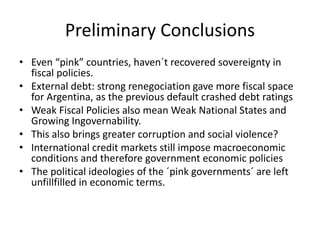
Preliminary Conclusions 
• Even “pink” countries, haven´t recovered sovereignty in 
fiscal policies. 
• External debt: strong renegociation gave more fiscal space 
for Argentina, as the previous default crashed debt ratings 
• Weak Fiscal Policies also mean Weak National States and 
Growing Ingovernability. 
• This also brings greater corruption and social violence? 
• International credit markets still impose macroeconomic 
conditions and therefore government economic policies 
• The political ideologies of the ´pink governments´ are left 
unfillfilled in economic terms.
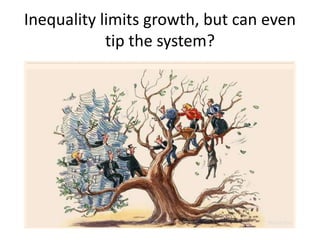
Inequality limits growth, but can even 
tip the system?
www.olafinanciera.unam.mx

Fiscal Policy and Public Debt

  • 1.
    Fiscal Policy andPublic Debt Eugenia Correa Economics Faculty, UNAM 12th International Post Keynesian Conference Kansas City, Missouri September 25–28, 2014
  • 2.
    Financial Markets doingtheir job ? (FT-4-09-2014)
  • 3.
    Key Ideas onLAC-Fiscal Policy at the WC • Stabilization through Fiscal Consolidation as a condition for Growth; • Which means, abandoning fiscal stimulus policies • Increase in public debt in local currencies • Privatizations • Decentralization • Reduction and focus of Subsidies • Increased Tax revenue by VAT
  • 4.
    Key ideas inFiscal Policy for LAC, today • Fiscal discipline to avoid volatility, high inflation and devaluations that marked the 1980s and 1990s. (IMF, WB, OCDE, etc) • Moderate Fiscal Stimulus during a prolonged slump (debates about its size and duration) • Created strong ceiling (fiscal superavit, descend public debt in local currency) during growth periods, for eventual stimulus in long slump • The conventional view is still that expansionary fiscal policy could stimulate the economy, • Country risk rating based on sound fiscal policies
  • 5.
    How Have FiscalPolicies Evolved? • Privatization and PPP • Capital and Income Concentration • For developing countries, also: • - no BC loans to Government • - growing rent transfers • - dollarization (total or partial) / off-shore credit circuit • - Fiscal consolidation and Austericy Policies • - Changes in Financial Structures: decline of Public Banks.
  • 6.
    WC vs Now • Stabilization Policies • Reduction of Expenditure, except for debt service • (Temporary) Increase in revenues, by privatizations and non-income taxes • Only sound fiscal policies can improve a country´s rating - linked to the interest rates of private foreing debt • Long term Sustainability of public accounts • Transparency of public accounts • Privatization of Public Services and parts of public administration • Goverment Debt Ceiling • Privatization in Education and Health • Only responsable fiscal policies can improve the rating, call contry risk. That was no-linked to the interest rates of private foreing debt
  • 7.
    LAC comprise alarge region, with different pasts and institutions, so LET US SEE WHAT HAPPEN WITH THE SO CALL “PINK” COUNTRIES
  • 8.
    Debate: • SomeSouth America governments in 00s abandoned Neoliberal Policies towards Growth with Stable Public Policies. (Argentina, Bolivia, Brazil, Ecuador, Paraguay, Uruguay and Venezuela) • Those governments called “Pink South America’ countries” have moved away from IMF policy supervision. Which means less fiscal policy constraints? • Lets take a look …
  • 9.
    Economic Growth LAcout-WC Governments GDP per capita 2003-2013 Argentina 5.9 Bolivia 2.8 Brazil 2.5 Ecuador 3.6 Paraguay 3.1 Uruguay 5.8 Venezuela 2.9 Source: Cepal, Balance Preliminar, several years.
  • 10.
  • 11.
  • 12.
    Declining Public Debt 140 120 100 80 60 40 20 0 Central Government Gross Debt (as % GDP) Argentina Bolivia Brazil Ecuador Paraguay Uruguay Venezuela LAC 2004 2005 2006 2007 2008 2009 2010 2011 2012 2013
  • 13.
    Surplus Primary Balance- Public Sector
  • 14.
    Surplus of GeneralBalance before Crisis
  • 15.
    Resilience in PublicBudget LA Pink Governments Public Sector Interest Payments as % of Central Government Income 2003 2004 2005 2006 2007 2008 2009 2010 2011 Argentina 15 10 14 12 13 13 13 7 9 Bolivia 13 12 11 7 5 3 5 5 5 Brazil 41 31 32 30 27 23 23 14 17 Ecuador 17 15 13 13 10 5 3 4 4 Paraguay nd nd nd nd 6 4 4 2 1 Uruguay 28 23 21 20 18 14 14 11 11 Venezuela 22 16 11 7 6 6 7 7 11 Source: Cepal, Anuario Estadístico 2011 2010 and 2011 are Central Government
  • 16.
    Preliminary Conclusions •Even “pink” countries, haven´t recovered sovereignty in fiscal policies. • External debt: strong renegociation gave more fiscal space for Argentina, as the previous default crashed debt ratings • Weak Fiscal Policies also mean Weak National States and Growing Ingovernability. • This also brings greater corruption and social violence? • International credit markets still impose macroeconomic conditions and therefore government economic policies • The political ideologies of the ´pink governments´ are left unfillfilled in economic terms.
  • 17.
    Inequality limits growth,but can even tip the system?
  • 18.

Editor's Notes

  • #10 Argentina, Bolivia, Brazil, Ecuador, Paraguay, Uruguay y Venezuela; 50 % por the population LAC, 310 millions persons.