1
What is Fire?
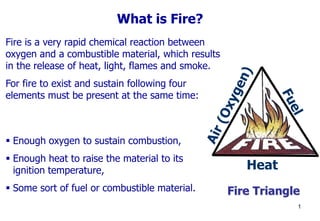
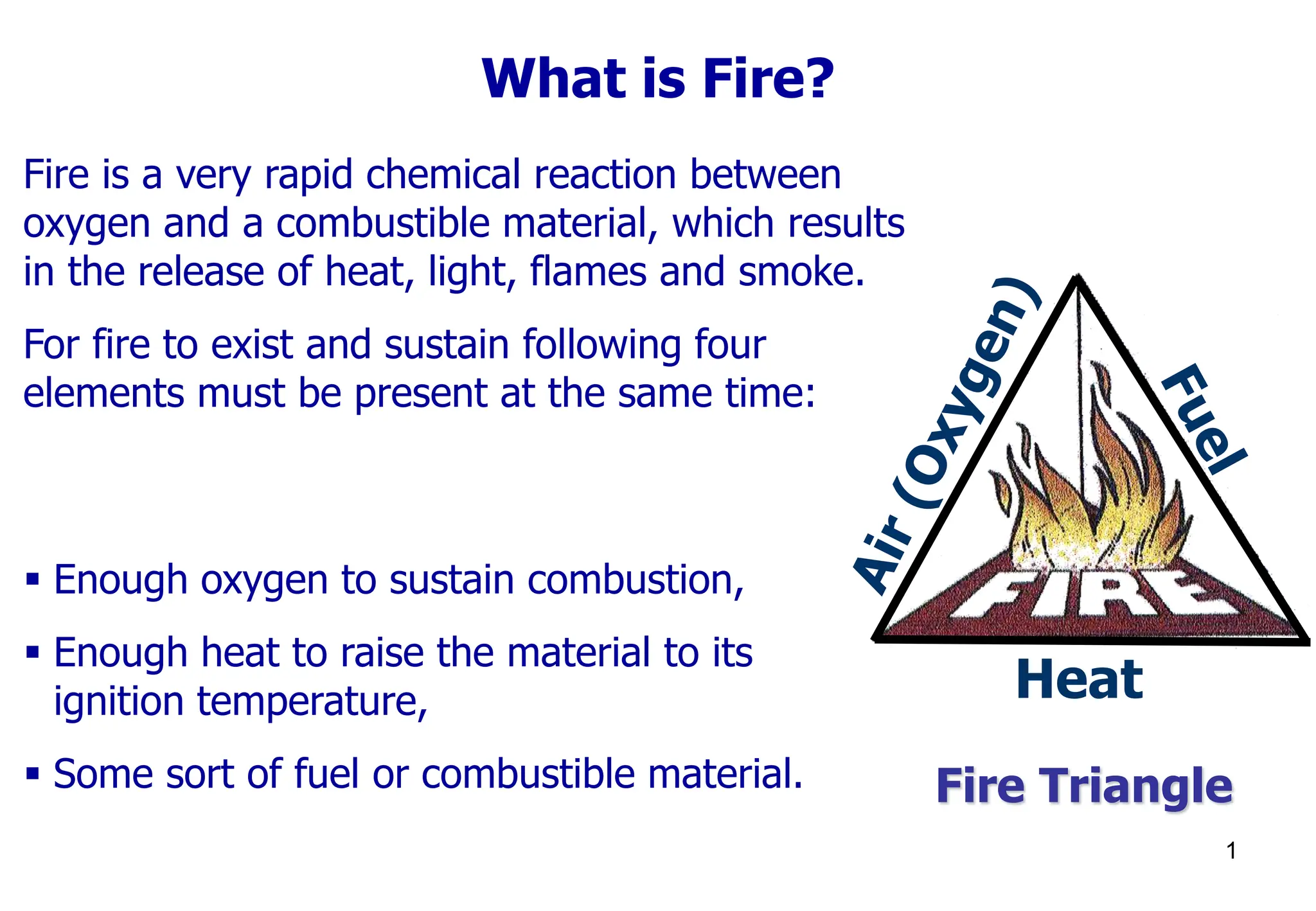
Fire Triangle
Heat
Fire is a very rapid chemical reaction between
oxygen and a combustible material, which results
in the release of heat, light, flames and smoke.
For fire to exist and sustain following four
elements must be present at the same time:
 Enough oxygen to sustain combustion,
 Enough heat to raise the material to its
ignition temperature,
 Some sort of fuel or combustible material.
2
Types of Fires
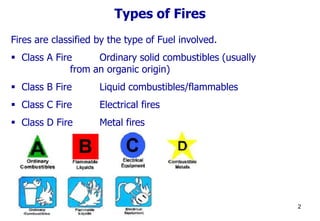
Fires are classified by the type of Fuel involved.
 Class A Fire Ordinary solid combustibles (usually
from an organic origin)
 Class B Fire Liquid combustibles/flammables
 Class C Fire Electrical fires
 Class D Fire Metal fires
3
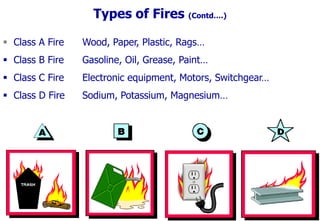
Types of Fires (Contd….)
 Class A Fire Wood, Paper, Plastic, Rags…
 Class B Fire Gasoline, Oil, Grease, Paint…
 Class C Fire Electronic equipment, Motors, Switchgear…
 Class D Fire Sodium, Potassium, Magnesium…
4
Methods of Extinguishing Fire
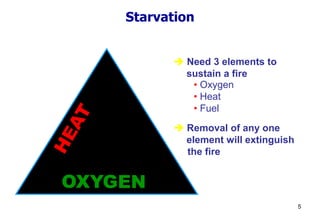
1- Starvation – Removing Fuel
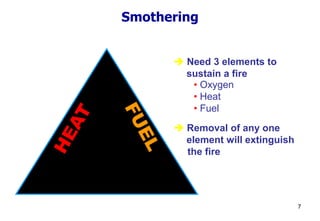
2- Smothering – Removing Oxygen
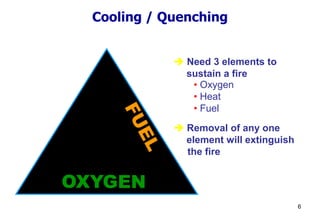
3- Cooling – Removing Heat
Heat
5
 Need 3 elements to
sustain a fire
• Oxygen
• Heat
• Fuel
 Removal of any one
element will extinguish
the fire
Starvation
6
 Need 3 elements to
sustain a fire
• Oxygen
• Heat
• Fuel
 Removal of any one
element will extinguish
the fire
Cooling / Quenching
7
 Need 3 elements to
sustain a fire
• Oxygen
• Heat
• Fuel
 Removal of any one
element will extinguish
the fire
Smothering
8
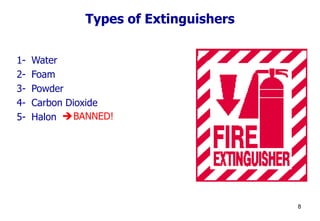
Types of Extinguishers
1- Water
2- Foam
3- Powder
4- Carbon Dioxide
5- Halon BANNED!
9
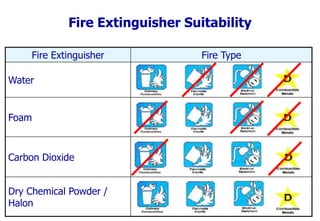
Fire Extinguisher Suitability
Fire Extinguisher Fire Type
Water
Foam
Carbon Dioxide
Dry Chemical Powder /
Halon
10
Rules for Fighting Fires
 Fight fire in downwind direction.
 Start fighting the fire from safe distance (2-5 m).
 Do not leave the fire area unless you are sure that the fire is
completely out.

fire - safety talk.pptx fire - safety talk.pptx

  • 1.
    1 What is Fire? FireTriangle Heat Fire is a very rapid chemical reaction between oxygen and a combustible material, which results in the release of heat, light, flames and smoke. For fire to exist and sustain following four elements must be present at the same time:  Enough oxygen to sustain combustion,  Enough heat to raise the material to its ignition temperature,  Some sort of fuel or combustible material.
  • 2.
    2 Types of Fires Firesare classified by the type of Fuel involved.  Class A Fire Ordinary solid combustibles (usually from an organic origin)  Class B Fire Liquid combustibles/flammables  Class C Fire Electrical fires  Class D Fire Metal fires
  • 3.
    3 Types of Fires(Contd….)  Class A Fire Wood, Paper, Plastic, Rags…  Class B Fire Gasoline, Oil, Grease, Paint…  Class C Fire Electronic equipment, Motors, Switchgear…  Class D Fire Sodium, Potassium, Magnesium…
  • 4.
    4 Methods of ExtinguishingFire 1- Starvation – Removing Fuel 2- Smothering – Removing Oxygen 3- Cooling – Removing Heat Heat
  • 5.
    5  Need 3elements to sustain a fire • Oxygen • Heat • Fuel  Removal of any one element will extinguish the fire Starvation
  • 6.
    6  Need 3elements to sustain a fire • Oxygen • Heat • Fuel  Removal of any one element will extinguish the fire Cooling / Quenching
  • 7.
    7  Need 3elements to sustain a fire • Oxygen • Heat • Fuel  Removal of any one element will extinguish the fire Smothering
  • 8.
    8 Types of Extinguishers 1-Water 2- Foam 3- Powder 4- Carbon Dioxide 5- Halon BANNED!
  • 9.
    9 Fire Extinguisher Suitability FireExtinguisher Fire Type Water Foam Carbon Dioxide Dry Chemical Powder / Halon
  • 10.
    10 Rules for FightingFires  Fight fire in downwind direction.  Start fighting the fire from safe distance (2-5 m).  Do not leave the fire area unless you are sure that the fire is completely out.