Finding Balance in the Age of Open
   Data: Some Policy and Legal
         Considerations
Rishi Maharaj
Information Access and Privacy Professional
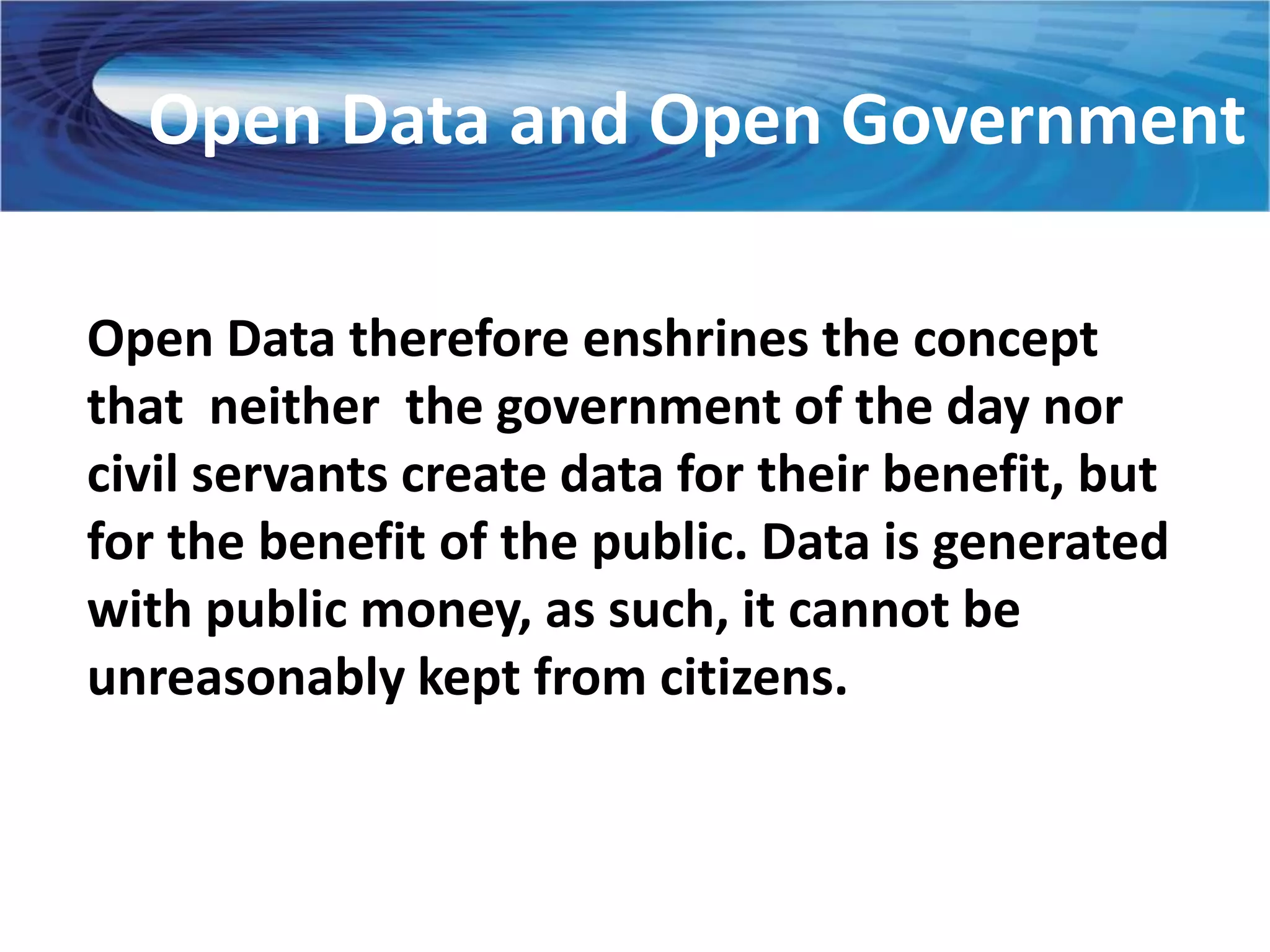
“Information is the Oxygen of democracy. If
People do not know what is happening in their
society, if the actions of those who rule them
are hidden, then they cannot take a meaningful
part in the affairs of that society”

http://www.article19.org/pdfs/standards/righttoknow.pdf


                                                          2
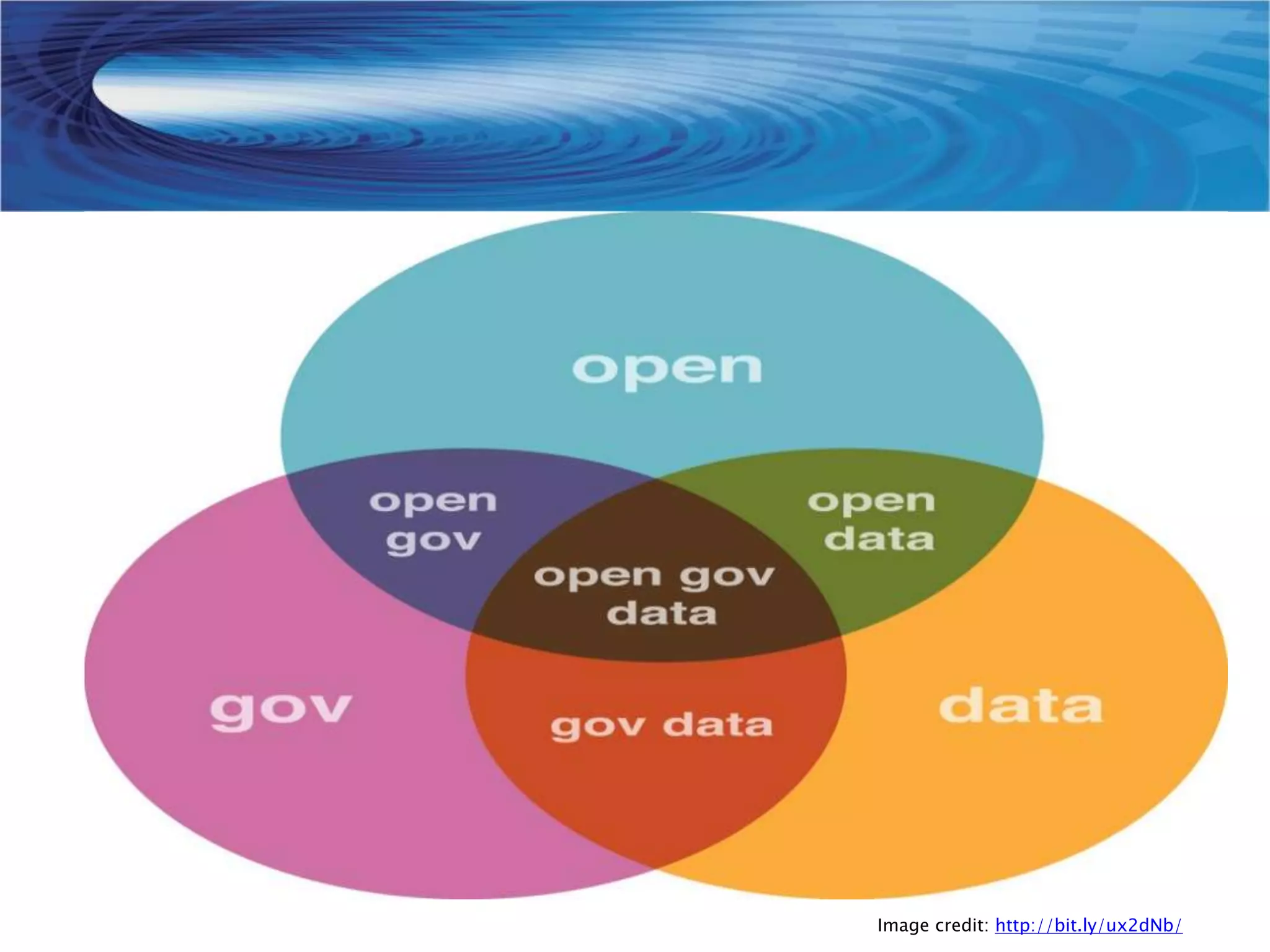
Open Data and Open Government

Open Data therefore enshrines the concept
that neither the government of the day nor
civil servants create data for their benefit, but
for the benefit of the public. Data is generated
with public money, as such, it cannot be
unreasonably kept from citizens.
Image credit: http://bit.ly/ux2dNb/
Access to Information


‘the right to information lays the foundation
 upon which to build good governance and
 transparency…. It is the key to moving from
 formal to consultative and responsive
 democracy’

                Commonwealth Human Rights Initiative
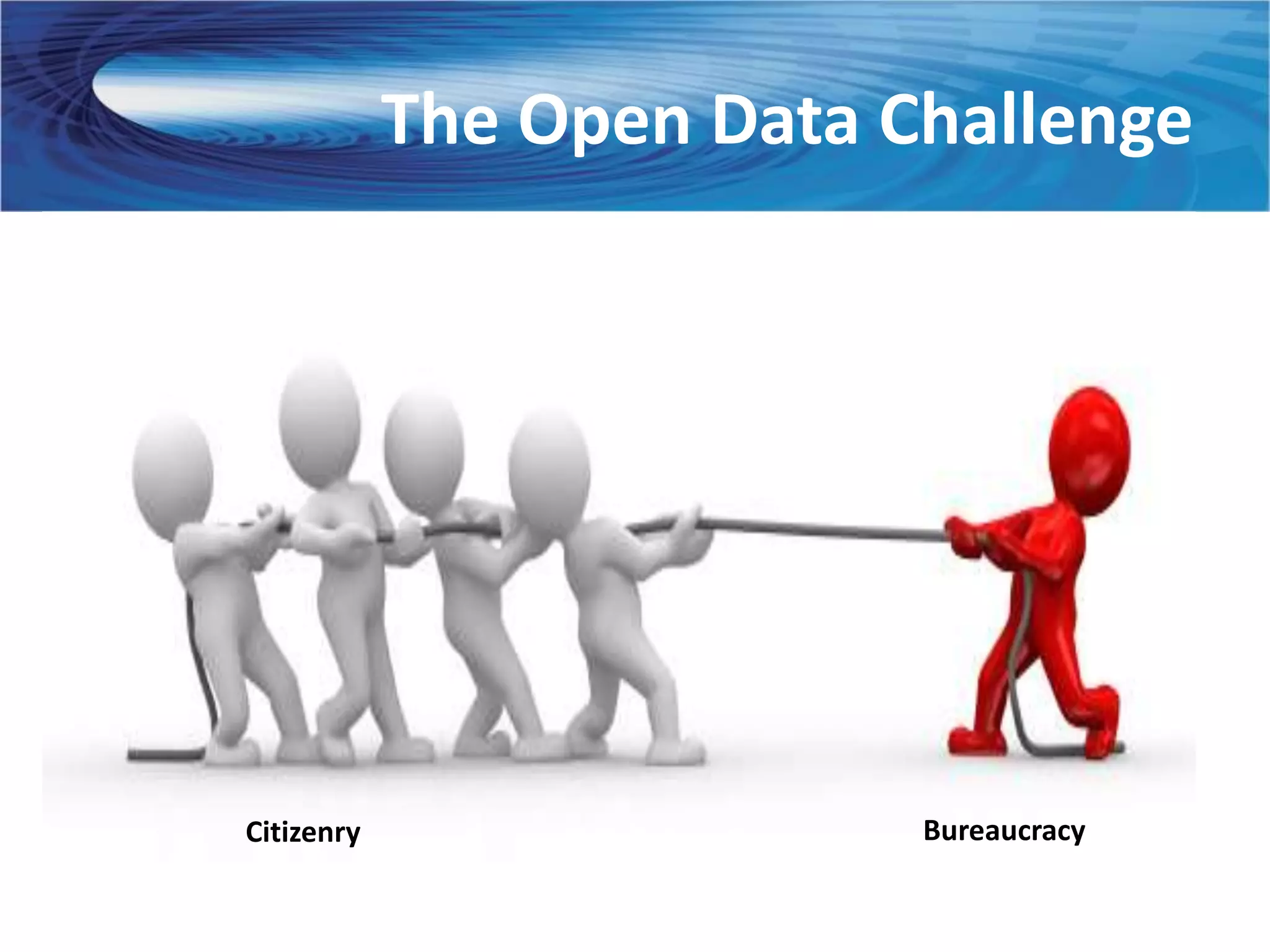
The Open Data Challenge


Citizenry                  Bureaucracy
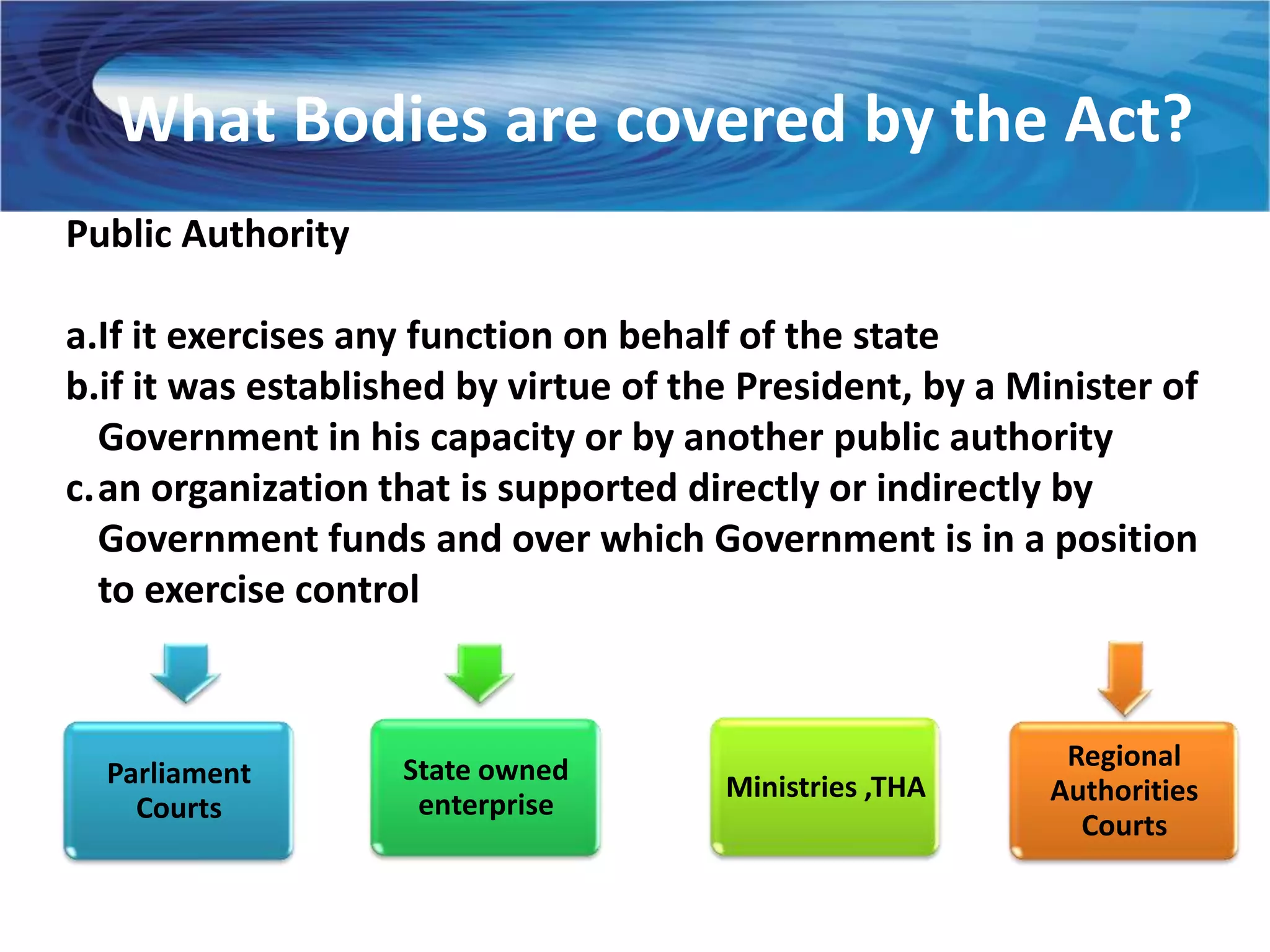
What Bodies are covered by the Act?
Public Authority

a.If it exercises any function on behalf of the state
b.if it was established by virtue of the President, by a Minister of
  Government in his capacity or by another public authority
c.an organization that is supported directly or indirectly by
  Government funds and over which Government is in a position
  to exercise control


                    State owned                             Regional
  Parliament                           Ministries ,THA
                     enterprise                            Authorities
    Courts
                                                             Courts
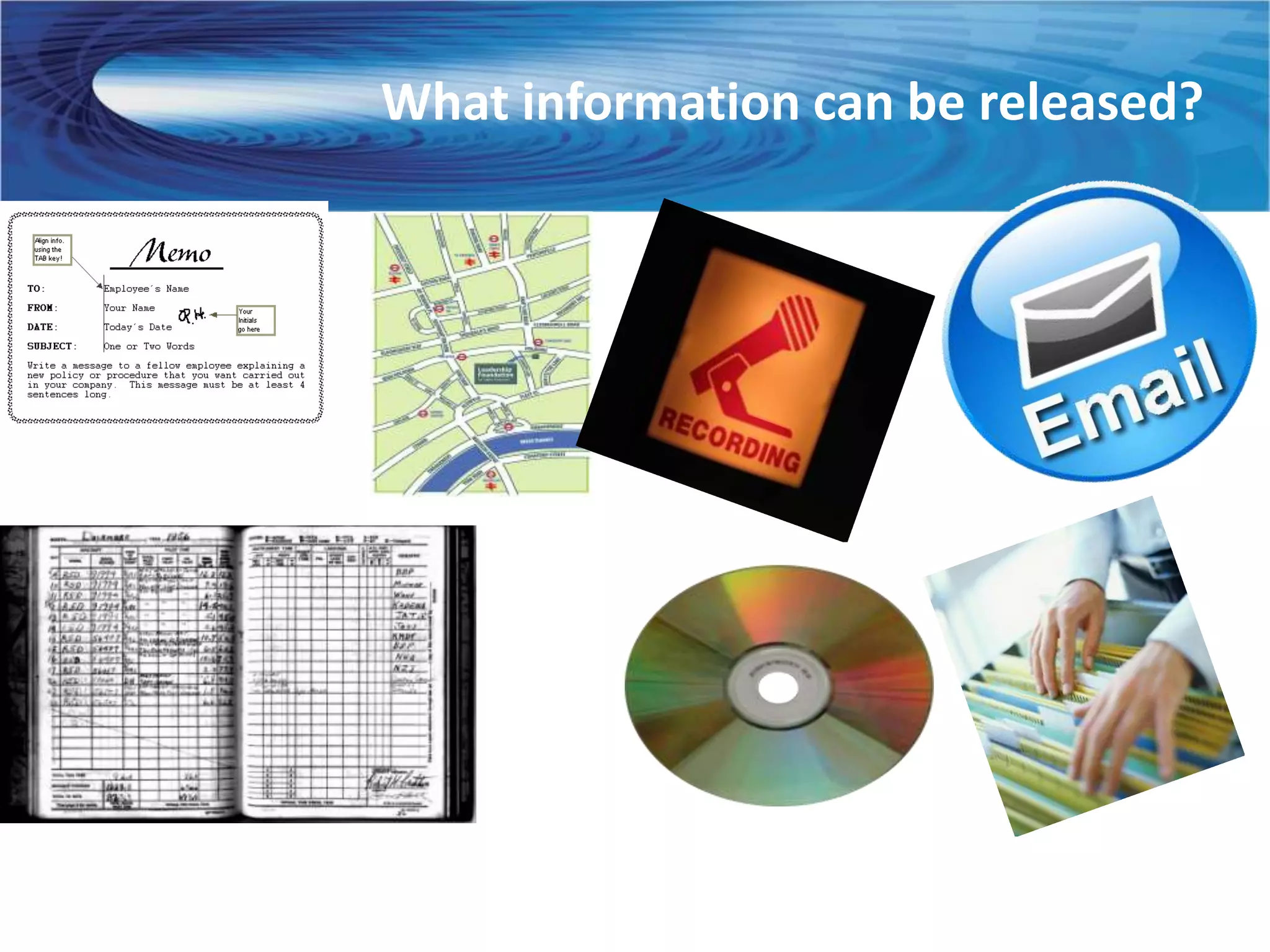
What information can be released?
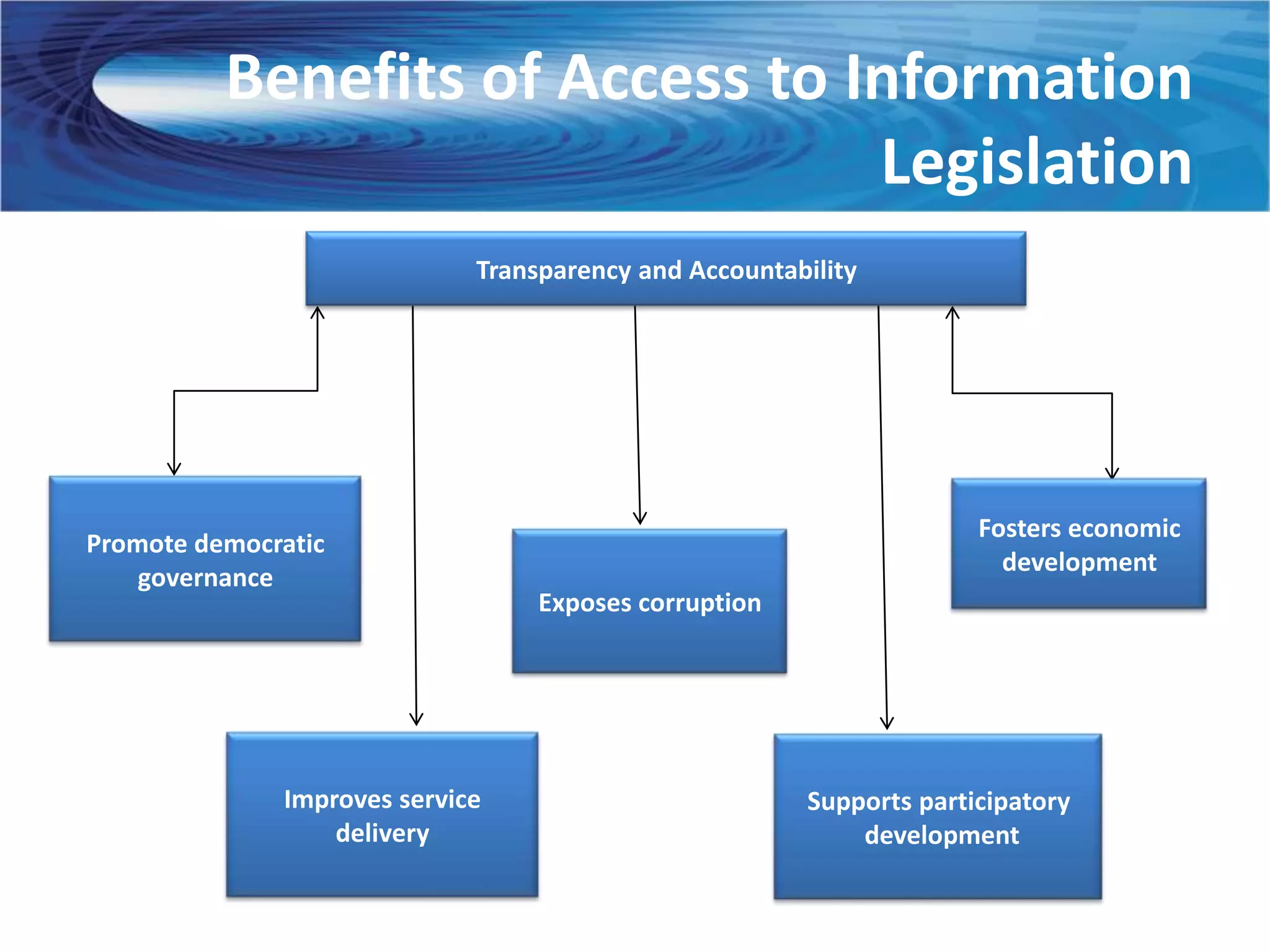
Benefits of Access to Information
                                 Legislation
                             Transparency and Accountability


                                                                     Fosters economic
Promote democratic
                                                                       development
    governance
                                  Exposes corruption


              Improves service                         Supports participatory
                  delivery                                 development
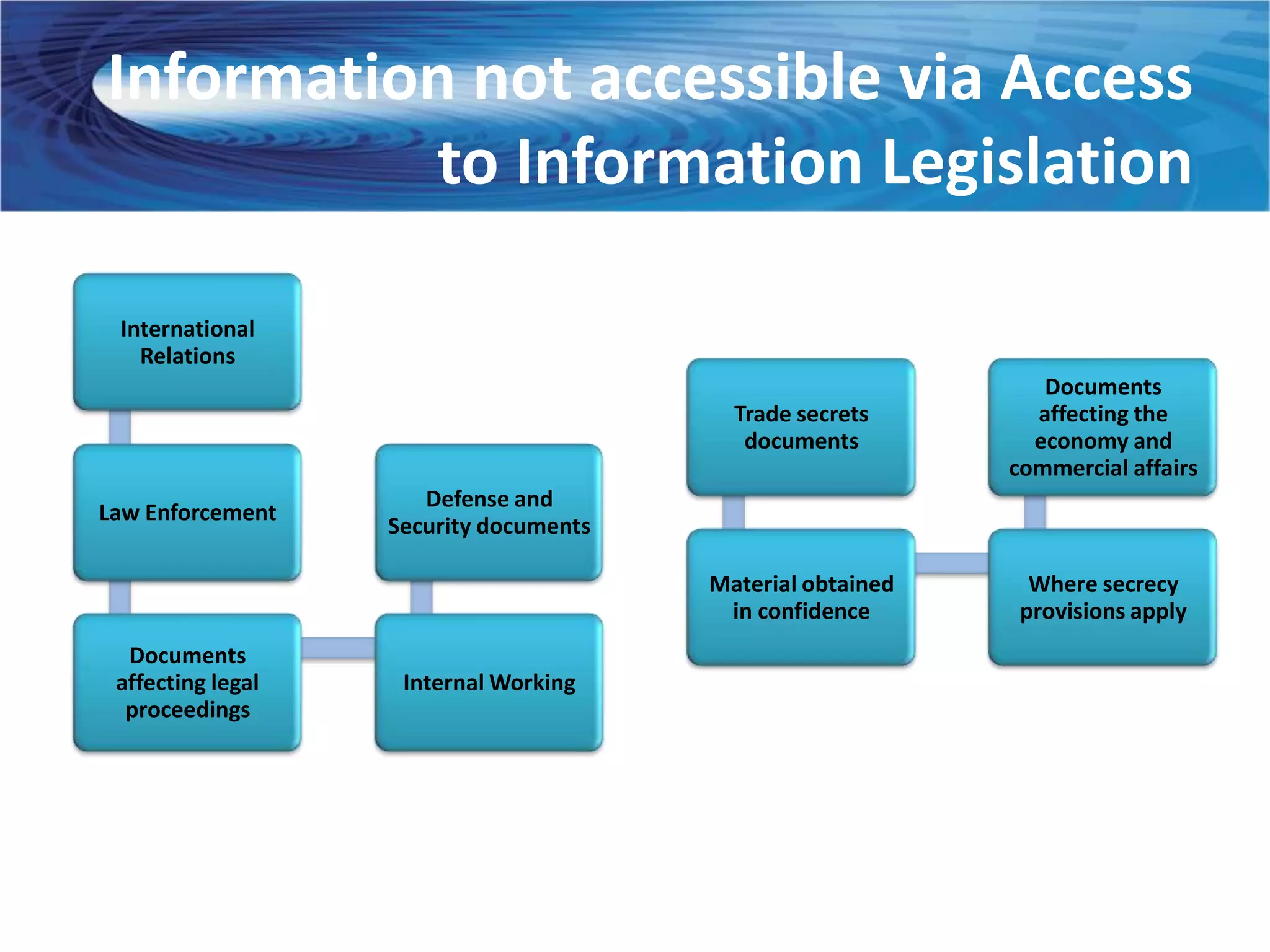
Information not accessible via Access
          to Information Legislation

 International
   Relations
                                                               Documents
                                          Trade secrets       affecting the
                                           documents          economy and
                                                            commercial affairs
                      Defense and
Law Enforcement
                   Security documents

                                        Material obtained     Where secrecy
                                         in confidence       provisions apply
  Documents
 affecting legal    Internal Working
  proceedings
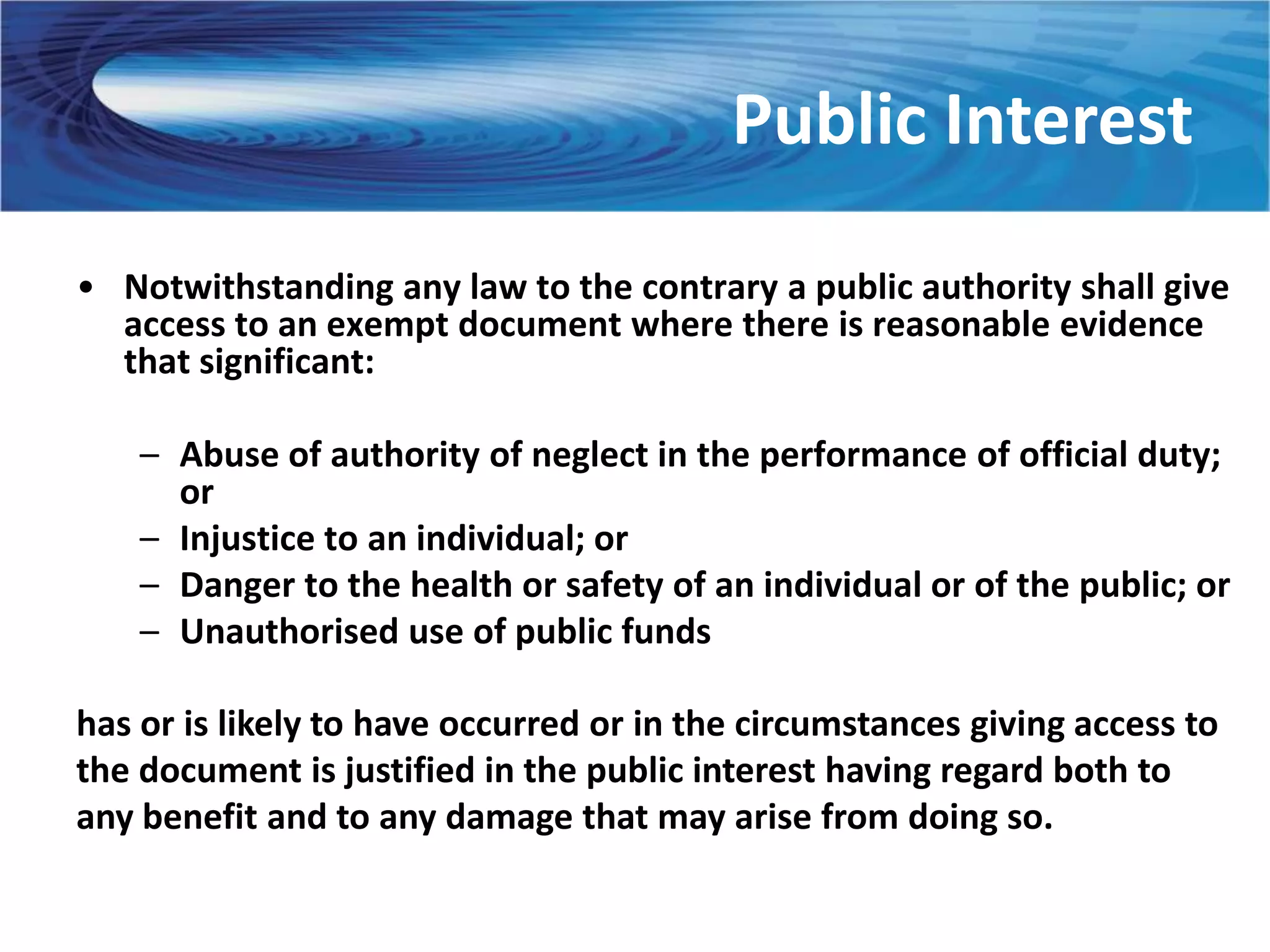
Public Interest
• Notwithstanding any law to the contrary a public authority shall give
  access to an exempt document where there is reasonable evidence
  that significant:

    – Abuse of authority of neglect in the performance of official duty;
      or
    – Injustice to an individual; or
    – Danger to the health or safety of an individual or of the public; or
    – Unauthorised use of public funds

has or is likely to have occurred or in the circumstances giving access to
the document is justified in the public interest having regard both to
any benefit and to any damage that may arise from doing so.
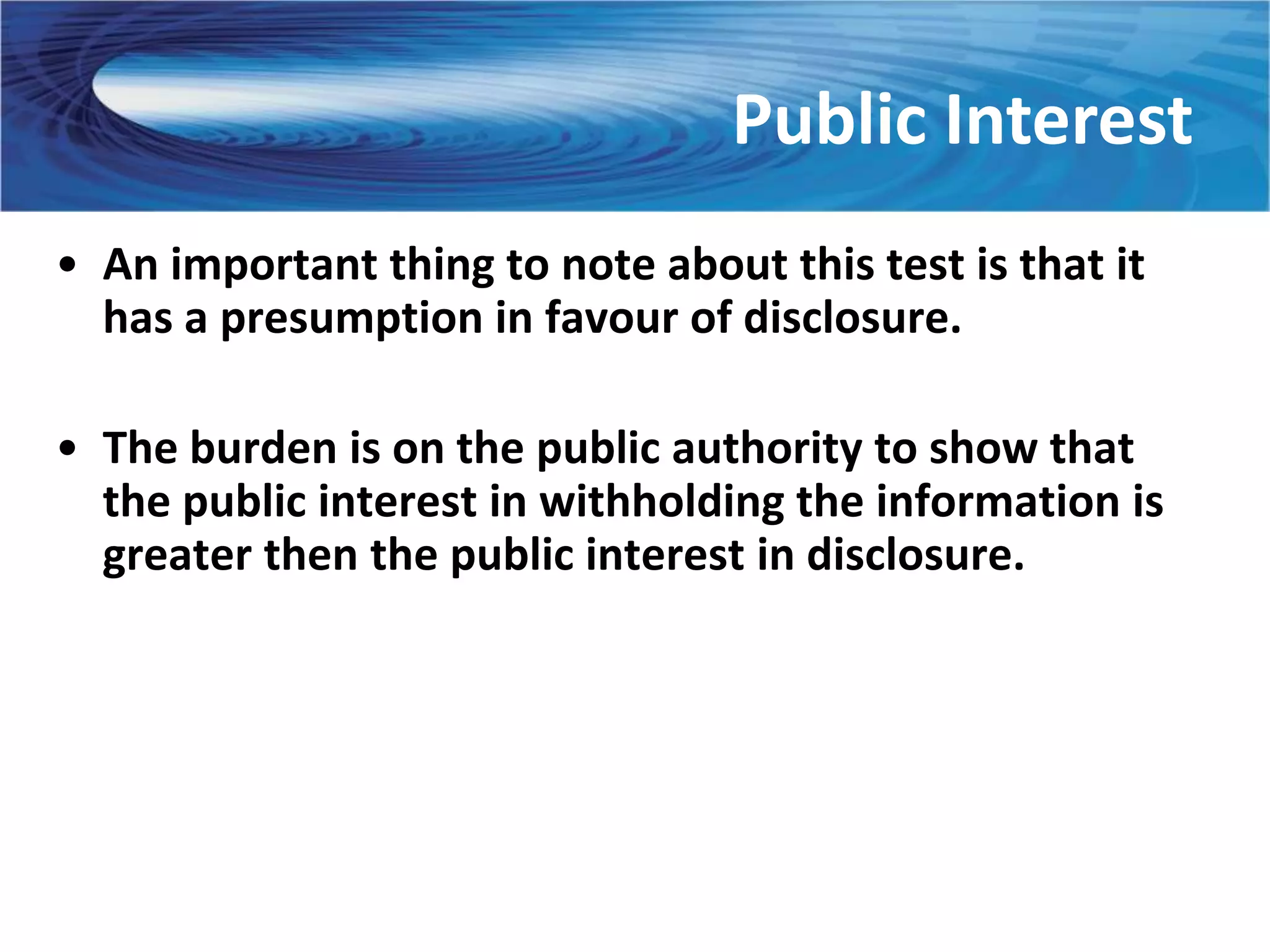
Public Interest
• An important thing to note about this test is that it
  has a presumption in favour of disclosure.

• The burden is on the public authority to show that
  the public interest in withholding the information is
  greater then the public interest in disclosure.
Privacy Protection

“Personal data is the new oil of the Internet
and the new currency of the digital world.”


Meglena Kuneva, European
Consumer Commissioner,
March 2009
Information Privacy Defined


• Information Privacy: Data Protection
  – Freedom of choice; personal control;
    informational self-determination;
  – Control over the collection, use and disclosure of
    any recorded information about an identifiable
    individual;
  – Privacy principles as embodied in “General Privacy
    Principles”
  – Global Privacy Standard (2006).
Why is the Protection of Personal
                           Information necessary?

• Privacy has long been understood to have a value
  in a civil society that respects inherent rights &
  values of mankind
• T&T Constitution enshrines the right to privacy
• Universal Declaration of Human Rights states that
  privacy is a fundamental human right
• Privacy is an important element in the control of
  electronic activities such as unsolicited marketing
  & spam
                                                    15
Privacy Protection
• We are currently confronting the rise of what I refer to
  as “digital dossiers”…. As businesses and the
  government increasingly share personal information,
  digital dossiers about nearly every individual are being
  assembled. This raises serious concerns. The
  information gathered about us has become quite
  extensive, and it is being used in ways that profoundly
  affect our lives. Yet, we know little about how our
  personal information is being used, and we lack the
  power to do much about it.”

(Solove, 2010, p. 1)
Privacy Protection

Different type of Data

• Personal data: information that is or can be
  linked directly or indirectly to some person.

• Statistical data: data without any personal
  information.
Privacy Protection
Challenge
• The need to protect against disclosure of
  personal information in confidential data (and
  against discovery of personal information from
  statistical data by matching techniques).
                     vs.
• The need to provide access to microdata for
  research.
Data Sharing & Data Matching

Government is subject to specific responsibilities re data
sharing and data matching that recognizes the
importance of Government as a primary holder of info
about individuals

Where a Public Body intends to share and or match info
with other Public Body, it shall do so only pursuant to an
agreement in a manner prescribed by the Information
Commissioner


                                                        19
Access by Design

7 basic principles
1. Be Proactive not Reactive
2. Access embedded into design
3. Openness and Transparency = Accountability
4. Fosters Collaboration
5. Enhances efficient government Collaboration
6. Makes Access truly Accessibility
7. Increases Quality of Information

      Source: http://www.ipc.on.ca/images/Resources/accessbydesign_7fundamentalprinciples.pdf
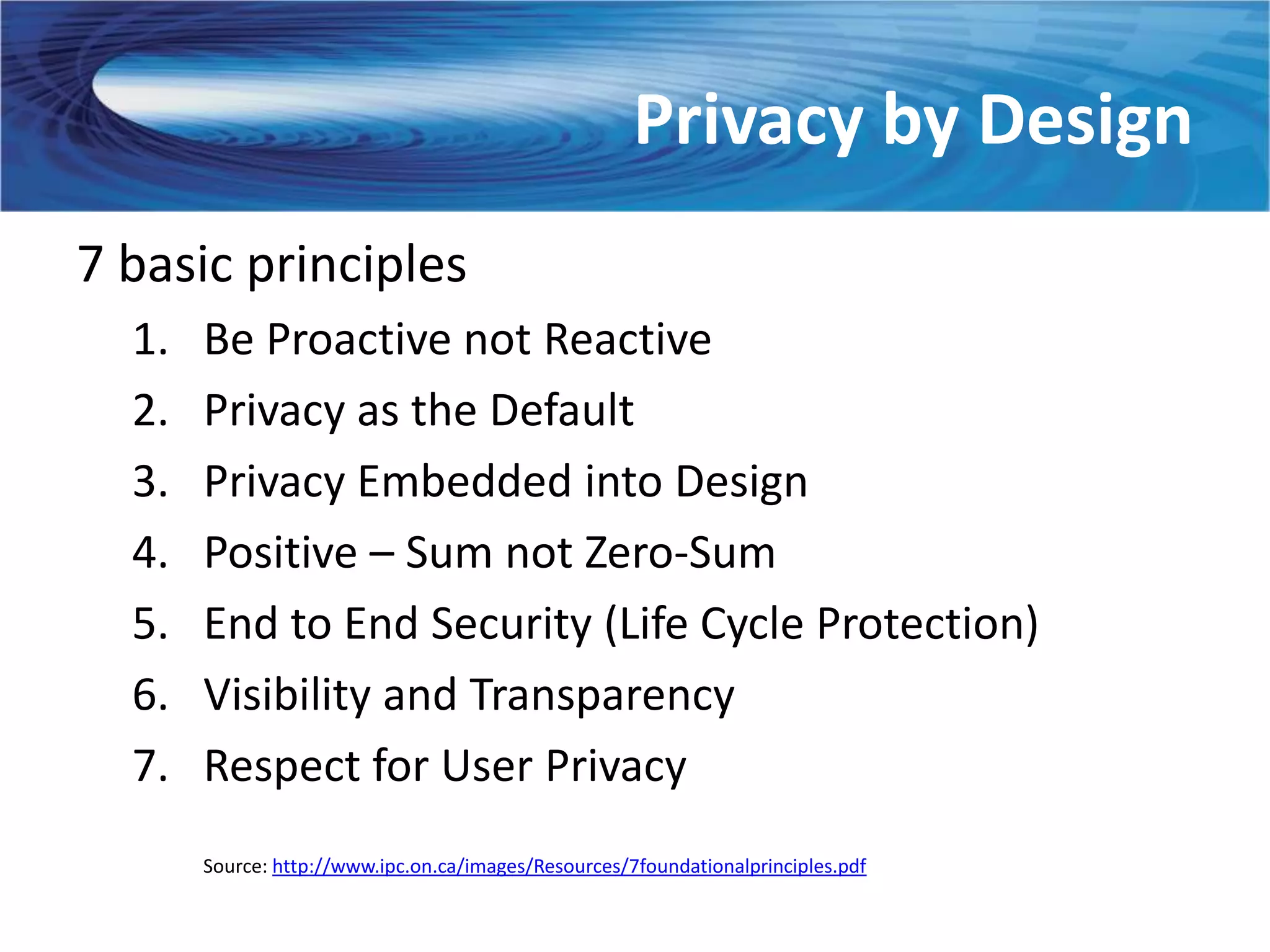
Privacy by Design
7 basic principles
  1.   Be Proactive not Reactive
  2.   Privacy as the Default
  3.   Privacy Embedded into Design
  4.   Positive – Sum not Zero-Sum
  5.   End to End Security (Life Cycle Protection)
  6.   Visibility and Transparency
  7.   Respect for User Privacy
       Source: http://www.ipc.on.ca/images/Resources/7foundationalprinciples.pdf
THANK YOU

Finding balance in the age of open data

  • 1.
    Finding Balance inthe Age of Open Data: Some Policy and Legal Considerations Rishi Maharaj Information Access and Privacy Professional
  • 2.
    “Information is theOxygen of democracy. If People do not know what is happening in their society, if the actions of those who rule them are hidden, then they cannot take a meaningful part in the affairs of that society” http://www.article19.org/pdfs/standards/righttoknow.pdf 2
  • 3.
    Open Data andOpen Government Open Data therefore enshrines the concept that neither the government of the day nor civil servants create data for their benefit, but for the benefit of the public. Data is generated with public money, as such, it cannot be unreasonably kept from citizens.
  • 4.
  • 5.
    Access to Information ‘theright to information lays the foundation upon which to build good governance and transparency…. It is the key to moving from formal to consultative and responsive democracy’ Commonwealth Human Rights Initiative
  • 6.
    The Open DataChallenge Citizenry Bureaucracy
  • 7.
    What Bodies arecovered by the Act? Public Authority a.If it exercises any function on behalf of the state b.if it was established by virtue of the President, by a Minister of Government in his capacity or by another public authority c.an organization that is supported directly or indirectly by Government funds and over which Government is in a position to exercise control State owned Regional Parliament Ministries ,THA enterprise Authorities Courts Courts
  • 8.
  • 9.
    Benefits of Accessto Information Legislation Transparency and Accountability Fosters economic Promote democratic development governance Exposes corruption Improves service Supports participatory delivery development
  • 10.
    Information not accessiblevia Access to Information Legislation International Relations Documents Trade secrets affecting the documents economy and commercial affairs Defense and Law Enforcement Security documents Material obtained Where secrecy in confidence provisions apply Documents affecting legal Internal Working proceedings
  • 11.
    Public Interest • Notwithstandingany law to the contrary a public authority shall give access to an exempt document where there is reasonable evidence that significant: – Abuse of authority of neglect in the performance of official duty; or – Injustice to an individual; or – Danger to the health or safety of an individual or of the public; or – Unauthorised use of public funds has or is likely to have occurred or in the circumstances giving access to the document is justified in the public interest having regard both to any benefit and to any damage that may arise from doing so.
  • 12.
    Public Interest • Animportant thing to note about this test is that it has a presumption in favour of disclosure. • The burden is on the public authority to show that the public interest in withholding the information is greater then the public interest in disclosure.
  • 13.
    Privacy Protection “Personal datais the new oil of the Internet and the new currency of the digital world.” Meglena Kuneva, European Consumer Commissioner, March 2009
  • 14.
    Information Privacy Defined •Information Privacy: Data Protection – Freedom of choice; personal control; informational self-determination; – Control over the collection, use and disclosure of any recorded information about an identifiable individual; – Privacy principles as embodied in “General Privacy Principles” – Global Privacy Standard (2006).
  • 15.
    Why is theProtection of Personal Information necessary? • Privacy has long been understood to have a value in a civil society that respects inherent rights & values of mankind • T&T Constitution enshrines the right to privacy • Universal Declaration of Human Rights states that privacy is a fundamental human right • Privacy is an important element in the control of electronic activities such as unsolicited marketing & spam 15
  • 16.
    Privacy Protection • Weare currently confronting the rise of what I refer to as “digital dossiers”…. As businesses and the government increasingly share personal information, digital dossiers about nearly every individual are being assembled. This raises serious concerns. The information gathered about us has become quite extensive, and it is being used in ways that profoundly affect our lives. Yet, we know little about how our personal information is being used, and we lack the power to do much about it.” (Solove, 2010, p. 1)
  • 17.
    Privacy Protection Different typeof Data • Personal data: information that is or can be linked directly or indirectly to some person. • Statistical data: data without any personal information.
  • 18.
    Privacy Protection Challenge • Theneed to protect against disclosure of personal information in confidential data (and against discovery of personal information from statistical data by matching techniques). vs. • The need to provide access to microdata for research.
  • 19.
    Data Sharing &Data Matching Government is subject to specific responsibilities re data sharing and data matching that recognizes the importance of Government as a primary holder of info about individuals Where a Public Body intends to share and or match info with other Public Body, it shall do so only pursuant to an agreement in a manner prescribed by the Information Commissioner 19
  • 20.
    Access by Design 7basic principles 1. Be Proactive not Reactive 2. Access embedded into design 3. Openness and Transparency = Accountability 4. Fosters Collaboration 5. Enhances efficient government Collaboration 6. Makes Access truly Accessibility 7. Increases Quality of Information Source: http://www.ipc.on.ca/images/Resources/accessbydesign_7fundamentalprinciples.pdf
  • 21.
    Privacy by Design 7basic principles 1. Be Proactive not Reactive 2. Privacy as the Default 3. Privacy Embedded into Design 4. Positive – Sum not Zero-Sum 5. End to End Security (Life Cycle Protection) 6. Visibility and Transparency 7. Respect for User Privacy Source: http://www.ipc.on.ca/images/Resources/7foundationalprinciples.pdf
  • 22.