19MST15 – FINANCIAL AND
MANAGEMENT ACCOUNTING
M. NANDHAKUMAR
ASSISTANT PROFESSOR
ERODE SENGUNTHAR ENGINEERING COLLEGE (AUTONOMOUS)
PERUNDURAI, ERODE
UNIT – III FINANCIAL STATEMENT ANALYSIS
 Meaning of financial statement analysis
 Definition of financial statement analysis
 Objectives of financial statement analysis
 Nature of financial statement analysis
 Functions/Uses/Importance of financial statement analysis
 Types of financial statement analysis
 Limitations of financial statement analysis
 Tools/Techniques of financial statement analysis
MEANING OF FINANCIAL STATEMENT ANALYSIS
 Financial analysis is also referred as “Analysis of financial
statements”. The term “Financial Analysis”, also known as an
“Analysis and interpretation of financial statements”, refers to the
process determining financial strengths and weakness of firm.
DEFINITION OF FINANCIAL STATEMENT
ANALYSIS
• According to Myers, “Financial statement analysis is largely a study of
relationship among the various financial factors in a business as disclosed by
single set-of statements, and study of the trend of these factor as shown in a series
of statement”.
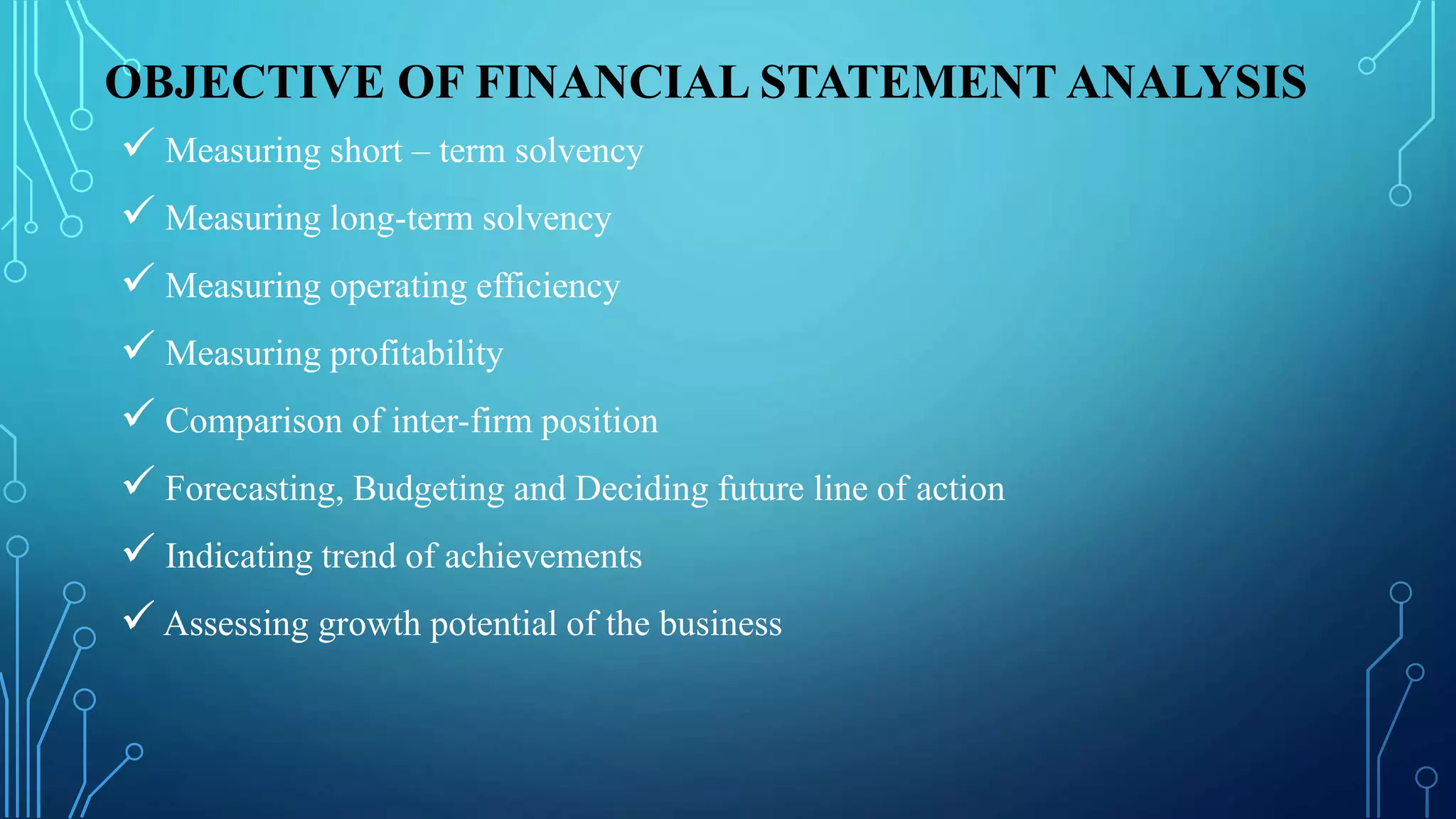
OBJECTIVE OF FINANCIAL STATEMENT ANALYSIS
 Measuring short – term solvency
 Measuring long-term solvency
 Measuring operating efficiency
 Measuring profitability
 Comparison of inter-firm position
 Forecasting, Budgeting and Deciding future line of action
 Indicating trend of achievements
 Assessing growth potential of the business
NATURE OF FINANCIAL STATEMENT ANALYSIS
 Based on recorded facts
 Accounting conventions
 Personal judgement
FUNCTIONS/USES/IMPORTANCE OF FINANCIAL
STATEMENT ANALYSIS
 For management
 For financers
 For creditors
 For investors
 For owners
 For employees
TYPES OF FINANCIAL STATEMENT ANALYSIS
 On the basis of information used
 External analysis
 Internal analysis
 On the basis of modes operation analysis
 Horizontal analysis
 Vertical analysis
LIMITATIONS OF FINANCIAL STATEMENT
ANALYSIS
 Absence of standard universally accepted terminology
 Ignoring qualitative aspects
 Misleading result in absence of absolute data
 Ignoring price level changing
 Suffering from limitations of financial statements
 Financial statements are affected by the personal ability and bias of analyst
TOOLS / TECHNIQUES OF FINANCIAL STATEMENT
ANALYSIS
THANK U CHILDREN’S

Financial Statement Analysis

  • 1.
    19MST15 – FINANCIALAND MANAGEMENT ACCOUNTING M. NANDHAKUMAR ASSISTANT PROFESSOR ERODE SENGUNTHAR ENGINEERING COLLEGE (AUTONOMOUS) PERUNDURAI, ERODE
  • 2.
    UNIT – IIIFINANCIAL STATEMENT ANALYSIS  Meaning of financial statement analysis  Definition of financial statement analysis  Objectives of financial statement analysis  Nature of financial statement analysis  Functions/Uses/Importance of financial statement analysis  Types of financial statement analysis  Limitations of financial statement analysis  Tools/Techniques of financial statement analysis
  • 3.
    MEANING OF FINANCIALSTATEMENT ANALYSIS  Financial analysis is also referred as “Analysis of financial statements”. The term “Financial Analysis”, also known as an “Analysis and interpretation of financial statements”, refers to the process determining financial strengths and weakness of firm.
  • 4.
    DEFINITION OF FINANCIALSTATEMENT ANALYSIS • According to Myers, “Financial statement analysis is largely a study of relationship among the various financial factors in a business as disclosed by single set-of statements, and study of the trend of these factor as shown in a series of statement”.
  • 5.
    OBJECTIVE OF FINANCIALSTATEMENT ANALYSIS  Measuring short – term solvency  Measuring long-term solvency  Measuring operating efficiency  Measuring profitability  Comparison of inter-firm position  Forecasting, Budgeting and Deciding future line of action  Indicating trend of achievements  Assessing growth potential of the business
  • 6.
    NATURE OF FINANCIALSTATEMENT ANALYSIS  Based on recorded facts  Accounting conventions  Personal judgement
  • 7.
    FUNCTIONS/USES/IMPORTANCE OF FINANCIAL STATEMENTANALYSIS  For management  For financers  For creditors  For investors  For owners  For employees
  • 8.
    TYPES OF FINANCIALSTATEMENT ANALYSIS  On the basis of information used  External analysis  Internal analysis  On the basis of modes operation analysis  Horizontal analysis  Vertical analysis
  • 9.
    LIMITATIONS OF FINANCIALSTATEMENT ANALYSIS  Absence of standard universally accepted terminology  Ignoring qualitative aspects  Misleading result in absence of absolute data  Ignoring price level changing  Suffering from limitations of financial statements  Financial statements are affected by the personal ability and bias of analyst
  • 10.
    TOOLS / TECHNIQUESOF FINANCIAL STATEMENT ANALYSIS
  • 12.