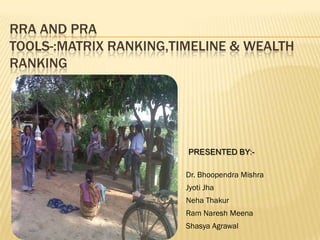
RRA AND PRA
TOOLS-:MATRIX RANKING,TIMELINE & WEALTH
RANKING


                        PRESENTED BY:-

                        Dr. Bhoopendra Mishra
                        Jyoti Jha
                        Neha Thakur
                        Ram Naresh Meena
                        Shasya Agrawal
DEFINING PRA
 This technique of data collection aims to
  incorporate the knowledge and opinions
  of rural people in the planning and
  management of development projects
  and programmes.
PRA
 Appraisal – The finding out of information about
  problems, needs, and potential in a village. It is
  the first stage in any project.
 Participatory – Means that people are involved in
  the process – a “bottom-up” approach that
  requires good communication skills and attitude of
  project staff.
 Rural – The techniques can be used in any
  situation, urban or rural, with both literate and
  illiterate people.
OBJECTIVES OF PRA

   Stimulate the community to identify the causes of its
    problems and collective aspirations;
   Facilitate communication with the community;
   Help the community to identify resources, experiences,
    and potential improvement;
   Identify interests and conflicts; and
   Motivate communities to develop self reliance in project
    development and management
CORE CONCEPTS OF PRA

 Empowerment
 Respect

 Localization

 Enjoyment

 Inclusiveness
METHODS USED IN PRA

 Secondary data reviews
 Observation

 Semi-structured interviews

 Analytical games

 Stories and portrays

 Diagrams

 Workshop
GOOD FEATURES OF PRA

 “Learning-as-you-go”   Principle
 Innovative

 Interactive

 Informal

 In   the community
SOME TYPICAL DANGERS AND
LIMITATIONS OF PRA

   Difficulty in getting exact information
   Difficulty in finding the right questions to ask
   Not enough time to spend in the village
   Danger of „rural development tourism‟
   Difficulty in finding the right interdisciplinary team
   Lack of experience of team members, particularly lack
    of skills in the field of communication, facilitation,
    and conflict negotiation
   Team members do not show the right attitude, fail to
    listen, and lack respect
RRA VS PRA

Category              RRA                 PRA
Major Development     Late 1970s, 1980s   Late 1980s, 1990s,
Major innovation in   Universities        NGOs
Main uses             Aid agencies,       NGOs, Government field
                      Universities        organizations
Key Resources         Local people’s      Local people’s
overlooked after      knowledge           capabilities
Main innovation       Methods             Behaviors
Outsiders’ Role       Obtaining           Facilitating
Objectives            Data Collection     Empowerment
Main actors           Outsiders           Local people
Long-term outcomes    Plans, projects,    Sustainable local action
                      publications        and institutions
MATRIX RANKING AND MATRIX SCORING


Technique to findout the advantages and
  disadvantages against a product or service

Use to
Compare services or products available
PROCEDURE
   Selection of an issue to investigate with a family or group of farmers.
    For example, different varieties of rice, different methods of compost
    making, or different seed .storage vessels;

   A serial number should be given to each product or service
   A symbol for eachshould be made

   Talking about the advantages and disadvantages of each item

   Turning them into criteria and list them in a column on the paper

   Farmers asked to rank in order of performance against each criteria)
   When complete, matrix ranking will show why one item is more used
    locally than others, even though others might be better.

   Matrix scoring is a variation of matrix ranking. Instead of ranking each
    item against each criteria, score them out of 10.
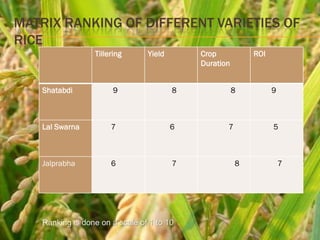
MATRIX RANKING OF DIFFERENT VARIETIES OF
RICE
                 Tillering      Yield       Crop           ROI
                                            Duration


   Shatabdi            9                8              8         9


   Lal Swarna         7                 6          7             5


   Jalprabha          6                 7              8             7


   Ranking is done on a scale of 1 to 10
TIMELINE

The facilitators meet small groups of villagers and
  discuss with them the most important events in
  the community’s past and prepare with the
  information a historical timeline which serves
  as the base for further work.
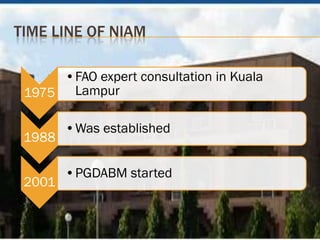
TIME LINE OF NIAM

      •FAO expert consultation in Kuala
 1975 Lampur

        •Was established
 1988

        •PGDABM started
 2001
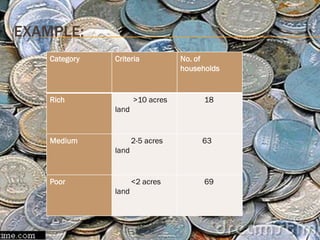
WEALTH RANKING:


 This is a particularly useful method of
  (1) discovering how the community members
 define poverty,
 (2) to find who the really poor people are, and
  (3) to stratify samples of wealth. This is best
 done once you have built up some rapport with
 the community members.
EXAMPLE:
    Category   Criteria           No. of
                                  households


    Rich              >10 acres         18
               land


    Medium            2-5 acres        63
               land


    Poor              <2 acres          69
               land
THANK YOU
 

Final ppt

  • 1.
    RRA AND PRA TOOLS-:MATRIXRANKING,TIMELINE & WEALTH RANKING PRESENTED BY:- Dr. Bhoopendra Mishra Jyoti Jha Neha Thakur Ram Naresh Meena Shasya Agrawal
  • 2.
    DEFINING PRA Thistechnique of data collection aims to incorporate the knowledge and opinions of rural people in the planning and management of development projects and programmes.
  • 3.
    PRA  Appraisal –The finding out of information about problems, needs, and potential in a village. It is the first stage in any project.  Participatory – Means that people are involved in the process – a “bottom-up” approach that requires good communication skills and attitude of project staff.  Rural – The techniques can be used in any situation, urban or rural, with both literate and illiterate people.
  • 4.
    OBJECTIVES OF PRA  Stimulate the community to identify the causes of its problems and collective aspirations;  Facilitate communication with the community;  Help the community to identify resources, experiences, and potential improvement;  Identify interests and conflicts; and  Motivate communities to develop self reliance in project development and management
  • 5.
    CORE CONCEPTS OFPRA  Empowerment  Respect  Localization  Enjoyment  Inclusiveness
  • 6.
    METHODS USED INPRA  Secondary data reviews  Observation  Semi-structured interviews  Analytical games  Stories and portrays  Diagrams  Workshop
  • 7.
    GOOD FEATURES OFPRA  “Learning-as-you-go” Principle  Innovative  Interactive  Informal  In the community
  • 8.
    SOME TYPICAL DANGERSAND LIMITATIONS OF PRA  Difficulty in getting exact information  Difficulty in finding the right questions to ask  Not enough time to spend in the village  Danger of „rural development tourism‟  Difficulty in finding the right interdisciplinary team  Lack of experience of team members, particularly lack of skills in the field of communication, facilitation, and conflict negotiation  Team members do not show the right attitude, fail to listen, and lack respect
  • 9.
    RRA VS PRA Category RRA PRA Major Development Late 1970s, 1980s Late 1980s, 1990s, Major innovation in Universities NGOs Main uses Aid agencies, NGOs, Government field Universities organizations Key Resources Local people’s Local people’s overlooked after knowledge capabilities Main innovation Methods Behaviors Outsiders’ Role Obtaining Facilitating Objectives Data Collection Empowerment Main actors Outsiders Local people Long-term outcomes Plans, projects, Sustainable local action publications and institutions
  • 10.
    MATRIX RANKING ANDMATRIX SCORING Technique to findout the advantages and disadvantages against a product or service Use to Compare services or products available
  • 11.
    PROCEDURE  Selection of an issue to investigate with a family or group of farmers. For example, different varieties of rice, different methods of compost making, or different seed .storage vessels;  A serial number should be given to each product or service  A symbol for eachshould be made  Talking about the advantages and disadvantages of each item  Turning them into criteria and list them in a column on the paper  Farmers asked to rank in order of performance against each criteria)  When complete, matrix ranking will show why one item is more used locally than others, even though others might be better.  Matrix scoring is a variation of matrix ranking. Instead of ranking each item against each criteria, score them out of 10.
  • 12.
    MATRIX RANKING OFDIFFERENT VARIETIES OF RICE Tillering Yield Crop ROI Duration Shatabdi 9 8 8 9 Lal Swarna 7 6 7 5 Jalprabha 6 7 8 7 Ranking is done on a scale of 1 to 10
  • 13.
    TIMELINE The facilitators meetsmall groups of villagers and discuss with them the most important events in the community’s past and prepare with the information a historical timeline which serves as the base for further work.
  • 14.
    TIME LINE OFNIAM •FAO expert consultation in Kuala 1975 Lampur •Was established 1988 •PGDABM started 2001
  • 15.
    WEALTH RANKING: Thisis a particularly useful method of (1) discovering how the community members define poverty, (2) to find who the really poor people are, and (3) to stratify samples of wealth. This is best done once you have built up some rapport with the community members.
  • 16.
    EXAMPLE: Category Criteria No. of households Rich >10 acres 18 land Medium 2-5 acres 63 land Poor <2 acres 69 land
  • 17.