ePortfolio Feasibility Project
Source: Tourism Queensland
Context to Project

• Developments in the use of ePortfolios in the
  Australian higher education sector have advanced
  rapidly in recent years.
• ePortfolios Australia Conferences
• A number of ALTC (now OLT) projects
• USC -assessing and assuring of graduate outcomes
  and uses in work integrated learning experiences
  are areas of interest
Four Project Aims


a. Investigate purposes USC community
   require from an ePortfolio system

b. Develop set of criteria of
   functional requirements
Aims of the Project (cont.)


c. Investigate appropriate software apps

d. To provide future recommendations for
   ePortfolio use
Human Ethics Approval


  To share project findings we have
human ethics approval No. A/12/408
Project Timeline Over Six Months


Develop                Application   L&T          New data
          Literature                                           Software   Analyze   Develop    Write
project                ethics        Week         collection
          search                                               trials     data      criteria   report
plan                   approval      Activities   methods
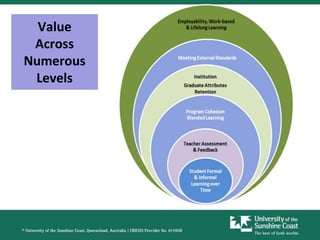
Value of an ePortfolio

• Potentially ePortfolios can meet diverse needs

• Internal and external stakeholders

• Require multiple ePortfolio purposes, presentations and
  audiences at different times

(Joyes et al. 2010: 17)
Value
 Across
Numerous
 Levels
Email Interest Group
• All staff email sent out initially
• Diverse number of responses

• Within this group – volunteers to trial
  ePortfolio software packages
• Feedback/showcase event to come
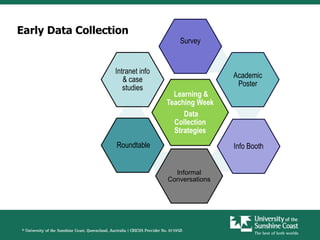
Early Data Collection
                                     Survey


                  Intranet info
                                                  Academic
                     & case
                                                   Poster
                     studies
                                    Learning &
                                  Teaching Week
                                       Data
                                    Collection
                                    Strategies
                  Roundtable                      Info Booth


                                    Informal
                                  Conversations
Early Observations

Different levels of understanding about ePortfolios.
    1. What is an ePortfolio?
    2. Interested but questions
    3. See value but inexperienced in use
    4. Staff (students?) who have previously used
        ePortfolios successfully.
Ongoing & New Data Collection


Ongoing                New Actions

Intranet Information   Presentations at Program Team Meetings
Survey Online          Billboard Posters Around Campus
Conversations          Software Trial One Month
Email Interest Group   Showcase Event
Going to Workshops     Functionality Testing
Who is interested in ePs?

• Mostly ‘professional’ degrees e.g.
 - nursing
 - occupational therapy
 - teaching
 - urban planning
 - science (vocationally directed)


• One degree with vast diversity in subject choice
Discussion

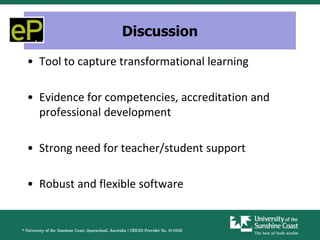
• Tool to capture transformational learning

• Evidence for competencies, accreditation and
  professional development

• Strong need for teacher/student support

• Robust and flexible software
What’s Next?

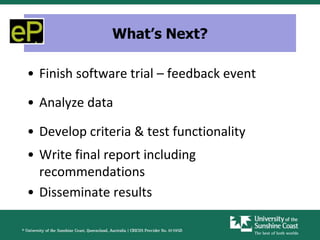
• Finish software trial – feedback event

• Analyze data

• Develop criteria & test functionality
• Write final report including
  recommendations
• Disseminate results
Questions in the Back of My Mind


• Initial excitement about potential of
  ePortfolios then –

• Hard work begins – “Does the bubble
  burst?”
                 ??????
Questions in the Back of My Mind

Talking to others involved in ePortfolios:

• Are resources available?

• Is there institutional will?


                  ??????
Contact Details
If you would like further information please contact:

                    Christine Slade,

         ePortfolio Feasibility Project Manager

            University of the Sunshine Coast

               Email: cslade@usc.edu.au

Eportfolio Feasability Project

  • 1.
  • 2.
  • 4.
    Context to Project •Developments in the use of ePortfolios in the Australian higher education sector have advanced rapidly in recent years. • ePortfolios Australia Conferences • A number of ALTC (now OLT) projects • USC -assessing and assuring of graduate outcomes and uses in work integrated learning experiences are areas of interest
  • 5.
    Four Project Aims a.Investigate purposes USC community require from an ePortfolio system b. Develop set of criteria of functional requirements
  • 6.
    Aims of theProject (cont.) c. Investigate appropriate software apps d. To provide future recommendations for ePortfolio use
  • 7.
    Human Ethics Approval To share project findings we have human ethics approval No. A/12/408
  • 8.
    Project Timeline OverSix Months Develop Application L&T New data Literature Software Analyze Develop Write project ethics Week collection search trials data criteria report plan approval Activities methods
  • 9.
    Value of anePortfolio • Potentially ePortfolios can meet diverse needs • Internal and external stakeholders • Require multiple ePortfolio purposes, presentations and audiences at different times (Joyes et al. 2010: 17)
  • 10.
  • 11.
    Email Interest Group •All staff email sent out initially • Diverse number of responses • Within this group – volunteers to trial ePortfolio software packages • Feedback/showcase event to come
  • 12.
    Early Data Collection Survey Intranet info Academic & case Poster studies Learning & Teaching Week Data Collection Strategies Roundtable Info Booth Informal Conversations
  • 13.
    Early Observations Different levelsof understanding about ePortfolios. 1. What is an ePortfolio? 2. Interested but questions 3. See value but inexperienced in use 4. Staff (students?) who have previously used ePortfolios successfully.
  • 14.
    Ongoing & NewData Collection Ongoing New Actions Intranet Information Presentations at Program Team Meetings Survey Online Billboard Posters Around Campus Conversations Software Trial One Month Email Interest Group Showcase Event Going to Workshops Functionality Testing
  • 15.
    Who is interestedin ePs? • Mostly ‘professional’ degrees e.g. - nursing - occupational therapy - teaching - urban planning - science (vocationally directed) • One degree with vast diversity in subject choice
  • 16.
    Discussion • Tool tocapture transformational learning • Evidence for competencies, accreditation and professional development • Strong need for teacher/student support • Robust and flexible software
  • 17.
    What’s Next? • Finishsoftware trial – feedback event • Analyze data • Develop criteria & test functionality • Write final report including recommendations • Disseminate results
  • 18.
    Questions in theBack of My Mind • Initial excitement about potential of ePortfolios then – • Hard work begins – “Does the bubble burst?” ??????
  • 19.
    Questions in theBack of My Mind Talking to others involved in ePortfolios: • Are resources available? • Is there institutional will? ??????
  • 20.
    Contact Details If youwould like further information please contact: Christine Slade, ePortfolio Feasibility Project Manager University of the Sunshine Coast Email: cslade@usc.edu.au

Editor's Notes

  • #10 EPortfolios are a tool that has the potential to meet diverse needs within learning and teaching in higher education. Interest drivers can come from external and internal stakeholders, therefore requiring multiple ePortfolio purposes, presentations and audiences at different times (Joyes et al. 2010: 17) as exemplified in Figure 2. For example through ePortfolio use:- Individual students can enable their personal learning over the duration of their degree and provide evidence of graduate attributes, employability and continued professional development to selected audiences. Opportunity can be provided at a course and/or program level for creative and individual assessment, especially pertinent in experiential learning and work-integrated learning environments as well as in blended learning initiatives.  Institutions can provide evidence of student transformational learning over time to support graduate attribute attainment and the requirements of external learning and teaching standards.