Film Language
According to Bordwell and Thompson
‘Film Art’

• A seminal book about film written in
  1977 and updated regularly since
  then.

• Their purpose in writing was to
  describe the basic techniques of
  cinema and to show how the separate
  techniques of the film functioned in
  the film's larger context.
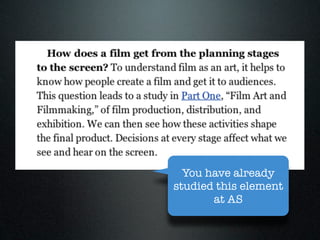
You have already
studied this element
       at AS
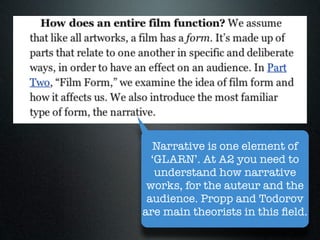
Narrative is one element of
  ‘GLARN’. At A2 you need to
   understand how narrative
 works, for the auteur and the
 audience. Propp and Todorov
are main theorists in this field.
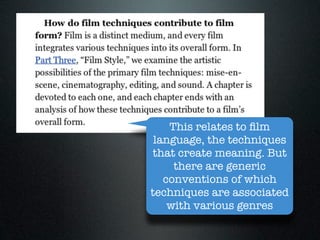
This relates to film
 language, the techniques
that create meaning. But
     there are generic
   conventions of which
techniques are associated
    with various genres
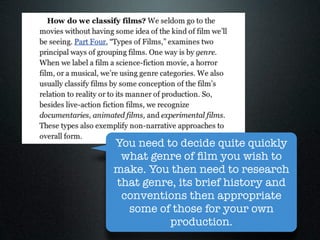
You need to decide quite quickly
 what genre of film you wish to
make. You then need to research
that genre, its brief history and
 conventions then appropriate
  some of those for your own
          production.
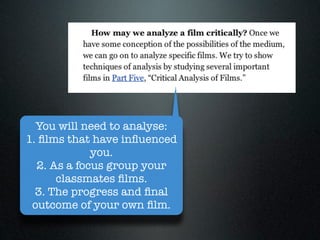
You will need to analyse:
1. films that have influenced
             you.
  2. As a focus group your
      classmates films.
  3. The progress and final
 outcome of your own film.
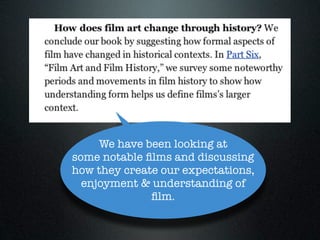
We have been looking at
some notable films and discussing
how they create our expectations,
  enjoyment & understanding of
              film.
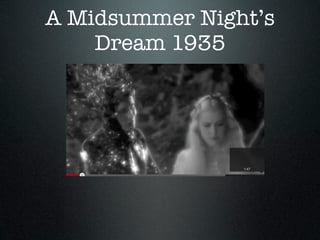
A Midsummer Night’s
    Dream 1935
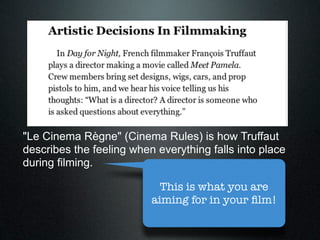
"Le Cinema Règne" (Cinema Rules) is how Truffaut
describes the feeling when everything falls into place
during filming.

                            This is what you are
                          aiming for in your film!
You need to constantly
  review your progress
on your blog, treat it as
   an online diary and
track the decisions you
    make, creative &
 technical. This is good
 practice in film terms
but don’t forget you will
   need to refer to it in
your evaluation & your
  Critical Perspectives
exam. Try watching the
 directors commentary
 on your favourite DVD
When researching, keep a note and screen shots of angles,
lighting and techniques that you admire and would like to
incorporate into your own.
You will come across lots of
    situations where you may be
   frustrated by logistical and/or
 technical hiccups, even problems
with your location or talent. Again
 you should keep a record of when
these incidents occurred and what
     you did to get around them.

Film art

  • 1.
    Film Language According toBordwell and Thompson
  • 2.
    ‘Film Art’ • Aseminal book about film written in 1977 and updated regularly since then. • Their purpose in writing was to describe the basic techniques of cinema and to show how the separate techniques of the film functioned in the film's larger context.
  • 3.
    You have already studiedthis element at AS
  • 4.
    Narrative is oneelement of ‘GLARN’. At A2 you need to understand how narrative works, for the auteur and the audience. Propp and Todorov are main theorists in this field.
  • 5.
    This relates tofilm language, the techniques that create meaning. But there are generic conventions of which techniques are associated with various genres
  • 6.
    You need todecide quite quickly what genre of film you wish to make. You then need to research that genre, its brief history and conventions then appropriate some of those for your own production.
  • 7.
    You will needto analyse: 1. films that have influenced you. 2. As a focus group your classmates films. 3. The progress and final outcome of your own film.
  • 8.
    We have beenlooking at some notable films and discussing how they create our expectations, enjoyment & understanding of film.
  • 13.
  • 19.
    "Le Cinema Règne"(Cinema Rules) is how Truffaut describes the feeling when everything falls into place during filming. This is what you are aiming for in your film!
  • 21.
    You need toconstantly review your progress on your blog, treat it as an online diary and track the decisions you make, creative & technical. This is good practice in film terms but don’t forget you will need to refer to it in your evaluation & your Critical Perspectives exam. Try watching the directors commentary on your favourite DVD
  • 22.
    When researching, keepa note and screen shots of angles, lighting and techniques that you admire and would like to incorporate into your own.
  • 23.
    You will comeacross lots of situations where you may be frustrated by logistical and/or technical hiccups, even problems with your location or talent. Again you should keep a record of when these incidents occurred and what you did to get around them.