FENIX platform
OVERVIEW OF THE NEW SOFTWARE
PLATFORM AND SYSTEM SETUP
Fabio Grita
System support officer, FAO
and
Stefania Bacci
Statistician
What is FENIX
A collection of software tools, methods and
standards to facilitate acquisition,
management and analysis of large, diversified
and distributed sets of data.
What’s the aim of FENIX
• Avail data as “public good”
• Ensure interoperability between IT
systems
• Respond to users’ requirements
• Strengthen the international, regional and
national institutional networks
Key features
• Based on Open Source software; no licensing constraints and full
redistribution rights
• Service-Oriented Architecture (SOA): extensible software  ability to plug-in
new functionalities and applications
• Enhanced data sharing, e.g. through web services (APIs)
• Ability to handle different type of data
• Data search system based on metadata
• Analytical capacities through embedded statistical packages
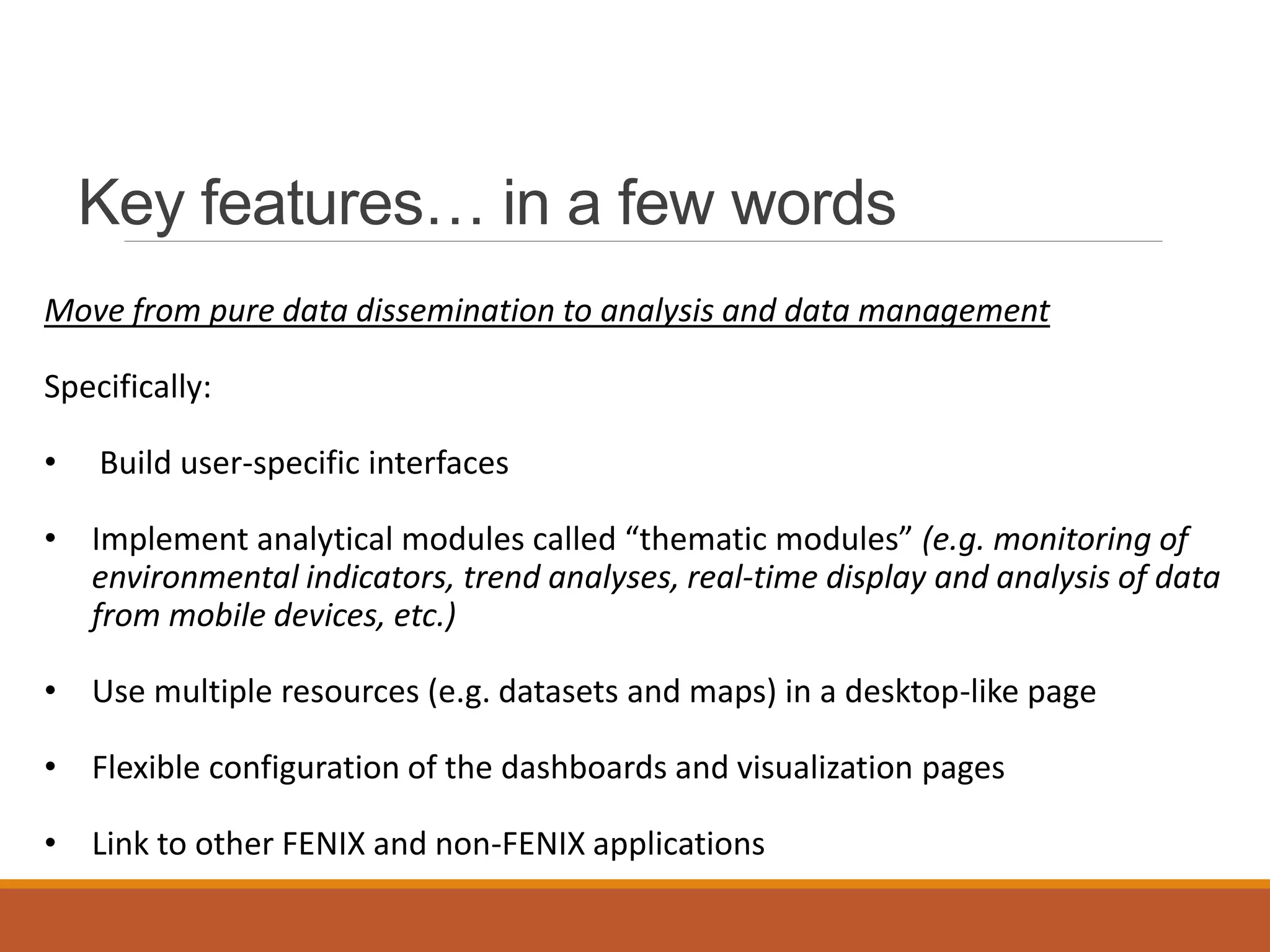
Key features… in a few words
Move from pure data dissemination to analysis and data management
Specifically:
• Build user-specific interfaces
• Implement analytical modules called “thematic modules” (e.g. monitoring of
environmental indicators, trend analyses, real-time display and analysis of data
from mobile devices, etc.)
• Use multiple resources (e.g. datasets and maps) in a desktop-like page
• Flexible configuration of the dashboards and visualization pages
• Link to other FENIX and non-FENIX applications
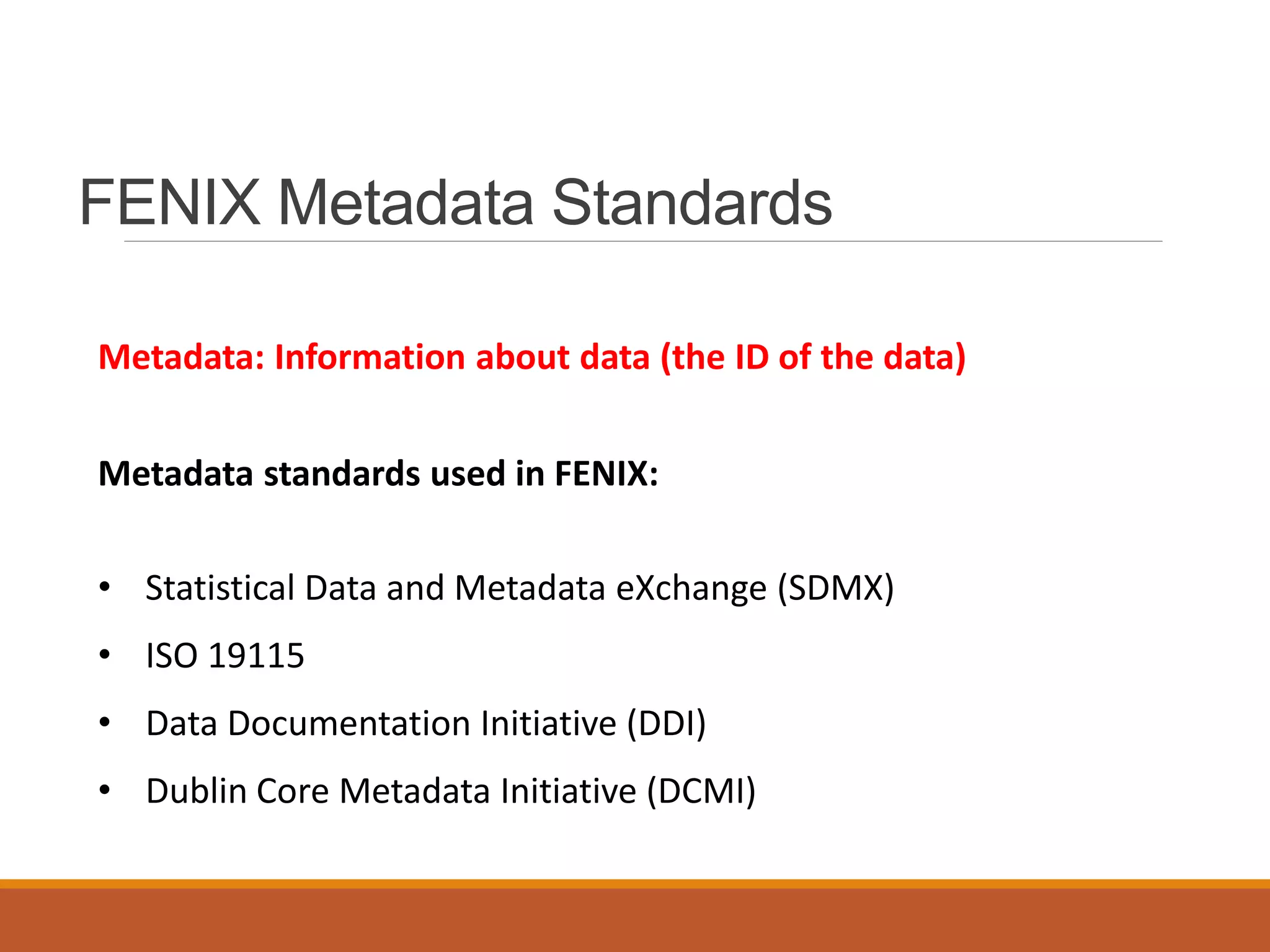
FENIX Metadata Standards
Metadata: Information about data (the ID of the data)
Metadata standards used in FENIX:
• Statistical Data and Metadata eXchange (SDMX)
• ISO 19115
• Data Documentation Initiative (DDI)
• Dublin Core Metadata Initiative (DCMI)
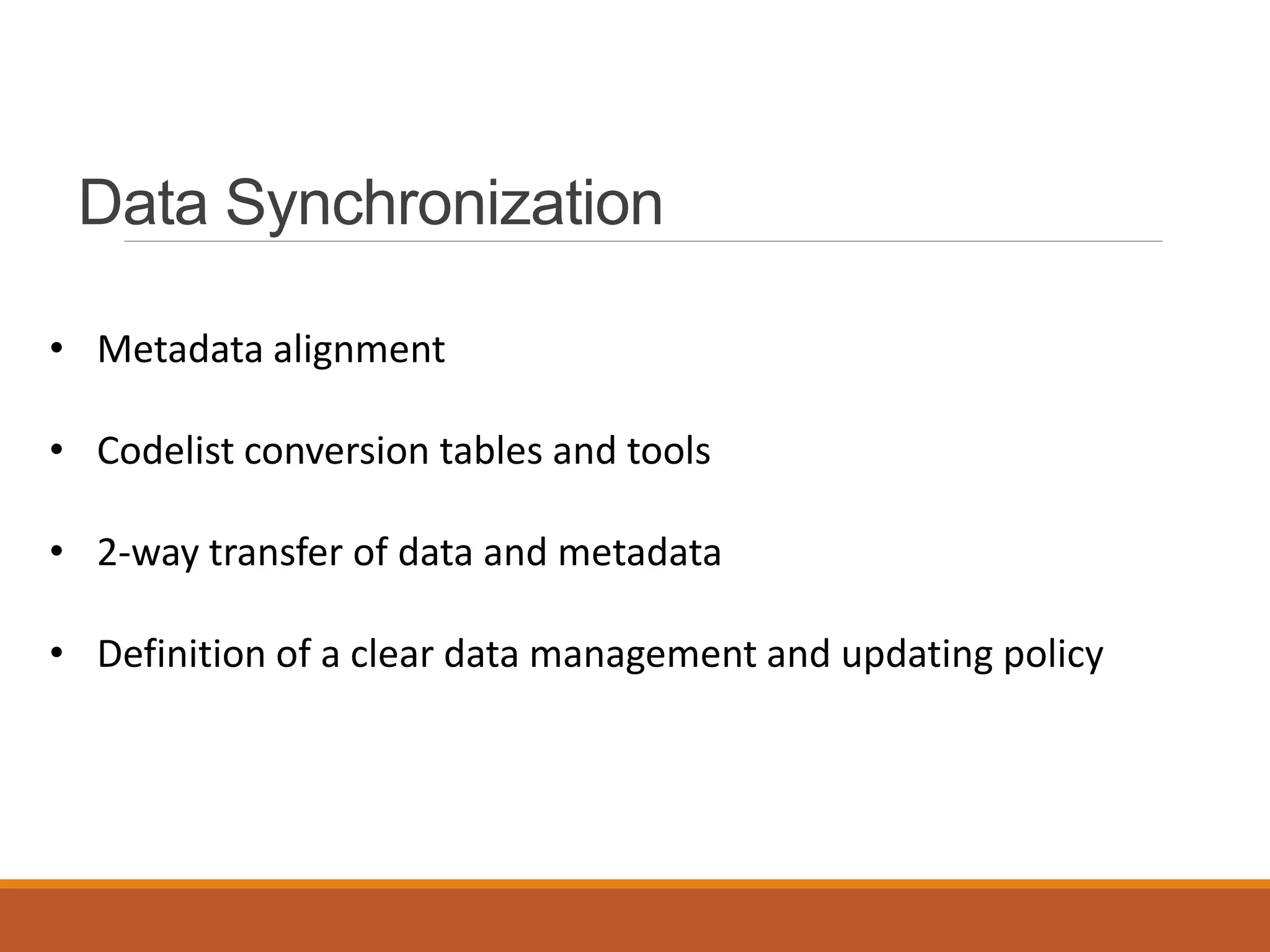
Data Synchronization
• Metadata alignment
• Codelist conversion tables and tools
• 2-way transfer of data and metadata
• Definition of a clear data management and updating policy
Future opportunities for the
ECO Region
Promote data and metadata consistency across national and regional nodes
and define a set of data standards
Create a network for data sharing and ensure a data flow from national to
the regional and global nodes and vice versa
Provide services availing geospatial information and real-time data for
monitoring environmental parameters and derive breed-related indicators
from remote sensing, GIS and other geo-referenced data

"FENIX platform OVERVIEW OF THE NEW SOFTWARE PLATFORM AND SYSTEM SETUP"

  • 1.
    FENIX platform OVERVIEW OFTHE NEW SOFTWARE PLATFORM AND SYSTEM SETUP Fabio Grita System support officer, FAO and Stefania Bacci Statistician
  • 2.
    What is FENIX Acollection of software tools, methods and standards to facilitate acquisition, management and analysis of large, diversified and distributed sets of data.
  • 3.
    What’s the aimof FENIX • Avail data as “public good” • Ensure interoperability between IT systems • Respond to users’ requirements • Strengthen the international, regional and national institutional networks
  • 4.
    Key features • Basedon Open Source software; no licensing constraints and full redistribution rights • Service-Oriented Architecture (SOA): extensible software  ability to plug-in new functionalities and applications • Enhanced data sharing, e.g. through web services (APIs) • Ability to handle different type of data • Data search system based on metadata • Analytical capacities through embedded statistical packages
  • 5.
    Key features… ina few words Move from pure data dissemination to analysis and data management Specifically: • Build user-specific interfaces • Implement analytical modules called “thematic modules” (e.g. monitoring of environmental indicators, trend analyses, real-time display and analysis of data from mobile devices, etc.) • Use multiple resources (e.g. datasets and maps) in a desktop-like page • Flexible configuration of the dashboards and visualization pages • Link to other FENIX and non-FENIX applications
  • 7.
    FENIX Metadata Standards Metadata:Information about data (the ID of the data) Metadata standards used in FENIX: • Statistical Data and Metadata eXchange (SDMX) • ISO 19115 • Data Documentation Initiative (DDI) • Dublin Core Metadata Initiative (DCMI)
  • 8.
    Data Synchronization • Metadataalignment • Codelist conversion tables and tools • 2-way transfer of data and metadata • Definition of a clear data management and updating policy
  • 9.
    Future opportunities forthe ECO Region Promote data and metadata consistency across national and regional nodes and define a set of data standards Create a network for data sharing and ensure a data flow from national to the regional and global nodes and vice versa Provide services availing geospatial information and real-time data for monitoring environmental parameters and derive breed-related indicators from remote sensing, GIS and other geo-referenced data