Norwegian State of Estate
A Reporting Service for the State-owned Properties in
Norway
Ling Shi, Bjørg E. Pettersen, Ivar Østhassel, Nikolay Nikolov,
Arash Khorramhonarnama, Arne J. Berre and Dumitru Roman
@EDF2015, 16th November
The public sector owns a significant
amount of property data. Re-use of
public sector information is required by
both the EU and the Norwegian
government.
EU’s DIRECTIVE 2013/37/EU OF THE EUROPEAN PARLIAMENT AND OF THE COUNCIL of 26 June 2013 amending Directive 2003/98/EC on the re-use of
public sector information
2
About
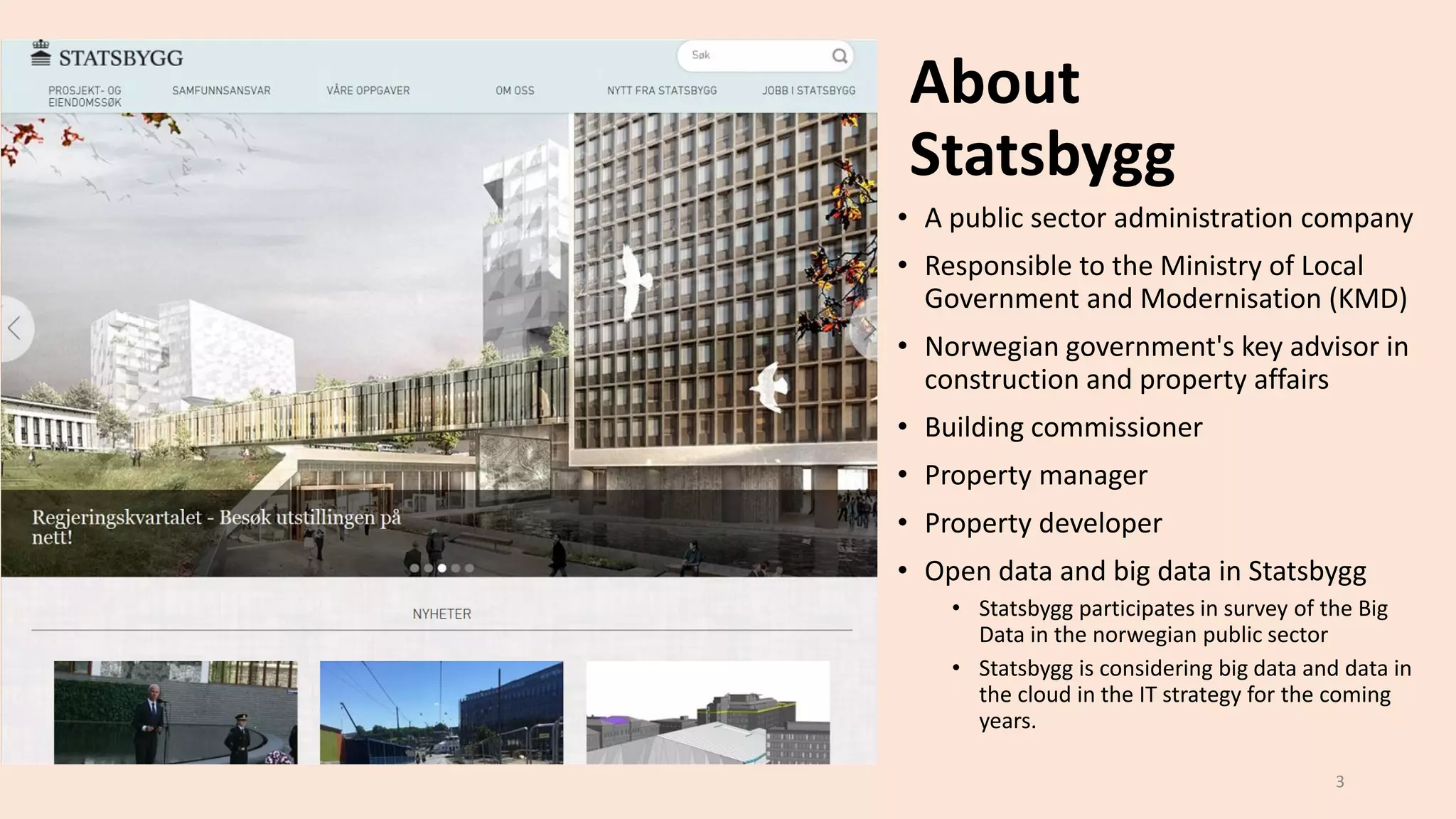
Statsbygg
• A public sector administration company
• Responsible to the Ministry of Local
Government and Modernisation (KMD)
• Norwegian government's key advisor in
construction and property affairs
• Building commissioner
• Property manager
• Property developer
• Open data and big data in Statsbygg
• Statsbygg participates in survey of the Big
Data in the norwegian public sector
• Statsbygg is considering big data and data in
the cloud in the IT strategy for the coming
years.
3
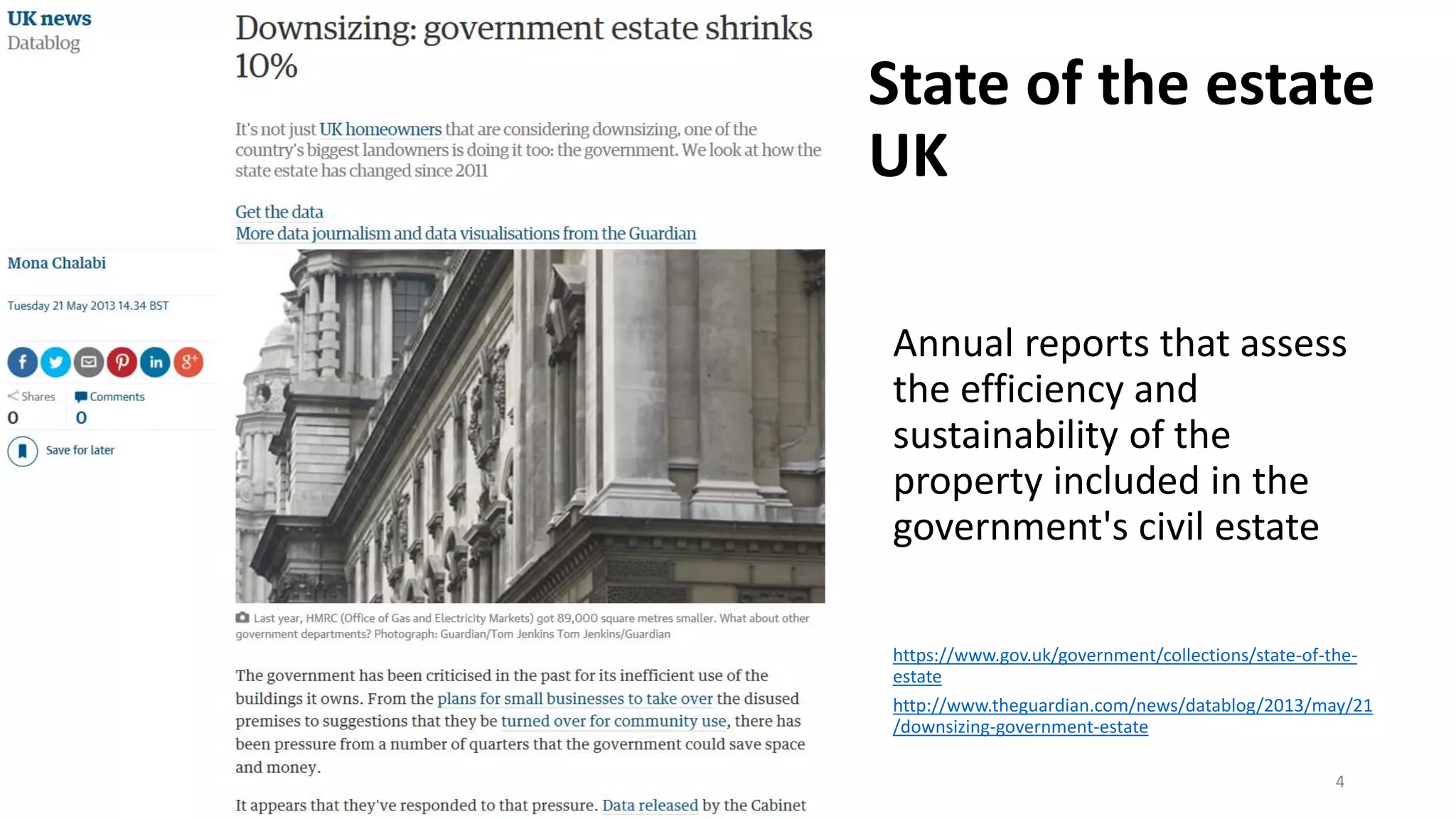
Annual reports that assess
the efficiency and
sustainability of the
property included in the
government's civil estate
https://www.gov.uk/government/collections/state-of-the-
estate
http://www.theguardian.com/news/datablog/2013/may/21
/downsizing-government-estate
State of the estate
UK
4
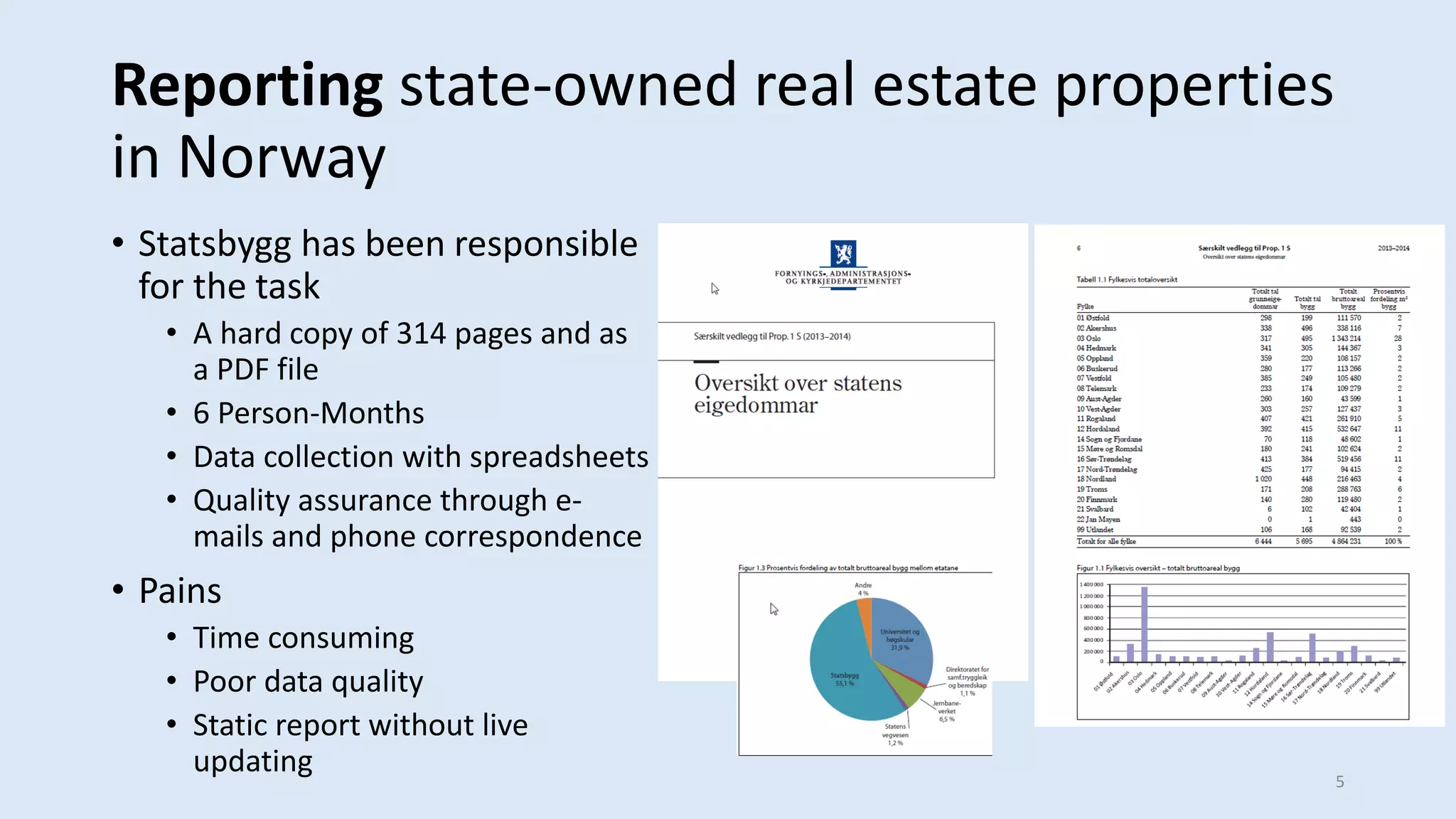
Reporting state-owned real estate properties
in Norway
• Statsbygg has been responsible
for the task
• A hard copy of 314 pages and as
a PDF file
• 6 Person-Months
• Data collection with spreadsheets
• Quality assurance through e-
mails and phone correspondence
• Pains
• Time consuming
• Poor data quality
• Static report without live
updating 5
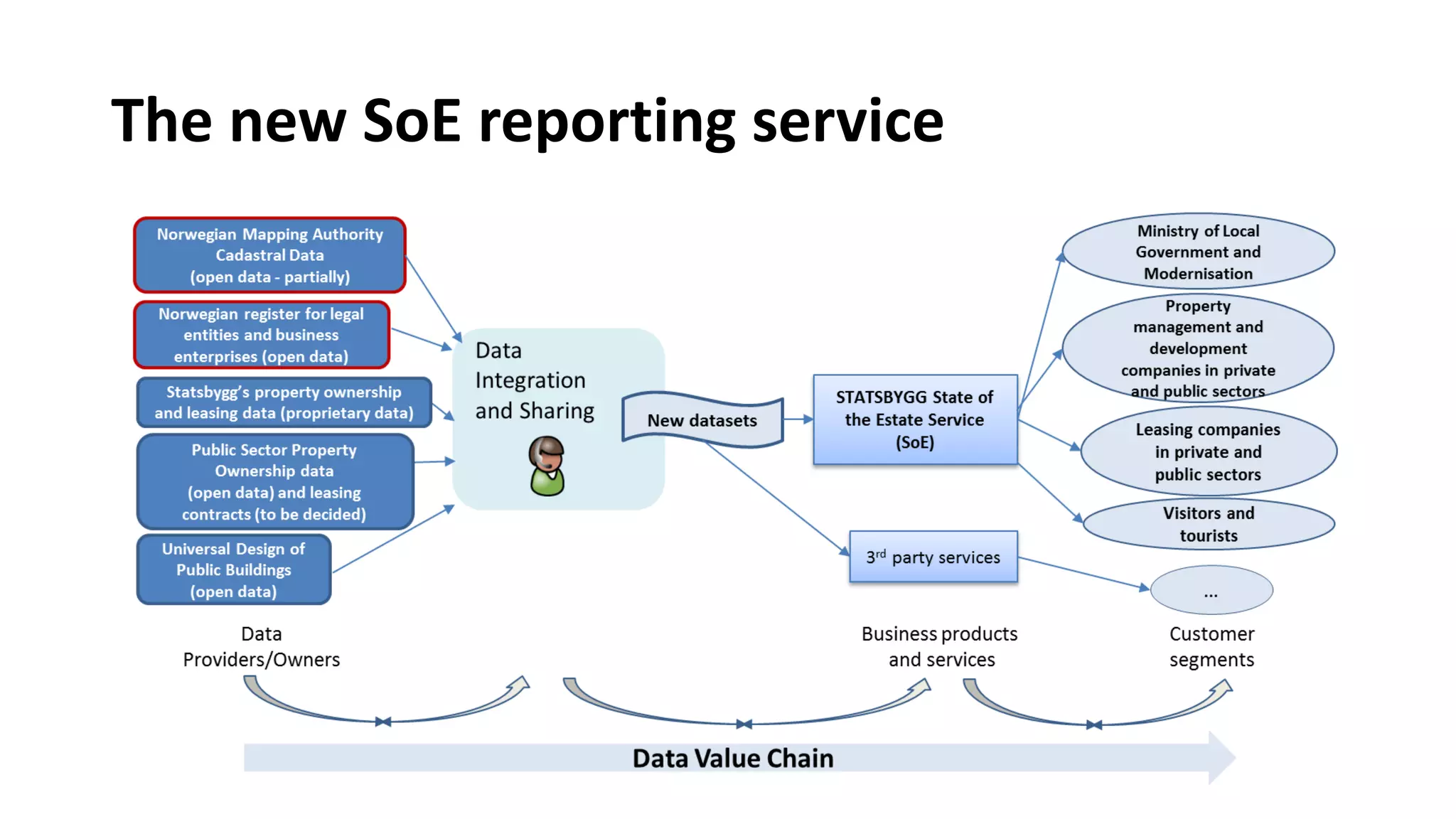
The new SoE reporting service
6
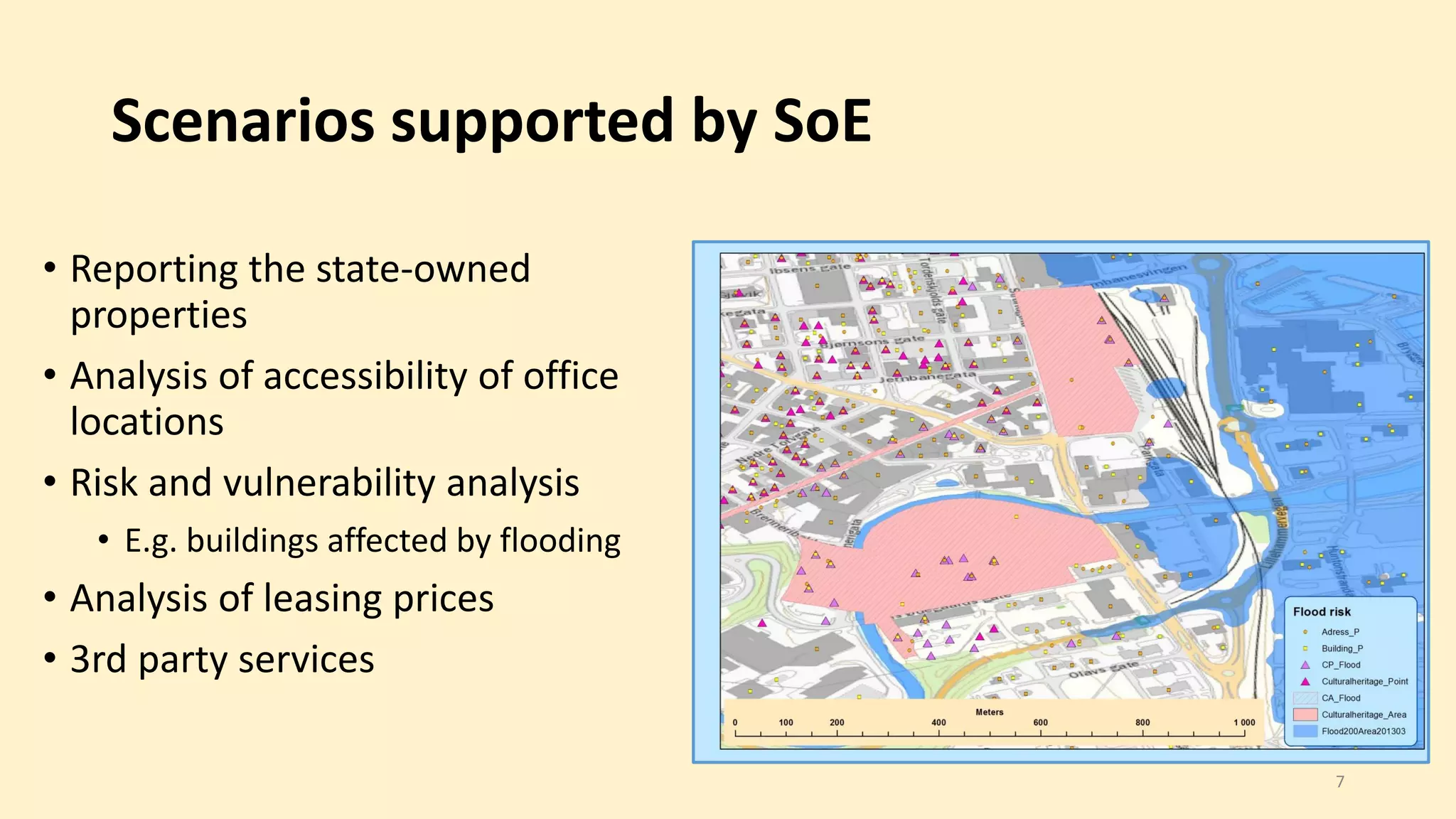
Scenarios supported by SoE
• Reporting the state-owned
properties
• Analysis of accessibility of office
locations
• Risk and vulnerability analysis
• E.g. buildings affected by flooding
• Analysis of leasing prices
• 3rd party services
7
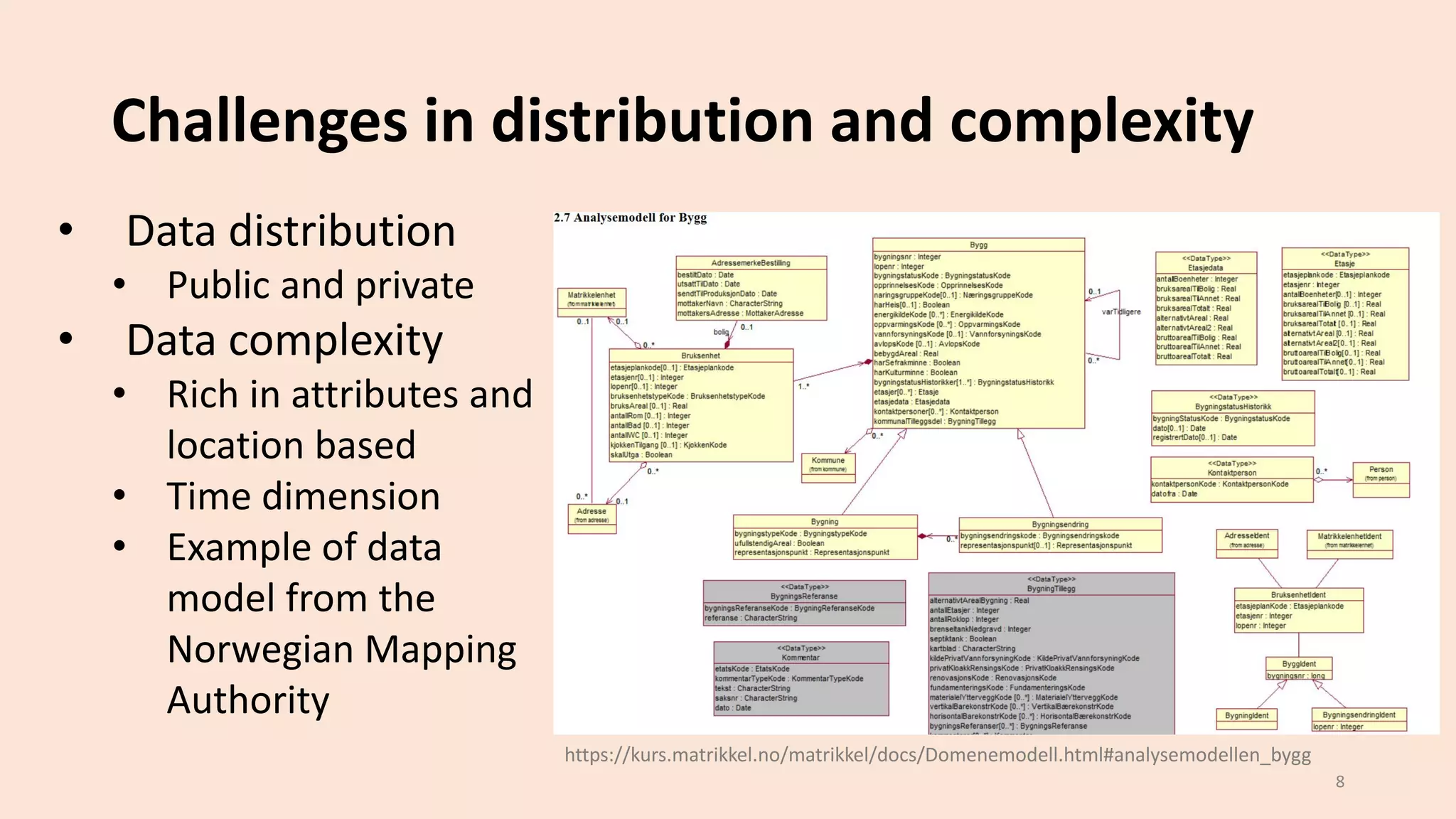
Challenges in distribution and complexity
8
https://kurs.matrikkel.no/matrikkel/docs/Domenemodell.html#analysemodellen_bygg
• Data distribution
• Public and private
• Data complexity
• Rich in attributes and
location based
• Time dimension
• Example of data
model from the
Norwegian Mapping
Authority
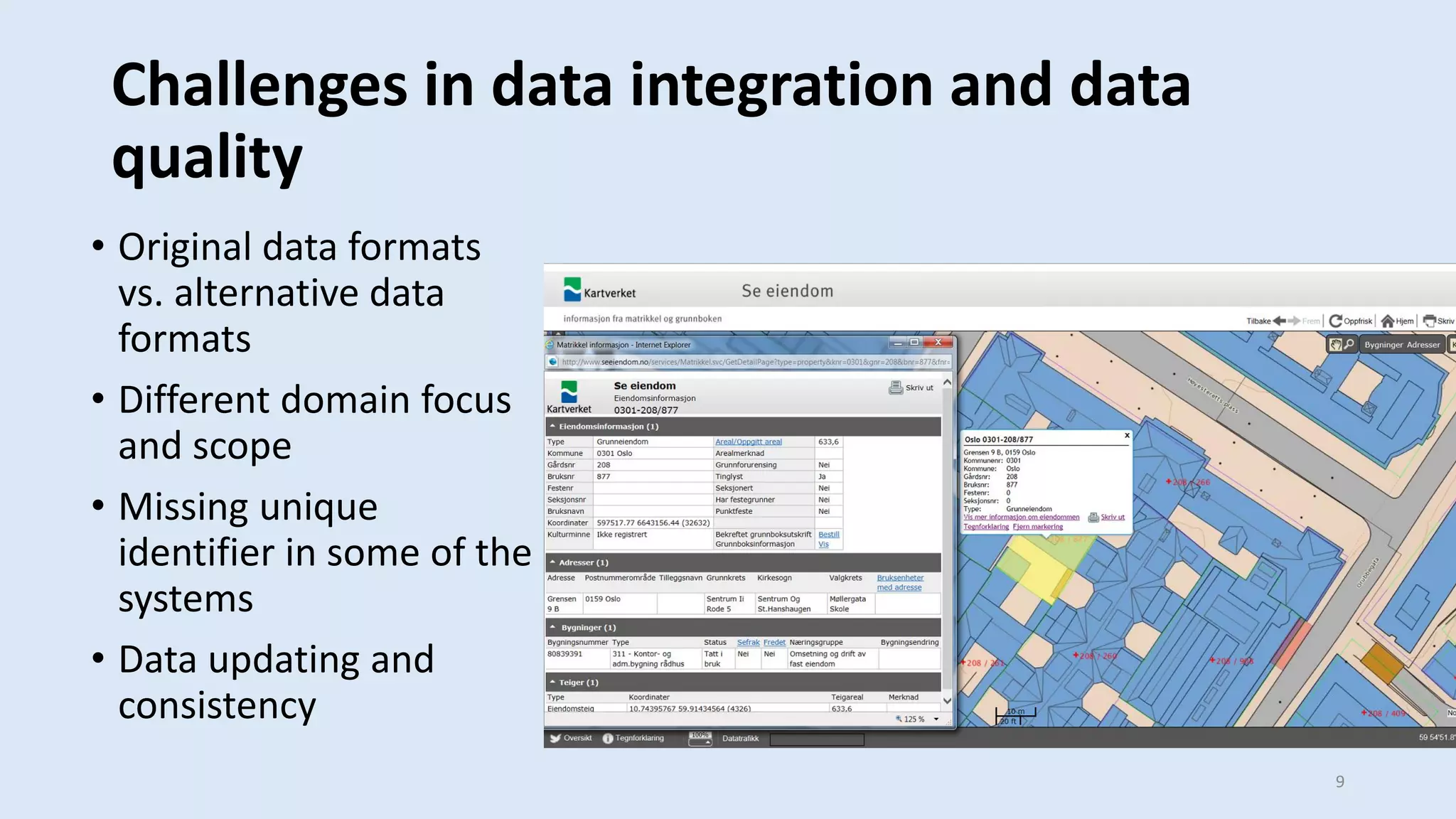
Challenges in data integration and data
quality
• Original data formats
vs. alternative data
formats
• Different domain focus
and scope
• Missing unique
identifier in some of the
systems
• Data updating and
consistency
9
Challenges in data sharing and data security
• Data security, which data to share and with whom
• Personal identifiable information
• Some special types of properties
10
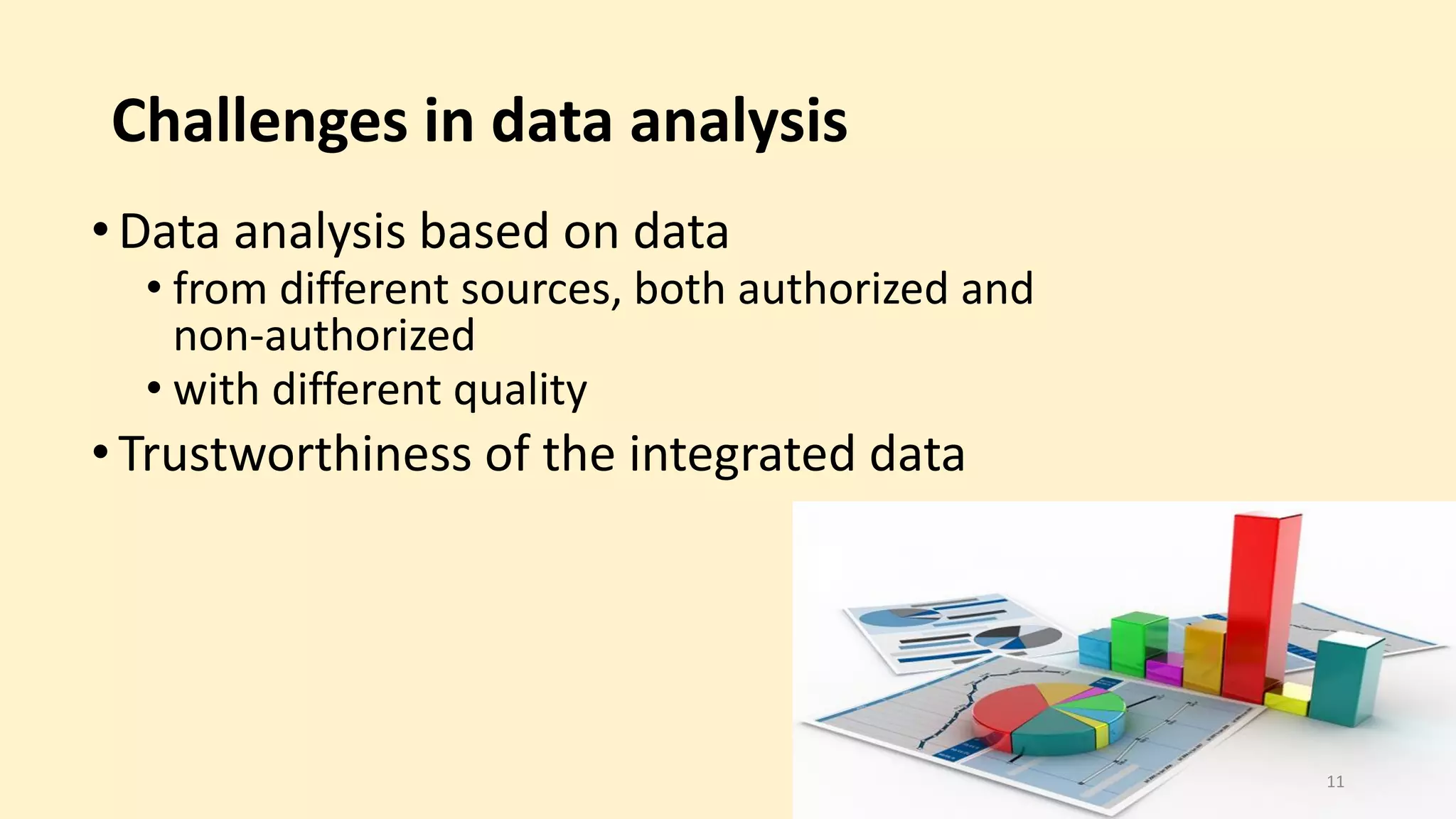
Challenges in data analysis
• Data analysis based on data
• from different sources, both authorized and
non-authorized
• with different quality
• Trustworthiness of the integrated data
11
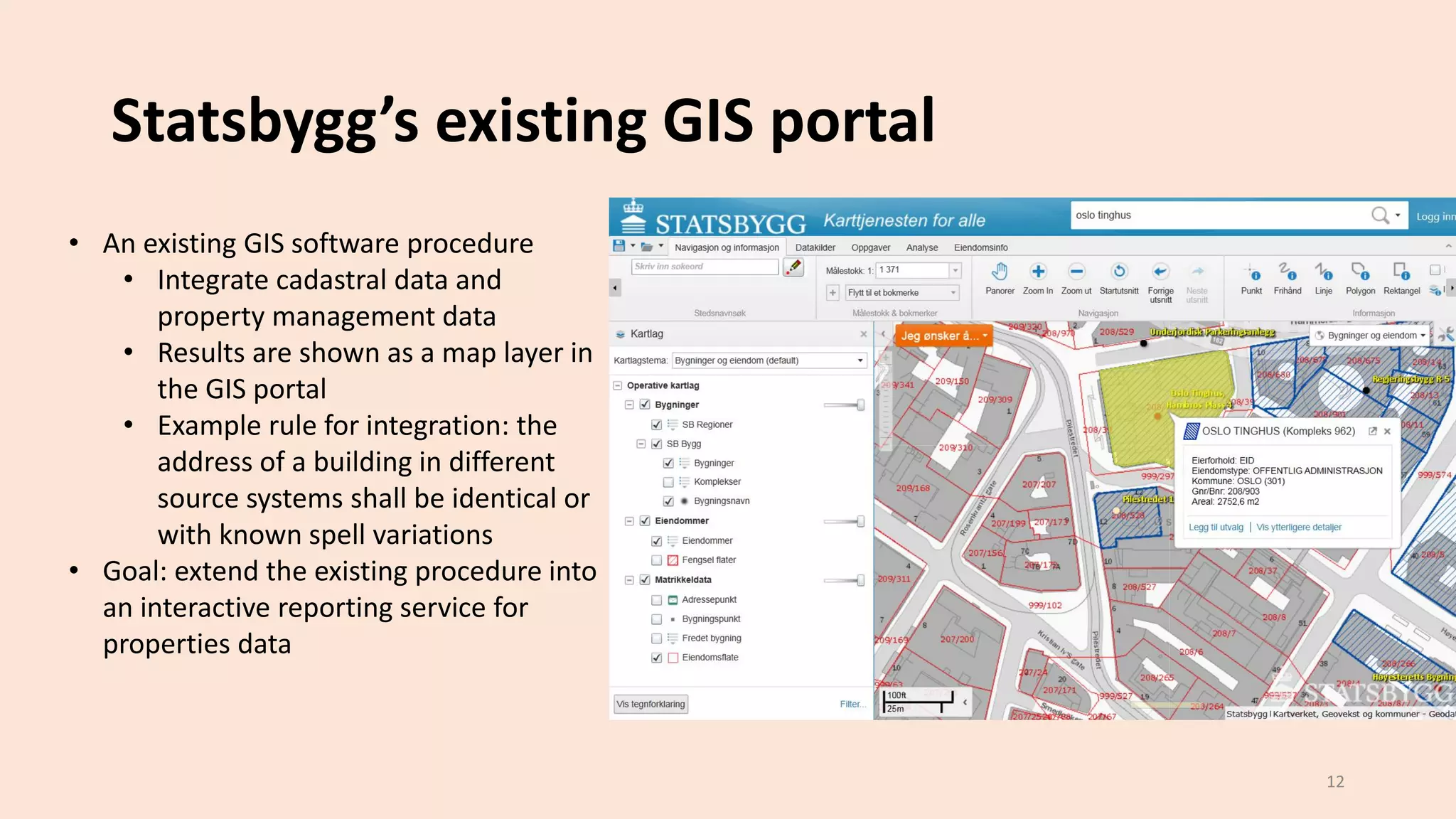
Statsbygg’s existing GIS portal
12
• An existing GIS software procedure
• Integrate cadastral data and
property management data
• Results are shown as a map layer in
the GIS portal
• Example rule for integration: the
address of a building in different
source systems shall be identical or
with known spell variations
• Goal: extend the existing procedure into
an interactive reporting service for
properties data
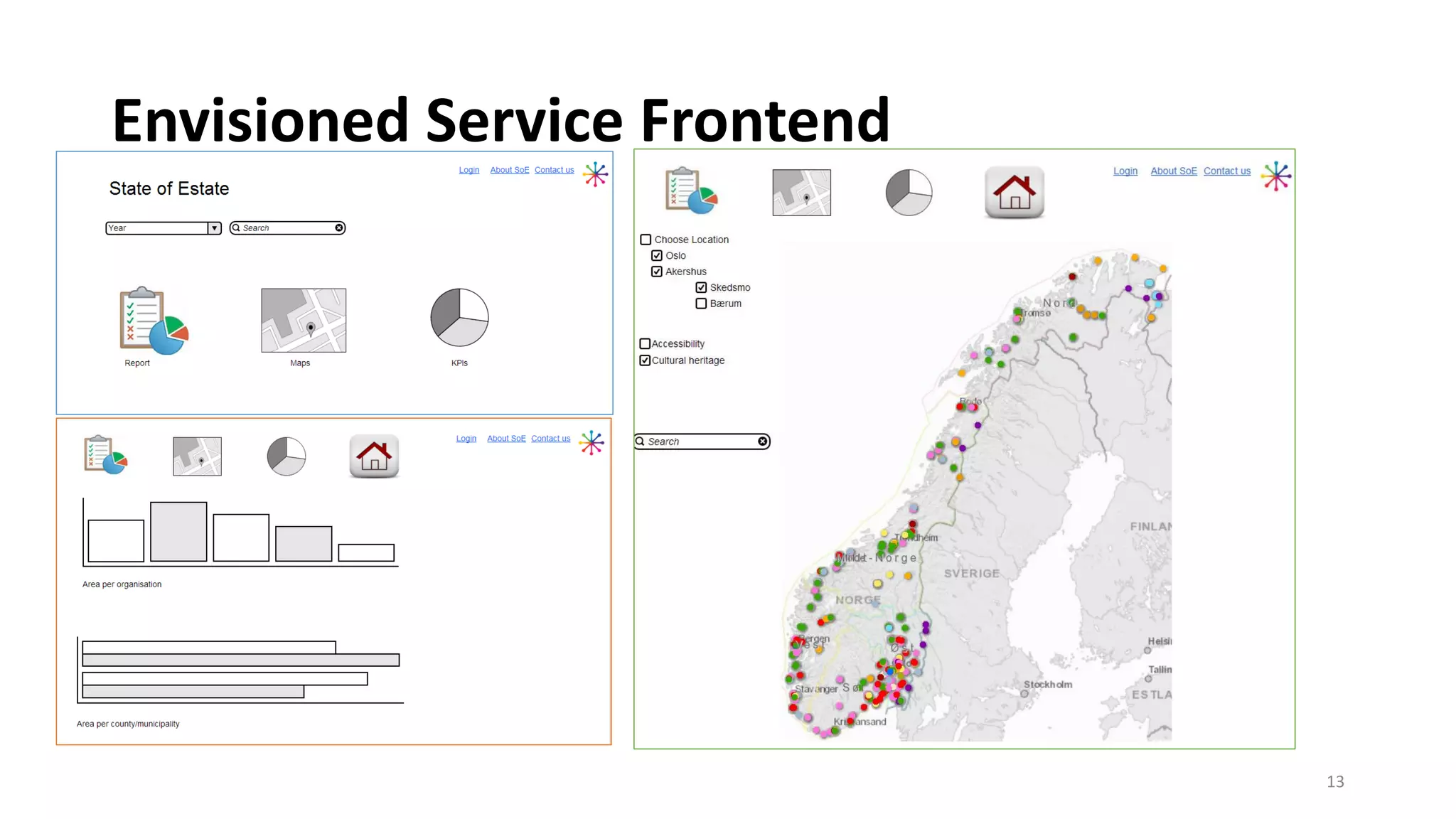
Envisioned Service Frontend
13
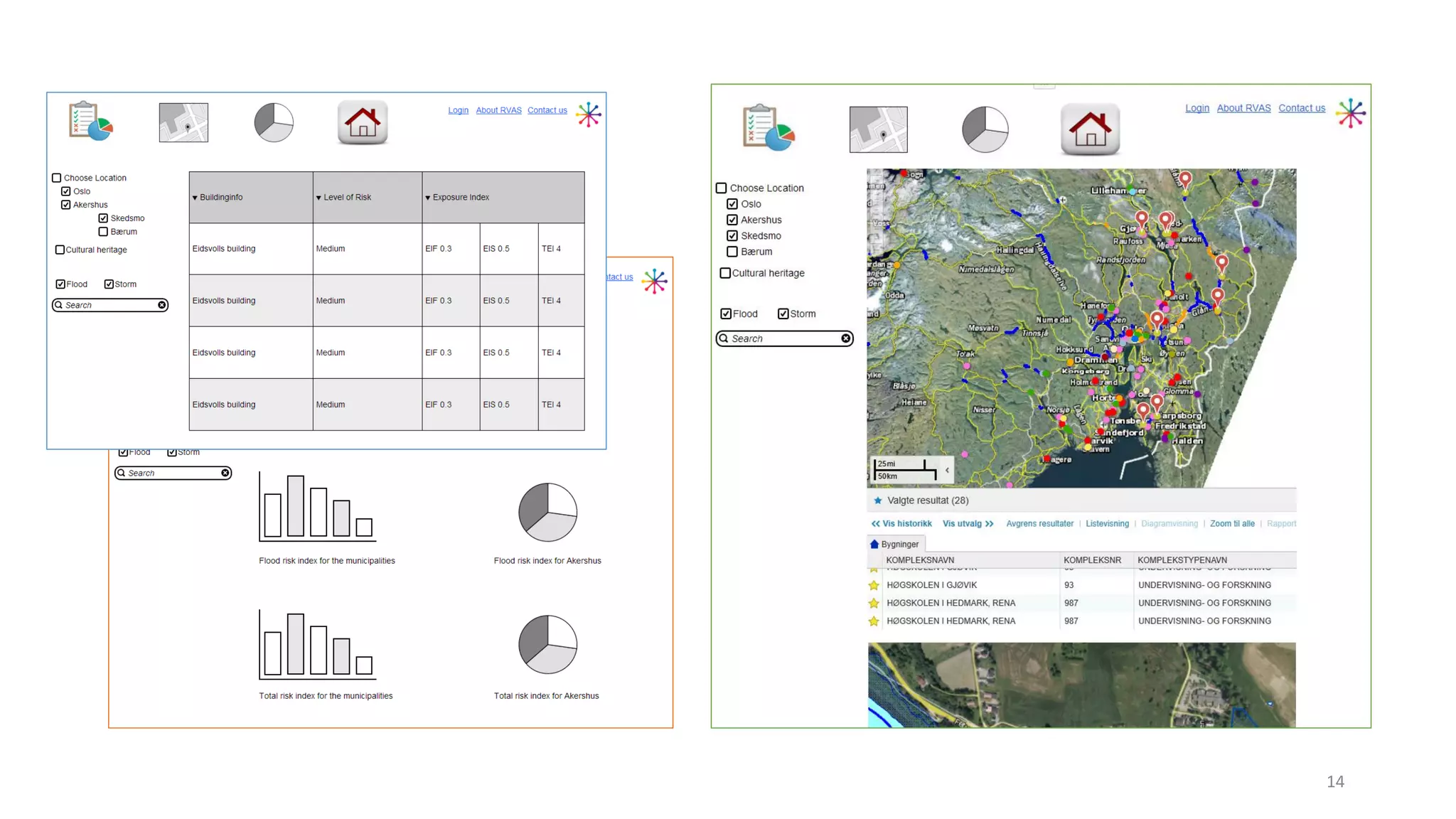
14
Impacts and outcomes
• Sharing of Statsbygg’s internal property datasets in novel ways
• Exploitation of cadastral data and other cross-sectorial data
• A pilot SoE web service using Statsbygg’s data and the integrated cross-
sectorial data
• Data collection survey for ownership and, possibly, leasing of property data
from government agencies
• Sharing the survey data results in novel ways
• An extended pilot to include survey result, i.e., the public sector’s owned
and, possibly, leased properties
• Reporting function based on SoE web service
• Internationalization process
15
Internationalization
• Every country has the similar need for SoE
service
• Can the experience and methods from Norway be
reused?
• What’s the main challenges in the other countries?
16
• The Norwegian SoE is based on reusing and integrating the
existing data from different orgnizations in the public sector
• Many datasets from the public sector in Norway are open
• The service creates new values by sewing the data together
• The integrated dataset and SoE service will make it easier for
other service providers to make new innovative services.
proDataMarket project goals
• To make property data more accessible, more usable and
easier to understand
• To make it easier for:
• Property data providers to publish and distribute their data
• Data consumers to find and access property data needed for their
businesses
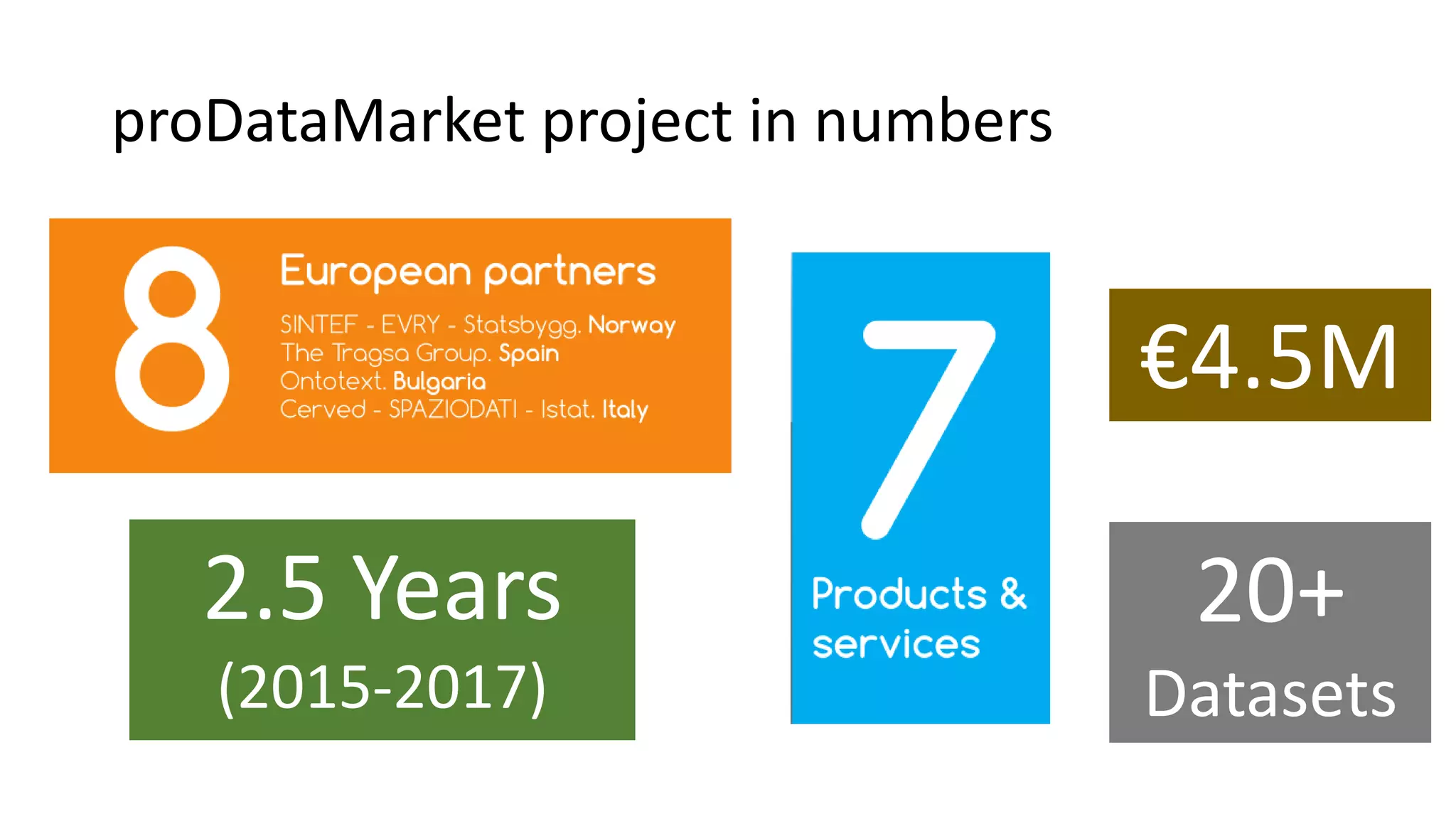
proDataMarket project in numbers
2.5 Years
(2015-2017)
€4.5M
20+
Datasets
Thank you!
Contact: ivar.osthassel@statsbygg.no
http://prodatamarket.eu
http://www.statsbygg.no
@prodatamarket

proDataMarket presentation at "European Data Forum"

  • 1.
    Norwegian State ofEstate A Reporting Service for the State-owned Properties in Norway Ling Shi, Bjørg E. Pettersen, Ivar Østhassel, Nikolay Nikolov, Arash Khorramhonarnama, Arne J. Berre and Dumitru Roman @EDF2015, 16th November
  • 2.
    The public sectorowns a significant amount of property data. Re-use of public sector information is required by both the EU and the Norwegian government. EU’s DIRECTIVE 2013/37/EU OF THE EUROPEAN PARLIAMENT AND OF THE COUNCIL of 26 June 2013 amending Directive 2003/98/EC on the re-use of public sector information 2
  • 3.
    About Statsbygg • A publicsector administration company • Responsible to the Ministry of Local Government and Modernisation (KMD) • Norwegian government's key advisor in construction and property affairs • Building commissioner • Property manager • Property developer • Open data and big data in Statsbygg • Statsbygg participates in survey of the Big Data in the norwegian public sector • Statsbygg is considering big data and data in the cloud in the IT strategy for the coming years. 3
  • 4.
    Annual reports thatassess the efficiency and sustainability of the property included in the government's civil estate https://www.gov.uk/government/collections/state-of-the- estate http://www.theguardian.com/news/datablog/2013/may/21 /downsizing-government-estate State of the estate UK 4
  • 5.
    Reporting state-owned realestate properties in Norway • Statsbygg has been responsible for the task • A hard copy of 314 pages and as a PDF file • 6 Person-Months • Data collection with spreadsheets • Quality assurance through e- mails and phone correspondence • Pains • Time consuming • Poor data quality • Static report without live updating 5
  • 6.
    The new SoEreporting service 6
  • 7.
    Scenarios supported bySoE • Reporting the state-owned properties • Analysis of accessibility of office locations • Risk and vulnerability analysis • E.g. buildings affected by flooding • Analysis of leasing prices • 3rd party services 7
  • 8.
    Challenges in distributionand complexity 8 https://kurs.matrikkel.no/matrikkel/docs/Domenemodell.html#analysemodellen_bygg • Data distribution • Public and private • Data complexity • Rich in attributes and location based • Time dimension • Example of data model from the Norwegian Mapping Authority
  • 9.
    Challenges in dataintegration and data quality • Original data formats vs. alternative data formats • Different domain focus and scope • Missing unique identifier in some of the systems • Data updating and consistency 9
  • 10.
    Challenges in datasharing and data security • Data security, which data to share and with whom • Personal identifiable information • Some special types of properties 10
  • 11.
    Challenges in dataanalysis • Data analysis based on data • from different sources, both authorized and non-authorized • with different quality • Trustworthiness of the integrated data 11
  • 12.
    Statsbygg’s existing GISportal 12 • An existing GIS software procedure • Integrate cadastral data and property management data • Results are shown as a map layer in the GIS portal • Example rule for integration: the address of a building in different source systems shall be identical or with known spell variations • Goal: extend the existing procedure into an interactive reporting service for properties data
  • 13.
  • 14.
  • 15.
    Impacts and outcomes •Sharing of Statsbygg’s internal property datasets in novel ways • Exploitation of cadastral data and other cross-sectorial data • A pilot SoE web service using Statsbygg’s data and the integrated cross- sectorial data • Data collection survey for ownership and, possibly, leasing of property data from government agencies • Sharing the survey data results in novel ways • An extended pilot to include survey result, i.e., the public sector’s owned and, possibly, leased properties • Reporting function based on SoE web service • Internationalization process 15
  • 16.
    Internationalization • Every countryhas the similar need for SoE service • Can the experience and methods from Norway be reused? • What’s the main challenges in the other countries? 16 • The Norwegian SoE is based on reusing and integrating the existing data from different orgnizations in the public sector • Many datasets from the public sector in Norway are open • The service creates new values by sewing the data together • The integrated dataset and SoE service will make it easier for other service providers to make new innovative services.
  • 17.
    proDataMarket project goals •To make property data more accessible, more usable and easier to understand • To make it easier for: • Property data providers to publish and distribute their data • Data consumers to find and access property data needed for their businesses
  • 18.
    proDataMarket project innumbers 2.5 Years (2015-2017) €4.5M 20+ Datasets
  • 19.