Definition of Fasting


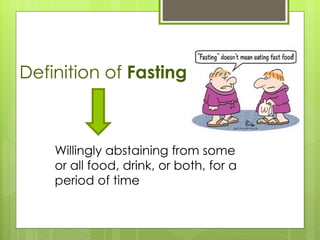
    Willingly abstaining from some
    or all food, drink, or both, for a
    period of time
Benefits of Fasting
     (Based on Scientific Research)


Reduced risks of   Enhances                    Increases
                   stress        Slows aging
cancer,                                        maximum life
                   resistance,   process
cardiovascular                                 span
diseases and       insulin
diabetes           resistance
                   and immune
                   disorders
Fasting in Buddhism

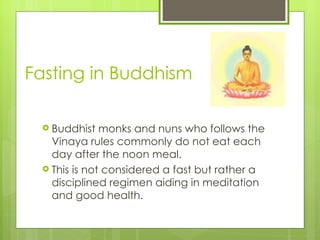
  Buddhist   monks and nuns who follows the
   Vinaya rules commonly do not eat each
   day after the noon meal.
  This is not considered a fast but rather a
   disciplined regimen aiding in meditation
   and good health.
Fasting in Christianity
 Fasting is a practice in several Christian
  denominations or other churches.
 Some denominations do not practice it
  considering it an external observance
 However, many individual believers
  choose to observe fasts at various times at
  their own behest
Fasting in Catholicism
 Fastingand abstinence were more strictly
  regulated before 1956.
 The church had prescribed that Roman
  Catholics observe fasting and/or
  abstinence on a number of days
  throughout the year.
 One of it was on Lent (40 days) preceding
  Good Friday.
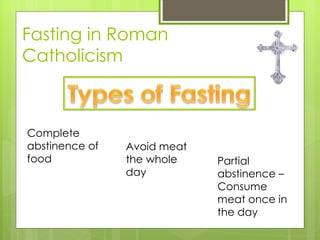
Fasting in Roman
   Catholicism
                           Food Intake reduced


                      1 full meal       2 small meals

1 small meal (morning) + 1 small meal (evening) ≠ 1 full meal


                    18 – 59 years old
Fasting in Roman
Catholicism


Complete
abstinence of   Avoid meat
food            the whole    Partial
                day          abstinence –
                             Consume
                             meat once in
                             the day
Fasting in Hinduism

 Fasting  is a very integral part of the Hindu
  religion.
 Individuals observe different kinds of fasts
  based on personal beliefs and local
  customs.
 It is generally known as ‘viratham’ among
  the Tamil speaking population
How is Fasting observed in
Hinduism?

                 Fast once a
                  week
     ANCIENT
    HINDUISM     Have fruit
    TRADITION     juice or 1 or
                  2 fruits

                 Break fast in
                  the evening
                  after sunset
Fasting in Hinduism
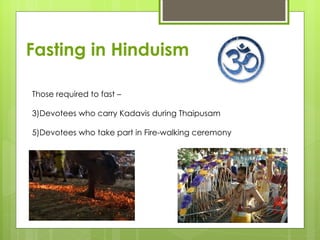
Fasting in Hinduism

Those required to fast –

3)Devotees who carry Kadavis during Thaipusam

5)Devotees who take part in Fire-walking ceremony
Fasting in Taoism


    Refrain from evil thoughts and evil spirits

    Cannot listen to music

    Consume only vegetarian food

    Taoist Fasting days are:

   1st, 8th, 14th, 15th, 18th, 23rd, 24th, 28th, 29th,
     and 30th lunar day, as well as, every
     Festival Day.
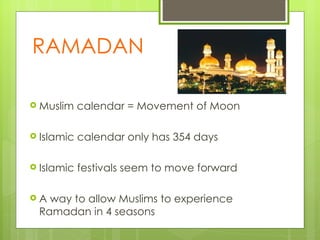
RAMADAN

 Muslim    calendar = Movement of Moon

 Islamic   calendar only has 354 days

 Islamic   festivals seem to move forward

A way to allow Muslims to experience
 Ramadan in 4 seasons
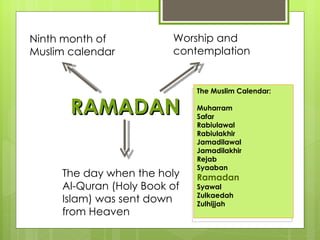
Ninth month of           Worship and
Muslim calendar          contemplation


                              The Muslim Calendar:

       RAMADAN                Muharram
                              Safar
                              Rabiulawal
                              Rabiulakhir
                              Jamadilawal
                              Jamadilakhir
                              Rejab
                              Syaaban
     The day when the holy    Ramadan
     Al-Quran (Holy Book of   Syawal
                              Zulkaedah
     Islam) was sent down     Zulhijjah
     from Heaven
Stringent rules must be
followed closely from
dawn until sunset for
the entire month


               THE RULES

                                 Greater sympathy
 Eating, drinking, smoking and   for the needy and
 intimate physical contact       poor
 between husband and wife
THE RATIONALE


Greater                          Cleanse the
                   Generate      body of
concentration      empathy for
on the spiritual                 overindulgence
                   the hungry
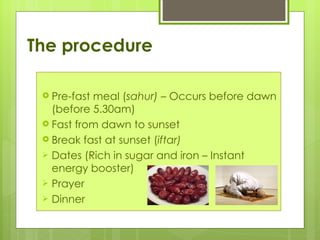
The procedure

  Pre-fastmeal (sahur) – Occurs before dawn
   (before 5.30am)
  Fast from dawn to sunset
  Break fast at sunset (iftar)
  Dates (Rich in sugar and iron – Instant
   energy booster)
  Prayer
  Dinner

Fasting

  • 2.
    Definition of Fasting Willingly abstaining from some or all food, drink, or both, for a period of time
  • 3.
    Benefits of Fasting (Based on Scientific Research) Reduced risks of Enhances Increases stress Slows aging cancer, maximum life resistance, process cardiovascular span diseases and insulin diabetes resistance and immune disorders
  • 4.
    Fasting in Buddhism  Buddhist monks and nuns who follows the Vinaya rules commonly do not eat each day after the noon meal.  This is not considered a fast but rather a disciplined regimen aiding in meditation and good health.
  • 5.
    Fasting in Christianity Fasting is a practice in several Christian denominations or other churches.  Some denominations do not practice it considering it an external observance  However, many individual believers choose to observe fasts at various times at their own behest
  • 6.
    Fasting in Catholicism Fastingand abstinence were more strictly regulated before 1956.  The church had prescribed that Roman Catholics observe fasting and/or abstinence on a number of days throughout the year.  One of it was on Lent (40 days) preceding Good Friday.
  • 7.
    Fasting in Roman Catholicism Food Intake reduced 1 full meal 2 small meals 1 small meal (morning) + 1 small meal (evening) ≠ 1 full meal 18 – 59 years old
  • 8.
    Fasting in Roman Catholicism Complete abstinenceof Avoid meat food the whole Partial day abstinence – Consume meat once in the day
  • 9.
    Fasting in Hinduism Fasting is a very integral part of the Hindu religion.  Individuals observe different kinds of fasts based on personal beliefs and local customs.  It is generally known as ‘viratham’ among the Tamil speaking population
  • 10.
    How is Fastingobserved in Hinduism?  Fast once a week ANCIENT HINDUISM  Have fruit TRADITION juice or 1 or 2 fruits  Break fast in the evening after sunset
  • 11.
  • 12.
    Fasting in Hinduism Thoserequired to fast – 3)Devotees who carry Kadavis during Thaipusam 5)Devotees who take part in Fire-walking ceremony
  • 13.
    Fasting in Taoism  Refrain from evil thoughts and evil spirits  Cannot listen to music  Consume only vegetarian food  Taoist Fasting days are: 1st, 8th, 14th, 15th, 18th, 23rd, 24th, 28th, 29th, and 30th lunar day, as well as, every Festival Day.
  • 14.
    RAMADAN  Muslim calendar = Movement of Moon  Islamic calendar only has 354 days  Islamic festivals seem to move forward A way to allow Muslims to experience Ramadan in 4 seasons
  • 15.
    Ninth month of Worship and Muslim calendar contemplation The Muslim Calendar: RAMADAN Muharram Safar Rabiulawal Rabiulakhir Jamadilawal Jamadilakhir Rejab Syaaban The day when the holy Ramadan Al-Quran (Holy Book of Syawal Zulkaedah Islam) was sent down Zulhijjah from Heaven
  • 16.
    Stringent rules mustbe followed closely from dawn until sunset for the entire month THE RULES Greater sympathy Eating, drinking, smoking and for the needy and intimate physical contact poor between husband and wife
  • 17.
    THE RATIONALE Greater Cleanse the Generate body of concentration empathy for on the spiritual overindulgence the hungry
  • 18.
    The procedure Pre-fastmeal (sahur) – Occurs before dawn (before 5.30am)  Fast from dawn to sunset  Break fast at sunset (iftar)  Dates (Rich in sugar and iron – Instant energy booster)  Prayer  Dinner