To Begin 
On another piece of paper, write an answer for 
the following question 
What does it mean to have 
“pride”? When is it good or 
OK to have pride? When can 
is it not OK to have pride?
The Rise of Extreme 
Nationalism in Europe 
Prior to World War 1 
1915 to 1933
First, some definitions 
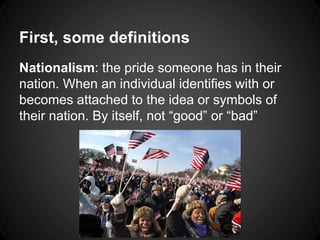
Nationalism: the pride someone has in their 
nation. When an individual identifies with or 
becomes attached to the idea or symbols of 
their nation. By itself, not “good” or “bad”
First, some definitions 
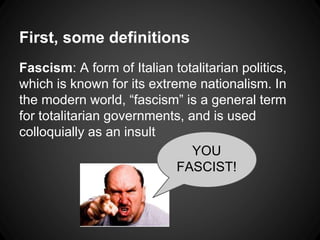
Fascism: A form of Italian totalitarian politics, 
which is known for its extreme nationalism. In 
the modern world, “fascism” is a general term 
for totalitarian governments, and is used 
colloquially as an insult 
YOU 
FASCIST!
First, some definitions 
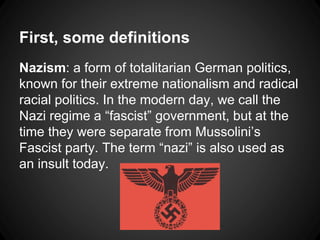
Nazism: a form of totalitarian German politics, 
known for their extreme nationalism and radical 
racial politics. In the modern day, we call the 
Nazi regime a “fascist” government, but at the 
time they were separate from Mussolini’s 
Fascist party. The term “nazi” is also used as 
an insult today.
In short 
Nationalism: pride in one’s country 
Fascism: an Italian form of extreme nationalism 
Nazism: a German form of extreme nationalism
The Rise of the Nazis 
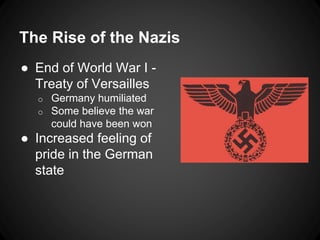
● End of World War I - 
Treaty of Versailles 
o Germany humiliated 
o Some believe the war 
could have been won 
● Increased feeling of 
pride in the German 
state
Hitler 
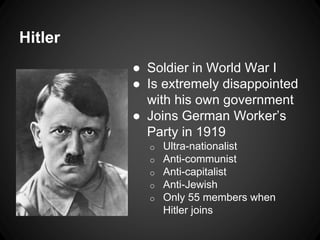
● Soldier in World War I 
● Is extremely disappointed 
with his own government 
● Joins German Worker’s 
Party in 1919 
o Ultra-nationalist 
o Anti-communist 
o Anti-capitalist 
o Anti-Jewish 
o Only 55 members when 
Hitler joins
Nazi Party 
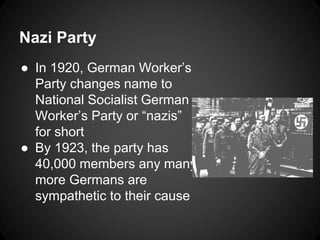
● In 1920, German Worker’s 
Party changes name to 
National Socialist German 
Worker’s Party or “nazis” 
for short 
● By 1923, the party has 
40,000 members any many 
more Germans are 
sympathetic to their cause
Nazi Party 
● The nazis attempt a 
government takeover in 
1923, but Hitler is 
arrested 
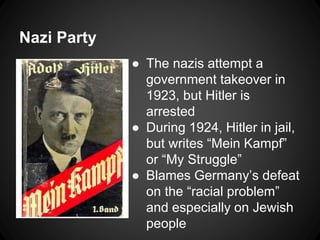
● During 1924, Hitler in jail, 
but writes “Mein Kampf” 
or “My Struggle” 
● Blames Germany’s defeat 
on the “racial problem” 
and especially on Jewish 
people
Nazi Party 
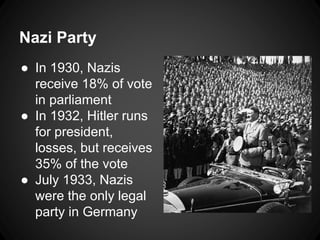
● In 1930, Nazis 
receive 18% of vote 
in parliament 
● In 1932, Hitler runs 
for president, 
losses, but receives 
35% of the vote 
● July 1933, Nazis 
were the only legal 
party in Germany
Meanwhile, in Italy... 
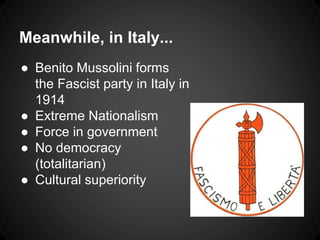
● Benito Mussolini forms 
the Fascist party in Italy in 
1914 
● Extreme Nationalism 
● Force in government 
● No democracy 
(totalitarian) 
● Cultural superiority
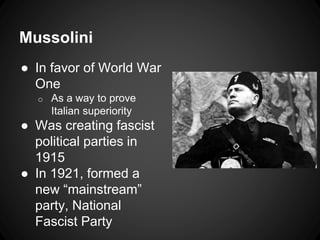
Mussolini 
● In favor of World War 
One 
o As a way to prove 
Italian superiority 
● Was creating fascist 
political parties in 
1915 
● In 1921, formed a 
new “mainstream” 
party, National 
Fascist Party
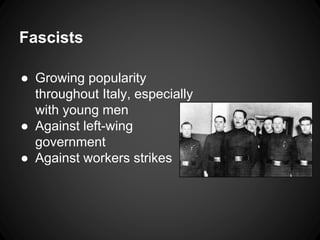
Fascists 
● Growing popularity 
throughout Italy, especially 
with young men 
● Against left-wing 
government 
● Against workers strikes
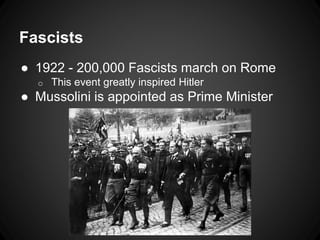
Fascists 
● 1922 - 200,000 Fascists march on Rome 
o This event greatly inspired Hitler 
● Mussolini is appointed as Prime Minister
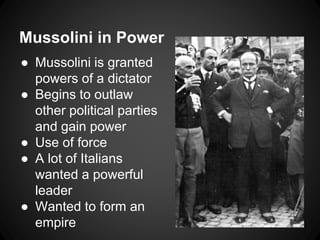
Mussolini in Power 
● Mussolini is granted 
powers of a dictator 
● Begins to outlaw 
other political parties 
and gain power 
● Use of force 
● A lot of Italians 
wanted a powerful 
leader 
● Wanted to form an 
empire
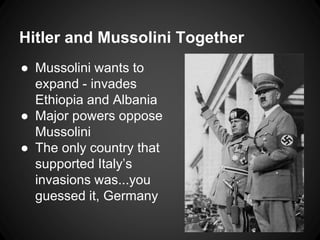
Hitler and Mussolini Together 
● Mussolini wants to 
expand - invades 
Ethiopia and Albania 
● Major powers oppose 
Mussolini 
● The only country that 
supported Italy’s 
invasions was...you 
guessed it, Germany
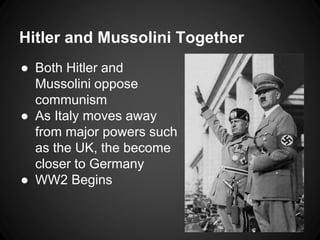
Hitler and Mussolini Together 
● Both Hitler and 
Mussolini oppose 
communism 
● As Italy moves away 
from major powers such 
as the UK, the become 
closer to Germany 
● WW2 Begins
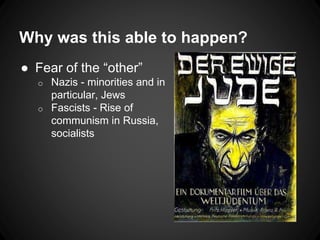
Why was this able to happen? 
● Fear of the “other” 
o Nazis - minorities and in 
particular, Jews 
o Fascists - Rise of 
communism in Russia, 
socialists
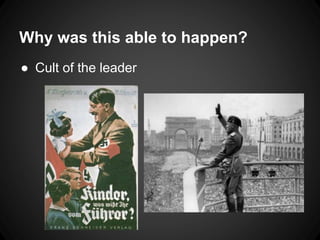
Why was this able to happen? 
● Cult of the leader
Why was this able to happen? 
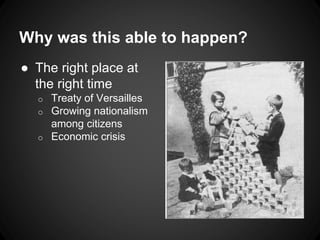
● The right place at 
the right time 
o Treaty of Versailles 
o Growing nationalism 
among citizens 
o Economic crisis
Homework 
In about one page, answer the following 
questions: 
What does nationalism mean to you? Is it OK to 
have pride in your country? At what point do 
you think nationalism becomes a “problem”? In 
your opinion, what is the appropriate way to 
celebrate your own country (in Spain or in 
general)?

Fascism and Nazism

  • 1.
    To Begin Onanother piece of paper, write an answer for the following question What does it mean to have “pride”? When is it good or OK to have pride? When can is it not OK to have pride?
  • 2.
    The Rise ofExtreme Nationalism in Europe Prior to World War 1 1915 to 1933
  • 3.
    First, some definitions Nationalism: the pride someone has in their nation. When an individual identifies with or becomes attached to the idea or symbols of their nation. By itself, not “good” or “bad”
  • 4.
    First, some definitions Fascism: A form of Italian totalitarian politics, which is known for its extreme nationalism. In the modern world, “fascism” is a general term for totalitarian governments, and is used colloquially as an insult YOU FASCIST!
  • 5.
    First, some definitions Nazism: a form of totalitarian German politics, known for their extreme nationalism and radical racial politics. In the modern day, we call the Nazi regime a “fascist” government, but at the time they were separate from Mussolini’s Fascist party. The term “nazi” is also used as an insult today.
  • 6.
    In short Nationalism:pride in one’s country Fascism: an Italian form of extreme nationalism Nazism: a German form of extreme nationalism
  • 7.
    The Rise ofthe Nazis ● End of World War I - Treaty of Versailles o Germany humiliated o Some believe the war could have been won ● Increased feeling of pride in the German state
  • 8.
    Hitler ● Soldierin World War I ● Is extremely disappointed with his own government ● Joins German Worker’s Party in 1919 o Ultra-nationalist o Anti-communist o Anti-capitalist o Anti-Jewish o Only 55 members when Hitler joins
  • 9.
    Nazi Party ●In 1920, German Worker’s Party changes name to National Socialist German Worker’s Party or “nazis” for short ● By 1923, the party has 40,000 members any many more Germans are sympathetic to their cause
  • 10.
    Nazi Party ●The nazis attempt a government takeover in 1923, but Hitler is arrested ● During 1924, Hitler in jail, but writes “Mein Kampf” or “My Struggle” ● Blames Germany’s defeat on the “racial problem” and especially on Jewish people
  • 11.
    Nazi Party ●In 1930, Nazis receive 18% of vote in parliament ● In 1932, Hitler runs for president, losses, but receives 35% of the vote ● July 1933, Nazis were the only legal party in Germany
  • 12.
    Meanwhile, in Italy... ● Benito Mussolini forms the Fascist party in Italy in 1914 ● Extreme Nationalism ● Force in government ● No democracy (totalitarian) ● Cultural superiority
  • 13.
    Mussolini ● Infavor of World War One o As a way to prove Italian superiority ● Was creating fascist political parties in 1915 ● In 1921, formed a new “mainstream” party, National Fascist Party
  • 14.
    Fascists ● Growingpopularity throughout Italy, especially with young men ● Against left-wing government ● Against workers strikes
  • 15.
    Fascists ● 1922- 200,000 Fascists march on Rome o This event greatly inspired Hitler ● Mussolini is appointed as Prime Minister
  • 16.
    Mussolini in Power ● Mussolini is granted powers of a dictator ● Begins to outlaw other political parties and gain power ● Use of force ● A lot of Italians wanted a powerful leader ● Wanted to form an empire
  • 17.
    Hitler and MussoliniTogether ● Mussolini wants to expand - invades Ethiopia and Albania ● Major powers oppose Mussolini ● The only country that supported Italy’s invasions was...you guessed it, Germany
  • 18.
    Hitler and MussoliniTogether ● Both Hitler and Mussolini oppose communism ● As Italy moves away from major powers such as the UK, the become closer to Germany ● WW2 Begins
  • 19.
    Why was thisable to happen? ● Fear of the “other” o Nazis - minorities and in particular, Jews o Fascists - Rise of communism in Russia, socialists
  • 20.
    Why was thisable to happen? ● Cult of the leader
  • 21.
    Why was thisable to happen? ● The right place at the right time o Treaty of Versailles o Growing nationalism among citizens o Economic crisis
  • 22.
    Homework In aboutone page, answer the following questions: What does nationalism mean to you? Is it OK to have pride in your country? At what point do you think nationalism becomes a “problem”? In your opinion, what is the appropriate way to celebrate your own country (in Spain or in general)?