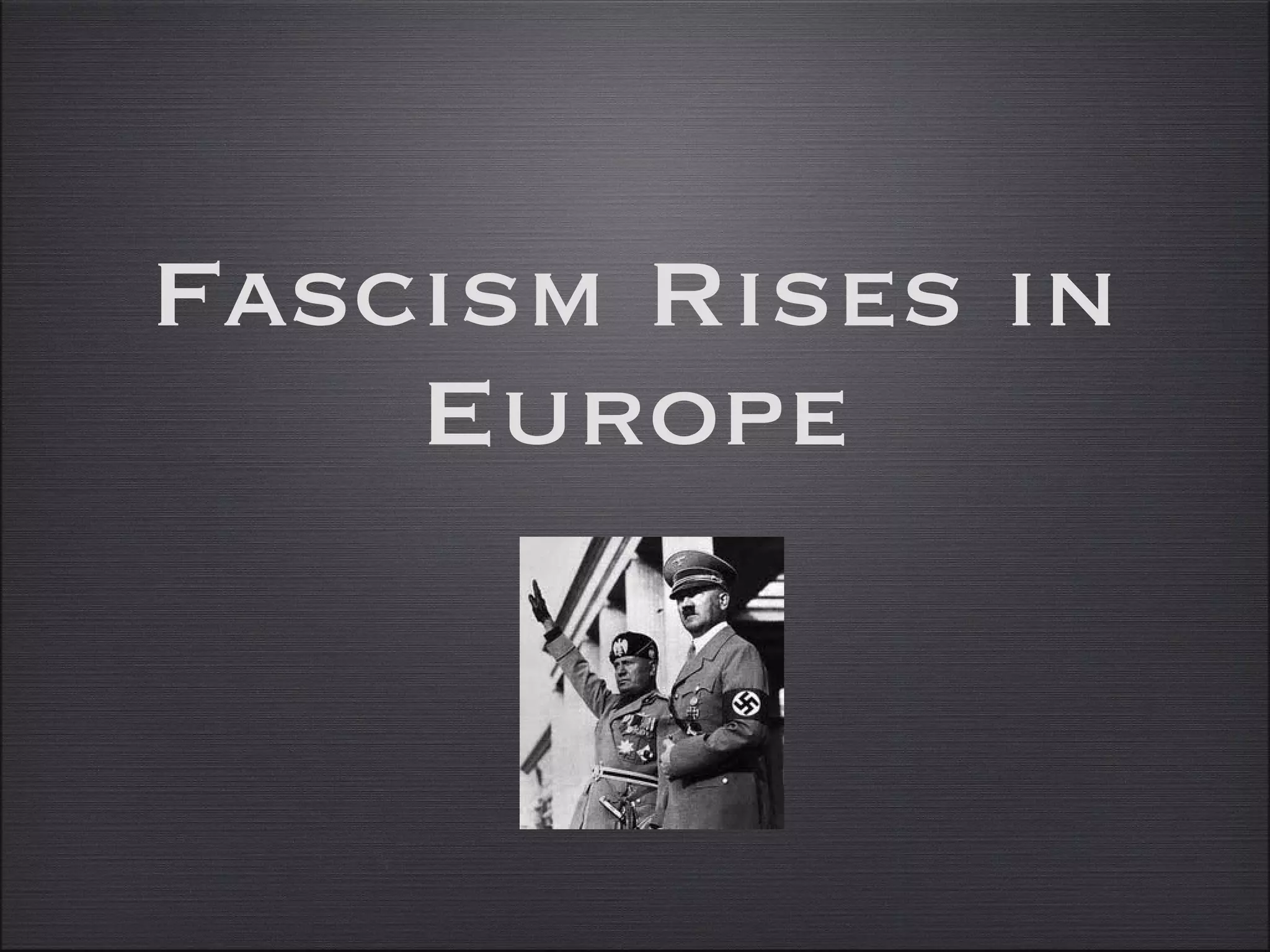
Fascism Rises in Europe
Fascism ’ s Rise in italy Fascism  - militant political movement, emphasized loyalty to state and obedience to leader Similar to communism - ruled by dictators, one party system, no individual rights, but believed classes had place in society Italians unhappy - no land gains after WWI, rising inflation, high unemployment , democratic government seemed helpless
Benito Mussolini  - newspaper editor and politician, promised to rescue Italy by improving economy and rebuilding military Founds Fascist Party in 1919, plays on fears of workers ’  revolt to get support from middle, upper class 1922 30,000 Fascists march on Rome, demand King Emmanuel III put Mussolini in charge of gov ’ t.  Mussolini now  “ Il Duce ” (the leader) - makes major changes.....
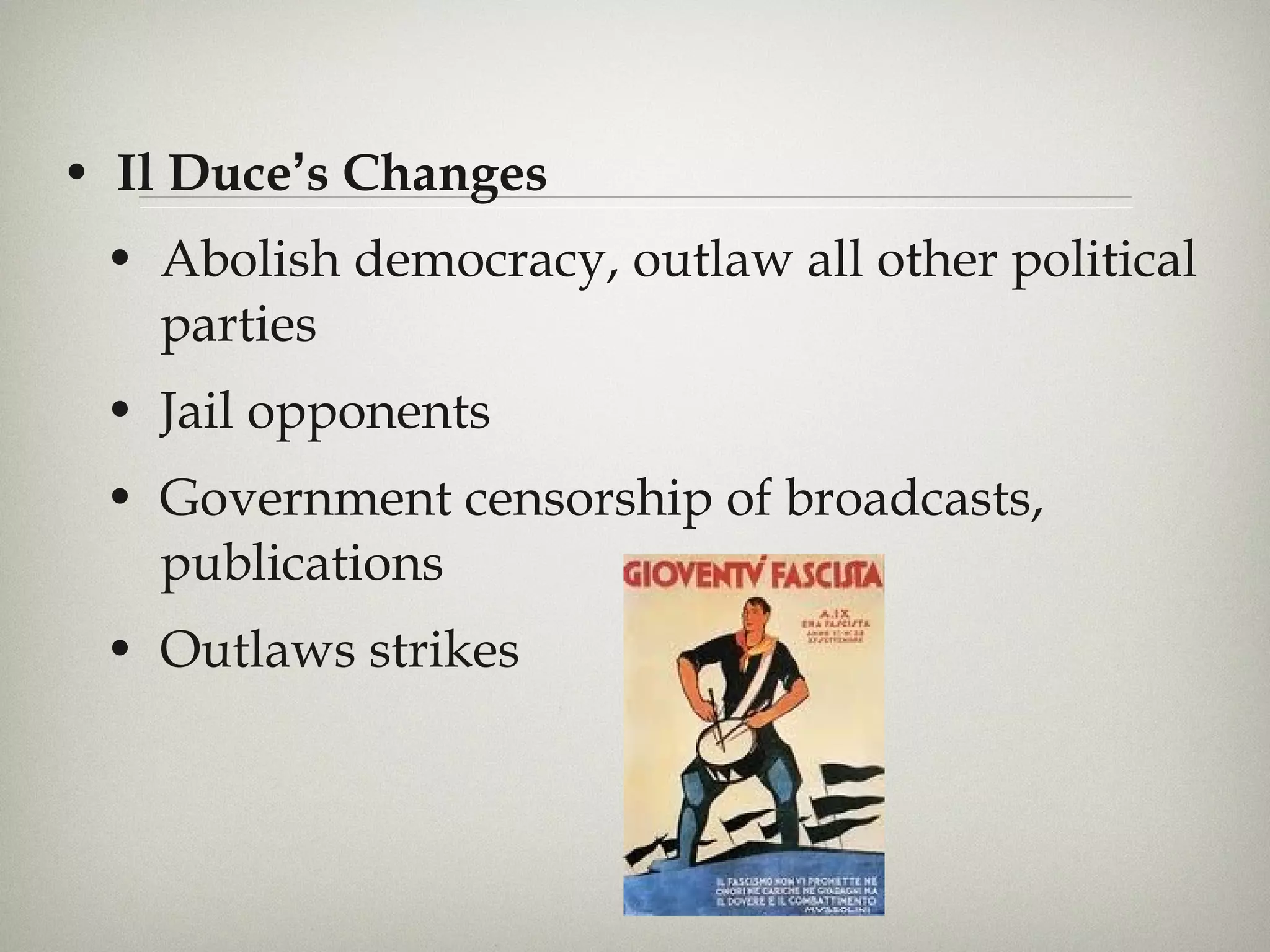
Il Duce ’ s Changes Abolish democracy, outlaw all other political parties Jail opponents  Government censorship of broadcasts, publications Outlaws strikes
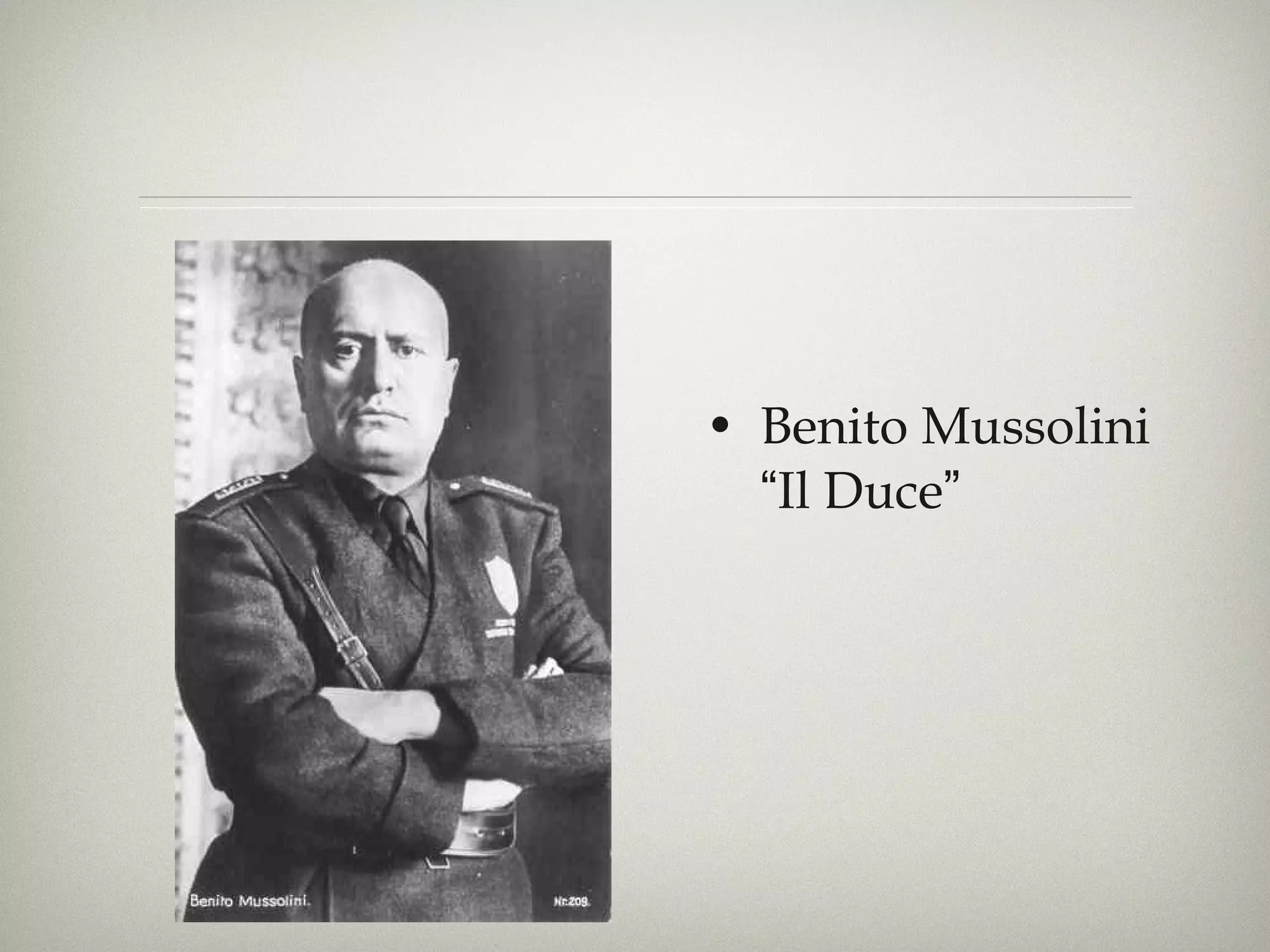
Benito Mussolini  “ Il Duce ”
Hitler Rises to power in germany Adolph Hitler  won 2  “ Iron Cross ”  awards in WWI, joined National Socialist German Worker ’ s Party - policies of this group foundation for German fascism known as Nazism Organizer and speaking skills led Hitler to be chosen  der Furer  (leader) of Nazi party Inspired by Mussolini, tries to seize power in 1923 but is arrested
Writes  Mein Kampf  (My Struggle) in jail, stating goals and beliefs Germans (incorrectly Aryans) = master race Versailles Treaty an outrage - lands would be regained Germany overcrowded, needed more  lebensraum  (living space) Revives Nazi party after release  Paid little attention until Great Depression - Germans look to him for security and strong leadership
Hitler Becomes Chancellor Nazis  become largest political party, President names Hitler chancellor (thinking he can control him) Hitler bans other political parties, opponents jailed SS (Schutzstaffel) created - protection squad, loyal only to Hitler, Gestapo (secret police) becomes part of SS Uses propaganda , book burnings and Hitler Youth (boys) League of German Girls to ensure obedience
Anti-Semitism  (hatred of Jewish people) key part of Nazi ideology Less than 1% of pop., but Jewish people used as scapegoats (blamed) for problems Laws passed taking many rights from Jewish people Violence against them increases - Kristallnacht (Night of Broken Glass), Nazi mobs attack homes, businesses and synagogues
other countries fall to dictators Hungary, Poland, Yugoslavia, Albania, Bulgaria and Romania all become dictatorships-suspend constitutions Czechoslovakia only democracy in eastern Europe mid 1930s world ’ s powerful countries split - democratic vs totalitarian

Fascism

  • 1.
  • 2.
    Fascism ’ sRise in italy Fascism - militant political movement, emphasized loyalty to state and obedience to leader Similar to communism - ruled by dictators, one party system, no individual rights, but believed classes had place in society Italians unhappy - no land gains after WWI, rising inflation, high unemployment , democratic government seemed helpless
  • 3.
    Benito Mussolini - newspaper editor and politician, promised to rescue Italy by improving economy and rebuilding military Founds Fascist Party in 1919, plays on fears of workers ’ revolt to get support from middle, upper class 1922 30,000 Fascists march on Rome, demand King Emmanuel III put Mussolini in charge of gov ’ t. Mussolini now “ Il Duce ” (the leader) - makes major changes.....
  • 4.
    Il Duce ’s Changes Abolish democracy, outlaw all other political parties Jail opponents Government censorship of broadcasts, publications Outlaws strikes
  • 5.
    Benito Mussolini “ Il Duce ”
  • 6.
    Hitler Rises topower in germany Adolph Hitler won 2 “ Iron Cross ” awards in WWI, joined National Socialist German Worker ’ s Party - policies of this group foundation for German fascism known as Nazism Organizer and speaking skills led Hitler to be chosen der Furer (leader) of Nazi party Inspired by Mussolini, tries to seize power in 1923 but is arrested
  • 7.
    Writes MeinKampf (My Struggle) in jail, stating goals and beliefs Germans (incorrectly Aryans) = master race Versailles Treaty an outrage - lands would be regained Germany overcrowded, needed more lebensraum (living space) Revives Nazi party after release Paid little attention until Great Depression - Germans look to him for security and strong leadership
  • 8.
    Hitler Becomes ChancellorNazis become largest political party, President names Hitler chancellor (thinking he can control him) Hitler bans other political parties, opponents jailed SS (Schutzstaffel) created - protection squad, loyal only to Hitler, Gestapo (secret police) becomes part of SS Uses propaganda , book burnings and Hitler Youth (boys) League of German Girls to ensure obedience
  • 9.
    Anti-Semitism (hatredof Jewish people) key part of Nazi ideology Less than 1% of pop., but Jewish people used as scapegoats (blamed) for problems Laws passed taking many rights from Jewish people Violence against them increases - Kristallnacht (Night of Broken Glass), Nazi mobs attack homes, businesses and synagogues
  • 10.
    other countries fallto dictators Hungary, Poland, Yugoslavia, Albania, Bulgaria and Romania all become dictatorships-suspend constitutions Czechoslovakia only democracy in eastern Europe mid 1930s world ’ s powerful countries split - democratic vs totalitarian