Parenting Styles, Punishment
and Co-parenting
By: Martha B Klotunowitch , Janelle Smith and Indian Davis
Human Development Through the Lifespan (440557)
October 4, 2016
Parenting Styles
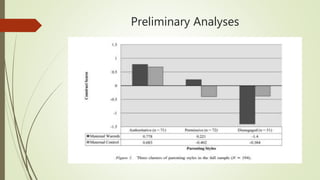
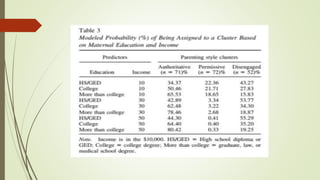
Socioeconomic Status, Parenting, and Externalizing Problems in
African American Single-Mother Homes:
A Person-Oriented Approach
By: Margaret T. Anton. Deborah J. Jones and Eric A. Youngstown
University of North Carolina at Chapel
Journal of Family Psychology
2015, Vol. 29, No. 3, 405-415
Preliminary Analyses
Parental Style as Context: An Integrative Model
Darling, Nancy; Steinberg, Laurence
Psychological Bulletin, Vol 113(3), May 1993, 487-496.
http://dx.doi.org/10.1037/0033-2909.113.3.487
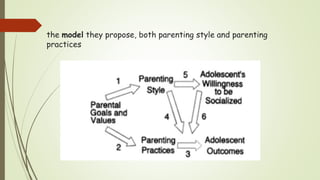
the model they propose, both parenting style and parenting
practices
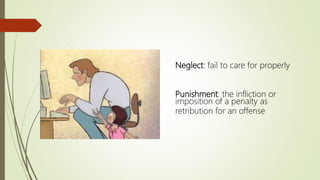
Neglect and Punishment
Neglect: fail to care for properly
Punishment: the infliction or
imposition of a penalty as
retribution for an offense
Article I
Intergenerational transmission of abuse: Implications for
parenting interventions from a neuropsychological
perspective
 The brain of a neglect child is small than normal brain
 The social, emotional, and cognitive difficulties can be traced to
brain development
 Stress can lead to difficulties in social behavior such as unable to
differentiate, manage or express emotions, and control impulse
Article II
A genetically informed study of the association between
harsh punishment and offspring behavioral problems
 Harsh parenting are associated with greater drug and alcohol use among children
raised together in a single family and that twins who are reported to use more
harsh parenting than their co-twins have children who report more alcohol use
that those of their co-twin.
 Controlled corporal punishment such as slapping or spanking has only a slight
association with negative outcomes for children.
 Harsh punishment have significant associations with behavioral and emotional
outcomes in the offspring.
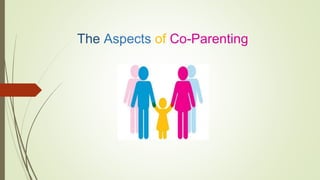
The Aspects of Co-Parenting
Co-parenting Parenting as a Team
 Studies show that when parents can agree and get along the results are far better
than of those who and unsupportive co parents.
 Although conflict is inevitable be willing to resolve it. Stay calm, negotiate, and
move on. Signs of conflict between parents can make a child uneasy.
 Keep the child's best interest first.
 Be supportive of each other's decision- don’t sweat the small things.
 Keep the children out of the middle! – Never use them to as a messenger or bad
mouth the other parent.
 Separate your feelings from behavior- Don’t let emotions provoke inappropriate
decisions/actions.
 Think about the possible impact of the children/ child's well being.
 Be peaceful and respectful- To the best of your ability especially around the children.
 Give updates and communicate important issues- Educational, medical, and
recreational information should be shared.
 Have an open mind and be willing to compromise.
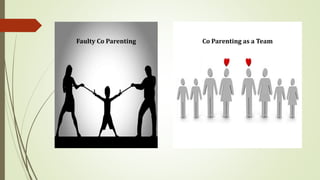
Faulty Co Parenting Co Parenting as a Team
Family

Family

  • 1.
    Parenting Styles, Punishment andCo-parenting By: Martha B Klotunowitch , Janelle Smith and Indian Davis Human Development Through the Lifespan (440557) October 4, 2016
  • 2.
  • 3.
    Socioeconomic Status, Parenting,and Externalizing Problems in African American Single-Mother Homes: A Person-Oriented Approach By: Margaret T. Anton. Deborah J. Jones and Eric A. Youngstown University of North Carolina at Chapel Journal of Family Psychology 2015, Vol. 29, No. 3, 405-415
  • 4.
  • 6.
    Parental Style asContext: An Integrative Model Darling, Nancy; Steinberg, Laurence Psychological Bulletin, Vol 113(3), May 1993, 487-496. http://dx.doi.org/10.1037/0033-2909.113.3.487
  • 7.
    the model theypropose, both parenting style and parenting practices
  • 10.
  • 11.
    Neglect: fail tocare for properly Punishment: the infliction or imposition of a penalty as retribution for an offense
  • 12.
    Article I Intergenerational transmissionof abuse: Implications for parenting interventions from a neuropsychological perspective  The brain of a neglect child is small than normal brain  The social, emotional, and cognitive difficulties can be traced to brain development  Stress can lead to difficulties in social behavior such as unable to differentiate, manage or express emotions, and control impulse
  • 14.
    Article II A geneticallyinformed study of the association between harsh punishment and offspring behavioral problems  Harsh parenting are associated with greater drug and alcohol use among children raised together in a single family and that twins who are reported to use more harsh parenting than their co-twins have children who report more alcohol use that those of their co-twin.  Controlled corporal punishment such as slapping or spanking has only a slight association with negative outcomes for children.  Harsh punishment have significant associations with behavioral and emotional outcomes in the offspring.
  • 15.
    The Aspects ofCo-Parenting
  • 16.
    Co-parenting Parenting asa Team  Studies show that when parents can agree and get along the results are far better than of those who and unsupportive co parents.  Although conflict is inevitable be willing to resolve it. Stay calm, negotiate, and move on. Signs of conflict between parents can make a child uneasy.  Keep the child's best interest first.  Be supportive of each other's decision- don’t sweat the small things.
  • 17.
     Keep thechildren out of the middle! – Never use them to as a messenger or bad mouth the other parent.  Separate your feelings from behavior- Don’t let emotions provoke inappropriate decisions/actions.  Think about the possible impact of the children/ child's well being.  Be peaceful and respectful- To the best of your ability especially around the children.  Give updates and communicate important issues- Educational, medical, and recreational information should be shared.  Have an open mind and be willing to compromise.
  • 18.
    Faulty Co ParentingCo Parenting as a Team

Editor's Notes

  • #7 Despite broad consensus about the effects of parenting practices on child development, many questions about the construct parenting style remain unanswered. Particularly pressing issues are the variability in the effects of parenting style as a function of the child's cultural background, the processes through which parenting style influences the child's development, and the operationalization of parenting style. Drawing on historical review, the authors present a model that integrates 2 traditions in socialization research, the study of specific parenting practices and the study of global parent characteristics. They propose that parenting style is best conceptualized as a context that moderates the influence of specific parenting practices on the child. It is argued that only by maintaining the distinction between parenting style andparenting practice can researchers address questions concerning socialization processes. (PsycINFO Database Record (c) 2013 APA, all rights reserved)
  • #8 Parenting goals for socialization influence both parenting style (Arrow 1) and parenting practices (Arrow 2). Parenting practices have a direct effect on specific child developmental outcomes (Arrow 3). In contrast, parenting style influences child development primarily through its moderating influence on the relationship between parenting practices and developmental outcomes (Arrow 4) and through its influence on the child's openness to parental socialization (Arrow 5). The child's openness to socialization also moderates the influence of parenting practice on the child's development (Arrow 6)
  • #20 https://youtu.be/vm0UNn7tJ5o