COLEGIO INTERNACIONAL SEK - EL CASTILLO
                    DEPARTAMENTO DE CIENCIAS NATURALES
                               Natural Sciences


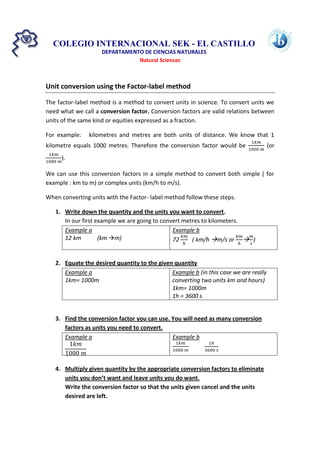
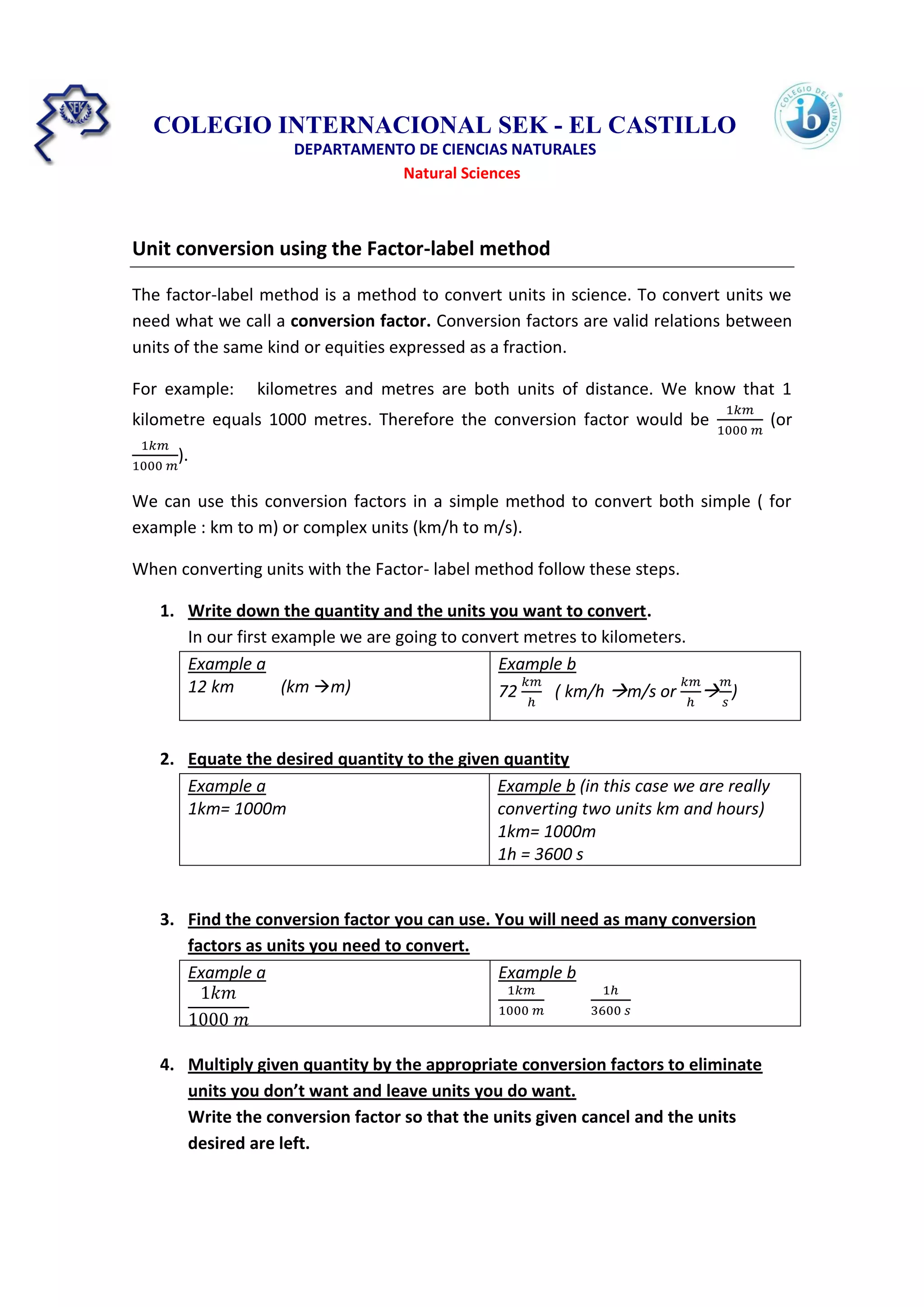
Unit conversion using the Factor-label method

The factor-label method is a method to convert units in science. To convert units we
need what we call a conversion factor. Conversion factors are valid relations between
units of the same kind or equities expressed as a fraction.

For example:    kilometres and metres are both units of distance. We know that 1
kilometre equals 1000 metres. Therefore the conversion factor would be                (or
     ).

We can use this conversion factors in a simple method to convert both simple ( for
example : km to m) or complex units (km/h to m/s).

When converting units with the Factor- label method follow these steps.

   1. Write down the quantity and the units you want to convert.
      In our first example we are going to convert metres to kilometers.
      Example a                                Example b
      12 km         (km m)                    72     ( km/h m/s or  )


   2. Equate the desired quantity to the given quantity
      Example a                               Example b (in this case we are really
      1km= 1000m                              converting two units km and hours)
                                              1km= 1000m
                                              1h = 3600 s


   3. Find the conversion factor you can use. You will need as many conversion
      factors as units you need to convert.
      Example a                               Example b


   4. Multiply given quantity by the appropriate conversion factors to eliminate
      units you don’t want and leave units you do want.
      Write the conversion factor so that the units given cancel and the units
      desired are left.
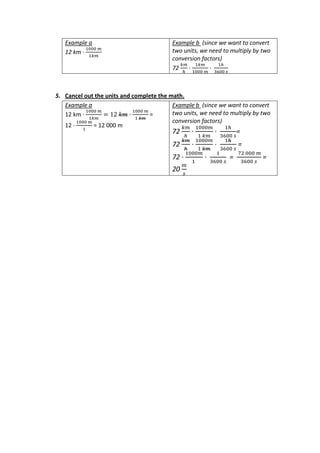
Example a                              Example b (since we want to convert
   12 km ·                                two units, we need to multiply by two
                                          conversion factors)
                                          72            ·


5. Cancel out the units and complete the math.
   Example a                              Example b (since we want to convert
   12 km ·                        =       two units, we need to multiply by two
                                          conversion factors)
   12 ·      = 12 000 m
                                          72              ·         =
                                          72              ·         =
                                          72          ·         =           =
                                          20

Factor label method

  • 1.
    COLEGIO INTERNACIONAL SEK- EL CASTILLO DEPARTAMENTO DE CIENCIAS NATURALES Natural Sciences Unit conversion using the Factor-label method The factor-label method is a method to convert units in science. To convert units we need what we call a conversion factor. Conversion factors are valid relations between units of the same kind or equities expressed as a fraction. For example: kilometres and metres are both units of distance. We know that 1 kilometre equals 1000 metres. Therefore the conversion factor would be (or ). We can use this conversion factors in a simple method to convert both simple ( for example : km to m) or complex units (km/h to m/s). When converting units with the Factor- label method follow these steps. 1. Write down the quantity and the units you want to convert. In our first example we are going to convert metres to kilometers. Example a Example b 12 km (km m) 72 ( km/h m/s or  ) 2. Equate the desired quantity to the given quantity Example a Example b (in this case we are really 1km= 1000m converting two units km and hours) 1km= 1000m 1h = 3600 s 3. Find the conversion factor you can use. You will need as many conversion factors as units you need to convert. Example a Example b 4. Multiply given quantity by the appropriate conversion factors to eliminate units you don’t want and leave units you do want. Write the conversion factor so that the units given cancel and the units desired are left.
  • 2.
    Example a Example b (since we want to convert 12 km · two units, we need to multiply by two conversion factors) 72 · 5. Cancel out the units and complete the math. Example a Example b (since we want to convert 12 km · = two units, we need to multiply by two conversion factors) 12 · = 12 000 m 72 · = 72 · = 72 · = = 20