Natural Science 2º ESO
Perfect systems 
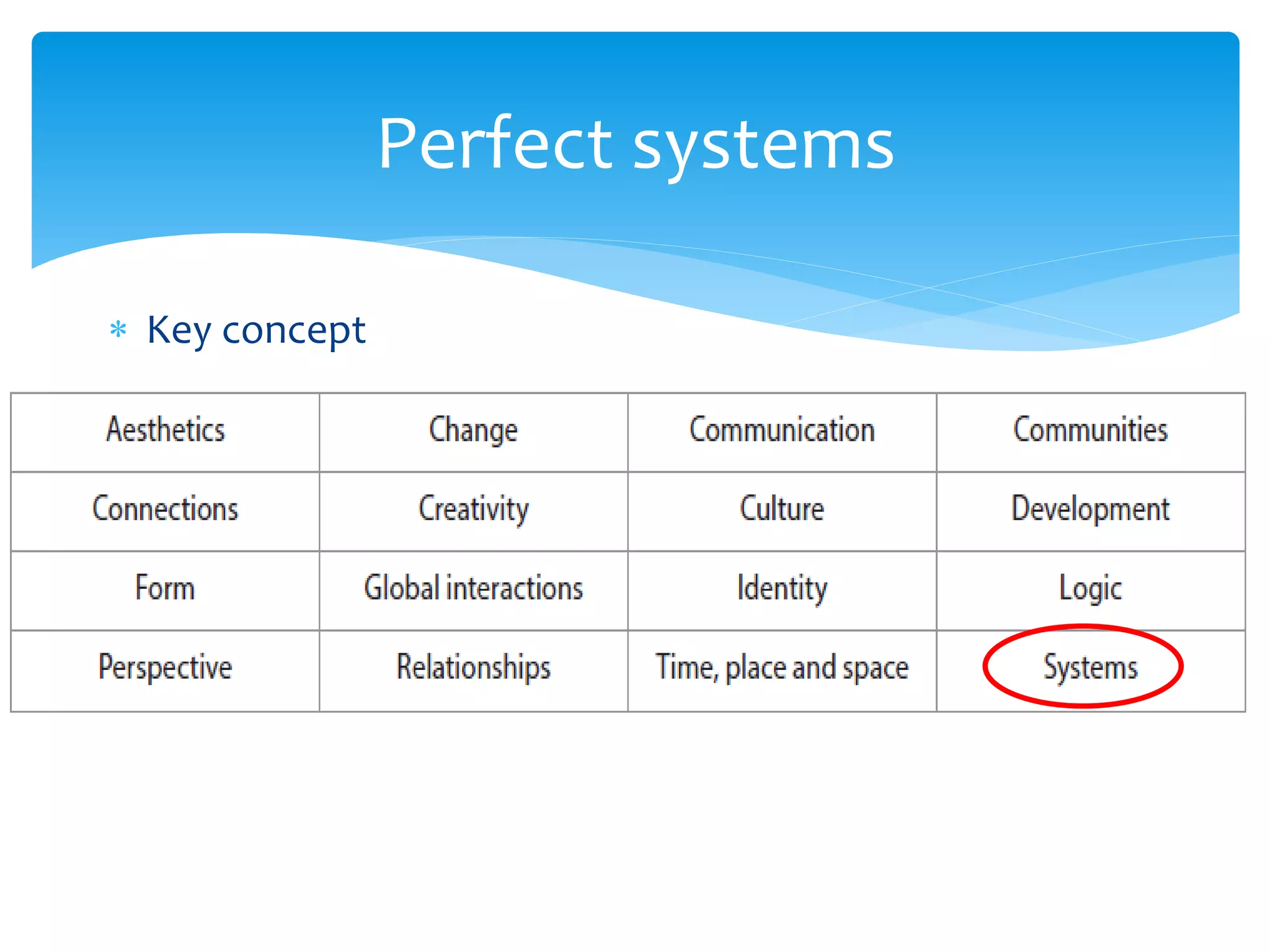
 Key concept
Perfect systems 
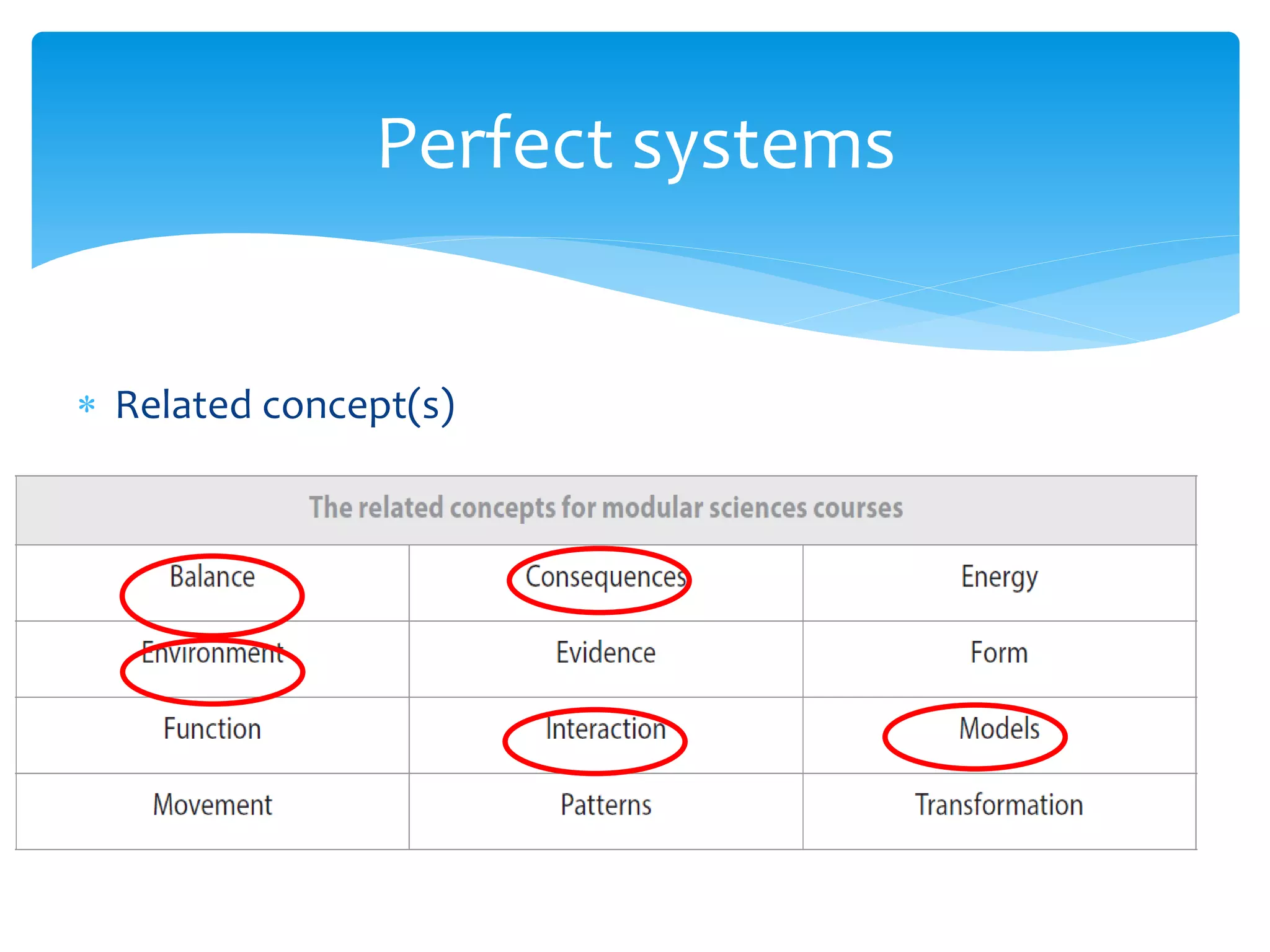
 Related concept(s)
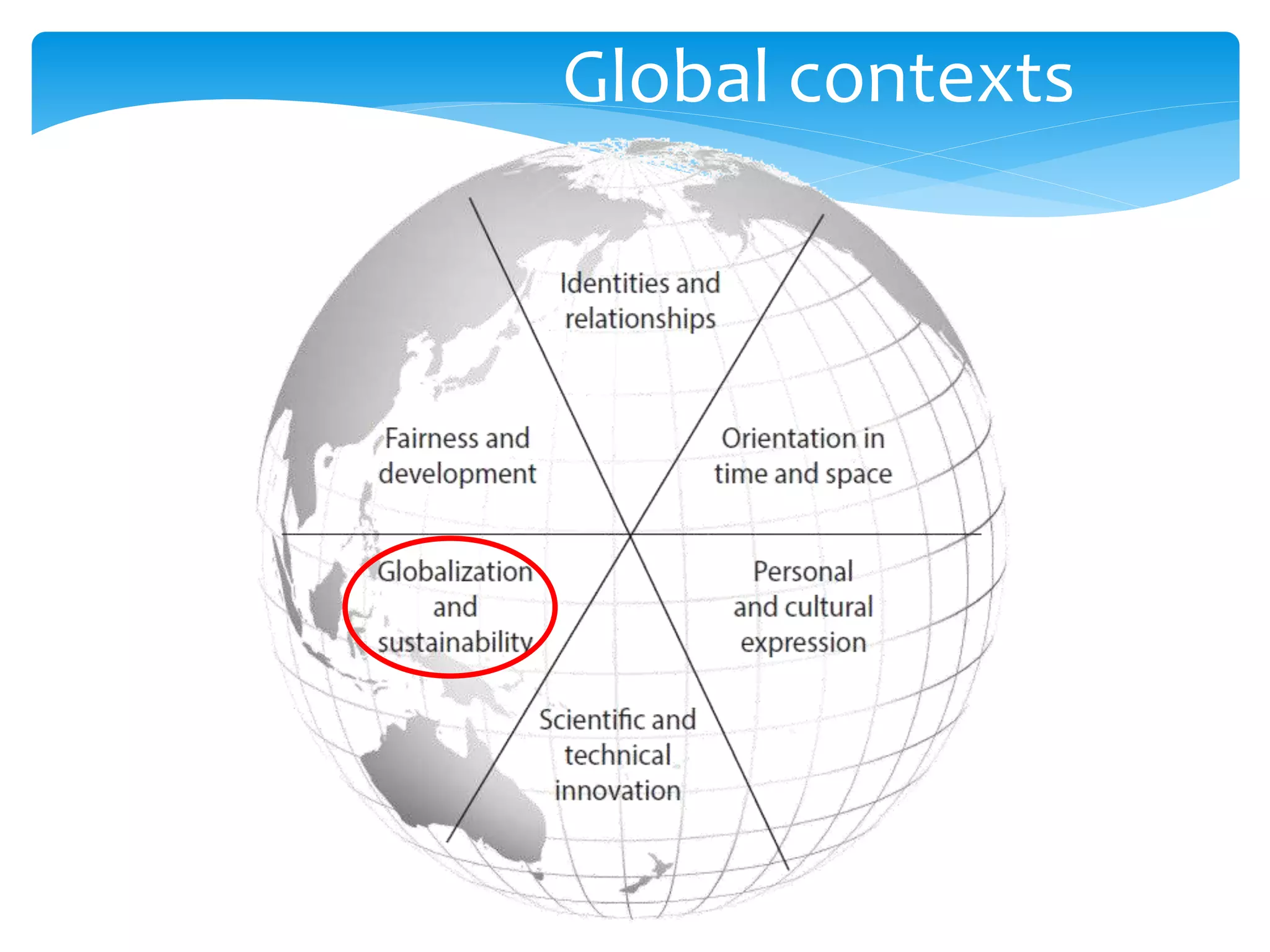
Global contexts
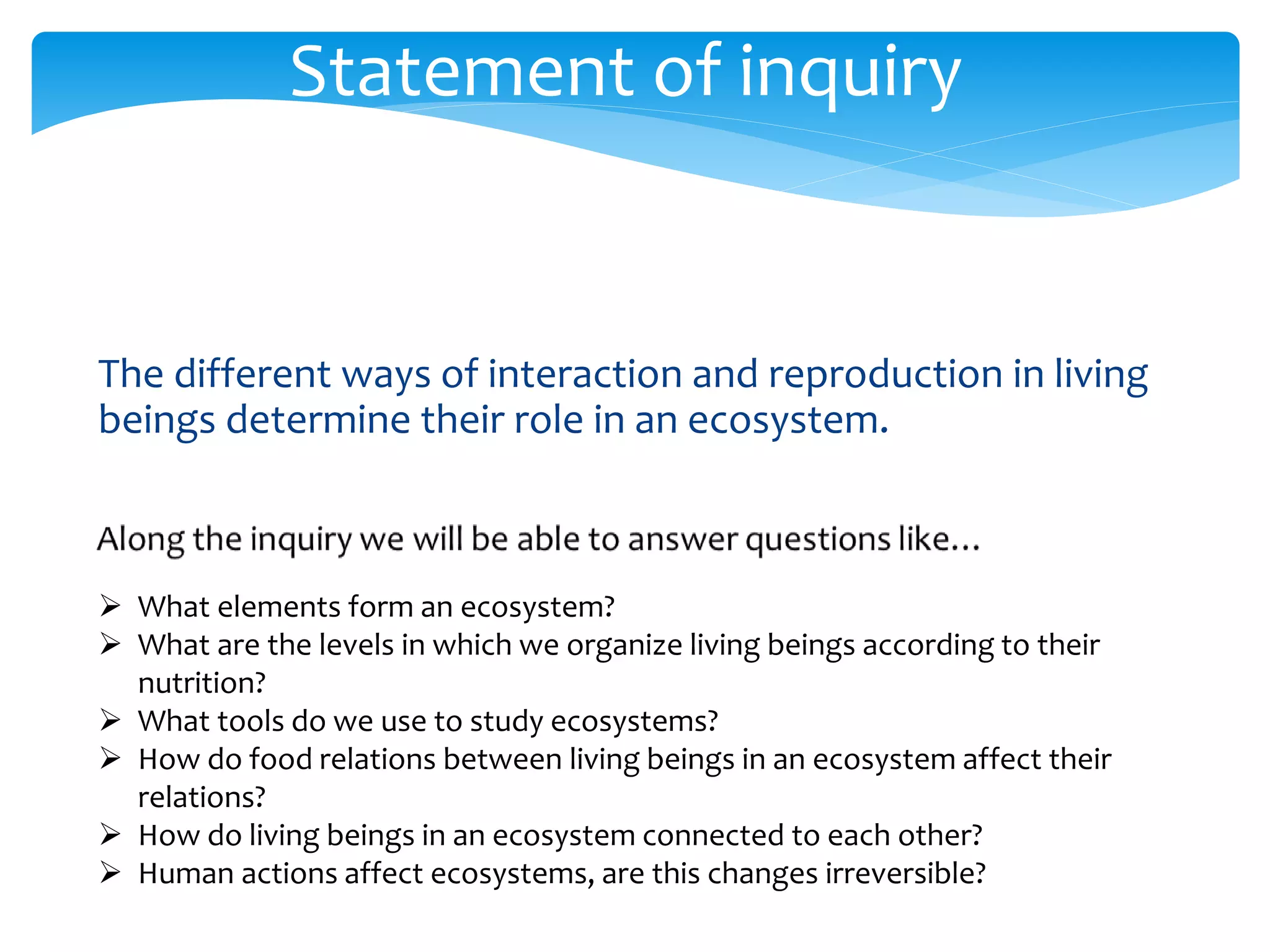
Statement of inquiry 
The different ways of interaction and reproduction in living 
beings determine their role in an ecosystem. 
 What elements form an ecosystem? 
 What are the levels in which we organize living beings according to their 
nutrition? 
 What tools do we use to study ecosystems? 
 How do food relations between living beings in an ecosystem affect their 
relations? 
 How do living beings in an ecosystem connected to each other? 
 Human actions affect ecosystems, are this changes irreversible?
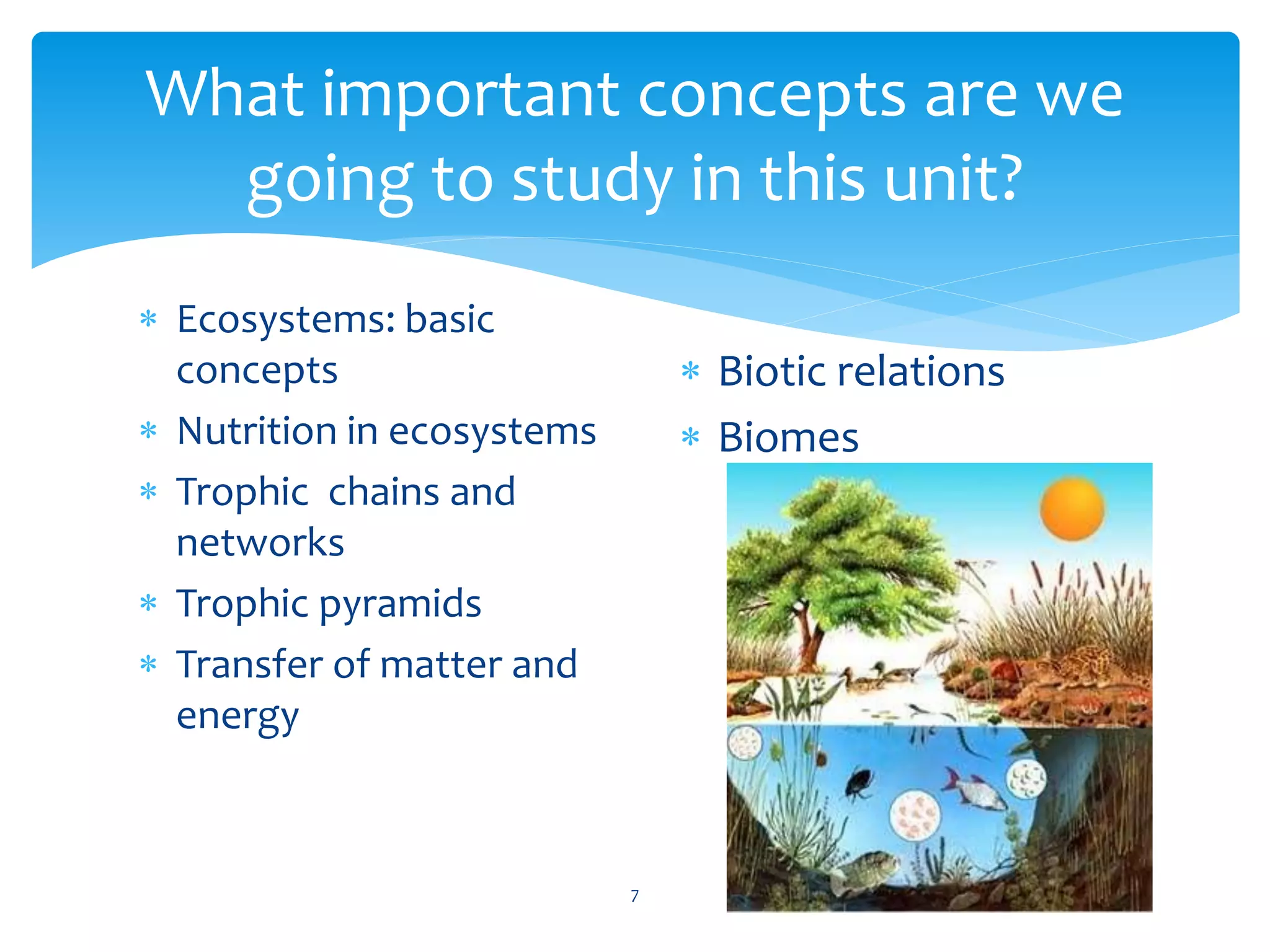
What important concepts are we 
going to study in this unit? 
 Ecosystems: basic 
concepts 
 Nutrition in ecosystems 
 Trophic chains and 
networks 
 Trophic pyramids 
 Transfer of matter and 
energy 
7 
 Biotic relations 
 Biomes
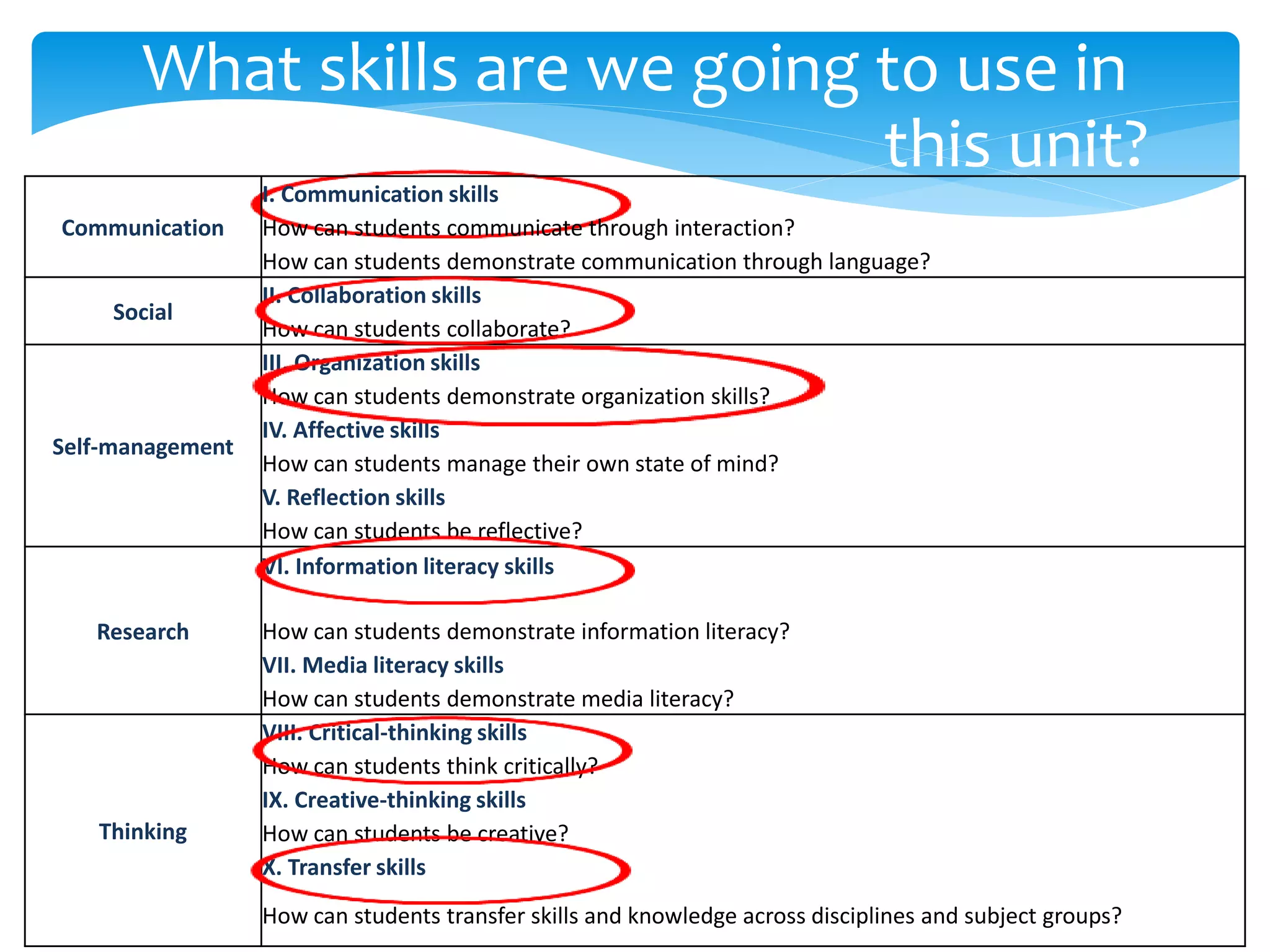
What skills are we going to use in 
this unit?
What skills are we going to use in 
this unit? 
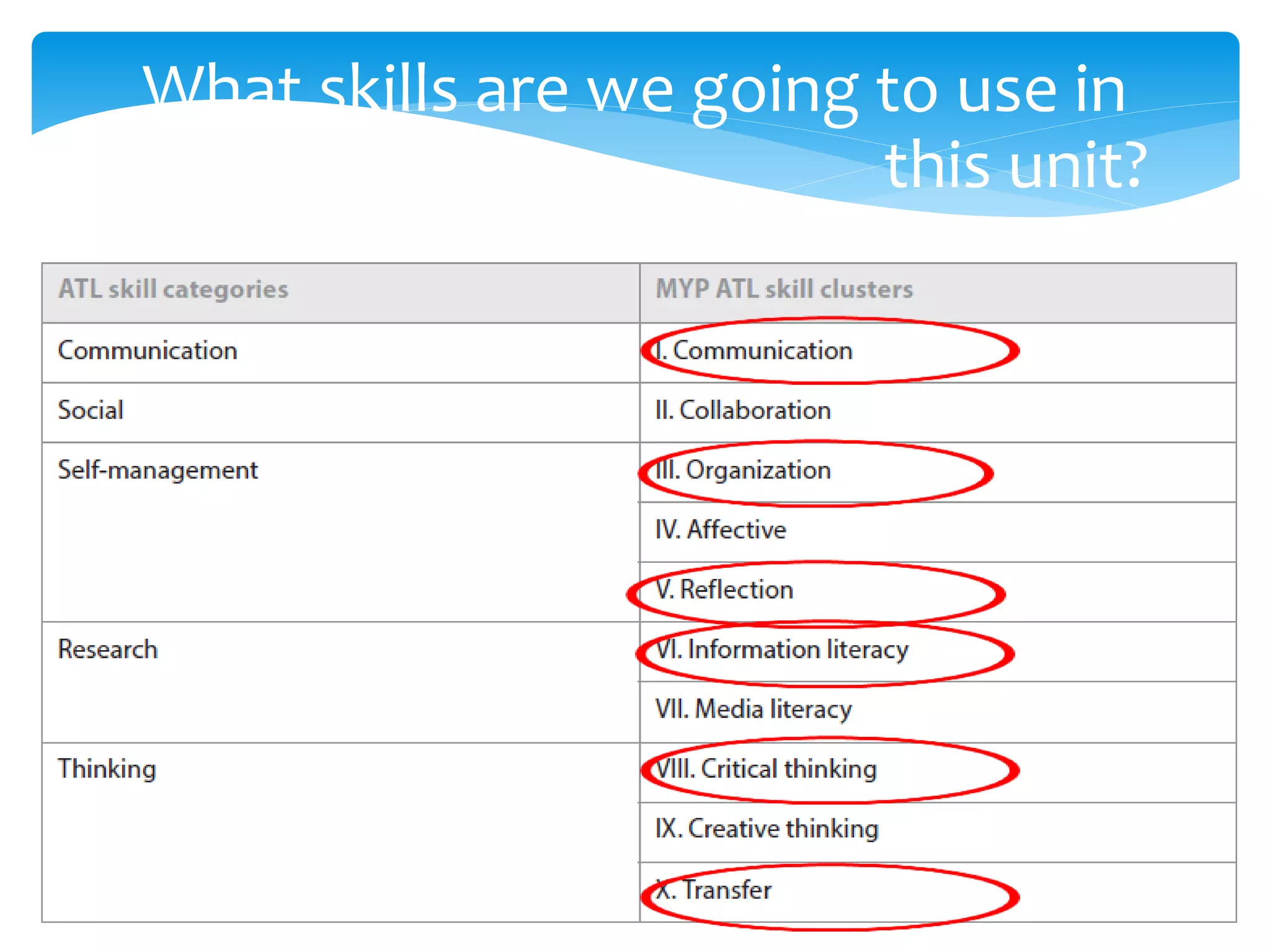
Communication 
I. Communication skills 
How can students communicate through interaction? 
How can students demonstrate communication through language? 
Social 
II. Collaboration skills 
How can students collaborate? 
Self-management 
III. Organization skills 
How can students demonstrate organization skills? 
IV. Affective skills 
How can students manage their own state of mind? 
V. Reflection skills 
How can students be reflective? 
Research 
VI. Information literacy skills 
How can students demonstrate information literacy? 
VII. Media literacy skills 
How can students demonstrate media literacy? 
Thinking 
VIII. Critical-thinking skills 
How can students think critically? 
IX. Creative-thinking skills 
How can students be creative? 
X. Transfer skills 
How can students transfer skills and knowledge across disciplines and subject groups?
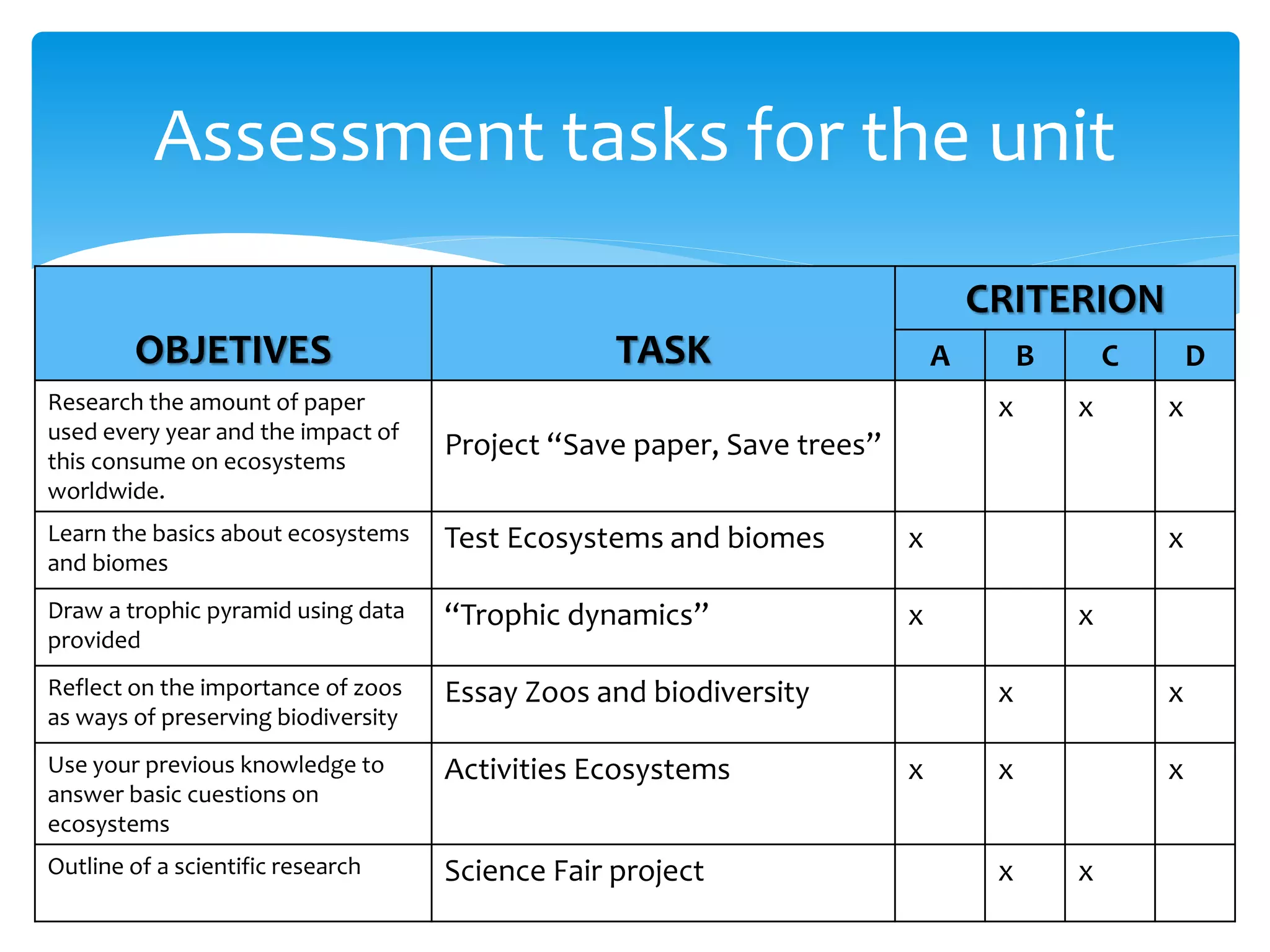
Assessment tasks for the unit 
OBJETIVES TASK 
CRITERION 
A B C D 
Research the amount of paper 
used every year and the impact of 
this consume on ecosystems 
worldwide. 
Project “Save paper, Save trees” 
x x x 
Learn the basics about ecosystems 
and biomes 
Test Ecosystems and biomes x x 
Draw a trophic pyramid using data 
provided 
“Trophic dynamics” x x 
Reflect on the importance of zoos 
as ways of preserving biodiversity 
Essay Zoos and biodiversity x x 
Use your previous knowledge to 
answer basic cuestions on 
ecosystems 
Activities Ecosystems x x x 
Outline of a scientific research Science Fair project x x
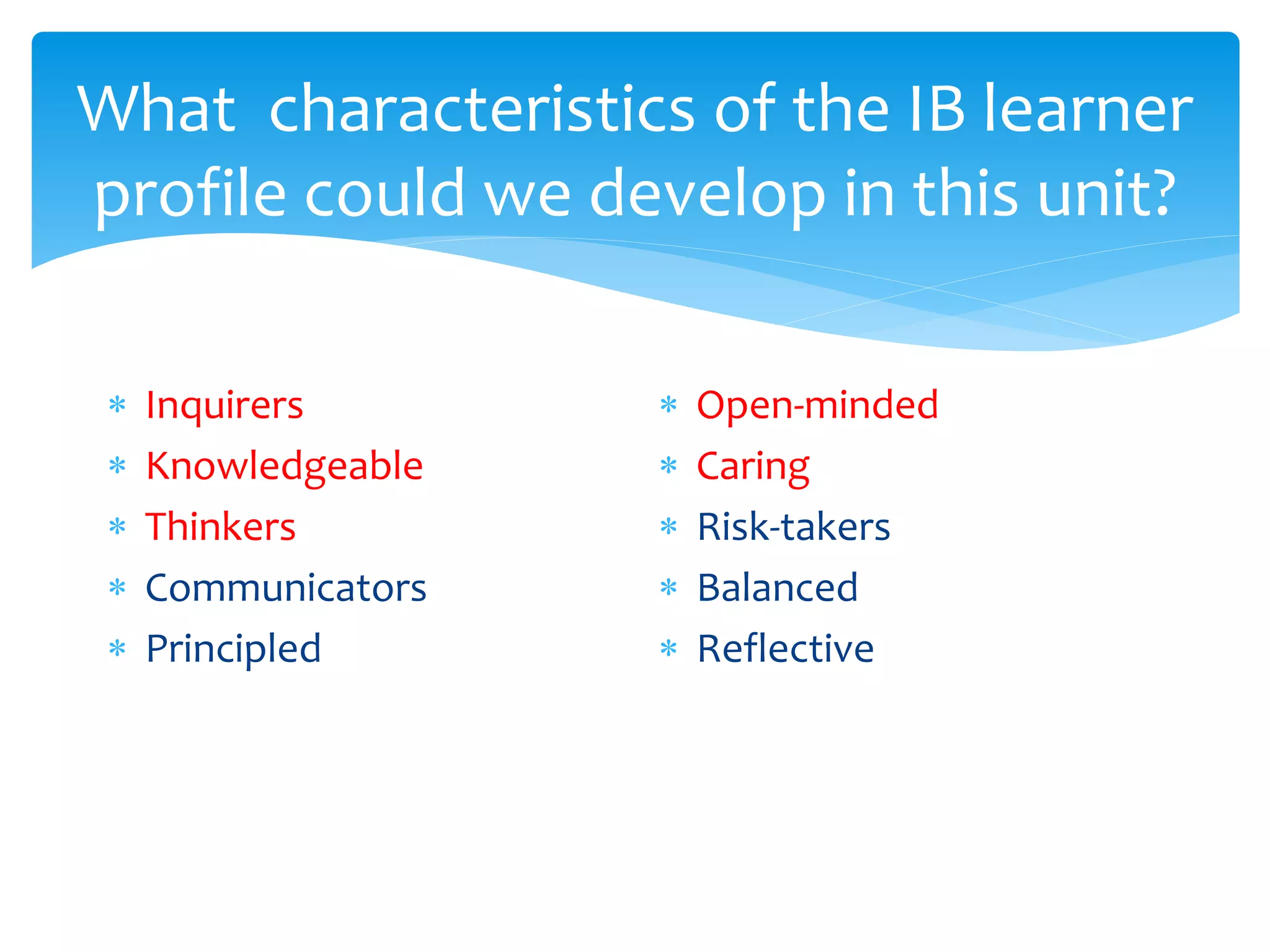
What characteristics of the IB learner 
profile could we develop in this unit? 
 Inquirers 
 Knowledgeable 
 Thinkers 
 Communicators 
 Principled 
 Open-minded 
 Caring 
 Risk-takers 
 Balanced 
 Reflective

Myp intro 2014 unit 3 2º

  • 1.
  • 3.
  • 4.
    Perfect systems Related concept(s)
  • 5.
  • 6.
    Statement of inquiry The different ways of interaction and reproduction in living beings determine their role in an ecosystem.  What elements form an ecosystem?  What are the levels in which we organize living beings according to their nutrition?  What tools do we use to study ecosystems?  How do food relations between living beings in an ecosystem affect their relations?  How do living beings in an ecosystem connected to each other?  Human actions affect ecosystems, are this changes irreversible?
  • 7.
    What important conceptsare we going to study in this unit?  Ecosystems: basic concepts  Nutrition in ecosystems  Trophic chains and networks  Trophic pyramids  Transfer of matter and energy 7  Biotic relations  Biomes
  • 8.
    What skills arewe going to use in this unit?
  • 9.
    What skills arewe going to use in this unit? Communication I. Communication skills How can students communicate through interaction? How can students demonstrate communication through language? Social II. Collaboration skills How can students collaborate? Self-management III. Organization skills How can students demonstrate organization skills? IV. Affective skills How can students manage their own state of mind? V. Reflection skills How can students be reflective? Research VI. Information literacy skills How can students demonstrate information literacy? VII. Media literacy skills How can students demonstrate media literacy? Thinking VIII. Critical-thinking skills How can students think critically? IX. Creative-thinking skills How can students be creative? X. Transfer skills How can students transfer skills and knowledge across disciplines and subject groups?
  • 10.
    Assessment tasks forthe unit OBJETIVES TASK CRITERION A B C D Research the amount of paper used every year and the impact of this consume on ecosystems worldwide. Project “Save paper, Save trees” x x x Learn the basics about ecosystems and biomes Test Ecosystems and biomes x x Draw a trophic pyramid using data provided “Trophic dynamics” x x Reflect on the importance of zoos as ways of preserving biodiversity Essay Zoos and biodiversity x x Use your previous knowledge to answer basic cuestions on ecosystems Activities Ecosystems x x x Outline of a scientific research Science Fair project x x
  • 11.
    What characteristics ofthe IB learner profile could we develop in this unit?  Inquirers  Knowledgeable  Thinkers  Communicators  Principled  Open-minded  Caring  Risk-takers  Balanced  Reflective

Editor's Notes

  • #2 Incluimos el nombre de nuestra asignatura y el curso en la que se imparte.
  • #5 Ponemos la pregunta de la unidad en el título. Si queréis, podéis incluir movimiento y que salga primero la columna izquierda y luego la derecha cuando ya hayáis debatido. En la pregunta con qué otros temas está relacionado, debemos fomentar la conexión interdisciplinar si se puede (aprendizaje holítico)
  • #8 Incluimos los conceptos del planificador
  • #11 En tarea ponemos en nombre completo de la misma. Intentaremos ser un poco específicos. Por ejemplo, en vez de Examen Unidad 1 pondremos el tema del que se examinan. En vez de Experimento de Laboratorio diremos en qué consiste. En objetivos decimos qué objetivos de nuestra asignatura se trabajan en esa tarea. Cada asignatura tiene un número de criterios. Podéis eliminarlos de la tabla o simplemente poner una línea en los que no se aplican en vuestra asignatura.
  • #12 Alentamos el debate de los alumnos y la justificación