Facilitation Skills
for Artists
Working with Groups
7.2.13
To Facilitate:

Is to make easy or help forward an action or process

e.g. to facilitate dialogue in a group enables interaction, sharing of ideas
and expertise etc., assists in the emergence of understanding and
meaning, can aid collaboration through the identification of an action and
fosters agreements towards this end.


                                   A Facilitator:
Through providing a structure and process, assists a group to function
effectively, to achieve synergy and supports “everyone to do their best
thinking and practice” (Kaner et al, 2007)
Kaner, S. with Lind, L., Toldi, C., Fisk, S. and Berger, D., "Facilitator's Guide to
Participatory Decision-Making, (2007)
A Good Facilitator ...
                                           (group-made list 7.2.13)

Guides a process                                           Is a good Listener and has good communication skills

Plans and gives structure e.g. Introductions,              Provides opportunities for evaluation and feedback

     •  
Is mindful of adapting plans to current conditions         Is capable, confident and has good self-presentation

Suspends judgement                                         Is patient
                                                           Has Boundaries while creating a secure atmosphere
Shares power
                                                           Connects with people and recognises / affirms
Understands the dynamics of a group                           contributions
Is good at time management                                 Knows their own limitations
Has personal integrity                                     Manages expectations of the group/funders/self

Can think on their feet (reflection in action)             Is able to deal with vulnerable participants (may bring in
                                                                expertise)
Respects the autonomy of individuals, the group
   wisdom                                                  Acknowledges and deals with problems

Values personal experience                                 Can Mediate effectively
                                                           Summarises information.
Encourages risk-taking, critical thinking and creativity
                                                           understands process and content functions
Fosters collective responsibility

Promotes participation and group action
A Good Facilitator...


Process

Ensures that everyone has an opportunity to participate

Enables people to express and deal with conflict

Assists members to identify feelings that impede the group's work

Content

Clarifies any confusing comments or statements

Identifies connections or common threads

Organises and summarises ideas, plans etc.
Listening


Active Listening makes use of paraphrasing to affirm and build
understanding.

Open Questions allow for reflection, sharing of opinion and feelings, shares
control within the encounter.
How... What... Why... Tell me more about?
Dialogic listening or Relational Listening


Dialogic Listening is a process of finding meaning through conversational
exchange, asking for clarity and testing understanding. It focuses on the
interaction and process of co-creation.

Characteristics of dialogic listening are:

    Authenticity

    Inclusion

    Confirmation

    Presentness

    Spirit of mutual equality and supportive climate
Dialogic listening or Relational Listening


Techniques:
    Encourage each other to say more, to further explore and explicate
      views and questions
    Use, extend, and play with metaphors to reveal new perspectives on
      an issue or situation
    Paraphrase, interpret and respond

    Explore the context of each other's claims (ideas, feelings and
      opinions)

John Stewart and Milt Thomas, "Dialogic Listening: Sculpting Mutual Meanings," in Bridges
Not Walls, ed. John Stewart, 6th edition, (New York: McGraw- Hill, 1995)
Why Work with Groups?


What are some of the challenges of
      working with groups?


  When do I use facilitation?
Group Development


Forming

Storming

Norming

Performing

Adjourning (Mourning)

Tuckman, Bruce 1965. Developmental Sequence in Small Groups
Conflict Resolution

The Conflict Resolution Network identifies 12 skills for resolving conflict:


The Win/Win Approach               The Creative Response

Empathy                            Appropriate Assertiveness

Co-operative Power                 Managing Emotions

Willingness to Resolve             Mapping the Conflict

Development of Options             Negotiation Skills

Third Party Mediation              Broadening Perspectives


© Conflict Resolution Network
PO Box 1016 Chatswood NSW 2057 Australia Website www.crnhq.org
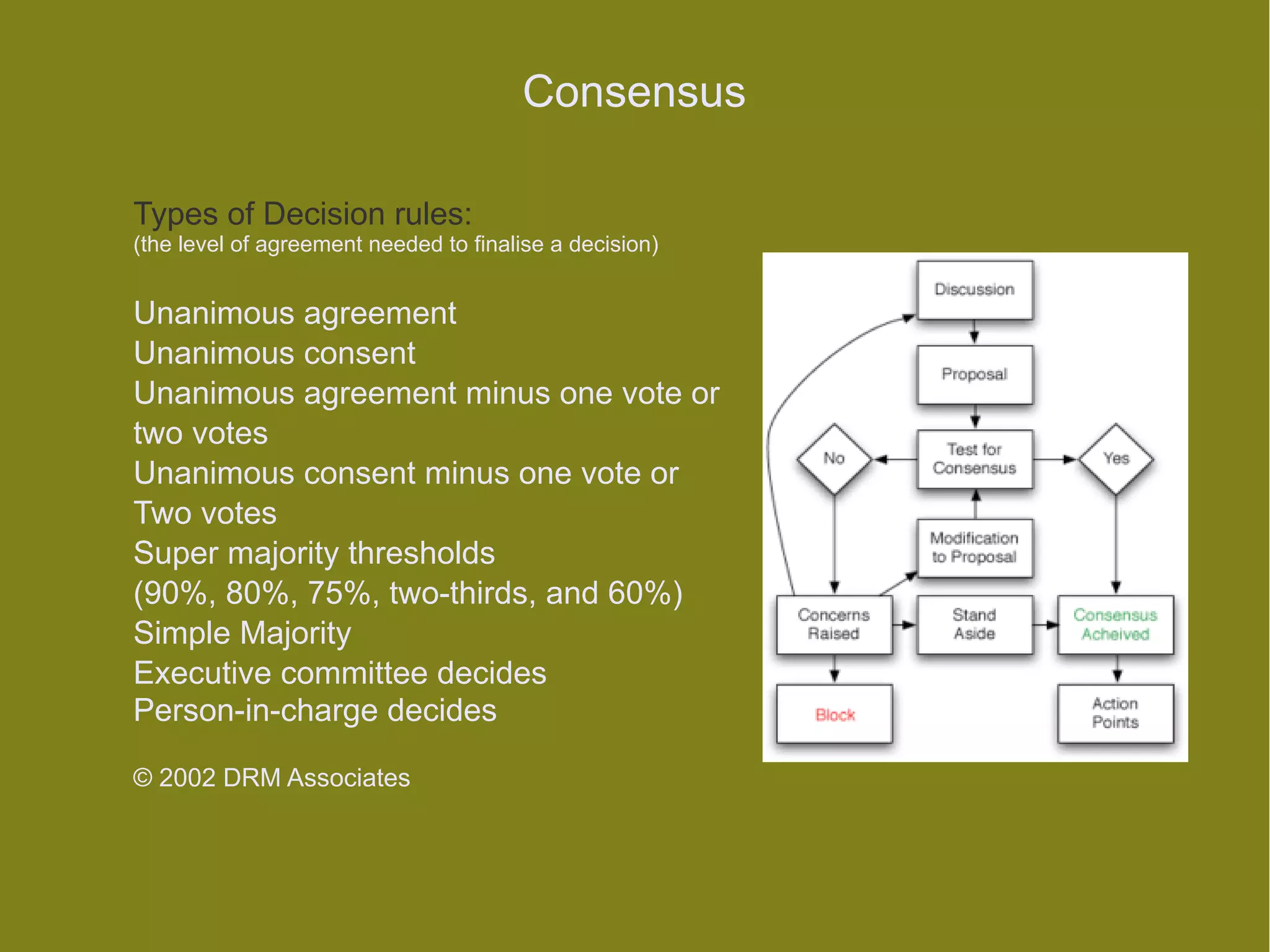
Consensus

Types of Decision rules:
(the level of agreement needed to finalise a decision)


Unanimous agreement
Unanimous consent
Unanimous agreement minus one vote or
two votes
Unanimous consent minus one vote or
Two votes
Super majority thresholds
(90%, 80%, 75%, two-thirds, and 60%)
Simple Majority
Executive committee decides
Person-in-charge decides

© 2002 DRM Associates
ORID – Focused Discussion Technique


Observational (observed via the senses, hard facts)


Reflective (emotional)


Interpretive (finding meaning, patterns, links)


Decisional (what action? What next?)


© Institute of Cultural Affairs
Resources
Facilitation

Artslink Queensland http://artslinkqld.com.au/groupfacilitationskills

Mindtoolshttp://www.mindtools.com/pages/article/RoleofAFacilitator.htmlaptop

Groupwork
Infed - the encyclopaedia of informal education http://www.infed.org/groupwork/what_is_group_work.htm

Conflict Resolution & Consensus
Conflict Resolution Network http://www.crnhq.org/pages.php?pID=12#skill_5
www.actupny.org/documents/CDdocuments/Consensus.html
www.npd-solutions.com/consensus.html          http://www.consensusdecisionmaking.org/

Strategic Questioning
ORID and The Art of Focused Conversation: 100 Ways to Access Group Wisdom in the Workplace
Institute of Cultural Affairs
http://www.jobsletter.org.nz/vivian/strat704.htm

Evaluation

Learning Store University Wisconsin Extension

http://learningstore.uwex.edu/Program-Development-Evaluation-C234.aspx

Icebreaker

http://insight.typepad.co.uk/40_icebreakers_for_small_groups.pdf

http://arteducationdaily.blogspot.ie/2011/10/art-class-icebreakers-index.html

Facilitation Skills notes from artist Niamh O'Connor

  • 1.
  • 2.
    To Facilitate: Is tomake easy or help forward an action or process e.g. to facilitate dialogue in a group enables interaction, sharing of ideas and expertise etc., assists in the emergence of understanding and meaning, can aid collaboration through the identification of an action and fosters agreements towards this end. A Facilitator: Through providing a structure and process, assists a group to function effectively, to achieve synergy and supports “everyone to do their best thinking and practice” (Kaner et al, 2007) Kaner, S. with Lind, L., Toldi, C., Fisk, S. and Berger, D., "Facilitator's Guide to Participatory Decision-Making, (2007)
  • 3.
    A Good Facilitator... (group-made list 7.2.13) Guides a process Is a good Listener and has good communication skills Plans and gives structure e.g. Introductions, Provides opportunities for evaluation and feedback •   Is mindful of adapting plans to current conditions Is capable, confident and has good self-presentation Suspends judgement Is patient Has Boundaries while creating a secure atmosphere Shares power Connects with people and recognises / affirms Understands the dynamics of a group contributions Is good at time management Knows their own limitations Has personal integrity Manages expectations of the group/funders/self Can think on their feet (reflection in action) Is able to deal with vulnerable participants (may bring in expertise) Respects the autonomy of individuals, the group wisdom Acknowledges and deals with problems Values personal experience Can Mediate effectively Summarises information. Encourages risk-taking, critical thinking and creativity understands process and content functions Fosters collective responsibility Promotes participation and group action
  • 4.
    A Good Facilitator... Process Ensuresthat everyone has an opportunity to participate Enables people to express and deal with conflict Assists members to identify feelings that impede the group's work Content Clarifies any confusing comments or statements Identifies connections or common threads Organises and summarises ideas, plans etc.
  • 5.
    Listening Active Listening makesuse of paraphrasing to affirm and build understanding. Open Questions allow for reflection, sharing of opinion and feelings, shares control within the encounter. How... What... Why... Tell me more about?
  • 6.
    Dialogic listening orRelational Listening Dialogic Listening is a process of finding meaning through conversational exchange, asking for clarity and testing understanding. It focuses on the interaction and process of co-creation. Characteristics of dialogic listening are: Authenticity Inclusion Confirmation Presentness Spirit of mutual equality and supportive climate
  • 7.
    Dialogic listening orRelational Listening Techniques: Encourage each other to say more, to further explore and explicate views and questions Use, extend, and play with metaphors to reveal new perspectives on an issue or situation Paraphrase, interpret and respond Explore the context of each other's claims (ideas, feelings and opinions) John Stewart and Milt Thomas, "Dialogic Listening: Sculpting Mutual Meanings," in Bridges Not Walls, ed. John Stewart, 6th edition, (New York: McGraw- Hill, 1995)
  • 8.
    Why Work withGroups? What are some of the challenges of working with groups? When do I use facilitation?
  • 9.
  • 10.
    Conflict Resolution The ConflictResolution Network identifies 12 skills for resolving conflict: The Win/Win Approach The Creative Response Empathy Appropriate Assertiveness Co-operative Power Managing Emotions Willingness to Resolve Mapping the Conflict Development of Options Negotiation Skills Third Party Mediation Broadening Perspectives © Conflict Resolution Network PO Box 1016 Chatswood NSW 2057 Australia Website www.crnhq.org
  • 11.
    Consensus Types of Decisionrules: (the level of agreement needed to finalise a decision) Unanimous agreement Unanimous consent Unanimous agreement minus one vote or two votes Unanimous consent minus one vote or Two votes Super majority thresholds (90%, 80%, 75%, two-thirds, and 60%) Simple Majority Executive committee decides Person-in-charge decides © 2002 DRM Associates
  • 12.
    ORID – FocusedDiscussion Technique Observational (observed via the senses, hard facts) Reflective (emotional) Interpretive (finding meaning, patterns, links) Decisional (what action? What next?) © Institute of Cultural Affairs
  • 13.
    Resources Facilitation Artslink Queensland http://artslinkqld.com.au/groupfacilitationskills Mindtoolshttp://www.mindtools.com/pages/article/RoleofAFacilitator.htmlaptop Groupwork Infed- the encyclopaedia of informal education http://www.infed.org/groupwork/what_is_group_work.htm Conflict Resolution & Consensus Conflict Resolution Network http://www.crnhq.org/pages.php?pID=12#skill_5 www.actupny.org/documents/CDdocuments/Consensus.html www.npd-solutions.com/consensus.html http://www.consensusdecisionmaking.org/ Strategic Questioning ORID and The Art of Focused Conversation: 100 Ways to Access Group Wisdom in the Workplace Institute of Cultural Affairs http://www.jobsletter.org.nz/vivian/strat704.htm Evaluation Learning Store University Wisconsin Extension http://learningstore.uwex.edu/Program-Development-Evaluation-C234.aspx Icebreaker http://insight.typepad.co.uk/40_icebreakers_for_small_groups.pdf http://arteducationdaily.blogspot.ie/2011/10/art-class-icebreakers-index.html