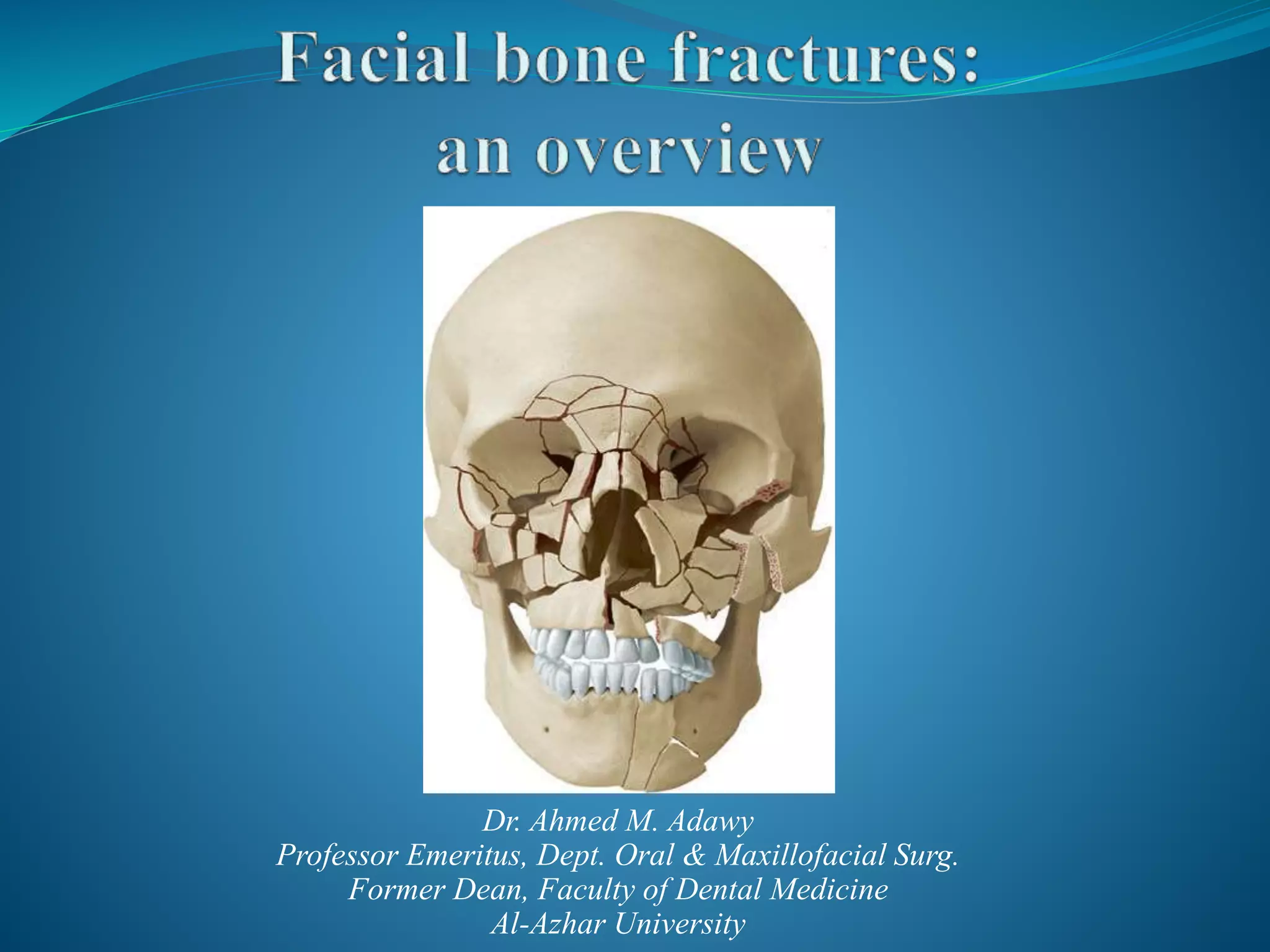
Dr. Ahmed M. Adawy
Professor Emeritus, Dept. Oral & Maxillofacial Surg.
Former Dean, Faculty of Dental Medicine
Al-Azhar University
The skull is composed of three principle bony
structures: cranial vault, cranial base, and facial
skeleton. The rigid cranial vault protects the brain
from external injury. The brain rests on cranial base.
This constitutes ‘‘neurocranium’’ (1)
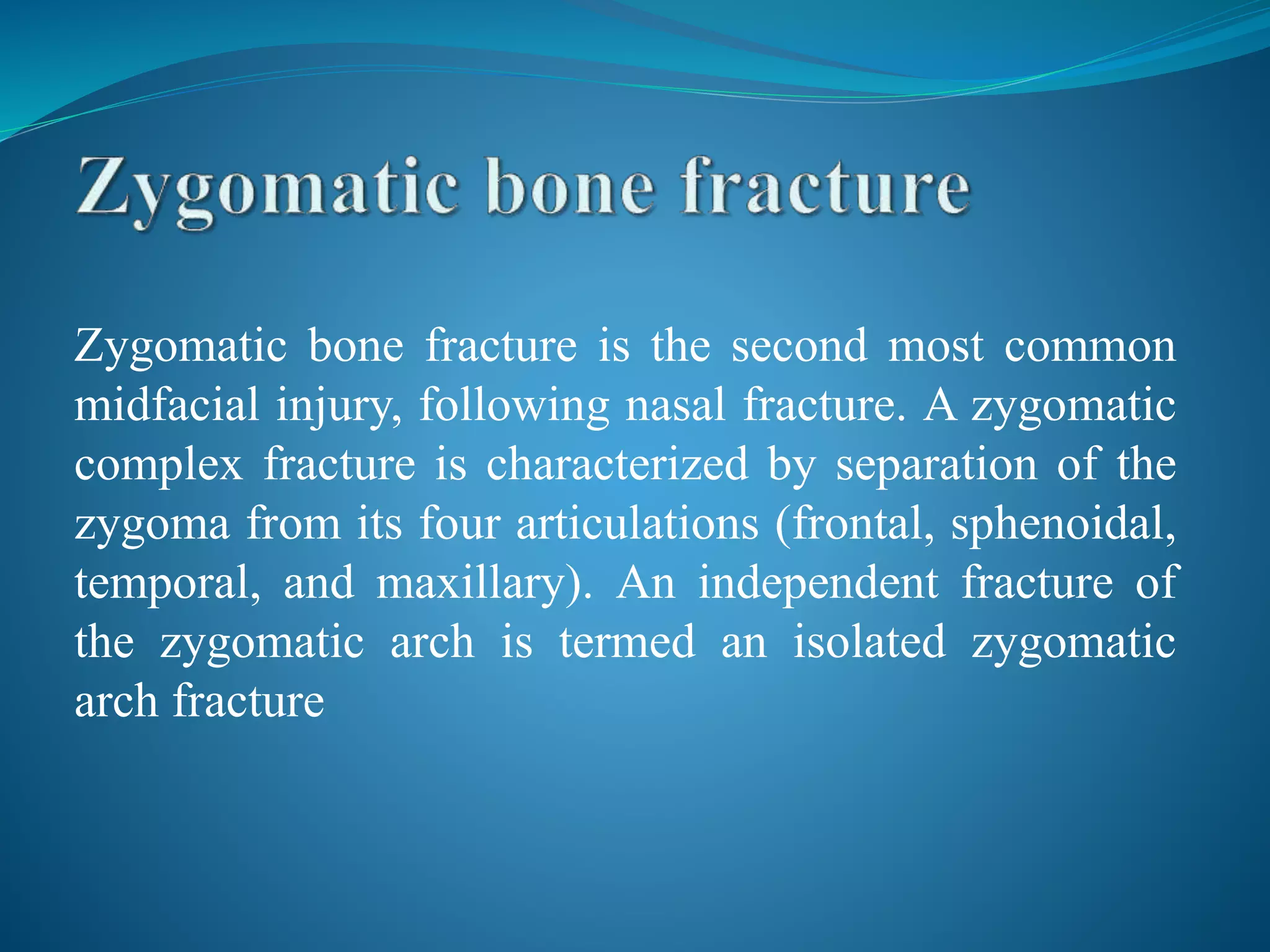
Eight bones form the cranial vault: two parietal bones,
two temporal bones, frontal bone, occipital bone,
sphenoidal and ethmoidal bones
Craniofacial skeleton
The facial skeleton can be divided for convenience
into three parts; the upper third of facial skeleton
being a part of cranial vault and comprising of frontal
bone, the middle third comprising of central midfacial
bone: the maxilla, the nasoethmoid, and lateral
midfacial bone: zygoma, and the lower third
comprising of rigid bone: mandible, with its condylar
articulation to base of skull (1)
Fifteen irregular bones form the facial skeleton:
three singular bones lying in the midline;
mandible, ethmoid, and vomer and six paired
bones occurring bilaterally; maxilla,
inferior nasal concha [turbinate], zygomatic,
palatine, nasal, and lacrimal bones
Facial skeleton
The facial skeleton constitutes with the oral cavity and
other associated soft tissues, ‘‘viscerocranium’’. The
facial skeleton is made up of a series of irregular
flattened bones that (with exception of the mandible)
is joined by static articulations called sutures. In
adults, sutures are believed to function primarily as
shock absorbers to dissipate stresses transmitted
through the skull (2)
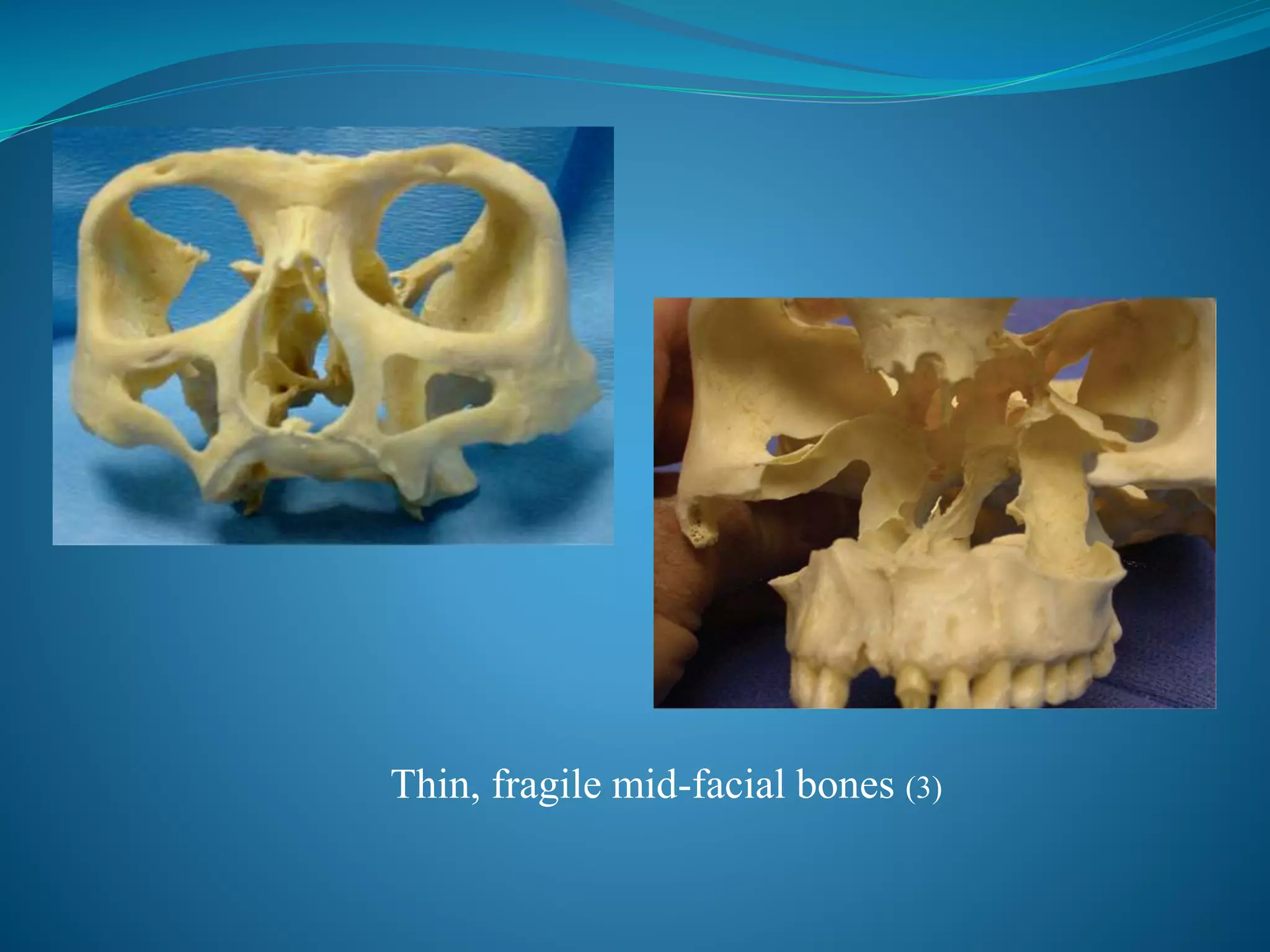
Anatomically, the bones of the cranial vault and the
mandible have a basic structure similar to many other
bones of the skeleton with a strong outer cortex and a
cancellous centre. In contrast, most of the bones of the
midfacial region are comprised only of a thin layer of
cortical bone and exhibit significant variations in their
thickness and composition
Thin, fragile mid-facial bones (3)
The bone and soft tissues of the midfacial region
are able to absorb the energy from impact forces.
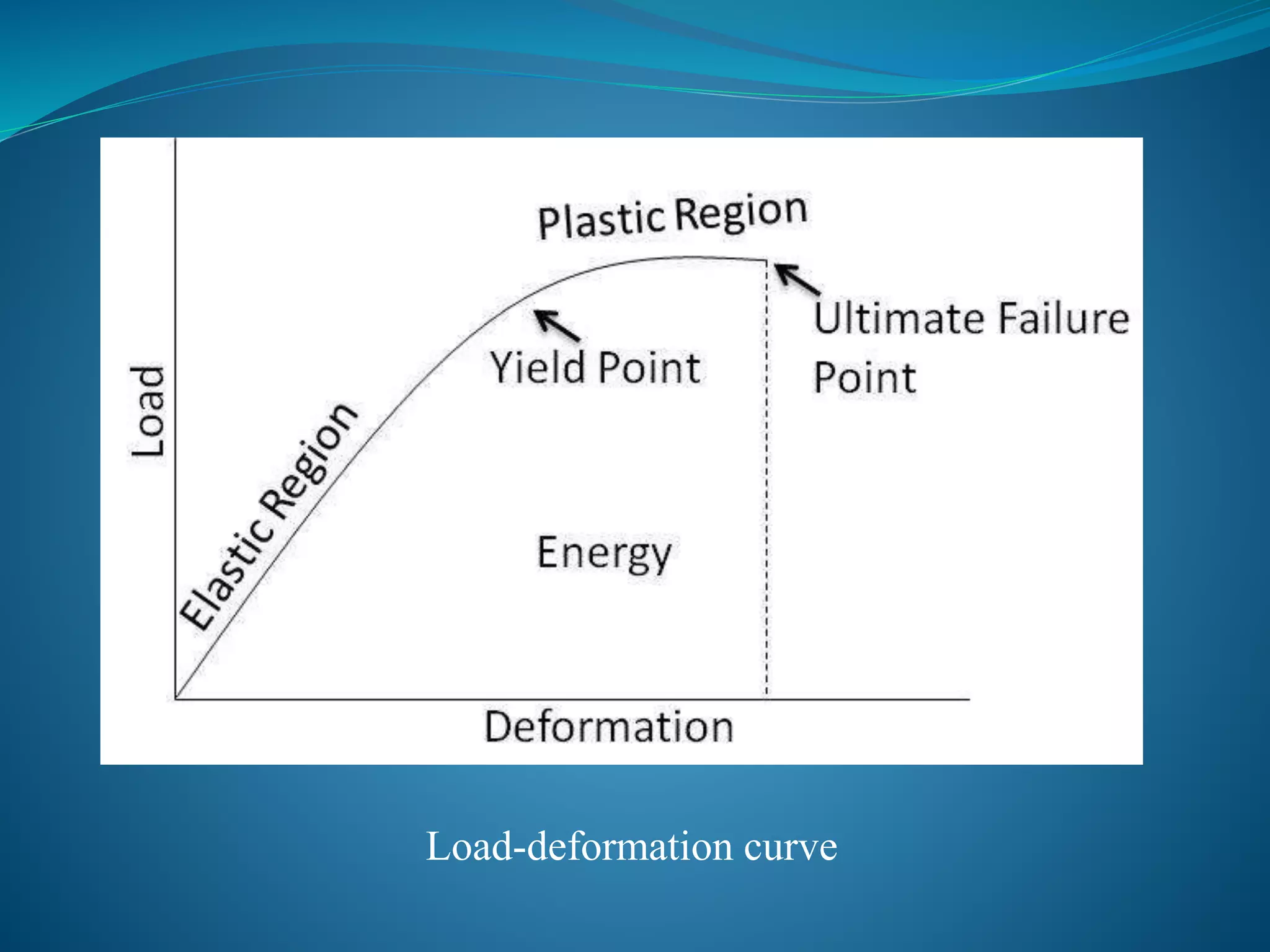
Force to the bone in the elastic range causing the
deformation and after force removal, bone returns
to its previous state, but if the force be greater than
the elasticity of bone, a permanent displacement
occurs and be irreversible. Furthermore, when these
forces exceed the strength of these tissues, a variety
of fractures can occur at this region
Load-deformation curve
The characteristics of fractures resulting from trauma
are determined by a dynamic factor (given by the
force and energy of the impact) and by a static factor
(given by the anatomic characteristics of the bone
involved). A small impact area results in a localized
fracture, whereas a large impact area leads to more
extensive indirect fractures, because the force is being
transmitted over a larger area of bone (4)
According to geometry of face, protruding areas are
most likely to sustain injury. Thus the nasal bones are
most commonly injured, followed by malar bones,
orbital rims, and symphysis of the mandible. The area
of the frontal bone is most resistant to injury. As
fracture occurs energy absorption takes place, thus
protecting the brain from violent deceleration
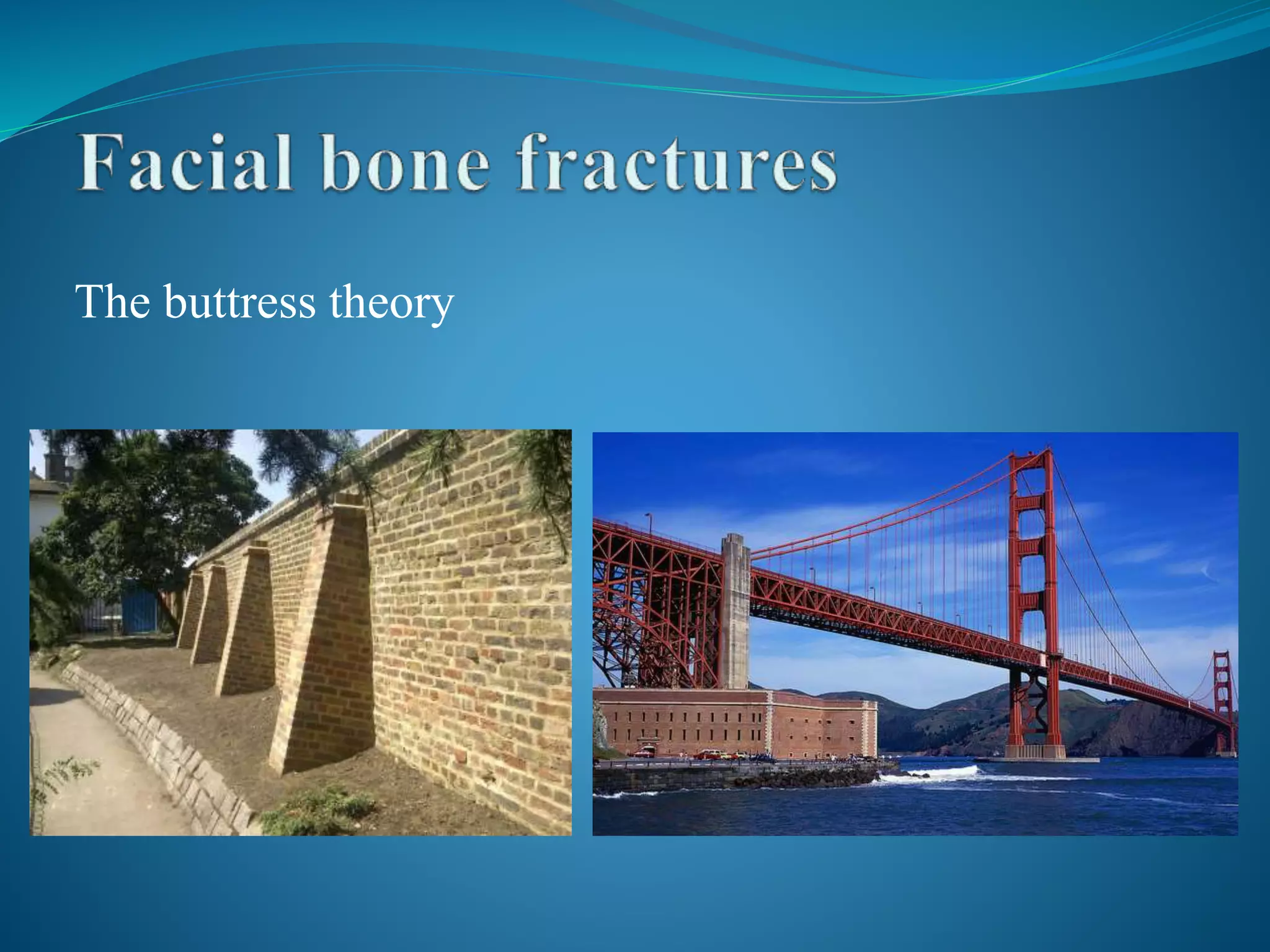
The buttress theory
The buttress theory proposes that the midfacial region
is like a framework that is stabilized by horizontal and
vertical buttresses. These buttresses believed to absorb
considerable amount of traumatic energy approaching
the midface region from below. However, the midface
has very low tolerance to impact forces applied from
other directions, with nasal bones exhibiting the least
resistance (5)
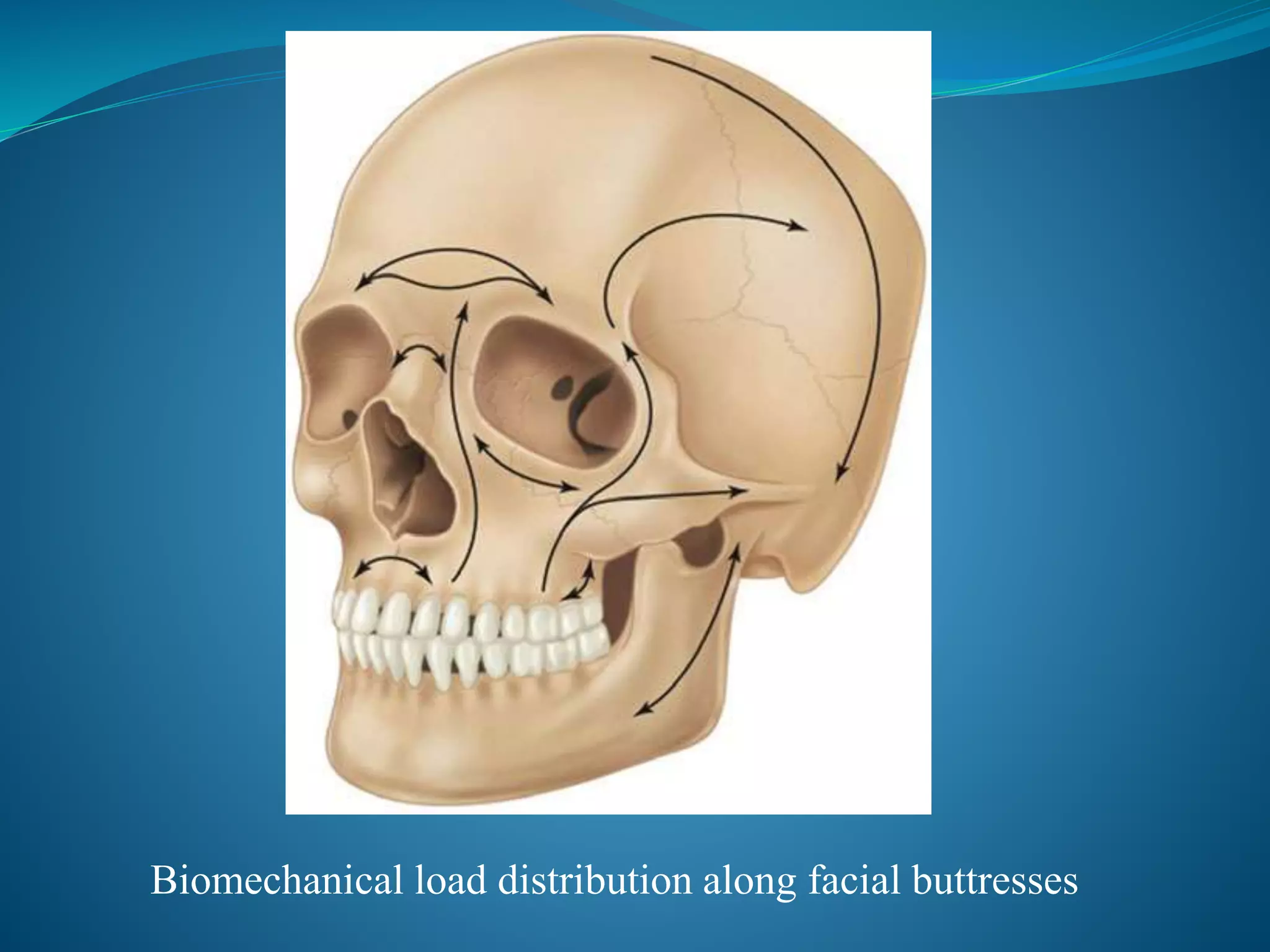
Biomechanical load distribution along facial buttresses
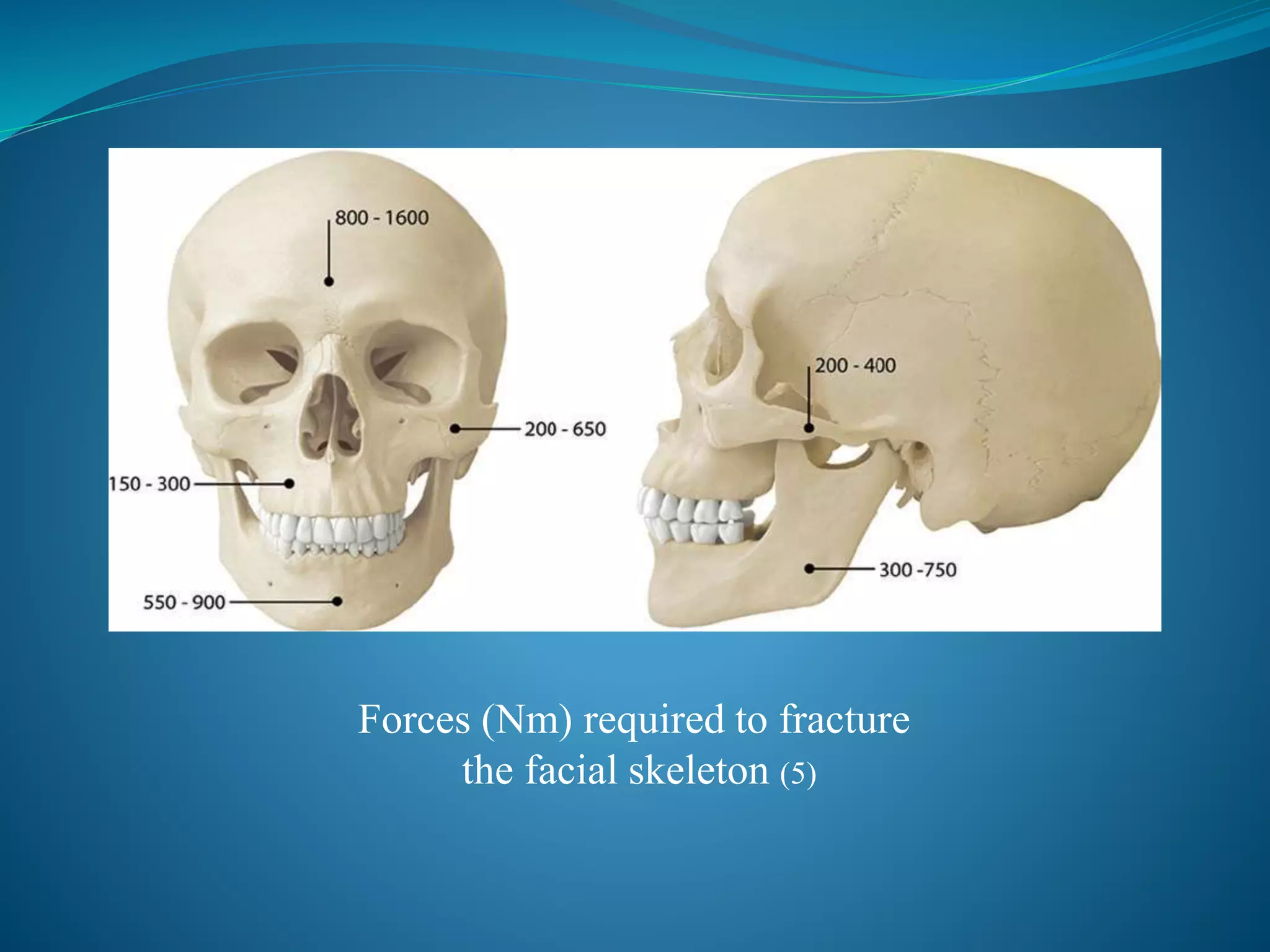
The nasal bones were the most fragile of the facial
bones, with tolerance levels for minimal fracture in
the 25–75 Nm range. The maxilla displayed low
tolerance level in the range of 150–300 Nm. The
relatively fragile zygomatic arch displayed tolerance
levels between 200 and 400 Nm, whereas the body of
the zygoma displayed a higher tolerance level with a
grouping in the 200–650 Nm range. The massive
frontal bone displayed the highest tolerance levels
with grouping between 800 and 1600 Nm
Forces (Nm) required to fracture
the facial skeleton (5)
Interesting to note that the bite forces in healthy
middle-aged humans averages 520 Nm for males and
340 Nm for females. However, maximal forces have
produced up to the high 700s
The buttresses represent areas of relative increased
bone thickness that support both the functional units
and the form of the face in an optimal relation, and
forces directed toward the face are distributed along
these buttresses. Facial buttresses can be classified
into vertical and horizontal buttresses (5)
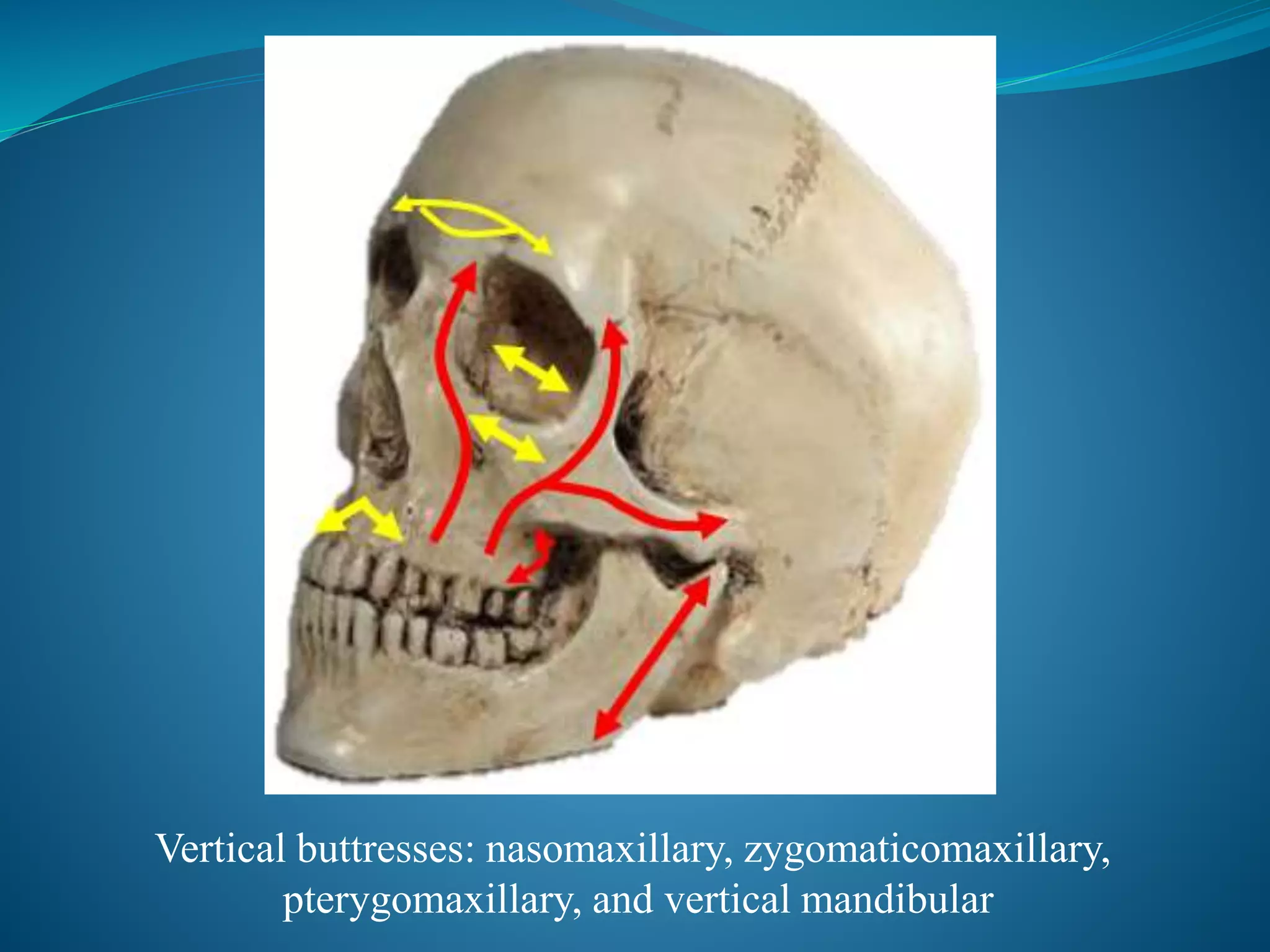
The vertical buttresses are: the nasomaxillary buttress
(connections between the maxilla and nasal bones),
the zygomaticomaxillary buttress (from the maxilla to
the zygomatic region), the pterygomaxillary buttress
(from the maxilla to the pterygoid process) and the
posterior or mandibular buttress (ascending ramus of
the mandible)
Vertical buttresses: nasomaxillary, zygomaticomaxillary,
pterygomaxillary, and vertical mandibular
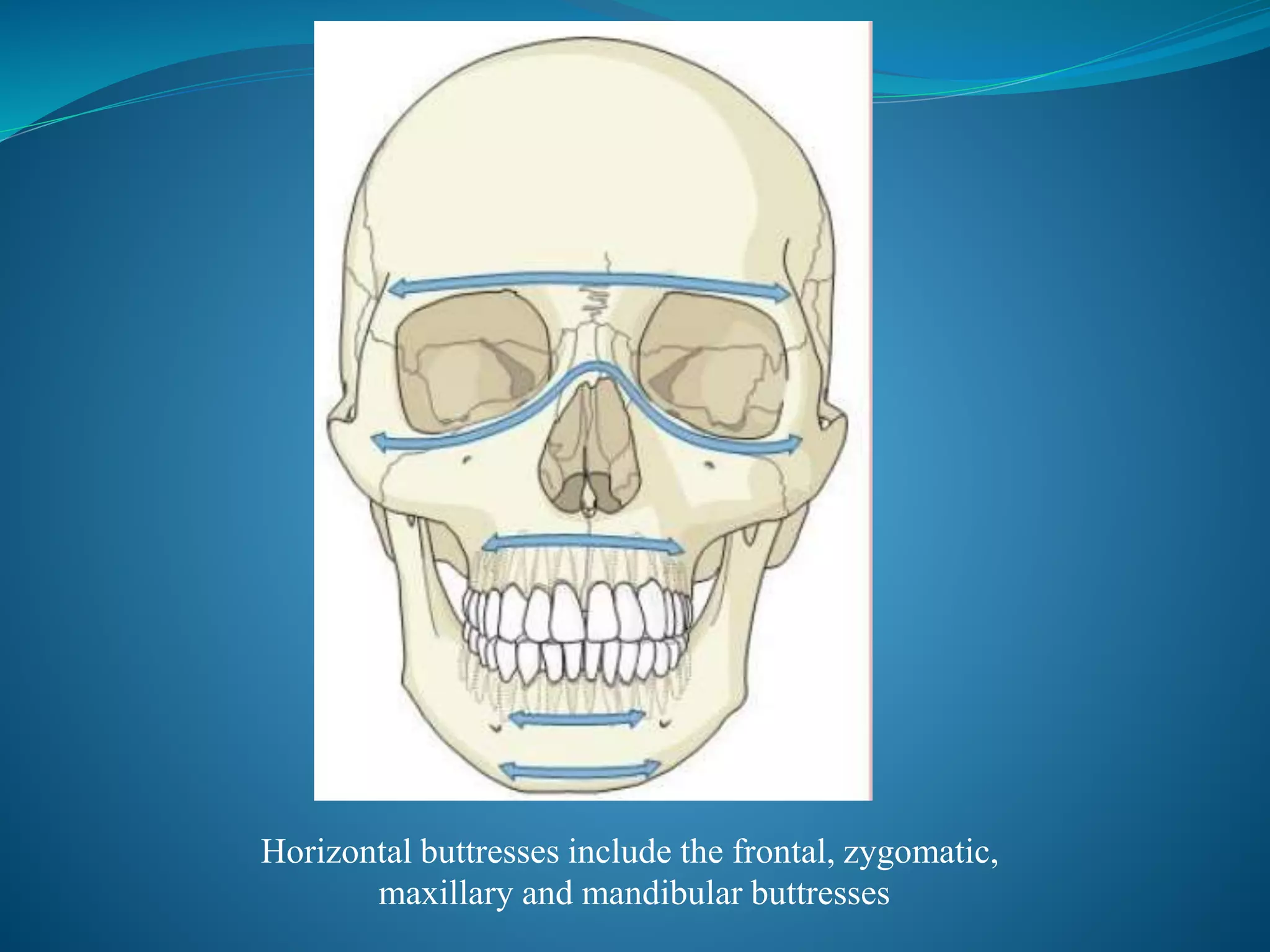
The horizontal buttresses include:
(1) frontal bar,
(2) transverse zygomatic buttress,
(3) transverse maxillary buttress,
(4) upper transverse mandibular buttress,
(5) lower transverse mandibular buttress
Horizontal buttresses include the frontal, zygomatic,
maxillary and mandibular buttresses
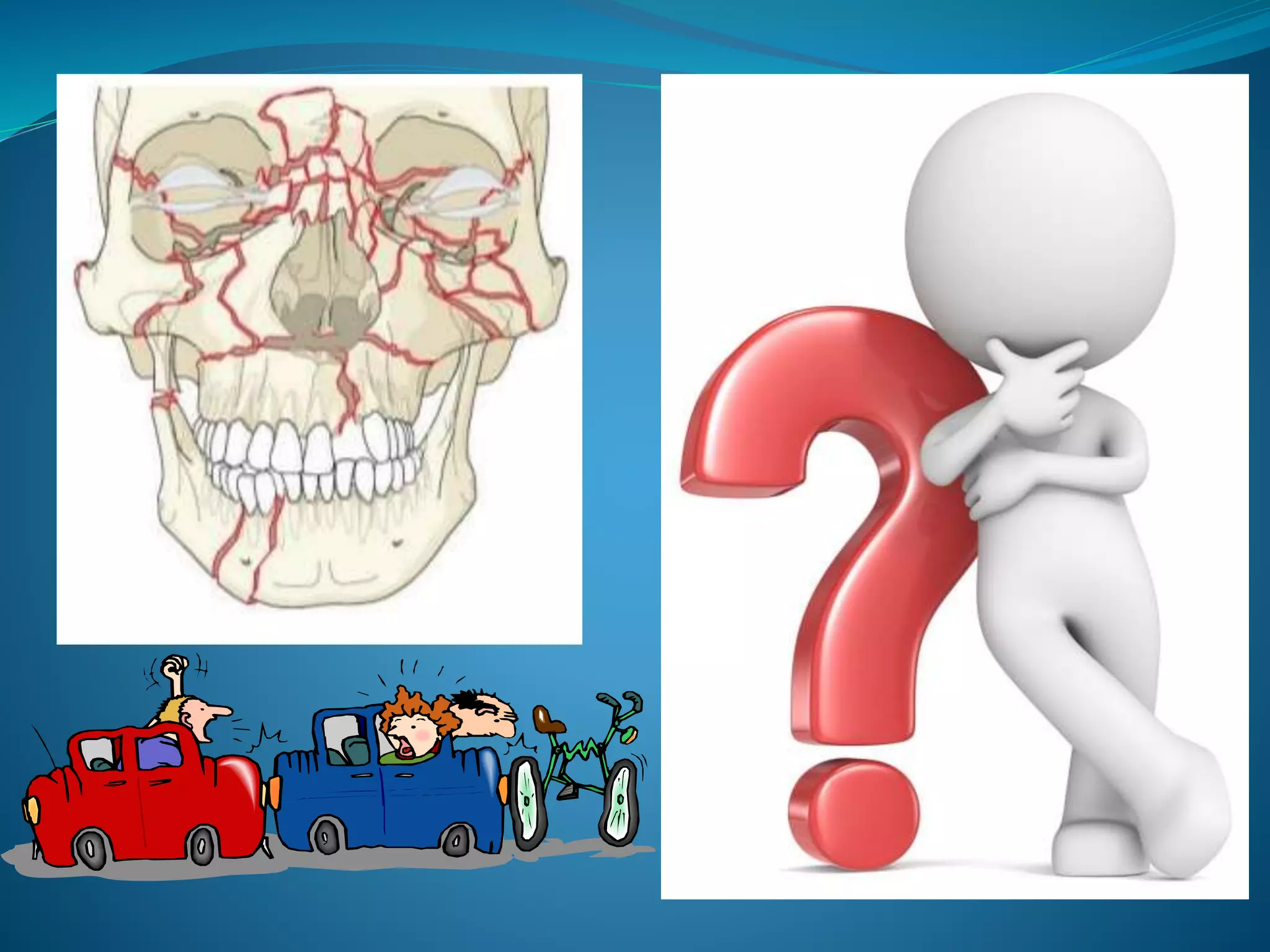
The most common causes of maxillofacial trauma
are traffic accidents, injuries from fights, sport
accidents or falls. The combination of traffic accidents
and injuries from fights account for 80% of
maxillofacial fractures (6). The force of impact can be
derived from the equation F = ma (7), where:
Force = mass ( weight) × acceleration ( speed)
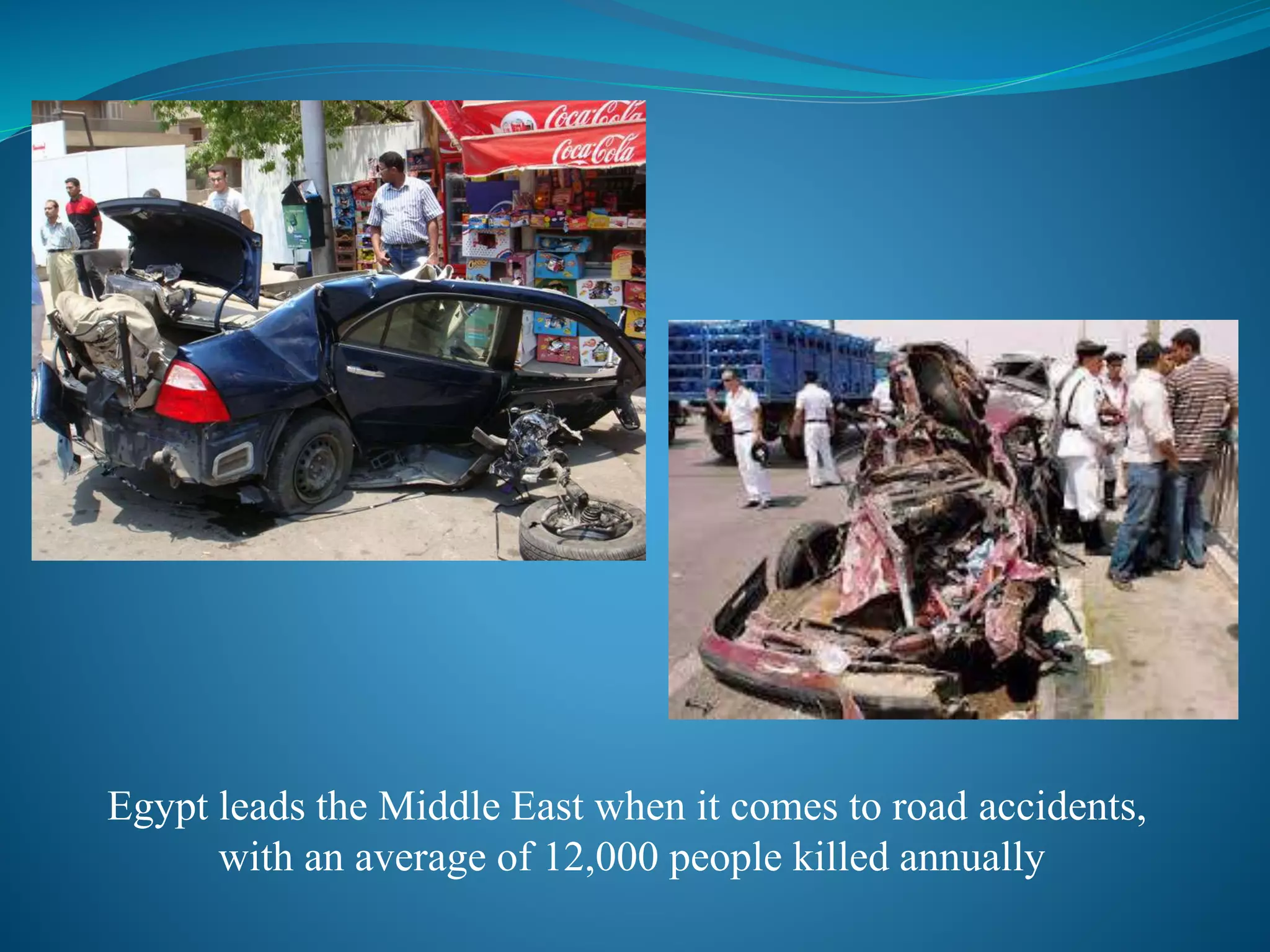
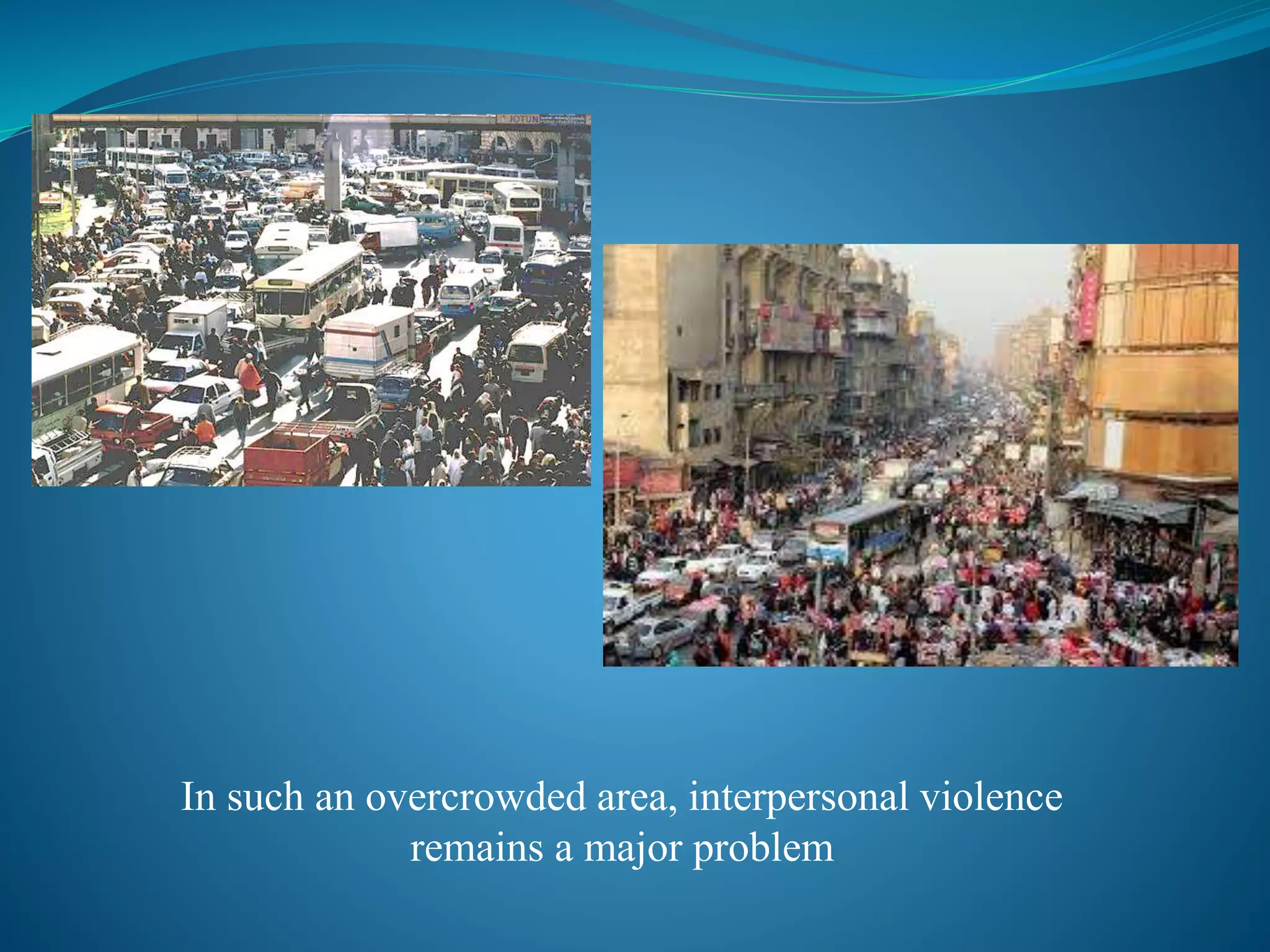
Egypt leads the Middle East when it comes to road accidents,
with an average of 12,000 people killed annually
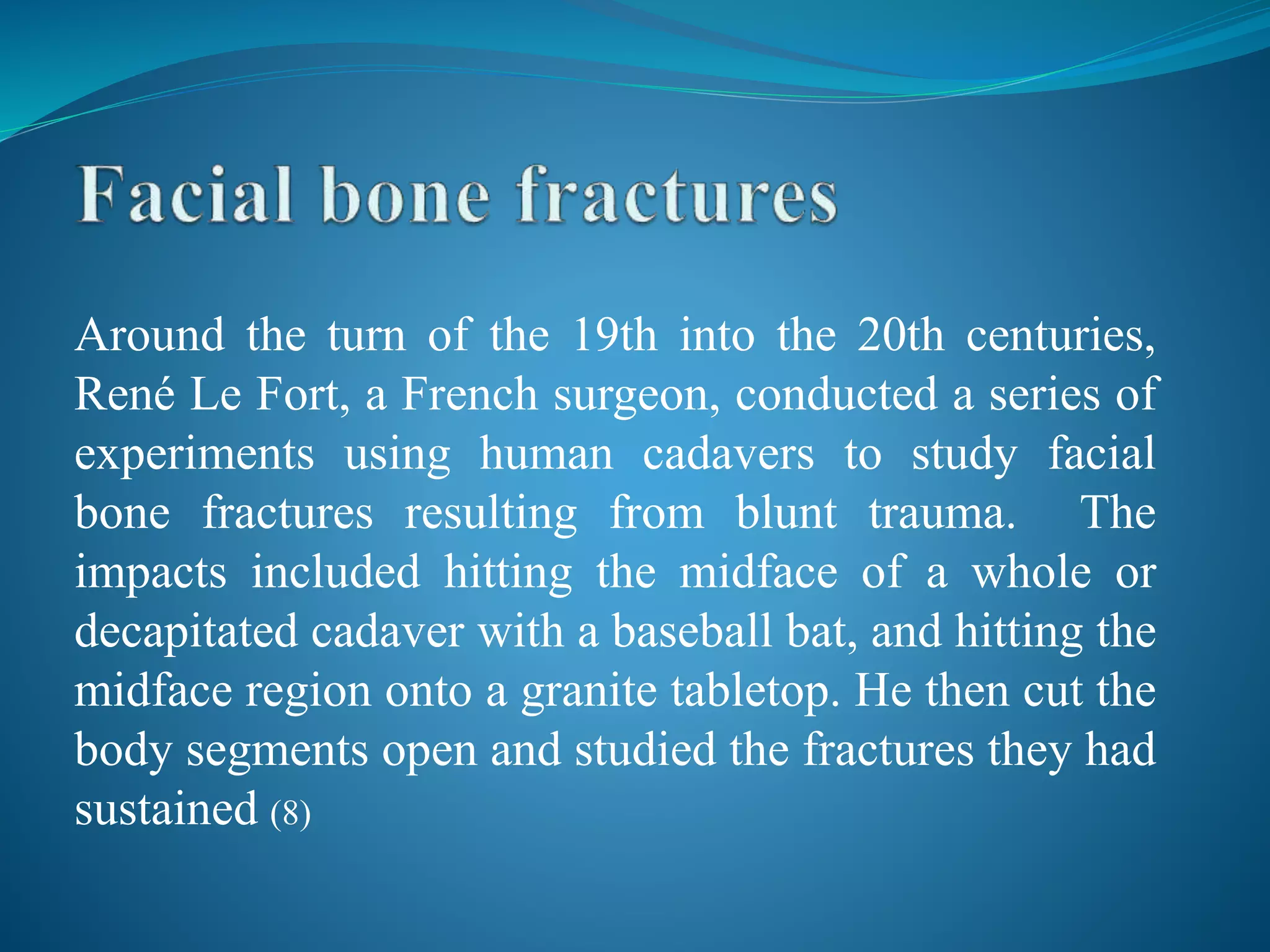
In such an overcrowded area, interpersonal violence
remains a major problem
Around the turn of the 19th into the 20th centuries,
René Le Fort, a French surgeon, conducted a series of
experiments using human cadavers to study facial
bone fractures resulting from blunt trauma. The
impacts included hitting the midface of a whole or
decapitated cadaver with a baseball bat, and hitting the
midface region onto a granite tabletop. He then cut the
body segments open and studied the fractures they had
sustained (8)
He concluded that midface fractures occurred through
‘lines’ of inherent weakness in the facial skeletal
structure, producing defined injury patterns. The
fracture patterns were predictable and reproducible,
depending on the site of impact on the midface. He
then formulated a classification system still
extensively used today: the Le Fort classification.
Common to these fractures is involvement of the
pterygoid plates
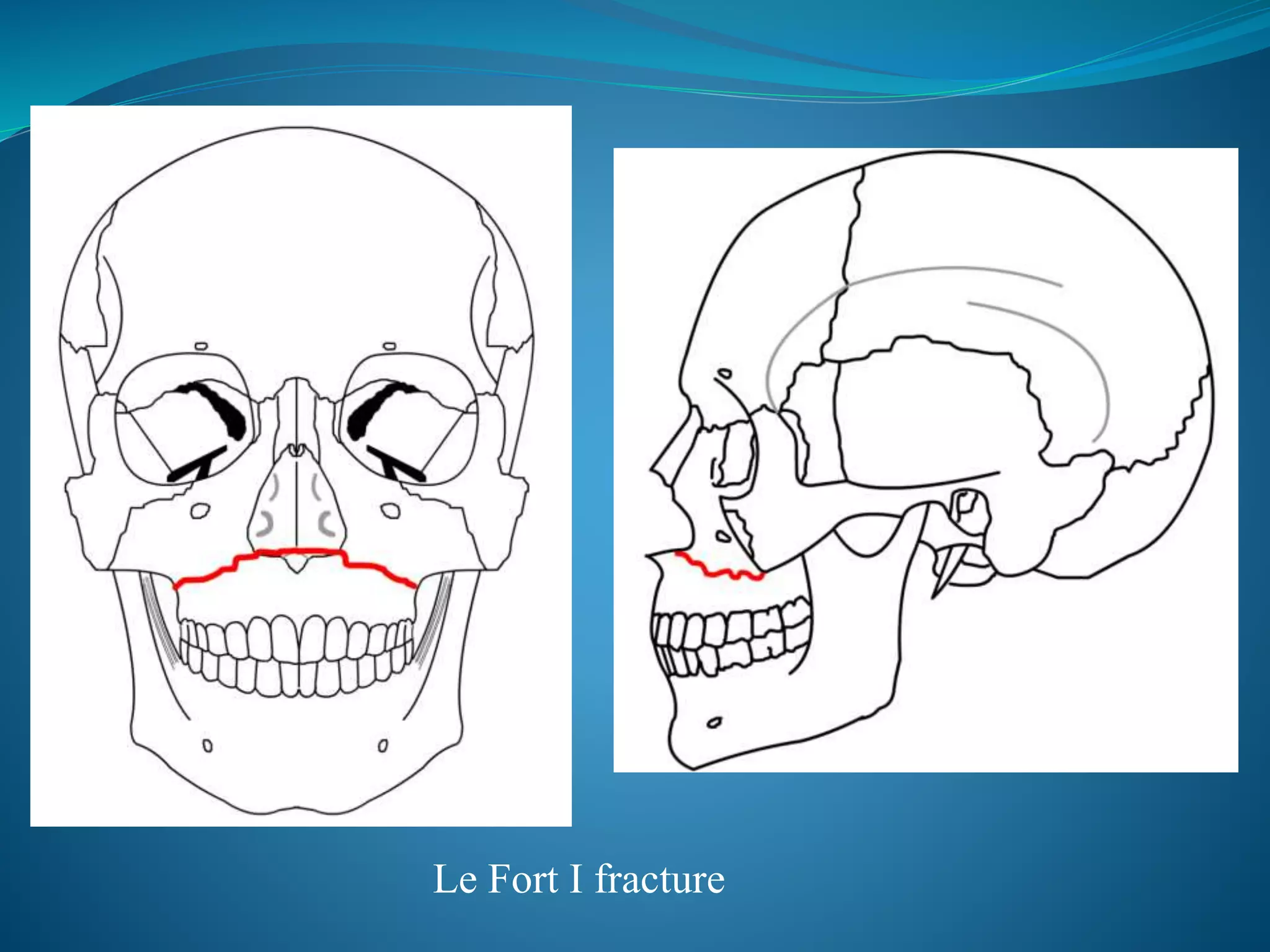
The Le Fort I fracture extends horizontally across the
maxilla above the level of the roots of the teeth,
traversing the lower lateral walls of the pyriform
aperture and the lower nasal septum. It extends
posteriorly across the lateral, medial and posterior
walls of the maxillary sinus and involves the
pterygoid plates. Unique to Le Fort I fracture is the
involvement of the lateral walls of the pyriform
aperture
Le Fort I fracture
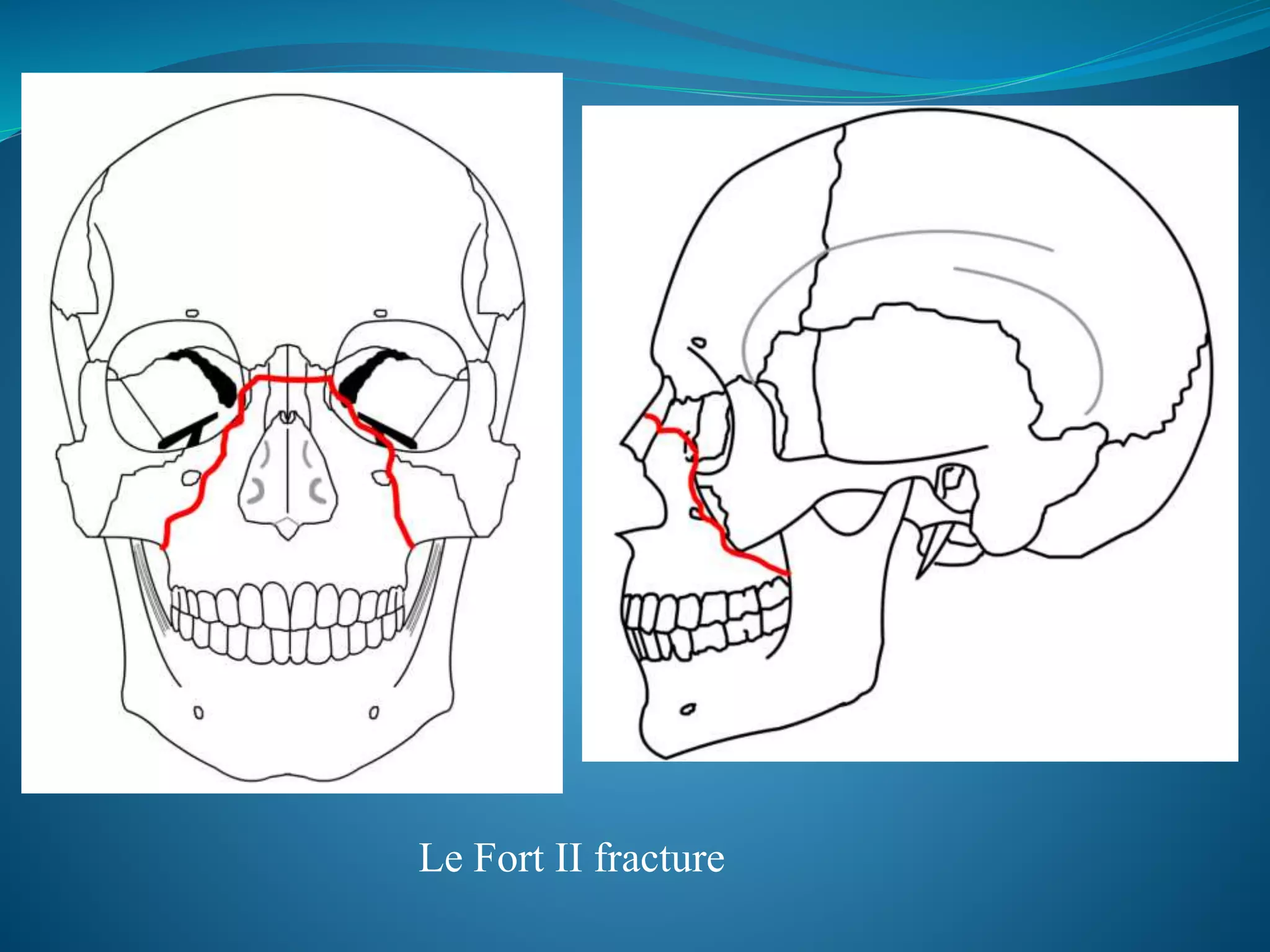
The Le Fort II fracture is pyramidal, with the apex at
the naso-frontal suture. From the apex, the fracture
line extends inferolaterally through the medial wall of
the orbit, orbital floor, inferior orbital rim and through
the zygomatico-maxillary suture. It also extends
posteriorly to the pterygoid plates. Unique to Le Fort
II fractures is involvement of the inferior orbital rim
Le Fort II fracture
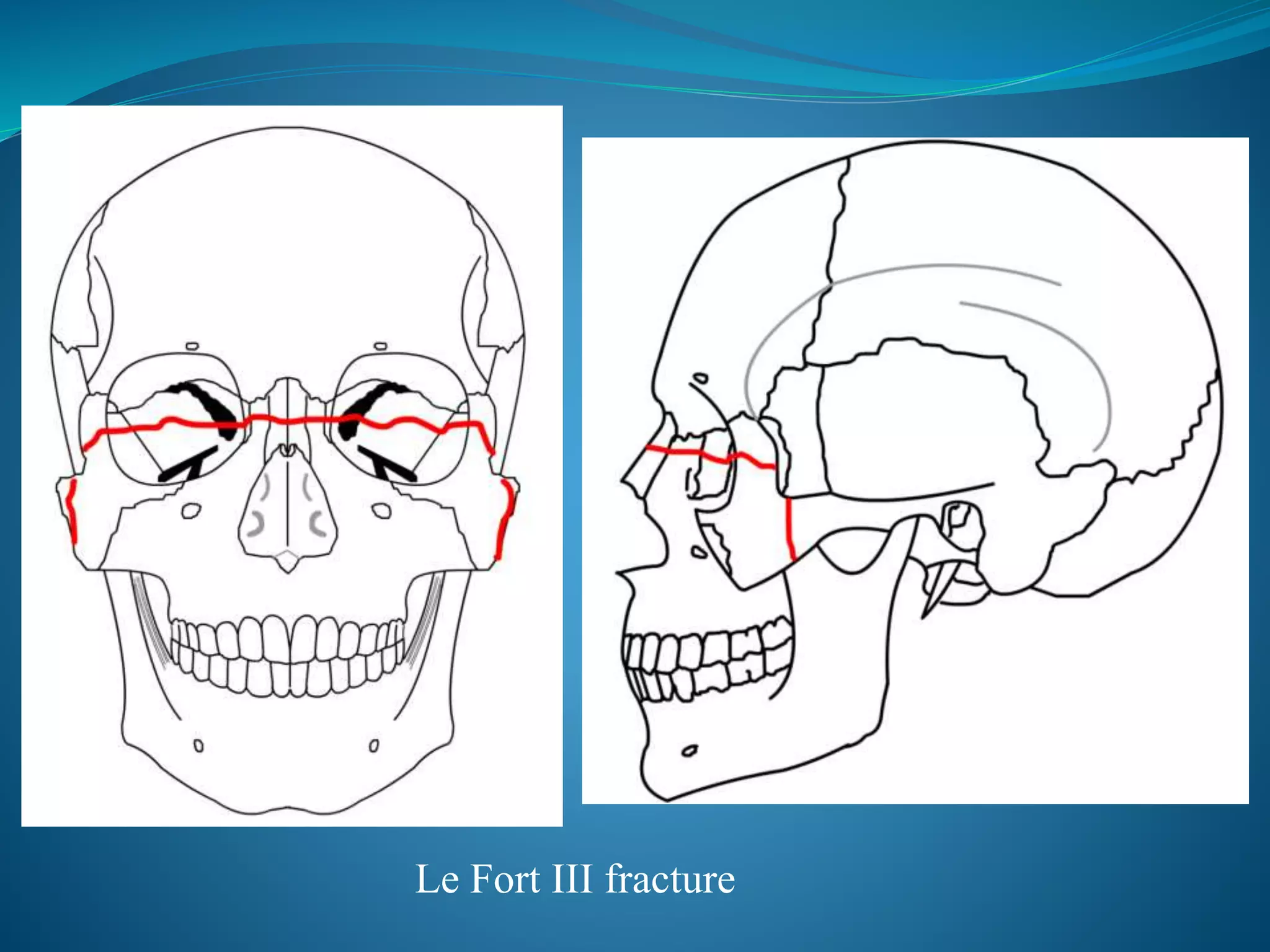
The Le Fort III fracture, also known as cranio-facial
disjunction, is like the Le Fort II, and comprises
dissociation of the naso-frontal suture. However, this
is horizontally oriented, traversing the medial and
lateral walls of the orbits, the zygomatico-frontal
suture and the zygomatic arch. Involvement of the
latter is unique to type III fractures (9)
Le Fort III fracture
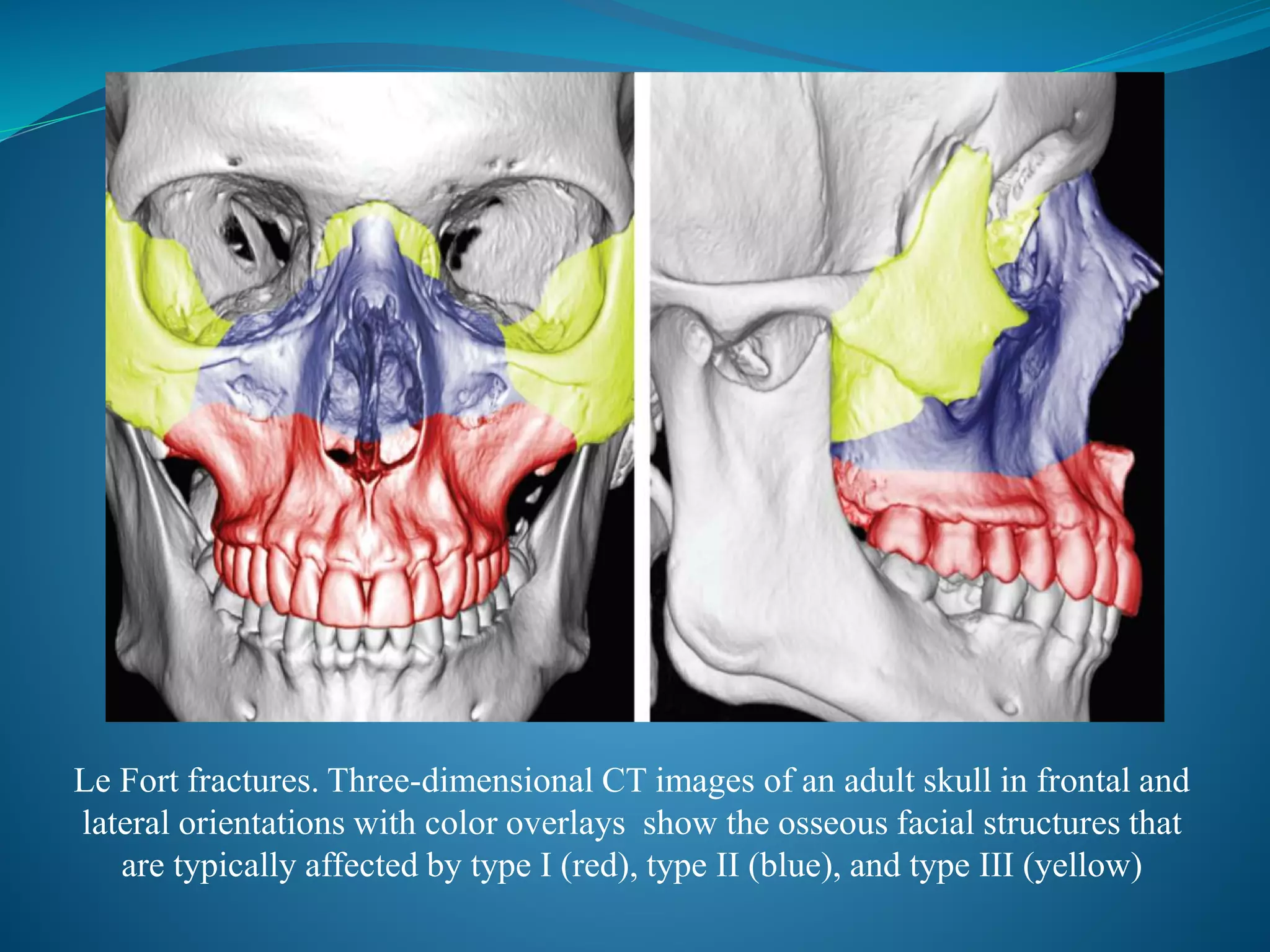
Le Fort fractures. Three-dimensional CT images of an adult skull in frontal and
lateral orientations with color overlays show the osseous facial structures that
are typically affected by type I (red), type II (blue), and type III (yellow)
Although useful in describing a midface fracture, Le
Fort’s classification is based on low-velocity trauma,
and does not completely reflect the breadth of high-
velocity fractures encountered in modern practice. In
addition, it underestimate the complexity of facial
fracture patterns, which often include combination of
front-orbital, zygomatic, and nasoethmoidal fractures
with maxillary injury. Moreover, it does not define the
facial skeletal supports or the more severely
comminuted fractures
Currently, facial fractures are classified into central
midface fractures, lateral midface fractures and
mandibular fractures. Central midface fractures
include: nasal, nasoethmoidal, orbital wall, maxillary
sinus, Le Fort I, and Le Fort II fractures. Lateral
midface fractures include fractures of the zygomatic-
malar complex, zygomatic arch, and orbital floor
fractures. While Le Fort III fractures are combined
central and lateral midface fractures. In another way,
facial bone fractures are classified as isolated or
complex fractures
In a series of multi-trauma patients with over 7,000
facial bone fractures, 24.3% affected the mandible and
71.5% affected the central and lateral midface. Almost
one third of fractures simultaneously affected more
than one area of the face (10)
In another study comprising 2,094 cases with facial
bone fractures (11), the most common isolated fracture
site was the nasal bone (37.7%), followed by the
mandible (30%), orbital bones (7.6%), zygoma
(5.7%), maxilla (1.3%) and the frontal bone (0.3%).
The largest group with complex fractures included the
inferior orbital wall and zygomaticomaxillary (14%)
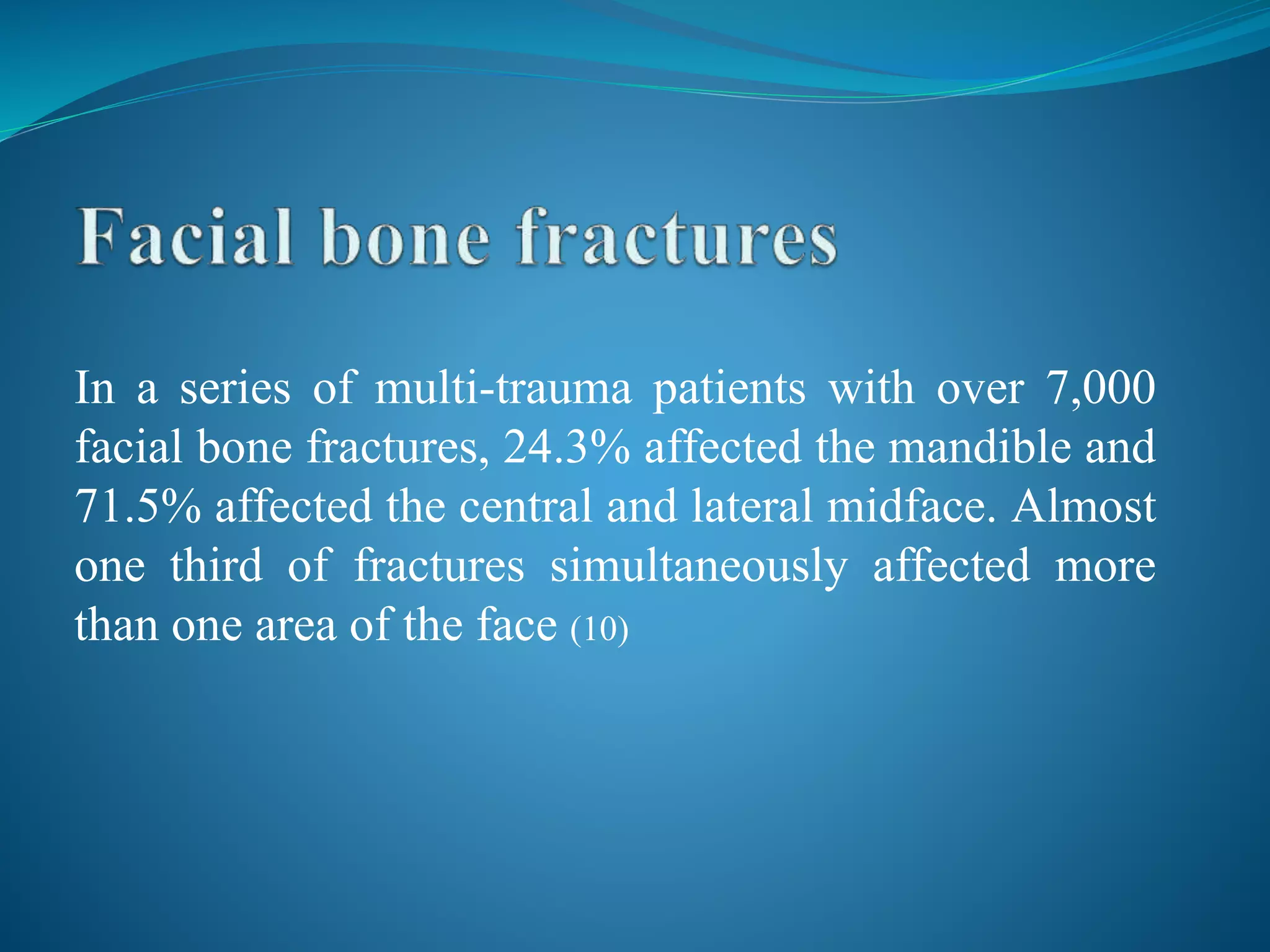
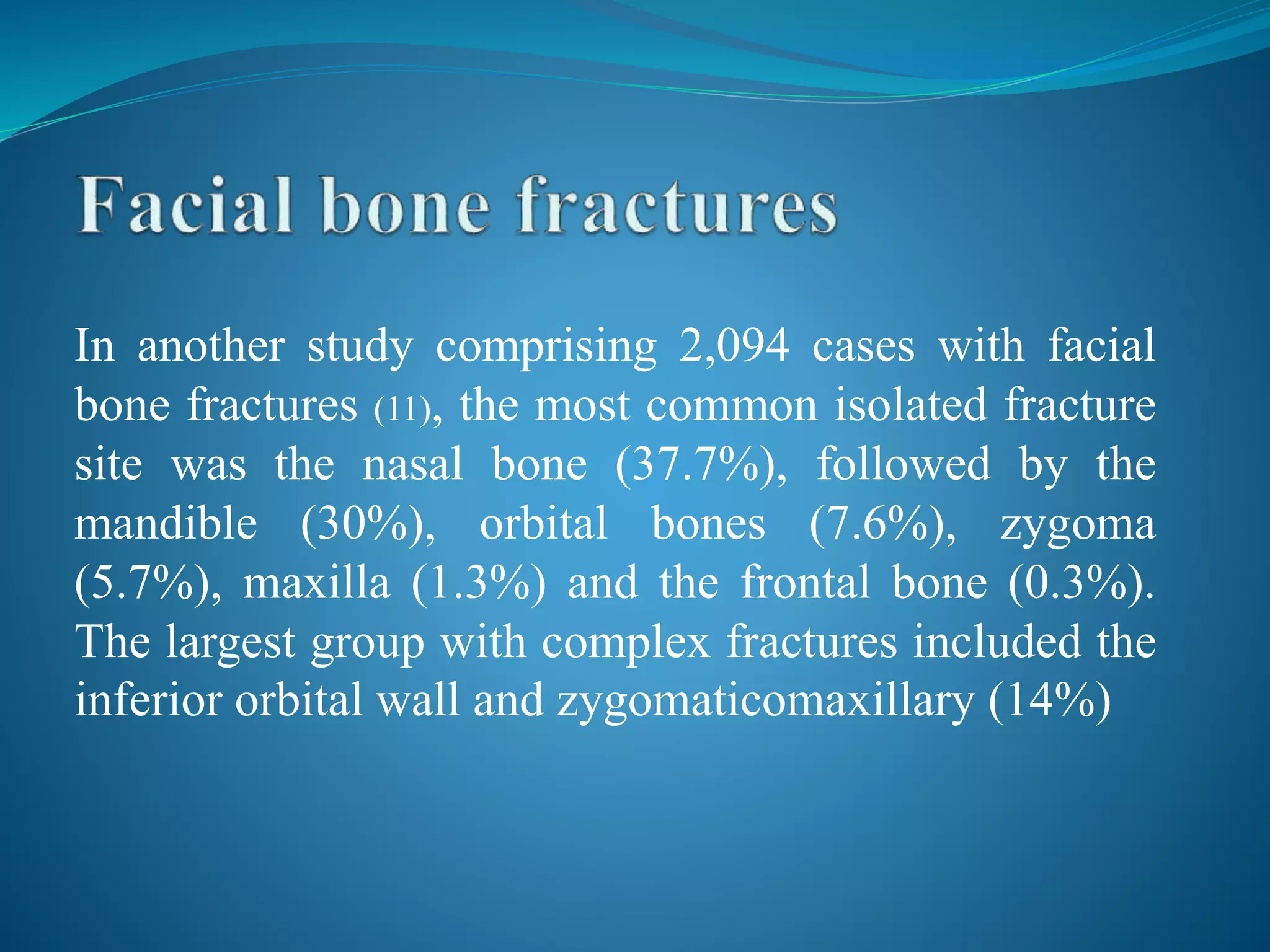
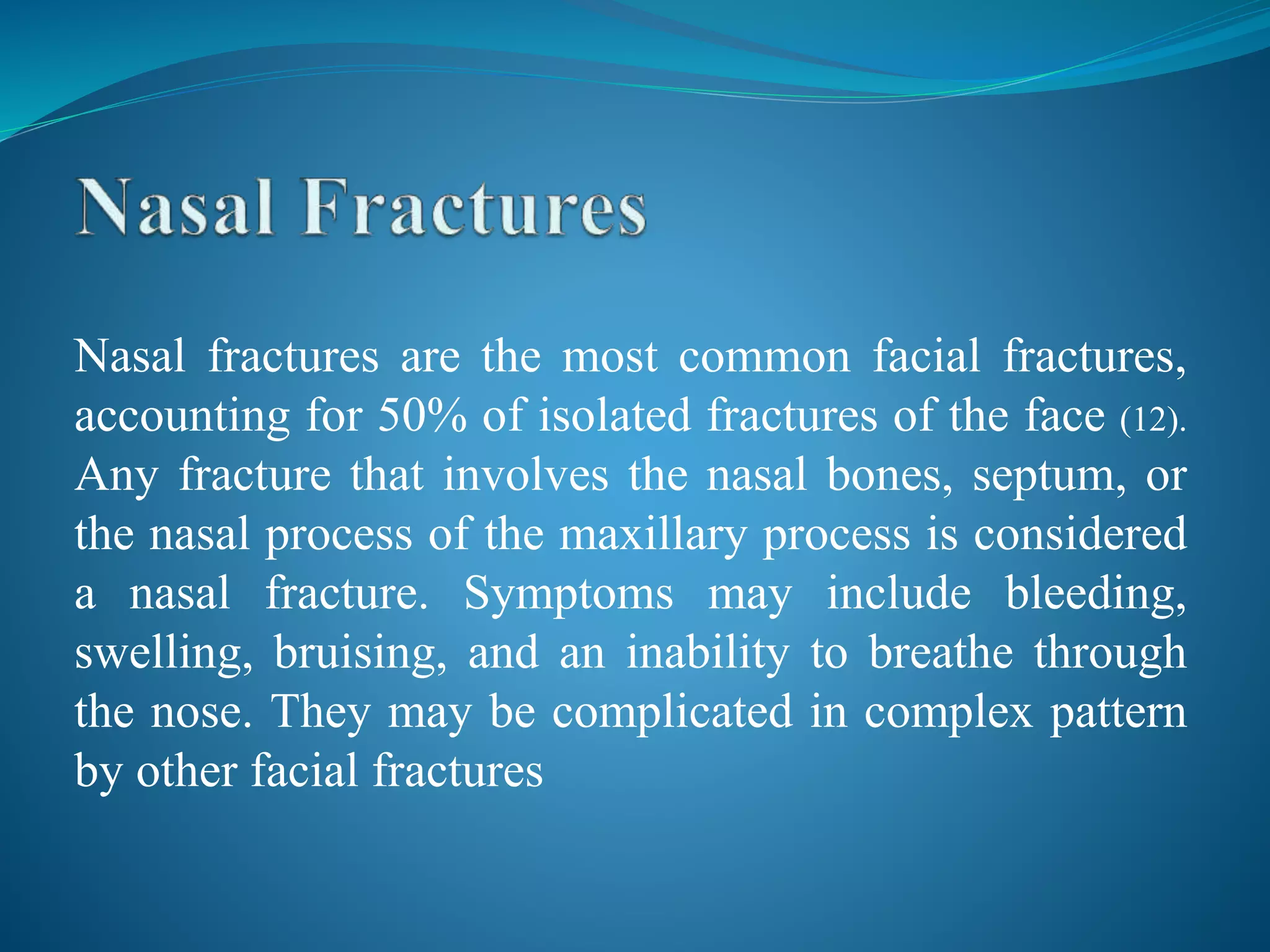
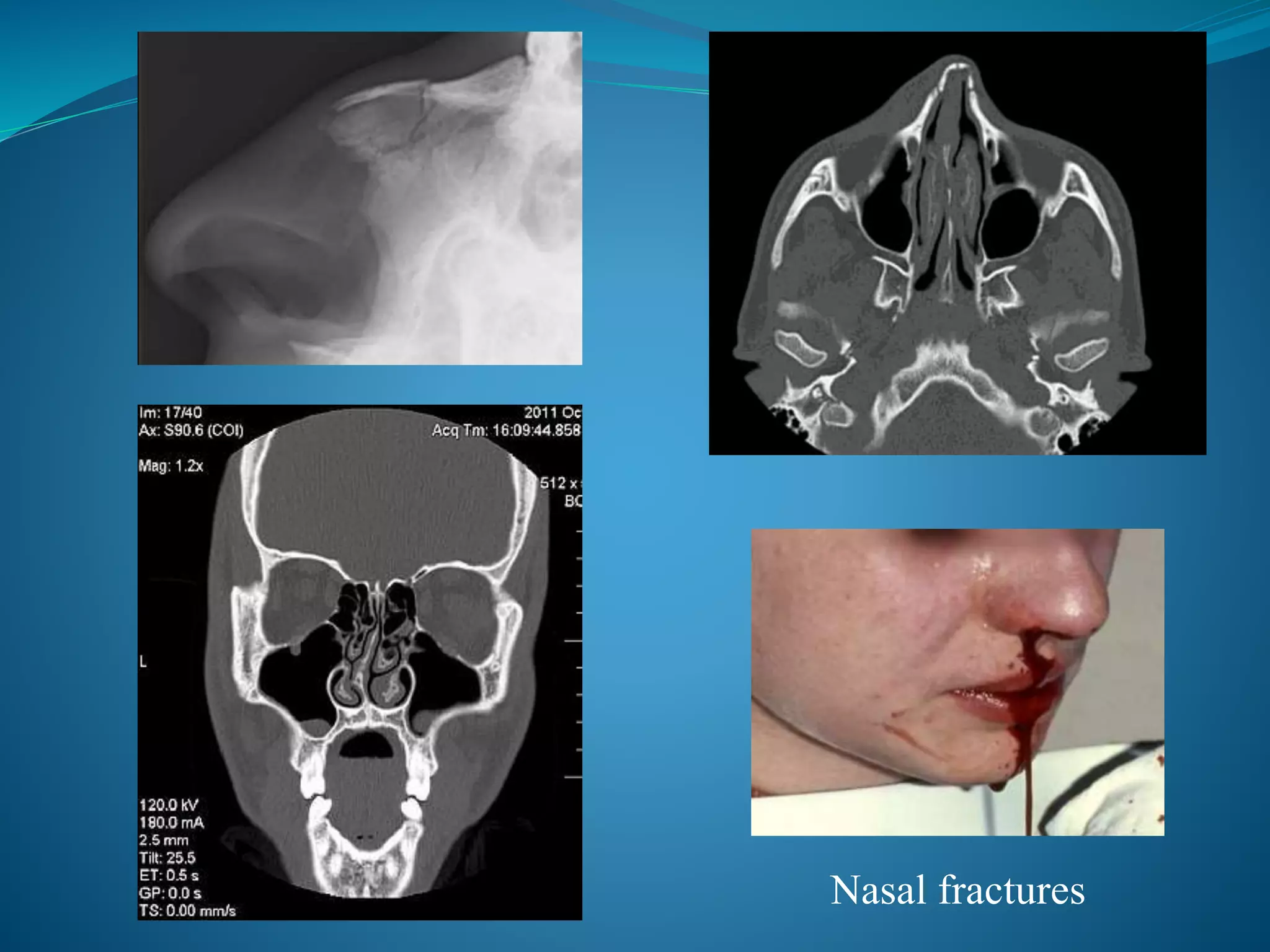
Nasal fractures are the most common facial fractures,
accounting for 50% of isolated fractures of the face (12).
Any fracture that involves the nasal bones, septum, or
the nasal process of the maxillary process is considered
a nasal fracture. Symptoms may include bleeding,
swelling, bruising, and an inability to breathe through
the nose. They may be complicated in complex pattern
by other facial fractures
Nasal fractures
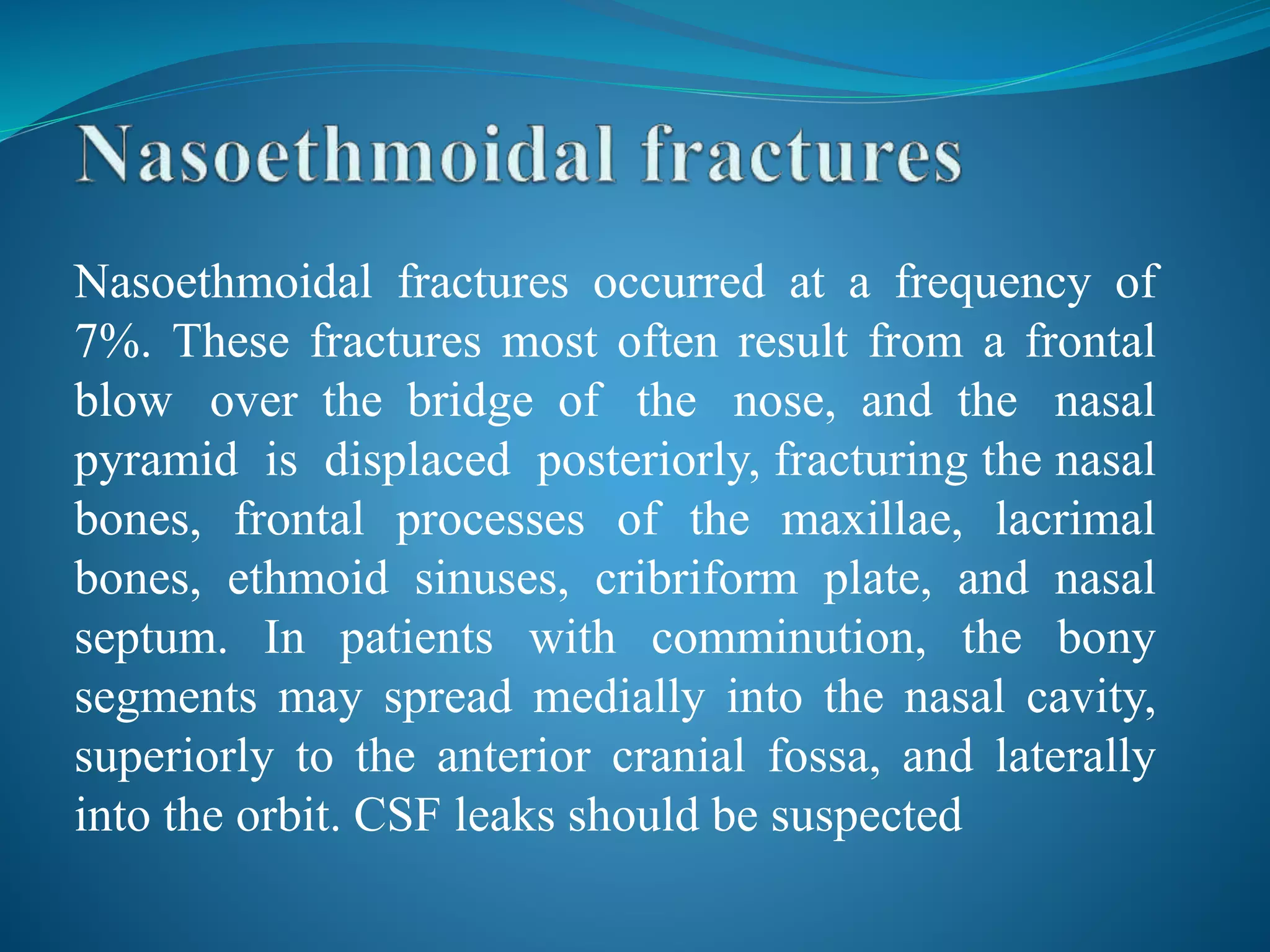
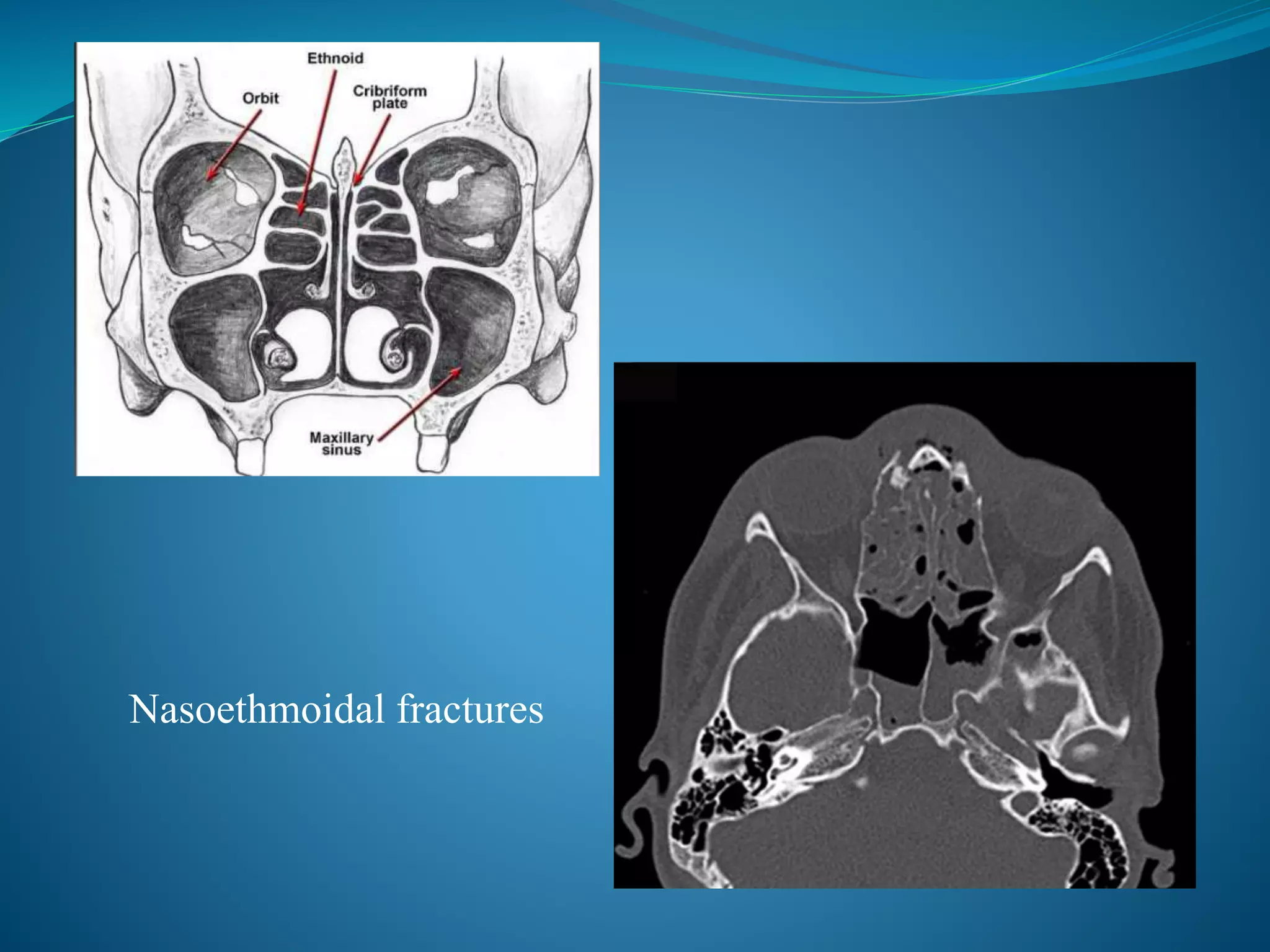
Nasoethmoidal fractures occurred at a frequency of
7%. These fractures most often result from a frontal
blow over the bridge of the nose, and the nasal
pyramid is displaced posteriorly, fracturing the nasal
bones, frontal processes of the maxillae, lacrimal
bones, ethmoid sinuses, cribriform plate, and nasal
septum. In patients with comminution, the bony
segments may spread medially into the nasal cavity,
superiorly to the anterior cranial fossa, and laterally
into the orbit. CSF leaks should be suspected
Nasoethmoidal fractures
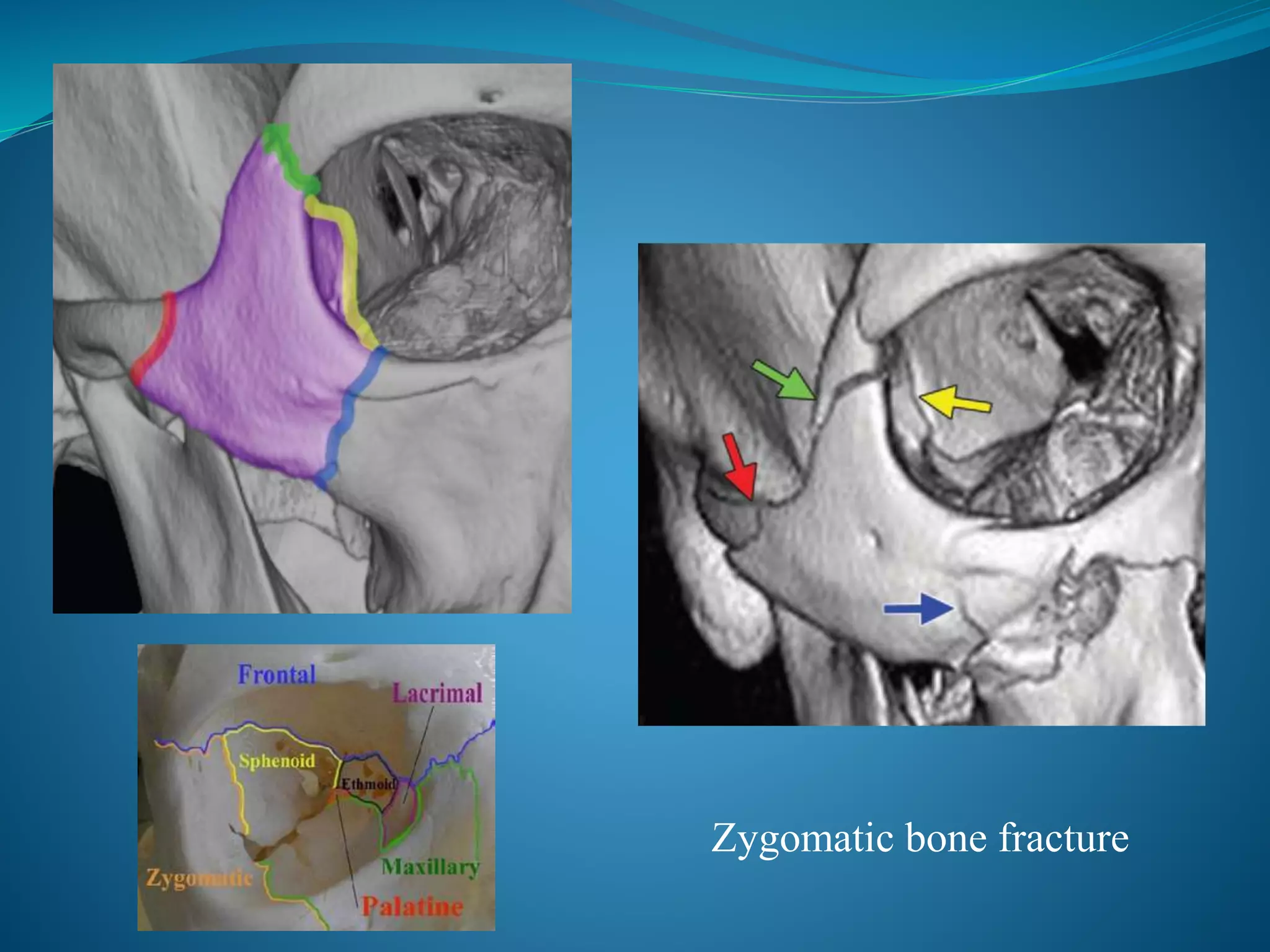
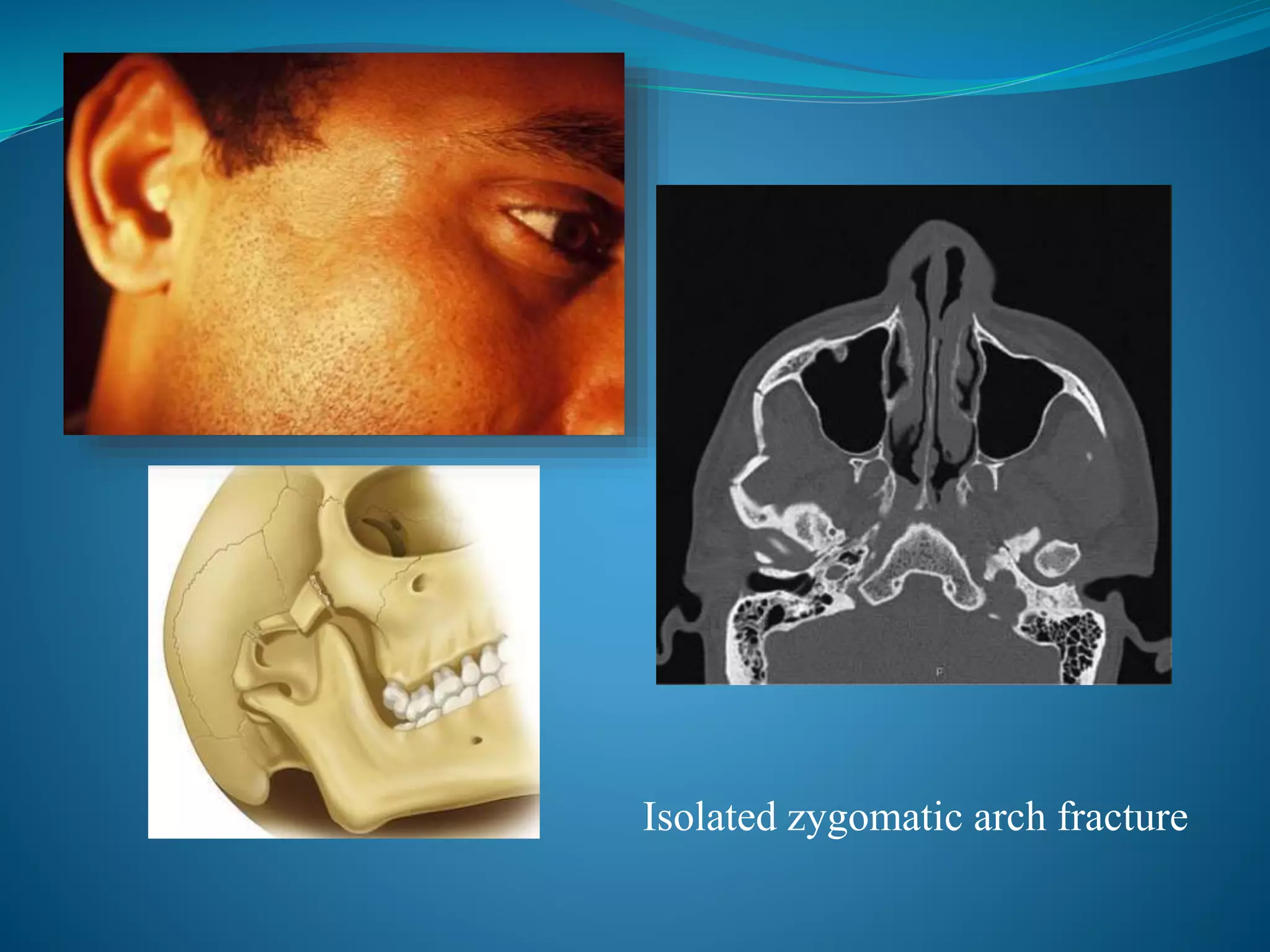
Zygomatic bone fracture is the second most common
midfacial injury, following nasal fracture. A zygomatic
complex fracture is characterized by separation of the
zygoma from its four articulations (frontal, sphenoidal,
temporal, and maxillary). An independent fracture of
the zygomatic arch is termed an isolated zygomatic
arch fracture
Zygomatic bone fracture
Isolated zygomatic arch fracture
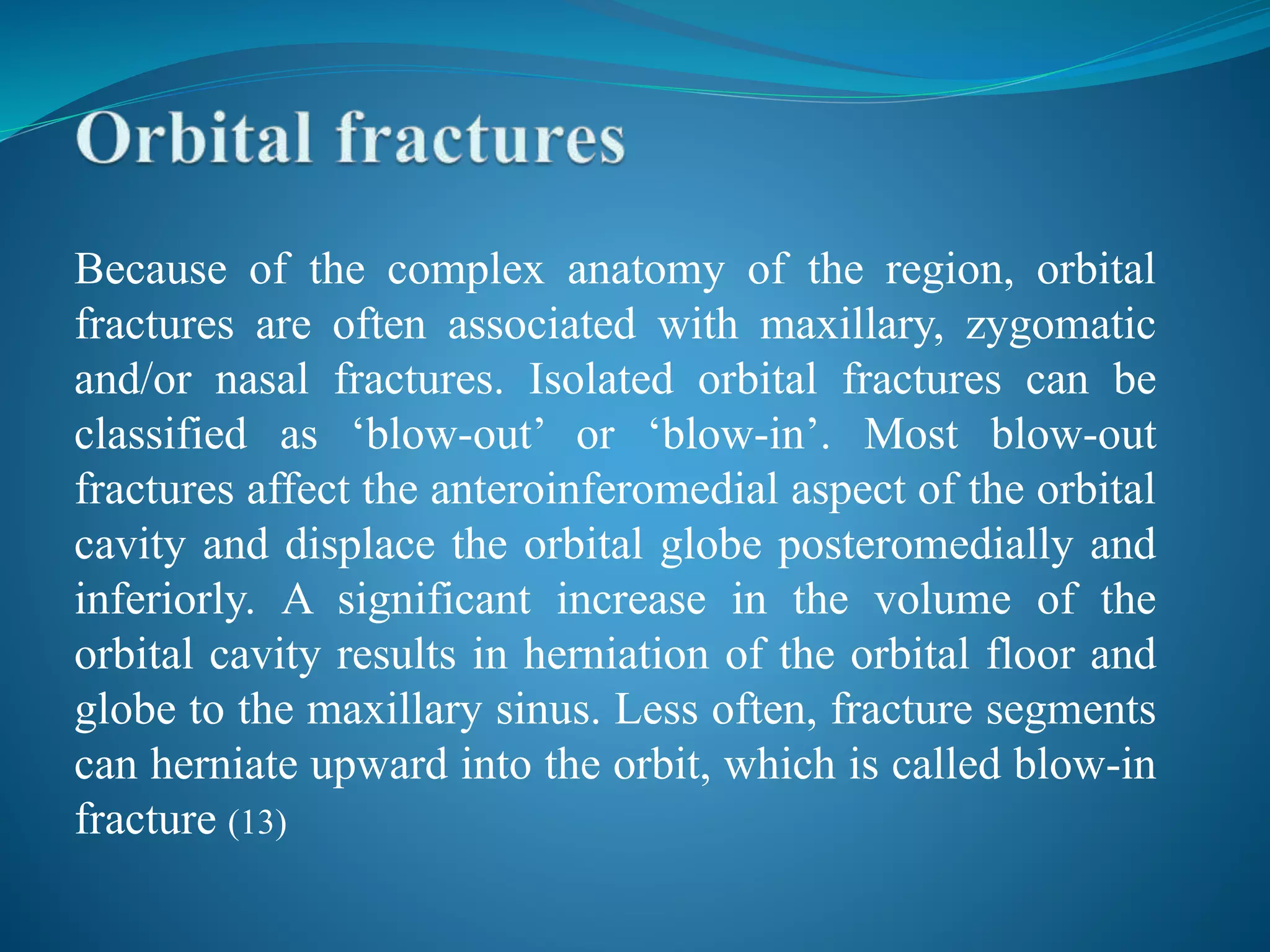
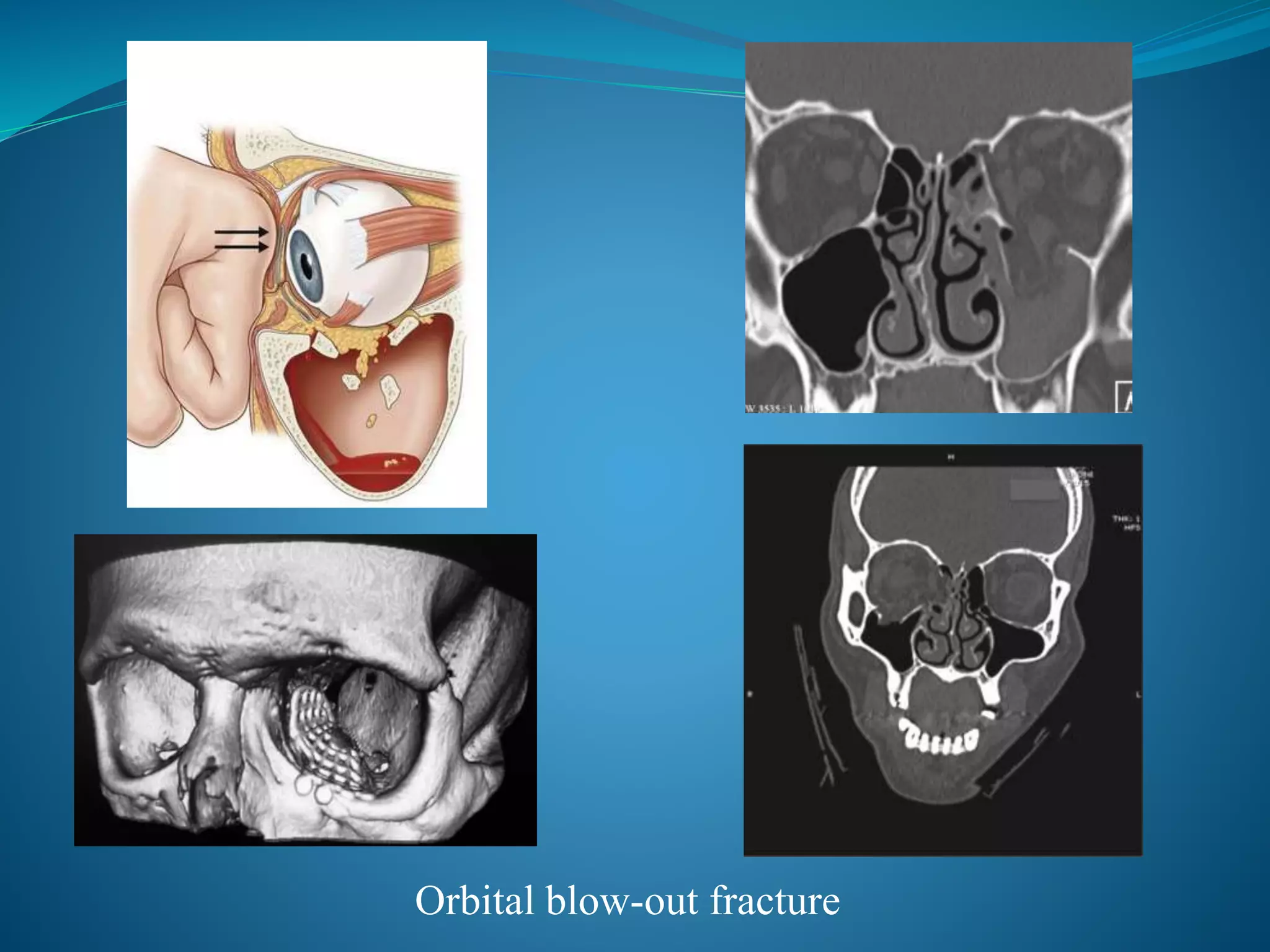
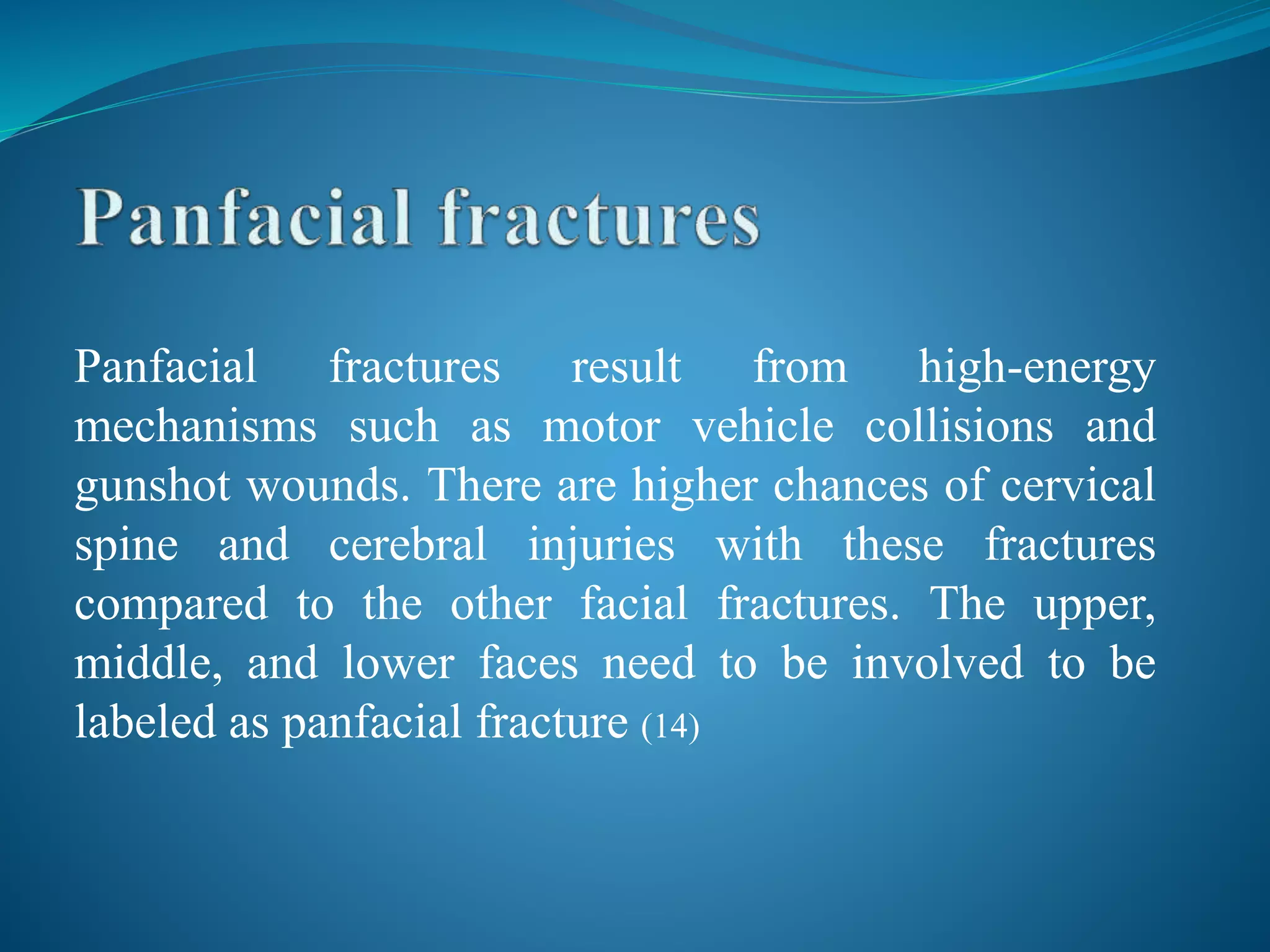
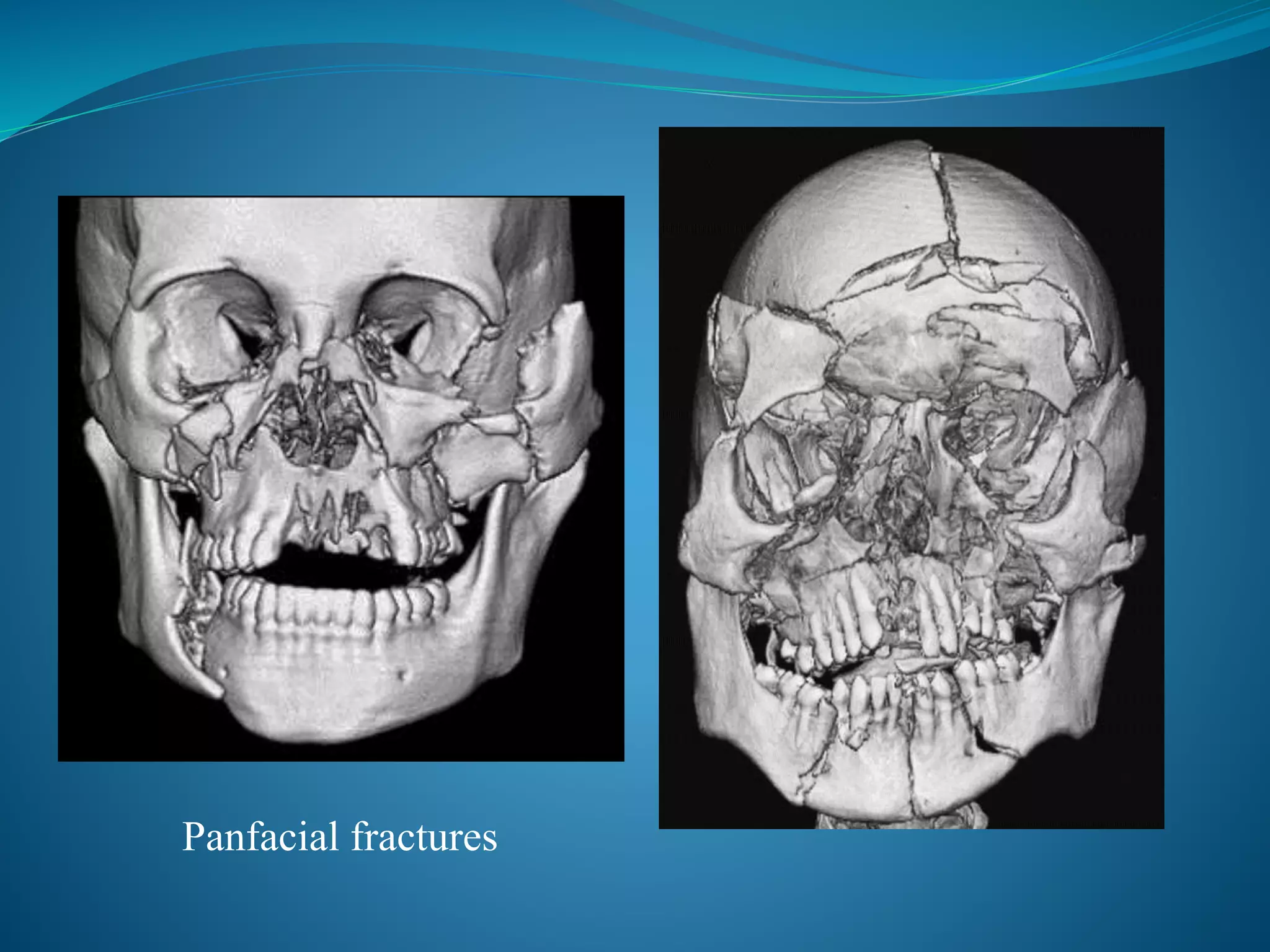
Because of the complex anatomy of the region, orbital
fractures are often associated with maxillary, zygomatic
and/or nasal fractures. Isolated orbital fractures can be
classified as ‘blow-out’ or ‘blow-in’. Most blow-out
fractures affect the anteroinferomedial aspect of the orbital
cavity and displace the orbital globe posteromedially and
inferiorly. A significant increase in the volume of the
orbital cavity results in herniation of the orbital floor and
globe to the maxillary sinus. Less often, fracture segments
can herniate upward into the orbit, which is called blow-in
fracture (13)
Orbital blow-out fracture
Panfacial fractures result from high-energy
mechanisms such as motor vehicle collisions and
gunshot wounds. There are higher chances of cervical
spine and cerebral injuries with these fractures
compared to the other facial fractures. The upper,
middle, and lower faces need to be involved to be
labeled as panfacial fracture (14)
Panfacial fractures
Clinical examination and computed tomography
imaging are the gold standards in the diagnosis,
planning, and management of facial fractures (15)
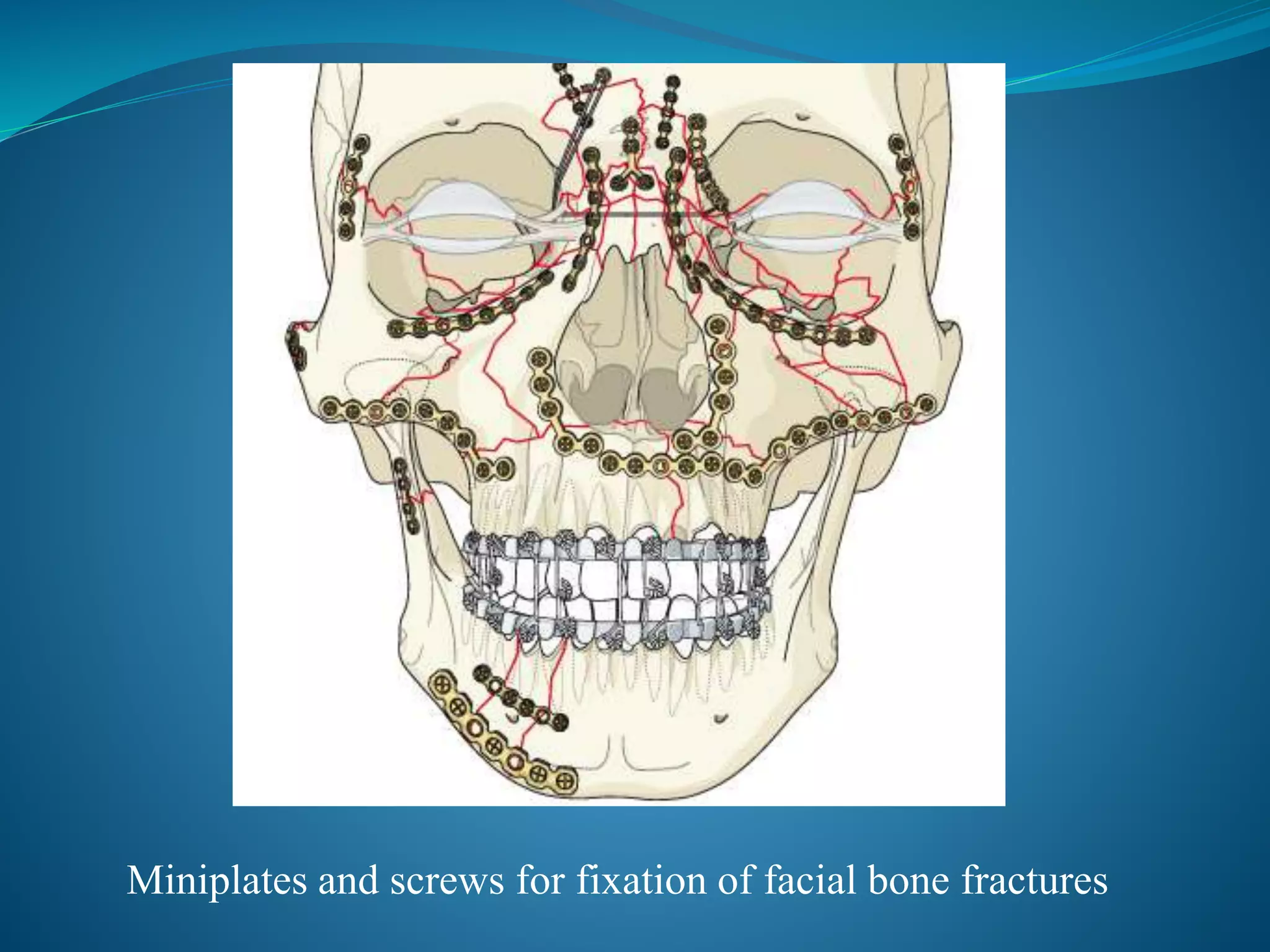
Significant advances have occurred during the last
two decades in the methods of fixation used for facial
bone fractures, resulting in improved functional and
aesthetic outcomes. Surgical techniques have been
moving away from delayed closed reduction with
internal wires suspension to early open reduction and
internal plate fixation
Miniplates and screws for fixation of facial bone fractures
The transition from wire osteosynthesis to rigid
internal fixation in craniofacial reconstruction using
different micro or mini-plates and screw systems is
regarded as one of the greatest advances in the field of
maxillofacial surgery. The high degree of ductility in
these microplate screw fixation systems permits an
optimal adaptation to the thin facial bone and provides
three-dimensional stability (16)
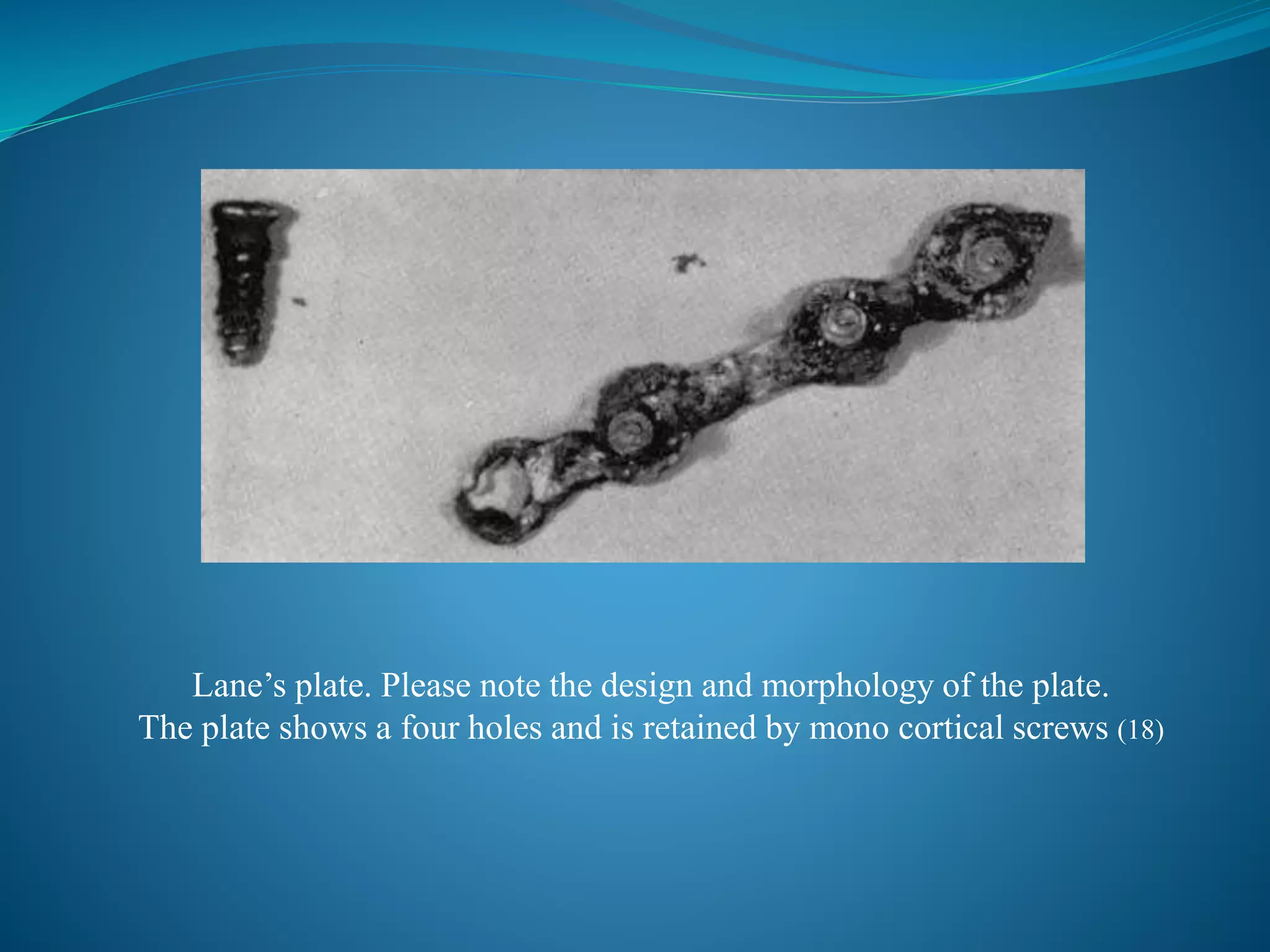
Interesting to note that plating of fractures began in
1895 when Lane first introduced a metal plate for use
in internal fixation (17). Lane’s plate was eventually
abandoned owing to problems with corrosion. Today,
the use of miniplates provides the principal modality
of treatment for reduction and fixation of displaced
facial fractures. Titanium plates and screws are
considered the “gold standard” to immobilize
displaced fracture segments
Lane’s plate. Please note the design and morphology of the plate.
The plate shows a four holes and is retained by mono cortical screws (18)
The main limitation with plate fixation is the larger
surgical exposure required and greater profile
(thickness) of the plate beneath the soft tissue. The
conventional fixation of osteosynthesis plates requires
areas of sufficient cortical bone mass to insert screws.
This may be difficult to achieve at sites where the
boney structures is very thin and can cause further
fractures due to the force applied to the fragments (19)
The face has relatively little soft tissue to provide
coverage to hardware from the outer surface. It is
therefore not surprising that palpable/ prominent
plates and screws are one of the common
complications in craniofacial procedures. The sliding
of the overlying soft tissue of the face over the
hardware can result in erosion, infection and
subsequent exposure of the fixation devices. Large
size hardware has a larger tendency toward eroding
the overlaying tissue (20)
The use of biodegradable implants, glues and adhesive
for fracture fixation has potential to overcome many
of the problems associated with microplate screw
fixation systems. However, to date, substances with
adhesive properties for bone gluing purposes are
limited due to bad biocompatibility, high infection
rates and lack of sufficient adhesive stability (21)
The principle aim of these devices and techniques is to
reconstruct the pre-traumatic facial appearance,
including the facial width, projection, and height (22).
The restoration of the normal function of the facial
structures is another aim in facial fracture
management. Modern therapy also mandate the rigid
stabilization of the vertical and horizontal facial
buttress to withstand the forces of mastication
Different treatment approaches exist to restore the
facial skeleton using the different facial buttresses as
landmarks. The frontal bar defines the contour of the
upper third of the face. The inferior orbital rim and
malar prominence define the width and projection of
the midface. The maxillary alveolus and piriform
aperture provide the platform for nasal reconstruction
Re-establishment of these buttresses is essential for
the maintenance of midface height, width, and
projection. Reconstruction can be done in a “bottom
up & inside out” or “top down & outside in” (23). The
occlusion gives a reference for the width and the
vertical and horizontal planes. Starting from a stable
area to an unstable one is advocated
In spite of the advancement in the different types of
technologies and methods of bone fixation, clinicians
continue to experience complications and challenging
reconstruction conditions. Several authors reported an
overall complication rate among craniofacial
procedures between 14% and 22% (24,25). Infection is
one of the most commonly encountered problem, and
is one of the main causes for removal of maxillofacial
internal fixation hardware
Nonunion or malunion usually results from failure to
either adequately reduce disparate fracture fragments
or not establishing adequate bone-to-bone contact.
This can result in excessive motion between the bone
segments and cause tissue rupture in the forming
callus and / or hardware failure. Mobility of the bone
fragments can cause numerous problems such as
malocclusion and diplopia (26,27). As such, but even so,
we are still far from ideal
1. Moore KL, Agur AMR, Dalley AF. Essential clinical anatomy 5th Ed. Lippincott
Williams & Wilkins, a Wolters Kluwer business. P. 486, 2015.
2. Rafferty KL, Herring SW, Marshall CD. Biomechanics of the rostrum and the role of
facial sutures. J Morphol; 257: 33, 2003.
3. Richard A. Pollock RA. Craniomaxillofacial Buttresses: Anatomy and Operative Repair.
Thieme New York • Stuttgart. P. 48, 2012.
4. Schuknecht B, Graetz K. Radiologic assessment of maxillofacial, mandibular, and skull
base trauma. Eur Radiol; 15: 560, 2005.
5. Hardt N, Kuttenberger. Craniofacial trauma. Diagnosis and Management. Springer-Verlag
Berlin Heidelberg. 2010.
6. Salvolini U. Traumatic injuries: imaging of facial injuries. Eur Radiol; 12: 1253, 2002.
7. Pappachan B, Alexander M. Biomechanics of cranio-maxillofacial trauma. J. Maxillofac.
Oral Surg; 11: 224, 2012.
8. Le Fort. Experimental study of fractures of the upper jaw. Rev chir de Paris; 23:208,
1901. doi.org/10.1148/rg.331125080
9. Winegar B, Murillo H, Tantiwongkosi B. Spectrum of critical imaging findings in
complex facial skeletal trauma. Radiographics; 33: 3, 2013.
10. Schuknecht B, Graetz K. Radiologic assessment of maxillofacial, mandibular, and skull
base trauma. Eur Radiol; 15: 560, 2005.
11. Hwang K, Sun Hye You SH. Analysis of facial bone fractures: An 11-year study of 2,094
patients Indian J Plast Surg; 43: 42, 2010.
12. Erdmann D, Follmar KE, DebruijnM, et al. A retrospective analysis of facial
fracture etiologies. Ann Plast Surg; 60: 398, 2008.
13. Som PM, Brandwein MS. Facial fractures and postoperative findings. In: Som PM,
Curtin HD (eds). Head and neck imaging. Mosby, St. Louis: P. 374-438, 2002.
14. CurtisW, Horswell BB. Panfacial fractures an approach to management. Oral
Maxillofacial Surg Clin North Am; 25: 649, 2013.
15. Gelesko S, Markiewicz MR, Bell RB. Responsible and prudent imaging in the
diagnosis and management of facial fractures. Oral Maxillofacial Surg Clin North Am;
25: 545, 2013.
16. Terry BC, Härle F, Härle F, et al. Atlas of Craniomaxillofacial Osteosynthesis:
Microplates, Miniplates, and Screws. 2nd ed. Stuttgart ; New York: Thieme, 2009.
17. Lane WA. Some remarks on the treatment of fractures. Brit Med J; 1: 861, 1895.
doi: 10.1136/bmj.1.1790.861.
18. Bechtol CO, Fergusson A B, Laing PE. Metals and engineering in bone and joint
surgery. Baltimore: Williams Wilkins. P. 20, 1959.
19. Smeets R, Marx R, Kolk A, et al. In vitro study of adhesivepolymethylmethacrylate
bone cement bonding to cortical bone in maxillofacial surgery. J Oral Maxillofac Surg;
68: 3028, 2010.
20. Jack JM, Stewart DH, Rinker BD, et al. Modern surgical treatment of complex
facial fractures: A 6-year review. J Craniofac Surg; 16: 726, 2005.
21. Heiss C, Hahn N, Wenisch S, et al. The tissue response to an alkylene
bis(dilactoyl)-methacrylate bone adhesive. Biomaterials; 26: 1389, 2005.
22. He D, Zhang Y, Ellis E3. Panfacial fractures: analysis of 33 cases treated late. J
Oral Maxillofac Surg; 65: 2459, 2007.
23. Kühnel TS, Reichert TE. Trauma of the midface. GMS Current Topics in
Otorhinolaryngology- Head and Neck Surgery; 14: 1, 2015.
24. Goodrich JT. Craniofacial surgery: Complications and their prevention. Semin
Pediatr Neurol; 11: 288, 2004.
25. Rauso R, Tartaro G, Stea S, et al. Plates removal in orthognathic surgery and
facial fractures: When and why. J Craniofac Surg; 22: 252, 2011.
26. Girotto JA, MacKenzie E, Fowler C, et al. Long-term physical impairment and
functional outcomes after complex facial fractures. Plast Reconstr Surg; 108: 312,
2001.
27. Murthy AS, Lehman JA,Jr. Symptomatic plate removal in maxillofacial trauma:
A review of 76 cases. Ann Plast Surg; 55: 603, 2005.

Facial bone fractures an overview

  • 2.
    Dr. Ahmed M.Adawy Professor Emeritus, Dept. Oral & Maxillofacial Surg. Former Dean, Faculty of Dental Medicine Al-Azhar University
  • 3.
    The skull iscomposed of three principle bony structures: cranial vault, cranial base, and facial skeleton. The rigid cranial vault protects the brain from external injury. The brain rests on cranial base. This constitutes ‘‘neurocranium’’ (1)
  • 4.
    Eight bones formthe cranial vault: two parietal bones, two temporal bones, frontal bone, occipital bone, sphenoidal and ethmoidal bones Craniofacial skeleton
  • 5.
    The facial skeletoncan be divided for convenience into three parts; the upper third of facial skeleton being a part of cranial vault and comprising of frontal bone, the middle third comprising of central midfacial bone: the maxilla, the nasoethmoid, and lateral midfacial bone: zygoma, and the lower third comprising of rigid bone: mandible, with its condylar articulation to base of skull (1)
  • 6.
    Fifteen irregular bonesform the facial skeleton: three singular bones lying in the midline; mandible, ethmoid, and vomer and six paired bones occurring bilaterally; maxilla, inferior nasal concha [turbinate], zygomatic, palatine, nasal, and lacrimal bones Facial skeleton
  • 7.
    The facial skeletonconstitutes with the oral cavity and other associated soft tissues, ‘‘viscerocranium’’. The facial skeleton is made up of a series of irregular flattened bones that (with exception of the mandible) is joined by static articulations called sutures. In adults, sutures are believed to function primarily as shock absorbers to dissipate stresses transmitted through the skull (2)
  • 8.
    Anatomically, the bonesof the cranial vault and the mandible have a basic structure similar to many other bones of the skeleton with a strong outer cortex and a cancellous centre. In contrast, most of the bones of the midfacial region are comprised only of a thin layer of cortical bone and exhibit significant variations in their thickness and composition
  • 9.
  • 10.
    The bone andsoft tissues of the midfacial region are able to absorb the energy from impact forces. Force to the bone in the elastic range causing the deformation and after force removal, bone returns to its previous state, but if the force be greater than the elasticity of bone, a permanent displacement occurs and be irreversible. Furthermore, when these forces exceed the strength of these tissues, a variety of fractures can occur at this region
  • 11.
  • 12.
    The characteristics offractures resulting from trauma are determined by a dynamic factor (given by the force and energy of the impact) and by a static factor (given by the anatomic characteristics of the bone involved). A small impact area results in a localized fracture, whereas a large impact area leads to more extensive indirect fractures, because the force is being transmitted over a larger area of bone (4)
  • 13.
    According to geometryof face, protruding areas are most likely to sustain injury. Thus the nasal bones are most commonly injured, followed by malar bones, orbital rims, and symphysis of the mandible. The area of the frontal bone is most resistant to injury. As fracture occurs energy absorption takes place, thus protecting the brain from violent deceleration
  • 14.
  • 15.
    The buttress theoryproposes that the midfacial region is like a framework that is stabilized by horizontal and vertical buttresses. These buttresses believed to absorb considerable amount of traumatic energy approaching the midface region from below. However, the midface has very low tolerance to impact forces applied from other directions, with nasal bones exhibiting the least resistance (5)
  • 16.
    Biomechanical load distributionalong facial buttresses
  • 17.
    The nasal boneswere the most fragile of the facial bones, with tolerance levels for minimal fracture in the 25–75 Nm range. The maxilla displayed low tolerance level in the range of 150–300 Nm. The relatively fragile zygomatic arch displayed tolerance levels between 200 and 400 Nm, whereas the body of the zygoma displayed a higher tolerance level with a grouping in the 200–650 Nm range. The massive frontal bone displayed the highest tolerance levels with grouping between 800 and 1600 Nm
  • 18.
    Forces (Nm) requiredto fracture the facial skeleton (5)
  • 19.
    Interesting to notethat the bite forces in healthy middle-aged humans averages 520 Nm for males and 340 Nm for females. However, maximal forces have produced up to the high 700s
  • 20.
    The buttresses representareas of relative increased bone thickness that support both the functional units and the form of the face in an optimal relation, and forces directed toward the face are distributed along these buttresses. Facial buttresses can be classified into vertical and horizontal buttresses (5)
  • 21.
    The vertical buttressesare: the nasomaxillary buttress (connections between the maxilla and nasal bones), the zygomaticomaxillary buttress (from the maxilla to the zygomatic region), the pterygomaxillary buttress (from the maxilla to the pterygoid process) and the posterior or mandibular buttress (ascending ramus of the mandible)
  • 22.
    Vertical buttresses: nasomaxillary,zygomaticomaxillary, pterygomaxillary, and vertical mandibular
  • 23.
    The horizontal buttressesinclude: (1) frontal bar, (2) transverse zygomatic buttress, (3) transverse maxillary buttress, (4) upper transverse mandibular buttress, (5) lower transverse mandibular buttress
  • 24.
    Horizontal buttresses includethe frontal, zygomatic, maxillary and mandibular buttresses
  • 25.
    The most commoncauses of maxillofacial trauma are traffic accidents, injuries from fights, sport accidents or falls. The combination of traffic accidents and injuries from fights account for 80% of maxillofacial fractures (6). The force of impact can be derived from the equation F = ma (7), where: Force = mass ( weight) × acceleration ( speed)
  • 26.
    Egypt leads theMiddle East when it comes to road accidents, with an average of 12,000 people killed annually
  • 27.
    In such anovercrowded area, interpersonal violence remains a major problem
  • 28.
    Around the turnof the 19th into the 20th centuries, René Le Fort, a French surgeon, conducted a series of experiments using human cadavers to study facial bone fractures resulting from blunt trauma. The impacts included hitting the midface of a whole or decapitated cadaver with a baseball bat, and hitting the midface region onto a granite tabletop. He then cut the body segments open and studied the fractures they had sustained (8)
  • 29.
    He concluded thatmidface fractures occurred through ‘lines’ of inherent weakness in the facial skeletal structure, producing defined injury patterns. The fracture patterns were predictable and reproducible, depending on the site of impact on the midface. He then formulated a classification system still extensively used today: the Le Fort classification. Common to these fractures is involvement of the pterygoid plates
  • 30.
    The Le FortI fracture extends horizontally across the maxilla above the level of the roots of the teeth, traversing the lower lateral walls of the pyriform aperture and the lower nasal septum. It extends posteriorly across the lateral, medial and posterior walls of the maxillary sinus and involves the pterygoid plates. Unique to Le Fort I fracture is the involvement of the lateral walls of the pyriform aperture
  • 31.
    Le Fort Ifracture
  • 32.
    The Le FortII fracture is pyramidal, with the apex at the naso-frontal suture. From the apex, the fracture line extends inferolaterally through the medial wall of the orbit, orbital floor, inferior orbital rim and through the zygomatico-maxillary suture. It also extends posteriorly to the pterygoid plates. Unique to Le Fort II fractures is involvement of the inferior orbital rim
  • 33.
    Le Fort IIfracture
  • 34.
    The Le FortIII fracture, also known as cranio-facial disjunction, is like the Le Fort II, and comprises dissociation of the naso-frontal suture. However, this is horizontally oriented, traversing the medial and lateral walls of the orbits, the zygomatico-frontal suture and the zygomatic arch. Involvement of the latter is unique to type III fractures (9)
  • 35.
    Le Fort IIIfracture
  • 36.
    Le Fort fractures.Three-dimensional CT images of an adult skull in frontal and lateral orientations with color overlays show the osseous facial structures that are typically affected by type I (red), type II (blue), and type III (yellow)
  • 37.
    Although useful indescribing a midface fracture, Le Fort’s classification is based on low-velocity trauma, and does not completely reflect the breadth of high- velocity fractures encountered in modern practice. In addition, it underestimate the complexity of facial fracture patterns, which often include combination of front-orbital, zygomatic, and nasoethmoidal fractures with maxillary injury. Moreover, it does not define the facial skeletal supports or the more severely comminuted fractures
  • 38.
    Currently, facial fracturesare classified into central midface fractures, lateral midface fractures and mandibular fractures. Central midface fractures include: nasal, nasoethmoidal, orbital wall, maxillary sinus, Le Fort I, and Le Fort II fractures. Lateral midface fractures include fractures of the zygomatic- malar complex, zygomatic arch, and orbital floor fractures. While Le Fort III fractures are combined central and lateral midface fractures. In another way, facial bone fractures are classified as isolated or complex fractures
  • 39.
    In a seriesof multi-trauma patients with over 7,000 facial bone fractures, 24.3% affected the mandible and 71.5% affected the central and lateral midface. Almost one third of fractures simultaneously affected more than one area of the face (10)
  • 40.
    In another studycomprising 2,094 cases with facial bone fractures (11), the most common isolated fracture site was the nasal bone (37.7%), followed by the mandible (30%), orbital bones (7.6%), zygoma (5.7%), maxilla (1.3%) and the frontal bone (0.3%). The largest group with complex fractures included the inferior orbital wall and zygomaticomaxillary (14%)
  • 41.
    Nasal fractures arethe most common facial fractures, accounting for 50% of isolated fractures of the face (12). Any fracture that involves the nasal bones, septum, or the nasal process of the maxillary process is considered a nasal fracture. Symptoms may include bleeding, swelling, bruising, and an inability to breathe through the nose. They may be complicated in complex pattern by other facial fractures
  • 42.
  • 43.
    Nasoethmoidal fractures occurredat a frequency of 7%. These fractures most often result from a frontal blow over the bridge of the nose, and the nasal pyramid is displaced posteriorly, fracturing the nasal bones, frontal processes of the maxillae, lacrimal bones, ethmoid sinuses, cribriform plate, and nasal septum. In patients with comminution, the bony segments may spread medially into the nasal cavity, superiorly to the anterior cranial fossa, and laterally into the orbit. CSF leaks should be suspected
  • 44.
  • 45.
    Zygomatic bone fractureis the second most common midfacial injury, following nasal fracture. A zygomatic complex fracture is characterized by separation of the zygoma from its four articulations (frontal, sphenoidal, temporal, and maxillary). An independent fracture of the zygomatic arch is termed an isolated zygomatic arch fracture
  • 46.
  • 47.
  • 48.
    Because of thecomplex anatomy of the region, orbital fractures are often associated with maxillary, zygomatic and/or nasal fractures. Isolated orbital fractures can be classified as ‘blow-out’ or ‘blow-in’. Most blow-out fractures affect the anteroinferomedial aspect of the orbital cavity and displace the orbital globe posteromedially and inferiorly. A significant increase in the volume of the orbital cavity results in herniation of the orbital floor and globe to the maxillary sinus. Less often, fracture segments can herniate upward into the orbit, which is called blow-in fracture (13)
  • 49.
  • 50.
    Panfacial fractures resultfrom high-energy mechanisms such as motor vehicle collisions and gunshot wounds. There are higher chances of cervical spine and cerebral injuries with these fractures compared to the other facial fractures. The upper, middle, and lower faces need to be involved to be labeled as panfacial fracture (14)
  • 51.
  • 52.
    Clinical examination andcomputed tomography imaging are the gold standards in the diagnosis, planning, and management of facial fractures (15)
  • 53.
    Significant advances haveoccurred during the last two decades in the methods of fixation used for facial bone fractures, resulting in improved functional and aesthetic outcomes. Surgical techniques have been moving away from delayed closed reduction with internal wires suspension to early open reduction and internal plate fixation
  • 54.
    Miniplates and screwsfor fixation of facial bone fractures
  • 55.
    The transition fromwire osteosynthesis to rigid internal fixation in craniofacial reconstruction using different micro or mini-plates and screw systems is regarded as one of the greatest advances in the field of maxillofacial surgery. The high degree of ductility in these microplate screw fixation systems permits an optimal adaptation to the thin facial bone and provides three-dimensional stability (16)
  • 56.
    Interesting to notethat plating of fractures began in 1895 when Lane first introduced a metal plate for use in internal fixation (17). Lane’s plate was eventually abandoned owing to problems with corrosion. Today, the use of miniplates provides the principal modality of treatment for reduction and fixation of displaced facial fractures. Titanium plates and screws are considered the “gold standard” to immobilize displaced fracture segments
  • 57.
    Lane’s plate. Pleasenote the design and morphology of the plate. The plate shows a four holes and is retained by mono cortical screws (18)
  • 58.
    The main limitationwith plate fixation is the larger surgical exposure required and greater profile (thickness) of the plate beneath the soft tissue. The conventional fixation of osteosynthesis plates requires areas of sufficient cortical bone mass to insert screws. This may be difficult to achieve at sites where the boney structures is very thin and can cause further fractures due to the force applied to the fragments (19)
  • 59.
    The face hasrelatively little soft tissue to provide coverage to hardware from the outer surface. It is therefore not surprising that palpable/ prominent plates and screws are one of the common complications in craniofacial procedures. The sliding of the overlying soft tissue of the face over the hardware can result in erosion, infection and subsequent exposure of the fixation devices. Large size hardware has a larger tendency toward eroding the overlaying tissue (20)
  • 60.
    The use ofbiodegradable implants, glues and adhesive for fracture fixation has potential to overcome many of the problems associated with microplate screw fixation systems. However, to date, substances with adhesive properties for bone gluing purposes are limited due to bad biocompatibility, high infection rates and lack of sufficient adhesive stability (21)
  • 61.
    The principle aimof these devices and techniques is to reconstruct the pre-traumatic facial appearance, including the facial width, projection, and height (22). The restoration of the normal function of the facial structures is another aim in facial fracture management. Modern therapy also mandate the rigid stabilization of the vertical and horizontal facial buttress to withstand the forces of mastication
  • 62.
    Different treatment approachesexist to restore the facial skeleton using the different facial buttresses as landmarks. The frontal bar defines the contour of the upper third of the face. The inferior orbital rim and malar prominence define the width and projection of the midface. The maxillary alveolus and piriform aperture provide the platform for nasal reconstruction
  • 63.
    Re-establishment of thesebuttresses is essential for the maintenance of midface height, width, and projection. Reconstruction can be done in a “bottom up & inside out” or “top down & outside in” (23). The occlusion gives a reference for the width and the vertical and horizontal planes. Starting from a stable area to an unstable one is advocated
  • 64.
    In spite ofthe advancement in the different types of technologies and methods of bone fixation, clinicians continue to experience complications and challenging reconstruction conditions. Several authors reported an overall complication rate among craniofacial procedures between 14% and 22% (24,25). Infection is one of the most commonly encountered problem, and is one of the main causes for removal of maxillofacial internal fixation hardware
  • 65.
    Nonunion or malunionusually results from failure to either adequately reduce disparate fracture fragments or not establishing adequate bone-to-bone contact. This can result in excessive motion between the bone segments and cause tissue rupture in the forming callus and / or hardware failure. Mobility of the bone fragments can cause numerous problems such as malocclusion and diplopia (26,27). As such, but even so, we are still far from ideal
  • 67.
    1. Moore KL,Agur AMR, Dalley AF. Essential clinical anatomy 5th Ed. Lippincott Williams & Wilkins, a Wolters Kluwer business. P. 486, 2015. 2. Rafferty KL, Herring SW, Marshall CD. Biomechanics of the rostrum and the role of facial sutures. J Morphol; 257: 33, 2003. 3. Richard A. Pollock RA. Craniomaxillofacial Buttresses: Anatomy and Operative Repair. Thieme New York • Stuttgart. P. 48, 2012. 4. Schuknecht B, Graetz K. Radiologic assessment of maxillofacial, mandibular, and skull base trauma. Eur Radiol; 15: 560, 2005. 5. Hardt N, Kuttenberger. Craniofacial trauma. Diagnosis and Management. Springer-Verlag Berlin Heidelberg. 2010. 6. Salvolini U. Traumatic injuries: imaging of facial injuries. Eur Radiol; 12: 1253, 2002. 7. Pappachan B, Alexander M. Biomechanics of cranio-maxillofacial trauma. J. Maxillofac. Oral Surg; 11: 224, 2012. 8. Le Fort. Experimental study of fractures of the upper jaw. Rev chir de Paris; 23:208, 1901. doi.org/10.1148/rg.331125080 9. Winegar B, Murillo H, Tantiwongkosi B. Spectrum of critical imaging findings in complex facial skeletal trauma. Radiographics; 33: 3, 2013. 10. Schuknecht B, Graetz K. Radiologic assessment of maxillofacial, mandibular, and skull base trauma. Eur Radiol; 15: 560, 2005. 11. Hwang K, Sun Hye You SH. Analysis of facial bone fractures: An 11-year study of 2,094 patients Indian J Plast Surg; 43: 42, 2010.
  • 68.
    12. Erdmann D,Follmar KE, DebruijnM, et al. A retrospective analysis of facial fracture etiologies. Ann Plast Surg; 60: 398, 2008. 13. Som PM, Brandwein MS. Facial fractures and postoperative findings. In: Som PM, Curtin HD (eds). Head and neck imaging. Mosby, St. Louis: P. 374-438, 2002. 14. CurtisW, Horswell BB. Panfacial fractures an approach to management. Oral Maxillofacial Surg Clin North Am; 25: 649, 2013. 15. Gelesko S, Markiewicz MR, Bell RB. Responsible and prudent imaging in the diagnosis and management of facial fractures. Oral Maxillofacial Surg Clin North Am; 25: 545, 2013. 16. Terry BC, Härle F, Härle F, et al. Atlas of Craniomaxillofacial Osteosynthesis: Microplates, Miniplates, and Screws. 2nd ed. Stuttgart ; New York: Thieme, 2009. 17. Lane WA. Some remarks on the treatment of fractures. Brit Med J; 1: 861, 1895. doi: 10.1136/bmj.1.1790.861. 18. Bechtol CO, Fergusson A B, Laing PE. Metals and engineering in bone and joint surgery. Baltimore: Williams Wilkins. P. 20, 1959. 19. Smeets R, Marx R, Kolk A, et al. In vitro study of adhesivepolymethylmethacrylate bone cement bonding to cortical bone in maxillofacial surgery. J Oral Maxillofac Surg; 68: 3028, 2010. 20. Jack JM, Stewart DH, Rinker BD, et al. Modern surgical treatment of complex facial fractures: A 6-year review. J Craniofac Surg; 16: 726, 2005.
  • 69.
    21. Heiss C,Hahn N, Wenisch S, et al. The tissue response to an alkylene bis(dilactoyl)-methacrylate bone adhesive. Biomaterials; 26: 1389, 2005. 22. He D, Zhang Y, Ellis E3. Panfacial fractures: analysis of 33 cases treated late. J Oral Maxillofac Surg; 65: 2459, 2007. 23. Kühnel TS, Reichert TE. Trauma of the midface. GMS Current Topics in Otorhinolaryngology- Head and Neck Surgery; 14: 1, 2015. 24. Goodrich JT. Craniofacial surgery: Complications and their prevention. Semin Pediatr Neurol; 11: 288, 2004. 25. Rauso R, Tartaro G, Stea S, et al. Plates removal in orthognathic surgery and facial fractures: When and why. J Craniofac Surg; 22: 252, 2011. 26. Girotto JA, MacKenzie E, Fowler C, et al. Long-term physical impairment and functional outcomes after complex facial fractures. Plast Reconstr Surg; 108: 312, 2001. 27. Murthy AS, Lehman JA,Jr. Symptomatic plate removal in maxillofacial trauma: A review of 76 cases. Ann Plast Surg; 55: 603, 2005.