Facebook Open GraphLiving in a Personalized and Social Web WorldJohn Maver & Jaime Tedford
Speaker BiosJamie Tedford is Founder and CEO of Brand Networks, a leading Social Solutions company.  Our clients include Starbucks, Warner Brothers, PUMA and Monster.com to name a few.  We’re proud to have been recently named a “Preferred Developer Consultant” by Facebook.  Prior to Brand Networks, Jamie was the SVP Media Innovation at Arnold Worldwide.  He is also a founding Board Member of the Word of Mouth Marketing Association (WOMMA).  Jamie is a frequent contributor to Marketing Daily, and his commentary on Social Media, Word of Mouth Marketing, and Advertising has been featured in the New York Times, on CNN and ABC News. Jaime TedfordJohn Maver is Principal and Co-Founder of Thought Labs, which helps companies get connected to their customers using social media. John has worked with small businesses and Fortune 100 companies to find the right strategies, implementations and success metrics for their brands.  He has been involved with the Facebook, Bebo and MySpace platforms from the time they were released and created an application for Facebook that is currently ranked in the top 100 (out of over 500,000 applications). John also co-authored the book, “Facebook Development: A Complete Guide to Smart Application Development for the Facebook Platform.” Prior to specializing in social media, John spent ten years leading software-development teams and building award-winning software-debugging products. John Maver
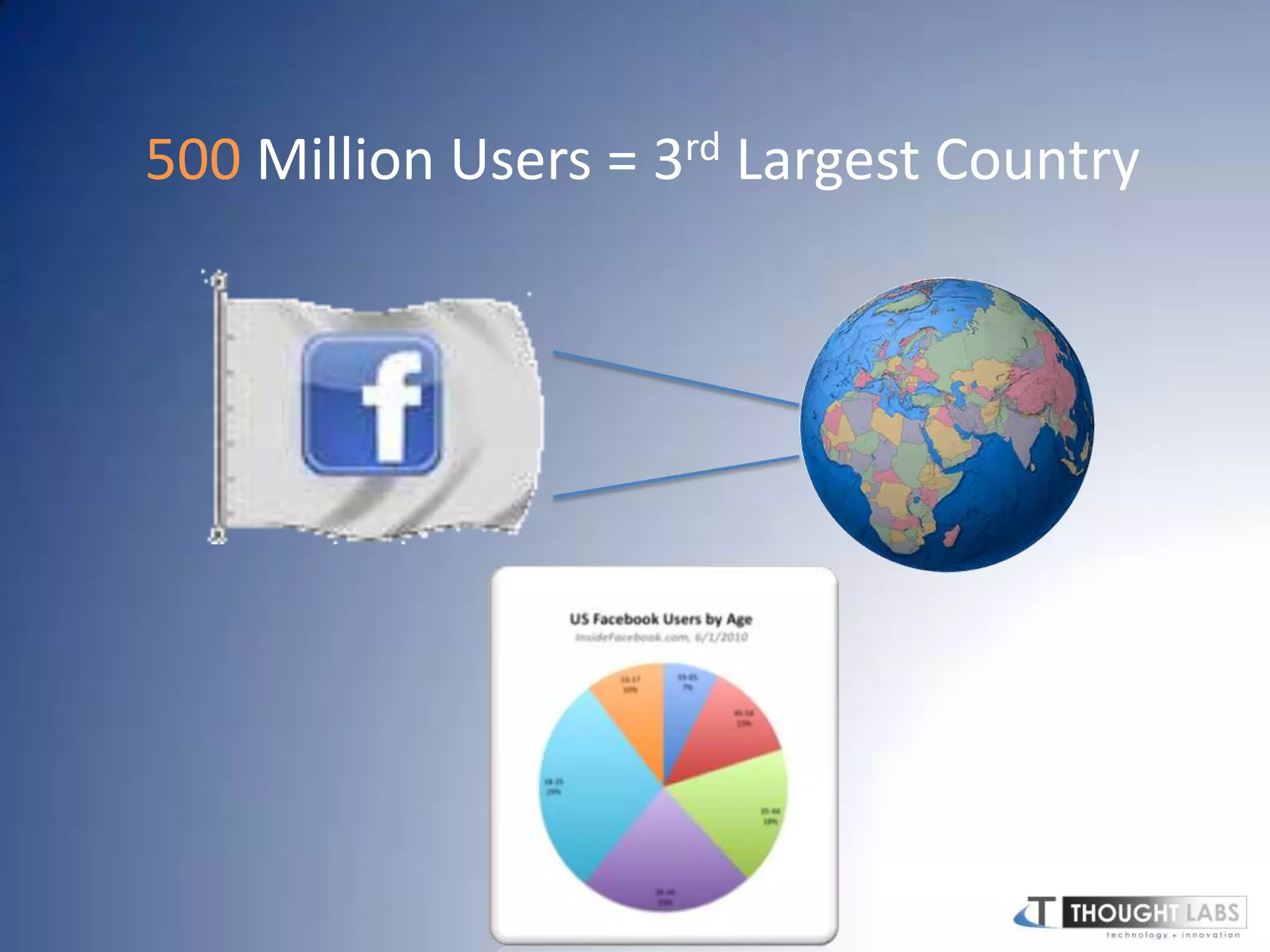
500 Million Users = 3rd Largest Country
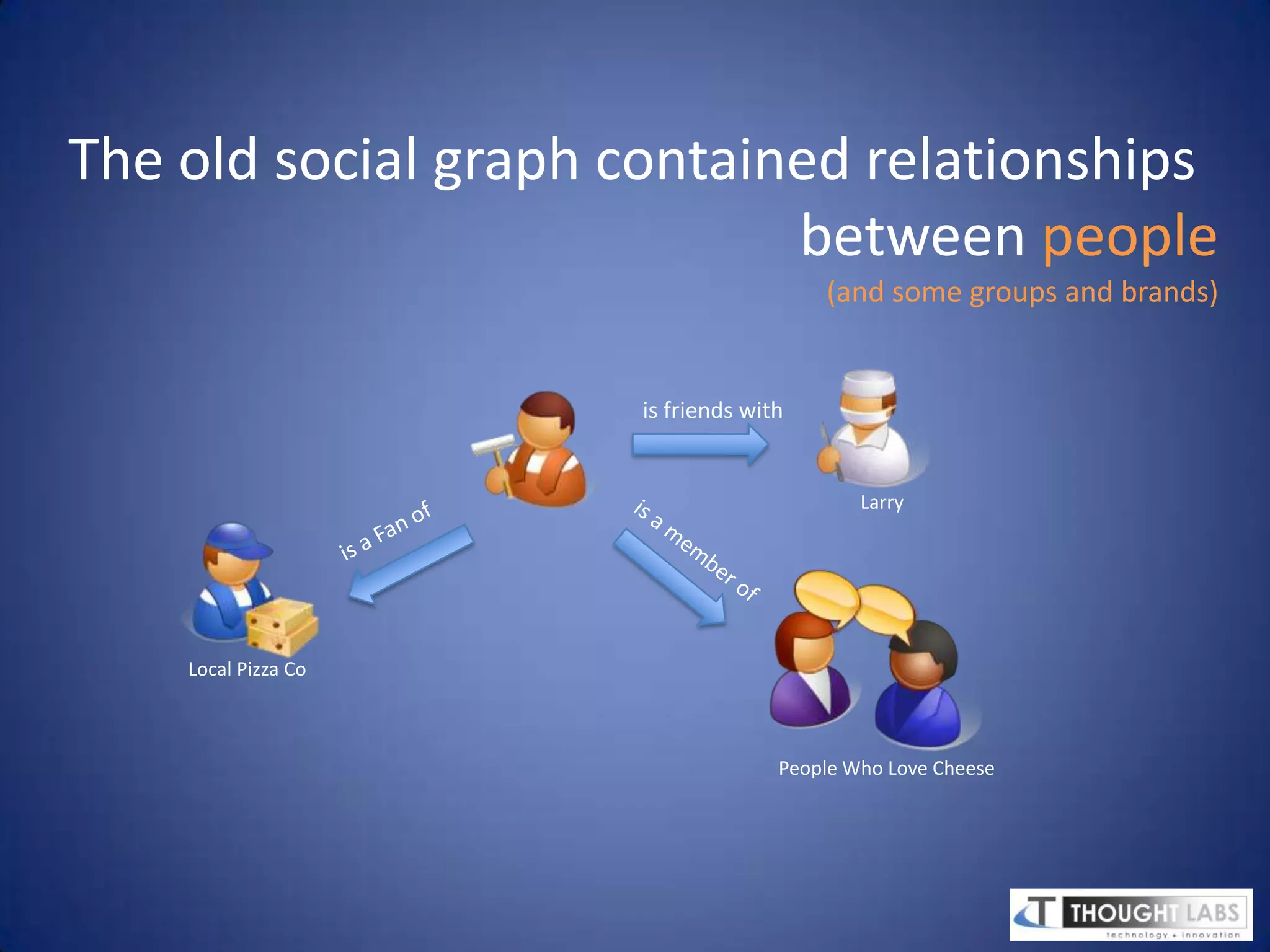
The old social graph contained relationshipsbetween people(and some groups and brands)    is friends withLarryis a Fan ofis a member ofLocal Pizza CoPeople Who Love Cheese
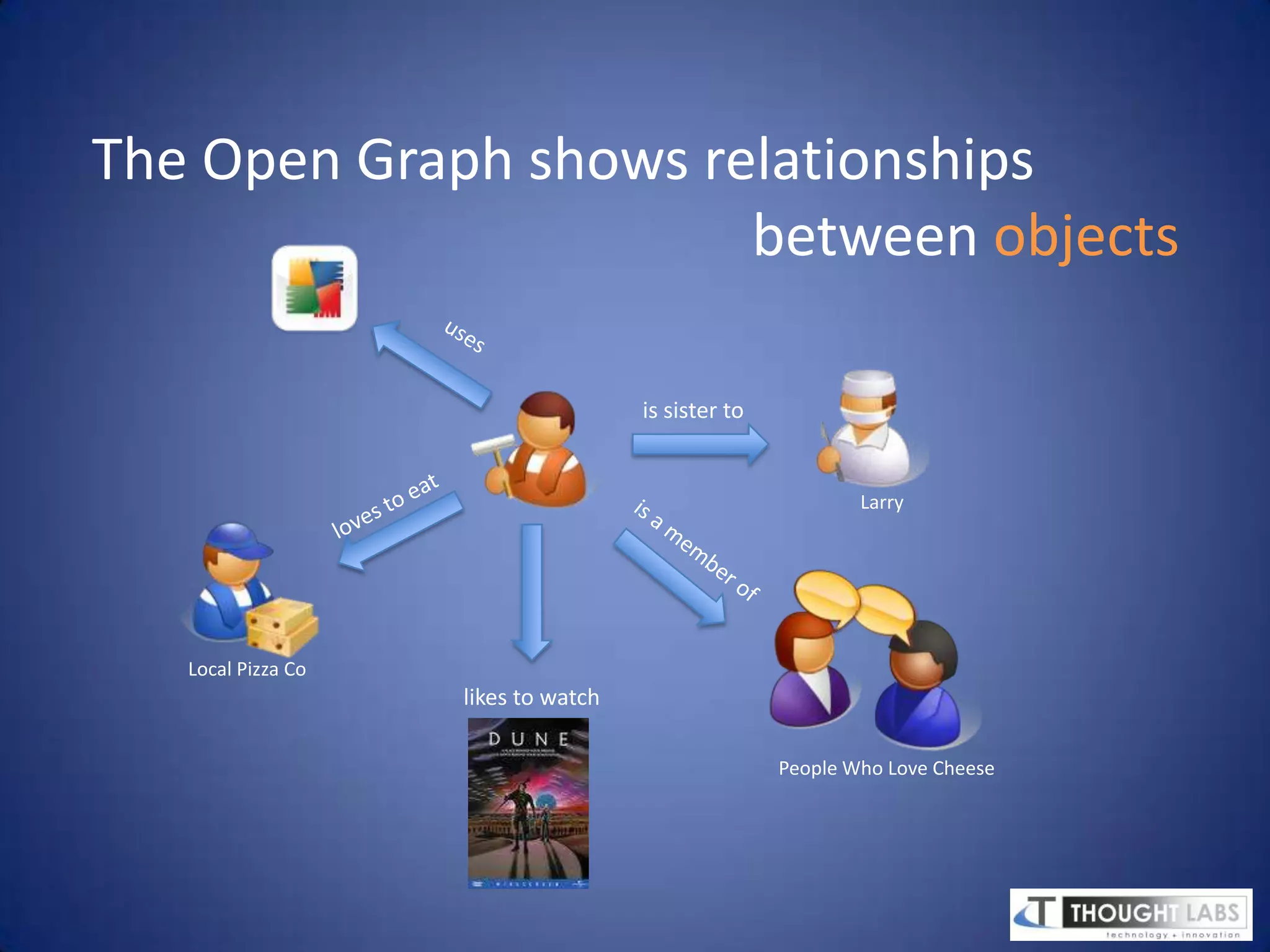
The Open Graph shows relationshipsbetween objectsuses is sister toLarryloves to eatis a member ofLocal Pizza Colikes to watchPeople Who Love Cheese
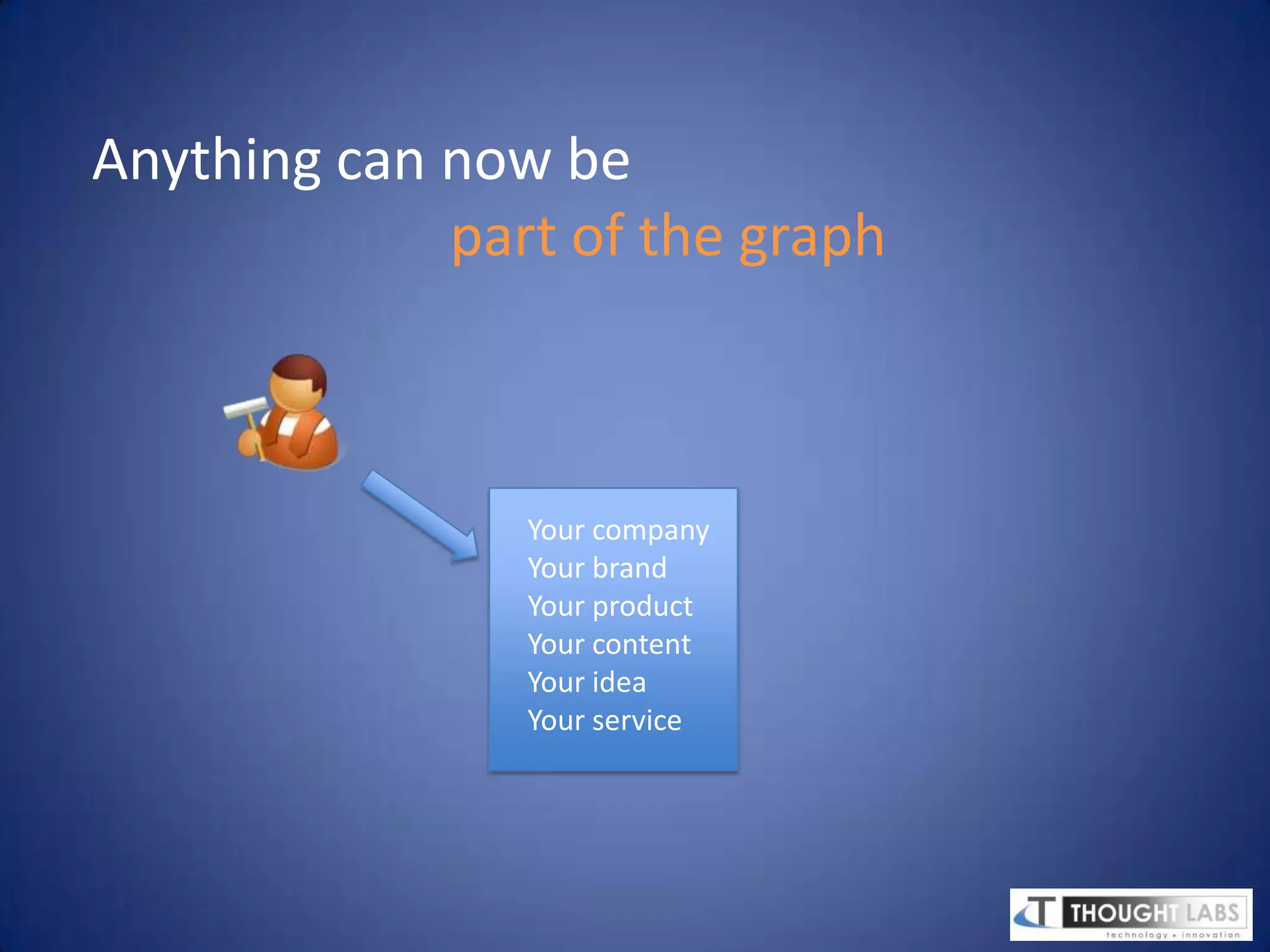
Anything can now bepart of the graphYour companyYour brandYour productYour contentYour ideaYour service
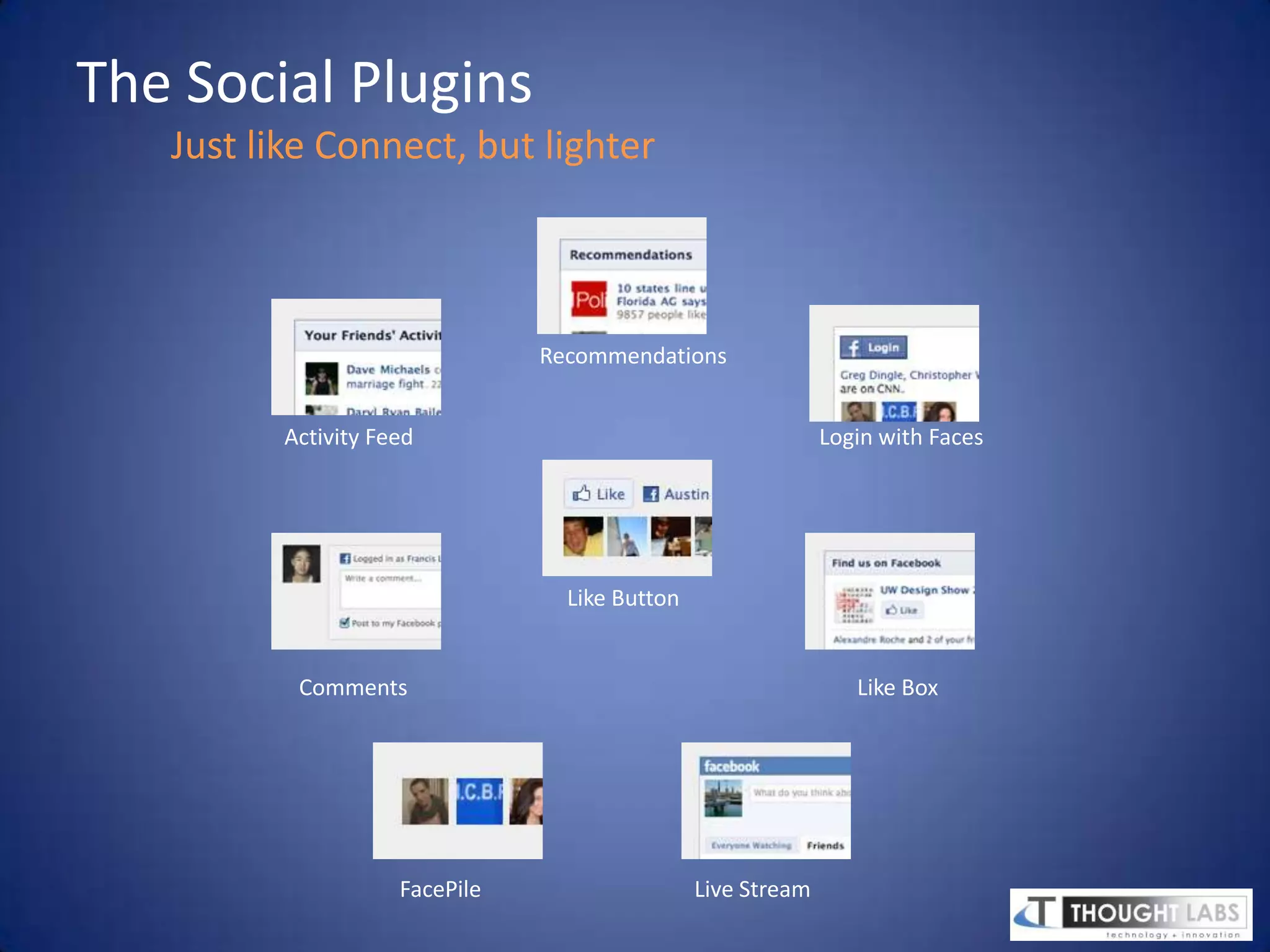
The Social Plugins          Just like Connect, but lighterRecommendationsActivity FeedLogin with FacesLike ButtonCommentsLike BoxFacePileLive Stream
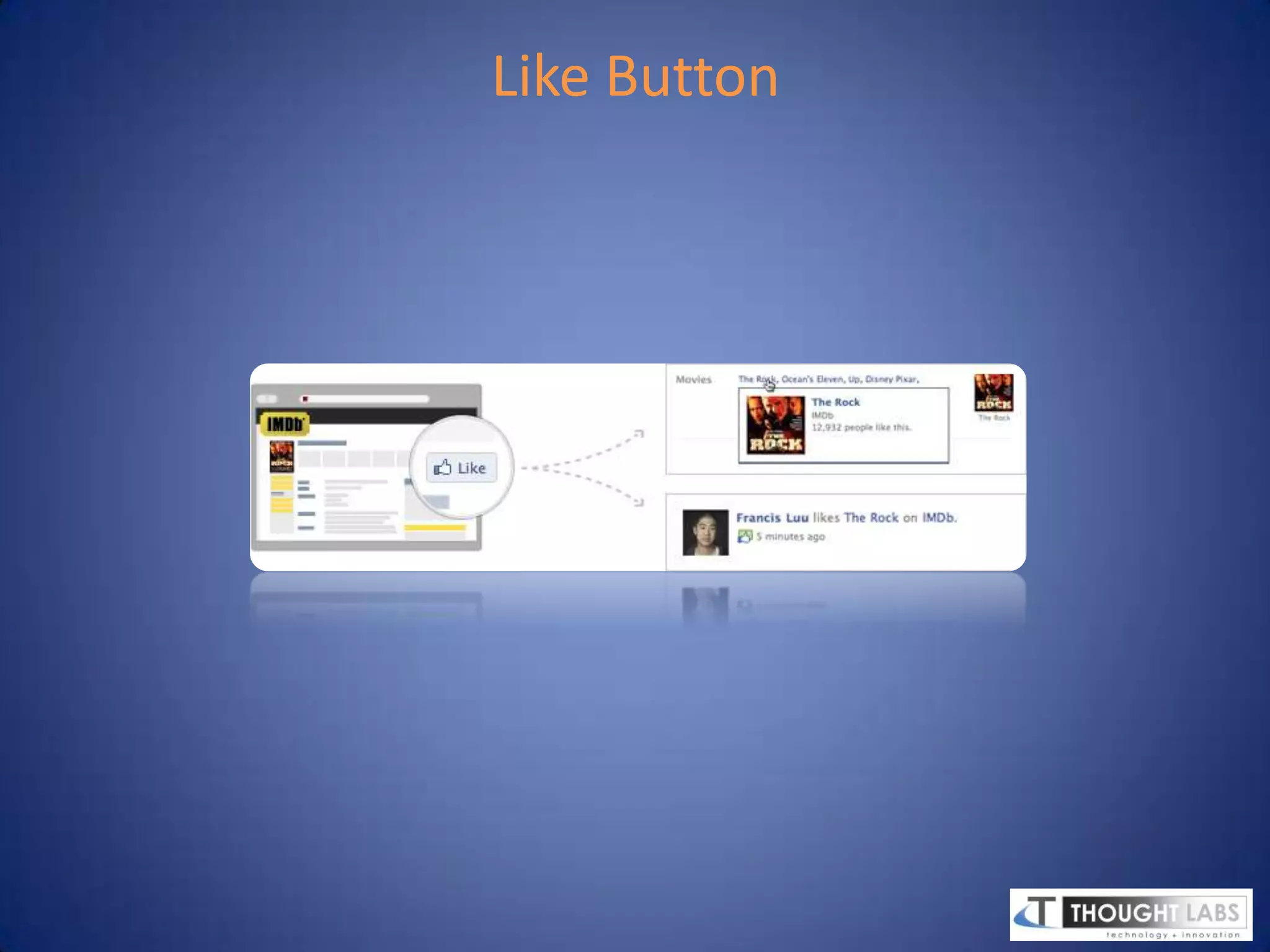
Like Button
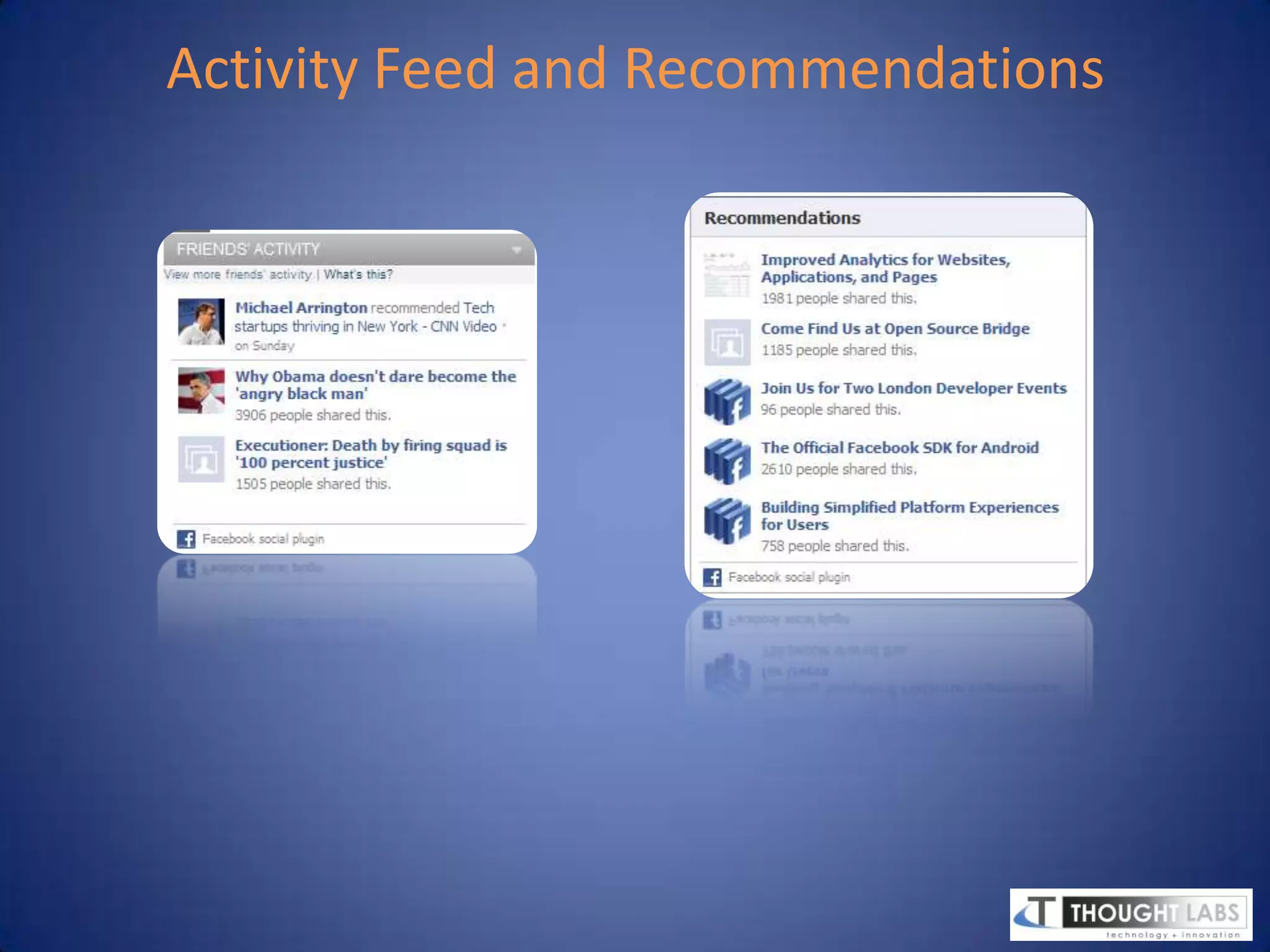
Activity Feed and Recommendations
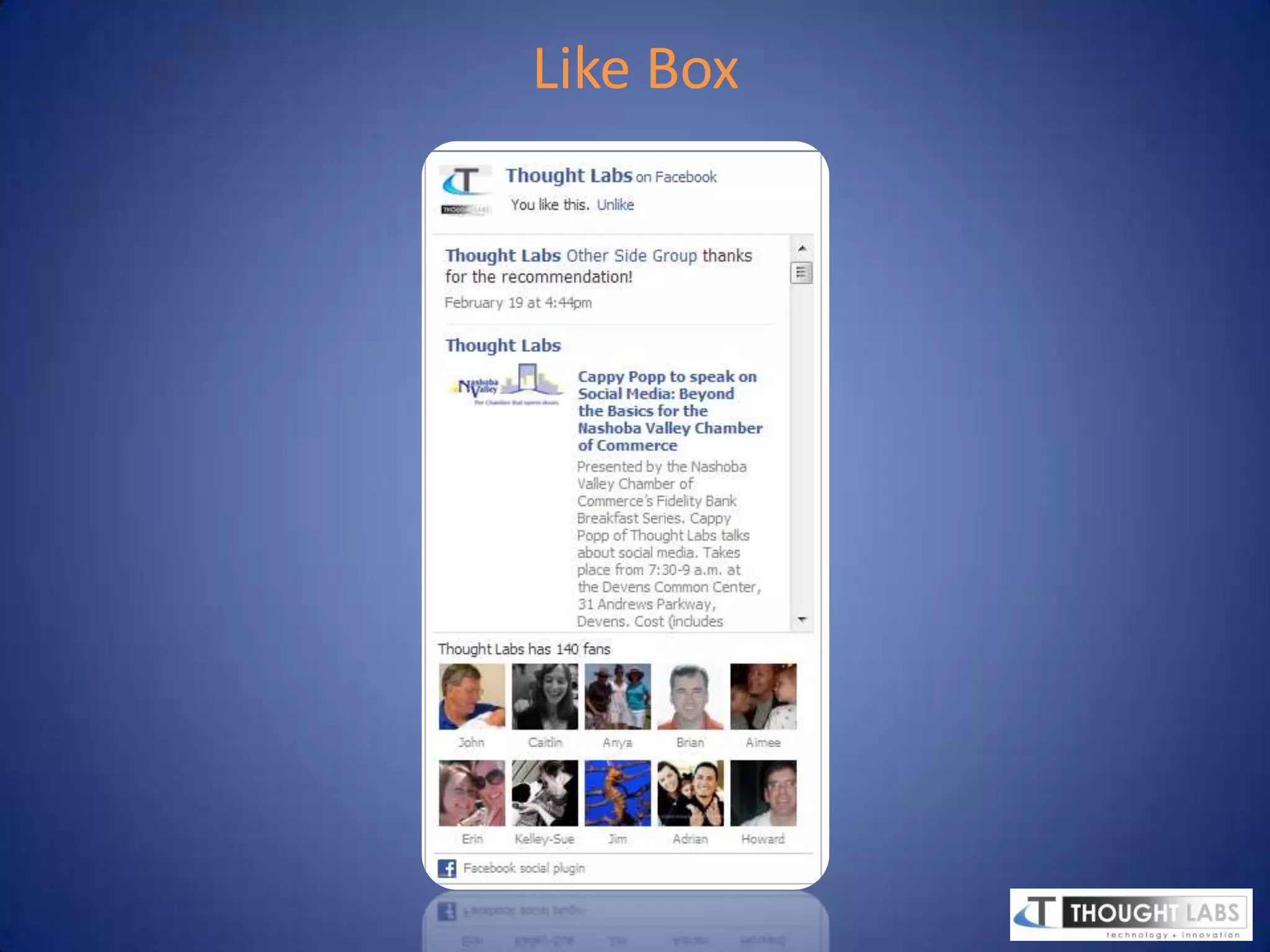
Like Box
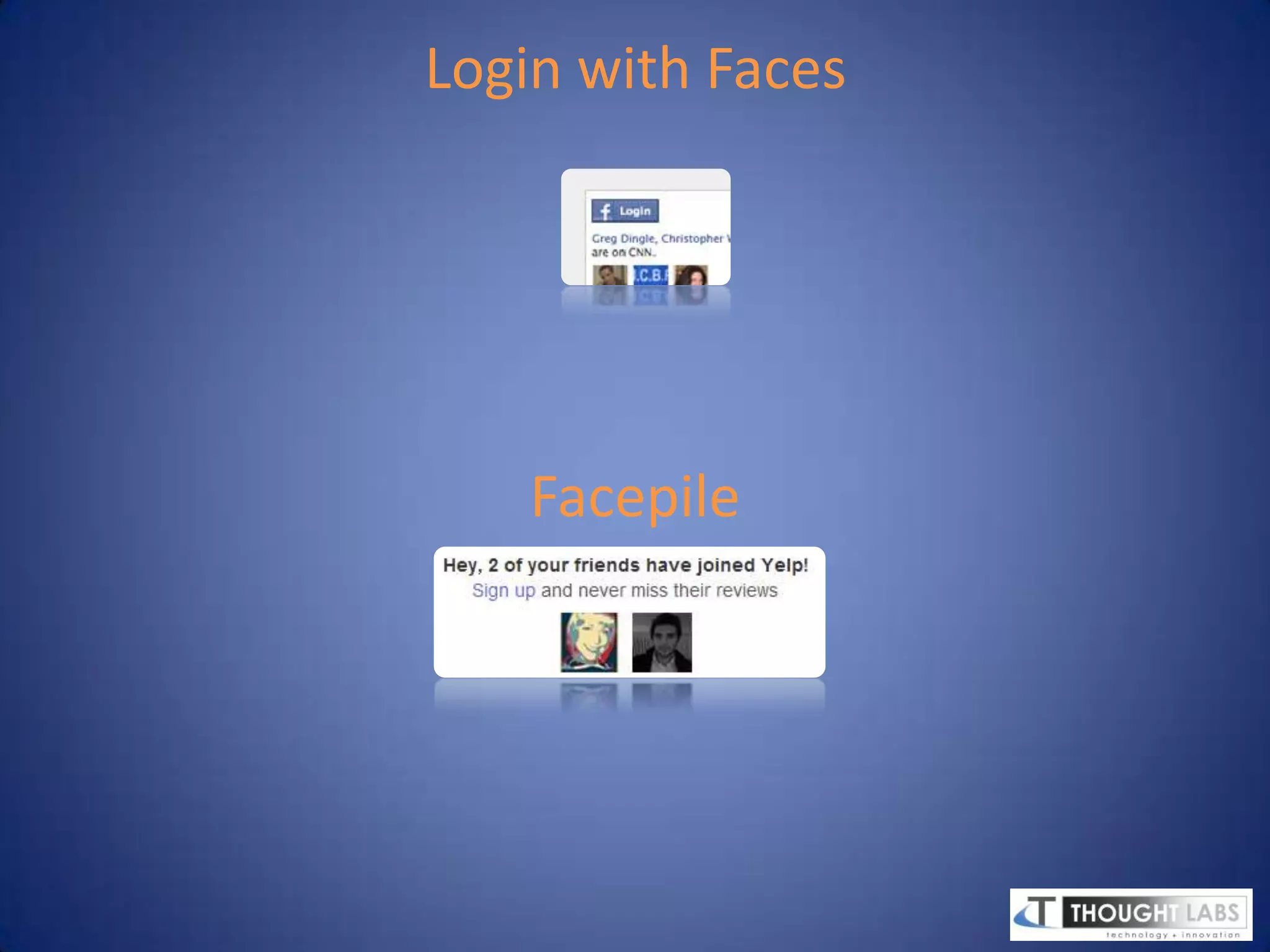
Login with FacesFacepile
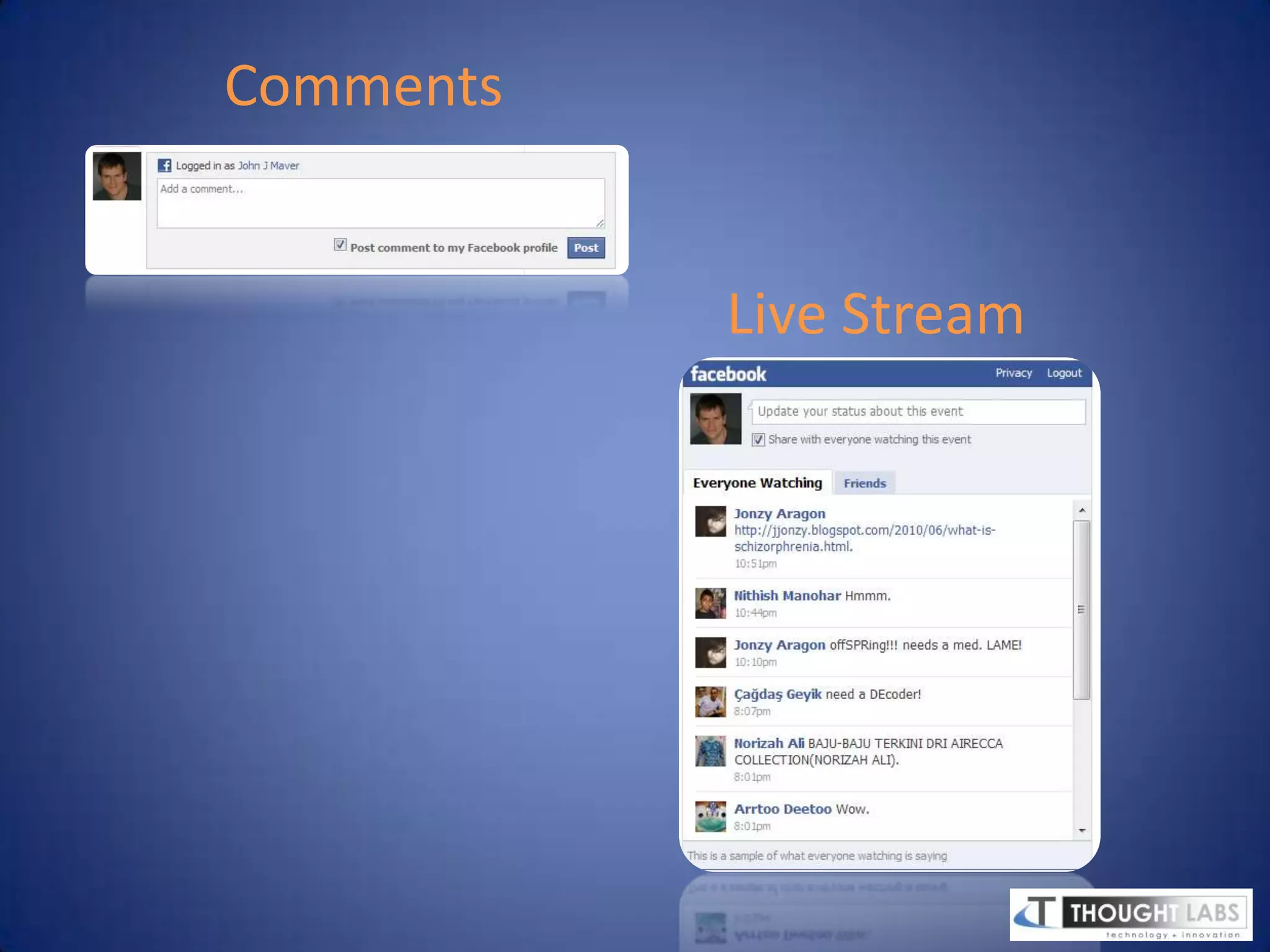
CommentsLive Stream
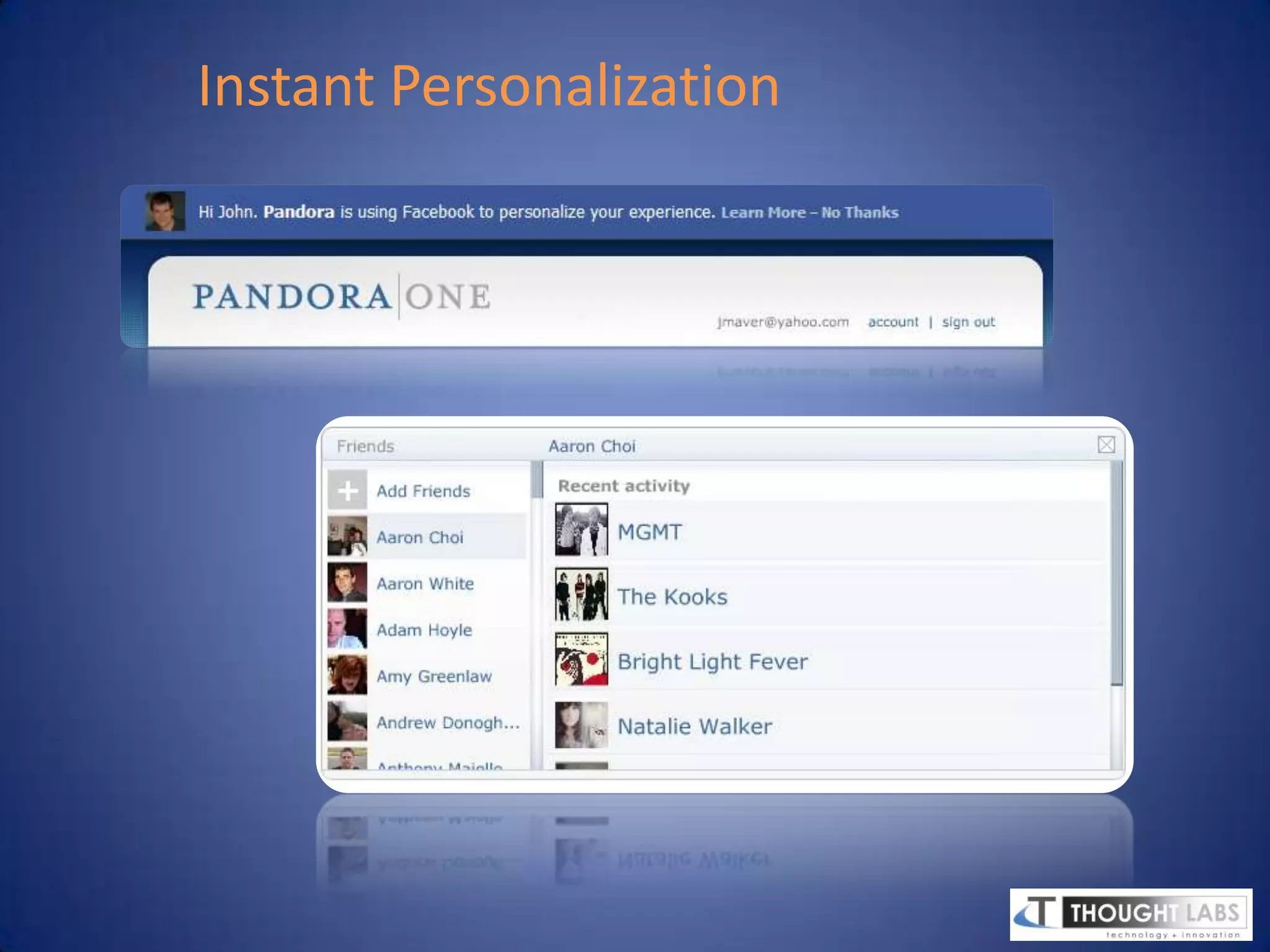
Instant Personalization
Stake your claim on “the Graph!”
The Open Graph is the new Gold Rush!
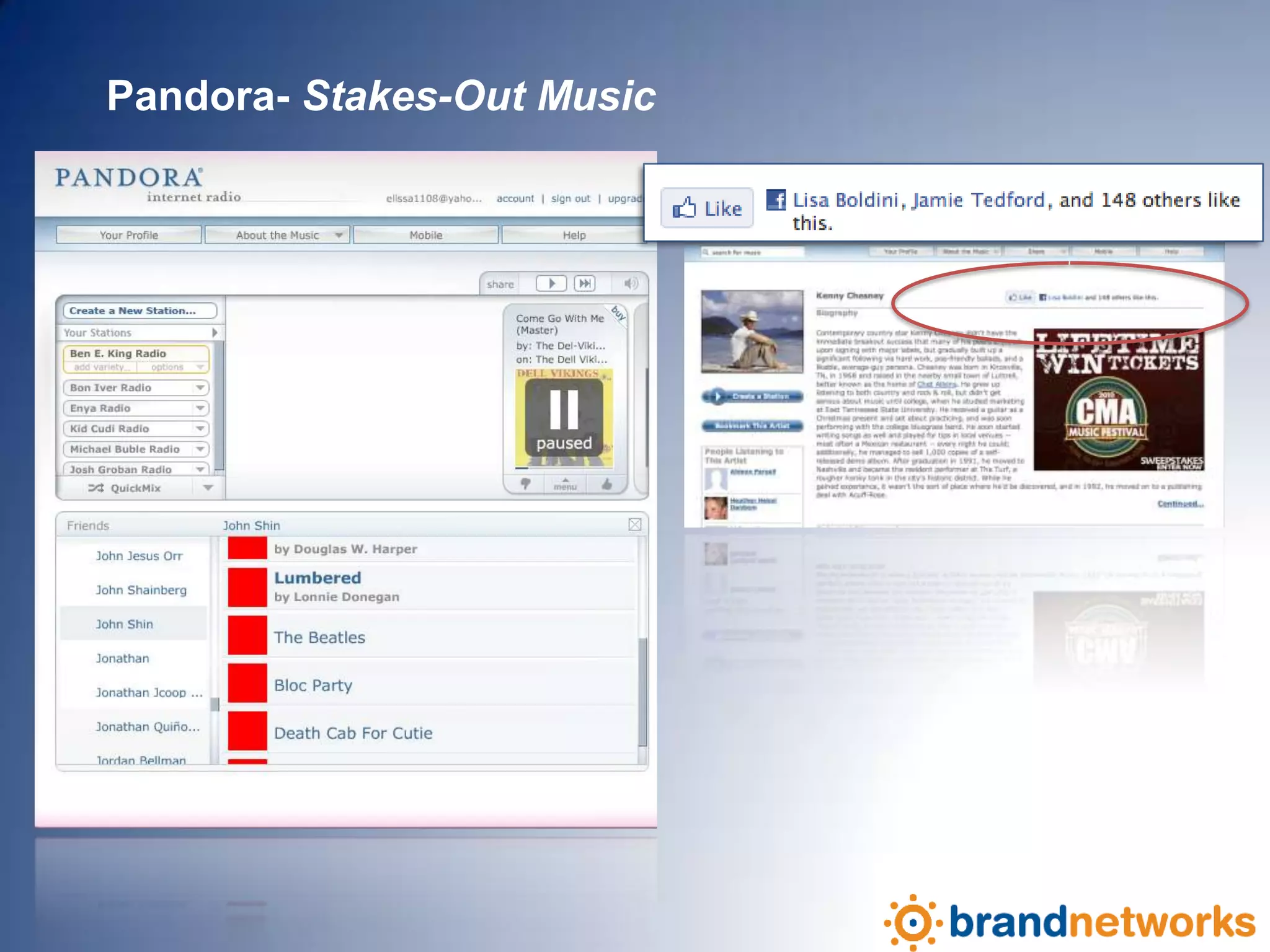
Pandora- Stakes-Out Music
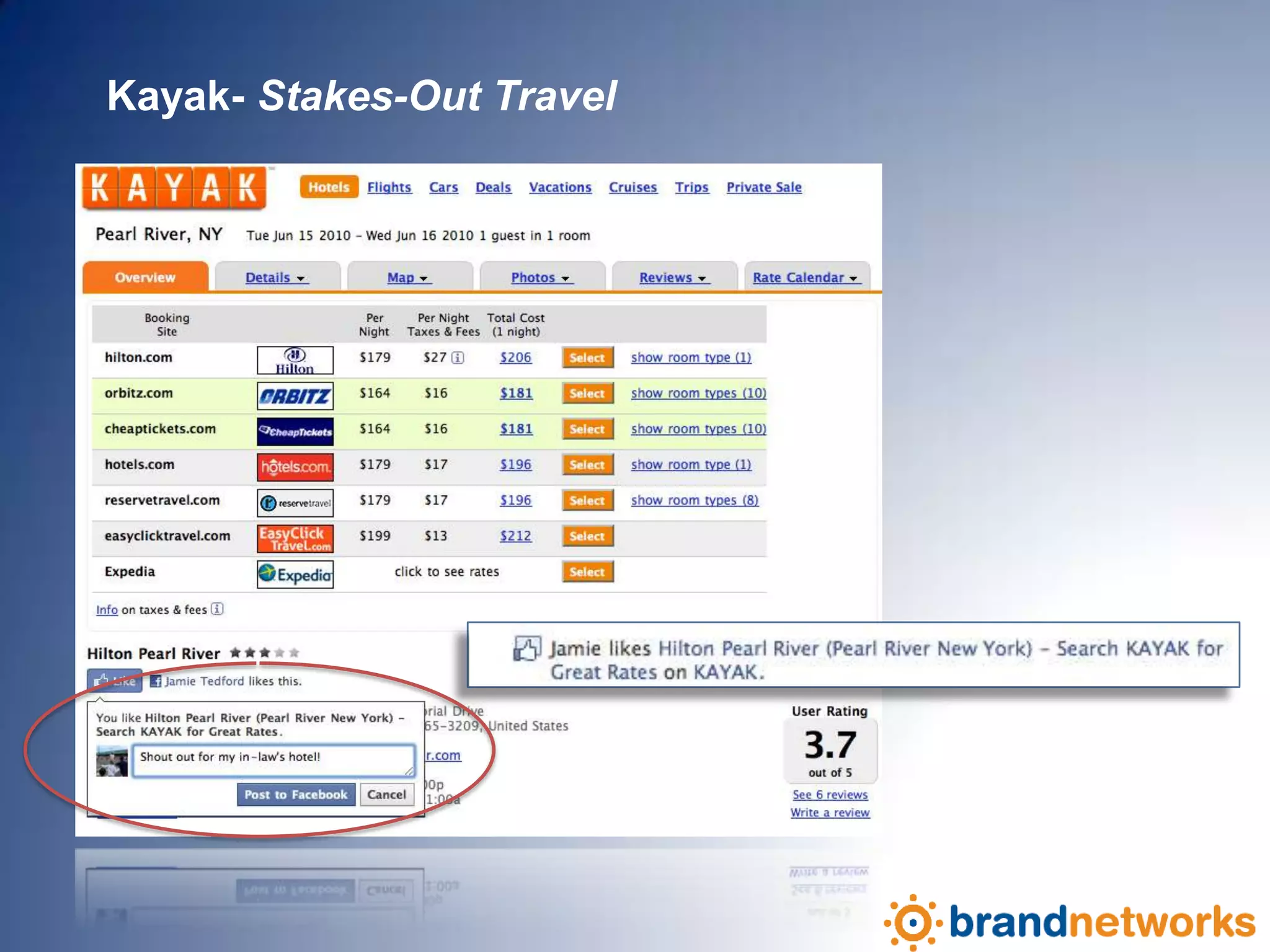
Kayak- Stakes-Out Travel
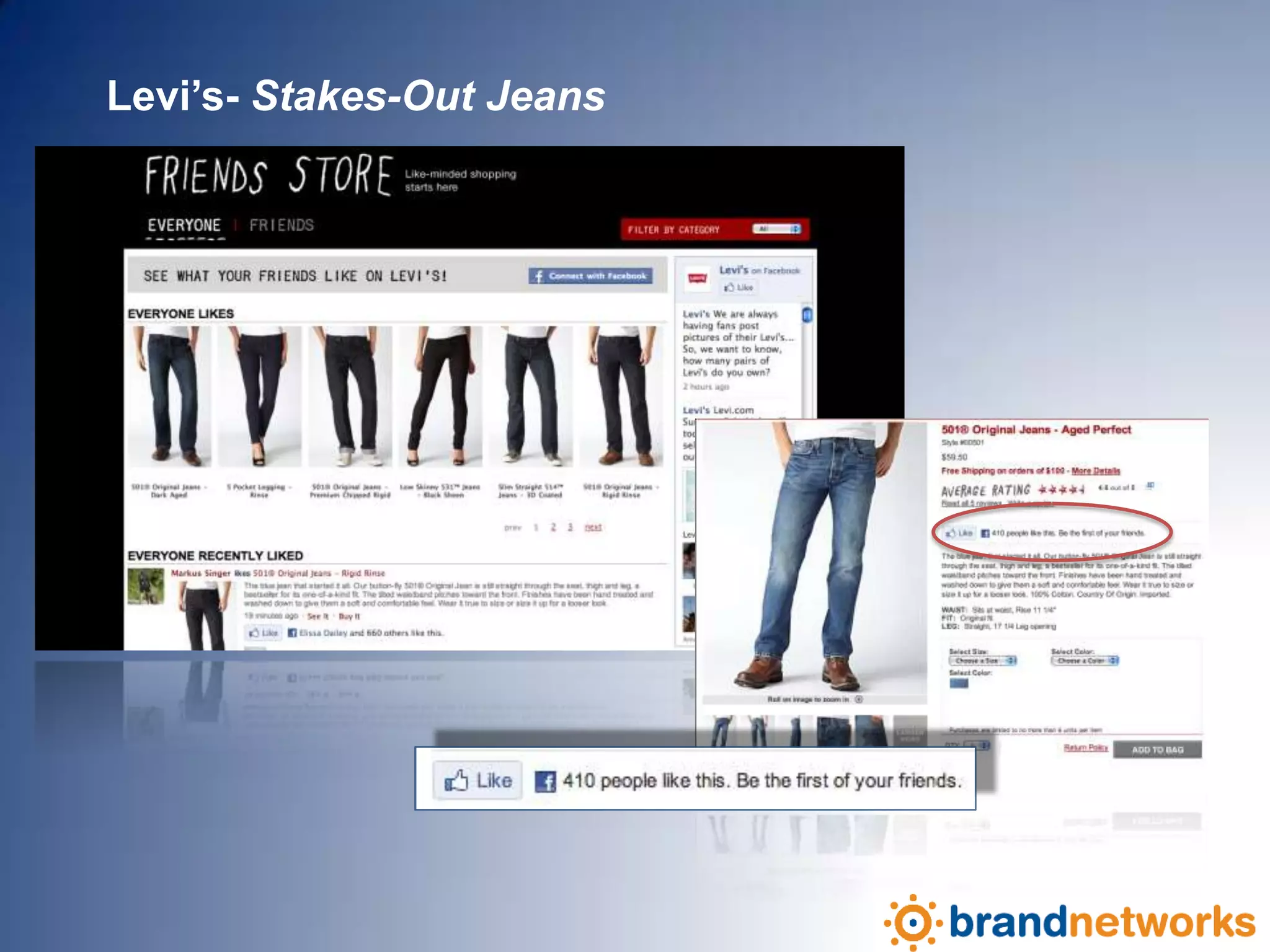
Levi’s- Stakes-Out Jeans
So if we’re in the new Gold Rush… what’s the Gold (or Goal)?
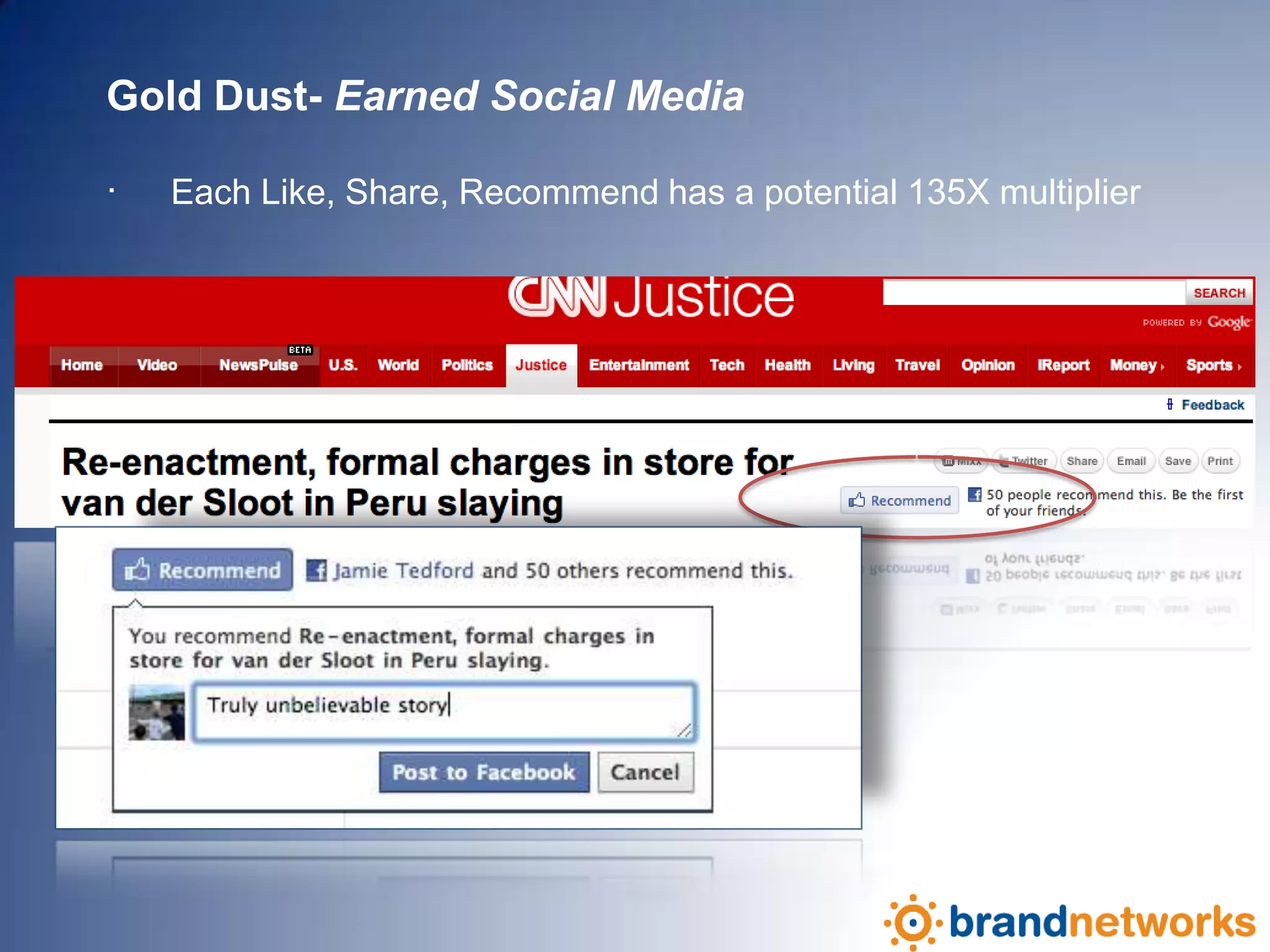
Gold Dust- Earned Social Media·     Each Like, Share, Recommend has a potential 135X multiplier
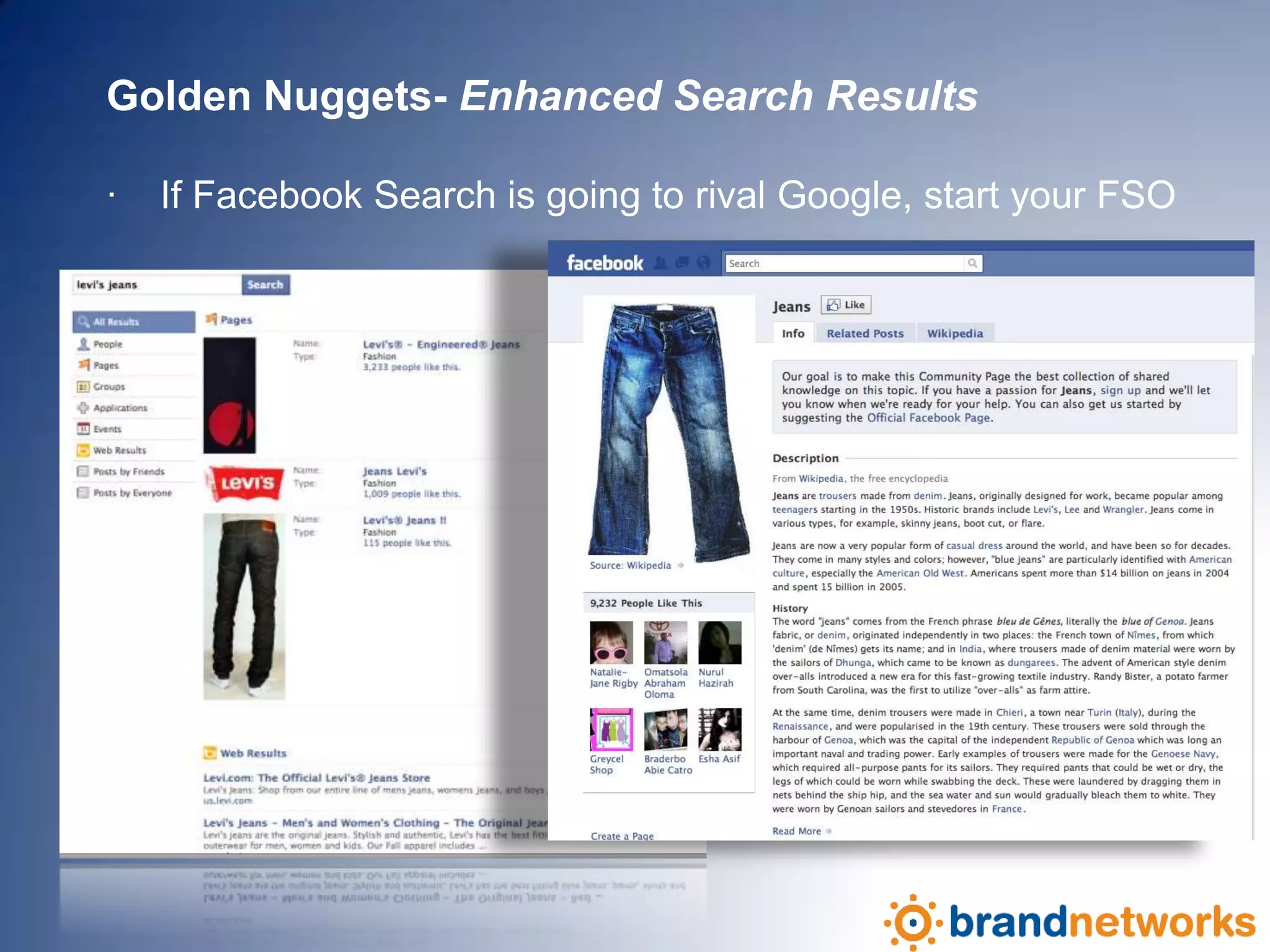
Golden Nuggets- Enhanced Search Results·    If Facebook Search is going to rival Google, start your FSO
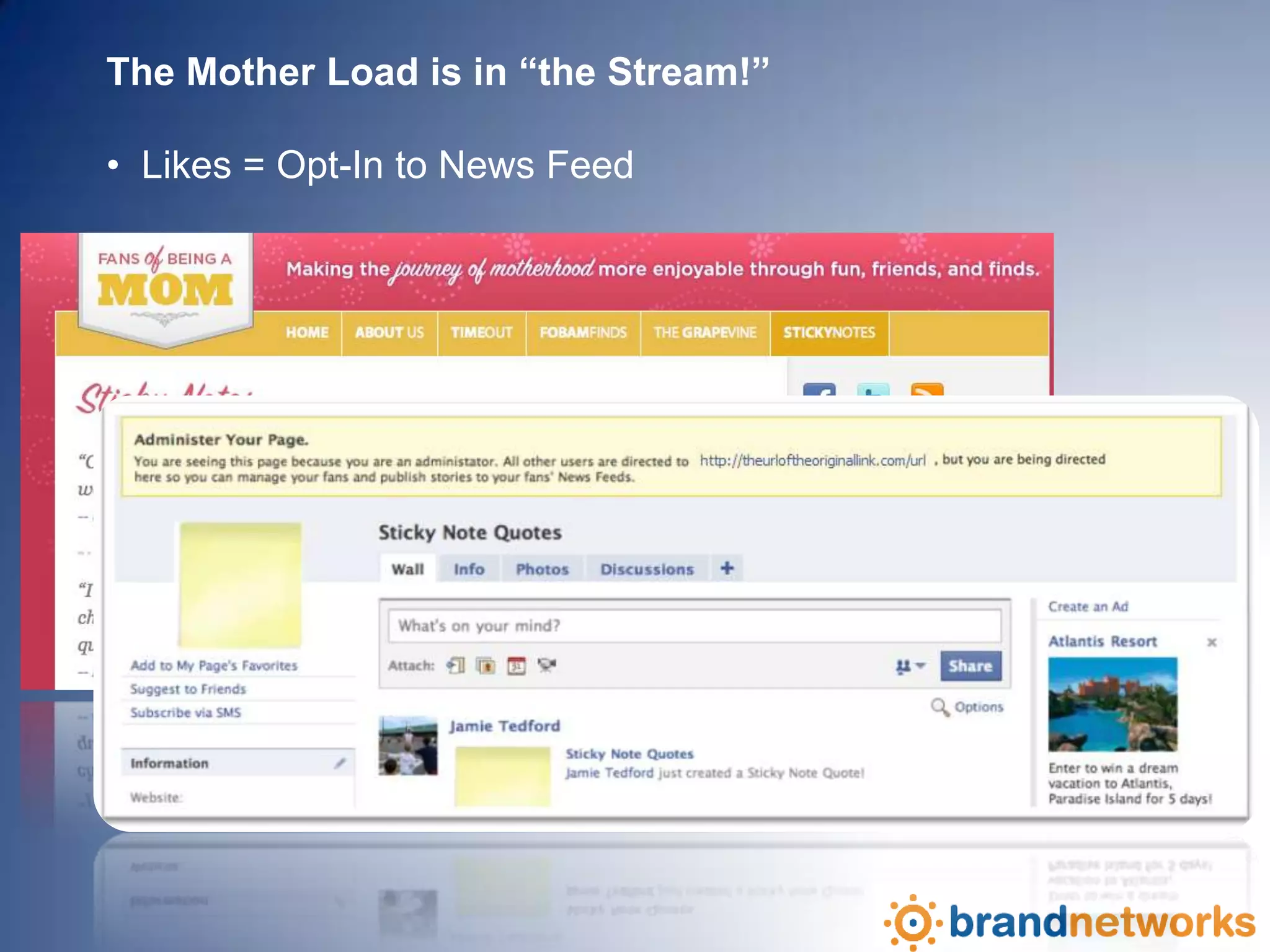
The Mother Load is in “the Stream!”     Likes = Opt-In to News FeedStake Your Claim!  Happy Prospecting
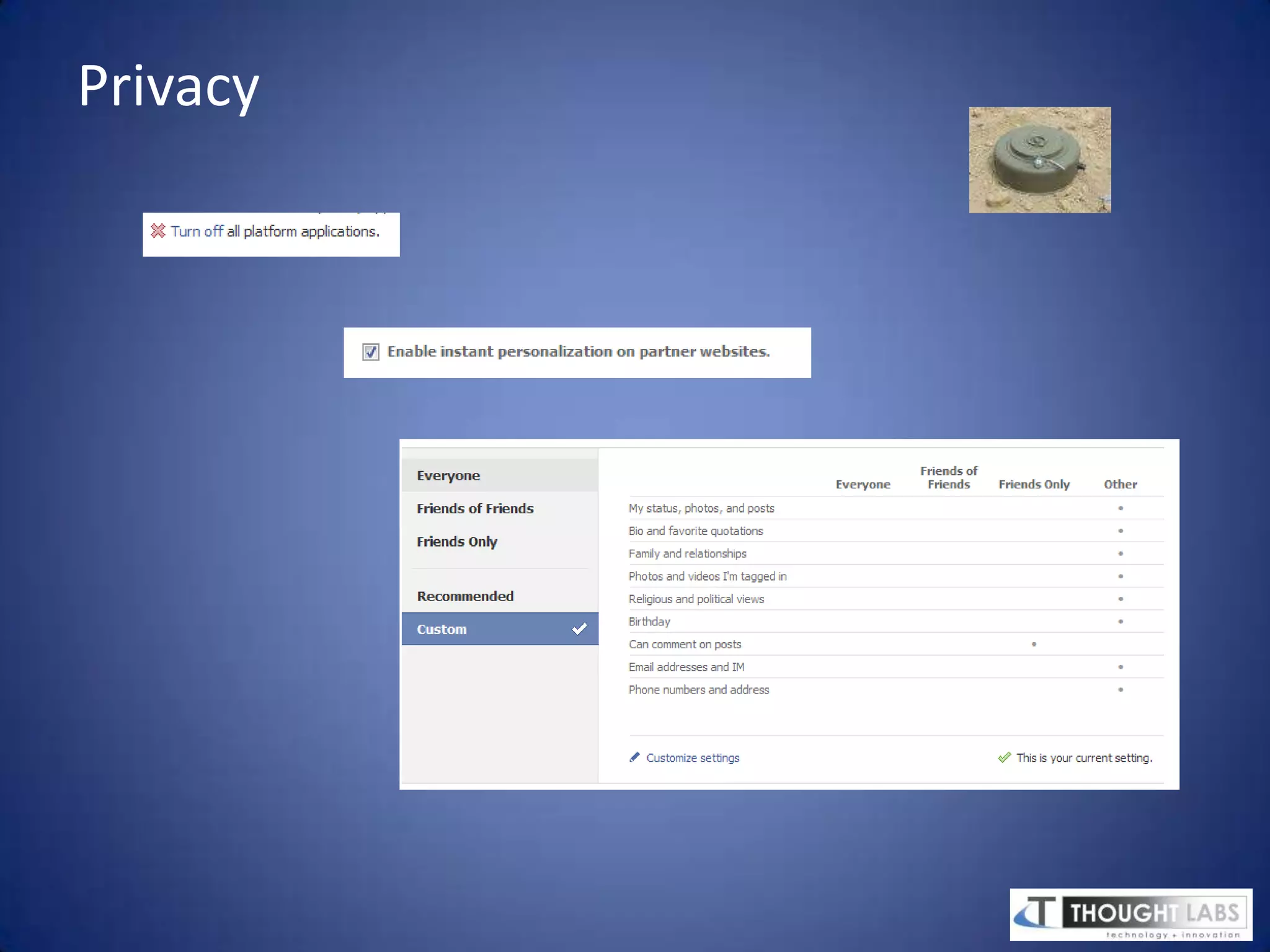
Privacy
Questions?
Facebook Open Graph: Living in a Personalized and Social Web World

Facebook Open Graph: Living in a Personalized and Social Web World

  • 1.
    Facebook Open GraphLivingin a Personalized and Social Web WorldJohn Maver & Jaime Tedford
  • 2.
    Speaker BiosJamie Tedfordis Founder and CEO of Brand Networks, a leading Social Solutions company.  Our clients include Starbucks, Warner Brothers, PUMA and Monster.com to name a few.  We’re proud to have been recently named a “Preferred Developer Consultant” by Facebook.  Prior to Brand Networks, Jamie was the SVP Media Innovation at Arnold Worldwide.  He is also a founding Board Member of the Word of Mouth Marketing Association (WOMMA).  Jamie is a frequent contributor to Marketing Daily, and his commentary on Social Media, Word of Mouth Marketing, and Advertising has been featured in the New York Times, on CNN and ABC News. Jaime TedfordJohn Maver is Principal and Co-Founder of Thought Labs, which helps companies get connected to their customers using social media. John has worked with small businesses and Fortune 100 companies to find the right strategies, implementations and success metrics for their brands.  He has been involved with the Facebook, Bebo and MySpace platforms from the time they were released and created an application for Facebook that is currently ranked in the top 100 (out of over 500,000 applications). John also co-authored the book, “Facebook Development: A Complete Guide to Smart Application Development for the Facebook Platform.” Prior to specializing in social media, John spent ten years leading software-development teams and building award-winning software-debugging products. John Maver
  • 3.
    500 Million Users= 3rd Largest Country
  • 4.
    The old socialgraph contained relationshipsbetween people(and some groups and brands) is friends withLarryis a Fan ofis a member ofLocal Pizza CoPeople Who Love Cheese
  • 5.
    The Open Graphshows relationshipsbetween objectsuses is sister toLarryloves to eatis a member ofLocal Pizza Colikes to watchPeople Who Love Cheese
  • 6.
    Anything can nowbepart of the graphYour companyYour brandYour productYour contentYour ideaYour service
  • 7.
    The Social Plugins Just like Connect, but lighterRecommendationsActivity FeedLogin with FacesLike ButtonCommentsLike BoxFacePileLive Stream
  • 8.
  • 9.
    Activity Feed andRecommendations
  • 10.
  • 11.
  • 12.
  • 13.
  • 14.
    Stake your claimon “the Graph!”
  • 15.
    The Open Graphis the new Gold Rush!
  • 16.
  • 17.
  • 18.
  • 19.
    So if we’rein the new Gold Rush… what’s the Gold (or Goal)?
  • 20.
    Gold Dust- EarnedSocial Media·     Each Like, Share, Recommend has a potential 135X multiplier
  • 21.
    Golden Nuggets- EnhancedSearch Results·    If Facebook Search is going to rival Google, start your FSO
  • 22.
    The Mother Loadis in “the Stream!”    Likes = Opt-In to News FeedStake Your Claim! Happy Prospecting
  • 23.
  • 24.

Editor's Notes

  • #4 Facebook is where your customers are 500 million current users, up from 400 million just 5 months ago Has deep penetration into international markets, approaching 50% saturation in some countries like the UK Over 35 demographic is now close to half of the overall user base
  • #5 The old social graph focused on friendship relationships. Facebook next added group relationships, and finally brand relationships. However this still limited the types of connections that could be made.
  • #6 The Open Graph now enables relationships between people and what they like – people, products, places, ideas. Anything a person can connect to can be linked now in Facebook.Facebook has established some basic categories of objects to start with, but these will increase over time.
  • #7 Using the categories specified, Facebook can now group and display relationships with context. This can make it much easier for brands to spread their messages and grow their business.
  • #8 Facebook’s social plugins have evolved from the Facebook Connect widgets. They offer lightweight interactions, often not requiring the user to log into the hosting website.There are 3 layers of integration, each offering a little more for doing more work:Generate a simple line of HTML that hosts the appropriate control and paste it onto your site. (Sometimes a little metadata must be added as well)Use the Facebook JavaScript SDK and XFBML to add the plugins, modify and interact with themCreate a Facebook web application and use the JavaScript SDK/Open Graph API to create rich integrations
  • #9 The Like button offers the simplest and most powerful integration. You can add a like button to individual items like a product or to a brand or a page as a whole. Users click the button and a feed story is put on their profile and sent out to their friends. The news story links back to the original page. This can drive a lot of traffic from Facebook back to your website. There are other advantages to the Like button laid out on slide 23.Note: this plugin does not require a user to be logged into your site, only to be logged into Facebook. It will prompt them to log into Facebook if they aren’t already.
  • #10 These widgets show what a user’s friends have done on the site and which items were interacted with the most. This can be a great way to drive views of other content that is likely to be relevant to the viewing users. Facebook takes care of matching the items users have commented on, liked or shared – your site doesn’t have to do anything but add this box.Note: these plugins do not require a user to be logged into your site, only to be logged into Facebook. They will prompt users to log into Facebook if they aren’t already.
  • #11 The Like Box is a quick way to drive users to a Facebook Public Profile (Fan Page) that you have created for your brand or company. It lets people become a Fan, shows the latest updates and pictures of friends that have also become Fans. Note: this plugin does not require a user to be logged into your site, only to be logged into Facebook. It will prompt users to log into Facebook if they aren’t already.
  • #12 Enabling Facebook users to log into your site with their Facebook credentials can drastically increase sign ups and retention. It can be a little tricky to integrate with an existing user management system, but Facebook provides some tools to help migrate users, as well as to gather needed information like email addresses. You can position the Login button anywhere on your page, and it will show friends of the user who have already signed up as an enticement. This plugin actually does require users to log into your site.The Facepileplugin just shows friends that have connected their Facebook account to your site. It is similar to the faces in the Login plugin. You can place this anywhere again as social pressure to sign in. Note: this plugin does not require a user to be logged into your site, only to be logged into Facebook. It will prompt users to log into Facebook if they aren’t already.
  • #13 The Comments Box is an easy way to add discussions to a product page or site. Comments from users can be sent directly to their profiles as updates and therefore out to their friends. You can have full moderation capabilities to handle bad content. You need to be prepared to deal with international users, so get your Google Translate ready.The Live Stream adds a real time discussion to a page. Again comments go to the users profile. This plugin is quite scalable and would work well for events, launches, etc.Note: these plugins do not require a user to be logged into your site, only to be logged into Facebook. They will prompt users to log into Facebook if they aren’t already.
  • #14 Instant Personalization is a feature that allows select sites (currently Docs.com, Pandora and Yelp) access to the viewing user’s public information without them having to log into the site. This lets them automatically show content based on the user’s interests or friend activity. Non-select sites would have to create an application and get the user to give permission in order to access the information.There was some controversy about this, but Facebook has created a privacy setting to allow users to disable it.
  • #15 The Open Graph is like the Wild West. There is a lot of opportunity to grow quickly and establish dominance by claiming first-order objects on the graph.
  • #16 Each item that is “liked” can be a first-order-object, meaning that it has a name and identity. An example would be an object named “Boston Celtics” on a page at the Boston Globe. Anyone that sees the item will see it only as “Boston Celtics”. Since anyone can create an object named “Boston Celtics”, the goal is to be the one that owns the one that has the most Fans.
  • #17 Pandora used the Like button to enable users to Like all the artists on the site. This creates a news story on the user’s profile that is also sent to his friends. The news story links back to Pandora. They also show what music a user’s friends have listened to and which artists they like. This adds a lot of value for a user in return for being a Facebook user.
  • #18 Kayak enables users to “like” hotels and other destinations. In this case, Jaime has liked the Hilton Pearl River hotel. If enough people interact with this object on Facebook, Kayak will have a valuable property, since it now “owns” it. If the Hilton Pearl River wants to reach its customers, it will likely have to interact with Kayak.
  • #19 Levi’s lets users like individual products, not just the brand as a whole. Users who click it will go right to this specific pair of jeans. Wouldn’t something like this help your products sell more?
  • #20 Having objects and interactions from Facebook is wonderful because of what you can do with them. The next pages discuss the benefits.
  • #21 Each person that shares or interacts with a piece content has, on average, 135 friends. Their interactions are posted on their profile and can show up in the news feeds of their friends. That gives each piece of content a potential 135x multiplier. So, create valuable content and make it very easy to share.
  • #22 Facebook’s search algorithms are still a mystery, but those pages that friends have interacted with the most are likely to show up near the top. Users also judge the validity of results by the number of Fans or likes. So, by creating popular content, you are doing “Facebook Search Optimization”.Watch out for Community pages. Facebook has created topic based pages fed by Wikipedia for just everything. Often these come up before the actual brand or company equivalent. While there isn’t much you can do about this directly, building your brand on Facebook is the best way to get found and clicked on instead.
  • #23 The hidden secret of the Like button is that you are actually creating segmented communication channels. The owner of an object gets a special page that they can post status updates to everyone that liked the object. For example, if a user likes Josh Groban on Pandora, Pandora can now post stories to their news feed about Josh Groban. Just like with Public Profiles, don’t spam your users or they will unlike or mute you.Most users don’t know that this is what they are signing up for, so choose level of communication that you feel is appropriate for your customers and your business.
  • #25 Users always have concerns as Facebook tries to balance privacy with the benefits of public information. The more public information, the more Facebook can spread and the more successful it is. Younger generations also feel more comfortable sharing publicly.Facebook recently release privacy updates to enable users to better control how information is shared with their friends. They can also now globally shut off information access for all applications and for Instant Personalization.Businesses that need access to a user’s information should ask only for the pieces that they need in response to a user’s direct action. Users will feel better about giving permission in those cases.