Under guidence: Dr. Salma Khanam
Presented by: Abhishek Kr Pandey
Department: Pharmacognosy
Class: 1st Semester M-PHARM
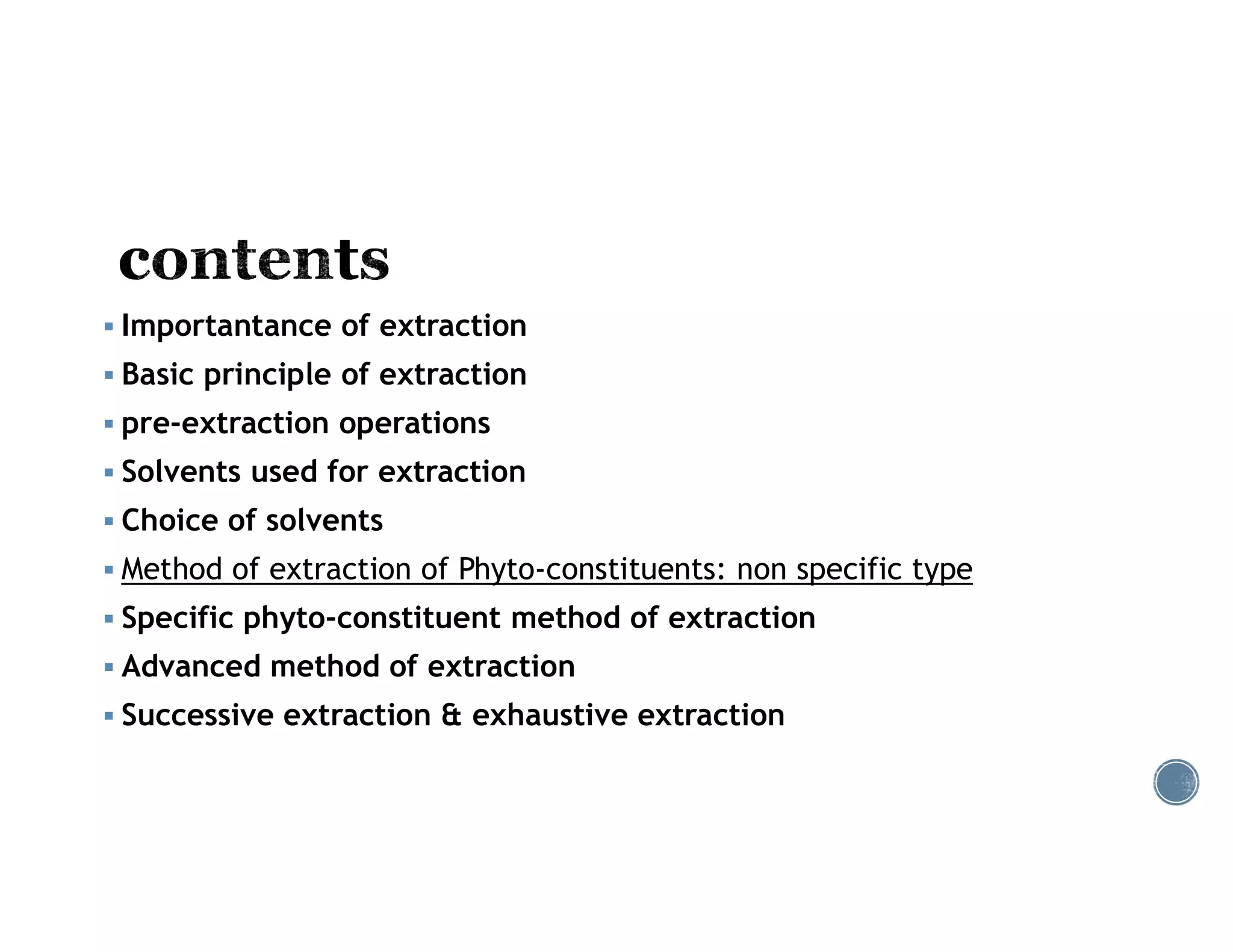
 Importantance of extraction
 Basic principle of extraction
 pre-extraction operations
 Solvents used for extraction
 Choice of solvents
 Method of extraction of Phyto-constituents: non specific type
 Specific phyto-constituent method of extraction
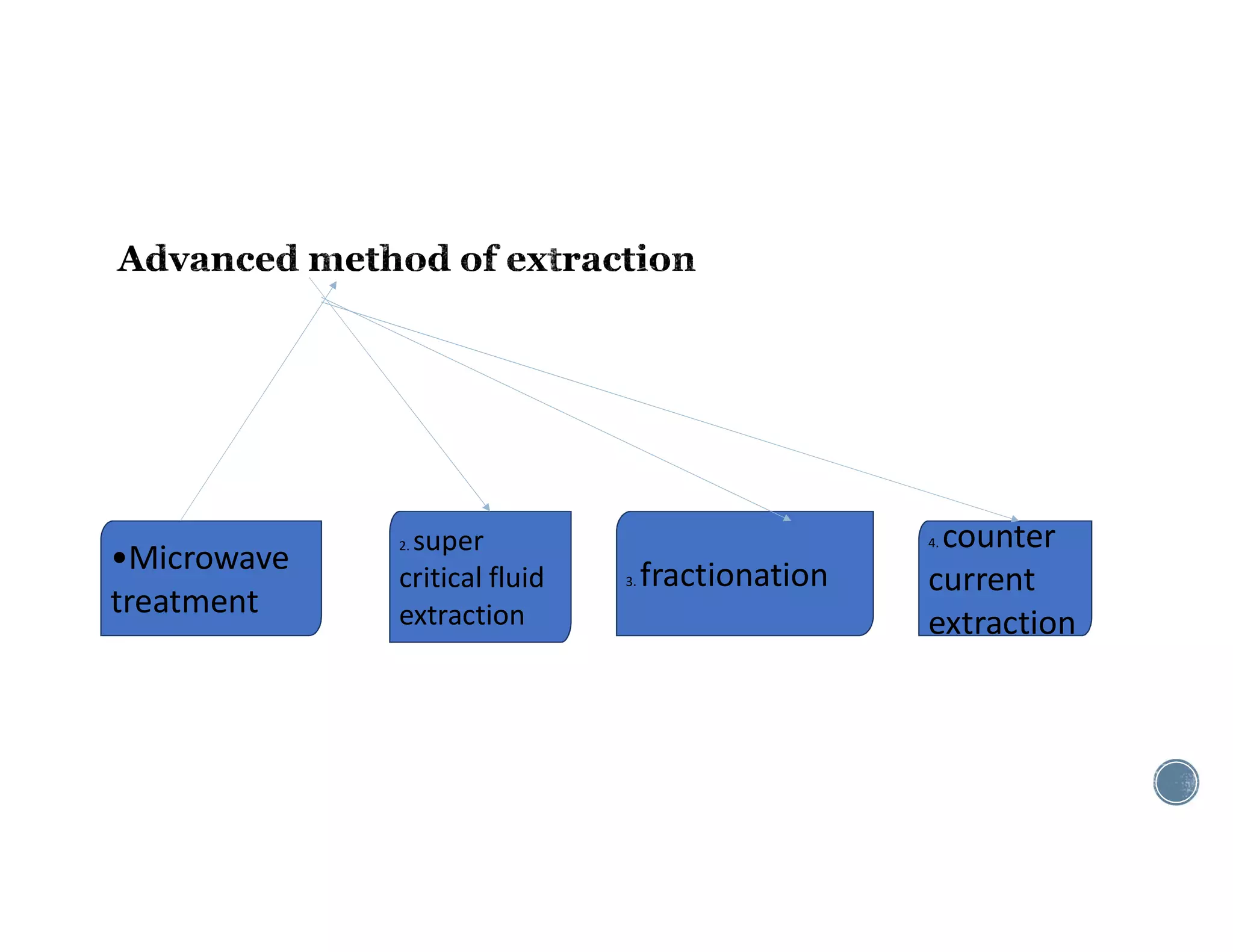
 Advanced method of extraction
 Successive extraction & exhaustive extraction
 Definition:
 It is the process of isolation of soluble material from insoluble residue, which may be liquid/
solid by the treatment with the solvent. On the basis of the physical nature of crude drug to be
extracted, that is liquid/ solid the extraction process may be liquid liquid/ solid – liquid
extraction.
 IMPORTANCE OF EXTRACTION
 As a part of biosynthesis studies
 Biochemical studies
 Chemotaxonomic studies
 Ecological studies
 Phytochemical studies
 Pharmacological studies
 Plant tissue culture studies
 As a part of formulation
Mass transfer
equilibrium setup between solution inside the cell
wall & the free solution.
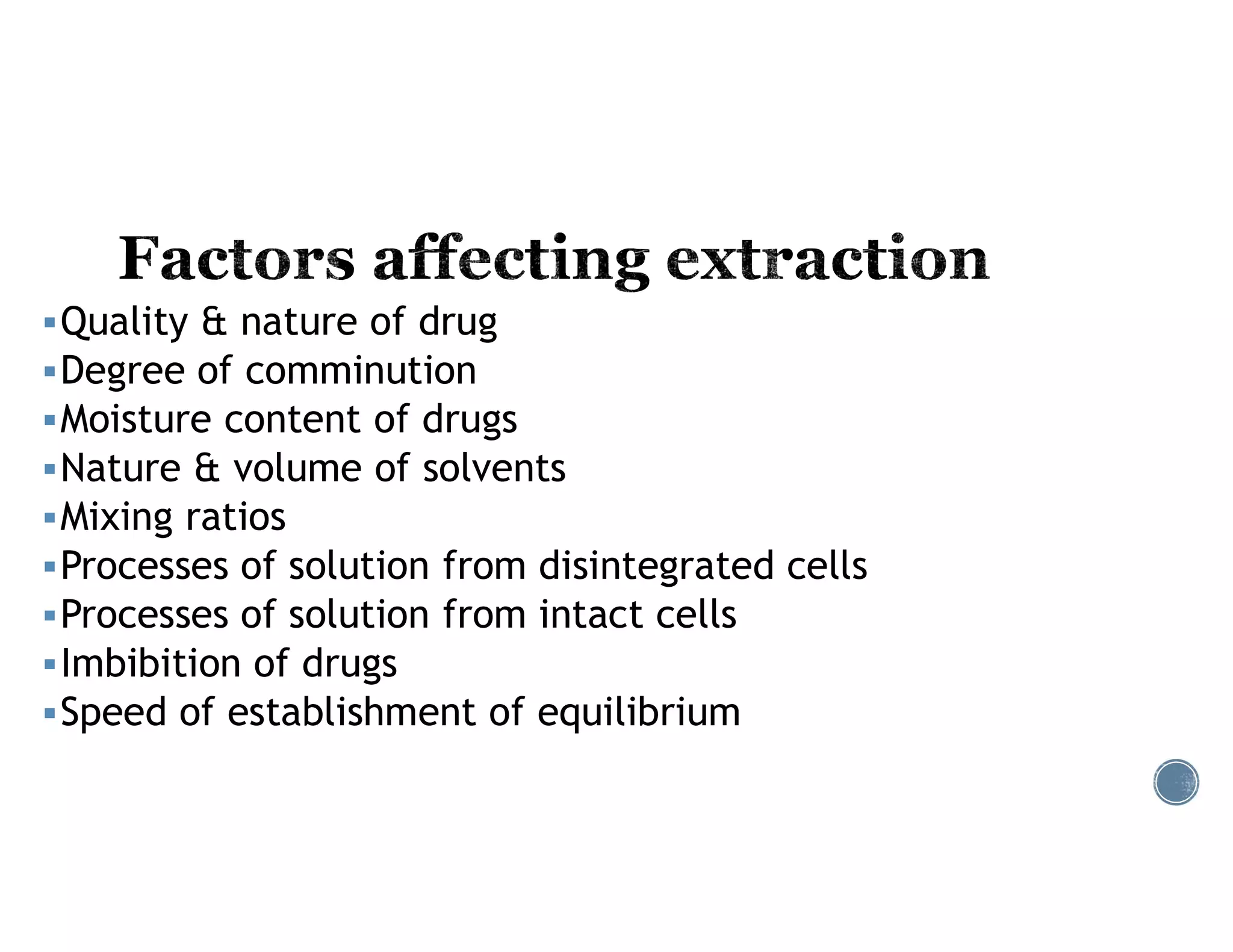
Quality & nature of drug
Degree of comminution
Moisture content of drugs
Nature & volume of solvents
Mixing ratios
Processes of solution from disintegrated cells
Processes of solution from intact cells
Imbibition of drugs
Speed of establishment of equilibrium
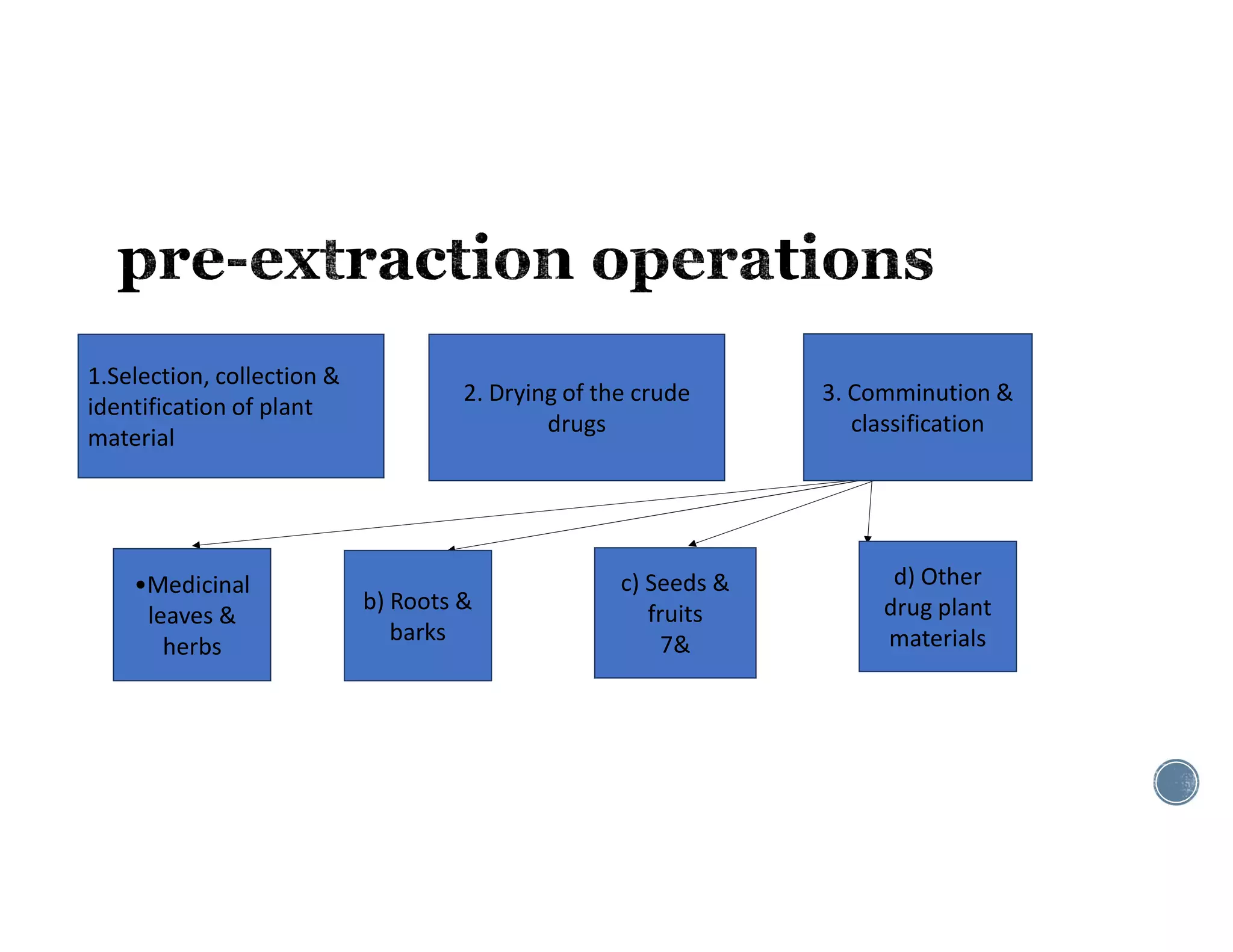
1.Selection, collection &
identification of plant
material
2. Drying of the crude
drugs
3. Comminution &
classification
•Medicinal
leaves &
herbs
b) Roots &
barks
c) Seeds &
fruits
7&
d) Other
drug plant
materials
 Criteria to be considered for the choice of solvents:
 Selectivity
 Ease of handling
 Economy
 Protection of the environment & safety
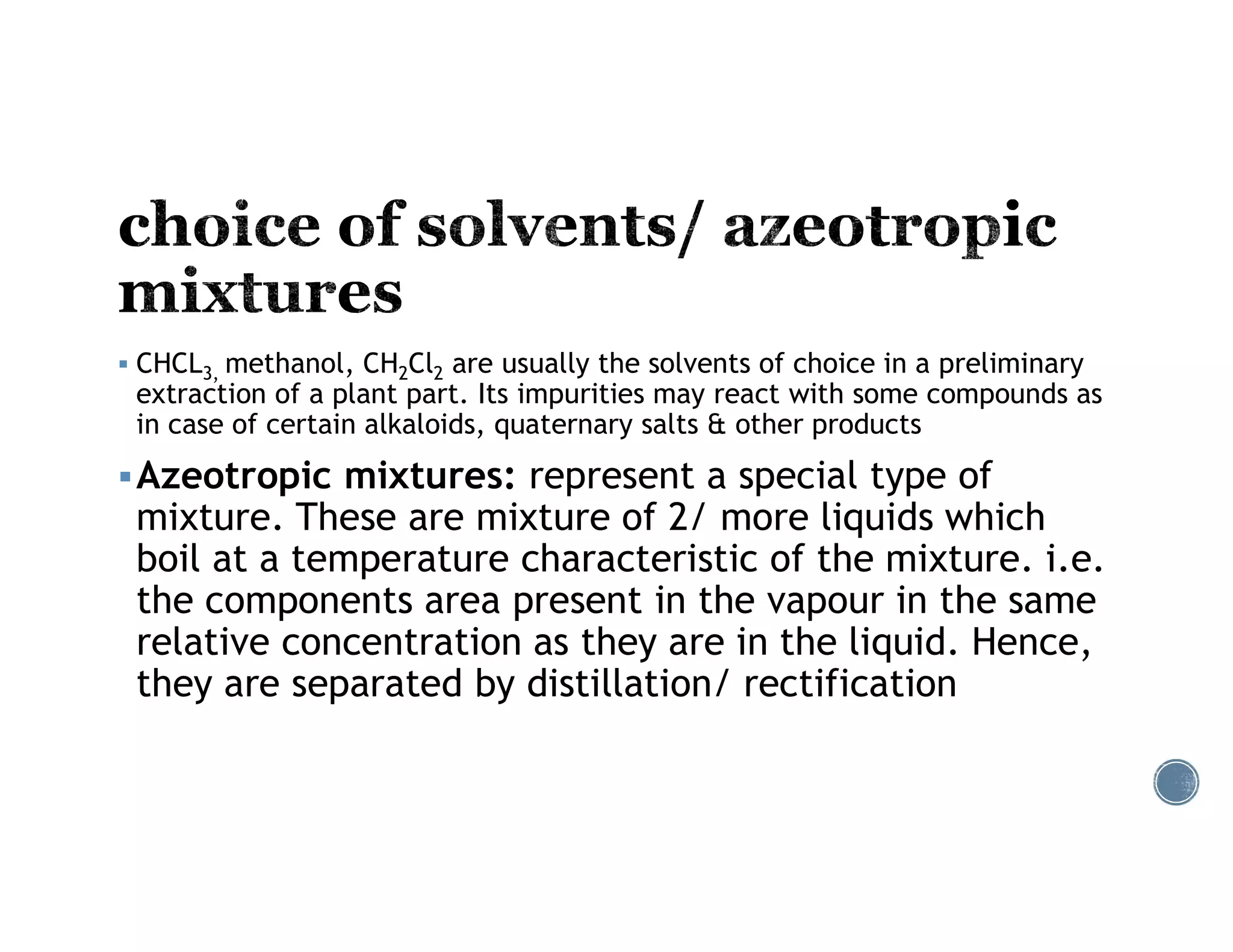
 CHCL3, methanol, CH2Cl2 are usually the solvents of choice in a preliminary
extraction of a plant part. Its impurities may react with some compounds as
in case of certain alkaloids, quaternary salts & other products
Azeotropic mixtures: represent a special type of
mixture. These are mixture of 2/ more liquids which
boil at a temperature characteristic of the mixture. i.e.
the components area present in the vapour in the same
relative concentration as they are in the liquid. Hence,
they are separated by distillation/ rectification
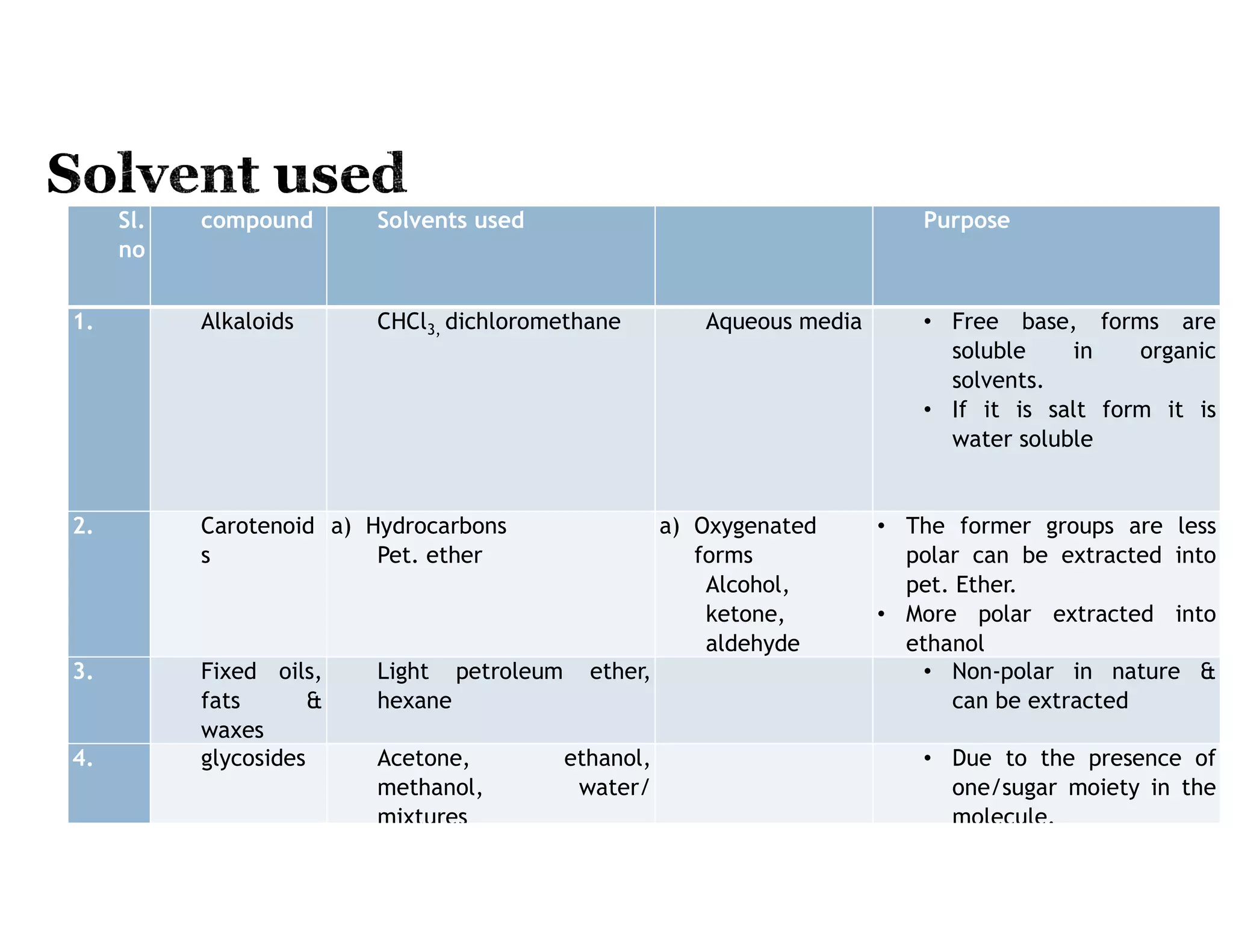
Sl.
no
compound Solvents used Purpose
1. Alkaloids CHCl3, dichloromethane Aqueous media • Free base, forms are
soluble in organic
solvents.
• If it is salt form it is
water soluble
2. Carotenoid
s
a) Hydrocarbons
Pet. ether
a) Oxygenated
forms
Alcohol,
ketone,
aldehyde
• The former groups are less
polar can be extracted into
pet. Ether.
• More polar extracted into
ethanol
3. Fixed oils,
fats &
waxes
Light petroleum ether,
hexane
• Non-polar in nature &
can be extracted
4. glycosides Acetone, ethanol,
methanol, water/
mixtures
• Due to the presence of
one/sugar moiety in the
molecule.
 N-hexane
 Benzene
 Toluene
 Chloroform
 Carbon tetrachloride
 Methanol
 Ethanol
 N-propanol
 acetone
Non specific type of
extraction/ solvent
method of extraction
Specific type of extraction
Advanced method of
extraction/ non solvent
method
1.maceration 2.digestion
3.vorical/
turbo
extractio
n
4.
ultrasound
extraction
5. extraction
by electric
energy
6.
percolati
on &
percolati
on
7. soxhlation
8. infusion/
decoction
Extraction of volatile
oils/essential oil
Enfleurage: -- volatile
oil from flowers
Expression method of
extraction
Distilllation with
water
Hydro-steam
distillation
Direct-steam
distillation
Distillation
perse
•Microwave
treatment
2. super
critical fluid
extraction
3. fractionation
4. counter
current
extraction
Difference between successive &
exhaustive method of extraction
Successive extraction Exhaustive extraction
Multiple solvents are used in the
increasing order of polarity
Single solvent is used
Multiple components of different
solubility are extracted
Single component is extracted
until exhaustion of the
component.
Before carry out the extraction
with other solvent we have to
ensure the marc is dried and
free of previously used solvent
Since same solvent is used no
need of drying the marc
Objective of the method to
know the types of constituent
present in it
The main objective here is to
exact quantity of single
component present in it.
1. Dr. pulok k. Mukherjee, quality control of herbal drugs, business
horizons pharmacytical publishers, 4th edition, pg ( 379-422)
2. Dr. vinod D. rangari, pharmacognosy & phytochemistry volume – 1,
career publications, 3rd edition, pg( 56-70), pg(326-328)
3. Biren Shah, A.K SETH, pharmacognosy & phytochemistry, published
by Elsevier, 1st edition, pg no.( 407-416)
4. TREASE & EVANS, pharmacognosy, published by w. c saunders, 15th
edition pg( 135)
5. S.L DEORE, S.S. KHADABADI, B.A. BAVISKAR, pharmacognosy &
phytochemistry a comprehensive apprproach, published by pharma
med press, chapter 15, pg ( 481-509)
Thank you

Extraction

  • 1.
    Under guidence: Dr.Salma Khanam Presented by: Abhishek Kr Pandey Department: Pharmacognosy Class: 1st Semester M-PHARM
  • 2.
     Importantance ofextraction  Basic principle of extraction  pre-extraction operations  Solvents used for extraction  Choice of solvents  Method of extraction of Phyto-constituents: non specific type  Specific phyto-constituent method of extraction  Advanced method of extraction  Successive extraction & exhaustive extraction
  • 3.
     Definition:  Itis the process of isolation of soluble material from insoluble residue, which may be liquid/ solid by the treatment with the solvent. On the basis of the physical nature of crude drug to be extracted, that is liquid/ solid the extraction process may be liquid liquid/ solid – liquid extraction.  IMPORTANCE OF EXTRACTION  As a part of biosynthesis studies  Biochemical studies  Chemotaxonomic studies  Ecological studies  Phytochemical studies  Pharmacological studies  Plant tissue culture studies  As a part of formulation
  • 4.
    Mass transfer equilibrium setupbetween solution inside the cell wall & the free solution.
  • 5.
    Quality & natureof drug Degree of comminution Moisture content of drugs Nature & volume of solvents Mixing ratios Processes of solution from disintegrated cells Processes of solution from intact cells Imbibition of drugs Speed of establishment of equilibrium
  • 6.
    1.Selection, collection & identificationof plant material 2. Drying of the crude drugs 3. Comminution & classification •Medicinal leaves & herbs b) Roots & barks c) Seeds & fruits 7& d) Other drug plant materials
  • 7.
     Criteria tobe considered for the choice of solvents:  Selectivity  Ease of handling  Economy  Protection of the environment & safety
  • 8.
     CHCL3, methanol,CH2Cl2 are usually the solvents of choice in a preliminary extraction of a plant part. Its impurities may react with some compounds as in case of certain alkaloids, quaternary salts & other products Azeotropic mixtures: represent a special type of mixture. These are mixture of 2/ more liquids which boil at a temperature characteristic of the mixture. i.e. the components area present in the vapour in the same relative concentration as they are in the liquid. Hence, they are separated by distillation/ rectification
  • 10.
    Sl. no compound Solvents usedPurpose 1. Alkaloids CHCl3, dichloromethane Aqueous media • Free base, forms are soluble in organic solvents. • If it is salt form it is water soluble 2. Carotenoid s a) Hydrocarbons Pet. ether a) Oxygenated forms Alcohol, ketone, aldehyde • The former groups are less polar can be extracted into pet. Ether. • More polar extracted into ethanol 3. Fixed oils, fats & waxes Light petroleum ether, hexane • Non-polar in nature & can be extracted 4. glycosides Acetone, ethanol, methanol, water/ mixtures • Due to the presence of one/sugar moiety in the molecule.
  • 11.
     N-hexane  Benzene Toluene  Chloroform  Carbon tetrachloride  Methanol  Ethanol  N-propanol  acetone
  • 12.
    Non specific typeof extraction/ solvent method of extraction Specific type of extraction Advanced method of extraction/ non solvent method
  • 13.
    1.maceration 2.digestion 3.vorical/ turbo extractio n 4. ultrasound extraction 5. extraction byelectric energy 6. percolati on & percolati on 7. soxhlation 8. infusion/ decoction
  • 17.
    Extraction of volatile oils/essentialoil Enfleurage: -- volatile oil from flowers Expression method of extraction Distilllation with water Hydro-steam distillation Direct-steam distillation Distillation perse
  • 20.
    •Microwave treatment 2. super critical fluid extraction 3.fractionation 4. counter current extraction
  • 21.
    Difference between successive& exhaustive method of extraction Successive extraction Exhaustive extraction Multiple solvents are used in the increasing order of polarity Single solvent is used Multiple components of different solubility are extracted Single component is extracted until exhaustion of the component. Before carry out the extraction with other solvent we have to ensure the marc is dried and free of previously used solvent Since same solvent is used no need of drying the marc Objective of the method to know the types of constituent present in it The main objective here is to exact quantity of single component present in it.
  • 22.
    1. Dr. pulokk. Mukherjee, quality control of herbal drugs, business horizons pharmacytical publishers, 4th edition, pg ( 379-422) 2. Dr. vinod D. rangari, pharmacognosy & phytochemistry volume – 1, career publications, 3rd edition, pg( 56-70), pg(326-328) 3. Biren Shah, A.K SETH, pharmacognosy & phytochemistry, published by Elsevier, 1st edition, pg no.( 407-416) 4. TREASE & EVANS, pharmacognosy, published by w. c saunders, 15th edition pg( 135) 5. S.L DEORE, S.S. KHADABADI, B.A. BAVISKAR, pharmacognosy & phytochemistry a comprehensive apprproach, published by pharma med press, chapter 15, pg ( 481-509)
  • 23.