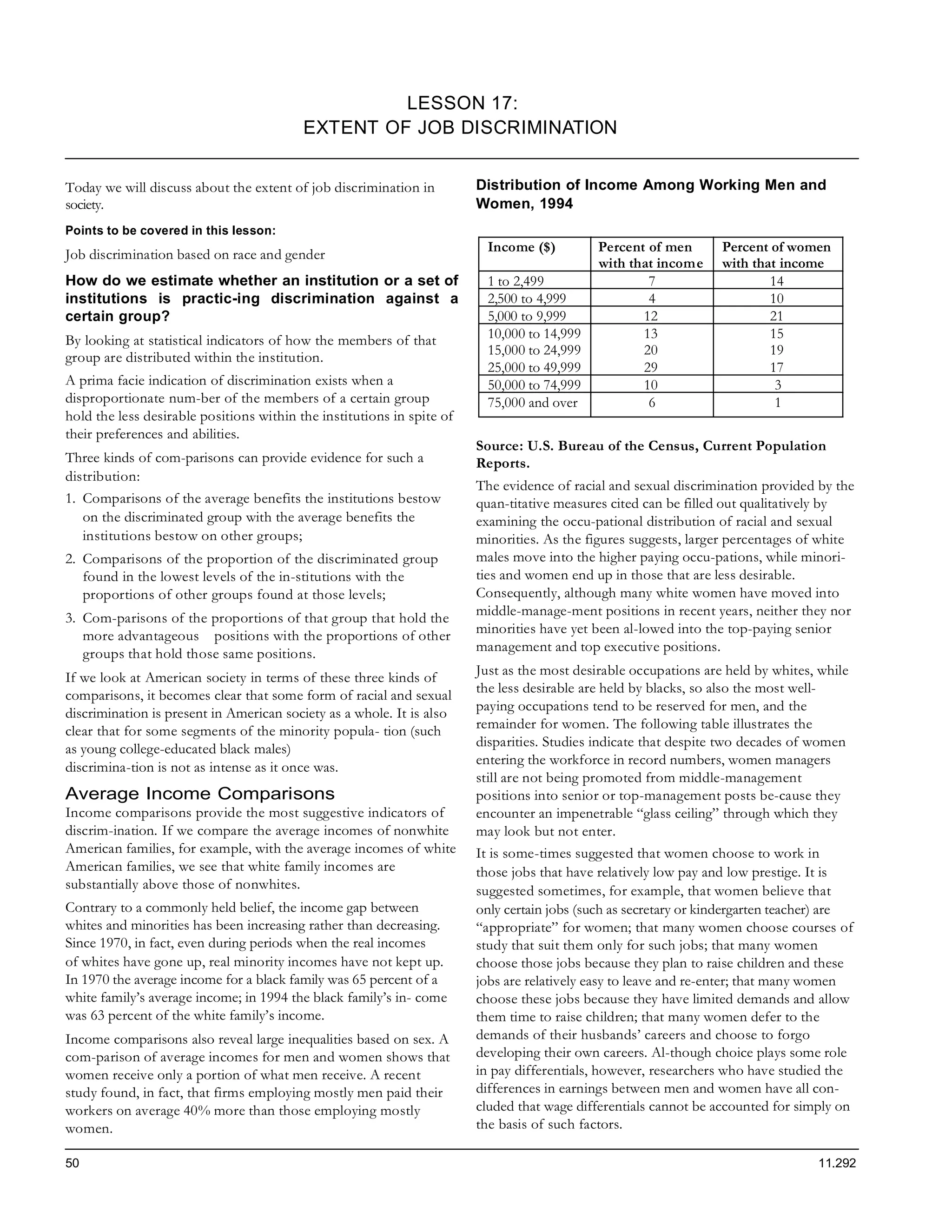
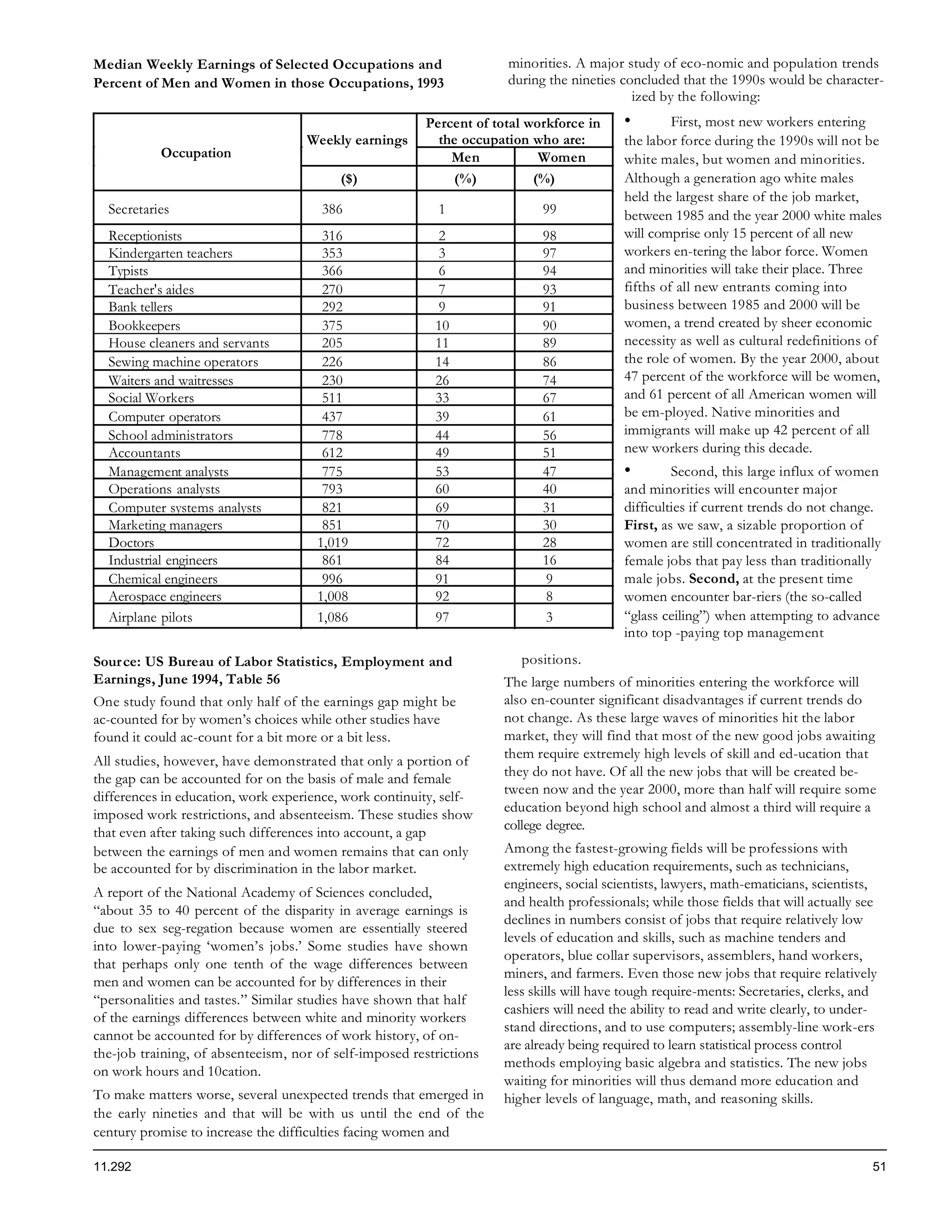
Job discrimination can be estimated by looking at statistical indicators showing how underrepresented groups are distributed within institutions. Three types of comparisons provide evidence: 1) Comparing average benefits between groups, 2) Comparing low-level representation between groups, and 3) Comparing high-level representation between groups. Studies of American society show racial and gender discrimination in average incomes, occupational distributions, and glass ceilings. While some choice factors contribute to differences, studies find only a portion of earnings gaps can be explained by choice, and discrimination in the labor market must also be a factor. Upcoming demographic changes may exacerbate issues if current trends are not addressed.