Downloaded 113 times
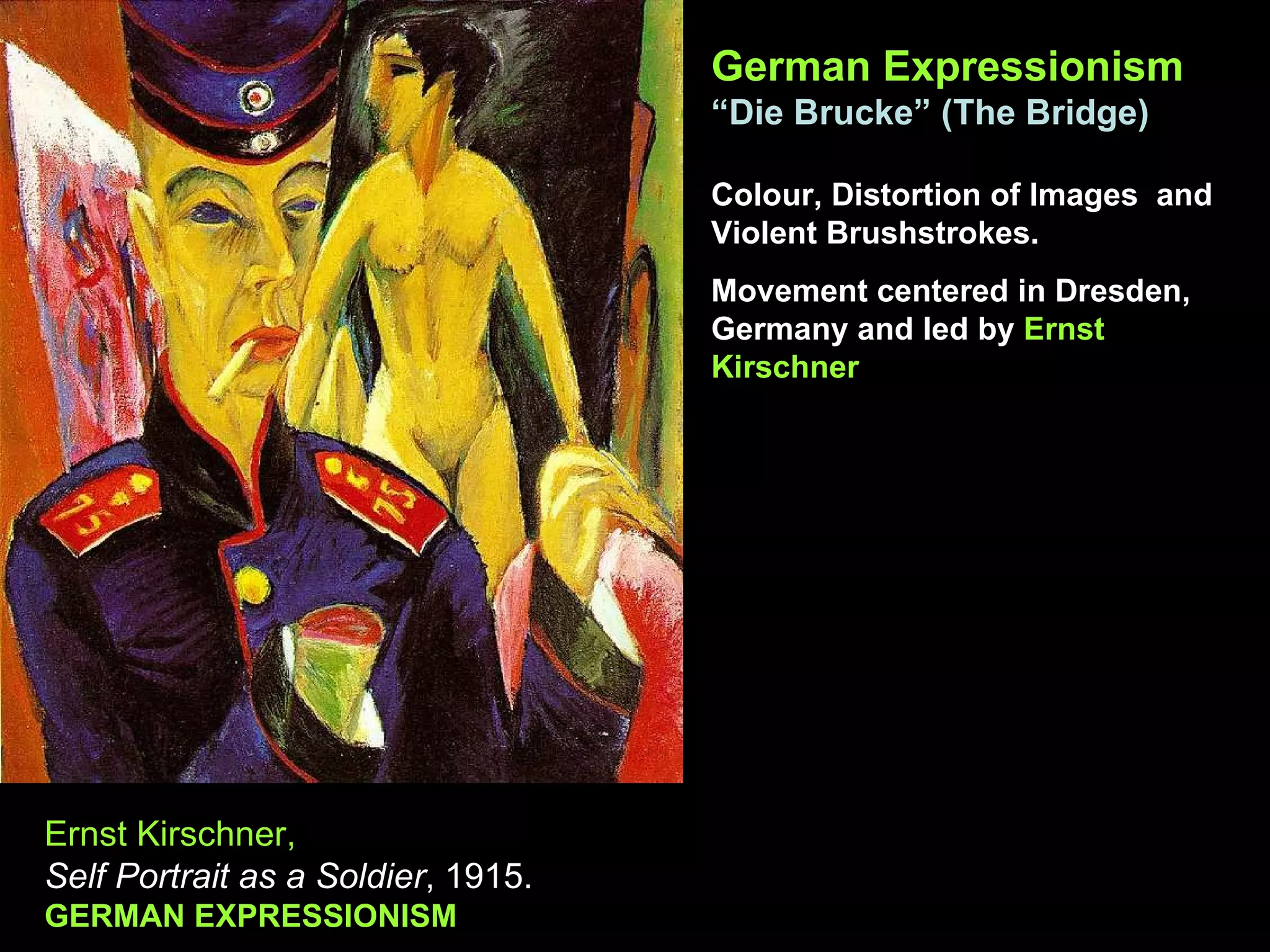
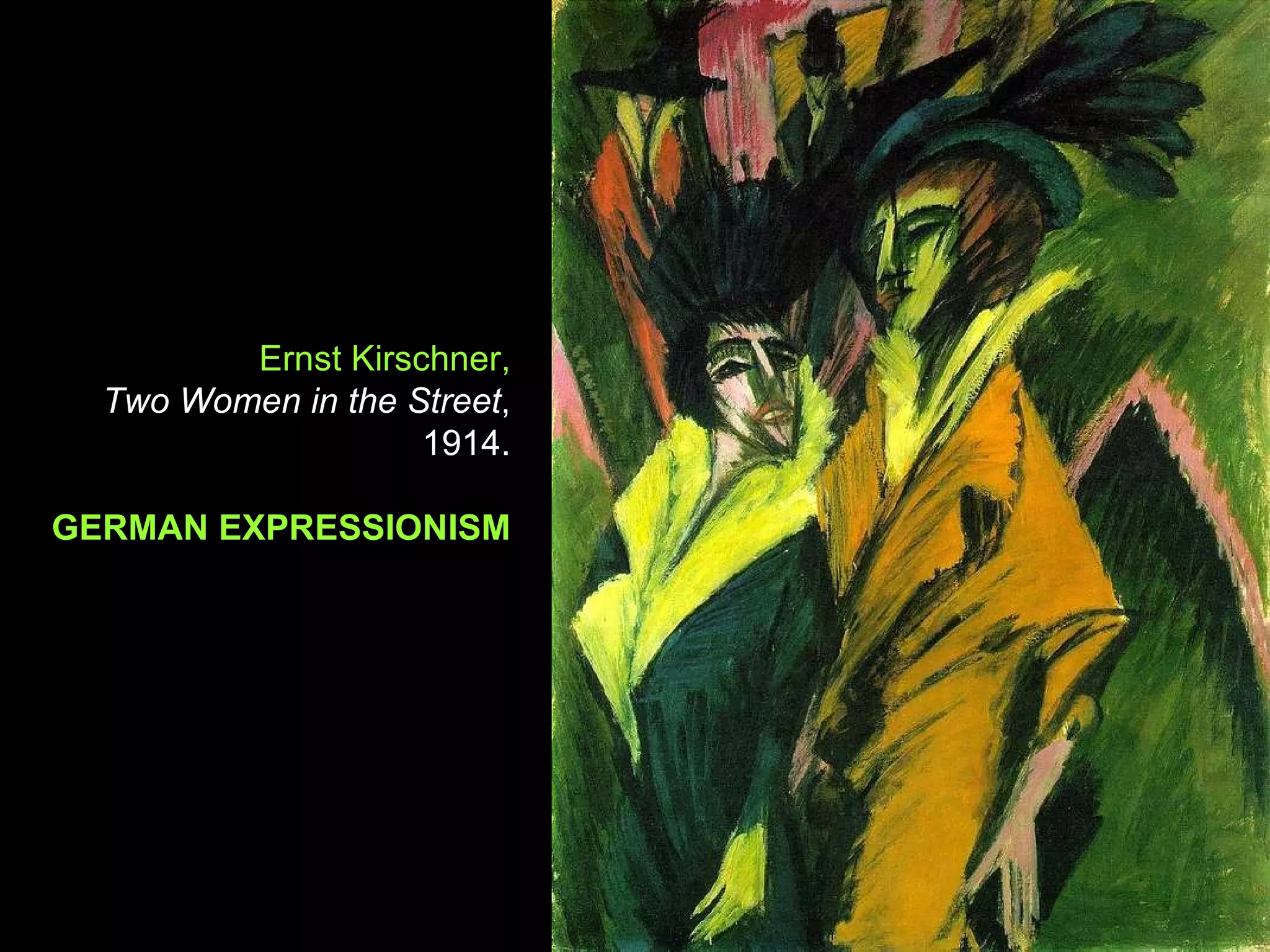
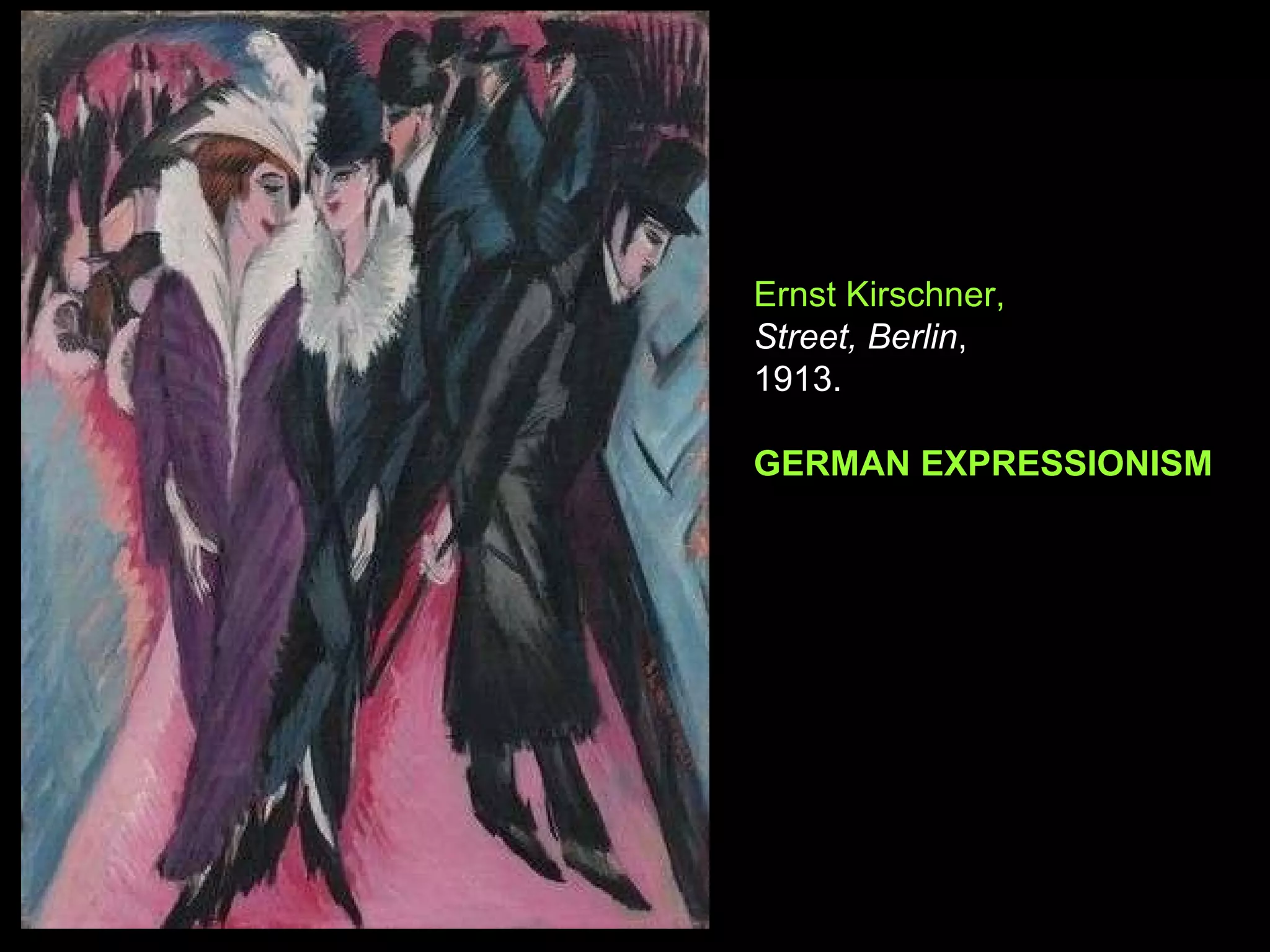
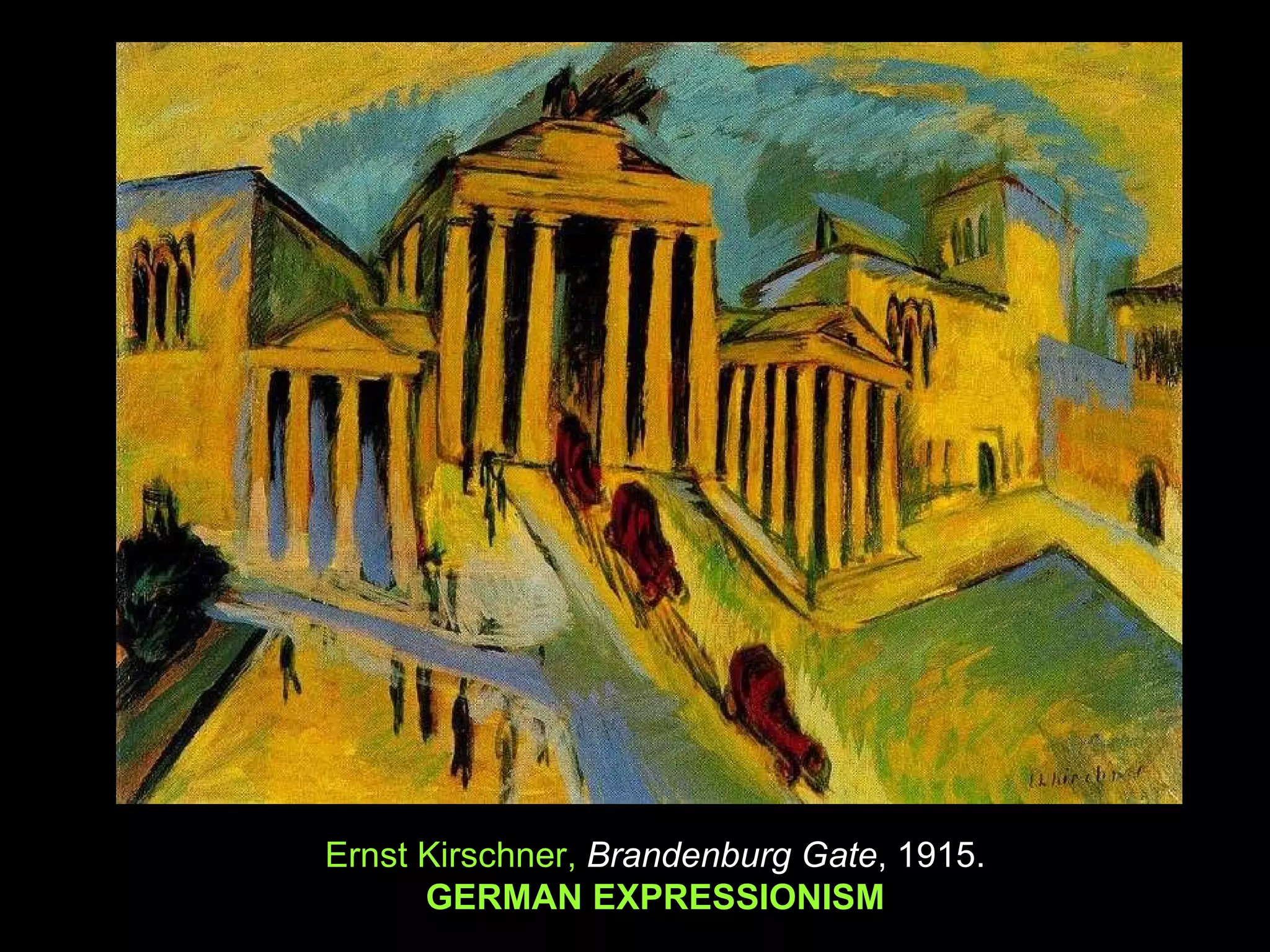

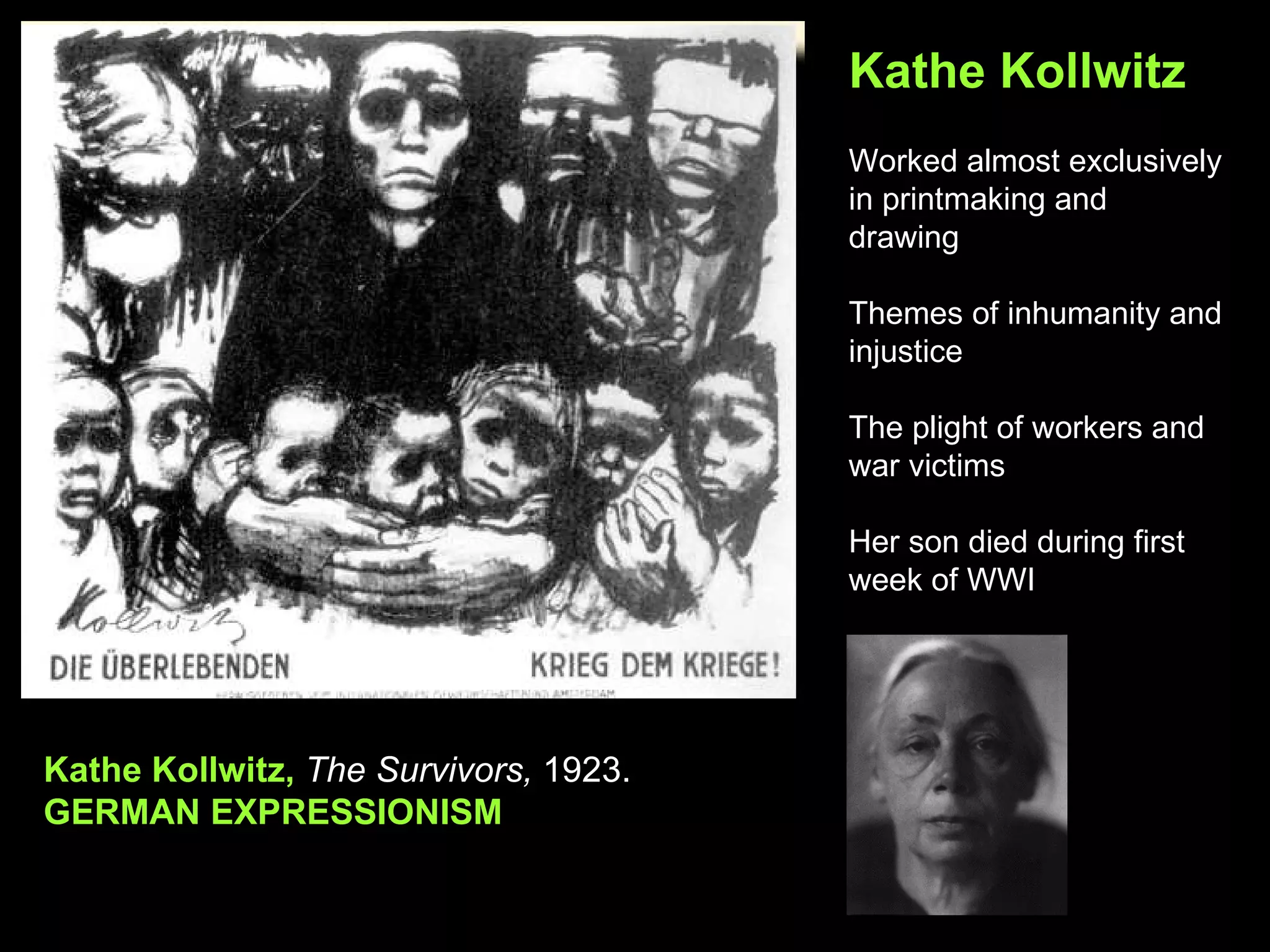
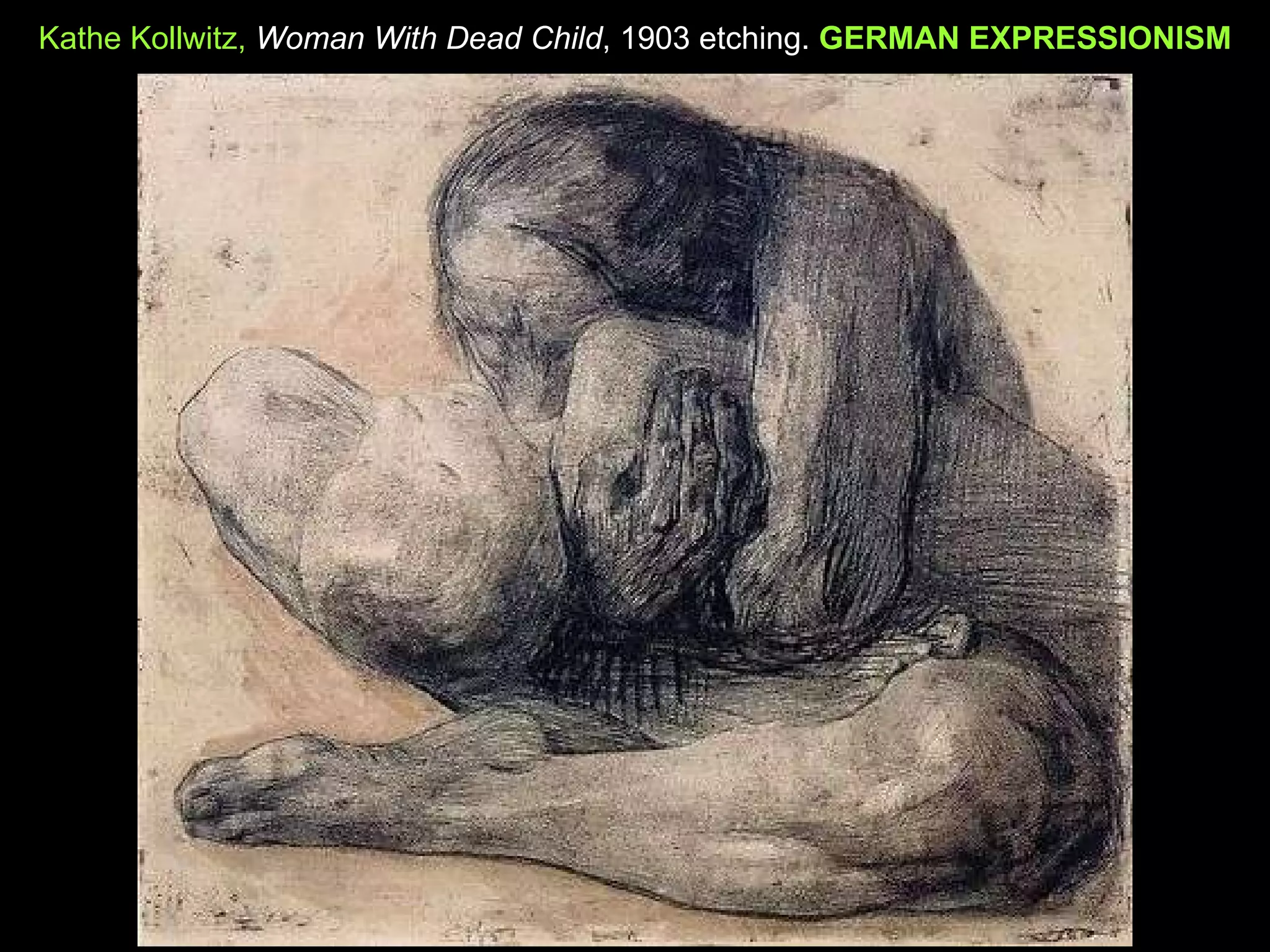
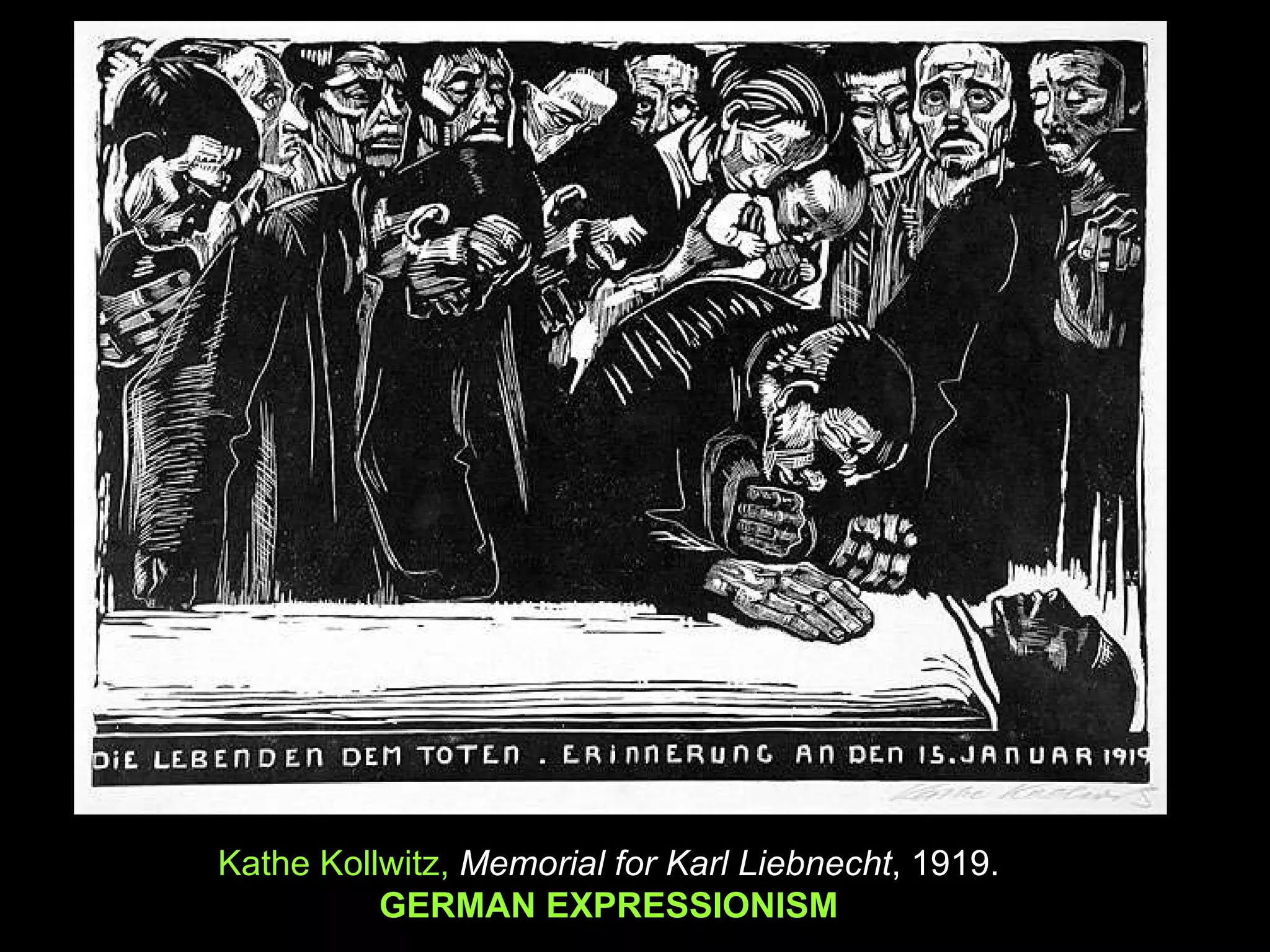
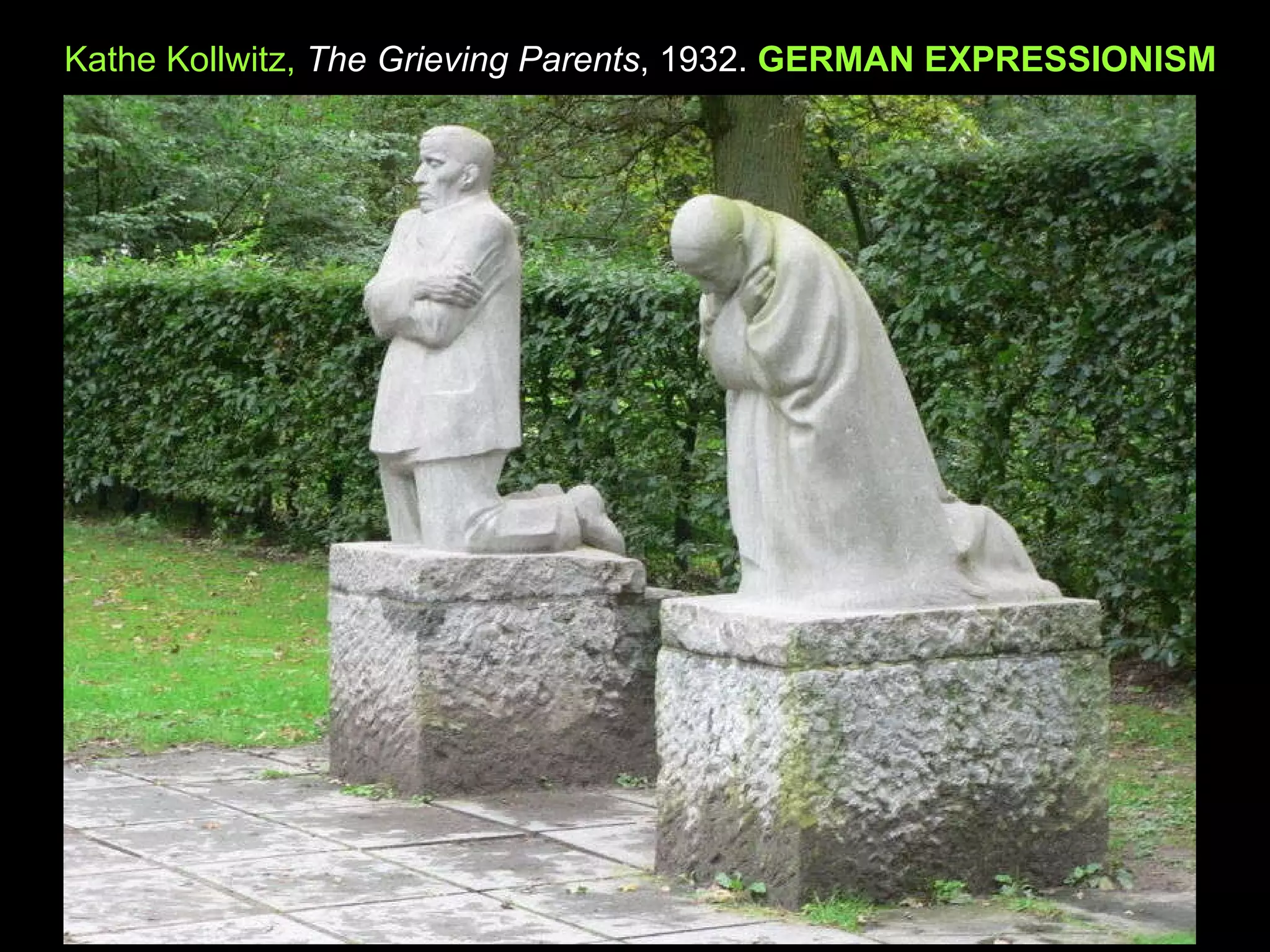
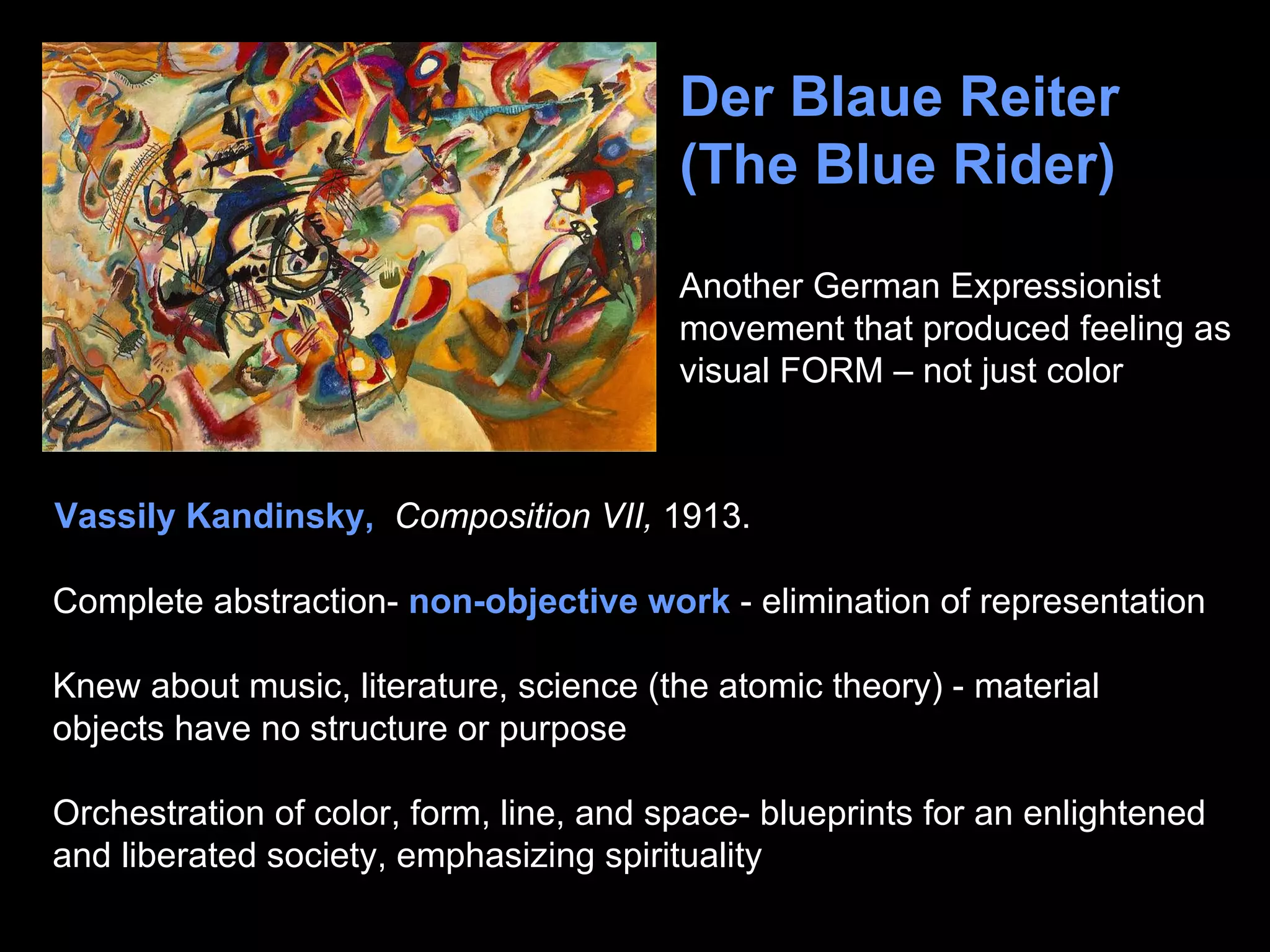
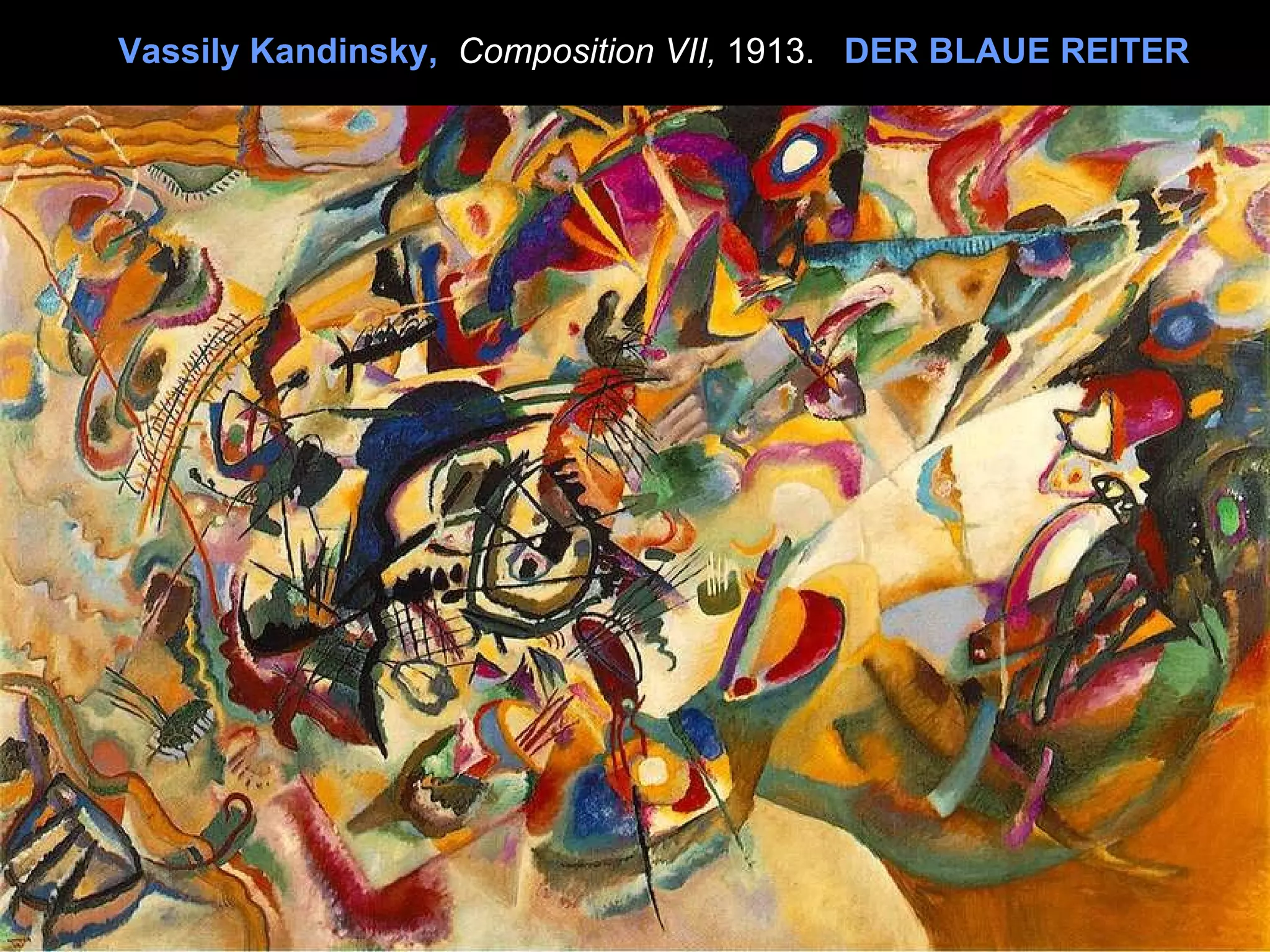
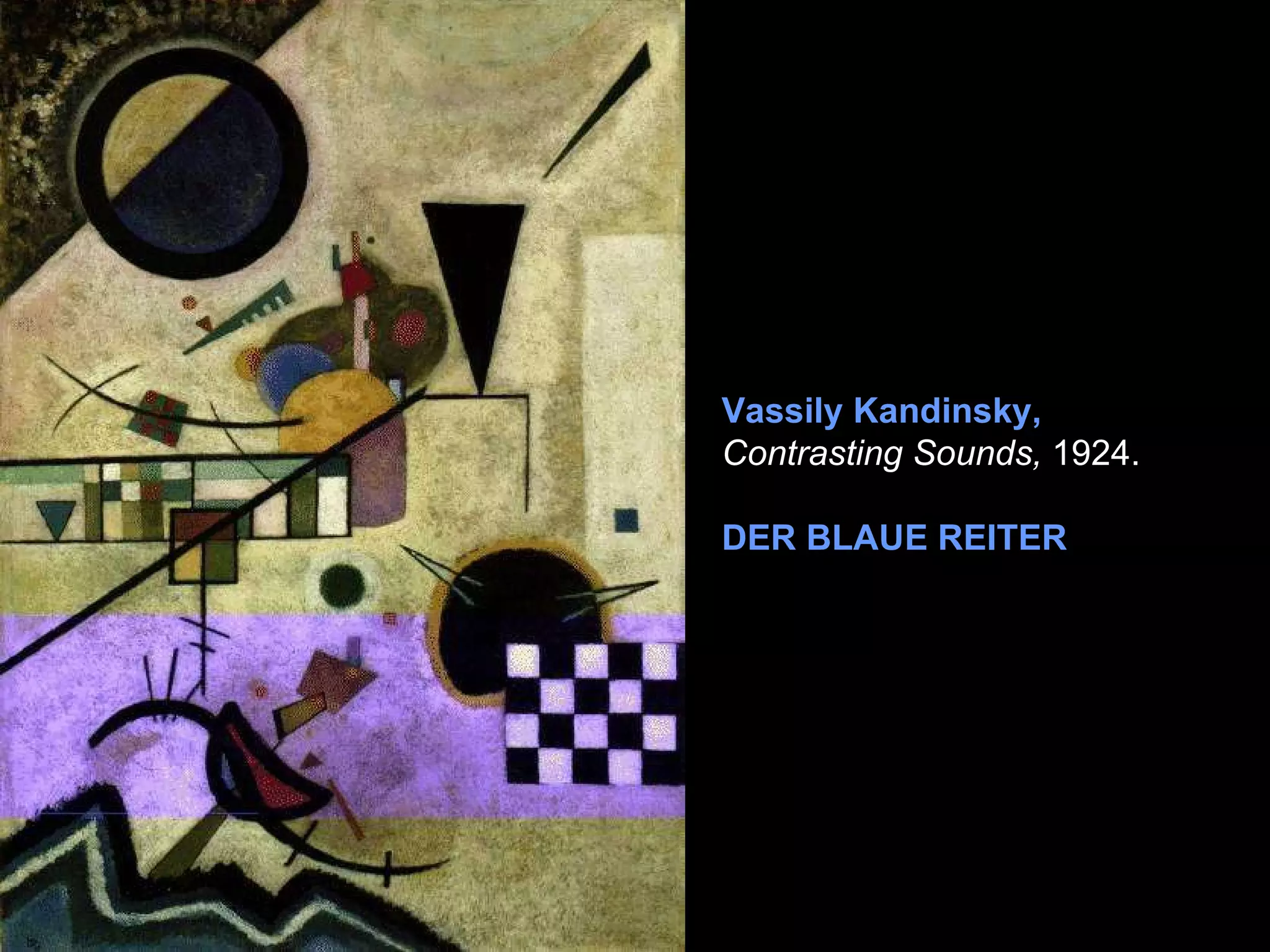
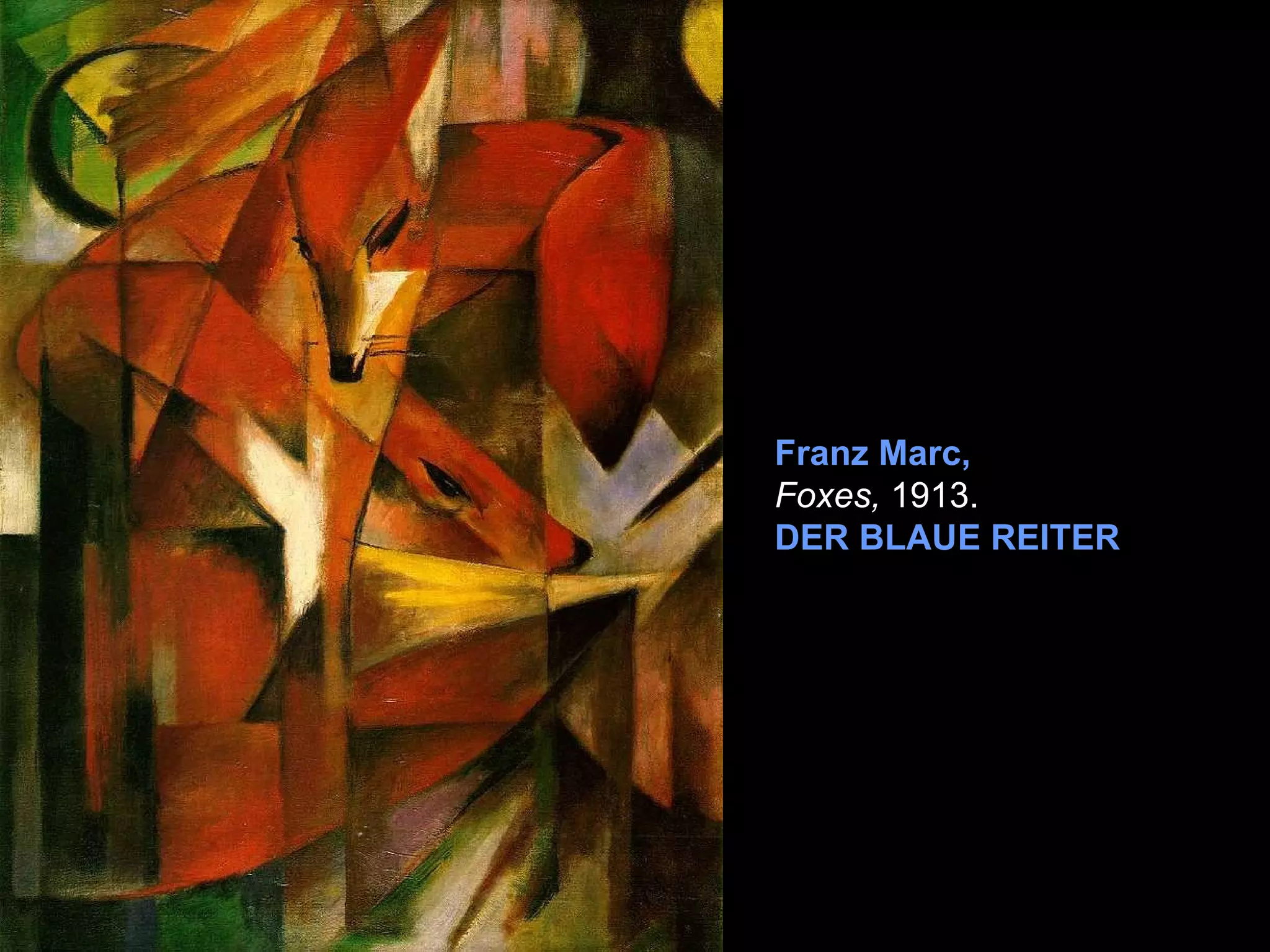
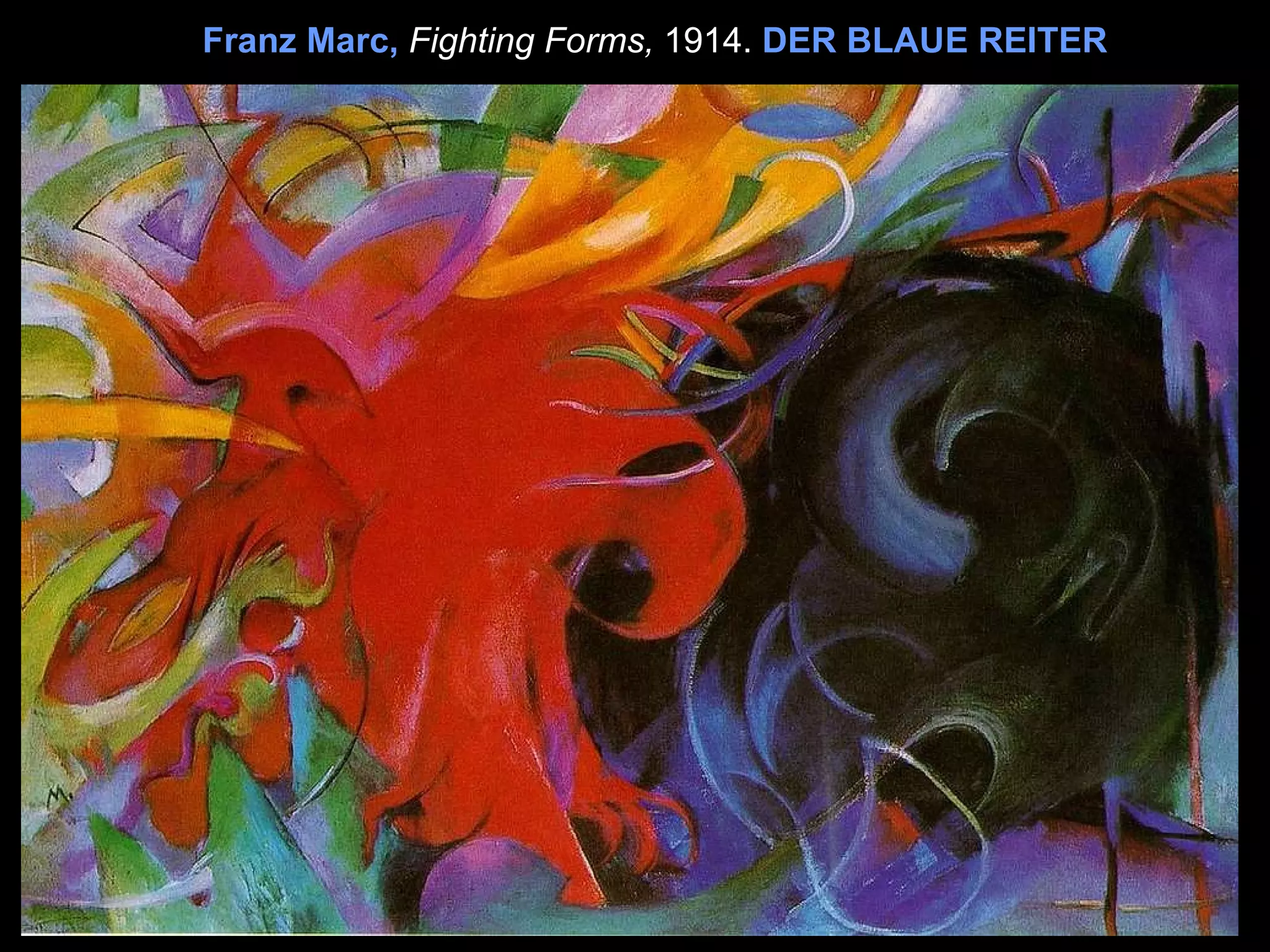
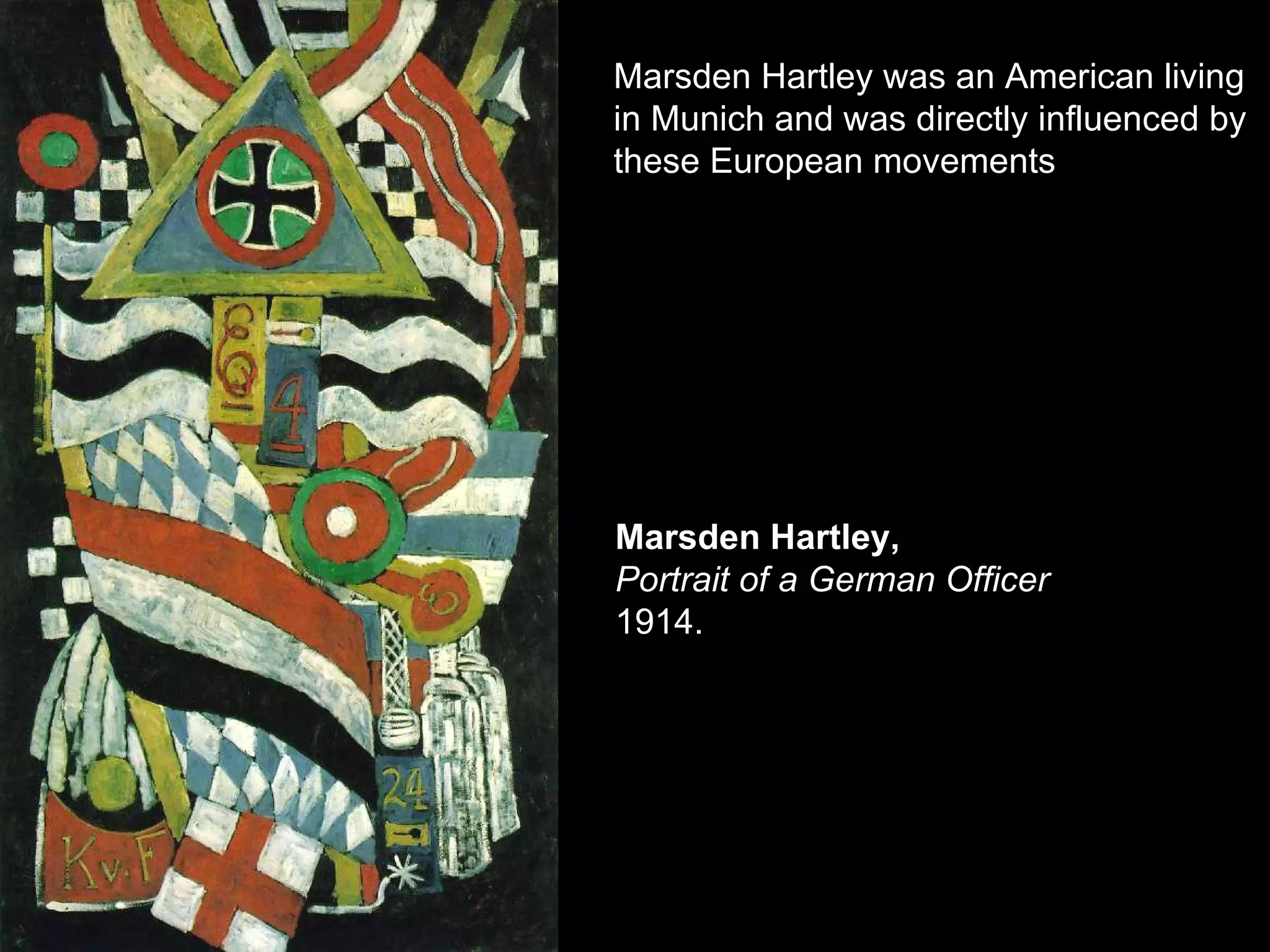

Expressionism developed in late 19th and early 20th century Germany, characterized by the use of vivid colors chosen by artists to convey inner visions and evoke emotions in viewers, as well as distorted images and violent brushstrokes. Two major German Expressionist movements were Die Brucke, centered in Dresden and led by Ernst Kirschner, and Der Blaue Reiter, which pursued non-objective abstraction and the orchestration of color, form, and space to envision an enlightened society. Expressionism also influenced other creative fields like music of Arnold Schoenberg, dance of Mary Wigman, and cinema of Alfred Hitchcock and Tim Burton.


