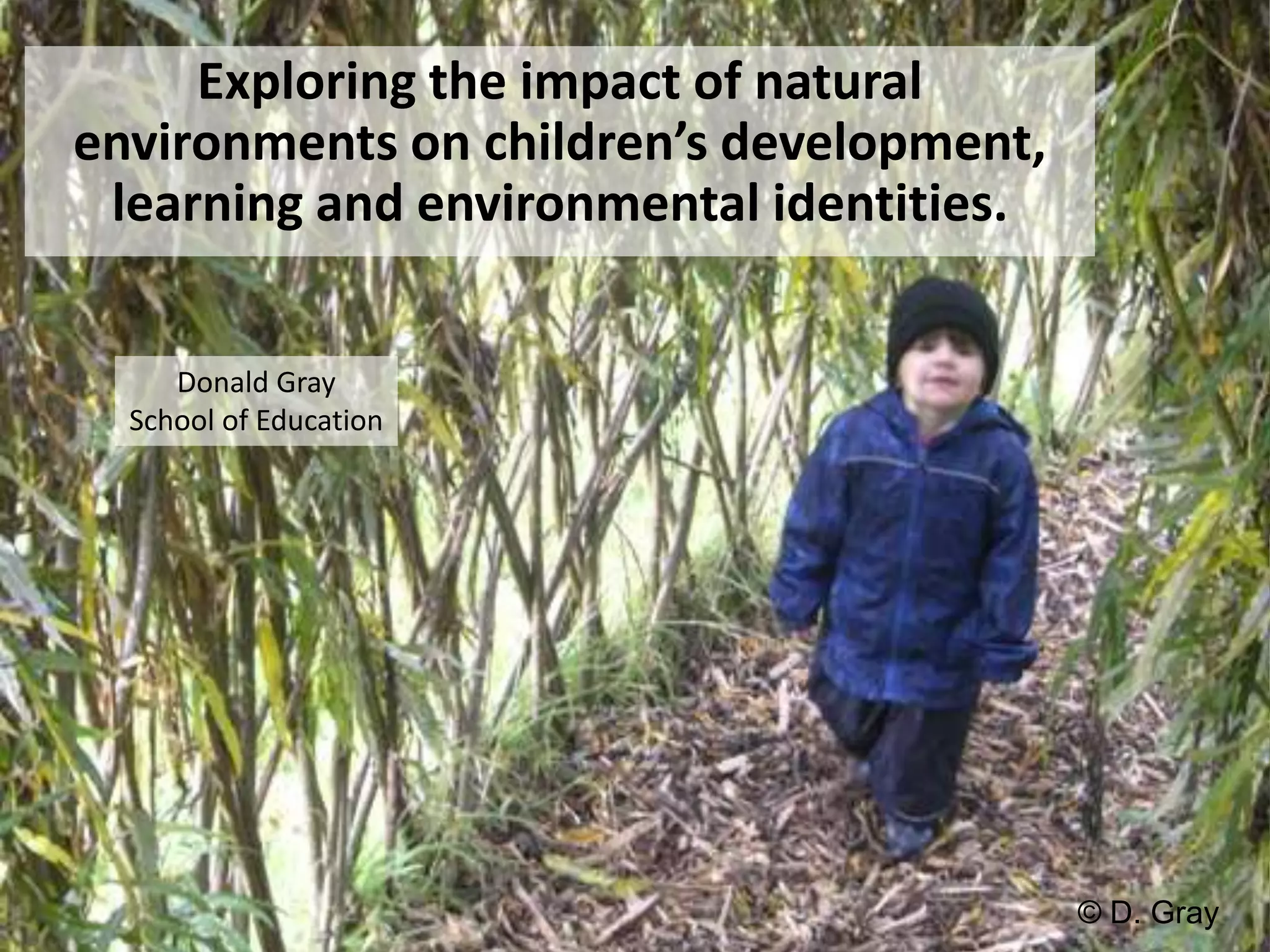

Exploring the impact of natural environments on children’s development, learning and environmental identities.Donald GraySchool of Education© D. Gray
© Marie-Aude Bodin_UNEP
Freefoto.com
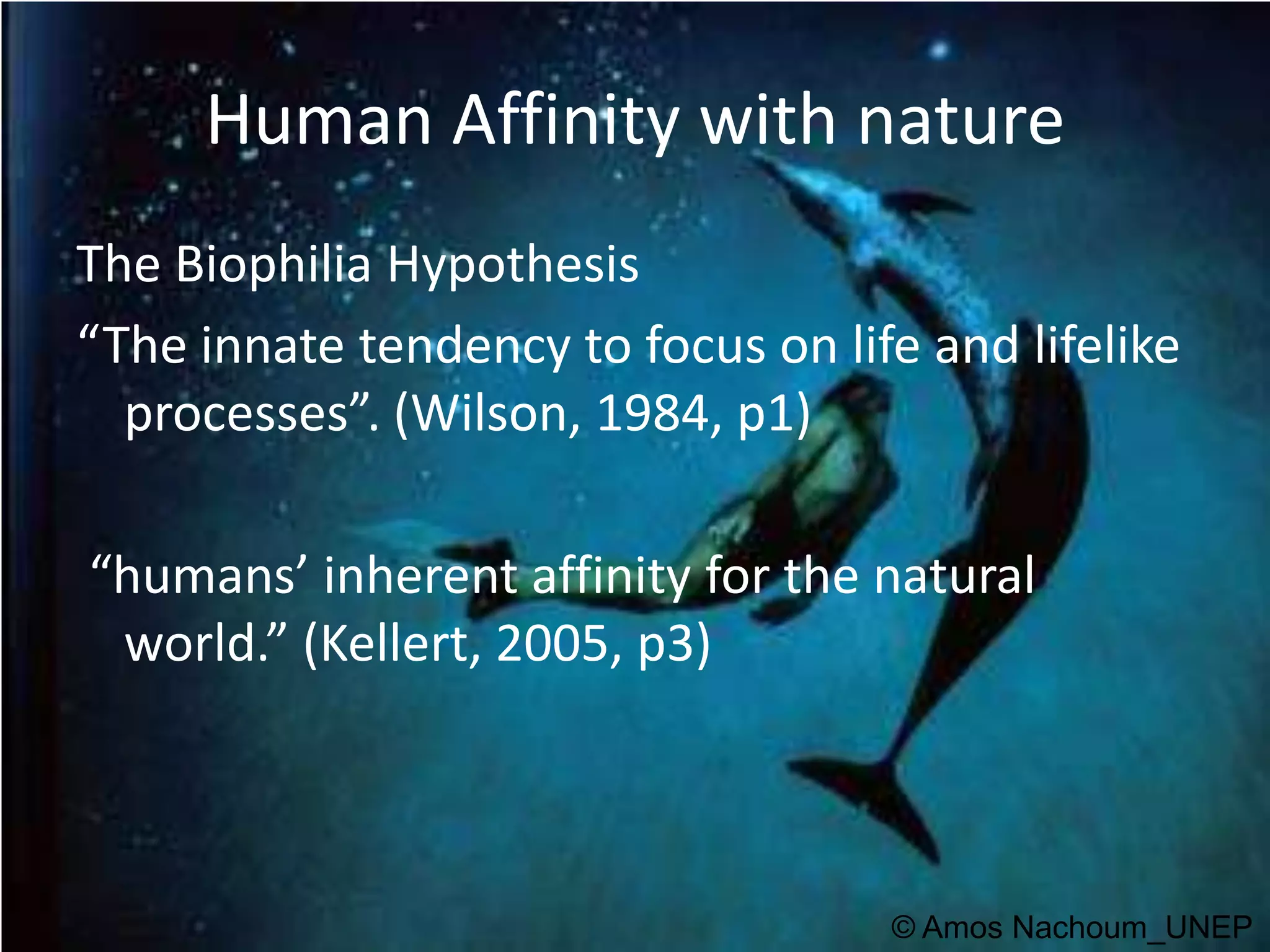
Human Affinity with natureThe Biophilia Hypothesis“The innate tendency to focus on life and lifelike processes”. (Wilson, 1984, p1)  “humans’ inherent affinity for the natural world.” (Kellert, 2005, p3)© Amos Nachoum_UNEP
Biologically prepared learning...both the rewards and the dangers associated with natural settings during human evolution have been sufficiently critical to favour individuals who readily learned, and then over time remembered, various adaptive responses—both positive/approach (biophilic) responses and negative/avoidance (biophobic) responses—to certain natural stimuli and configurations. (Ulrich, 1993, p75)© D. Gray
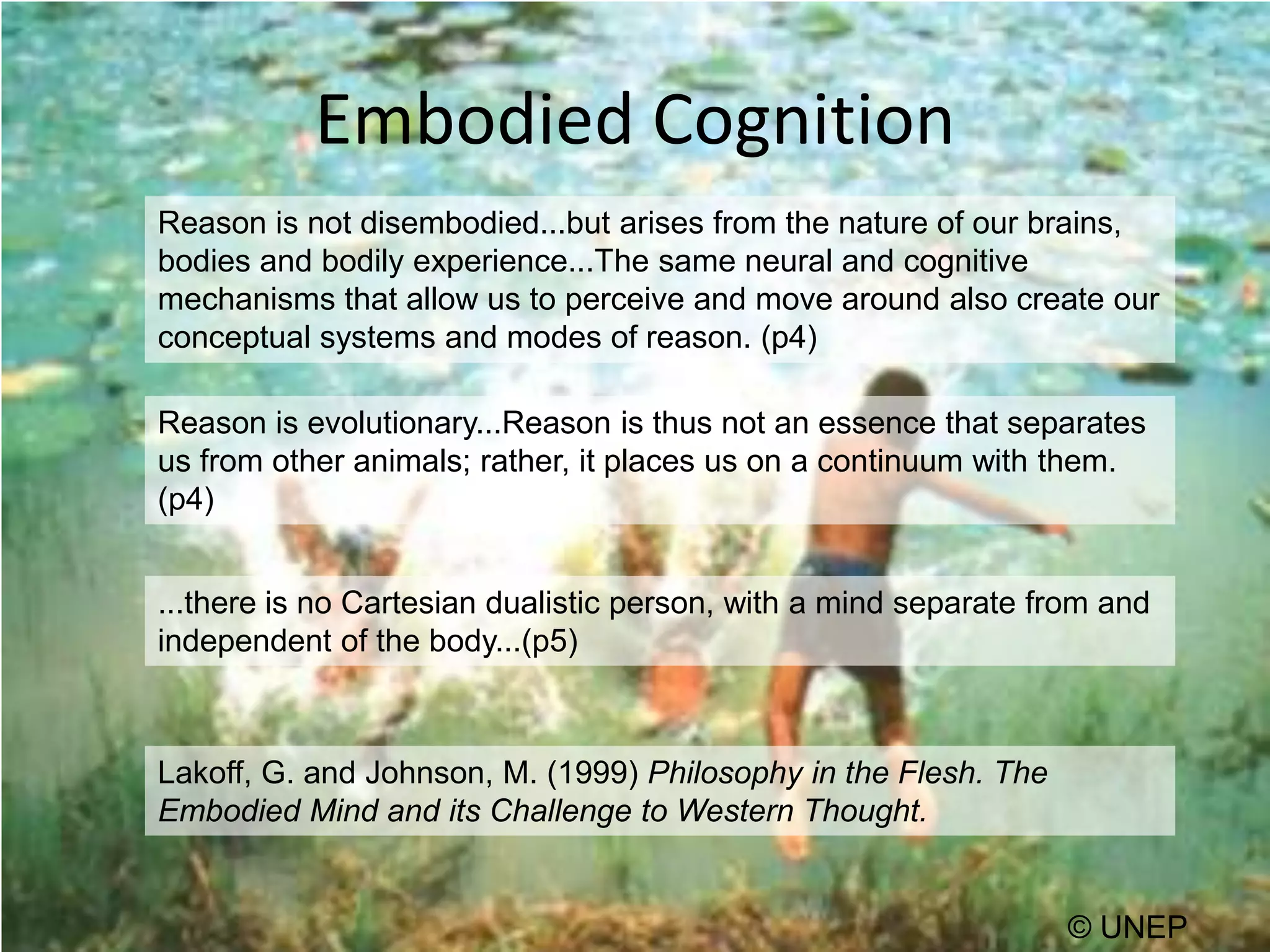
Embodied CognitionReason is not disembodied...but arises from the nature of our brains, bodies and bodily experience...The same neural and cognitive mechanisms that allow us to perceive and move around also create our conceptual systems and modes of reason. (p4)Reason is evolutionary...Reason is thus not an essence that separates us from other animals; rather, it places us on a continuum with them. (p4)...there is no Cartesian dualistic person, with a mind separate from and independent of the body...(p5)Lakoff, G. and Johnson, M. (1999) Philosophy in the Flesh. The Embodied Mind and its Challenge to Western Thought.© UNEP
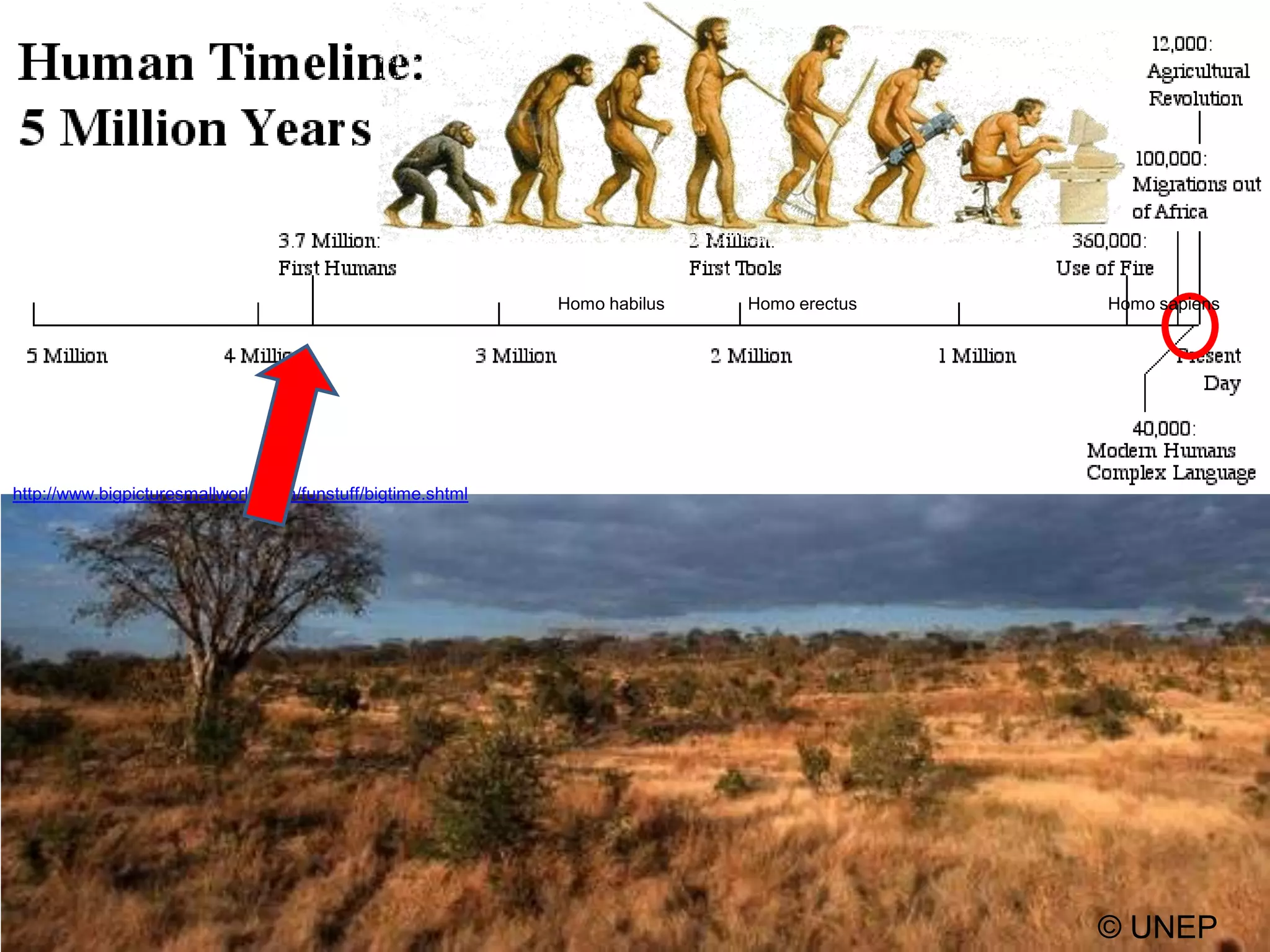
Homo habilusHomo erectus Homo sapienshttp://www.bigpicturesmallworld.com/funstuff/bigtime.shtml© UNEP
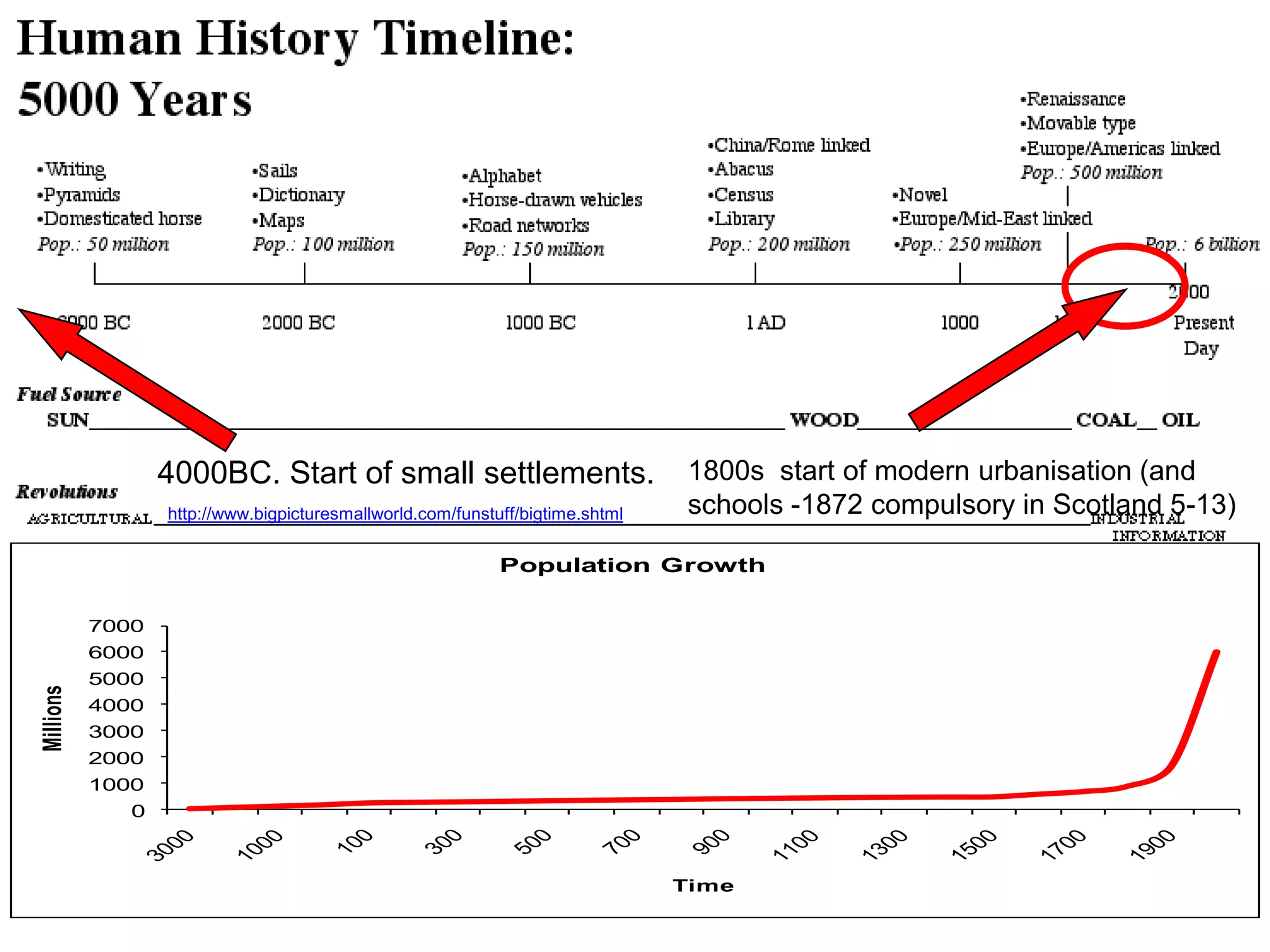
4000BC. Start of small settlements.1800s  start of modern urbanisation (and schools -1872 compulsory in Scotland 5-13)http://www.bigpicturesmallworld.com/funstuff/bigtime.shtml
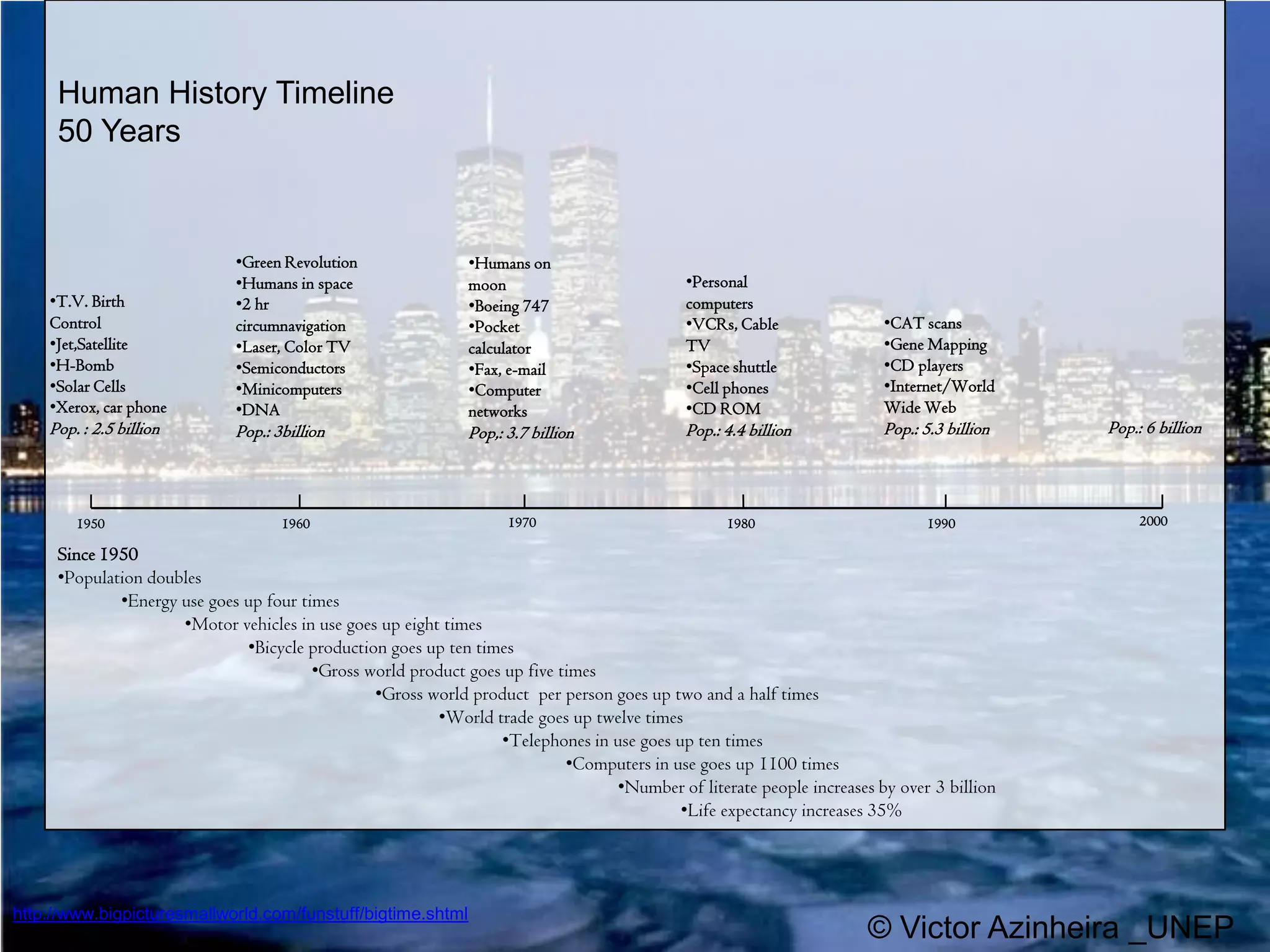
200019701980199019501960Human History Timeline50 YearsGreen Revolution
Humans in space
2 hr circumnavigation
Laser, Color TV
Semiconductors
Minicomputers
DNAPop.: 3billionHumans on moon
Boeing 747
Pocket calculator
Fax, e-mail
Computer networksPop,: 3.7 billionPersonal computers
VCRs, Cable TV

Exploring the impact of natural environments on children’s development, learning and environmental identities

  • 1.
    Exploring the impactof natural environments on children’s development, learning and environmental identities.Donald GraySchool of Education© D. Gray
  • 2.
  • 3.
  • 4.
    Human Affinity withnatureThe Biophilia Hypothesis“The innate tendency to focus on life and lifelike processes”. (Wilson, 1984, p1) “humans’ inherent affinity for the natural world.” (Kellert, 2005, p3)© Amos Nachoum_UNEP
  • 5.
    Biologically prepared learning...boththe rewards and the dangers associated with natural settings during human evolution have been sufficiently critical to favour individuals who readily learned, and then over time remembered, various adaptive responses—both positive/approach (biophilic) responses and negative/avoidance (biophobic) responses—to certain natural stimuli and configurations. (Ulrich, 1993, p75)© D. Gray
  • 6.
    Embodied CognitionReason isnot disembodied...but arises from the nature of our brains, bodies and bodily experience...The same neural and cognitive mechanisms that allow us to perceive and move around also create our conceptual systems and modes of reason. (p4)Reason is evolutionary...Reason is thus not an essence that separates us from other animals; rather, it places us on a continuum with them. (p4)...there is no Cartesian dualistic person, with a mind separate from and independent of the body...(p5)Lakoff, G. and Johnson, M. (1999) Philosophy in the Flesh. The Embodied Mind and its Challenge to Western Thought.© UNEP
  • 7.
    Homo habilusHomo erectusHomo sapienshttp://www.bigpicturesmallworld.com/funstuff/bigtime.shtml© UNEP
  • 8.
    4000BC. Start ofsmall settlements.1800s start of modern urbanisation (and schools -1872 compulsory in Scotland 5-13)http://www.bigpicturesmallworld.com/funstuff/bigtime.shtml
  • 9.
  • 10.
  • 11.
  • 12.
  • 13.
  • 14.
  • 15.
  • 16.
  • 17.
  • 18.
  • 19.
    Computer networksPop,: 3.7billionPersonal computers
  • 20.
  • 21.
  • 22.
  • 23.
    CD ROMPop.: 4.4billionT.V. Birth Control
  • 24.
  • 25.
  • 26.
  • 27.
    Xerox, car phonePop.: 2.5 billionCAT scans
  • 28.
  • 29.
  • 30.
    Internet/World Wide WebPop.:5.3 billionPop.: 6 billionSince 1950Population doubles
  • 31.
    Energy use goesup four times
  • 32.
    Motor vehicles inuse goes up eight times
  • 33.
  • 34.
    Gross world productgoes up five times
  • 35.
    Gross world product per person goes up two and a half times
  • 36.
    World trade goesup twelve times
  • 37.
    Telephones in usegoes up ten times
  • 38.
    Computers in usegoes up 1100 times
  • 39.
    Number of literatepeople increases by over 3 billion
  • 40.
    Life expectancy increases35%http://www.bigpicturesmallworld.com/funstuff/bigtime.shtml© Victor Azinheira _UNEP
  • 41.
    The AnthropoceneRefers tothe current geological epoch in which human beings and their societies have become a global geophysical force capable of creating global level changes in “i) the biological fabric of the Earth; ii) the stocks and flows of major elements in the planetary machinery such as nitrogen, carbon, phosphorus, and silicon; and iii) the energy balance at the Earth’s surface” (Steffen et al., 2007, p614)© Rudolf Gurth _UNEP
  • 42.
    Human Impacts onthe Natural Environment33,047, or 12.5 percent of plants are threatened on a global scale, may be an underestimate.75 percent of the major marine fish stocks are either depleted from overfishing or are being fished at their biological limit.world’s forest cover reduced by as much as half through logging and conversion.58 percent of coral reefs are potentially threatened by destructive fishing practices, tourist pressures, and pollution.65 percent of the roughly 1.5 billion ha of cropland worldwide have experienced some degree of soil degradation.Coastal ecosystems such as salt marshes, coral reefs, mangroves, and seagrasses have declined - seagrasses have been disappearing at a rate of 110 km2 yr−1 since 1980. © Lupidi _UNEP
  • 43.
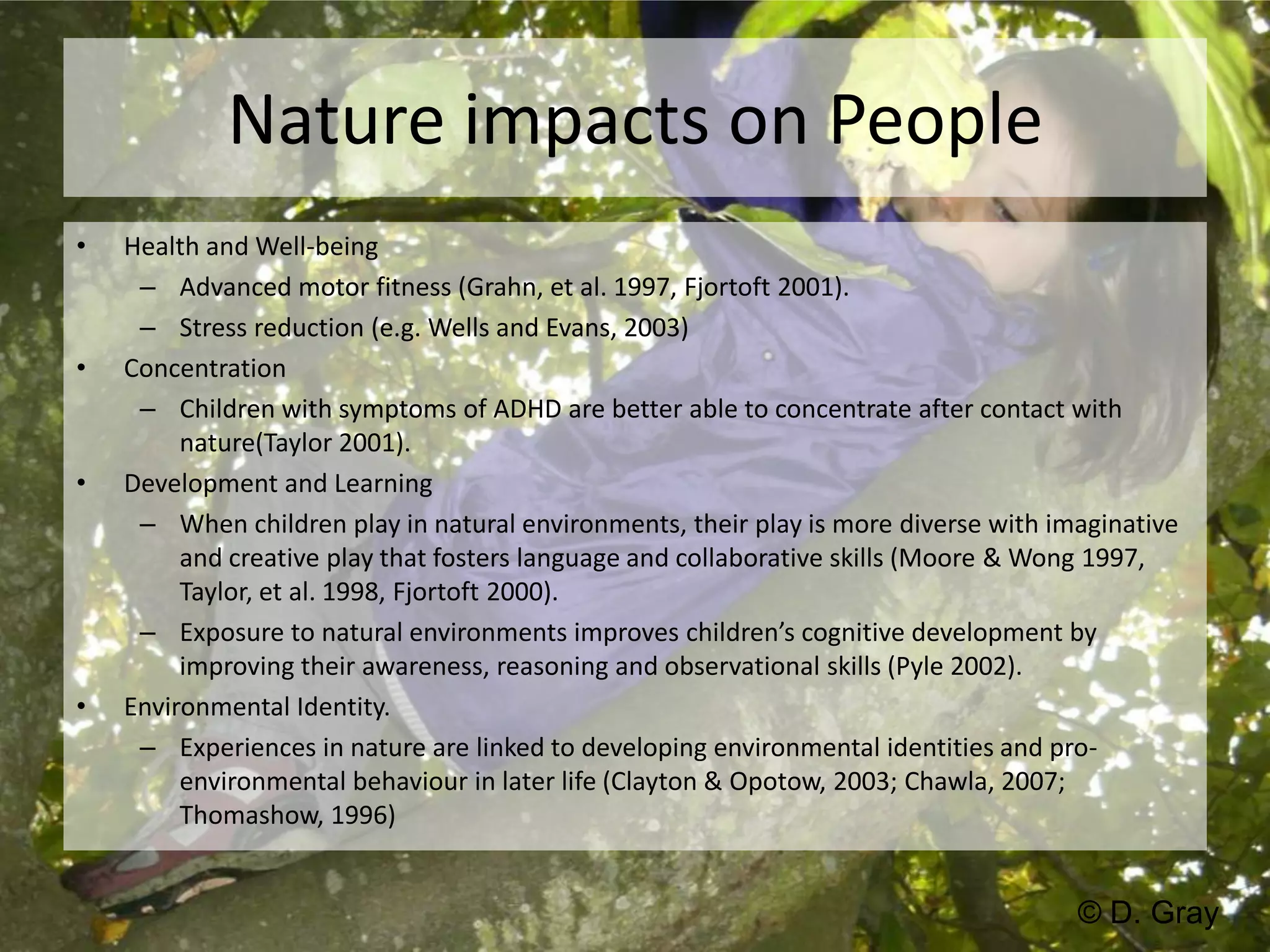
    Nature impacts onPeopleHealth and Well-beingAdvanced motor fitness (Grahn, et al. 1997, Fjortoft 2001).Stress reduction (e.g. Wells and Evans, 2003)ConcentrationChildren with symptoms of ADHD are better able to concentrate after contact with nature(Taylor 2001).Development and LearningWhen children play in natural environments, their play is more diverse with imaginative and creative play that fosters language and collaborative skills (Moore & Wong 1997, Taylor, et al. 1998, Fjortoft 2000).Exposure to natural environments improves children’s cognitive development by improving their awareness, reasoning and observational skills (Pyle 2002).Environmental Identity.Experiences in nature are linked to developing environmental identities and pro-environmental behaviour in later life (Clayton & Opotow, 2003; Chawla, 2007; Thomashow, 1996)© D. Gray
  • 44.
    Attention Restoration TheoryKaplan,S. (1995) The Restorative Benefits of Nature: Toward an Integrative Framework. Journal of Environmental Psychology , 16, 169-182Builds on William James’ (1892) – notion of effort in voluntary attentionDirected attention fatigueRestorative environments: being away, fascination, extent, compatability.Green play settings improved children's concentration: children with Attention Deficit Disorder were found to function better than usual after activities in green settings. Taylor A F, Kuo F E and Sullivan W C, 2001.Faber Taylor, A., & Kuo, F. E. (2008). Children with attention deficits concentrate better after walk in the park. Journal of Attention Disorders Volume 12 Number 5 March 2009 402-409.© D. Gray
  • 45.
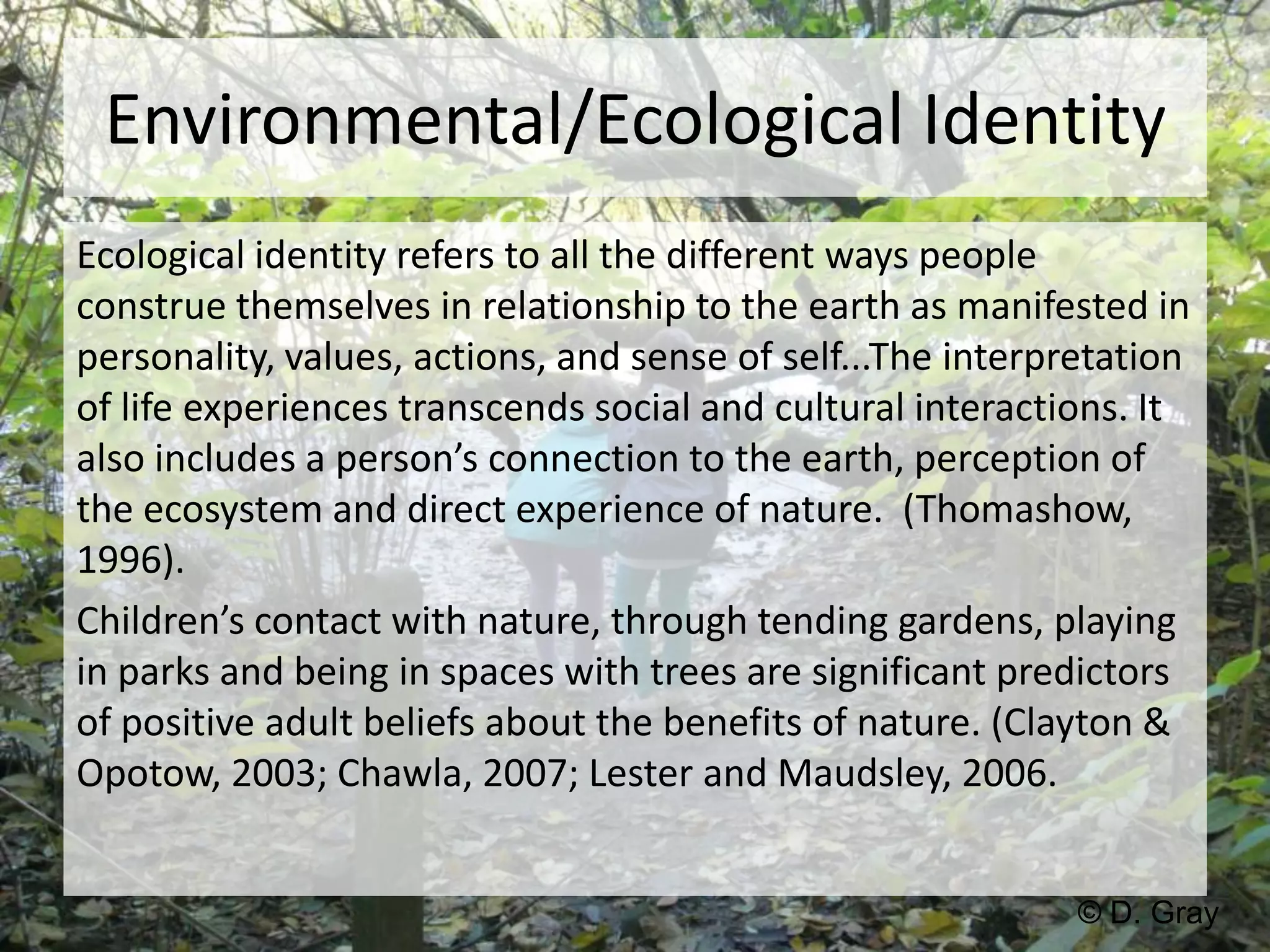
    Environmental/Ecological IdentityEcological identityrefers to all the different ways people construe themselves in relationship to the earth as manifested in personality, values, actions, and sense of self...The interpretation of life experiences transcends social and cultural interactions. It also includes a person’s connection to the earth, perception of the ecosystem and direct experience of nature. (Thomashow, 1996).Children’s contact with nature, through tending gardens, playing in parks and being in spaces with trees are significant predictors of positive adult beliefs about the benefits of nature. (Clayton & Opotow, 2003; Chawla, 2007; Lester and Maudsley, 2006.© D. Gray
  • 46.
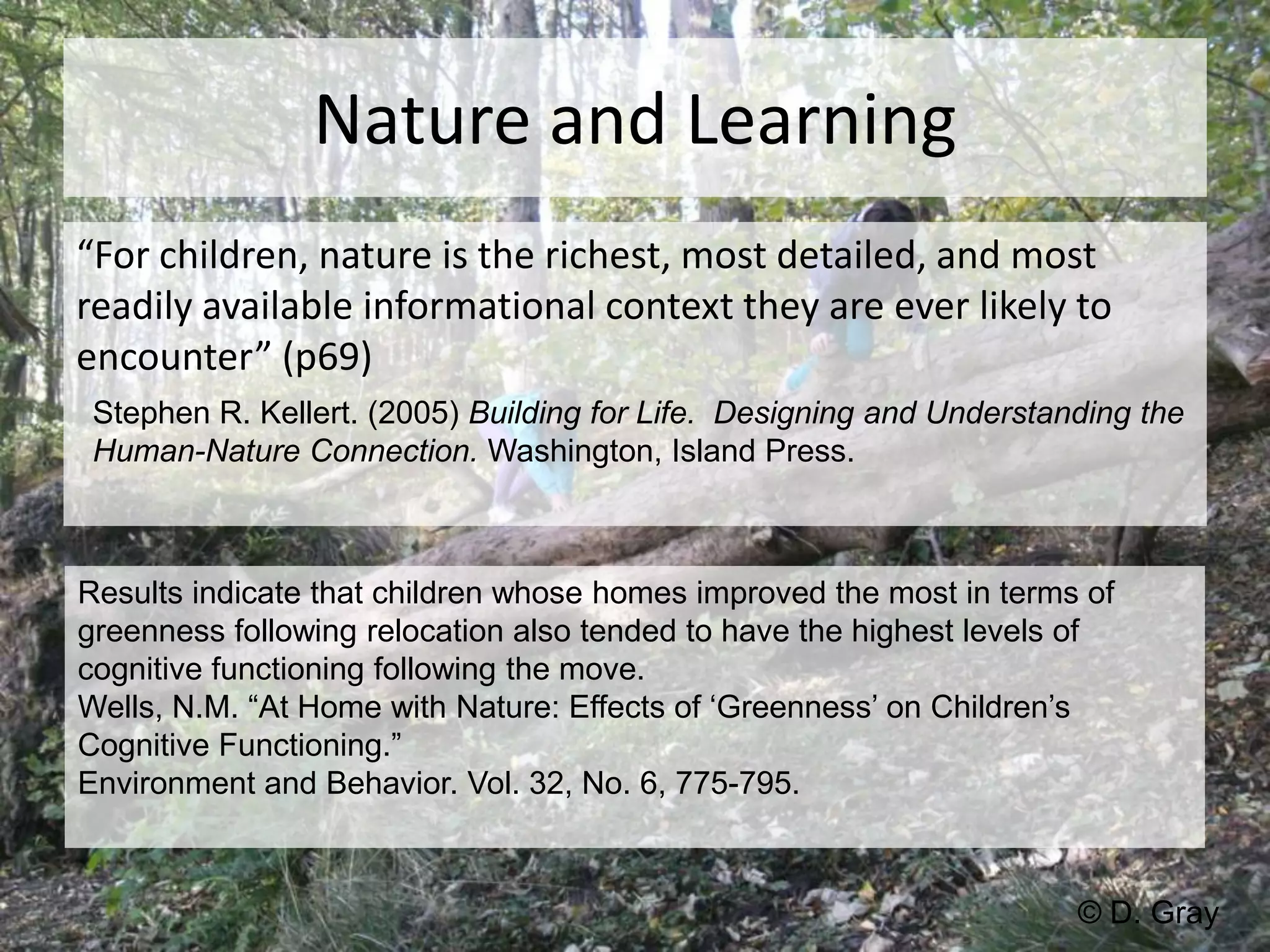
    Nature and Learning“Forchildren, nature is the richest, most detailed, and most readily available informational context they are ever likely to encounter” (p69)Stephen R. Kellert. (2005) Building for Life. Designing and Understanding the Human-Nature Connection. Washington, Island Press.Results indicate that children whose homes improved the most in terms of greenness following relocation also tended to have the highest levels of cognitive functioning following the move.Wells, N.M. “At Home with Nature: Effects of ‘Greenness’ on Children’s Cognitive Functioning.”Environment and Behavior. Vol. 32, No. 6, 775-795.© D. Gray
  • 47.
    Nothing new?John AmosComenius 1592-1670Jean-Jacque Rousseau 1712 –1778Johann Heinrich Pestalozzi 1746 - 1827Friedrich Froebel 1782 - 1852Patrick Geddes 1854 - 1932John Dewey 1859 –1952Maria Montessori 1870 –1952Kurt Hahn 1886 –1974 Loris Malaguzzi (Reggio Emilia) 1920-1994© D. Gray
  • 48.
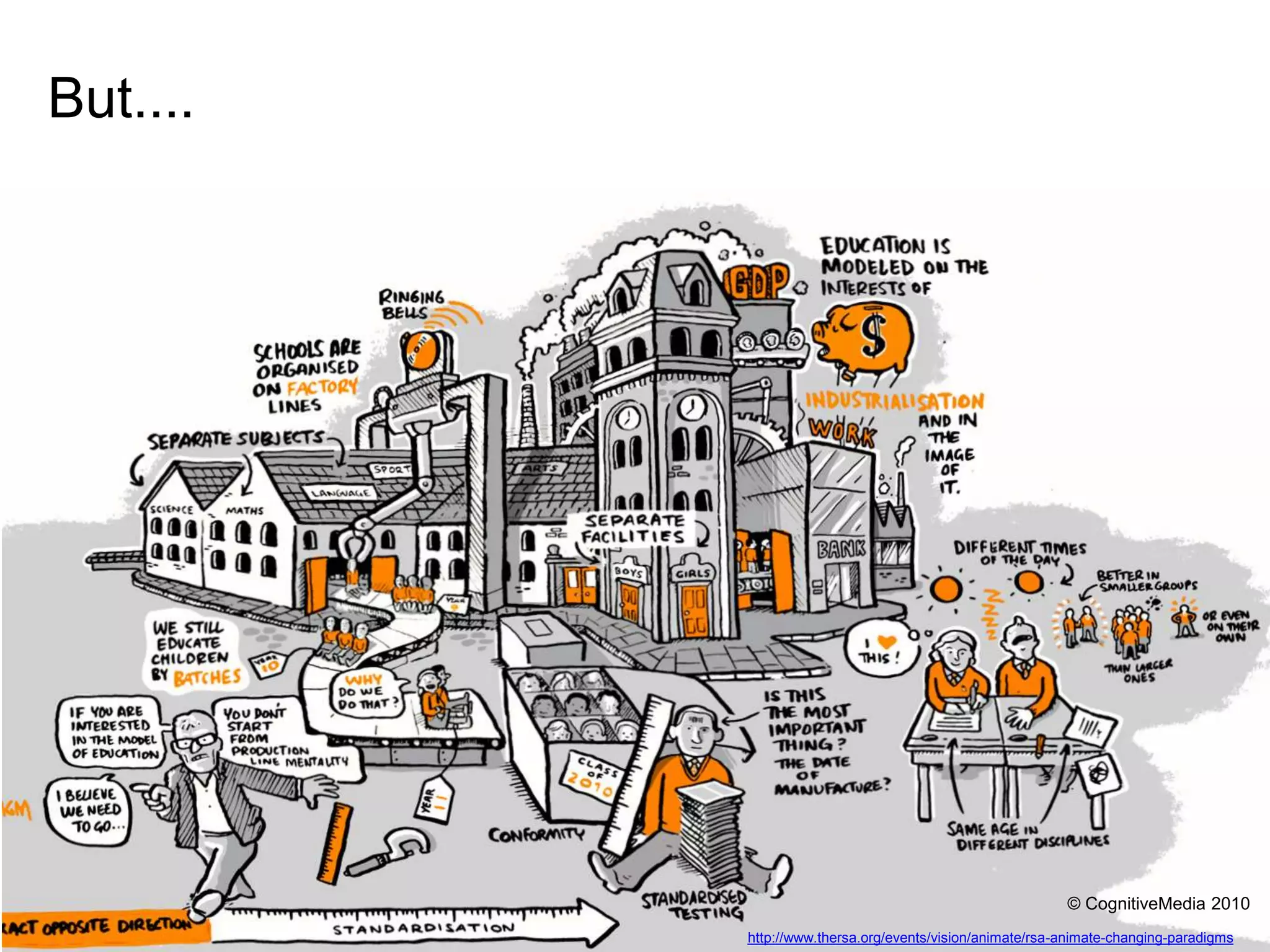
    But.... © CognitiveMedia2010http://www.thersa.org/events/vision/animate/rsa-animate-changing-paradigms
  • 49.
    Implications for EducationSchooldesignStephen R. Kellert. (2005) Building for Life. Designing and Understanding the Human-Nature Connection. Washington, Island PressCurriculumLTS (2010) A Curriculum for Excellence through Outdoor LearningPedagogies/Approachese.g. Place-based educationDavid A. Gruenewald (2003) Foundations of Place: A Multidisciplinary Framework for Place-Conscious Education. American Educational Research Journal, Vol. 40, No. 3, pp. 619–654© D. Gray
  • 50.
    The Times theyare a changing...?Curriculum for Excellence: Outdoor LearningForest Education Initiative/Forest SchoolsPlace-based learningLandscapes for LearningReal World LearningChildren and Nature NetworkGrounds for Learning© D. Gray
  • 51.
    Further ResearchResearch isrequired to identify the types of nature experiences that appear to be most efficacious at each stage and how these influence future dispositions.
  • 52.
    The role ofkey socializerssuch as parents and teachers. How they interact with children and the extent to which that interaction contributes towards the development of their environmental identity and future attitudes and behaviours.
  • 53.
    There has beenno research that has gathered real time data on nature experiences over a prolonged period of time. This research will require field observations or records, ethnographic field work and interviews with key socializers and children.
  • 54.
    Examining the impactof providing children with different levels of responsibility for action can provide further evidence to help understand the processes that encourage development of pro-environmental behaviours.
  • 55.
    The impact thatdifferent environmental experiences has on learning.
  • 56.