Developing a roadmap for peatland GHG accounting
            and carbon markets in the UK

       Aletta Bonn, Clifton Bain, Mark Reed,
             Chris Evans & Klaus Glenk
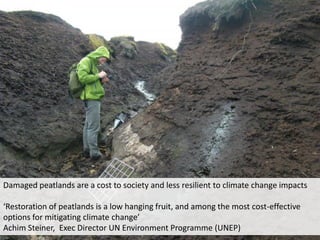
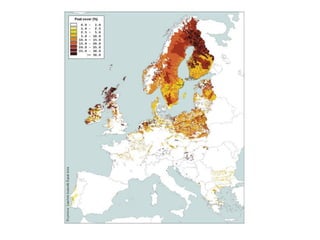
Damaged peatlands are a cost to society and less resilient to climate change impacts

‘Restoration of peatlands is a low hanging fruit, and among the most cost-effective
options for mitigating climate change’
Achim Steiner, Exec Director UN Environment Programme (UNEP)
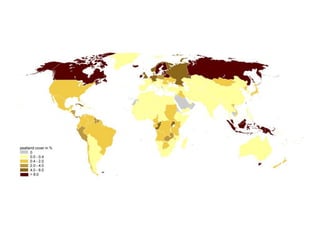
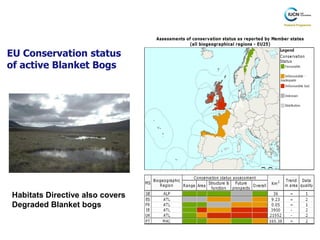
EU Conservation status
of active Blanket Bogs


Habitats Directive also covers
Degraded Blanket bogs
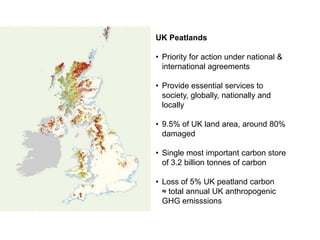
UK Peatlands

• Priority for action under national &
  international agreements

• Provide essential services to
  society, globally, nationally and
  locally

• 9.5% of UK land area, around 80%
  damaged

• Single most important carbon store
  of 3.2 billion tonnes of carbon

• Loss of 5% UK peatland carbon
  ≈ total annual UK anthropogenic
  GHG emisssions
IUCN UK Peatland
Programme
Strong partnership of peatland
restoration projects, statutory agencies
& representatives from business and
private land managers

2011 Commission of Inquiry on
Peatlands

2010/11/12 IUCN UK PP Conferences
‘Investing in Peatlands’

http://www.iucn-uk-
peatlandprogramme.org/
Assessing and valuing peatland ecosystem services
for sustainable management

Valuations of biodiversity, ecosystem services and natural resource use

Challenges : Incorporation of
(1) stock sustainability
(2) issues of scale
(3) complexity of socio-ecological systems

(4) How do we integrate information on values obtained from the
natural sciences, economics and other social sciences into governance
and so improve decision making and how can such improved
decisions be implemented effectively?
Assessing and valuing peatland ecosystem services
for sustainable management


(WP1) Relationships between environmental processes and the delivery
of ecosystem services
(WP2) Economic considerations for prioritising peatland restoration and
conservation activities
(WP3) Payments for Ecosystem Services and cross-boundary
collaboration

(WP4) Developing a roadmap for peatland GHG accounting and carbon
markets in the
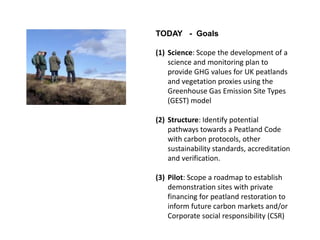
TODAY - Goals

(1) Science: Scope the development of a
    science and monitoring plan to
    provide GHG values for UK peatlands
    and vegetation proxies using the
    Greenhouse Gas Emission Site Types
    (GEST) model

(2) Structure: Identify potential
    pathways towards a Peatland Code
    with carbon protocols, other
    sustainability standards, accreditation
    and verification.

(3) Pilot: Scope a roadmap to establish
    demonstration sites with private
    financing for peatland restoration to
    inform future carbon markets and/or
    Corporate social responsibility (CSR)
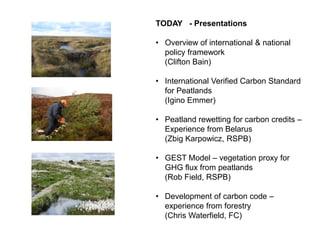
TODAY - Presentations

• Overview of international & national
  policy framework
  (Clifton Bain)

• International Verified Carbon Standard
  for Peatlands
  (Igino Emmer)

• Peatland rewetting for carbon credits –
  Experience from Belarus
  (Zbig Karpowicz, RSPB)

• GEST Model – vegetation proxy for
  GHG flux from peatlands
  (Rob Field, RSPB)

• Development of carbon code –
  experience from forestry
  (Chris Waterfield, FC)
Discussion

•   What steps would be necessary to produce a UK Peatland Carbon
    Code consistent with national/international GHG Accounting
    Guidelines to facilitate peatland restoration via CSR payments?

•   To what extent can the UK learn from and develop existing
    initiatives, including the Verified Carbon Standard (http://www.v-c-
    s.org) and international demonstration sites e.g. Belarus (funded by
    the German Government for carbon gains)?

•   Can we learn from the Woodland Carbon code development and
    implementation?

•   How could such a code be designed to optimise synergies between
    carbon sequestration/storage and water quality, biodiversity and
    recreation benefits at different spatial scales (where these exist)?

•   What steps would need to be taken to secure privately finance for
    UK restoration pilots?

Introduction to Day 2 workshop

  • 1.
    Developing a roadmapfor peatland GHG accounting and carbon markets in the UK Aletta Bonn, Clifton Bain, Mark Reed, Chris Evans & Klaus Glenk
  • 4.
    Damaged peatlands area cost to society and less resilient to climate change impacts ‘Restoration of peatlands is a low hanging fruit, and among the most cost-effective options for mitigating climate change’ Achim Steiner, Exec Director UN Environment Programme (UNEP)
  • 7.
    EU Conservation status ofactive Blanket Bogs Habitats Directive also covers Degraded Blanket bogs
  • 8.
    UK Peatlands • Priorityfor action under national & international agreements • Provide essential services to society, globally, nationally and locally • 9.5% of UK land area, around 80% damaged • Single most important carbon store of 3.2 billion tonnes of carbon • Loss of 5% UK peatland carbon ≈ total annual UK anthropogenic GHG emisssions
  • 10.
    IUCN UK Peatland Programme Strongpartnership of peatland restoration projects, statutory agencies & representatives from business and private land managers 2011 Commission of Inquiry on Peatlands 2010/11/12 IUCN UK PP Conferences ‘Investing in Peatlands’ http://www.iucn-uk- peatlandprogramme.org/
  • 11.
    Assessing and valuingpeatland ecosystem services for sustainable management Valuations of biodiversity, ecosystem services and natural resource use Challenges : Incorporation of (1) stock sustainability (2) issues of scale (3) complexity of socio-ecological systems (4) How do we integrate information on values obtained from the natural sciences, economics and other social sciences into governance and so improve decision making and how can such improved decisions be implemented effectively?
  • 12.
    Assessing and valuingpeatland ecosystem services for sustainable management (WP1) Relationships between environmental processes and the delivery of ecosystem services (WP2) Economic considerations for prioritising peatland restoration and conservation activities (WP3) Payments for Ecosystem Services and cross-boundary collaboration (WP4) Developing a roadmap for peatland GHG accounting and carbon markets in the
  • 13.
    TODAY - Goals (1)Science: Scope the development of a science and monitoring plan to provide GHG values for UK peatlands and vegetation proxies using the Greenhouse Gas Emission Site Types (GEST) model (2) Structure: Identify potential pathways towards a Peatland Code with carbon protocols, other sustainability standards, accreditation and verification. (3) Pilot: Scope a roadmap to establish demonstration sites with private financing for peatland restoration to inform future carbon markets and/or Corporate social responsibility (CSR)
  • 14.
    TODAY - Presentations •Overview of international & national policy framework (Clifton Bain) • International Verified Carbon Standard for Peatlands (Igino Emmer) • Peatland rewetting for carbon credits – Experience from Belarus (Zbig Karpowicz, RSPB) • GEST Model – vegetation proxy for GHG flux from peatlands (Rob Field, RSPB) • Development of carbon code – experience from forestry (Chris Waterfield, FC)
  • 16.
    Discussion • What steps would be necessary to produce a UK Peatland Carbon Code consistent with national/international GHG Accounting Guidelines to facilitate peatland restoration via CSR payments? • To what extent can the UK learn from and develop existing initiatives, including the Verified Carbon Standard (http://www.v-c- s.org) and international demonstration sites e.g. Belarus (funded by the German Government for carbon gains)? • Can we learn from the Woodland Carbon code development and implementation? • How could such a code be designed to optimise synergies between carbon sequestration/storage and water quality, biodiversity and recreation benefits at different spatial scales (where these exist)? • What steps would need to be taken to secure privately finance for UK restoration pilots?