Exploring Automation in
Government
Process Automation in Digital Government Services
Hi, I’m Adrianna.
I’m the director of product management at San Francisco
Digital Services.
We’re a digital team embedded in local government,
working on a range of services from affordable housing to
permits and more.
Before we begin:
- All opinions are my own
- All usage of Camunda is in my personal
capacity as a tinkerer and is not an
endorsement
Why does tech seem to suck in
government?
Why can’t your city or county seem to
build something that works?
Why don’t we “just”...?
Which government are we
talking about anyway?
Many types of government
- Federal, state, county, municipal
- Executive, legislative, judiciary
- Unified city/county: e.g. City and County of San
Francisco, Miami-Dade County
- Sovereign tribes, governing bodies, park districts
Source: “A Civic Technologist’s Practice Guide”, Cyd Harrell (2020)
Many types of people in government
- Elected
- Appointed
- Career staff
Source: “A Civic Technologist’s Practice Guide”, Cyd Harrell (2020)
Many types of people that
government has to serve, usually all
at once
- All ethnicities
- Major languages
- Rich and poor
- Housed and unhoused
- Immigration status
- Device / internet type
- People with disabilities
- Different genders
It’s not always a tech problem.
But things are changing!
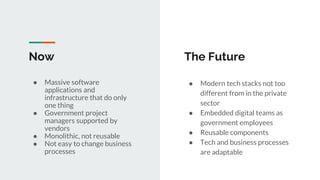
Now
● Massive software
applications and
infrastructure that do only
one thing
● Government project
managers supported by
vendors
● Monolithic, not reusable
● Not easy to change business
processes
● Modern tech stacks not too
different from in the private
sector
● Embedded digital teams as
government employees
● Reusable components
● Tech and business processes
are adaptable
The Future
Process automation helps to
orchestrate large, complex
systems and processes so we
can build new ones on top of
them.
Embedded digital teams
- Work as consultants to government teams (like 18F)
- Or work on supporting delivery within a government
entity, like my team
For more info, read Cyd Harrell’s “Civic Technologist’s
Practice Guide” (link).
What government needs
- Develop programs for residents (policy)
- Offer services to residents and businesses (delivery)
Process automation can benefit end users (residents)
and users (government staff) in the delivery of digital
government services.
How I started exploring process automation
● The world was falling apart
● Lots of people needed help
● Everyone in local government
was under-staffed and doing
new things overnight
I wanted to explore process automation so that the 5 people we had could
give out as much money ASAP.
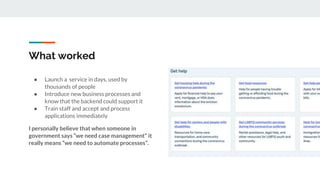
What worked
● Launch a service in days, used by
thousands of people
● Introduce new business processes and
know that the backend could support it
● Train staff and accept and process
applications immediately
I personally believe that when someone in
government says “we need case management” it
really means “we need to automate processes”.
What didn’t work
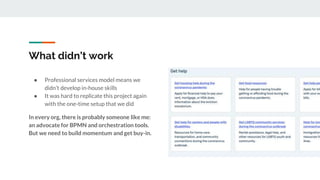
● Professional services model means we
didn’t develop in-house skills
● It was hard to replicate this project again
with the one-time setup that we did
In every org, there is probably someone like me:
an advocate for BPMN and orchestration tools.
But we need to build momentum and get buy-in.
What I’m doing
- Building small prototypes, learning from like-minded folks in similar teams
- Exploring ways to introduce BPMN workflows into the work that we do
Often, like everything in government, procurement is where we trip up.
It’s hard to buy something unless its value is known. It’s hard to know and
prove value until we can run something in production.
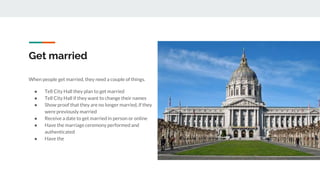
Get married
When people get married, they need a couple of things.
● Tell City Hall they plan to get married
● Tell City Hall if they want to change their names
● Show proof that they are no longer married, if they
were previously married
● Receive a date to get married in person or online
● Have the marriage ceremony performed and
authenticated
● Have the
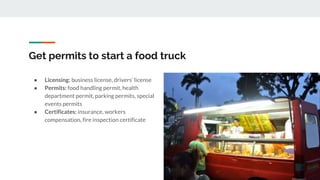
Get permits to start a food truck
● Licensing: business license, drivers’ license
● Permits: food handling permit, health
department permit, parking permits, special
events permits
● Certificates: insurance, workers
compensation, fire inspection certificate
Other interesting areas
● All grants, licenses, permits
● Anything touching communication
● Status lookup for applications
● Feedback from the public
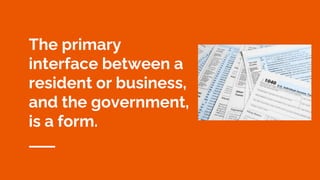
The primary
interface between a
resident or business,
and the government,
is a form.
Data from the
form is then fed
into a process.
In the old days: one person, one
office, one form, one Excel sheet.
Today: collaborative workflows.
We need to orchestrate and
automate.
- Routing and hand-off
- Not lose applications
- Reduce manual entry
- Enable collaboration between teams
- Improve communication touchpoints with public
Benefits of Process Automation
- Difficult procurement processes
- Security concerns
- Different way of working that requires training or support or professional
services and a strong internal champion
- Can take a long time to get to production
- Challenge of making huge impact if only used in a few areas by a few teams
- Many, many stakeholders in government
Challenges of Process Automation
Reach out if you’re also working on government or
nonprofit work!
Let’s build a community, share our stories.
How you can help
Contact
● Email: adrianna.tan@sfgov.org
● Twitter: @skinnylatte
● Slack: see you there!

Exploring Automation in Government

  • 1.
    Exploring Automation in Government ProcessAutomation in Digital Government Services
  • 2.
    Hi, I’m Adrianna. I’mthe director of product management at San Francisco Digital Services. We’re a digital team embedded in local government, working on a range of services from affordable housing to permits and more.
  • 3.
    Before we begin: -All opinions are my own - All usage of Camunda is in my personal capacity as a tinkerer and is not an endorsement
  • 4.
    Why does techseem to suck in government?
  • 5.
    Why can’t yourcity or county seem to build something that works?
  • 6.
    Why don’t we“just”...?
  • 7.
    Which government arewe talking about anyway?
  • 8.
    Many types ofgovernment - Federal, state, county, municipal - Executive, legislative, judiciary - Unified city/county: e.g. City and County of San Francisco, Miami-Dade County - Sovereign tribes, governing bodies, park districts Source: “A Civic Technologist’s Practice Guide”, Cyd Harrell (2020)
  • 9.
    Many types ofpeople in government - Elected - Appointed - Career staff Source: “A Civic Technologist’s Practice Guide”, Cyd Harrell (2020)
  • 10.
    Many types ofpeople that government has to serve, usually all at once - All ethnicities - Major languages - Rich and poor - Housed and unhoused - Immigration status - Device / internet type - People with disabilities - Different genders
  • 11.
    It’s not alwaysa tech problem.
  • 12.
    But things arechanging!
  • 13.
    Now ● Massive software applicationsand infrastructure that do only one thing ● Government project managers supported by vendors ● Monolithic, not reusable ● Not easy to change business processes ● Modern tech stacks not too different from in the private sector ● Embedded digital teams as government employees ● Reusable components ● Tech and business processes are adaptable The Future
  • 14.
    Process automation helpsto orchestrate large, complex systems and processes so we can build new ones on top of them.
  • 15.
    Embedded digital teams -Work as consultants to government teams (like 18F) - Or work on supporting delivery within a government entity, like my team For more info, read Cyd Harrell’s “Civic Technologist’s Practice Guide” (link).
  • 16.
    What government needs -Develop programs for residents (policy) - Offer services to residents and businesses (delivery) Process automation can benefit end users (residents) and users (government staff) in the delivery of digital government services.
  • 17.
    How I startedexploring process automation ● The world was falling apart ● Lots of people needed help ● Everyone in local government was under-staffed and doing new things overnight I wanted to explore process automation so that the 5 people we had could give out as much money ASAP.
  • 18.
    What worked ● Launcha service in days, used by thousands of people ● Introduce new business processes and know that the backend could support it ● Train staff and accept and process applications immediately I personally believe that when someone in government says “we need case management” it really means “we need to automate processes”.
  • 19.
    What didn’t work ●Professional services model means we didn’t develop in-house skills ● It was hard to replicate this project again with the one-time setup that we did In every org, there is probably someone like me: an advocate for BPMN and orchestration tools. But we need to build momentum and get buy-in.
  • 20.
    What I’m doing -Building small prototypes, learning from like-minded folks in similar teams - Exploring ways to introduce BPMN workflows into the work that we do Often, like everything in government, procurement is where we trip up. It’s hard to buy something unless its value is known. It’s hard to know and prove value until we can run something in production.
  • 21.
    Get married When peopleget married, they need a couple of things. ● Tell City Hall they plan to get married ● Tell City Hall if they want to change their names ● Show proof that they are no longer married, if they were previously married ● Receive a date to get married in person or online ● Have the marriage ceremony performed and authenticated ● Have the
  • 22.
    Get permits tostart a food truck ● Licensing: business license, drivers’ license ● Permits: food handling permit, health department permit, parking permits, special events permits ● Certificates: insurance, workers compensation, fire inspection certificate
  • 23.
    Other interesting areas ●All grants, licenses, permits ● Anything touching communication ● Status lookup for applications ● Feedback from the public
  • 24.
    The primary interface betweena resident or business, and the government, is a form.
  • 25.
    Data from the formis then fed into a process.
  • 26.
    In the olddays: one person, one office, one form, one Excel sheet. Today: collaborative workflows. We need to orchestrate and automate.
  • 27.
    - Routing andhand-off - Not lose applications - Reduce manual entry - Enable collaboration between teams - Improve communication touchpoints with public Benefits of Process Automation
  • 28.
    - Difficult procurementprocesses - Security concerns - Different way of working that requires training or support or professional services and a strong internal champion - Can take a long time to get to production - Challenge of making huge impact if only used in a few areas by a few teams - Many, many stakeholders in government Challenges of Process Automation
  • 29.
    Reach out ifyou’re also working on government or nonprofit work! Let’s build a community, share our stories. How you can help
  • 30.
    Contact ● Email: adrianna.tan@sfgov.org ●Twitter: @skinnylatte ● Slack: see you there!

Editor's Notes

  • #2 Notes from Claire: Share why I want to present Does each section / slide showcase professional / personal? What do I want my audience to think, feel or do?
  • #16 As I previously mentioned, more and more government teams have embedded digital teams now. That means it’s people like me, who have never worked in public service, now wondering how to contribute my skills towards public google.
  • #18 So far, we only have one public-facing project that has process automation. And it was with one of your competitors, which has more of a professional services business.
  • #22 Now, I’m going to talk about some ways in which other cities can potentially use process automation. Note that this is not mean that San Francisco is going to use camunda in ALL of these services, it just means that it’s got one employee, me, who is looking at using process automation in some of the things that I work on.
  • #23 It varies from city to city.
  • #24 It varies from city to city.