Exercise Oncology
Transforming Research to Practice
Andrew Chongaway PT, DPT
Board-Certified Oncologic Clinical Specialist
ACSM Certified Exercise Physiologist
ACSM/ACS Certified Cancer Exercise Trainer
Affiliations:
Beaumont Health, Royal Oak, MI
Deborah J Doherty, PT, PhD
Chair HMS Department
Associate Professor Oakland University
Owner, Center for Survivorship
Affiliations:
Human Movement Science (HMS) Department
School of Health Sciences, Oakland University, MI
Center for Survivorship, Brown City, MI
Intended Learning Outcomes
• Discuss the 5 levels of prevention & how they relate to exercise &
rehabilitation in the oncology setting
• Review the benefits of exercise in relation to optimizing physical function
& addressing adverse effects of cancer & related tx
• Introduce algorithms for assessing physical function in the inpatient, home
health, & outpatient physical therapy settings.
• Explore various ways to develop, prescribe, & progress an exercise
program in the oncology settings based on current research with respect
to tx status, lab values, & other risk factors
• Examine several case studies to foster confidence with exercise
prescription in the oncology population.
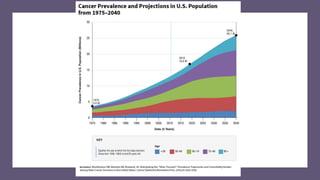
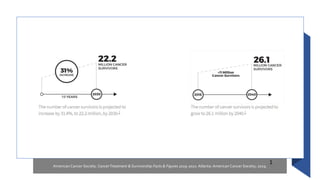
American Cancer Society. CancerTreatment & Survivorship Facts & Figures 2019-2021.Atlanta: American Cancer Society; 2019.
1
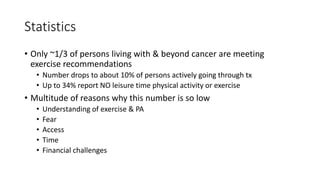
Statistics
• Only ~1/3 of persons living with & beyond cancer are meeting
exercise recommendations
• Number drops to about 10% of persons actively going through tx
• Up to 34% report NO leisure time physical activity or exercise
• Multitude of reasons why this number is so low
• Understanding of exercise & PA
• Fear
• Access
• Time
• Financial challenges
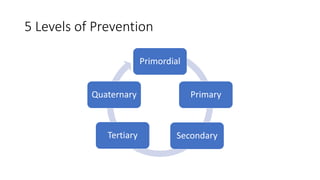
5 Levels of Prevention
Primordial
Primary
Secondary
Tertiary
Quaternary
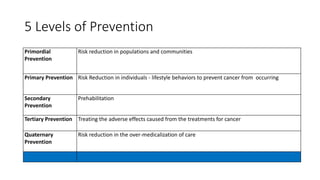
5 Levels of Prevention
Primordial
Prevention
Risk reduction in populations and communities
Primary Prevention Risk Reduction in individuals - lifestyle behaviors to prevent cancer from occurring
Secondary
Prevention
Prehabilitation
Tertiary Prevention Treating the adverse effects caused from the treatments for cancer
Quaternary
Prevention
Risk reduction in the over-medicalization of care
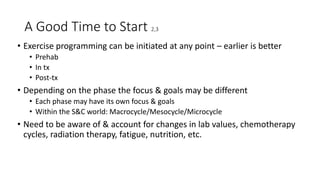
A Good Time to Start 2,3
• Exercise programming can be initiated at any point – earlier is better
• Prehab
• In tx
• Post-tx
• Depending on the phase the focus & goals may be different
• Each phase may have its own focus & goals
• Within the S&C world: Macrocycle/Mesocycle/Microcycle
• Need to be aware of & account for changes in lab values, chemotherapy
cycles, radiation therapy, fatigue, nutrition, etc.
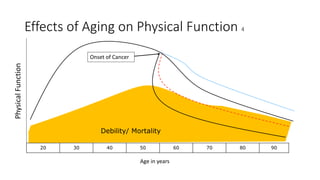
Effects of Aging on Physical Function 4
20 30 40 50 60 70 80 90
Debility/ Mortality
Physical
Function
Onset of Cancer
Age in years
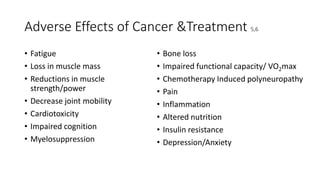
Adverse Effects of Cancer &Treatment 5,6
• Fatigue
• Loss in muscle mass
• Reductions in muscle
strength/power
• Decrease joint mobility
• Cardiotoxicity
• Impaired cognition
• Myelosuppression
• Bone loss
• Impaired functional capacity/ VO2max
• Chemotherapy Induced polyneuropathy
• Pain
• Inflammation
• Altered nutrition
• Insulin resistance
• Depression/Anxiety
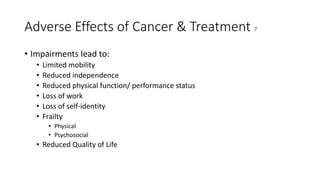
Adverse Effects of Cancer & Treatment 7
• Impairments lead to:
• Limited mobility
• Reduced independence
• Reduced physical function/ performance status
• Loss of work
• Loss of self-identity
• Frailty
• Physical
• Psychosocial
• Reduced Quality of Life
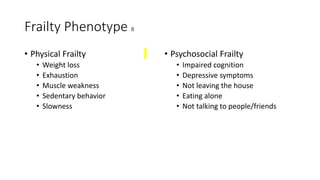
Frailty Phenotype 8
• Physical Frailty
• Weight loss
• Exhaustion
• Muscle weakness
• Sedentary behavior
• Slowness
• Psychosocial Frailty
• Impaired cognition
• Depressive symptoms
• Not leaving the house
• Eating alone
• Not talking to people/friends
Molecular Effects of Cancer & Treatment 9,10
• Muscle Weakness/Atrophy
• Proteolytic Pathways (Calpains, FoxO, UPP)
• Altered Vascular Dynamics
• Cardiotoxicity, Hypertension, Endothelial Alterations
• Insulin Resistance
• Systemic Inflammation
• IL-1; IL-6; TNF-α; IFN‐γ, CRP
• Hypothalamic Pituitary Adrenal Axis Dysfunction
• Cortisol; Myostatin
Benefits of Exercise
ADLs – Physical Activity - Exercise11-14
• Activities of Daily Living: getting out of bed, bathing, eating,
Transfers, dressing
• Physical Activity: any bodily movement produced by skeletal muscles
that requires energy expenditure (i.e. gardening, house cleaning,
playing with children or grandchildren, kayaking, pickleball…)
• Exercise: a subset of physical activity that is planned, structured, &
repetitive & has as a final or an intermediate objective - the
improvement or maintenance of physical fitness (i.e., aerobic
capacity, muscle strength power & endurance, balance, coordination,
& flexibility)
Potential Benefits of Exercise Oncology 15 .
• Strong Evidence
• Anxiety
• Fatigue
• Health Related QoL
• Lymphedema
• Physical Function
• Moderate Evidence
• Bone Health
• Sleep
• Insufficient Evidence
• Cardiotoxicity
• CIPN
• Cognitive Function
• Falls
• Pain
• Tx Tolerance
• Nausea
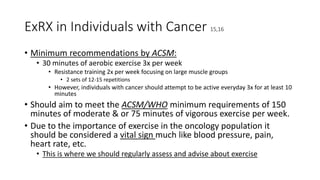
ExRX in Individuals with Cancer 15,16
• Minimum recommendations by ACSM:
• 30 minutes of aerobic exercise 3x per week
• Resistance training 2x per week focusing on large muscle groups
• 2 sets of 12-15 repetitions
• However, individuals with cancer should attempt to be active everyday 3x for at least 10
minutes
• Should aim to meet the ACSM/WHO minimum requirements of 150
minutes of moderate & or 75 minutes of vigorous exercise per week.
• Due to the importance of exercise in the oncology population it
should be considered a vital sign much like blood pressure, pain,
heart rate, etc.
• This is where we should regularly assess and advise about exercise
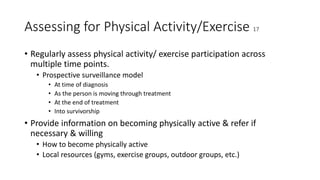
Assessing for Physical Activity/Exercise 17
• Regularly assess physical activity/ exercise participation across
multiple time points.
• Prospective surveillance model
• At time of diagnosis
• As the person is moving through treatment
• At the end of treatment
• Into survivorship
• Provide information on becoming physically active & refer if
necessary & willing
• How to become physically active
• Local resources (gyms, exercise groups, outdoor groups, etc.)
Foundations of an
Exercise Program
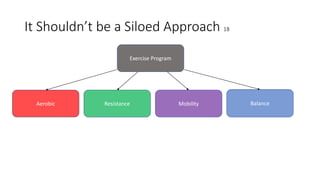
It Shouldn’t be a Siloed Approach 18
Exercise Program
Balance
Aerobic Resistance Mobility
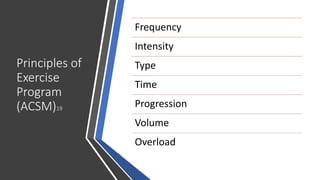
Principles of
Exercise
Program
(ACSM)19
Frequency
Intensity
Type
Time
Progression
Volume
Overload
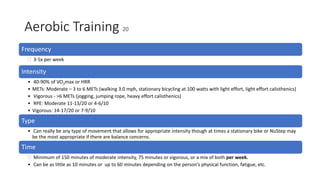
Aerobic Training 20
Frequency
 3-5x per week
Intensity
• 40-90% of VO2max or HRR
• METs: Moderate – 3 to 6 METs (walking 3.0 mph, stationary bicycling at 100 watts with light effort, light effort calisthenics)
• Vigorous - >6 METs (jogging, jumping rope, heavy effort calisthenics)
• RPE: Moderate 11-13/20 or 4-6/10
• Vigorous: 14-17/20 or 7-9/10
Type
• Can really be any type of movement that allows for appropriate intensity though at times a stationary bike or NuStep may
be the most appropriate if there are balance concerns.
Time
 Minimum of 150 minutes of moderate intensity, 75 minutes or vigorous, or a mix of both per week.
• Can be as little as 10 minutes or up to 60 minutes depending on the person’s physical function, fatigue, etc.
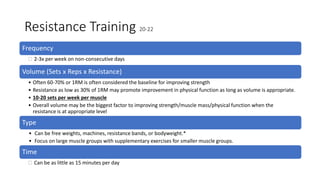
Resistance Training 20-22
Frequency
 2-3x per week on non-consecutive days
Volume (Sets x Reps x Resistance)
• Often 60-70% or 1RM is often considered the baseline for improving strength
• Resistance as low as 30% of 1RM may promote improvement in physical function as long as volume is appropriate.
• 10-20 sets per week per muscle
• Overall volume may be the biggest factor to improving strength/muscle mass/physical function when the
resistance is at appropriate level
Type
• Can be free weights, machines, resistance bands, or bodyweight.*
• Focus on large muscle groups with supplementary exercises for smaller muscle groups.
Time
 Can be as little as 15 minutes per day
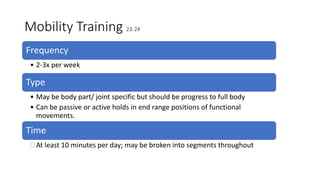
Mobility Training 23-24
Frequency
• 2-3x per week
Type
• May be body part/ joint specific but should be progress to full body
• Can be passive or active holds in end range positions of functional
movements.
Time
 At least 10 minutes per day; may be broken into segments throughout
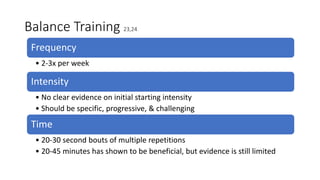
Balance Training 23,24
Frequency
• 2-3x per week
Intensity
• No clear evidence on initial starting intensity
• Should be specific, progressive, & challenging
Time
• 20-30 second bouts of multiple repetitions
• 20-45 minutes has shown to be beneficial, but evidence is still limited
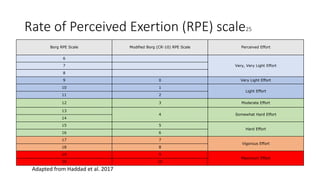
Rate of Perceived Exertion (RPE) scale25
Adapted from Haddad et al. 2017
Borg RPE Scale Modified Borg (CR-10) RPE Scale Perceived Effort
6
Very, Very Light Effort
7
8
9 0 Very Light Effort
10 1
Light Effort
11 2
12 3 Moderate Effort
13
4 Somewhat Hard Effort
14
15 5
Hard Effort
16 6
17 7
Vigorous Effort
18 8
19 9
Maximum Effort
20 10
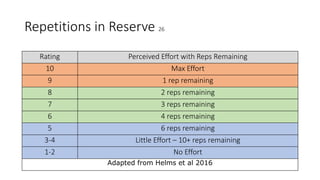
Repetitions in Reserve 26
Rating Perceived Effort with Reps Remaining
10 Max Effort
9 1 rep remaining
8 2 reps remaining
7 3 reps remaining
6 4 reps remaining
5 6 reps remaining
3-4 Little Effort – 10+ reps remaining
1-2 No Effort
Adapted from Helms et al 2016
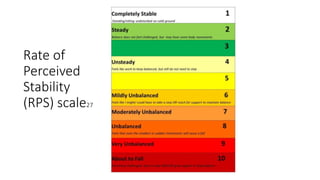
Rate of
Perceived
Stability
(RPS) scale27
Designing an Exercise Program
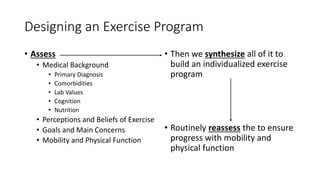
• Assess
• Medical Background
• Primary Diagnosis
• Comorbidities
• Lab Values
• Cognition
• Nutrition
• Perceptions and Beliefs of Exercise
• Goals and Main Concerns
• Mobility and Physical Function
• Then we synthesize all of it to
build an individualized exercise
program
• Routinely reassess the to ensure
progress with mobility and
physical function
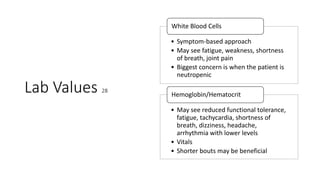
Reference for Lab Values 28
• White Blood Cells
• Reference Values
• 5.0-10.0 109/L
• Hemoglobin
• Reference Values
• Male: 14-17.4 g/dL
• Female: 12-16 g/dL
• Platelets
• Reference Values
• 140-400 k/uL
• Hematocrit
• Reference Values
• Male: 42-52%
• Female: 37-47%
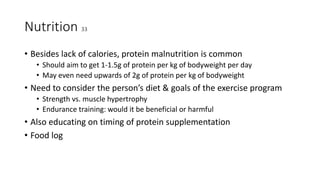
Lab Values 28
• Symptom-based approach
• May see fatigue, weakness, shortness
of breath, joint pain
• Biggest concern is when the patient is
neutropenic
White Blood Cells
• May see reduced functional tolerance,
fatigue, tachycardia, shortness of
breath, dizziness, headache,
arrhythmia with lower levels
• Vitals
• Shorter bouts may be beneficial
Hemoglobin/Hematocrit
Platelets 29
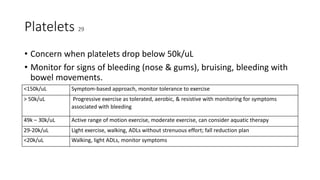
• Concern when platelets drop below 50k/uL
• Monitor for signs of bleeding (nose & gums), bruising, bleeding with
bowel movements.
<150k/uL Symptom-based approach, monitor tolerance to exercise
> 50k/uL Progressive exercise as tolerated, aerobic, & resistive with monitoring for symptoms
associated with bleeding
49k – 30k/uL Active range of motion exercise, moderate exercise, can consider aquatic therapy
29-20k/uL Light exercise, walking, ADLs without strenuous effort; fall reduction plan
<20k/uL Walking, light ADLs, monitor symptoms
Platelets30-32
Platelets 30-32
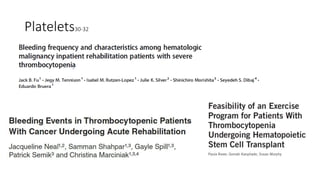
• Overall, there does not appear to be a significant increase in risk or
events of bleeding with physical activity/ exercise &
thrombocytopenia
• Aerobic exercise whether walking or stationary biking may have
better adherence compared to resistance training
• Neal et al. saw a trend for bleeding events related to prophylactic use
of anti-coagulant with platelets counts >50k/uL
Nutrition 33
• Often persons will report weight loss prior to being diagnosed with cancer
• Appetite & intake can be affected by:
• Taste changes
• Lack of appetite
• Early satiety
• Difficulty with eating
• Nausea
• Vomiting
• Mucositis
• Pain
• Xerostomia
• Depression/ Anxiety
Nutrition 33
• Besides lack of calories, protein malnutrition is common
• Should aim to get 1-1.5g of protein per kg of bodyweight per day
• May even need upwards of 2g of protein per kg of bodyweight
• Need to consider the person’s diet & goals of the exercise program
• Strength vs. muscle hypertrophy
• Endurance training: would it be beneficial or harmful
• Also educating on timing of protein supplementation
• Food log
Co-morbidities 34-36
• Co-morbidities need to be considered within exercise program
• Hypertension
• Cardiovascular Disease
• Diabetes
• Chronic Obstructive Pulmonary Disease
• Sarcopenia
• Osteoporosis/osteopenia
• Role of exercise in prehabilitation setting to optimize the performance
status
• Post tx - co-morbidities may affect as much or more than adverse
effects of tx
Cognition
• Need to consider the ability of the person to follow instructions &
complete exercises safely
• Not just at home but also in the facility
• Not just about safety but also understanding rest, fatigue, weakness
for safety
• Exercise/ physical activity log for home
• Can be adapted based on needs of the person
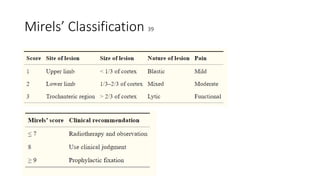
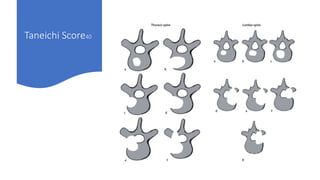
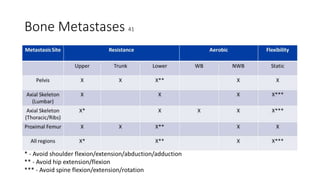
Bone Metastases 37,38
• Overall, exercise is safe for persons with Bone Metastases
• A supervised program is best but transition to an individual program is
feasible
• Important to have as much information as possible
• Number & Location of Lesions
• Type of lesion(s): Lytic/ Blastic
• Size of Lesion(s)
• Stable vs. Unstable
• Pain at rest vs pain with movement vs pain with weight-bearing
• May be best to avoid end range & explosive movements
• May have to pivot from the thought of:
• “If there’s pain then don’t do it” to
“How bad does the pain get with each movement?”
Mirels’ Classification 39
Taneichi Score40
Bone Metastases 41
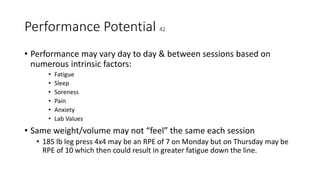
Performance Potential 42
• Performance may vary day to day & between sessions based on
numerous intrinsic factors:
• Fatigue
• Sleep
• Soreness
• Pain
• Anxiety
• Lab Values
• Same weight/volume may not “feel” the same each session
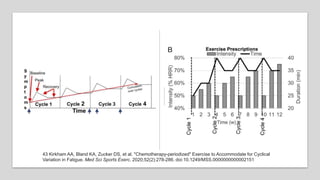
• 185 lb leg press 4x4 may be an RPE of 7 on Monday but on Thursday may be
RPE of 10 which then could result in greater fatigue down the line.
43 Kirkham AA, Bland KA, Zucker DS, et al. "Chemotherapy-periodized" Exercise to Accommodate for Cyclical
Variation in Fatigue. Med Sci Sports Exerc. 2020;52(2):278-286. doi:10.1249/MSS.0000000000002151
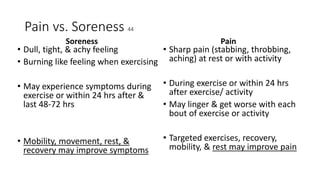
Pain vs. Soreness 44
Soreness
• Dull, tight, & achy feeling
• Burning like feeling when exercising
• May experience symptoms during
exercise or within 24 hrs after &
last 48-72 hrs
• Mobility, movement, rest, &
recovery may improve symptoms
Pain
• Sharp pain (stabbing, throbbing,
aching) at rest or with activity
• During exercise or within 24 hrs
after exercise/ activity
• May linger & get worse with each
bout of exercise or activity
• Targeted exercises, recovery,
mobility, & rest may improve pain
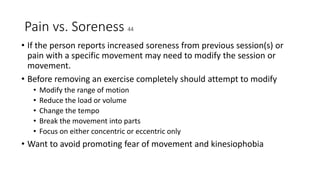
Pain vs. Soreness 44
• If the person reports increased soreness from previous session(s) or
pain with a specific movement may need to modify the session or
movement.
• Before removing an exercise completely should attempt to modify
• Modify the range of motion
• Reduce the load or volume
• Change the tempo
• Break the movement into parts
• Focus on either concentric or eccentric only
• Want to avoid promoting fear of movement and kinesiophobia
Assessing Physical Function
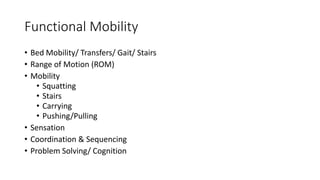
Functional Mobility
• Bed Mobility/ Transfers/ Gait/ Stairs
• Range of Motion (ROM)
• Mobility
• Squatting
• Stairs
• Carrying
• Pushing/Pulling
• Sensation
• Coordination & Sequencing
• Problem Solving/ Cognition
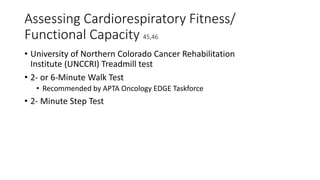
Assessing Cardiorespiratory Fitness/
Functional Capacity 45,46
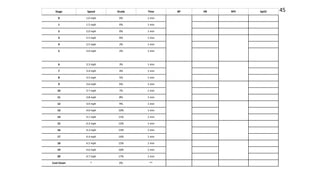
• University of Northern Colorado Cancer Rehabilitation
Institute (UNCCRI) Treadmill test
• 2- or 6-Minute Walk Test
• Recommended by APTA Oncology EDGE Taskforce
• 2- Minute Step Test
Stage Speed Grade Time BP HR RPE SpO2
0 1.0 mph 0% 1 min
1 1.5 mph 0% 1 min
2 2.0 mph 0% 1 min
3 2.5 mph 0% 1 min
4 2.5 mph 2% 1 min
5 3.0 mph 2% 1 min
6 3.3 mph 3% 1 min
7 3.4 mph 4% 1 min
8 3.5 mph 5% 1 min
9 3.6 mph 6% 1 min
10 3.7 mph 7% 1 min
11 3.8 mph 8% 1 min
12 3.9 mph 9% 1 min
13 4.0 mph 10% 1 min
14 4.1 mph 11% 1 min
15 4.2 mph 12% 1 min
16 4.3 mph 13% 1 min
17 4.4 mph 14% 1 min
18 4.5 mph 15% 1 min
19 4.6 mph 16% 1 min
20 4.7 mph 17% 1 min
Cool Down * 0% **
45
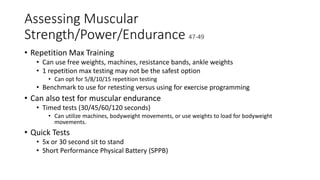
Assessing Muscular
Strength/Power/Endurance 47-49
• Repetition Max Training
• Can use free weights, machines, resistance bands, ankle weights
• 1 repetition max testing may not be the safest option
• Can opt for 5/8/10/15 repetition testing
• Benchmark to use for retesting versus using for exercise programming
• Can also test for muscular endurance
• Timed tests (30/45/60/120 seconds)
• Can utilize machines, bodyweight movements, or use weights to load for bodyweight
movements.
• Quick Tests
• 5x or 30 second sit to stand
• Short Performance Physical Battery (SPPB)
ACSM Guide to Repetition Max Testing
47,50
• 10-minute warm-up
• Initial load should be around 50-70% of individuals max
• If lift is successful a rest period of 3-5 minutes should be given.
• Resistance should be progressed in increments of 5-40lbs
• Should not exceed four sets to prevent neural & muscular
fatigue.
Assessing Balance 49,51
• Fullerton Advanced Balance Scale
• MiniBEST test
• Berg Balance Scale
• Quick Assessments
• Modified Clinical Test of Sensory Interaction in Balance (mCTSIB)
• Timed Up & Go
• Gait Speed
• All are considered acceptable to be used in clinical setting by APTA
Oncology EDGE Taskforce
Synthesize
• So again
• Putting all the pieces together based on:
• What adverse effects they are or may be dealing with
• How they move
• What they have the most difficulty with
• What they want to get back to
• And then designing an exercise program to work towards their goals
while addressing their main concerns.
Where Exercise
Programs Fall Short
The Pitfalls in an
Exercise Program
52,53
• Often the exercise program
is insufficient in:
• Specificity
• Volume
• Progressive Loading to
Adaptation
The Pitfalls 52,53
1. Specificity: Exercise program needs to be specific to the goals
• If the goals are to improve strength, then the program needs to reflect that
• A walking program won’t improve strength
2. Volume: Needs to be sufficient volume to the program to promote the
required gains
• Depending on the intensity (% of max, RPE, RIR) the volume may differ but
percentages as low as 30% have shown to promote gains
• Total Time Under Tension (TUT) per session or week
3. Progressive Loading: To get positive adaptations there needs to be
progressive loading & to get progressive loading there needs to be
positive adaptations
• Moving away from the progressive overload where the thought is to just keep
putting weight on the bar or machine
Specificity 15,54,55
• Making the case for Reps over Steps
• Often strength/power is significantly lacking in this population
• Muscle Weakness is routinely seen before Muscle Atrophy
• Type IIa/IIx atrophy is escalated due to sedentary nature
• A walking program is beneficial to promote activity but isn’t specific
• Further looking at mortality and overall survival there is a correlation with muscle strength/mass
and improved outcomes
• There is the thought of repetition range for producing strength, hypertrophy, or
endurance
• If strength increases hypertrophy will most likely occur and vice versa
• Neuromuscular adaptations
• Motor Unit recruitment (quantity and quality)
• Sequencing
• Rate Firing
Volume
• Volume (load x sets x reps) is often the critical factor in eliciting
positive adaptations
• Often what is lacking in the oncology population for exercise programs
• Don’t want to just pick a resistance but want to progressively load
within the exercise program
• Piling on the weights; going to failure; increasing volume too quickly can all
result in deterioration in performance (physical function) & lead to increased
fatigue & extended recovery
• When volume is sub-threshold there will either be null or blunted
positive adaptations & improvement in physical function
Progressive Loading
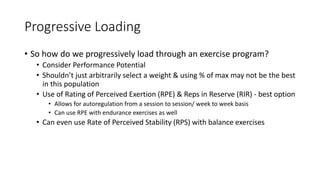
• So how do we progressively load through an exercise program?
• Consider Performance Potential
• Shouldn’t just arbitrarily select a weight & using % of max may not be the best
in this population
• Use of Rating of Perceived Exertion (RPE) & Reps in Reserve (RIR) - best option
• Allows for autoregulation from a session to session/ week to week basis
• Can use RPE with endurance exercises as well
• Can even use Rate of Perceived Stability (RPS) with balance exercises
Progressive Loading 56
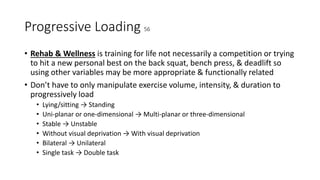
• Rehab & Wellness is training for life not necessarily a competition or trying
to hit a new personal best on the back squat, bench press, & deadlift so
using other variables may be more appropriate & functionally related
• Don’t have to only manipulate exercise volume, intensity, & duration to
progressively load
• Lying/sitting → Standing
• Uni-planar or one-dimensional → Multi-planar or three-dimensional
• Stable → Unstable
• Without visual deprivation → With visual deprivation
• Bilateral → Unilateral
• Single task → Double task
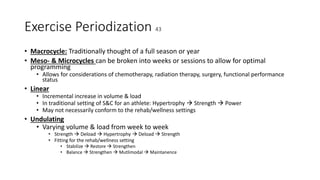
Exercise Periodization 43
• Macrocycle: Traditionally thought of a full season or year
• Meso- & Microcycles can be broken into weeks or sessions to allow for optimal
programming
• Allows for considerations of chemotherapy, radiation therapy, surgery, functional performance
status
• Linear
• Incremental increase in volume & load
• In traditional setting of S&C for an athlete: Hypertrophy  Strength  Power
• May not necessarily conform to the rehab/wellness settings
• Undulating
• Varying volume & load from week to week
• Strength  Deload  Hypertrophy  Deload  Strength
• Fitting for the rehab/wellness setting
• Stabilize  Restore  Strengthen
• Balance  Strengthen  Mutlimodal  Maintanence
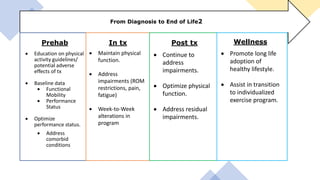
From Diagnosis to End of Life2
Prehab
 Education on physical
activity guidelines/
potential adverse
effects of tx
 Baseline data
 Functional
Mobility
 Performance
Status
 Optimize
performance status.
 Address
comorbid
conditions
In tx
 Maintain physical
function.
 Address
impairments (ROM
restrictions, pain,
fatigue)
 Week-to-Week
alterations in
program
Post tx
 Continue to
address
impairments.
 Optimize physical
function.
 Address residual
impairments.
Wellness
 Promote long life
adoption of
healthy lifestyle.
 Assist in transition
to individualized
exercise program.
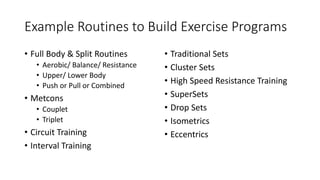
Example Routines to Build Exercise Programs
• Full Body & Split Routines
• Aerobic/ Balance/ Resistance
• Upper/ Lower Body
• Push or Pull or Combined
• Metcons
• Couplet
• Triplet
• Circuit Training
• Interval Training
• Traditional Sets
• Cluster Sets
• High Speed Resistance Training
• SuperSets
• Drop Sets
• Isometrics
• Eccentrics
Exercise Programming:
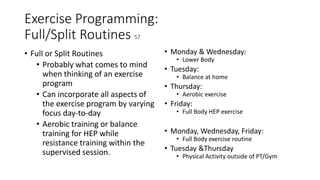
Full/Split Routines 57
• Full or Split Routines
• Probably what comes to mind
when thinking of an exercise
program
• Can incorporate all aspects of
the exercise program by varying
focus day-to-day
• Aerobic training or balance
training for HEP while
resistance training within the
supervised session.
• Monday & Wednesday:
• Lower Body
• Tuesday:
• Balance at home
• Thursday:
• Aerobic exercise
• Friday:
• Full Body HEP exercise
• Monday, Wednesday, Friday:
• Full Body exercise routine
• Tuesday &Thursday
• Physical Activity outside of PT/Gym
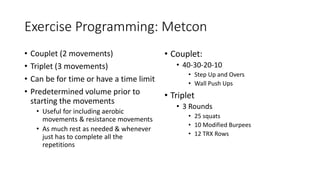
Exercise Programming: Metcon
• Couplet (2 movements)
• Triplet (3 movements)
• Can be for time or have a time limit
• Predetermined volume prior to
starting the movements
• Useful for including aerobic
movements & resistance movements
• As much rest as needed & whenever
just has to complete all the
repetitions
• Couplet:
• 40-30-20-10
• Step Up and Overs
• Wall Push Ups
• Triplet
• 3 Rounds
• 25 squats
• 10 Modified Burpees
• 12 TRX Rows
Exercise Programming:
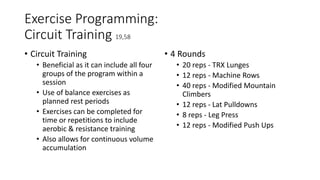
Circuit Training 19,58
• Circuit Training
• Beneficial as it can include all four
groups of the program within a
session
• Use of balance exercises as
planned rest periods
• Exercises can be completed for
time or repetitions to include
aerobic & resistance training
• Also allows for continuous volume
accumulation
• 4 Rounds
• 20 reps - TRX Lunges
• 12 reps - Machine Rows
• 40 reps - Modified Mountain
Climbers
• 12 reps - Lat Pulldowns
• 8 reps - Leg Press
• 12 reps - Modified Push Ups
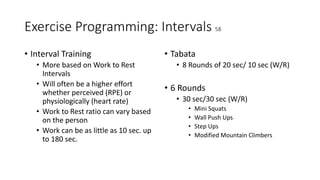
Exercise Programming: Intervals 58
• Interval Training
• More based on Work to Rest
Intervals
• Will often be a higher effort
whether perceived (RPE) or
physiologically (heart rate)
• Work to Rest ratio can vary based
on the person
• Work can be as little as 10 sec. up
to 180 sec.
• Tabata
• 8 Rounds of 20 sec/ 10 sec (W/R)
• 6 Rounds
• 30 sec/30 sec (W/R)
• Mini Squats
• Wall Push Ups
• Step Ups
• Modified Mountain Climbers
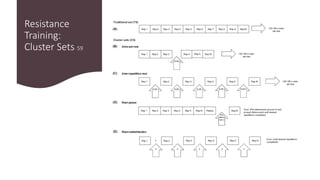
Resistance
Training:
Cluster Sets 59
Resistance Training:
High Speed Resistance Training (HSRT)/ Power
Training (PT) 60,61
• Load is usually heavier but lower load (40-60% 1RM)
• Moves away from the “don’t go too fast/ fast is not better”
philosophy
• Concentric phase is completed as fast as possible with a controlled
eccentric phase
• Promotion of power; maximal motor unit recruitment; favoring of
Type IIa & Type IIx fibers (fast twitch) which are more prone to disuse
& atrophy
• Focus on multi-joint movements utilizing larger musculature
Resistance Training:
SuperSets & Drop Sets 19, 62
• SuperSets
• Numerous variations with
supersets
• Paired Set (Push/Pull)
• Compound (single joint into multi
joint of the same muscle group)
• Staggered (Upper Body then Lower
Body flexion exercises)
• Only transitional rest is given
between exercise 1 & exercise 2 then
a standard of 120-180 second rest is
given
• Drop Sets
• With the completion of each set
resistance is reduced with little to
no rest between sets.
• Sets are often completed to
fatigue.
• Example:
• 55# - 45# - 35# ( each completed to
fatigue)
Resistance Training:
Eccentrics & Isometrics 63-65
• Eccentrics (Lastayo et al.)
• Lower metabolic cost compared to
concentric exercise
• May have a lower perceived effort
for the load being controlled
• Higher potential for greater motor
unit recruitment
• Potential to activate anabolic
pathways that promote muscle
hypertrophy independent of
growth hormone & testosterone
• Isometrics (Lum et al.)
• Also has a lower metabolic cost
compared to concentric exercise
• Again, lower perceived effort
compared to other forms of
exercise.
• May be tolerated well in setting of
bone metastases compared to
other forms of exercise
• Holds of 5-30 seconds with a
cumulative contraction time of 30-
150 seconds
Home Exercise Program
• May be focused specifically on main concern of the person
(limited ROM or tissue restriction after mastectomy) or be focus
on complimentary aspect of the exercise program (mobility &
aerobic exercise)
• Should have elements of progression & overload though
consistency with sets & repetitions may be easier to follow &
remember for HEP.
• An exercise/ physical activity log is beneficial & can be adapted
to meet the needs of the person
Case Studies
Case Study 1: Background Info
• 55-year-old female
• Oncologic History:
• Stage IA grade 3 mucinous retroperitoneal adenocarcinoma;
• XPL, TAH, BSO, omentectomy, peritoneal biopsies, pelvic node dissection, appendectomy &
resection of right sided retroperitoneal mass.
• Completed 3 cycles of adjuvant carboplatin & Taxol
• Metastatic disease in left lung (upper & lower lobe) a year later
• Completed another 6 cycles of carboplatin & Taxol, last four with Avastin; & completed SBRT
• Currently receiving maintenance Avastin every 3 weeks
• Past Medical History
• Lumbar laminectomy ~20 years prior with residual lower back pain & lateral right foot
numbness.
Case 1: Main Concerns & Goal(s)
• Her main concerns at the time of initial evaluation are:
• Shortness of breath with exertion
• Fatigue (weekly rating of 5-6/10)
• Numbness in bilateral feet
• Generalized weakness
• Unable to work full-time (works an extremely active job in healthcare setting)
• Goals of PT
• Be able to return to full-time work duties
• Be able to walk her dog for at least 35 minutes
• Reduce fatigue
• Be able to play a full round of golf
Case Study 1: Pre-Post Assessment
• Initial Assessment
• 5x Sit to Stand: 13 sec  7 seconds
• FAB- 28/40  34/40
• 6MWT: 414 meters  503 meters
• Fatigue 5-6/10  1-2/10
• Exercise Program
• Multimodal (Aerobic, Resistance, Balance, & Mobility)
• Use of Traditional Routines, Interval Training, & Circuit Training
• Home Program mainly included mobility& aerobic exercise.
Case Study 1: HEP Interval Program
• 4 Rounds (30 second work/ 90 second rest)
• Squats
• Wall Push Ups
• Lunges
• Banded Rows (Heavy Resistance)
• Mountain Climbers
• DB Shoulder Press
• Work period remains the same, but the rest period gradually reduces
as able.
Case 1: Sample Session
• Circuit Training - 3 Rounds
• 2 minutes on NuStep – RPE of 6-8/10 @ Level 4
• 15 Lat Pulldowns @55#
• 15 Leg Press @135#
• 1 minute of balancing on dyna discs
• 30 sec planks
• 10 TRX rows
• 10 DB Deadlifts (15# DBs)
• 30 sec tandem stance on foam each side
• Rest within session was only transitional rest ranging from 10-20
seconds max
Wrap Up
Key Points
• If you really want Exercise to be Medicine, then it needs to be specific
& at the correct dose just like chemotherapy, radiation therapy, etc.
• However, some exercise is better than none
• Reps over Steps
• HIIT Bodyweight/Resistance Training >>>> Walking/ Aerobic Program
• Supervision is most beneficial with promoting significant changes in
body composition, performance status, & QoL
• Though after a period of supervision, unsupervised programs have been
shown to further optimize or maintain physical function
• Even better with routine follow-up or check-ins
Key Points
Moving exercise forward in oncology population
We know exercise is beneficial
but we need to figure out
how to get persons living with & beyond cancer
• moving
• improving their understanding of the benefits
• providing access to
• Oncology Rehab
• Oncology Exercise personnel & facilities
Questions?
References
1. American Cancer Society. Cancer Treatment & Survivorship Facts & Figures 2019-2021. Atlanta: American
Cancer Society; 2019.
2. Suderman K, McIntyre C, Sellar C, McNeely ML. Implementing cancer exercise rehabilitation: An update
on recommendations for clinical practice. Curr Cancer Ther Rev. 2019;15(2):100-109.
3. Haff G, Travis Triplett N, National Strength & Conditioning Association (Estados Unidos). Essentials of
Strength Training and Conditioning. 4th ed. Champaign, ILL: Human Kinetics; 2016.
4. Nakano J, Fukushima T, Tanaka T, Fu JB, Morishita S. Physical function predicts mortality in patients with
cancer: a systematic review and meta-analysis of observational studies. Support Care Cancer. Published
online 2021. doi:10.1007/s00520-021-06171-3
5. Bauer J, Morley JE, Schols AMWJ, et al. Sarcopenia: A time for action. An SCWD position paper. J Cachexia
Sarcopenia Muscle. 2019;10(5):956-961
6. Gegechkori N, Haines L, Lin JJ. Long-Term and Latent Side Effects of Specific Cancer Types. Med Clin North
Am. 2017;101(6):1053-1073. doi:10.1016/j.mcna.2017.06.003
7. Sweegers MG, Altenburg TM, Chinapaw MJ, et al. Which exercise prescriptions improve quality of life and
physical function in patients with cancer during and following treatment? A systematic review and meta-
analysis of randomised controlled trials. Br J Sports Med. 2017;52(8):505-513. doi:10.1136/bjsports-2017-
097891
8. Coelho-Júnior HJ, Uchida MC, Picca A, et al. Evidence-based recommendations for resistance and power
training to prevent frailty in community-dwellers. Aging Clin Exp Res. 2021;33(8):2069-2086.
doi:10.1007/s40520-021-01802-5
References
9. Cameron AC, Touyz RM, Lang NN. Vascular Complications of Cancer Chemotherapy. Can J Cardiol.
2016;32(7):852-862. doi:10.1016/j.cjca.2015.12.023
10. Cole CL, Kleckner IR, Jatoi A, Schwarz EM, Dunne RF. The role of systemic inflammation in cancer-
associated muscle wasting and rationale for exercise as a therapeutic intervention. JCSM clin rep.
2018;3(2). doi:10.17987/jcsm-cr.v3i2.65
11. Czosnek L, Richards J, Zopf E, Cormie P, Rosenbaum S, Rankin NM. Exercise interventions for people
diagnosed with cancer: a systematic review of implementation outcomes. BMC Cancer. 2021;21(1):643.
12. Schmitz KH, Stout NL, Maitin‐Shepard M, et al. Moving through cancer: Setting the agenda to make
exercise standard in oncology practice. Cancer. 2020;(cncr.33245). doi:10.1002/cncr.33245
13. Courneya K.S., Karvinen K.H., Vallance J.K. (2007) Exercise Motivation and Behavior Change. In: Feuerstein
M. (eds) Handbook of Cancer Survivorship. Springer, Boston, MA. https://doi.org/10.1007/978-0-387-
34562-8_7
14. Cancer survivors and physical activity. Cancer.gov. Accessed August 31, 2021.
https://progressreport.cancer.gov/after/physical_activity
15. Campbell KL, Winters-Stone KM, Wiskemann J, et al. Exercise guidelines for cancer survivors: Consensus
statement from international multidisciplinary Roundtable. Med Sci Sports Exerc. 2019;51(11):2375-2390
16. Schmitz KH, Campbell AM, Stuiver MM, et al. Exercise is medicine in oncology: Engaging clinicians to help
patients move through cancer. CA Cancer J Clin. 2019;69(6):468-484.
References
17. Izquierdo, M., Merchant, R.A., Morley, J.E. et al. International Exercise Recommendations in Older Adults
(ICFSR): Expert Consensus Guidelines. J Nutr Health Aging (2021). https://doi.org/10.1007/s12603-021-
1665-8
18. Nakano J, Hashizume K, Fukushima T, et al. Effects of aerobic and resistance exercises on physical symptoms
in cancer patients: A meta-analysis. Integr Cancer Ther. 2018;17(4):1048-1058.
19. American College of Sports Medicine. ACSM’s Resources for the Exercise Physiologist. 2nd ed. Lippincott
Williams & Wilkins; 2017.
20. Stout, NL, Santa Mina, D, Lyons, KD, Robb, K, Silver, JK. A systematic review of rehabilitation and exercise
recommendations in oncology guidelines. CA Cancer J Clin. 2021. https://doi.org/10.3322/caac.21639
21. Fairman CM, Hyde PN, Focht BC. Resistance training interventions across the cancer control continuum: a
systematic review of the implementation of resistance training principles. Br J Sports Med. 2017;51(8):677-
685. doi:10.1136/bjsports-2016-096537
22. Schoenfeld B. Chapter 4: Role of Resistance Training Variables in Hypertrophy In: Schoenfeld B. Science and
Development of Muscle Hypertrophy. Champaign, IL: Human Kinetics; 2021.
23. Hayes SC, Newton RU, Spence RR, Galvão DA. The Exercise and Sports Science Australia position statement:
Exercise medicine in cancer management. J Sci Med Sport. 2019;22(11):1175-1199.
doi:10.1016/j.jsams.2019.05.003
24. Kneis S, Wehrle A, Müller J, et al. It's never too late - balance and endurance training improves functional
performance, quality of life, and alleviates neuropathic symptoms in cancer survivors suffering from
chemotherapy-induced peripheral neuropathy: results of a randomized controlled trial. BMC Cancer.
2019;19(1):414. Published 2019 May 2. doi:10.1186/s12885-019-5522-7
References
25. Haddad M, Stylianides G, Djaoui L, Dellal A, Chamari K. Session-RPE Method for Training Load Monitoring:
Validity, Ecological Usefulness, and Influencing Factors. Front Neurosci. 2017;11:612. Published 2017 Nov
2. doi:10.3389/fnins.2017.00612
26. Helms ER, Cronin J, Storey A, Zourdos MC. Application of the Repetitions in Reserve-Based Rating of
Perceived Exertion Scale for Resistance Training. Strength Cond J. 2016;38(4):42-49.
doi:10.1519/SSC.0000000000000218
27. Espy D, Reinthal A, Meisel S. Intensity of balance task intensity, as measured by the rate of perceived
stability, is independent of physical exertion as measured by heart rate. J Nov Physiother. 2017;7(S4).
doi:10.4172/2165-7025.1000343
28. Fischbach FT, Dunning MB. A manual of laboratory and diagnostic tests. Ninth edition. ed. Philadelphia:
Wolters Kluwer Health; 2015.
29. Maltser S, Cristian A, Silver JK, Morris GS, Stout NL. A Focused Review of Safety Considerations in Cancer
Rehabilitation. PM R. 2017;9(9S2):S415-S428. doi:10.1016/j.pmrj.2017.08.403
30. Rexer P, Kanphade G, Murphy S. Feasibility of an exercise program for patients with thrombocytopenia
undergoing hematopoietic stem cell transplant. J Acute Care Phys Ther. 2016;7(2):55-64.
31. Neal J, Shahpar S, Spill G, Semik P, Marciniak C. Bleeding events in thrombocytopenic patients with cancer
undergoing acute rehabilitation. Rehabil Proc.outcome. 2018;7:117957271876137.
32. Fu JB, Tennison JM, Rutzen-Lopez IM, et al. Bleeding frequency and characteristics among hematologic
malignancy inpatient rehabilitation patients with severe thrombocytopenia. Support Care Cancer.
2018;26(9):3135-3141.
33. Ravasco P. Nutrition in Cancer Patients. J Clin Med. 2019;8(8):1211. Published 2019 Aug 14.
doi:10.3390/jcm8081211
References
34. Fowler, H., Belot, A., Ellis, L. et al. Comorbidity prevalence among cancer patients: a population-based cohort study of
four cancers. BMC Cancer 20, 2 (2020). https://doi.org/10.1186/s12885-019-6472-9
35. Beauchamp MK, Evans R, Janaudis-Ferreira T, Goldstein RS, Brooks D. Systematic review of supervised exercise
programs after pulmonary rehabilitation in individuals with COPD. Chest. 2013;144(4):1124-1133.
36. Fiuza-Luces C, Santos-Lozano A, Joyner M, et al. Exercise benefits in cardiovascular disease: beyond attenuation of
traditional risk factors. Nat Rev Cardiol. 2018;15(12):731-743.
37. Sheill G, Guinan EM, Peat N, Hussey J. Considerations for Exercise Prescription in Patients With Bone Metastases: A
Comprehensive Narrative Review. PM R. 2018;10(8):843-864. doi:10.1016/j.pmrj.2018.02.006
38. Rosenberger F, Sprave T, Clauss D, et al. Spinal stabilization exercises for cancer patients with spinal metastases of
high fracture risk: Feasibility of the DISPO-II training program. Cancers (Basel). 2021;13(2):201.
39. Jawad MU, Scully SP. In brief: classifications in brief: Mirels' classification: metastatic disease in long bones and
impending pathologic fracture. Clin Orthop Relat Res. 2010;468(10):2825-2827. doi:10.1007/s11999-010-1326-4
40. Schlampp I, Rieken S, Habermehl D, et al. Stability of spinal bone metastases in breast cancer after radiotherapy: a
retrospective analysis of 157 cases: A retrospective analysis of 157 cases. Strahlenther Onkol. 2014;190(9):792-797.
41. Galvão DA, Taaffe DR, Cormie P, et al. Efficacy and safety of a modular multi-modal exercise program in prostate
cancer patients with bone metastases: a randomized controlled trial. BMC Cancer. 2011;11:517
42. Chiu LZF, Barnes JL. The Fitness-Fatigue Model REVISITED: Implications for PLANNING short- and long-term training.
Strength and Conditioning Journal. 2003;25(6):42. doi:10.1519/1533-4295(2003)025<0042:tfmrif>2.0.co;2
References
43. Kirkham AA, Bland KA, Zucker DS, et al. "Chemotherapy-periodized" Exercise to Accommodate for Cyclical
Variation in Fatigue. Med Sci Sports Exerc. 2020;52(2):278-286. doi:10.1249/MSS.0000000000002151
44. Soreness vs pain: What’s the difference? Choosept.com. Published May 25, 2018. Accessed June 9, 2021.
https://www.choosept.com/resources/detail/soreness-vs-pain-whats-difference
45. Kee Shackelford DY, Brown JM, Peterson BM, Schaffer J, Hayward R (2017) The University of Northern
Colorado Cancer Rehabilitation Institute Treadmill Protocol Accurately Measures VO2peak in Cancer
Survivors. Int J Phys Med Rehabil 5: 437. doi: 10.4172/2329-9096.1000437
46. Bohannon RW, Crouch RH. Two-minute step test of exercise capacity: Systematic review of procedures,
performance, and clinimetric properties. J Geriatr Phys Ther. 2019;42(2):105-112
47. American College of Sports Medicine. ACSM’s Resources for the Exercise Physiologist. 2nd ed. Lippincott
Williams and Wilkins; 2017.
48. Rosenberger F, Schneider J, Schlueter K, Paratte JL, Wiskemann J. Vertebral fracture during one repetition
maximum testing in a breast cancer survivor: A case report. Medicine (Baltimore). 2021;100(20):e25705.
doi:10.1097/MD.0000000000025705
49. Huang MH, Hile E, Croarkin E, et al. Academy of oncologic physical therapy EDGE task force: A systematic
review of measures of balance in adult cancer survivors. Rehabil Oncol. 2019;37(3):92-103.
50. Abdul-Hameed U, Rangra P, Shareef MY, Hussain ME. Reliability of 1-repetition maximum estimation
for upper and lower body muscular strength measurement in untrained middle aged type 2 diabetic
patients. Asian J Sports Med. 2012;3(4):267-273. doi:10.5812/asjsm
References
51. Fisher, M., Lee, J., Davies, C., Geyer, H., Colon, G., Pfalzer, L. Oncology Section EDGE Task Force on Breast Cancer Outcomes: A
Systematic Review of Outcome Measures for Functional Mobility. Rehabilitation Oncology. 2015; 33(3): 19-31.
52. Falvey JR, Mangione KK, Stevens-Lapsley JE. Rethinking Hospital-Associated Deconditioning: Proposed Paradigm Shift. Physical
Therapy. 2015;95(9):1307-1315. doi:10.2522/ptj.20140511.
53. Fairman CM, Hyde PN, Focht BC. Resistance training interventions across the cancer control continuum: a systematic review of
the implementation of resistance training principles. Br J Sports Med. 2017;51(8):677-685. doi:10.1136/bjsports-2016-096537
54. Yang J, Cao RY, Li Q, Zhu F. Muscle Atrophy in Cancer. Adv Exp Med Biol. 2018;1088:329-346. doi:10.1007/978-981-13-1435-
3_15
55. Taber CB, Vigotsky A, Nuckols G, Haun CT. Exercise-Induced Myofibrillar Hypertrophy is a Contributory Cause of Gains in Muscle
Strength. Sports Med. 2019;49(7):993-997. doi:10.1007/s40279-019-01107-8
56. La Scala Teixeira CV, Evangelista AL, Pereira PEA, Da Silva-Grigoletto ME, Bocalini DS, Behm DG. Complexity: A Novel Load
Progression Strategy in Strength Training. Front Physiol. 2019;10:839. Published 2019 Jul 3. doi:10.3389/fphys.2019.00839
57. Haff G, Travis Triplett N, National Strength & Conditioning Association. Essentials of Strength Training and Conditioning. 4th ed.
Champaign, ILL: Human Kinetics; 2016.
58. Mugele, H., Freitag, N., Wilhelmi, J. et al. High-intensity interval training in the therapy and aftercare of cancer patients: a
systematic review with meta-analysis. J Cancer Surviv 13, 205–223 (2019). https://doi.org/10.1007/s11764-019-00743-3
59. Latella C, Peddle-McIntyre C, Marcotte L, Steele J, Kendall K, Fairman CM. Strengthening the Case for Cluster Set Resistance
Training in Aged and Clinical Settings: Emerging Evidence, Proposed Benefits and Suggestions. Sports Medicine. 2021.
doi:10.1007/s40279-021-01455-4
References
60. Sayers SP, Gibson K. High-speed power training in older adults: a shift of the external resistance
at which peak power is produced. J Strength Cond Res. 2014;28(3):616–21.
61. Ramirez-Campillo R, Castillo A, de la Fuente C, Campos-Jara C, Andrade DC, Alvarez C, et al.
High-speed resistance training is more effective than low-speed resistance training to increase
functional capacity and muscle performance in older women. Exp Gerentol. 2014;58:51–7.
62. Schoenfeld B. Chapter 5: Advanced Training Practices. In: Schoenfeld B. Science and
Development of Muscle Hypertrophy. Champaign, IL: Human Kinetics; 2021.
63. Lum D, Barbosa TM. Brief review: Effects of isometric strength training on strength & dynamic
performance. Int J Sports Med. 2019;40(6):363-375.
64. Lastayo PC, Larsen S, Smith S, Dibble L, Marcus R. The feasibility and efficacy of eccentric
exercise with older cancer survivors: a preliminary study. J Geriatr Phys Ther. 2010;33(3):135-
140.
65. LaStayo P, Marcus R, Dibble L, Frajacomo F, Lindstedt S. Eccentric exercise in rehabilitation:
safety, feasibility, and application. J Appl Physiol. 2014;116(11):1426-1434.

Exercise Oncology Transforming Research to Practice shareable

  • 1.
    Exercise Oncology Transforming Researchto Practice Andrew Chongaway PT, DPT Board-Certified Oncologic Clinical Specialist ACSM Certified Exercise Physiologist ACSM/ACS Certified Cancer Exercise Trainer Affiliations: Beaumont Health, Royal Oak, MI Deborah J Doherty, PT, PhD Chair HMS Department Associate Professor Oakland University Owner, Center for Survivorship Affiliations: Human Movement Science (HMS) Department School of Health Sciences, Oakland University, MI Center for Survivorship, Brown City, MI
  • 2.
    Intended Learning Outcomes •Discuss the 5 levels of prevention & how they relate to exercise & rehabilitation in the oncology setting • Review the benefits of exercise in relation to optimizing physical function & addressing adverse effects of cancer & related tx • Introduce algorithms for assessing physical function in the inpatient, home health, & outpatient physical therapy settings. • Explore various ways to develop, prescribe, & progress an exercise program in the oncology settings based on current research with respect to tx status, lab values, & other risk factors • Examine several case studies to foster confidence with exercise prescription in the oncology population.
  • 4.
    American Cancer Society.CancerTreatment & Survivorship Facts & Figures 2019-2021.Atlanta: American Cancer Society; 2019. 1
  • 5.
    Statistics • Only ~1/3of persons living with & beyond cancer are meeting exercise recommendations • Number drops to about 10% of persons actively going through tx • Up to 34% report NO leisure time physical activity or exercise • Multitude of reasons why this number is so low • Understanding of exercise & PA • Fear • Access • Time • Financial challenges
  • 6.
    5 Levels ofPrevention Primordial Primary Secondary Tertiary Quaternary
  • 7.
    5 Levels ofPrevention Primordial Prevention Risk reduction in populations and communities Primary Prevention Risk Reduction in individuals - lifestyle behaviors to prevent cancer from occurring Secondary Prevention Prehabilitation Tertiary Prevention Treating the adverse effects caused from the treatments for cancer Quaternary Prevention Risk reduction in the over-medicalization of care
  • 8.
    A Good Timeto Start 2,3 • Exercise programming can be initiated at any point – earlier is better • Prehab • In tx • Post-tx • Depending on the phase the focus & goals may be different • Each phase may have its own focus & goals • Within the S&C world: Macrocycle/Mesocycle/Microcycle • Need to be aware of & account for changes in lab values, chemotherapy cycles, radiation therapy, fatigue, nutrition, etc.
  • 9.
    Effects of Agingon Physical Function 4 20 30 40 50 60 70 80 90 Debility/ Mortality Physical Function Onset of Cancer Age in years
  • 10.
    Adverse Effects ofCancer &Treatment 5,6 • Fatigue • Loss in muscle mass • Reductions in muscle strength/power • Decrease joint mobility • Cardiotoxicity • Impaired cognition • Myelosuppression • Bone loss • Impaired functional capacity/ VO2max • Chemotherapy Induced polyneuropathy • Pain • Inflammation • Altered nutrition • Insulin resistance • Depression/Anxiety
  • 11.
    Adverse Effects ofCancer & Treatment 7 • Impairments lead to: • Limited mobility • Reduced independence • Reduced physical function/ performance status • Loss of work • Loss of self-identity • Frailty • Physical • Psychosocial • Reduced Quality of Life
  • 12.
    Frailty Phenotype 8 •Physical Frailty • Weight loss • Exhaustion • Muscle weakness • Sedentary behavior • Slowness • Psychosocial Frailty • Impaired cognition • Depressive symptoms • Not leaving the house • Eating alone • Not talking to people/friends
  • 13.
    Molecular Effects ofCancer & Treatment 9,10 • Muscle Weakness/Atrophy • Proteolytic Pathways (Calpains, FoxO, UPP) • Altered Vascular Dynamics • Cardiotoxicity, Hypertension, Endothelial Alterations • Insulin Resistance • Systemic Inflammation • IL-1; IL-6; TNF-α; IFN‐γ, CRP • Hypothalamic Pituitary Adrenal Axis Dysfunction • Cortisol; Myostatin
  • 14.
  • 15.
    ADLs – PhysicalActivity - Exercise11-14 • Activities of Daily Living: getting out of bed, bathing, eating, Transfers, dressing • Physical Activity: any bodily movement produced by skeletal muscles that requires energy expenditure (i.e. gardening, house cleaning, playing with children or grandchildren, kayaking, pickleball…) • Exercise: a subset of physical activity that is planned, structured, & repetitive & has as a final or an intermediate objective - the improvement or maintenance of physical fitness (i.e., aerobic capacity, muscle strength power & endurance, balance, coordination, & flexibility)
  • 16.
    Potential Benefits ofExercise Oncology 15 . • Strong Evidence • Anxiety • Fatigue • Health Related QoL • Lymphedema • Physical Function • Moderate Evidence • Bone Health • Sleep • Insufficient Evidence • Cardiotoxicity • CIPN • Cognitive Function • Falls • Pain • Tx Tolerance • Nausea
  • 17.
    ExRX in Individualswith Cancer 15,16 • Minimum recommendations by ACSM: • 30 minutes of aerobic exercise 3x per week • Resistance training 2x per week focusing on large muscle groups • 2 sets of 12-15 repetitions • However, individuals with cancer should attempt to be active everyday 3x for at least 10 minutes • Should aim to meet the ACSM/WHO minimum requirements of 150 minutes of moderate & or 75 minutes of vigorous exercise per week. • Due to the importance of exercise in the oncology population it should be considered a vital sign much like blood pressure, pain, heart rate, etc. • This is where we should regularly assess and advise about exercise
  • 18.
    Assessing for PhysicalActivity/Exercise 17 • Regularly assess physical activity/ exercise participation across multiple time points. • Prospective surveillance model • At time of diagnosis • As the person is moving through treatment • At the end of treatment • Into survivorship • Provide information on becoming physically active & refer if necessary & willing • How to become physically active • Local resources (gyms, exercise groups, outdoor groups, etc.)
  • 19.
  • 20.
    It Shouldn’t bea Siloed Approach 18 Exercise Program Balance Aerobic Resistance Mobility
  • 21.
  • 22.
    Aerobic Training 20 Frequency 3-5x per week Intensity • 40-90% of VO2max or HRR • METs: Moderate – 3 to 6 METs (walking 3.0 mph, stationary bicycling at 100 watts with light effort, light effort calisthenics) • Vigorous - >6 METs (jogging, jumping rope, heavy effort calisthenics) • RPE: Moderate 11-13/20 or 4-6/10 • Vigorous: 14-17/20 or 7-9/10 Type • Can really be any type of movement that allows for appropriate intensity though at times a stationary bike or NuStep may be the most appropriate if there are balance concerns. Time  Minimum of 150 minutes of moderate intensity, 75 minutes or vigorous, or a mix of both per week. • Can be as little as 10 minutes or up to 60 minutes depending on the person’s physical function, fatigue, etc.
  • 23.
    Resistance Training 20-22 Frequency 2-3x per week on non-consecutive days Volume (Sets x Reps x Resistance) • Often 60-70% or 1RM is often considered the baseline for improving strength • Resistance as low as 30% of 1RM may promote improvement in physical function as long as volume is appropriate. • 10-20 sets per week per muscle • Overall volume may be the biggest factor to improving strength/muscle mass/physical function when the resistance is at appropriate level Type • Can be free weights, machines, resistance bands, or bodyweight.* • Focus on large muscle groups with supplementary exercises for smaller muscle groups. Time  Can be as little as 15 minutes per day
  • 24.
    Mobility Training 23-24 Frequency •2-3x per week Type • May be body part/ joint specific but should be progress to full body • Can be passive or active holds in end range positions of functional movements. Time  At least 10 minutes per day; may be broken into segments throughout
  • 25.
    Balance Training 23,24 Frequency •2-3x per week Intensity • No clear evidence on initial starting intensity • Should be specific, progressive, & challenging Time • 20-30 second bouts of multiple repetitions • 20-45 minutes has shown to be beneficial, but evidence is still limited
  • 26.
    Rate of PerceivedExertion (RPE) scale25 Adapted from Haddad et al. 2017 Borg RPE Scale Modified Borg (CR-10) RPE Scale Perceived Effort 6 Very, Very Light Effort 7 8 9 0 Very Light Effort 10 1 Light Effort 11 2 12 3 Moderate Effort 13 4 Somewhat Hard Effort 14 15 5 Hard Effort 16 6 17 7 Vigorous Effort 18 8 19 9 Maximum Effort 20 10
  • 27.
    Repetitions in Reserve26 Rating Perceived Effort with Reps Remaining 10 Max Effort 9 1 rep remaining 8 2 reps remaining 7 3 reps remaining 6 4 reps remaining 5 6 reps remaining 3-4 Little Effort – 10+ reps remaining 1-2 No Effort Adapted from Helms et al 2016
  • 28.
  • 29.
  • 30.
    Designing an ExerciseProgram • Assess • Medical Background • Primary Diagnosis • Comorbidities • Lab Values • Cognition • Nutrition • Perceptions and Beliefs of Exercise • Goals and Main Concerns • Mobility and Physical Function • Then we synthesize all of it to build an individualized exercise program • Routinely reassess the to ensure progress with mobility and physical function
  • 31.
    Reference for LabValues 28 • White Blood Cells • Reference Values • 5.0-10.0 109/L • Hemoglobin • Reference Values • Male: 14-17.4 g/dL • Female: 12-16 g/dL • Platelets • Reference Values • 140-400 k/uL • Hematocrit • Reference Values • Male: 42-52% • Female: 37-47%
  • 32.
    Lab Values 28 •Symptom-based approach • May see fatigue, weakness, shortness of breath, joint pain • Biggest concern is when the patient is neutropenic White Blood Cells • May see reduced functional tolerance, fatigue, tachycardia, shortness of breath, dizziness, headache, arrhythmia with lower levels • Vitals • Shorter bouts may be beneficial Hemoglobin/Hematocrit
  • 33.
    Platelets 29 • Concernwhen platelets drop below 50k/uL • Monitor for signs of bleeding (nose & gums), bruising, bleeding with bowel movements. <150k/uL Symptom-based approach, monitor tolerance to exercise > 50k/uL Progressive exercise as tolerated, aerobic, & resistive with monitoring for symptoms associated with bleeding 49k – 30k/uL Active range of motion exercise, moderate exercise, can consider aquatic therapy 29-20k/uL Light exercise, walking, ADLs without strenuous effort; fall reduction plan <20k/uL Walking, light ADLs, monitor symptoms
  • 34.
  • 35.
    Platelets 30-32 • Overall,there does not appear to be a significant increase in risk or events of bleeding with physical activity/ exercise & thrombocytopenia • Aerobic exercise whether walking or stationary biking may have better adherence compared to resistance training • Neal et al. saw a trend for bleeding events related to prophylactic use of anti-coagulant with platelets counts >50k/uL
  • 36.
    Nutrition 33 • Oftenpersons will report weight loss prior to being diagnosed with cancer • Appetite & intake can be affected by: • Taste changes • Lack of appetite • Early satiety • Difficulty with eating • Nausea • Vomiting • Mucositis • Pain • Xerostomia • Depression/ Anxiety
  • 37.
    Nutrition 33 • Besideslack of calories, protein malnutrition is common • Should aim to get 1-1.5g of protein per kg of bodyweight per day • May even need upwards of 2g of protein per kg of bodyweight • Need to consider the person’s diet & goals of the exercise program • Strength vs. muscle hypertrophy • Endurance training: would it be beneficial or harmful • Also educating on timing of protein supplementation • Food log
  • 38.
    Co-morbidities 34-36 • Co-morbiditiesneed to be considered within exercise program • Hypertension • Cardiovascular Disease • Diabetes • Chronic Obstructive Pulmonary Disease • Sarcopenia • Osteoporosis/osteopenia • Role of exercise in prehabilitation setting to optimize the performance status • Post tx - co-morbidities may affect as much or more than adverse effects of tx
  • 39.
    Cognition • Need toconsider the ability of the person to follow instructions & complete exercises safely • Not just at home but also in the facility • Not just about safety but also understanding rest, fatigue, weakness for safety • Exercise/ physical activity log for home • Can be adapted based on needs of the person
  • 40.
    Bone Metastases 37,38 •Overall, exercise is safe for persons with Bone Metastases • A supervised program is best but transition to an individual program is feasible • Important to have as much information as possible • Number & Location of Lesions • Type of lesion(s): Lytic/ Blastic • Size of Lesion(s) • Stable vs. Unstable • Pain at rest vs pain with movement vs pain with weight-bearing • May be best to avoid end range & explosive movements • May have to pivot from the thought of: • “If there’s pain then don’t do it” to “How bad does the pain get with each movement?”
  • 41.
  • 42.
  • 43.
  • 44.
    Performance Potential 42 •Performance may vary day to day & between sessions based on numerous intrinsic factors: • Fatigue • Sleep • Soreness • Pain • Anxiety • Lab Values • Same weight/volume may not “feel” the same each session • 185 lb leg press 4x4 may be an RPE of 7 on Monday but on Thursday may be RPE of 10 which then could result in greater fatigue down the line.
  • 45.
    43 Kirkham AA,Bland KA, Zucker DS, et al. "Chemotherapy-periodized" Exercise to Accommodate for Cyclical Variation in Fatigue. Med Sci Sports Exerc. 2020;52(2):278-286. doi:10.1249/MSS.0000000000002151
  • 46.
    Pain vs. Soreness44 Soreness • Dull, tight, & achy feeling • Burning like feeling when exercising • May experience symptoms during exercise or within 24 hrs after & last 48-72 hrs • Mobility, movement, rest, & recovery may improve symptoms Pain • Sharp pain (stabbing, throbbing, aching) at rest or with activity • During exercise or within 24 hrs after exercise/ activity • May linger & get worse with each bout of exercise or activity • Targeted exercises, recovery, mobility, & rest may improve pain
  • 47.
    Pain vs. Soreness44 • If the person reports increased soreness from previous session(s) or pain with a specific movement may need to modify the session or movement. • Before removing an exercise completely should attempt to modify • Modify the range of motion • Reduce the load or volume • Change the tempo • Break the movement into parts • Focus on either concentric or eccentric only • Want to avoid promoting fear of movement and kinesiophobia
  • 48.
  • 49.
    Functional Mobility • BedMobility/ Transfers/ Gait/ Stairs • Range of Motion (ROM) • Mobility • Squatting • Stairs • Carrying • Pushing/Pulling • Sensation • Coordination & Sequencing • Problem Solving/ Cognition
  • 50.
    Assessing Cardiorespiratory Fitness/ FunctionalCapacity 45,46 • University of Northern Colorado Cancer Rehabilitation Institute (UNCCRI) Treadmill test • 2- or 6-Minute Walk Test • Recommended by APTA Oncology EDGE Taskforce • 2- Minute Step Test
  • 51.
    Stage Speed GradeTime BP HR RPE SpO2 0 1.0 mph 0% 1 min 1 1.5 mph 0% 1 min 2 2.0 mph 0% 1 min 3 2.5 mph 0% 1 min 4 2.5 mph 2% 1 min 5 3.0 mph 2% 1 min 6 3.3 mph 3% 1 min 7 3.4 mph 4% 1 min 8 3.5 mph 5% 1 min 9 3.6 mph 6% 1 min 10 3.7 mph 7% 1 min 11 3.8 mph 8% 1 min 12 3.9 mph 9% 1 min 13 4.0 mph 10% 1 min 14 4.1 mph 11% 1 min 15 4.2 mph 12% 1 min 16 4.3 mph 13% 1 min 17 4.4 mph 14% 1 min 18 4.5 mph 15% 1 min 19 4.6 mph 16% 1 min 20 4.7 mph 17% 1 min Cool Down * 0% ** 45
  • 52.
    Assessing Muscular Strength/Power/Endurance 47-49 •Repetition Max Training • Can use free weights, machines, resistance bands, ankle weights • 1 repetition max testing may not be the safest option • Can opt for 5/8/10/15 repetition testing • Benchmark to use for retesting versus using for exercise programming • Can also test for muscular endurance • Timed tests (30/45/60/120 seconds) • Can utilize machines, bodyweight movements, or use weights to load for bodyweight movements. • Quick Tests • 5x or 30 second sit to stand • Short Performance Physical Battery (SPPB)
  • 53.
    ACSM Guide toRepetition Max Testing 47,50 • 10-minute warm-up • Initial load should be around 50-70% of individuals max • If lift is successful a rest period of 3-5 minutes should be given. • Resistance should be progressed in increments of 5-40lbs • Should not exceed four sets to prevent neural & muscular fatigue.
  • 54.
    Assessing Balance 49,51 •Fullerton Advanced Balance Scale • MiniBEST test • Berg Balance Scale • Quick Assessments • Modified Clinical Test of Sensory Interaction in Balance (mCTSIB) • Timed Up & Go • Gait Speed • All are considered acceptable to be used in clinical setting by APTA Oncology EDGE Taskforce
  • 55.
    Synthesize • So again •Putting all the pieces together based on: • What adverse effects they are or may be dealing with • How they move • What they have the most difficulty with • What they want to get back to • And then designing an exercise program to work towards their goals while addressing their main concerns.
  • 56.
  • 57.
    The Pitfalls inan Exercise Program 52,53 • Often the exercise program is insufficient in: • Specificity • Volume • Progressive Loading to Adaptation
  • 58.
    The Pitfalls 52,53 1.Specificity: Exercise program needs to be specific to the goals • If the goals are to improve strength, then the program needs to reflect that • A walking program won’t improve strength 2. Volume: Needs to be sufficient volume to the program to promote the required gains • Depending on the intensity (% of max, RPE, RIR) the volume may differ but percentages as low as 30% have shown to promote gains • Total Time Under Tension (TUT) per session or week 3. Progressive Loading: To get positive adaptations there needs to be progressive loading & to get progressive loading there needs to be positive adaptations • Moving away from the progressive overload where the thought is to just keep putting weight on the bar or machine
  • 59.
    Specificity 15,54,55 • Makingthe case for Reps over Steps • Often strength/power is significantly lacking in this population • Muscle Weakness is routinely seen before Muscle Atrophy • Type IIa/IIx atrophy is escalated due to sedentary nature • A walking program is beneficial to promote activity but isn’t specific • Further looking at mortality and overall survival there is a correlation with muscle strength/mass and improved outcomes • There is the thought of repetition range for producing strength, hypertrophy, or endurance • If strength increases hypertrophy will most likely occur and vice versa • Neuromuscular adaptations • Motor Unit recruitment (quantity and quality) • Sequencing • Rate Firing
  • 60.
    Volume • Volume (loadx sets x reps) is often the critical factor in eliciting positive adaptations • Often what is lacking in the oncology population for exercise programs • Don’t want to just pick a resistance but want to progressively load within the exercise program • Piling on the weights; going to failure; increasing volume too quickly can all result in deterioration in performance (physical function) & lead to increased fatigue & extended recovery • When volume is sub-threshold there will either be null or blunted positive adaptations & improvement in physical function
  • 61.
    Progressive Loading • Sohow do we progressively load through an exercise program? • Consider Performance Potential • Shouldn’t just arbitrarily select a weight & using % of max may not be the best in this population • Use of Rating of Perceived Exertion (RPE) & Reps in Reserve (RIR) - best option • Allows for autoregulation from a session to session/ week to week basis • Can use RPE with endurance exercises as well • Can even use Rate of Perceived Stability (RPS) with balance exercises
  • 62.
    Progressive Loading 56 •Rehab & Wellness is training for life not necessarily a competition or trying to hit a new personal best on the back squat, bench press, & deadlift so using other variables may be more appropriate & functionally related • Don’t have to only manipulate exercise volume, intensity, & duration to progressively load • Lying/sitting → Standing • Uni-planar or one-dimensional → Multi-planar or three-dimensional • Stable → Unstable • Without visual deprivation → With visual deprivation • Bilateral → Unilateral • Single task → Double task
  • 63.
    Exercise Periodization 43 •Macrocycle: Traditionally thought of a full season or year • Meso- & Microcycles can be broken into weeks or sessions to allow for optimal programming • Allows for considerations of chemotherapy, radiation therapy, surgery, functional performance status • Linear • Incremental increase in volume & load • In traditional setting of S&C for an athlete: Hypertrophy  Strength  Power • May not necessarily conform to the rehab/wellness settings • Undulating • Varying volume & load from week to week • Strength  Deload  Hypertrophy  Deload  Strength • Fitting for the rehab/wellness setting • Stabilize  Restore  Strengthen • Balance  Strengthen  Mutlimodal  Maintanence
  • 64.
    From Diagnosis toEnd of Life2 Prehab  Education on physical activity guidelines/ potential adverse effects of tx  Baseline data  Functional Mobility  Performance Status  Optimize performance status.  Address comorbid conditions In tx  Maintain physical function.  Address impairments (ROM restrictions, pain, fatigue)  Week-to-Week alterations in program Post tx  Continue to address impairments.  Optimize physical function.  Address residual impairments. Wellness  Promote long life adoption of healthy lifestyle.  Assist in transition to individualized exercise program.
  • 65.
    Example Routines toBuild Exercise Programs • Full Body & Split Routines • Aerobic/ Balance/ Resistance • Upper/ Lower Body • Push or Pull or Combined • Metcons • Couplet • Triplet • Circuit Training • Interval Training • Traditional Sets • Cluster Sets • High Speed Resistance Training • SuperSets • Drop Sets • Isometrics • Eccentrics
  • 66.
    Exercise Programming: Full/Split Routines57 • Full or Split Routines • Probably what comes to mind when thinking of an exercise program • Can incorporate all aspects of the exercise program by varying focus day-to-day • Aerobic training or balance training for HEP while resistance training within the supervised session. • Monday & Wednesday: • Lower Body • Tuesday: • Balance at home • Thursday: • Aerobic exercise • Friday: • Full Body HEP exercise • Monday, Wednesday, Friday: • Full Body exercise routine • Tuesday &Thursday • Physical Activity outside of PT/Gym
  • 67.
    Exercise Programming: Metcon •Couplet (2 movements) • Triplet (3 movements) • Can be for time or have a time limit • Predetermined volume prior to starting the movements • Useful for including aerobic movements & resistance movements • As much rest as needed & whenever just has to complete all the repetitions • Couplet: • 40-30-20-10 • Step Up and Overs • Wall Push Ups • Triplet • 3 Rounds • 25 squats • 10 Modified Burpees • 12 TRX Rows
  • 68.
    Exercise Programming: Circuit Training19,58 • Circuit Training • Beneficial as it can include all four groups of the program within a session • Use of balance exercises as planned rest periods • Exercises can be completed for time or repetitions to include aerobic & resistance training • Also allows for continuous volume accumulation • 4 Rounds • 20 reps - TRX Lunges • 12 reps - Machine Rows • 40 reps - Modified Mountain Climbers • 12 reps - Lat Pulldowns • 8 reps - Leg Press • 12 reps - Modified Push Ups
  • 69.
    Exercise Programming: Intervals58 • Interval Training • More based on Work to Rest Intervals • Will often be a higher effort whether perceived (RPE) or physiologically (heart rate) • Work to Rest ratio can vary based on the person • Work can be as little as 10 sec. up to 180 sec. • Tabata • 8 Rounds of 20 sec/ 10 sec (W/R) • 6 Rounds • 30 sec/30 sec (W/R) • Mini Squats • Wall Push Ups • Step Ups • Modified Mountain Climbers
  • 70.
  • 71.
    Resistance Training: High SpeedResistance Training (HSRT)/ Power Training (PT) 60,61 • Load is usually heavier but lower load (40-60% 1RM) • Moves away from the “don’t go too fast/ fast is not better” philosophy • Concentric phase is completed as fast as possible with a controlled eccentric phase • Promotion of power; maximal motor unit recruitment; favoring of Type IIa & Type IIx fibers (fast twitch) which are more prone to disuse & atrophy • Focus on multi-joint movements utilizing larger musculature
  • 72.
    Resistance Training: SuperSets &Drop Sets 19, 62 • SuperSets • Numerous variations with supersets • Paired Set (Push/Pull) • Compound (single joint into multi joint of the same muscle group) • Staggered (Upper Body then Lower Body flexion exercises) • Only transitional rest is given between exercise 1 & exercise 2 then a standard of 120-180 second rest is given • Drop Sets • With the completion of each set resistance is reduced with little to no rest between sets. • Sets are often completed to fatigue. • Example: • 55# - 45# - 35# ( each completed to fatigue)
  • 73.
    Resistance Training: Eccentrics &Isometrics 63-65 • Eccentrics (Lastayo et al.) • Lower metabolic cost compared to concentric exercise • May have a lower perceived effort for the load being controlled • Higher potential for greater motor unit recruitment • Potential to activate anabolic pathways that promote muscle hypertrophy independent of growth hormone & testosterone • Isometrics (Lum et al.) • Also has a lower metabolic cost compared to concentric exercise • Again, lower perceived effort compared to other forms of exercise. • May be tolerated well in setting of bone metastases compared to other forms of exercise • Holds of 5-30 seconds with a cumulative contraction time of 30- 150 seconds
  • 74.
    Home Exercise Program •May be focused specifically on main concern of the person (limited ROM or tissue restriction after mastectomy) or be focus on complimentary aspect of the exercise program (mobility & aerobic exercise) • Should have elements of progression & overload though consistency with sets & repetitions may be easier to follow & remember for HEP. • An exercise/ physical activity log is beneficial & can be adapted to meet the needs of the person
  • 75.
  • 76.
    Case Study 1:Background Info • 55-year-old female • Oncologic History: • Stage IA grade 3 mucinous retroperitoneal adenocarcinoma; • XPL, TAH, BSO, omentectomy, peritoneal biopsies, pelvic node dissection, appendectomy & resection of right sided retroperitoneal mass. • Completed 3 cycles of adjuvant carboplatin & Taxol • Metastatic disease in left lung (upper & lower lobe) a year later • Completed another 6 cycles of carboplatin & Taxol, last four with Avastin; & completed SBRT • Currently receiving maintenance Avastin every 3 weeks • Past Medical History • Lumbar laminectomy ~20 years prior with residual lower back pain & lateral right foot numbness.
  • 77.
    Case 1: MainConcerns & Goal(s) • Her main concerns at the time of initial evaluation are: • Shortness of breath with exertion • Fatigue (weekly rating of 5-6/10) • Numbness in bilateral feet • Generalized weakness • Unable to work full-time (works an extremely active job in healthcare setting) • Goals of PT • Be able to return to full-time work duties • Be able to walk her dog for at least 35 minutes • Reduce fatigue • Be able to play a full round of golf
  • 78.
    Case Study 1:Pre-Post Assessment • Initial Assessment • 5x Sit to Stand: 13 sec  7 seconds • FAB- 28/40  34/40 • 6MWT: 414 meters  503 meters • Fatigue 5-6/10  1-2/10 • Exercise Program • Multimodal (Aerobic, Resistance, Balance, & Mobility) • Use of Traditional Routines, Interval Training, & Circuit Training • Home Program mainly included mobility& aerobic exercise.
  • 79.
    Case Study 1:HEP Interval Program • 4 Rounds (30 second work/ 90 second rest) • Squats • Wall Push Ups • Lunges • Banded Rows (Heavy Resistance) • Mountain Climbers • DB Shoulder Press • Work period remains the same, but the rest period gradually reduces as able.
  • 80.
    Case 1: SampleSession • Circuit Training - 3 Rounds • 2 minutes on NuStep – RPE of 6-8/10 @ Level 4 • 15 Lat Pulldowns @55# • 15 Leg Press @135# • 1 minute of balancing on dyna discs • 30 sec planks • 10 TRX rows • 10 DB Deadlifts (15# DBs) • 30 sec tandem stance on foam each side • Rest within session was only transitional rest ranging from 10-20 seconds max
  • 81.
  • 82.
    Key Points • Ifyou really want Exercise to be Medicine, then it needs to be specific & at the correct dose just like chemotherapy, radiation therapy, etc. • However, some exercise is better than none • Reps over Steps • HIIT Bodyweight/Resistance Training >>>> Walking/ Aerobic Program • Supervision is most beneficial with promoting significant changes in body composition, performance status, & QoL • Though after a period of supervision, unsupervised programs have been shown to further optimize or maintain physical function • Even better with routine follow-up or check-ins
  • 83.
    Key Points Moving exerciseforward in oncology population We know exercise is beneficial but we need to figure out how to get persons living with & beyond cancer • moving • improving their understanding of the benefits • providing access to • Oncology Rehab • Oncology Exercise personnel & facilities
  • 84.
  • 85.
    References 1. American CancerSociety. Cancer Treatment & Survivorship Facts & Figures 2019-2021. Atlanta: American Cancer Society; 2019. 2. Suderman K, McIntyre C, Sellar C, McNeely ML. Implementing cancer exercise rehabilitation: An update on recommendations for clinical practice. Curr Cancer Ther Rev. 2019;15(2):100-109. 3. Haff G, Travis Triplett N, National Strength & Conditioning Association (Estados Unidos). Essentials of Strength Training and Conditioning. 4th ed. Champaign, ILL: Human Kinetics; 2016. 4. Nakano J, Fukushima T, Tanaka T, Fu JB, Morishita S. Physical function predicts mortality in patients with cancer: a systematic review and meta-analysis of observational studies. Support Care Cancer. Published online 2021. doi:10.1007/s00520-021-06171-3 5. Bauer J, Morley JE, Schols AMWJ, et al. Sarcopenia: A time for action. An SCWD position paper. J Cachexia Sarcopenia Muscle. 2019;10(5):956-961 6. Gegechkori N, Haines L, Lin JJ. Long-Term and Latent Side Effects of Specific Cancer Types. Med Clin North Am. 2017;101(6):1053-1073. doi:10.1016/j.mcna.2017.06.003 7. Sweegers MG, Altenburg TM, Chinapaw MJ, et al. Which exercise prescriptions improve quality of life and physical function in patients with cancer during and following treatment? A systematic review and meta- analysis of randomised controlled trials. Br J Sports Med. 2017;52(8):505-513. doi:10.1136/bjsports-2017- 097891 8. Coelho-Júnior HJ, Uchida MC, Picca A, et al. Evidence-based recommendations for resistance and power training to prevent frailty in community-dwellers. Aging Clin Exp Res. 2021;33(8):2069-2086. doi:10.1007/s40520-021-01802-5
  • 86.
    References 9. Cameron AC,Touyz RM, Lang NN. Vascular Complications of Cancer Chemotherapy. Can J Cardiol. 2016;32(7):852-862. doi:10.1016/j.cjca.2015.12.023 10. Cole CL, Kleckner IR, Jatoi A, Schwarz EM, Dunne RF. The role of systemic inflammation in cancer- associated muscle wasting and rationale for exercise as a therapeutic intervention. JCSM clin rep. 2018;3(2). doi:10.17987/jcsm-cr.v3i2.65 11. Czosnek L, Richards J, Zopf E, Cormie P, Rosenbaum S, Rankin NM. Exercise interventions for people diagnosed with cancer: a systematic review of implementation outcomes. BMC Cancer. 2021;21(1):643. 12. Schmitz KH, Stout NL, Maitin‐Shepard M, et al. Moving through cancer: Setting the agenda to make exercise standard in oncology practice. Cancer. 2020;(cncr.33245). doi:10.1002/cncr.33245 13. Courneya K.S., Karvinen K.H., Vallance J.K. (2007) Exercise Motivation and Behavior Change. In: Feuerstein M. (eds) Handbook of Cancer Survivorship. Springer, Boston, MA. https://doi.org/10.1007/978-0-387- 34562-8_7 14. Cancer survivors and physical activity. Cancer.gov. Accessed August 31, 2021. https://progressreport.cancer.gov/after/physical_activity 15. Campbell KL, Winters-Stone KM, Wiskemann J, et al. Exercise guidelines for cancer survivors: Consensus statement from international multidisciplinary Roundtable. Med Sci Sports Exerc. 2019;51(11):2375-2390 16. Schmitz KH, Campbell AM, Stuiver MM, et al. Exercise is medicine in oncology: Engaging clinicians to help patients move through cancer. CA Cancer J Clin. 2019;69(6):468-484.
  • 87.
    References 17. Izquierdo, M.,Merchant, R.A., Morley, J.E. et al. International Exercise Recommendations in Older Adults (ICFSR): Expert Consensus Guidelines. J Nutr Health Aging (2021). https://doi.org/10.1007/s12603-021- 1665-8 18. Nakano J, Hashizume K, Fukushima T, et al. Effects of aerobic and resistance exercises on physical symptoms in cancer patients: A meta-analysis. Integr Cancer Ther. 2018;17(4):1048-1058. 19. American College of Sports Medicine. ACSM’s Resources for the Exercise Physiologist. 2nd ed. Lippincott Williams & Wilkins; 2017. 20. Stout, NL, Santa Mina, D, Lyons, KD, Robb, K, Silver, JK. A systematic review of rehabilitation and exercise recommendations in oncology guidelines. CA Cancer J Clin. 2021. https://doi.org/10.3322/caac.21639 21. Fairman CM, Hyde PN, Focht BC. Resistance training interventions across the cancer control continuum: a systematic review of the implementation of resistance training principles. Br J Sports Med. 2017;51(8):677- 685. doi:10.1136/bjsports-2016-096537 22. Schoenfeld B. Chapter 4: Role of Resistance Training Variables in Hypertrophy In: Schoenfeld B. Science and Development of Muscle Hypertrophy. Champaign, IL: Human Kinetics; 2021. 23. Hayes SC, Newton RU, Spence RR, Galvão DA. The Exercise and Sports Science Australia position statement: Exercise medicine in cancer management. J Sci Med Sport. 2019;22(11):1175-1199. doi:10.1016/j.jsams.2019.05.003 24. Kneis S, Wehrle A, Müller J, et al. It's never too late - balance and endurance training improves functional performance, quality of life, and alleviates neuropathic symptoms in cancer survivors suffering from chemotherapy-induced peripheral neuropathy: results of a randomized controlled trial. BMC Cancer. 2019;19(1):414. Published 2019 May 2. doi:10.1186/s12885-019-5522-7
  • 88.
    References 25. Haddad M,Stylianides G, Djaoui L, Dellal A, Chamari K. Session-RPE Method for Training Load Monitoring: Validity, Ecological Usefulness, and Influencing Factors. Front Neurosci. 2017;11:612. Published 2017 Nov 2. doi:10.3389/fnins.2017.00612 26. Helms ER, Cronin J, Storey A, Zourdos MC. Application of the Repetitions in Reserve-Based Rating of Perceived Exertion Scale for Resistance Training. Strength Cond J. 2016;38(4):42-49. doi:10.1519/SSC.0000000000000218 27. Espy D, Reinthal A, Meisel S. Intensity of balance task intensity, as measured by the rate of perceived stability, is independent of physical exertion as measured by heart rate. J Nov Physiother. 2017;7(S4). doi:10.4172/2165-7025.1000343 28. Fischbach FT, Dunning MB. A manual of laboratory and diagnostic tests. Ninth edition. ed. Philadelphia: Wolters Kluwer Health; 2015. 29. Maltser S, Cristian A, Silver JK, Morris GS, Stout NL. A Focused Review of Safety Considerations in Cancer Rehabilitation. PM R. 2017;9(9S2):S415-S428. doi:10.1016/j.pmrj.2017.08.403 30. Rexer P, Kanphade G, Murphy S. Feasibility of an exercise program for patients with thrombocytopenia undergoing hematopoietic stem cell transplant. J Acute Care Phys Ther. 2016;7(2):55-64. 31. Neal J, Shahpar S, Spill G, Semik P, Marciniak C. Bleeding events in thrombocytopenic patients with cancer undergoing acute rehabilitation. Rehabil Proc.outcome. 2018;7:117957271876137. 32. Fu JB, Tennison JM, Rutzen-Lopez IM, et al. Bleeding frequency and characteristics among hematologic malignancy inpatient rehabilitation patients with severe thrombocytopenia. Support Care Cancer. 2018;26(9):3135-3141. 33. Ravasco P. Nutrition in Cancer Patients. J Clin Med. 2019;8(8):1211. Published 2019 Aug 14. doi:10.3390/jcm8081211
  • 89.
    References 34. Fowler, H.,Belot, A., Ellis, L. et al. Comorbidity prevalence among cancer patients: a population-based cohort study of four cancers. BMC Cancer 20, 2 (2020). https://doi.org/10.1186/s12885-019-6472-9 35. Beauchamp MK, Evans R, Janaudis-Ferreira T, Goldstein RS, Brooks D. Systematic review of supervised exercise programs after pulmonary rehabilitation in individuals with COPD. Chest. 2013;144(4):1124-1133. 36. Fiuza-Luces C, Santos-Lozano A, Joyner M, et al. Exercise benefits in cardiovascular disease: beyond attenuation of traditional risk factors. Nat Rev Cardiol. 2018;15(12):731-743. 37. Sheill G, Guinan EM, Peat N, Hussey J. Considerations for Exercise Prescription in Patients With Bone Metastases: A Comprehensive Narrative Review. PM R. 2018;10(8):843-864. doi:10.1016/j.pmrj.2018.02.006 38. Rosenberger F, Sprave T, Clauss D, et al. Spinal stabilization exercises for cancer patients with spinal metastases of high fracture risk: Feasibility of the DISPO-II training program. Cancers (Basel). 2021;13(2):201. 39. Jawad MU, Scully SP. In brief: classifications in brief: Mirels' classification: metastatic disease in long bones and impending pathologic fracture. Clin Orthop Relat Res. 2010;468(10):2825-2827. doi:10.1007/s11999-010-1326-4 40. Schlampp I, Rieken S, Habermehl D, et al. Stability of spinal bone metastases in breast cancer after radiotherapy: a retrospective analysis of 157 cases: A retrospective analysis of 157 cases. Strahlenther Onkol. 2014;190(9):792-797. 41. Galvão DA, Taaffe DR, Cormie P, et al. Efficacy and safety of a modular multi-modal exercise program in prostate cancer patients with bone metastases: a randomized controlled trial. BMC Cancer. 2011;11:517 42. Chiu LZF, Barnes JL. The Fitness-Fatigue Model REVISITED: Implications for PLANNING short- and long-term training. Strength and Conditioning Journal. 2003;25(6):42. doi:10.1519/1533-4295(2003)025<0042:tfmrif>2.0.co;2
  • 90.
    References 43. Kirkham AA,Bland KA, Zucker DS, et al. "Chemotherapy-periodized" Exercise to Accommodate for Cyclical Variation in Fatigue. Med Sci Sports Exerc. 2020;52(2):278-286. doi:10.1249/MSS.0000000000002151 44. Soreness vs pain: What’s the difference? Choosept.com. Published May 25, 2018. Accessed June 9, 2021. https://www.choosept.com/resources/detail/soreness-vs-pain-whats-difference 45. Kee Shackelford DY, Brown JM, Peterson BM, Schaffer J, Hayward R (2017) The University of Northern Colorado Cancer Rehabilitation Institute Treadmill Protocol Accurately Measures VO2peak in Cancer Survivors. Int J Phys Med Rehabil 5: 437. doi: 10.4172/2329-9096.1000437 46. Bohannon RW, Crouch RH. Two-minute step test of exercise capacity: Systematic review of procedures, performance, and clinimetric properties. J Geriatr Phys Ther. 2019;42(2):105-112 47. American College of Sports Medicine. ACSM’s Resources for the Exercise Physiologist. 2nd ed. Lippincott Williams and Wilkins; 2017. 48. Rosenberger F, Schneider J, Schlueter K, Paratte JL, Wiskemann J. Vertebral fracture during one repetition maximum testing in a breast cancer survivor: A case report. Medicine (Baltimore). 2021;100(20):e25705. doi:10.1097/MD.0000000000025705 49. Huang MH, Hile E, Croarkin E, et al. Academy of oncologic physical therapy EDGE task force: A systematic review of measures of balance in adult cancer survivors. Rehabil Oncol. 2019;37(3):92-103. 50. Abdul-Hameed U, Rangra P, Shareef MY, Hussain ME. Reliability of 1-repetition maximum estimation for upper and lower body muscular strength measurement in untrained middle aged type 2 diabetic patients. Asian J Sports Med. 2012;3(4):267-273. doi:10.5812/asjsm
  • 91.
    References 51. Fisher, M.,Lee, J., Davies, C., Geyer, H., Colon, G., Pfalzer, L. Oncology Section EDGE Task Force on Breast Cancer Outcomes: A Systematic Review of Outcome Measures for Functional Mobility. Rehabilitation Oncology. 2015; 33(3): 19-31. 52. Falvey JR, Mangione KK, Stevens-Lapsley JE. Rethinking Hospital-Associated Deconditioning: Proposed Paradigm Shift. Physical Therapy. 2015;95(9):1307-1315. doi:10.2522/ptj.20140511. 53. Fairman CM, Hyde PN, Focht BC. Resistance training interventions across the cancer control continuum: a systematic review of the implementation of resistance training principles. Br J Sports Med. 2017;51(8):677-685. doi:10.1136/bjsports-2016-096537 54. Yang J, Cao RY, Li Q, Zhu F. Muscle Atrophy in Cancer. Adv Exp Med Biol. 2018;1088:329-346. doi:10.1007/978-981-13-1435- 3_15 55. Taber CB, Vigotsky A, Nuckols G, Haun CT. Exercise-Induced Myofibrillar Hypertrophy is a Contributory Cause of Gains in Muscle Strength. Sports Med. 2019;49(7):993-997. doi:10.1007/s40279-019-01107-8 56. La Scala Teixeira CV, Evangelista AL, Pereira PEA, Da Silva-Grigoletto ME, Bocalini DS, Behm DG. Complexity: A Novel Load Progression Strategy in Strength Training. Front Physiol. 2019;10:839. Published 2019 Jul 3. doi:10.3389/fphys.2019.00839 57. Haff G, Travis Triplett N, National Strength & Conditioning Association. Essentials of Strength Training and Conditioning. 4th ed. Champaign, ILL: Human Kinetics; 2016. 58. Mugele, H., Freitag, N., Wilhelmi, J. et al. High-intensity interval training in the therapy and aftercare of cancer patients: a systematic review with meta-analysis. J Cancer Surviv 13, 205–223 (2019). https://doi.org/10.1007/s11764-019-00743-3 59. Latella C, Peddle-McIntyre C, Marcotte L, Steele J, Kendall K, Fairman CM. Strengthening the Case for Cluster Set Resistance Training in Aged and Clinical Settings: Emerging Evidence, Proposed Benefits and Suggestions. Sports Medicine. 2021. doi:10.1007/s40279-021-01455-4
  • 92.
    References 60. Sayers SP,Gibson K. High-speed power training in older adults: a shift of the external resistance at which peak power is produced. J Strength Cond Res. 2014;28(3):616–21. 61. Ramirez-Campillo R, Castillo A, de la Fuente C, Campos-Jara C, Andrade DC, Alvarez C, et al. High-speed resistance training is more effective than low-speed resistance training to increase functional capacity and muscle performance in older women. Exp Gerentol. 2014;58:51–7. 62. Schoenfeld B. Chapter 5: Advanced Training Practices. In: Schoenfeld B. Science and Development of Muscle Hypertrophy. Champaign, IL: Human Kinetics; 2021. 63. Lum D, Barbosa TM. Brief review: Effects of isometric strength training on strength & dynamic performance. Int J Sports Med. 2019;40(6):363-375. 64. Lastayo PC, Larsen S, Smith S, Dibble L, Marcus R. The feasibility and efficacy of eccentric exercise with older cancer survivors: a preliminary study. J Geriatr Phys Ther. 2010;33(3):135- 140. 65. LaStayo P, Marcus R, Dibble L, Frajacomo F, Lindstedt S. Eccentric exercise in rehabilitation: safety, feasibility, and application. J Appl Physiol. 2014;116(11):1426-1434.

Editor's Notes

  • #5 American Cancer Society. Cancer Treatment & Survivorship Facts & Figures 2019-2021. Atlanta: American Cancer Society; 2019.
  • #9 Suderman K, McIntyre C, Sellar C, McNeely ML. Implementing cancer exercise rehabilitation: An update on recommendations for clinical practice. Curr Cancer Ther Rev. 2019;15(2):100-109. Haff G, Travis Triplett N, National Strength & Conditioning Association (Estados Unidos). Essentials of Strength Training and Conditioning. 4th ed. Champaign, ILL: Human Kinetics; 2016.
  • #10 Nakano J, Fukushima T, Tanaka T, Fu JB, Morishita S. Physical function predicts mortality in patients with cancer: a systematic review and meta-analysis of observational studies. Support Care Cancer. Published online 2021. doi:10.1007/s00520-021-06171-3
  • #11 Bauer J, Morley JE, Schols AMWJ, et al. Sarcopenia: A time for action. An SCWD position paper. J Cachexia Sarcopenia Muscle. 2019;10(5):956-961 Gegechkori N, Haines L, Lin JJ. Long-Term and Latent Side Effects of Specific Cancer Types. Med Clin North Am. 2017;101(6):1053-1073. doi:10.1016/j.mcna.2017.06.003
  • #12 Sweegers MG, Altenburg TM, Chinapaw MJ, et al. Which exercise prescriptions improve quality of life and physical function in patients with cancer during and following treatment? A systematic review and meta-analysis of randomised controlled trials. Br J Sports Med. 2017;52(8):505-513. doi:10.1136/bjsports-2017-097891
  • #13 Coelho-Júnior HJ, Uchida MC, Picca A, et al. Evidence-based recommendations for resistance and power training to prevent frailty in community-dwellers. Aging Clin Exp Res. 2021;33(8):2069-2086. doi:10.1007/s40520-021-01802-5
  • #14 Cameron AC, Touyz RM, Lang NN. Vascular Complications of Cancer Chemotherapy. Can J Cardiol. 2016;32(7):852-862. doi:10.1016/j.cjca.2015.12.023 Cole CL, Kleckner IR, Jatoi A, Schwarz EM, Dunne RF. The role of systemic inflammation in cancer-associated muscle wasting and rationale for exercise as a therapeutic intervention. JCSM clin rep. 2018;3(2). doi:10.17987/jcsm-cr.v3i2.65
  • #16 Czosnek L, Richards J, Zopf E, Cormie P, Rosenbaum S, Rankin NM. Exercise interventions for people diagnosed with cancer: a systematic review of implementation outcomes. BMC Cancer. 2021;21(1):643. Schmitz KH, Stout NL, Maitin‐Shepard M, et al. Moving through cancer: Setting the agenda to make exercise standard in oncology practice. Cancer. 2020;(cncr.33245). doi:10.1002/cncr.33245 Courneya K.S., Karvinen K.H., Vallance J.K. (2007) Exercise Motivation and Behavior Change. In: Feuerstein M. (eds) Handbook of Cancer Survivorship. Springer, Boston, MA. https://doi.org/10.1007/978-0-387-34562-8_7 Cancer survivors and physical activity. Cancer.gov. Accessed August 31, 2021. https://progressreport.cancer.gov/after/physical_activity
  • #17 Campbell KL, Winters-Stone KM, Wiskemann J, et al. Exercise guidelines for cancer survivors: Consensus statement from international multidisciplinary Roundtable. Med Sci Sports Exerc. 2019;51(11):2375-2390
  • #18 Campbell KL, Winters-Stone KM, Wiskemann J, et al. Exercise guidelines for cancer survivors: Consensus statement from international multidisciplinary Roundtable. Med Sci Sports Exerc. 2019;51(11):2375-2390 Schmitz KH, Campbell AM, Stuiver MM, et al. Exercise is medicine in oncology: Engaging clinicians to help patients move through cancer. CA Cancer J Clin. 2019;69(6):468-484.
  • #19 Izquierdo, M., Merchant, R.A., Morley, J.E. et al. International Exercise Recommendations in Older Adults (ICFSR): Expert Consensus Guidelines. J Nutr Health Aging (2021). https://doi.org/10.1007/s12603-021-1665-8
  • #21 Nakano J, Hashizume K, Fukushima T, et al. Effects of aerobic and resistance exercises on physical symptoms in cancer patients: A meta-analysis. Integr Cancer Ther. 2018;17(4):1048-1058.
  • #22 American College of Sports Medicine. ACSM’s Resources for the Exercise Physiologist. 2nd ed. Lippincott Williams & Wilkins; 2017.
  • #23 Stout, NL, Santa Mina, D, Lyons, KD, Robb, K, Silver, JK. A systematic review of rehabilitation and exercise recommendations in oncology guidelines. CA Cancer J Clin. 2021. https://doi.org/10.3322/caac.21639
  • #24 Stout, NL, Santa Mina, D, Lyons, KD, Robb, K, Silver, JK. A systematic review of rehabilitation and exercise recommendations in oncology guidelines. CA Cancer J Clin. 2021. https://doi.org/10.3322/caac.21639 Fairman CM, Hyde PN, Focht BC. Resistance training interventions across the cancer control continuum: a systematic review of the implementation of resistance training principles. Br J Sports Med. 2017;51(8):677-685. doi:10.1136/bjsports-2016-096537 Schoenfeld B. Chapter 4: Role of Resistance Training Variables in Hypertrophy In: Schoenfeld B. Science and Development of Muscle Hypertrophy. Champaign, IL: Human Kinetics; 2021.
  • #25 Hayes SC, Newton RU, Spence RR, Galvão DA. The Exercise and Sports Science Australia position statement: Exercise medicine in cancer management. J Sci Med Sport. 2019;22(11):1175-1199. doi:10.1016/j.jsams.2019.05.003 Kneis S, Wehrle A, Müller J, et al. It's never too late - balance and endurance training improves functional performance, quality of life, and alleviates neuropathic symptoms in cancer survivors suffering from chemotherapy-induced peripheral neuropathy: results of a randomized controlled trial. BMC Cancer. 2019;19(1):414. Published 2019 May 2. doi:10.1186/s12885-019-5522-7
  • #26 Hayes SC, Newton RU, Spence RR, Galvão DA. The Exercise and Sports Science Australia position statement: Exercise medicine in cancer management. J Sci Med Sport. 2019;22(11):1175-1199. doi:10.1016/j.jsams.2019.05.003 Kneis S, Wehrle A, Müller J, et al. It's never too late - balance and endurance training improves functional performance, quality of life, and alleviates neuropathic symptoms in cancer survivors suffering from chemotherapy-induced peripheral neuropathy: results of a randomized controlled trial. BMC Cancer. 2019;19(1):414. Published 2019 May 2. doi:10.1186/s12885-019-5522-7
  • #27 Haddad M, Stylianides G, Djaoui L, Dellal A, Chamari K. Session-RPE Method for Training Load Monitoring: Validity, Ecological Usefulness, and Influencing Factors. Front Neurosci. 2017;11:612. Published 2017 Nov 2. doi:10.3389/fnins.2017.00612
  • #28 Helms ER, Cronin J, Storey A, Zourdos MC. Application of the Repetitions in Reserve-Based Rating of Perceived Exertion Scale for Resistance Training. Strength Cond J. 2016;38(4):42-49. doi:10.1519/SSC.0000000000000218
  • #29 Espy D, Reinthal A, Meisel S. Intensity of balance task intensity, as measured by the rate of perceived stability, is independent of physical exertion as measured by heart rate. J Nov Physiother. 2017;7(S4). doi:10.4172/2165-7025.1000343
  • #33 Fischbach FT, Dunning MB. A manual of laboratory and diagnostic tests. Ninth edition. ed. Philadelphia: Wolters Kluwer Health; 2015.
  • #34 Maltser S, Cristian A, Silver JK, Morris GS, Stout NL. A Focused Review of Safety Considerations in Cancer Rehabilitation. PM R. 2017;9(9S2):S415-S428. doi:10.1016/j.pmrj.2017.08.403
  • #35 Rexer P, Kanphade G, Murphy S. Feasibility of an exercise program for patients with thrombocytopenia undergoing hematopoietic stem cell transplant. J Acute Care Phys Ther. 2016;7(2):55-64. Neal J, Shahpar S, Spill G, Semik P, Marciniak C. Bleeding events in thrombocytopenic patients with cancer undergoing acute rehabilitation. Rehabil Proc.outcome. 2018;7:117957271876137. Fu JB, Tennison JM, Rutzen-Lopez IM, et al. Bleeding frequency and characteristics among hematologic malignancy inpatient rehabilitation patients with severe thrombocytopenia. Support Care Cancer. 2018;26(9):3135-3141.
  • #36 Rexer P, Kanphade G, Murphy S. Feasibility of an exercise program for patients with thrombocytopenia undergoing hematopoietic stem cell transplant. J Acute Care Phys Ther. 2016;7(2):55-64. Neal J, Shahpar S, Spill G, Semik P, Marciniak C. Bleeding events in thrombocytopenic patients with cancer undergoing acute rehabilitation. Rehabil Proc.outcome. 2018;7:117957271876137. Fu JB, Tennison JM, Rutzen-Lopez IM, et al. Bleeding frequency and characteristics among hematologic malignancy inpatient rehabilitation patients with severe thrombocytopenia. Support Care Cancer. 2018;26(9):3135-3141.
  • #37 Ravasco P. Nutrition in Cancer Patients. J Clin Med. 2019;8(8):1211. Published 2019 Aug 14. doi:10.3390/jcm8081211
  • #38 Ravasco P. Nutrition in Cancer Patients. J Clin Med. 2019;8(8):1211. Published 2019 Aug 14. doi:10.3390/jcm8081211
  • #39 Fowler, H., Belot, A., Ellis, L. et al. Comorbidity prevalence among cancer patients: a population-based cohort study of four cancers. BMC Cancer 20, 2 (2020). https://doi.org/10.1186/s12885-019-6472-9 Beauchamp MK, Evans R, Janaudis-Ferreira T, Goldstein RS, Brooks D. Systematic review of supervised exercise programs after pulmonary rehabilitation in individuals with COPD. Chest. 2013;144(4):1124-1133. Fiuza-Luces C, Santos-Lozano A, Joyner M, et al. Exercise benefits in cardiovascular disease: beyond attenuation of traditional risk factors. Nat Rev Cardiol. 2018;15(12):731-743.
  • #41 Sheill G, Guinan EM, Peat N, Hussey J. Considerations for Exercise Prescription in Patients With Bone Metastases: A Comprehensive Narrative Review. PM R. 2018;10(8):843-864. doi:10.1016/j.pmrj.2018.02.006 Rosenberger F, Sprave T, Clauss D, et al. Spinal stabilization exercises for cancer patients with spinal metastases of high fracture risk: Feasibility of the DISPO-II training program. Cancers (Basel). 2021;13(2):201.
  • #42 Jawad MU, Scully SP. In brief: classifications in brief: Mirels' classification: metastatic disease in long bones and impending pathologic fracture. Clin Orthop Relat Res. 2010;468(10):2825-2827. doi:10.1007/s11999-010-1326-4
  • #43 Schlampp I, Rieken S, Habermehl D, et al. Stability of spinal bone metastases in breast cancer after radiotherapy: a retrospective analysis of 157 cases: A retrospective analysis of 157 cases. Strahlenther Onkol. 2014;190(9):792-797.
  • #44 Galvão DA, Taaffe DR, Cormie P, et al. Efficacy and safety of a modular multi-modal exercise program in prostate cancer patients with bone metastases: a randomized controlled trial. BMC Cancer. 2011;11:517.
  • #45 Chiu LZF, Barnes JL. The Fitness-Fatigue Model REVISITED: Implications for PLANNING short- and long-term training. Strength and Conditioning Journal. 2003;25(6):42. doi:10.1519/1533-4295(2003)025<0042:tfmrif>2.0.co;2
  • #46 Kirkham AA, Bland KA, Zucker DS, et al. "Chemotherapy-periodized" Exercise to Accommodate for Cyclical Variation in Fatigue. Med Sci Sports Exerc. 2020;52(2):278-286. doi:10.1249/MSS.0000000000002151
  • #47 Soreness vs pain: What’s the difference? Choosept.com. Published May 25, 2018. Accessed June 9, 2021. https://www.choosept.com/resources/detail/soreness-vs-pain-whats-difference
  • #51 Kee Shackelford DY, Brown JM, Peterson BM, Schaffer J, Hayward R (2017) The University of Northern Colorado Cancer Rehabilitation Institute Treadmill Protocol Accurately Measures VO2peak in Cancer Survivors. Int J Phys Med Rehabil 5: 437. doi: 10.4172/2329-9096.1000437 Bohannon RW, Crouch RH. Two-minute step test of exercise capacity: Systematic review of procedures, performance, and clinimetric properties. J Geriatr Phys Ther. 2019;42(2):105-112.
  • #52 Kee Shackelford DY, Brown JM, Peterson BM, Schaffer J, Hayward R (2017) The University of Northern Colorado Cancer Rehabilitation Institute Treadmill Protocol Accurately Measures VO2peak in Cancer Survivors. Int J Phys Med Rehabil 5: 437. doi: 10.4172/2329-9096.1000437
  • #53 American College of Sports Medicine. ACSM’s Resources for the Exercise Physiologist. 2nd ed. Lippincott Williams and Wilkins; 2017. Rosenberger F, Schneider J, Schlueter K, Paratte JL, Wiskemann J. Vertebral fracture during one repetition maximum testing in a breast cancer survivor: A case report. Medicine (Baltimore). 2021;100(20):e25705. doi:10.1097/MD.0000000000025705 Huang MH, Hile E, Croarkin E, et al. Academy of oncologic physical therapy EDGE task force: A systematic review of measures of balance in adult cancer survivors. Rehabil Oncol. 2019;37(3):92-103.
  • #54 American College of Sports Medicine. ACSM’s Resources for the Exercise Physiologist. 2nd ed. Lippincott Williams and Wilkins; 2017. Abdul-Hameed U, Rangra P, Shareef MY, Hussain ME. Reliability of 1-repetition maximum estimation for upper and lower body muscular strength measurement in untrained middle aged type 2 diabetic patients. Asian J Sports Med. 2012;3(4):267-273. doi:10.5812/asjsm.34549
  • #55 Huang MH, Hile E, Croarkin E, et al. Academy of oncologic physical therapy EDGE task force: A systematic review of measures of balance in adult cancer survivors. Rehabil Oncol. 2019;37(3):92-103. Fisher, M., Lee, J., Davies, C., Geyer, H., Colon, G., Pfalzer, L. Oncology Section EDGE Task Force on Breast Cancer Outcomes: A Systematic Review of Outcome Measures for Functional Mobility. Rehabilitation Oncology. 2015; 33(3): 19-31.
  • #58 Falvey JR, Mangione KK, Stevens-Lapsley JE. Rethinking Hospital-Associated Deconditioning: Proposed Paradigm Shift. Physical Therapy. 2015;95(9):1307-1315. doi:10.2522/ptj.20140511. Fairman CM, Hyde PN, Focht BC. Resistance training interventions across the cancer control continuum: a systematic review of the implementation of resistance training principles. Br J Sports Med. 2017;51(8):677-685. doi:10.1136/bjsports-2016-096537 http://clipart-library.com/goals-cliparts.html https://zh.fanpop.com/clubs/personality-test/picks/results/130607/cup-half-full-half-empty
  • #60 Yang J, Cao RY, Li Q, Zhu F. Muscle Atrophy in Cancer. Adv Exp Med Biol. 2018;1088:329-346. doi:10.1007/978-981-13-1435-3_15 Taber CB, Vigotsky A, Nuckols G, Haun CT. Exercise-Induced Myofibrillar Hypertrophy is a Contributory Cause of Gains in Muscle Strength. Sports Med. 2019;49(7):993-997. doi:10.1007/s40279-019-01107-8 Loenneke JP, Buckner SL, Dankel SJ, Abe T. Exercise-Induced Changes in Muscle Size do not Contribute to Exercise-Induced Changes in Muscle Strength. Sports Med. 2019;49(7):987-991. doi:10.1007/s40279-019-01106-9
  • #63 La Scala Teixeira CV, Evangelista AL, Pereira PEA, Da Silva-Grigoletto ME, Bocalini DS, Behm DG. Complexity: A Novel Load Progression Strategy in Strength Training. Front Physiol. 2019;10:839. Published 2019 Jul 3. doi:10.3389/fphys.2019.00839
  • #65 Suderman K, McIntyre C, Sellar C, McNeely ML. Implementing cancer exercise rehabilitation: An update on recommendations for clinical practice. Curr Cancer Ther Rev. 2019;15(2):100-109.
  • #69 Mugele, H., Freitag, N., Wilhelmi, J. et al. High-intensity interval training in the therapy and aftercare of cancer patients: a systematic review with meta-analysis. J Cancer Surviv 13, 205–223 (2019). https://doi.org/10.1007/s11764-019-00743-3
  • #71 Latella C, Peddle-McIntyre C, Marcotte L, Steele J, Kendall K, Fairman CM. Strengthening the Case for Cluster Set Resistance Training in Aged and Clinical Settings: Emerging Evidence, Proposed Benefits and Suggestions. Sports Medicine. 2021. doi:10.1007/s40279-021-01455-4
  • #72 Sayers SP, Gibson K. High-speed power training in older adults: a shift of the external resistance at which peak power is produced. J Strength Cond Res. 2014;28(3):616–21. Ramirez-Campillo R, Castillo A, de la Fuente C, Campos-Jara C, Andrade DC, Alvarez C, et al. High-speed resistance training is more effective than low-speed resistance training to increase functional capacity and muscle performance in older women. Exp Gerentol. 2014;58:51–7.
  • #73 Schoenfeld B. Chapter 5: Advanced Training Practices. In: Schoenfeld B. Science and Development of Muscle Hypertrophy. Champaign, IL: Human Kinetics; 2021.
  • #74 Lum D, Barbosa TM. Brief review: Effects of isometric strength training on strength & dynamic performance. Int J Sports Med. 2019;40(6):363-375. Lastayo PC, Larsen S, Smith S, Dibble L, Marcus R. The feasibility and efficacy of eccentric exercise with older cancer survivors: a preliminary study. J Geriatr Phys Ther. 2010;33(3):135-140. LaStayo P, Marcus R, Dibble L, Frajacomo F, Lindstedt S. Eccentric exercise in rehabilitation: safety, feasibility, and application. J Appl Physiol. 2014;116(11):1426-1434.
  • #83 Schwartz AL, de Heer HD, Bea JW. Initiating Exercise Interventions to Promote Wellness in Cancer Patients and Survivors. Oncology (Williston Park). 2017;31(10):711-717. Koeppel M, Mathis K, Schmitz KH, Wiskemann J. Muscle hypertrophy in cancer patients and survivors via strength training. A meta-analysis and meta-regression. Crit Rev Oncol Hematol. 2021;163(103371):103371.
  • #84 Schwartz AL, de Heer HD, Bea JW. Initiating Exercise Interventions to Promote Wellness in Cancer Patients and Survivors. Oncology (Williston Park). 2017;31(10):711-717. Koeppel M, Mathis K, Schmitz KH, Wiskemann J. Muscle hypertrophy in cancer patients and survivors via strength training. A meta-analysis and meta-regression. Crit Rev Oncol Hematol. 2021;163(103371):103371.