

By:- CA Abhinav Jain
 Value of one country’s currency in terms of
other currency.
e.g.
1$ = 63.71 INR
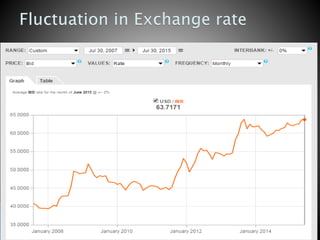
It may fluctuate daily.
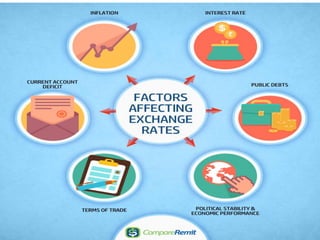
 A country with a lower inflation rate than
another's will see an appreciation in the value
of its currency.
 higher inflation typically sees depreciation
and is usually accompanied by higher interest
rates
 Increases in interest rates cause a country's
currency to appreciate
 Higher interest rates provide higher rates to
lenders, Attracting more foreign capital,
which causes a rise in exchange rates
 Forex rates, interest rates, and inflation are
all correlated.
 Balance of trade and earnings on foreign
investment.
 Total number of transactions including its
exports, imports, debt, etc.
 Spending more on importing products than it
sale of exports causes depreciation.
 Public debt or national debt owned by the
central government.
 A country with government debt is less likely
to acquire foreign capital, leading to inflation.
 Foreign investors will sell their bonds in the
open market
 As a result, a decrease in the value of its
exchange rate will follow.
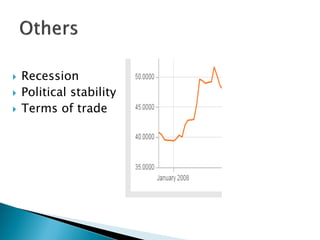
 Recession
 Political stability
 Terms of trade
 Weighted average of Time series model,
Regression mode, sensitivity analysis, spot rates,
forward rates.
 Demand & Supply
Demand of the currency increase – Appreciate currency
& vice versa
 FIIs Demand increase.
 Greece Insolvency Uncertainty in market
 Make in India Demand increases
 Gold, Crude oil (investment)
CA Abhinav Jain

Exchange Rate Fluctuation

  • 1.
  • 2.
     Value ofone country’s currency in terms of other currency. e.g. 1$ = 63.71 INR It may fluctuate daily.
  • 5.
     A countrywith a lower inflation rate than another's will see an appreciation in the value of its currency.  higher inflation typically sees depreciation and is usually accompanied by higher interest rates
  • 6.
     Increases ininterest rates cause a country's currency to appreciate  Higher interest rates provide higher rates to lenders, Attracting more foreign capital, which causes a rise in exchange rates  Forex rates, interest rates, and inflation are all correlated.
  • 7.
     Balance oftrade and earnings on foreign investment.  Total number of transactions including its exports, imports, debt, etc.  Spending more on importing products than it sale of exports causes depreciation.
  • 8.
     Public debtor national debt owned by the central government.  A country with government debt is less likely to acquire foreign capital, leading to inflation.  Foreign investors will sell their bonds in the open market  As a result, a decrease in the value of its exchange rate will follow.
  • 9.
     Recession  Politicalstability  Terms of trade
  • 11.
     Weighted averageof Time series model, Regression mode, sensitivity analysis, spot rates, forward rates.  Demand & Supply Demand of the currency increase – Appreciate currency & vice versa
  • 12.
     FIIs Demandincrease.  Greece Insolvency Uncertainty in market  Make in India Demand increases  Gold, Crude oil (investment)
  • 13.