Data Blending for critical
business decisions
ITEM, Kyiv, Mar 2018
About Me
● Yevgen Tsvetukhin
● Product manager in IT Consultancy company Railsware.
● Managing IT projects for 10+ years with businesses(mostly startups) from USA
and EU using latest best practices Agile, Scrum, Kanban, Lean Startup.
● Also taking part in managing company, Operations, HR, Finances.
● Product manager of mailtrap.io
Railsware Products
● mailtrap.io - fake smtp server that isolates emails from your
dev, qa, staging envs, from real production customers.
● Smart Checklist for Jira - Create Acceptance Criteria and
Definition of Done Jira checklists. Add other ToDo lists from
issue view or using Markdown editor
● +3 other products in MVP stage
● +3 products in Proof of concept stage
What is Data Blending?
The simplest:
Join data from different data sets
+ Transform
+ Map&Reduce
Ideally:
+ Real-time
+ Fully automated
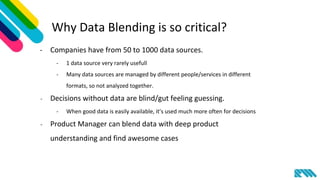
Why Data Blending is so critical?
- Companies have from 50 to 1000 data sources.
- 1 data source very rarely usefull
- Many data sources are managed by different people/services in different
formats, so not analyzed together.
- Decisions without data are blind/gut feeling guessing.
- When good data is easily available, it’s used much more often for decisions
- Product Manager can blend data with deep product
understanding and find awesome cases
What skills are needed?
- Google Spreadsheets (MS Excel) formulas
- Start with basic, but go to advanced level
- Understanding of databases
- Simple SQL like join, group by
- Write scripts to auto-upload external data regularly
- Can be delegated as simple task to engineer
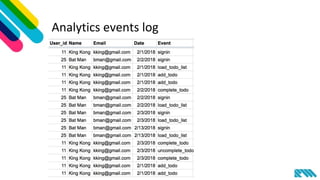
Super simple example of Data Blending
Analytics events log
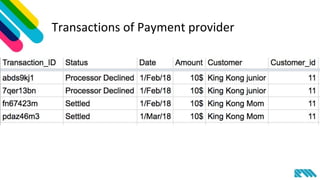
Transactions of Payment provider
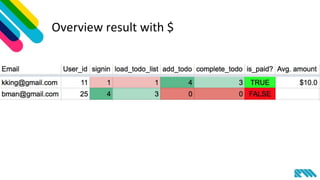
Overview result with $
Real example of Data Blending
(partial data)
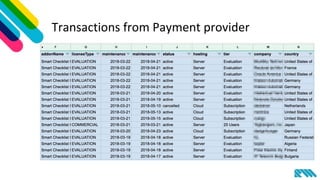
Transactions from Payment provider
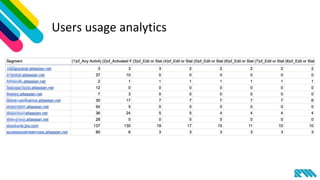
Users usage analytics
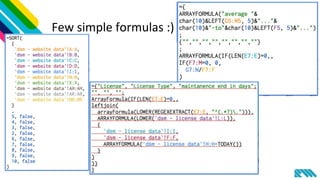
Few simple formulas :)
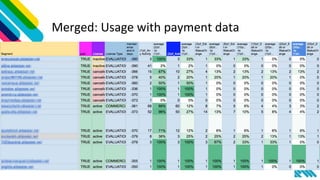
Merged: Usage with payment data
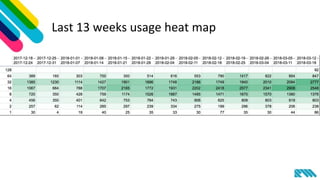
Last 13 weeks usage heat map
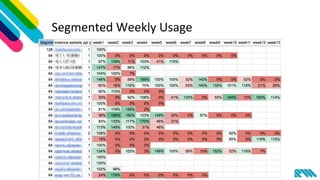
Segmented Weekly Usage
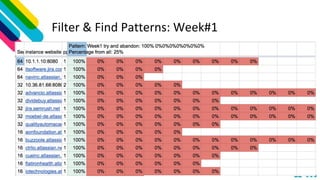
Filter & Find Patterns: Week#1
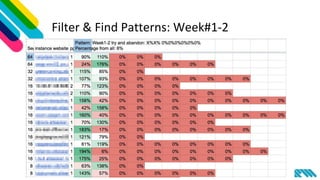
Filter & Find Patterns: Week#1-2
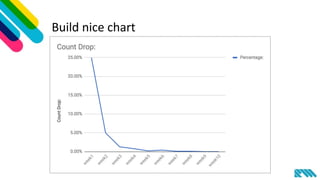
Build nice chart
Key decisions & findings
- Week#1 has most drop-offs by 1-2 people testing
- 3+ people testing drop-off very rarely
- Focus customers teaching & emails on Week#1
- Most of cancellations didn’t pass 8 actions/week
- Product is growing usage wise :)
Thank you!
Questions?

Evgeniy Tsvetukhin ITEM 2018

  • 1.
    Data Blending forcritical business decisions ITEM, Kyiv, Mar 2018
  • 2.
    About Me ● YevgenTsvetukhin ● Product manager in IT Consultancy company Railsware. ● Managing IT projects for 10+ years with businesses(mostly startups) from USA and EU using latest best practices Agile, Scrum, Kanban, Lean Startup. ● Also taking part in managing company, Operations, HR, Finances. ● Product manager of mailtrap.io
  • 3.
    Railsware Products ● mailtrap.io- fake smtp server that isolates emails from your dev, qa, staging envs, from real production customers. ● Smart Checklist for Jira - Create Acceptance Criteria and Definition of Done Jira checklists. Add other ToDo lists from issue view or using Markdown editor ● +3 other products in MVP stage ● +3 products in Proof of concept stage
  • 4.
    What is DataBlending? The simplest: Join data from different data sets + Transform + Map&Reduce Ideally: + Real-time + Fully automated
  • 5.
    Why Data Blendingis so critical? - Companies have from 50 to 1000 data sources. - 1 data source very rarely usefull - Many data sources are managed by different people/services in different formats, so not analyzed together. - Decisions without data are blind/gut feeling guessing. - When good data is easily available, it’s used much more often for decisions - Product Manager can blend data with deep product understanding and find awesome cases
  • 6.
    What skills areneeded? - Google Spreadsheets (MS Excel) formulas - Start with basic, but go to advanced level - Understanding of databases - Simple SQL like join, group by - Write scripts to auto-upload external data regularly - Can be delegated as simple task to engineer
  • 7.
    Super simple exampleof Data Blending
  • 8.
  • 9.
  • 10.
  • 11.
    Real example ofData Blending (partial data)
  • 12.
  • 13.
  • 14.
  • 15.
    Merged: Usage withpayment data
  • 16.
    Last 13 weeksusage heat map
  • 17.
  • 18.
    Filter & FindPatterns: Week#1
  • 19.
    Filter & FindPatterns: Week#1-2
  • 20.
  • 21.
    Key decisions &findings - Week#1 has most drop-offs by 1-2 people testing - 3+ people testing drop-off very rarely - Focus customers teaching & emails on Week#1 - Most of cancellations didn’t pass 8 actions/week - Product is growing usage wise :)
  • 22.