



GLOBAL PROBLEM
INDIAN SOLUTION
BIOPLASTIC TECHNOLOGY
MASTER BATCH
Add 5% Master Batch to your all HDPE Films and make it 100%
BIODEGRADABLE
BIOPLAST BIODEGRADABLE PLASTICS
A SINCERE EFFORT TOWARDS
ELIMINATING THE PLASTIC WASTE
LET US MAKE EARTH A
BETTER PLACE TO LIVE FOR ALL
IMPACT OF PLASTIC WASTE ON OUR ENVIRONMENT
The disposal of plastics products also contributes
significantly to their environmental impact. Because
most plastics are non-degradable, they take a long time
to break down, often several hundred years, when they
are land-filled. With more and more plastics products,
particularly plastics packaging, being disposed of soon
after their purchase, the landfill space required by
plastics waste is a growing concern.
The world's annual consumption of plastic materials has
increased from around 5 million tones in the 1950s to nearly 100
million tones today.
The amount of plastic waste generated annually in the UK is
estimated to be nearly 3 million tones. An estimated 56% of all
plastics waste is used packaging, three-quarters of which are
collected from households. It is estimated that only 7% of total
plastic waste arising are currently being recycled.
Plastics consumption is growing by about 4% every year in
western Europe.
PLASTIC WASTE
RECYCLING IS NOT ALWAYS THE ANSWER…
THE ANSWER IS … BIODEGRADABLE BAGS!
Recycling can be an excellent way of handling waste - but not always. Some reasons:
• Recycling does not occur until somebody actually uses the material.
• Health concerns raise problems with using post-consumer recycled material for food.
• Consistent and reliable supply of the recovered material may pose problems.
• Recycled material is often more costly to produce in terms of carbon footprint. The
recycled product has to be broken down by machines, transported away and then re-
machined all of which takes up a lot of energy/ carbon footprint.
BIODEGRADABLE TECHNOLOGY
Biodegradation is the transformation and deterioration of
polymers solely by living organisms (including the micro
organisms excreted by them ). Due to active enzymatic
reaction over the molecular structure of polyethylene.
Biodegradable plastics undergoes biodegradation by
biological processes during composting to yield carbon
dioxide (Co2), water, inorganic compounds and biomass
at a rate consistent with other compost able materials
(like cellulose, wood, paper ) and leaves no visible,
distinguishable or toxic residue.
BIODEGRADABLE TECHNOLOGY WITH ENZYME & BACTERIA
ENZYME WITH POLYETHYLENE
Enzymes used in this product are regarded a catalysts, helping to change the chemical
reaction of polyethylene accelerating the process of degradation. Autotrophic bacteria
present in mineral salts mediums containing some form of nitrogen-energy supplying
material are also used in this technology. Carbon is obtained from the added oxidation
agents in this product. The PH values of this composition blended with polyethylene is 9.5
confirming its non-acidity characteristics. All the ingredients of our plastic products are food
grade and non-toxic in nature.
COMPOSTING OF POLYETHYLENE
It is observed that soil contains at least 58% Carbon. The greater part of the Nitrogen
content of the soil is closely linked to organic matter. As the organic soil matter gradually
decomposes the nitrogen is converted into water or available forms of ammonia and
nitrates. This moist soil reacts with the biodegradable polyethylene film making it
susceptible to composting and the release of CO2. The enzymatic treatment is used at 4-6%
dosage for Polyethylene (90% HDPE, 10% LLDE). The use of this product makes Polyethylene
(HDPE LLDE) 100% Biodegradable. The cost of this process is extremely competitive as
compared to any other technology prevalent in the world today.
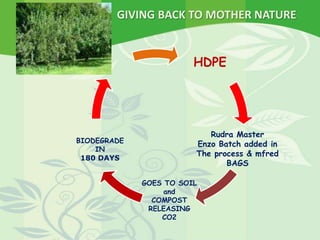
HDPE
Rudra Master
Enzo Batch added in
The process & mfred
BAGS
GOES TO SOIL
and
COMPOST
RELEASING
CO2
BIODEGRADE
IN
180 DAYS
GIVING BACK TO MOTHER NATURE
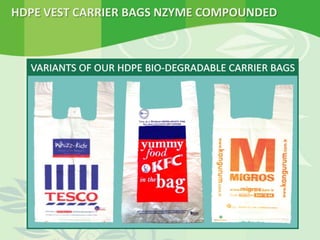
HDPE VEST CARRIER BAGS NZYME COMPOUNDED
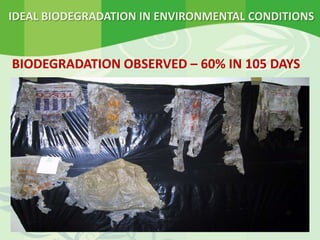
IDEAL BIODEGRADATION IN ENVIRONMENTAL CONDITIONS
BIODEGRADATION OBSERVED – 60% IN 105 DAYS
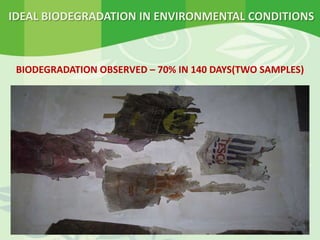
IDEAL BIODEGRADATION IN ENVIRONMENTAL CONDITIONS
BIODEGRADATION OBSERVED – 70% IN 140 DAYS(TWO SAMPLES)
PRODUCTS RECOMMENDED WITH ENZYME TECHNOLOGY FOR A CLEAN
ENVIRONMENT WITH VERY LESS COST ADDITION A MEANINGFUL APPROACH
VEST CARRIER BAGS IN THICKNESS FROM 7 TO 50 MICRONS
VEGETABLE BAGS
PRODUCE BAGS-ON-ROLLS
FRIDGE BAGS
DOMESTIC GARBAGE BAGS
COMMERCIAL GARBAGE BAGS
INDUSTRIAL LINERS
HOSPITAL WASTE GARBAGE BAGS
THIS ABOVE ALONE CONSTITUTES MORE THAN 50% OF THE
MUNCIPAL WASTE WHICH IS DISPOSED CARELESSLY BY ALL OF US.
BIODEGRADATION WITH BACTERIA
THE DEFINITION OF BIODEGRADABLE PLASTICS STATES THAT A DEGRADABLE PLASTIC IN WHICH
THE DEGRADATION RESULTS FROM THE ACTION OF NATURALLY OCCURRING
MICROORGANISMS SUCH AS BACTERIA, FUNGI AND ALGAE. AND OUR PRODUCTS HAVE BEEN
TESTED FOR ENUMERATION OF FUNGAL AND BACTERIAL COUNTS AT <10 CFU/GM OF
POLYETHYLENE FOR FUNGAL COUNTS AND 25 CFU/GM OF POLYETHYLENE FOR BACTERIA
COUNTS.
IT HAS ALSO BEEN FOUND THAT THE BACTERIAL COUNTS HAVE MULTIFOLD IN THE SOIL WITH
OUR BIODEGRADABLE BAGS. AS PER TEST REPORTS THE SIGNIFICANT INCREASE IN BACTERIAL
COUNTS AND WITH THE PRESENCE OF APPRECIABLE NO. OF SPECIES OF ALCALIGENES AND
PSEUDOMONAS INDICATE THE PROBABLE BIODEGRADATION OF POLYETHYLENE FILM TAKING
PLACE IN THE SOIL WHICH OTHERWISE WOULD NOT HAVE BEEN POSSIBLE IN A NORMAL SOIL.
THE METHOD OF TESTING WAS AS PER SOIL CHEMICAL ANALYSIS BY MR. M L JACKSON AND IS
5402 (AS CERTIFIED BY VIMTA LABS, INDIA) CFU/GM – COLONIEL FORMING UNITS OF BACTERIA
PER GRAM OF POLYETHYLENE.
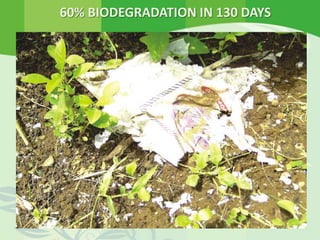
60% BIODEGRADATION IN 130 DAYS
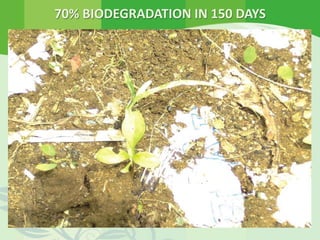
70% BIODEGRADATION IN 150 DAYS
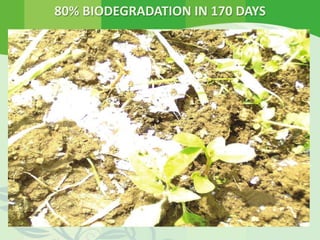
80% BIODEGRADATION IN 170 DAYS
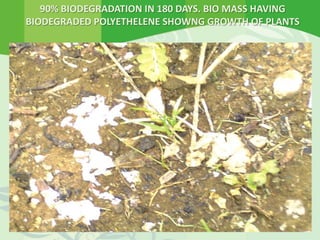
90% BIODEGRADATION IN 180 DAYS. BIO MASS HAVING
BIODEGRADED POLYETHELENE SHOWNG GROWTH OF PLANTS
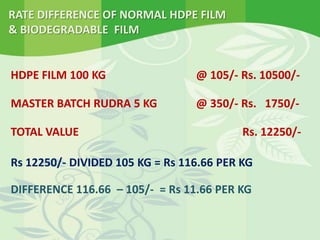
RATE DIFFERENCE OF NORMAL HDPE FILM
& BIODEGRADABLE FILM
HDPE FILM 100 KG @ 105/- Rs. 10500/-
MASTER BATCH RUDRA 5 KG @ 350/- Rs. 1750/-
TOTAL VALUE Rs. 12250/-
Rs 12250/- DIVIDED 105 KG = Rs 116.66 PER KG
DIFFERENCE 116.66 – 105/- = Rs 11.66 PER KG
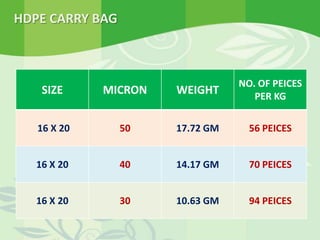
HDPE CARRY BAG
SIZE MICRON WEIGHT
NO. OF PEICES
PER KG
16 X 20 50 17.72 GM 56 PEICES
16 X 20 40 14.17 GM 70 PEICES
16 X 20 30 10.63 GM 94 PEICES
Tested & Certified By
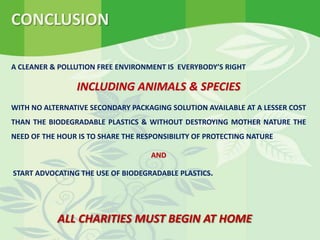
A CLEANER & POLLUTION FREE ENVIRONMENT IS EVERYBODY’S RIGHT
INCLUDING ANIMALS & SPECIES
WITH NO ALTERNATIVE SECONDARY PACKAGING SOLUTION AVAILABLE AT A LESSER COST
THAN THE BIODEGRADABLE PLASTICS & WITHOUT DESTROYING MOTHER NATURE THE
NEED OF THE HOUR IS TO SHARE THE RESPONSIBILITY OF PROTECTING NATURE
AND
START ADVOCATING THE USE OF BIODEGRADABLE PLASTICS.
CONCLUSION
ALL CHARITIES MUST BEGIN AT HOME
PRIDE OF INDIA

Evergreen bio degradable Pvt Ltd

  • 1.
  • 2.
    MASTER BATCH Add 5%Master Batch to your all HDPE Films and make it 100% BIODEGRADABLE
  • 3.
    BIOPLAST BIODEGRADABLE PLASTICS ASINCERE EFFORT TOWARDS ELIMINATING THE PLASTIC WASTE LET US MAKE EARTH A BETTER PLACE TO LIVE FOR ALL
  • 4.
    IMPACT OF PLASTICWASTE ON OUR ENVIRONMENT The disposal of plastics products also contributes significantly to their environmental impact. Because most plastics are non-degradable, they take a long time to break down, often several hundred years, when they are land-filled. With more and more plastics products, particularly plastics packaging, being disposed of soon after their purchase, the landfill space required by plastics waste is a growing concern.
  • 5.
    The world's annualconsumption of plastic materials has increased from around 5 million tones in the 1950s to nearly 100 million tones today. The amount of plastic waste generated annually in the UK is estimated to be nearly 3 million tones. An estimated 56% of all plastics waste is used packaging, three-quarters of which are collected from households. It is estimated that only 7% of total plastic waste arising are currently being recycled. Plastics consumption is growing by about 4% every year in western Europe. PLASTIC WASTE
  • 6.
    RECYCLING IS NOTALWAYS THE ANSWER… THE ANSWER IS … BIODEGRADABLE BAGS! Recycling can be an excellent way of handling waste - but not always. Some reasons: • Recycling does not occur until somebody actually uses the material. • Health concerns raise problems with using post-consumer recycled material for food. • Consistent and reliable supply of the recovered material may pose problems. • Recycled material is often more costly to produce in terms of carbon footprint. The recycled product has to be broken down by machines, transported away and then re- machined all of which takes up a lot of energy/ carbon footprint.
  • 7.
    BIODEGRADABLE TECHNOLOGY Biodegradation isthe transformation and deterioration of polymers solely by living organisms (including the micro organisms excreted by them ). Due to active enzymatic reaction over the molecular structure of polyethylene. Biodegradable plastics undergoes biodegradation by biological processes during composting to yield carbon dioxide (Co2), water, inorganic compounds and biomass at a rate consistent with other compost able materials (like cellulose, wood, paper ) and leaves no visible, distinguishable or toxic residue.
  • 8.
    BIODEGRADABLE TECHNOLOGY WITHENZYME & BACTERIA ENZYME WITH POLYETHYLENE Enzymes used in this product are regarded a catalysts, helping to change the chemical reaction of polyethylene accelerating the process of degradation. Autotrophic bacteria present in mineral salts mediums containing some form of nitrogen-energy supplying material are also used in this technology. Carbon is obtained from the added oxidation agents in this product. The PH values of this composition blended with polyethylene is 9.5 confirming its non-acidity characteristics. All the ingredients of our plastic products are food grade and non-toxic in nature. COMPOSTING OF POLYETHYLENE It is observed that soil contains at least 58% Carbon. The greater part of the Nitrogen content of the soil is closely linked to organic matter. As the organic soil matter gradually decomposes the nitrogen is converted into water or available forms of ammonia and nitrates. This moist soil reacts with the biodegradable polyethylene film making it susceptible to composting and the release of CO2. The enzymatic treatment is used at 4-6% dosage for Polyethylene (90% HDPE, 10% LLDE). The use of this product makes Polyethylene (HDPE LLDE) 100% Biodegradable. The cost of this process is extremely competitive as compared to any other technology prevalent in the world today.
  • 9.
    HDPE Rudra Master Enzo Batchadded in The process & mfred BAGS GOES TO SOIL and COMPOST RELEASING CO2 BIODEGRADE IN 180 DAYS GIVING BACK TO MOTHER NATURE
  • 10.
    HDPE VEST CARRIERBAGS NZYME COMPOUNDED
  • 11.
    IDEAL BIODEGRADATION INENVIRONMENTAL CONDITIONS BIODEGRADATION OBSERVED – 60% IN 105 DAYS
  • 12.
    IDEAL BIODEGRADATION INENVIRONMENTAL CONDITIONS BIODEGRADATION OBSERVED – 70% IN 140 DAYS(TWO SAMPLES)
  • 13.
    PRODUCTS RECOMMENDED WITHENZYME TECHNOLOGY FOR A CLEAN ENVIRONMENT WITH VERY LESS COST ADDITION A MEANINGFUL APPROACH VEST CARRIER BAGS IN THICKNESS FROM 7 TO 50 MICRONS VEGETABLE BAGS PRODUCE BAGS-ON-ROLLS FRIDGE BAGS DOMESTIC GARBAGE BAGS COMMERCIAL GARBAGE BAGS INDUSTRIAL LINERS HOSPITAL WASTE GARBAGE BAGS THIS ABOVE ALONE CONSTITUTES MORE THAN 50% OF THE MUNCIPAL WASTE WHICH IS DISPOSED CARELESSLY BY ALL OF US.
  • 14.
    BIODEGRADATION WITH BACTERIA THEDEFINITION OF BIODEGRADABLE PLASTICS STATES THAT A DEGRADABLE PLASTIC IN WHICH THE DEGRADATION RESULTS FROM THE ACTION OF NATURALLY OCCURRING MICROORGANISMS SUCH AS BACTERIA, FUNGI AND ALGAE. AND OUR PRODUCTS HAVE BEEN TESTED FOR ENUMERATION OF FUNGAL AND BACTERIAL COUNTS AT <10 CFU/GM OF POLYETHYLENE FOR FUNGAL COUNTS AND 25 CFU/GM OF POLYETHYLENE FOR BACTERIA COUNTS. IT HAS ALSO BEEN FOUND THAT THE BACTERIAL COUNTS HAVE MULTIFOLD IN THE SOIL WITH OUR BIODEGRADABLE BAGS. AS PER TEST REPORTS THE SIGNIFICANT INCREASE IN BACTERIAL COUNTS AND WITH THE PRESENCE OF APPRECIABLE NO. OF SPECIES OF ALCALIGENES AND PSEUDOMONAS INDICATE THE PROBABLE BIODEGRADATION OF POLYETHYLENE FILM TAKING PLACE IN THE SOIL WHICH OTHERWISE WOULD NOT HAVE BEEN POSSIBLE IN A NORMAL SOIL. THE METHOD OF TESTING WAS AS PER SOIL CHEMICAL ANALYSIS BY MR. M L JACKSON AND IS 5402 (AS CERTIFIED BY VIMTA LABS, INDIA) CFU/GM – COLONIEL FORMING UNITS OF BACTERIA PER GRAM OF POLYETHYLENE.
  • 15.
  • 16.
  • 17.
  • 18.
    90% BIODEGRADATION IN180 DAYS. BIO MASS HAVING BIODEGRADED POLYETHELENE SHOWNG GROWTH OF PLANTS
  • 19.
    RATE DIFFERENCE OFNORMAL HDPE FILM & BIODEGRADABLE FILM HDPE FILM 100 KG @ 105/- Rs. 10500/- MASTER BATCH RUDRA 5 KG @ 350/- Rs. 1750/- TOTAL VALUE Rs. 12250/- Rs 12250/- DIVIDED 105 KG = Rs 116.66 PER KG DIFFERENCE 116.66 – 105/- = Rs 11.66 PER KG
  • 20.
    HDPE CARRY BAG SIZEMICRON WEIGHT NO. OF PEICES PER KG 16 X 20 50 17.72 GM 56 PEICES 16 X 20 40 14.17 GM 70 PEICES 16 X 20 30 10.63 GM 94 PEICES
  • 21.
  • 22.
    A CLEANER &POLLUTION FREE ENVIRONMENT IS EVERYBODY’S RIGHT INCLUDING ANIMALS & SPECIES WITH NO ALTERNATIVE SECONDARY PACKAGING SOLUTION AVAILABLE AT A LESSER COST THAN THE BIODEGRADABLE PLASTICS & WITHOUT DESTROYING MOTHER NATURE THE NEED OF THE HOUR IS TO SHARE THE RESPONSIBILITY OF PROTECTING NATURE AND START ADVOCATING THE USE OF BIODEGRADABLE PLASTICS. CONCLUSION ALL CHARITIES MUST BEGIN AT HOME
  • 23.