Reshma Chitroda


 How effective is the combination of your main product
                   and ancillary tasks?
For our double page spread and radio trailer we had to make sure they both
advertised our documentary to our target audience and needed them to relate to
each other to avoid confusion.

TARGET AUDIENCE
The target audience we had in mind was for those students, who were thinking
of attending university, currently at university or those who have already
experience university and are interested in the change maybe for their children.
We aimed our documentary about university fees to people ages 16 and over and
also aiming it at a social “B” class and below ad the rise in university fees would
effect them the most. The reason we have this target audience in particular is
because the audience will be able to relate to it and also helps to how university
is changing therefore graduates or people in full time work are able to
understand this damaging change. To help engage the viewer fully we will try
and maximize the informative nature of the documentary whilst also aiming to
entertain.

RADIO TRAILER
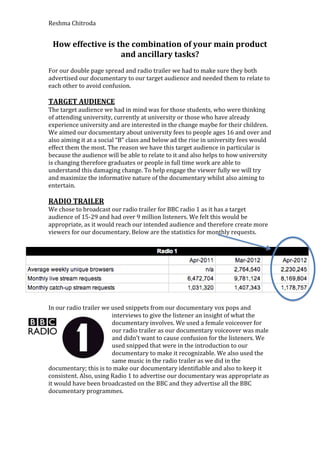
We chose to broadcast our radio trailer for BBC radio 1 as it has a target
audience of 15-29 and had over 9 million listeners. We felt this would be
appropriate, as it would reach our intended audience and therefore create more
viewers for our documentary. Below are the statistics for monthly requests.


In our radio trailer we used snippets from our documentary vox pops and
                        interviews to give the listener an insight of what the
                        documentary involves. We used a female voiceover for
                        our radio trailer as our documentary voiceover was male
                        and didn’t want to cause confusion for the listeners. We
                        used snipped that were in the introduction to our
                        documentary to make it recognizable. We also used the
                        same music in the radio trailer as we did in the
documentary; this is to make our documentary identifiable and also to keep it
consistent. Also, using Radio 1 to advertise our documentary was appropriate as
it would have been broadcasted on the BBC and they advertise all the BBC
documentary programmes.
Reshma Chitroda


  Magazine Double Page Spread

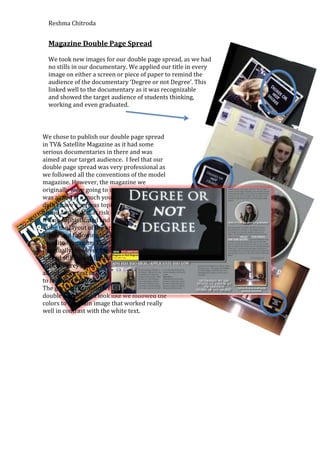
  We took new images for our double page spread, as we had
  no stills in our documentary. We applied our title in every
  image on either a screen or piece of paper to remind the
  audience of the documentary ‘Degree or not Degree’. This
  linked well to the documentary as it was recognizable
  and showed the target audience of students thinking,
  working and even graduated.


We chose to publish our double page spread
in TV& Satellite Magazine as it had some
serious documentaries in there and was
aimed at our target audience. I feel that our
double page spread was very professional as
we followed all the conventions of the model
magazine. However, the magazine we
originally were going to use as a template,
was aimed at a much younger audience and
didn’t have a serious topic, but we still went
ahead and took that risk and decided to make
it look sophisticated and unique ourselves by
using the layout of the article from Radio
Times and following the conventions for TV&
Satellite magazine. This worked out
eventually, however I feel the double page
spread still looks slightly empty at the sides
with the grey space so I feel we should have
added more text in or changed the font for it
to look more full.
The grey background we chose made the
double page spread look like we followed the
colors to the main image that worked really
well in contrast with the white text.

Evaluation question 2

  • 1.
    Reshma Chitroda Howeffective is the combination of your main product and ancillary tasks? For our double page spread and radio trailer we had to make sure they both advertised our documentary to our target audience and needed them to relate to each other to avoid confusion. TARGET AUDIENCE The target audience we had in mind was for those students, who were thinking of attending university, currently at university or those who have already experience university and are interested in the change maybe for their children. We aimed our documentary about university fees to people ages 16 and over and also aiming it at a social “B” class and below ad the rise in university fees would effect them the most. The reason we have this target audience in particular is because the audience will be able to relate to it and also helps to how university is changing therefore graduates or people in full time work are able to understand this damaging change. To help engage the viewer fully we will try and maximize the informative nature of the documentary whilst also aiming to entertain. RADIO TRAILER We chose to broadcast our radio trailer for BBC radio 1 as it has a target audience of 15-29 and had over 9 million listeners. We felt this would be appropriate, as it would reach our intended audience and therefore create more viewers for our documentary. Below are the statistics for monthly requests. In our radio trailer we used snippets from our documentary vox pops and interviews to give the listener an insight of what the documentary involves. We used a female voiceover for our radio trailer as our documentary voiceover was male and didn’t want to cause confusion for the listeners. We used snipped that were in the introduction to our documentary to make it recognizable. We also used the same music in the radio trailer as we did in the documentary; this is to make our documentary identifiable and also to keep it consistent. Also, using Radio 1 to advertise our documentary was appropriate as it would have been broadcasted on the BBC and they advertise all the BBC documentary programmes.
  • 2.
    Reshma Chitroda Magazine Double Page Spread We took new images for our double page spread, as we had no stills in our documentary. We applied our title in every image on either a screen or piece of paper to remind the audience of the documentary ‘Degree or not Degree’. This linked well to the documentary as it was recognizable and showed the target audience of students thinking, working and even graduated. We chose to publish our double page spread in TV& Satellite Magazine as it had some serious documentaries in there and was aimed at our target audience. I feel that our double page spread was very professional as we followed all the conventions of the model magazine. However, the magazine we originally were going to use as a template, was aimed at a much younger audience and didn’t have a serious topic, but we still went ahead and took that risk and decided to make it look sophisticated and unique ourselves by using the layout of the article from Radio Times and following the conventions for TV& Satellite magazine. This worked out eventually, however I feel the double page spread still looks slightly empty at the sides with the grey space so I feel we should have added more text in or changed the font for it to look more full. The grey background we chose made the double page spread look like we followed the colors to the main image that worked really well in contrast with the white text.