Evaluation Question 1 – In what way does your media product use, develop or
    challenge forms and conventions of a real media product? (Front page)


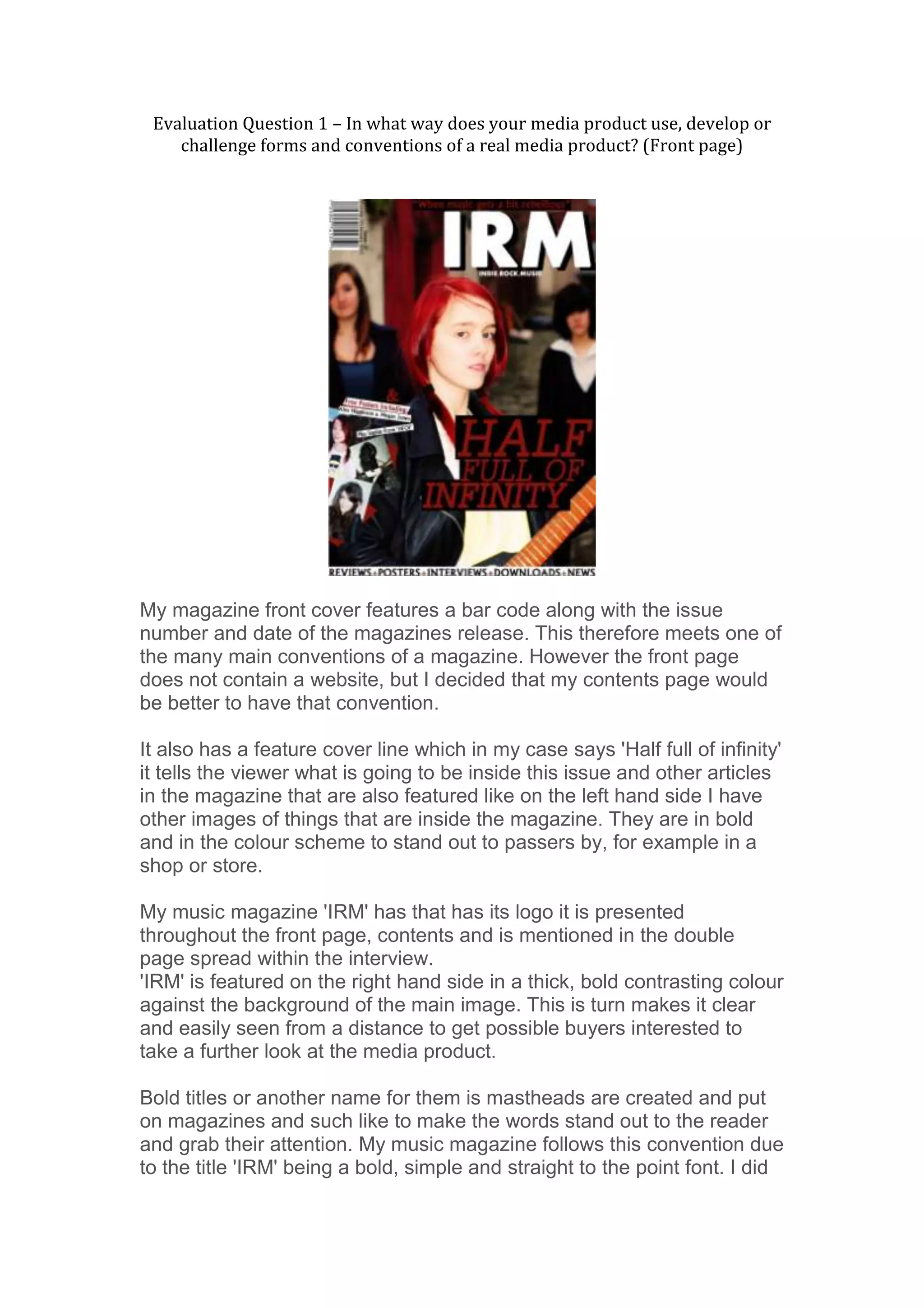
My magazine front cover features a bar code along with the issue
number and date of the magazines release. This therefore meets one of
the many main conventions of a magazine. However the front page
does not contain a website, but I decided that my contents page would
be better to have that convention.

It also has a feature cover line which in my case says 'Half full of infinity'
it tells the viewer what is going to be inside this issue and other articles
in the magazine that are also featured like on the left hand side I have
other images of things that are inside the magazine. They are in bold
and in the colour scheme to stand out to passers by, for example in a
shop or store.

My music magazine 'IRM' has that has its logo it is presented
throughout the front page, contents and is mentioned in the double
page spread within the interview.
'IRM' is featured on the right hand side in a thick, bold contrasting colour
against the background of the main image. This is turn makes it clear
and easily seen from a distance to get possible buyers interested to
take a further look at the media product.

Bold titles or another name for them is mastheads are created and put
on magazines and such like to make the words stand out to the reader
and grab their attention. My music magazine follows this convention due
to the title 'IRM' being a bold, simple and straight to the point font. I did
this to compliment my style model, which is NME. I liked the three letter
bold look. I created a three-dimensional look on photoshop by
duplicating the layer and making it black then moving it slightly
underneath to create the 3D look.

My magazine consists of a main image that has not had the background
cut out as I thought it added needed mis en scene. It is eye catching
due to the guitar and the models clothing. It is obvious straightaway that
it is a rock/music magazine. I used my nikon D40 camera with my
50mm lens. I used that particular lens to add depth of field onto the
image as 50mm allows you to choose where the main focus point of the
photograph will be. So I made sure the only person in total focus was
'Sophie' the front member of the band and all the others where out of
focus but still able to be seen by the reader.

  I made a strict colour scheme that is shown through all of my media
     products. I used maroon, brown and blacks. I did this to add a
                   professional edge to the magazine.

                           (contents page)
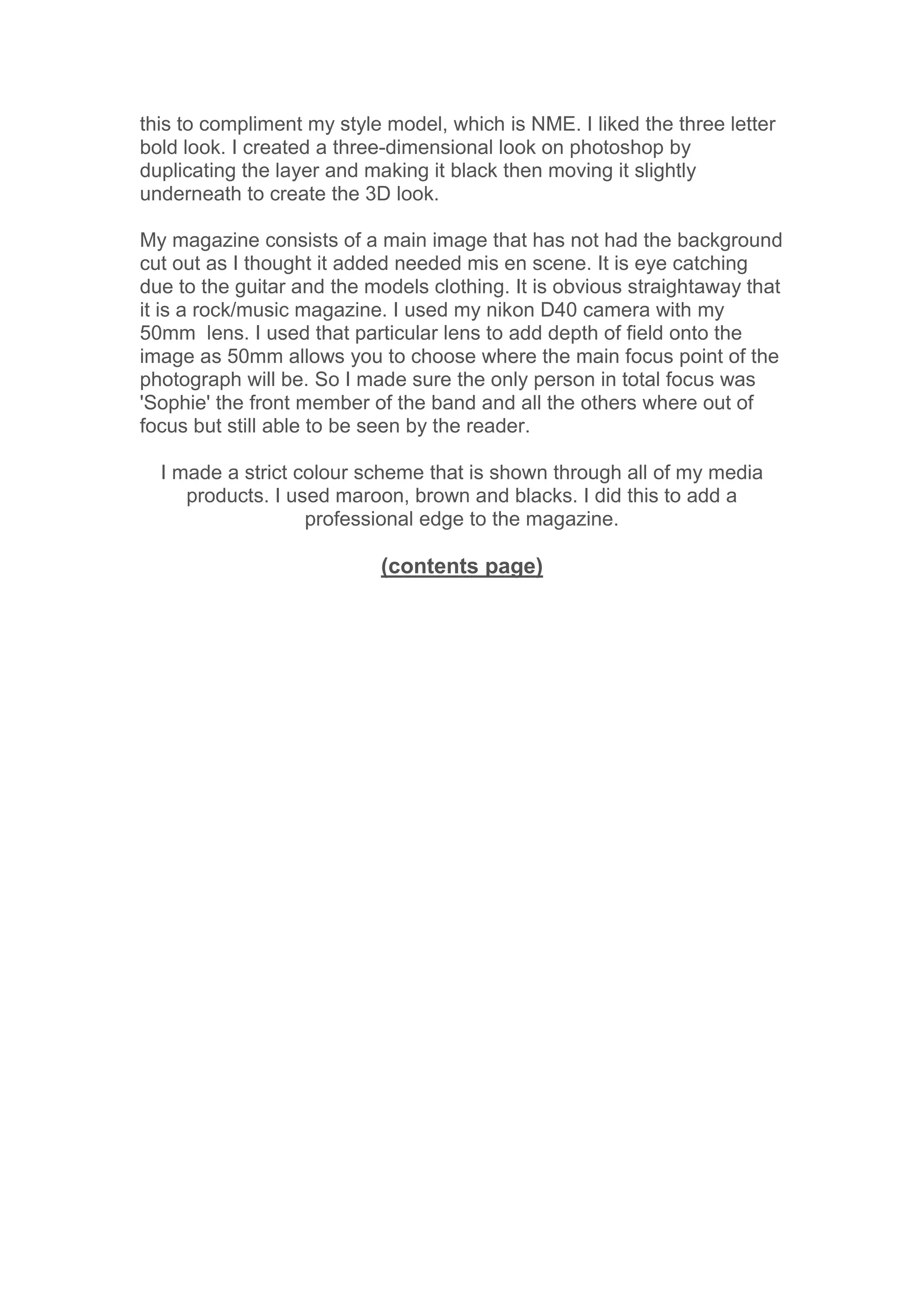
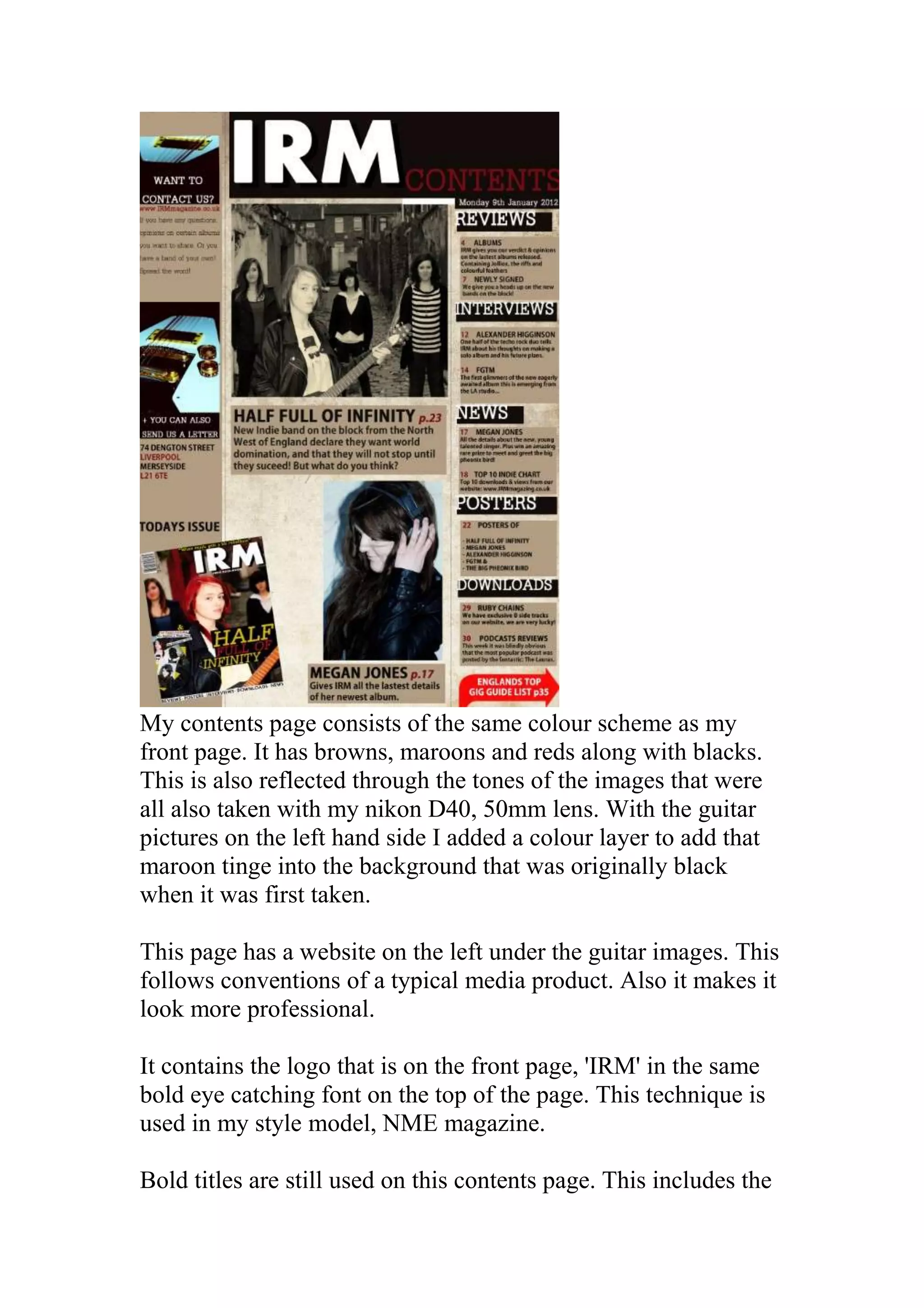
My contents page consists of the same colour scheme as my
front page. It has browns, maroons and reds along with blacks.
This is also reflected through the tones of the images that were
all also taken with my nikon D40, 50mm lens. With the guitar
pictures on the left hand side I added a colour layer to add that
maroon tinge into the background that was originally black
when it was first taken.

This page has a website on the left under the guitar images. This
follows conventions of a typical media product. Also it makes it
look more professional.

It contains the logo that is on the front page, 'IRM' in the same
bold eye catching font on the top of the page. This technique is
used in my style model, NME magazine.

Bold titles are still used on this contents page. This includes the
sub-heading of 'Half full of infinity' under the main image of the
contents page. This is so it stands out as it is the main article in
the issue.

The convention of the way it is set out is very accurate to my
style model issue I have picked. It has all the contents of the
issue on the right hand side. Although I did my own slant on the
NME style as the guitar images on the left and the whole left
column isn't on my style model.

 Another convention that is often used in contents pages' is the
 issue image on the page. Mine is on the bottom left hand side.
   Along with an image of another article that is in the issue.


                           (Double page)


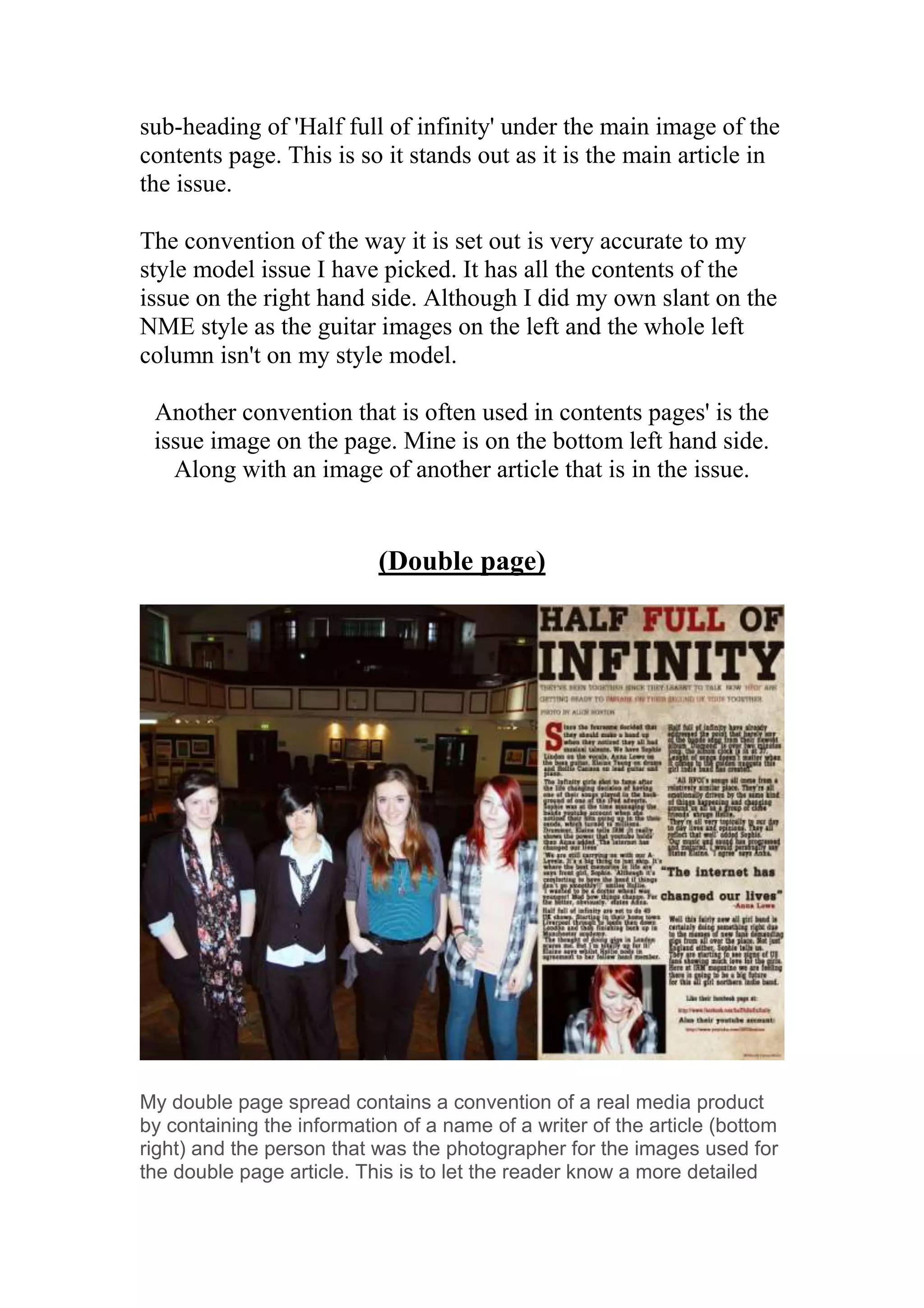
My double page spread contains a convention of a real media product
by containing the information of a name of a writer of the article (bottom
right) and the person that was the photographer for the images used for
the double page article. This is to let the reader know a more detailed
insight to the people behind the magazine, if they are interested and
want to do more research into the magazines' background.

The images I have used carry on the same look as the other images in
the magazine. For example the tones when I edited them in photoshop.
I have a browny/redy tone and tinge to the finished photograph. These
pictures on the double page are yet again taken with my nikon D40 and
50mm lens. So I could created depth of field and decide where the main
crisp focus would be placed. I also made sure the school hall was a
main focal point in the image as the band members are still within
school ages and school is mentioned in the interview.

 Another convention I met is that it contains a main, bold masthead that
states the name of the band getting interviewed. It also contains sub-
headings that gives the reader more instant information about the band
in the article.

Conventions of colour schemes is met throughout my magazine
product. As the same colours are still used in my double page article. In
addition to this the same background texture was used in this double
page spread as my contents page. i did this because my style model
had a nice, yet subtle texture in the background. I personally think it is
better than having a blank background.

I decided to have my main image to go over the half waypoint of the
double page spread due to my style model having this feature and I
thought it looked different to other music magazines.

Within the interview 'IRM' is used in bold capitals, this is the logo.
Although it isn't straightforward to notice straight away it is within the
text of the interview. To carry on the knowledge it is 'IRM' magazine that
the person is reading, exclusive to that magazine brand. I also decided
to have it within the text because my style model, 'NME' has this
feature. There it is a convention that my media product has.

Evaluation question 1

  • 1.
    Evaluation Question 1– In what way does your media product use, develop or challenge forms and conventions of a real media product? (Front page) My magazine front cover features a bar code along with the issue number and date of the magazines release. This therefore meets one of the many main conventions of a magazine. However the front page does not contain a website, but I decided that my contents page would be better to have that convention. It also has a feature cover line which in my case says 'Half full of infinity' it tells the viewer what is going to be inside this issue and other articles in the magazine that are also featured like on the left hand side I have other images of things that are inside the magazine. They are in bold and in the colour scheme to stand out to passers by, for example in a shop or store. My music magazine 'IRM' has that has its logo it is presented throughout the front page, contents and is mentioned in the double page spread within the interview. 'IRM' is featured on the right hand side in a thick, bold contrasting colour against the background of the main image. This is turn makes it clear and easily seen from a distance to get possible buyers interested to take a further look at the media product. Bold titles or another name for them is mastheads are created and put on magazines and such like to make the words stand out to the reader and grab their attention. My music magazine follows this convention due to the title 'IRM' being a bold, simple and straight to the point font. I did
  • 2.
    this to complimentmy style model, which is NME. I liked the three letter bold look. I created a three-dimensional look on photoshop by duplicating the layer and making it black then moving it slightly underneath to create the 3D look. My magazine consists of a main image that has not had the background cut out as I thought it added needed mis en scene. It is eye catching due to the guitar and the models clothing. It is obvious straightaway that it is a rock/music magazine. I used my nikon D40 camera with my 50mm lens. I used that particular lens to add depth of field onto the image as 50mm allows you to choose where the main focus point of the photograph will be. So I made sure the only person in total focus was 'Sophie' the front member of the band and all the others where out of focus but still able to be seen by the reader. I made a strict colour scheme that is shown through all of my media products. I used maroon, brown and blacks. I did this to add a professional edge to the magazine. (contents page)
  • 3.
    My contents pageconsists of the same colour scheme as my front page. It has browns, maroons and reds along with blacks. This is also reflected through the tones of the images that were all also taken with my nikon D40, 50mm lens. With the guitar pictures on the left hand side I added a colour layer to add that maroon tinge into the background that was originally black when it was first taken. This page has a website on the left under the guitar images. This follows conventions of a typical media product. Also it makes it look more professional. It contains the logo that is on the front page, 'IRM' in the same bold eye catching font on the top of the page. This technique is used in my style model, NME magazine. Bold titles are still used on this contents page. This includes the
  • 4.
    sub-heading of 'Halffull of infinity' under the main image of the contents page. This is so it stands out as it is the main article in the issue. The convention of the way it is set out is very accurate to my style model issue I have picked. It has all the contents of the issue on the right hand side. Although I did my own slant on the NME style as the guitar images on the left and the whole left column isn't on my style model. Another convention that is often used in contents pages' is the issue image on the page. Mine is on the bottom left hand side. Along with an image of another article that is in the issue. (Double page) My double page spread contains a convention of a real media product by containing the information of a name of a writer of the article (bottom right) and the person that was the photographer for the images used for the double page article. This is to let the reader know a more detailed
  • 5.
    insight to thepeople behind the magazine, if they are interested and want to do more research into the magazines' background. The images I have used carry on the same look as the other images in the magazine. For example the tones when I edited them in photoshop. I have a browny/redy tone and tinge to the finished photograph. These pictures on the double page are yet again taken with my nikon D40 and 50mm lens. So I could created depth of field and decide where the main crisp focus would be placed. I also made sure the school hall was a main focal point in the image as the band members are still within school ages and school is mentioned in the interview. Another convention I met is that it contains a main, bold masthead that states the name of the band getting interviewed. It also contains sub- headings that gives the reader more instant information about the band in the article. Conventions of colour schemes is met throughout my magazine product. As the same colours are still used in my double page article. In addition to this the same background texture was used in this double page spread as my contents page. i did this because my style model had a nice, yet subtle texture in the background. I personally think it is better than having a blank background. I decided to have my main image to go over the half waypoint of the double page spread due to my style model having this feature and I thought it looked different to other music magazines. Within the interview 'IRM' is used in bold capitals, this is the logo. Although it isn't straightforward to notice straight away it is within the text of the interview. To carry on the knowledge it is 'IRM' magazine that the person is reading, exclusive to that magazine brand. I also decided to have it within the text because my style model, 'NME' has this feature. There it is a convention that my media product has.