EVALUATION
QUESTION 2
How does your media product represent particular
social groups?
WHAT DOES THE MISE-EN-SCENE COMMUNICATE
ABOUT THE AUDIENCE REPRESENTED?
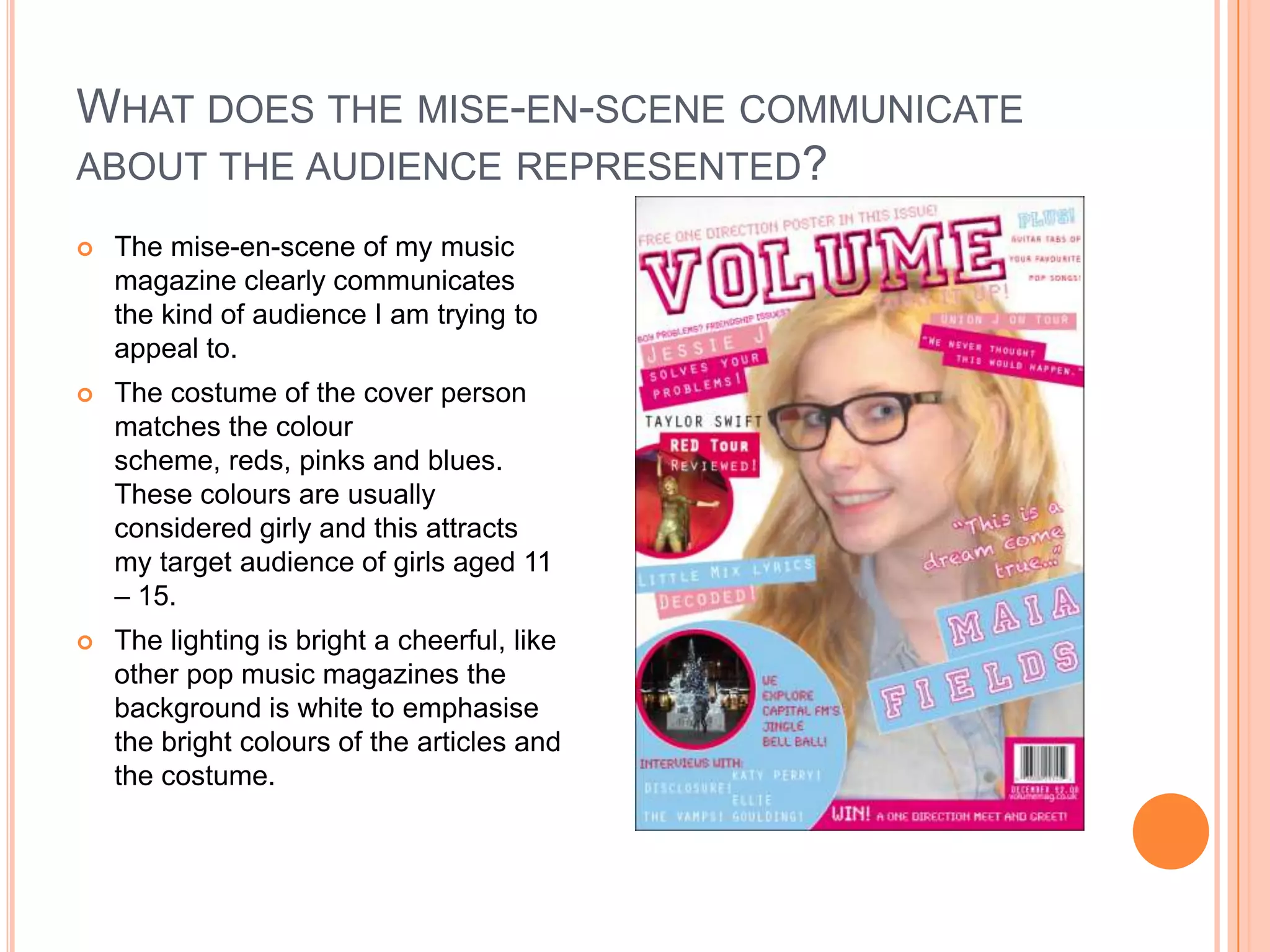
 The mise-en-scene of my music
magazine clearly communicates
the kind of audience I am trying to
appeal to.
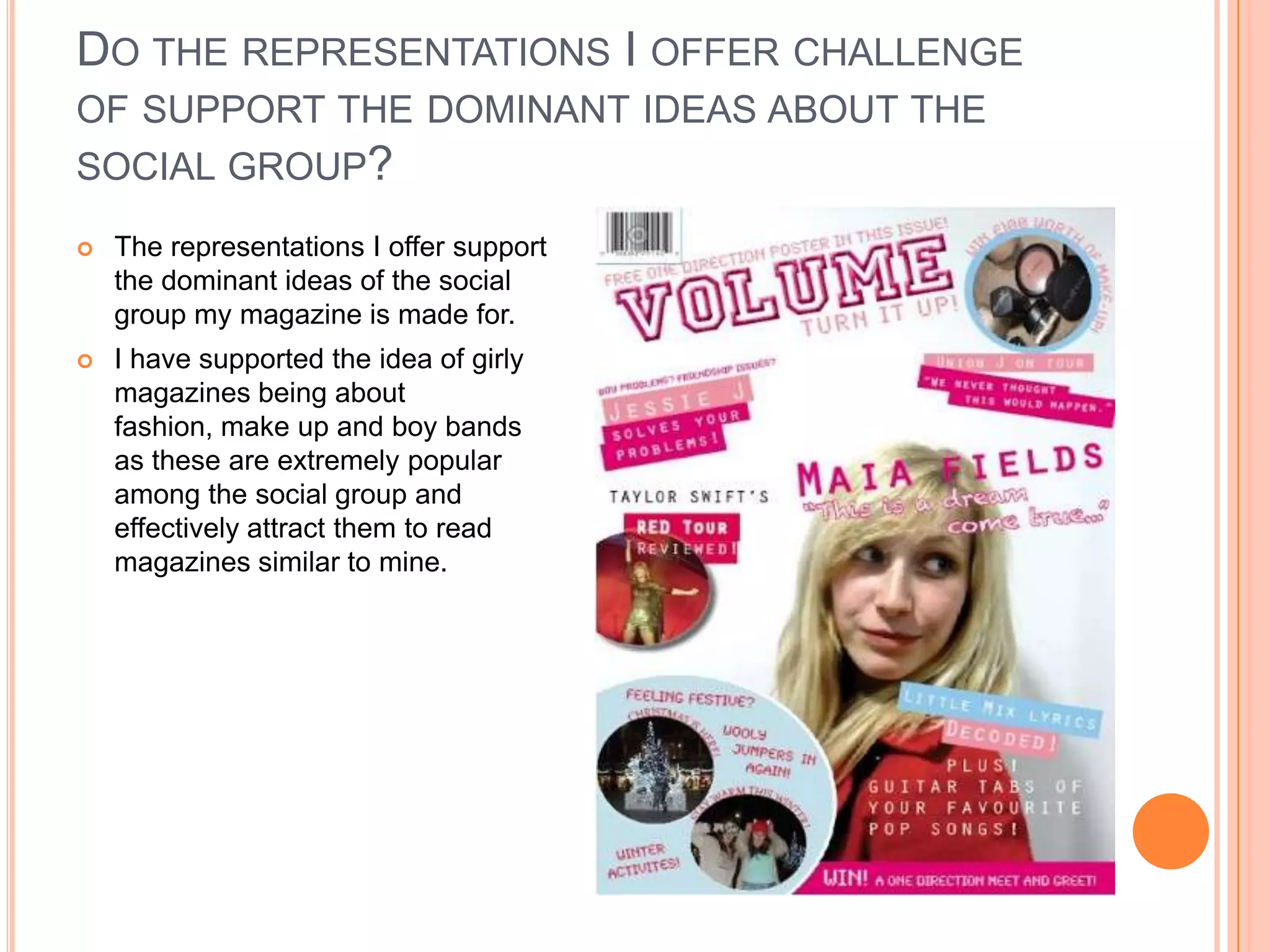
 The costume of the cover person
matches the colour
scheme, reds, pinks and blues.
These colours are usually
considered girly and this attracts
my target audience of girls aged 11
– 15.
 The lighting is bright a cheerful, like
other pop music magazines the
background is white to emphasise
the bright colours of the articles and
the costume.
HOW DOES MY PRODUCT REPRESENT ITS
TARGET AUDIENCE?
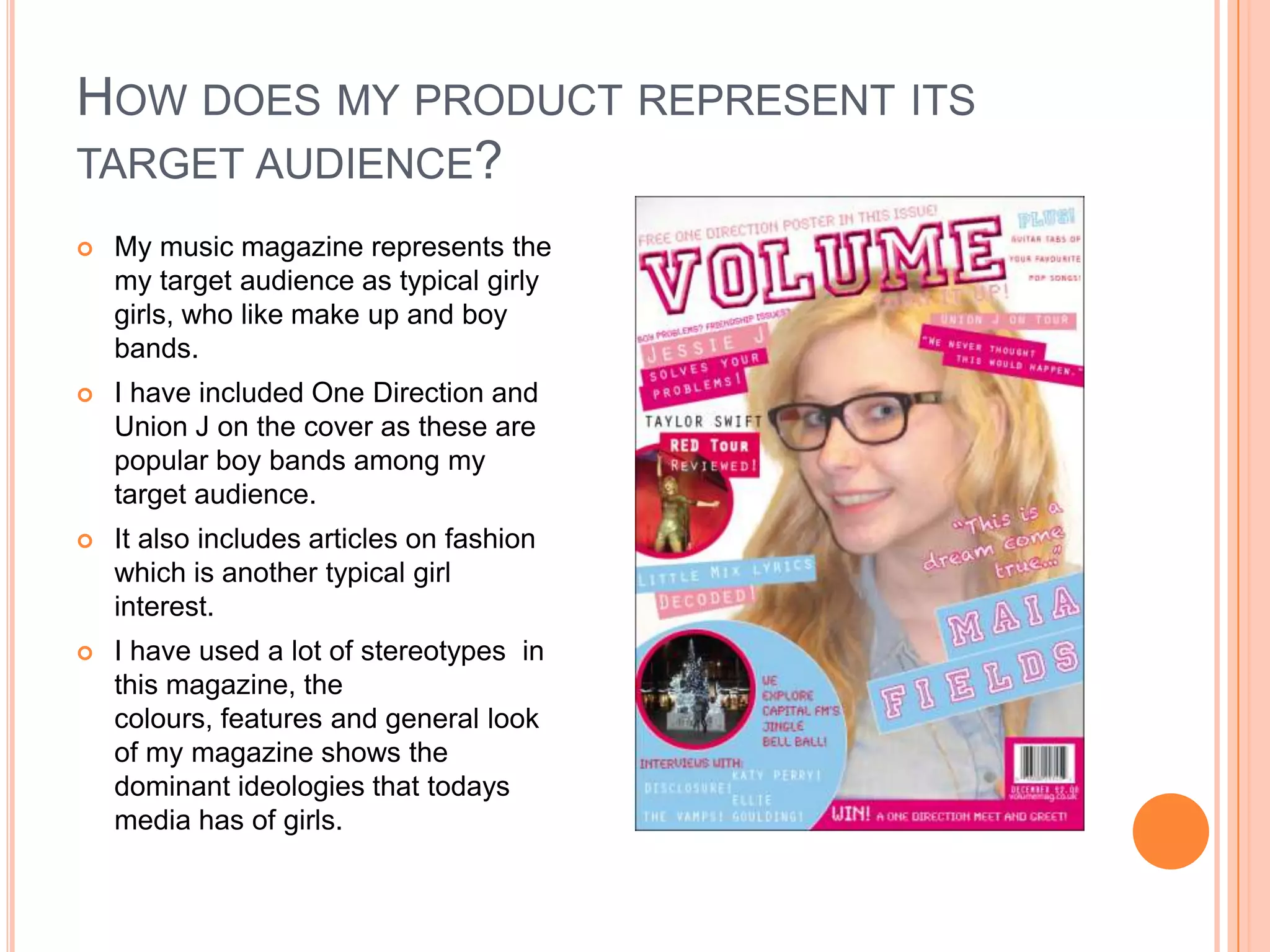
 My music magazine represents the
my target audience as typical girly
girls, who like make up and boy
bands.
 I have included One Direction and
Union J on the cover as these are
popular boy bands among my
target audience.
 It also includes articles on fashion
which is another typical girl
interest.
 I have used a lot of stereotypes in
this magazine, the
colours, features and general look
of my magazine shows the
dominant ideologies that todays
media has of girls.
HAVE I DONE ANYTHING DIFFERENT TO OTHER
REPRESENTATIONS FROM WITHIN MY MAGAZINES
GENRE?
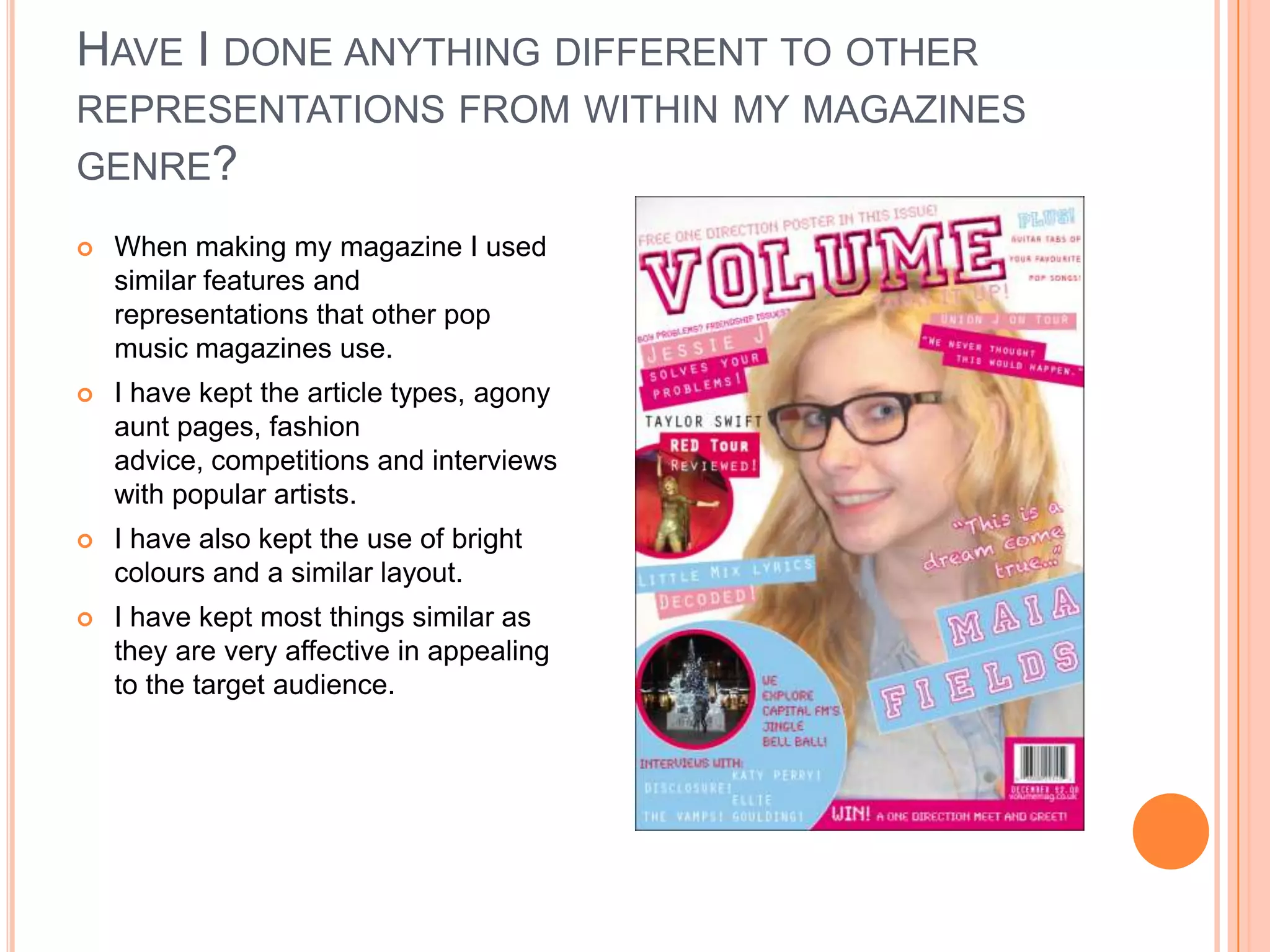
 When making my magazine I used
similar features and
representations that other pop
music magazines use.
 I have kept the article types, agony
aunt pages, fashion
advice, competitions and interviews
with popular artists.
 I have also kept the use of bright
colours and a similar layout.
 I have kept most things similar as
they are very affective in appealing
to the target audience.
DO THE REPRESENTATIONS I OFFER CHALLENGE
OF SUPPORT THE DOMINANT IDEAS ABOUT THE
SOCIAL GROUP?
 The representations I offer support
the dominant ideas of the social
group my magazine is made for.
 I have supported the idea of girly
magazines being about
fashion, make up and boy bands
as these are extremely popular
among the social group and
effectively attract them to read
magazines similar to mine.

Evaluation q.2 pp

  • 1.
    EVALUATION QUESTION 2 How doesyour media product represent particular social groups?
  • 2.
    WHAT DOES THEMISE-EN-SCENE COMMUNICATE ABOUT THE AUDIENCE REPRESENTED?  The mise-en-scene of my music magazine clearly communicates the kind of audience I am trying to appeal to.  The costume of the cover person matches the colour scheme, reds, pinks and blues. These colours are usually considered girly and this attracts my target audience of girls aged 11 – 15.  The lighting is bright a cheerful, like other pop music magazines the background is white to emphasise the bright colours of the articles and the costume.
  • 3.
    HOW DOES MYPRODUCT REPRESENT ITS TARGET AUDIENCE?  My music magazine represents the my target audience as typical girly girls, who like make up and boy bands.  I have included One Direction and Union J on the cover as these are popular boy bands among my target audience.  It also includes articles on fashion which is another typical girl interest.  I have used a lot of stereotypes in this magazine, the colours, features and general look of my magazine shows the dominant ideologies that todays media has of girls.
  • 4.
    HAVE I DONEANYTHING DIFFERENT TO OTHER REPRESENTATIONS FROM WITHIN MY MAGAZINES GENRE?  When making my magazine I used similar features and representations that other pop music magazines use.  I have kept the article types, agony aunt pages, fashion advice, competitions and interviews with popular artists.  I have also kept the use of bright colours and a similar layout.  I have kept most things similar as they are very affective in appealing to the target audience.
  • 5.
    DO THE REPRESENTATIONSI OFFER CHALLENGE OF SUPPORT THE DOMINANT IDEAS ABOUT THE SOCIAL GROUP?  The representations I offer support the dominant ideas of the social group my magazine is made for.  I have supported the idea of girly magazines being about fashion, make up and boy bands as these are extremely popular among the social group and effectively attract them to read magazines similar to mine.