Coursework
Evaluation
Amy Yahya
MY FRONT COVER

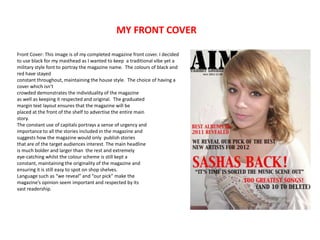
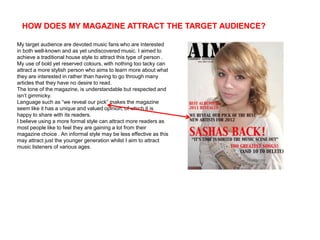
Front Cover: This image is of my completed magazine front cover. I decided
to use black for my masthead as I wanted to keep a traditional vibe yet a
military style font to portray the magazine name. The colours of black and
red have stayed
constant throughout, maintaining the house style. The choice of having a
cover which isn’t
crowded demonstrates the individuality of the magazine
as well as keeping it respected and original. The graduated
margin text layout ensures that the magazine will be
placed at the front of the shelf to advertise the entire main
story.
The constant use of capitals portrays a sense of urgency and
importance to all the stories included in the magazine and
suggests how the magazine would only publish stories
that are of the target audiences interest. The main headline
is much bolder and larger than the rest and extremely
eye-catching whilst the colour scheme is still kept a
constant, maintaining the originality of the magazine and
ensuring it is still easy to spot on shop shelves.
Language such as “we reveal” and “our pick” make the
magazine’s opinion seem important and respected by its
vast readership.
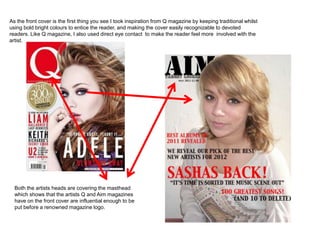
As the front cover is the first thing you see I took inspiration from Q magazine by keeping traditional whilst
using bold bright colours to entice the reader, and making the cover easily recognizable to devoted
readers. Like Q magazine, I also used direct eye contact to make the reader feel more involved with the
artist.


  Both the artists heads are covering the masthead
  which shows that the artists Q and Aim magazines
  have on the front cover are influential enough to be
  put before a renowned magazine logo.
MY CONTENTS PAGE
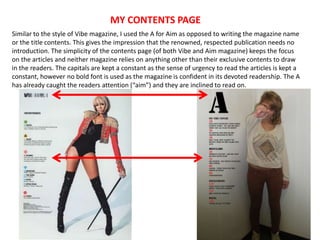
Similar to the style of Vibe magazine, I used the A for Aim as opposed to writing the magazine name
or the title contents. This gives the impression that the renowned, respected publication needs no
introduction. The simplicity of the contents page (of both Vibe and Aim magazine) keeps the focus
on the articles and neither magazine relies on anything other than their exclusive contents to draw
in the readers. The capitals are kept a constant as the sense of urgency to read the articles is kept a
constant, however no bold font is used as the magazine is confident in its devoted readership. The A
has already caught the readers attention (“aim”) and they are inclined to read on.
MY DOUBLE PAGE
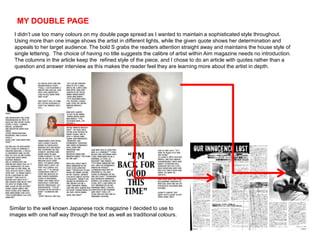
  I didn’t use too many colours on my double page spread as I wanted to maintain a sophisticated style throughout.
  Using more than one image shows the artist in different lights, while the given quote shows her determination and
  appeals to her target audience. The bold S grabs the readers attention straight away and maintains the house style of
  single lettering. The choice of having no title suggests the calibre of artist within Aim magazine needs no introduction.
  The columns in the article keep the refined style of the piece, and I chose to do an article with quotes rather than a
  question and answer interview as this makes the reader feel they are learning more about the artist in depth.


Similar to the well known Japanese rock magazine I decided to use to
images with one half way through the text as well as traditional colours.
HOW DOES MY MAGAZINE ATTRACT THE TARGET AUDIENCE?

My target audience are devoted music fans who are interested
in both well-known and as yet undiscovered music. I aimed to
achieve a traditional house style to attract this type of person .
My use of bold yet reserved colours, with nothing too tacky can
attract a more stylish person who aims to learn more about what
they are interested in rather than having to go through many
articles that they have no desire to read.
The tone of the magazine, is understandable but respected and
isn’t gimmicky.
Language such as “we reveal our pick” makes the magazine
seem like it has a unique and valued opinion, of which it is
happy to share with its readers.
I believe using a more formal style can attract more readers as
most people like to feel they are gaining a lot from their
magazine choice . An informal style may be less effective as this
may attract just the younger generation whilst I aim to attract
music listeners of various ages.
HOW DOES YOUR MAGAZINE USE, DEVELOP AND
CHALLENGE FORMS AND CONVENTIONS?

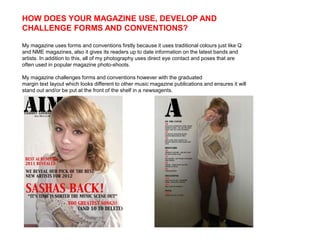
My magazine uses forms and conventions firstly because it uses traditional colours just like Q
and NME magazines, also it gives its readers up to date information on the latest bands and
artists. In addition to this, all of my photography uses direct eye contact and poses that are
often used in popular magazine photo-shoots.

My magazine challenges forms and conventions however with the graduated
margin text layout which looks different to other music magazine publications and ensures it will
stand out and/or be put at the front of the shelf in a newsagents.
HOW DOES YOUR MEDIA PRODUCT REPRESENT
PARTICULAR SOCIAL GROUPS?

My music magazine represents quirky young fashionable individuals who pride
themselves on their unique tastes. They have a broad taste in music and wish to
read a magazine that caters to these interests. The traditional yet unique style which
breaks some norms yet keeps certain aspects of originality. With the magazine not
focusing on one specific genre, I can be confident that the social groups are mixed
and therefore can have a wider target audience.


 WHAT TYPE OF MEDIA INSTITUTION MIGHT
 DISTRIBUTE YOUR PRODUCT AND WHY?

 I believe my product would be distributed through a popular media institution as it
 has a wide target audience rather than a small group of people. A media institution
 such as IPC Media would be suitable as it would ensure that my magazine has a
 good reputation and becomes recognized widely.
SKILLS
Overall my skills in Photoshop have improved dramatically. I can confidently edit an image and have
therefore edited and put together my front, contents and double page spread page.
I have learnt how to crop photos successfully without making them look unprofessional as well as edit
images to enhance them. I am also now able to create layers in order to place main image over the
masthead. Learning all these techniques helped me create my final magazine.


WHAT HAVE I LEARNT SINCE MY PRELIMINARY TASK?

It is clear that my skills have progressed since the preliminary task. My final magazine looks
much more professional than the college one I created for the preliminary task. The preliminary
task was unprofessional with unexciting colours and simple photography. The images used
were similar to ones you’d find on Facebook of friends, rather than on a respected magazine
cover.

Evaluation

  • 1.
  • 2.
    MY FRONT COVER FrontCover: This image is of my completed magazine front cover. I decided to use black for my masthead as I wanted to keep a traditional vibe yet a military style font to portray the magazine name. The colours of black and red have stayed constant throughout, maintaining the house style. The choice of having a cover which isn’t crowded demonstrates the individuality of the magazine as well as keeping it respected and original. The graduated margin text layout ensures that the magazine will be placed at the front of the shelf to advertise the entire main story. The constant use of capitals portrays a sense of urgency and importance to all the stories included in the magazine and suggests how the magazine would only publish stories that are of the target audiences interest. The main headline is much bolder and larger than the rest and extremely eye-catching whilst the colour scheme is still kept a constant, maintaining the originality of the magazine and ensuring it is still easy to spot on shop shelves. Language such as “we reveal” and “our pick” make the magazine’s opinion seem important and respected by its vast readership.
  • 3.
    As the frontcover is the first thing you see I took inspiration from Q magazine by keeping traditional whilst using bold bright colours to entice the reader, and making the cover easily recognizable to devoted readers. Like Q magazine, I also used direct eye contact to make the reader feel more involved with the artist. Both the artists heads are covering the masthead which shows that the artists Q and Aim magazines have on the front cover are influential enough to be put before a renowned magazine logo.
  • 4.
    MY CONTENTS PAGE Similarto the style of Vibe magazine, I used the A for Aim as opposed to writing the magazine name or the title contents. This gives the impression that the renowned, respected publication needs no introduction. The simplicity of the contents page (of both Vibe and Aim magazine) keeps the focus on the articles and neither magazine relies on anything other than their exclusive contents to draw in the readers. The capitals are kept a constant as the sense of urgency to read the articles is kept a constant, however no bold font is used as the magazine is confident in its devoted readership. The A has already caught the readers attention (“aim”) and they are inclined to read on.
  • 5.
    MY DOUBLE PAGE I didn’t use too many colours on my double page spread as I wanted to maintain a sophisticated style throughout. Using more than one image shows the artist in different lights, while the given quote shows her determination and appeals to her target audience. The bold S grabs the readers attention straight away and maintains the house style of single lettering. The choice of having no title suggests the calibre of artist within Aim magazine needs no introduction. The columns in the article keep the refined style of the piece, and I chose to do an article with quotes rather than a question and answer interview as this makes the reader feel they are learning more about the artist in depth. Similar to the well known Japanese rock magazine I decided to use to images with one half way through the text as well as traditional colours.
  • 6.
    HOW DOES MYMAGAZINE ATTRACT THE TARGET AUDIENCE? My target audience are devoted music fans who are interested in both well-known and as yet undiscovered music. I aimed to achieve a traditional house style to attract this type of person . My use of bold yet reserved colours, with nothing too tacky can attract a more stylish person who aims to learn more about what they are interested in rather than having to go through many articles that they have no desire to read. The tone of the magazine, is understandable but respected and isn’t gimmicky. Language such as “we reveal our pick” makes the magazine seem like it has a unique and valued opinion, of which it is happy to share with its readers. I believe using a more formal style can attract more readers as most people like to feel they are gaining a lot from their magazine choice . An informal style may be less effective as this may attract just the younger generation whilst I aim to attract music listeners of various ages.
  • 7.
    HOW DOES YOURMAGAZINE USE, DEVELOP AND CHALLENGE FORMS AND CONVENTIONS? My magazine uses forms and conventions firstly because it uses traditional colours just like Q and NME magazines, also it gives its readers up to date information on the latest bands and artists. In addition to this, all of my photography uses direct eye contact and poses that are often used in popular magazine photo-shoots. My magazine challenges forms and conventions however with the graduated margin text layout which looks different to other music magazine publications and ensures it will stand out and/or be put at the front of the shelf in a newsagents.
  • 8.
    HOW DOES YOURMEDIA PRODUCT REPRESENT PARTICULAR SOCIAL GROUPS? My music magazine represents quirky young fashionable individuals who pride themselves on their unique tastes. They have a broad taste in music and wish to read a magazine that caters to these interests. The traditional yet unique style which breaks some norms yet keeps certain aspects of originality. With the magazine not focusing on one specific genre, I can be confident that the social groups are mixed and therefore can have a wider target audience. WHAT TYPE OF MEDIA INSTITUTION MIGHT DISTRIBUTE YOUR PRODUCT AND WHY? I believe my product would be distributed through a popular media institution as it has a wide target audience rather than a small group of people. A media institution such as IPC Media would be suitable as it would ensure that my magazine has a good reputation and becomes recognized widely.
  • 9.
    SKILLS Overall my skillsin Photoshop have improved dramatically. I can confidently edit an image and have therefore edited and put together my front, contents and double page spread page. I have learnt how to crop photos successfully without making them look unprofessional as well as edit images to enhance them. I am also now able to create layers in order to place main image over the masthead. Learning all these techniques helped me create my final magazine. WHAT HAVE I LEARNT SINCE MY PRELIMINARY TASK? It is clear that my skills have progressed since the preliminary task. My final magazine looks much more professional than the college one I created for the preliminary task. The preliminary task was unprofessional with unexciting colours and simple photography. The images used were similar to ones you’d find on Facebook of friends, rather than on a respected magazine cover.