Evaluating  Works  of Art Historical vs. Critical Approaches
A r t  H i s t o r y  Seeking answers to these types of questions: When was it done? Where was it done? What style of art does it represent? What artists or works of art influenced the  artist? What impact did the artist or the work have upon  artists and works that followed? ART HISTORY relies on  External Cues
Description Determine  when, where,  and  by whom the work was done.
Analysis Identify  unique features  to determine artistic style.
Interpretation Learn how  time  and  place  influenced the artist.
Judgment Use information to  make a decision  about a work’s importance in the history of art.
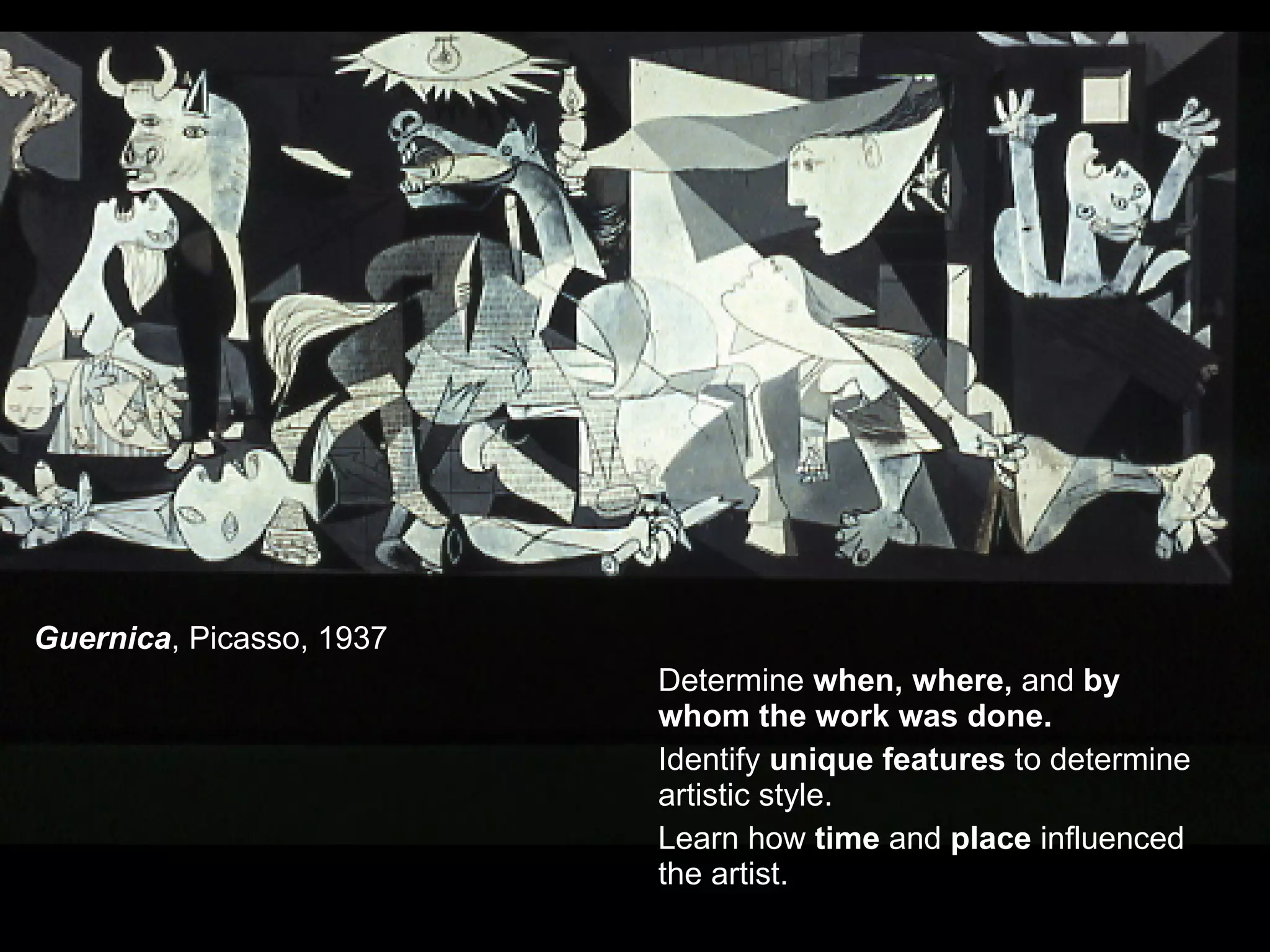
Guernica , Picasso, 1937 Determine  when, where,  and  by whom the work was done. Identify  unique features  to determine artistic style. Learn how  time  and  place  influenced the artist.
Use information to  make a decision  about a work’s importance in the history of art .
A r t  C r i t i c i s m  Seeking answers to these types of questions: What is in the artwork? How is the artwork designed or put together? What does it mean? Is it a successful work of art? ART CRITICISM relies on  Internal Cues
Description Focus:  Subject matter  and/or  Elements of Art
Analysis Focus:  Organization –  how Principles of Design have been used to arrange the elements of art
Interpretation Focus:  Moods, feelings and ideas  communicated by the work
Judgment Focus:  Decision-making  about the work’s artistic merit
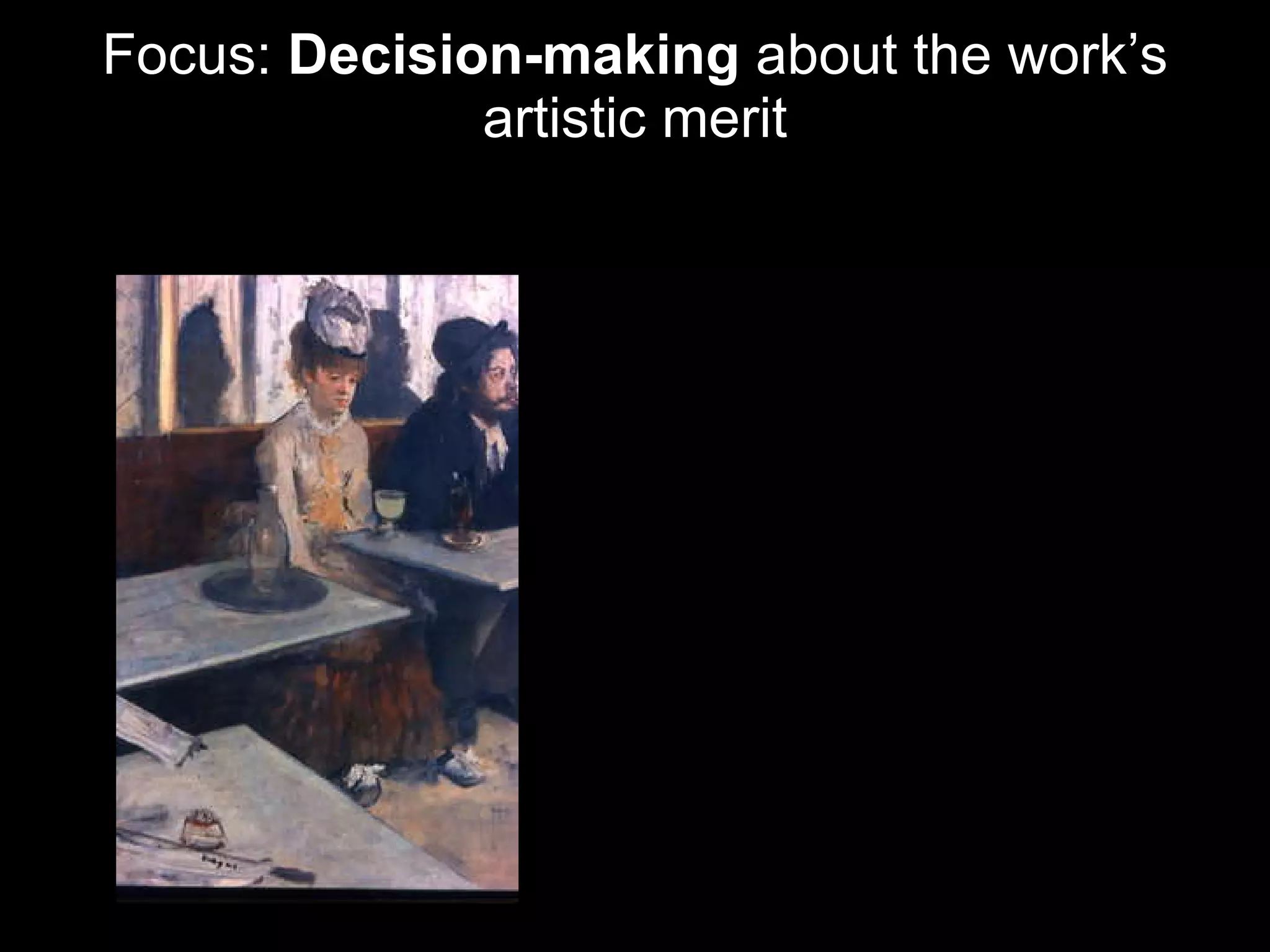
L'Absinthe , Degas, 1876 Focus:  Subject matter  and/or  Elements of Art Focus:  Organization –  how Principles of Design have been used to arrange the elements of art Focus:  Moods, feelings and ideas  communicated by the work
Focus:  Decision-making  about the work’s artistic merit

Evaluating Art Approaches

  • 1.
    Evaluating Works of Art Historical vs. Critical Approaches
  • 2.
    A r t H i s t o r y Seeking answers to these types of questions: When was it done? Where was it done? What style of art does it represent? What artists or works of art influenced the artist? What impact did the artist or the work have upon artists and works that followed? ART HISTORY relies on External Cues
  • 3.
    Description Determine when, where, and by whom the work was done.
  • 4.
    Analysis Identify unique features to determine artistic style.
  • 5.
    Interpretation Learn how time and place influenced the artist.
  • 6.
    Judgment Use informationto make a decision about a work’s importance in the history of art.
  • 7.
    Guernica , Picasso,1937 Determine when, where, and by whom the work was done. Identify unique features to determine artistic style. Learn how time and place influenced the artist.
  • 8.
    Use information to make a decision about a work’s importance in the history of art .
  • 9.
    A r t C r i t i c i s m Seeking answers to these types of questions: What is in the artwork? How is the artwork designed or put together? What does it mean? Is it a successful work of art? ART CRITICISM relies on Internal Cues
  • 10.
    Description Focus: Subject matter and/or Elements of Art
  • 11.
    Analysis Focus: Organization – how Principles of Design have been used to arrange the elements of art
  • 12.
    Interpretation Focus: Moods, feelings and ideas communicated by the work
  • 13.
    Judgment Focus: Decision-making about the work’s artistic merit
  • 14.
    L'Absinthe , Degas,1876 Focus: Subject matter and/or Elements of Art Focus: Organization – how Principles of Design have been used to arrange the elements of art Focus: Moods, feelings and ideas communicated by the work
  • 15.
    Focus: Decision-making about the work’s artistic merit