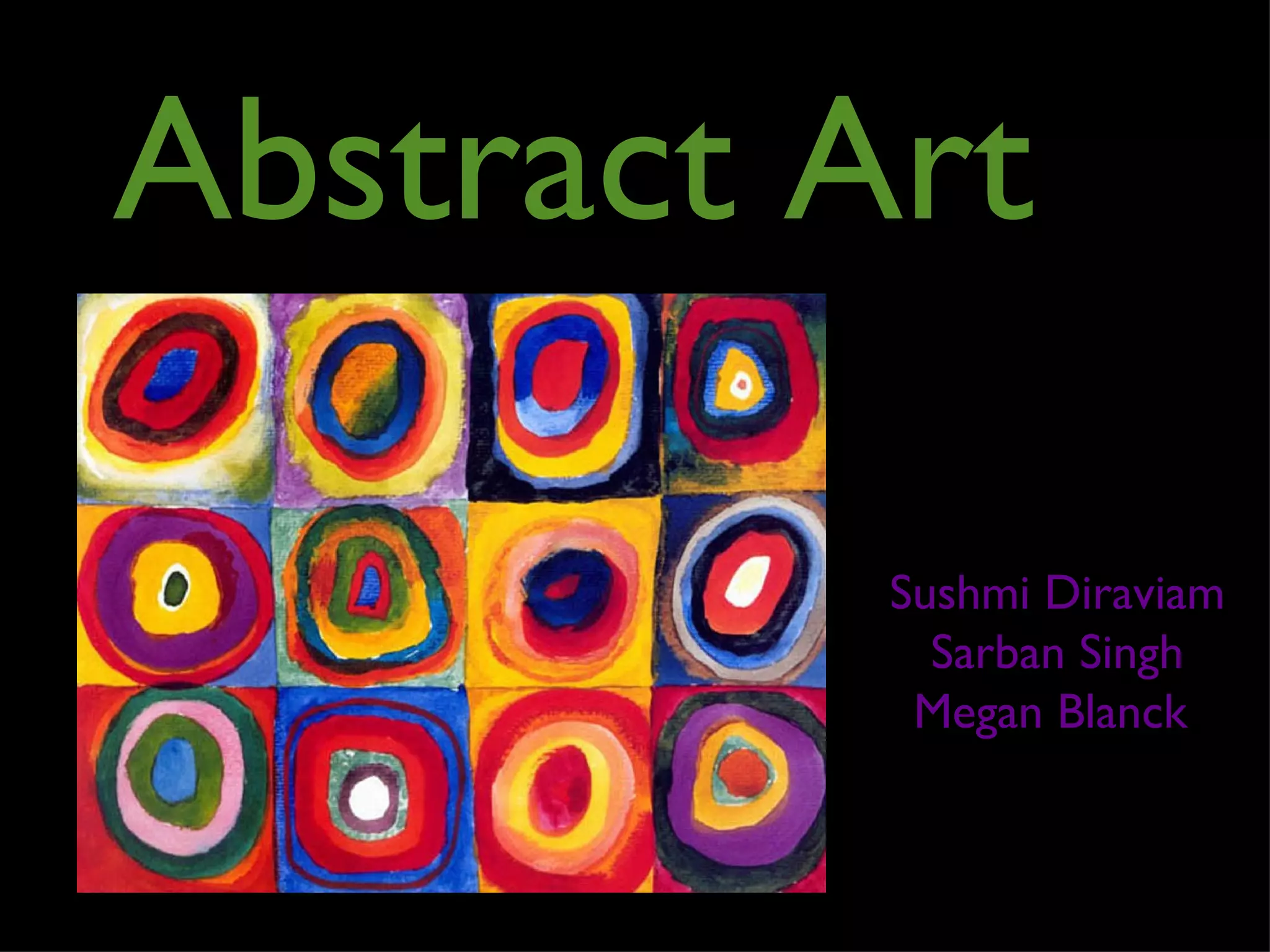
Abstract Art

          Sushmi Diraviam
            Sarban Singh
           Megan Blanck
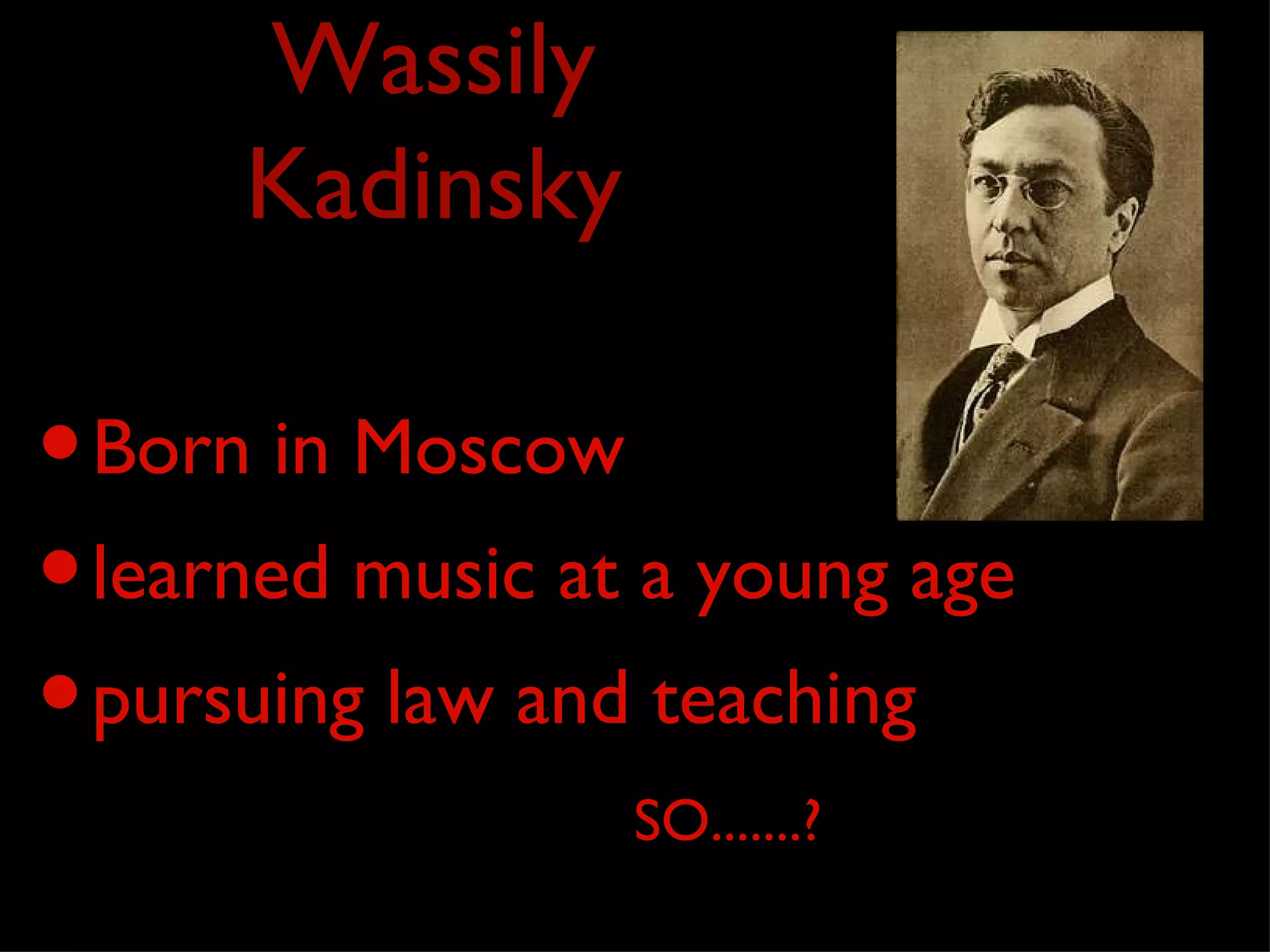
Wassily
      Kadinsky

• Born in Moscow
• learned music at a young age
• pursuing law and teaching
                  SO.......?
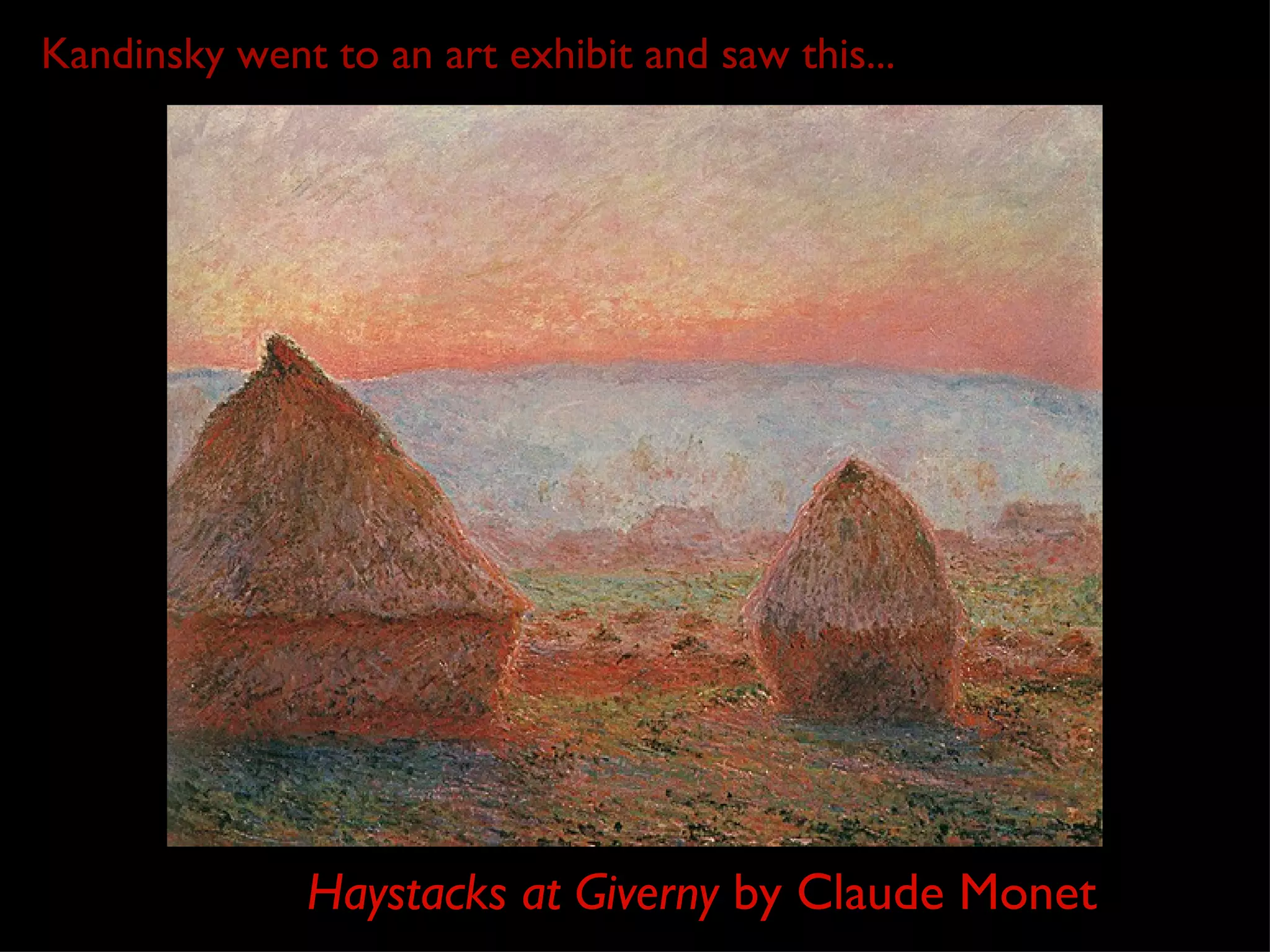
Kandinsky went to an art exhibit and saw this...


              Haystacks at Giverny by Claude Monet
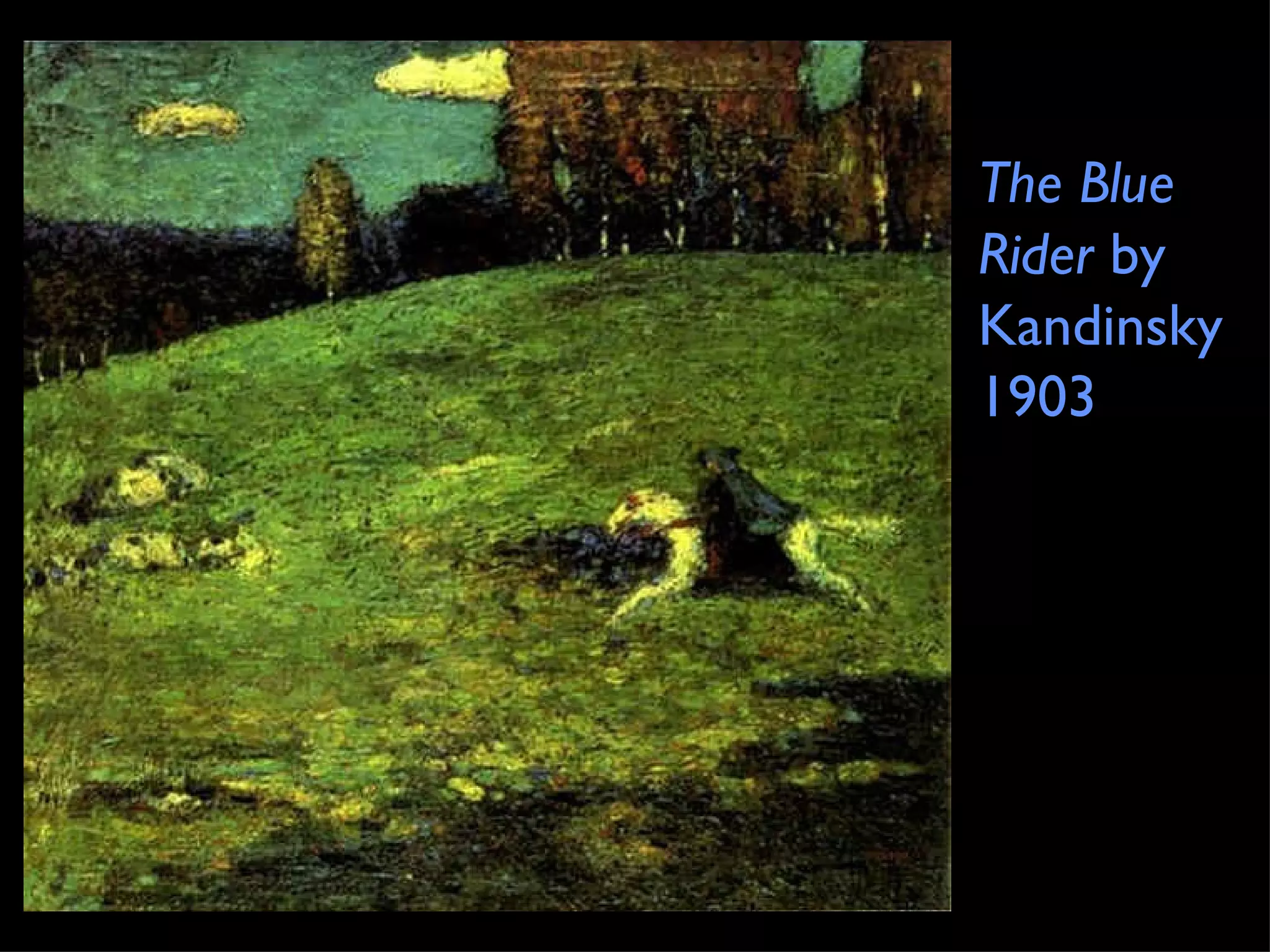
The Blue
Rider by
Kandinsky
1903
What is Abstract Art?
• nonobjective and nonrepresentational
• portraying non-visual aspects of an
  object
• color, form and line - only things that
  matter
• took meaning out of the paintings and
  emphasized emotion
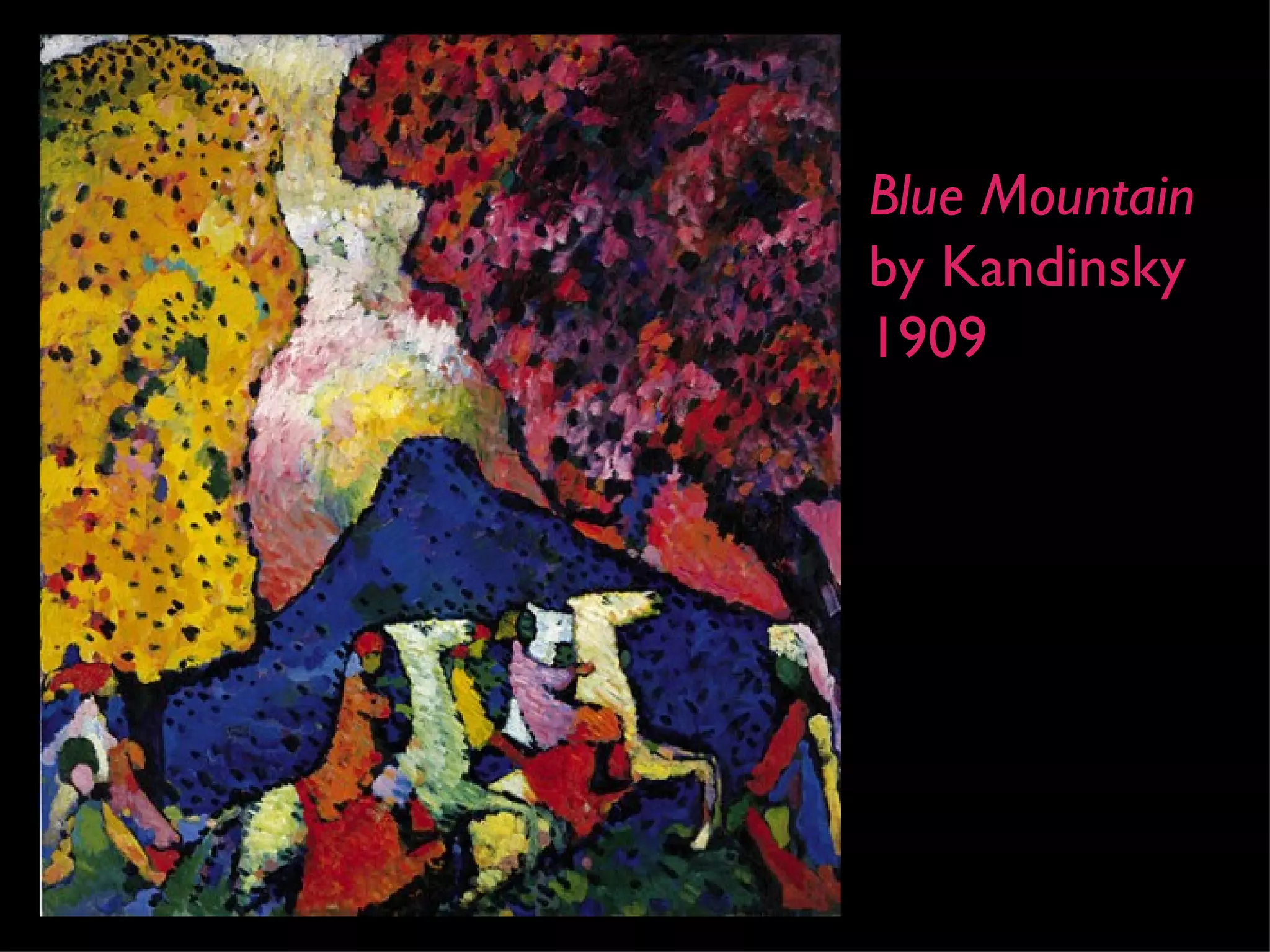
Blue Mountain
by Kandinsky
1909
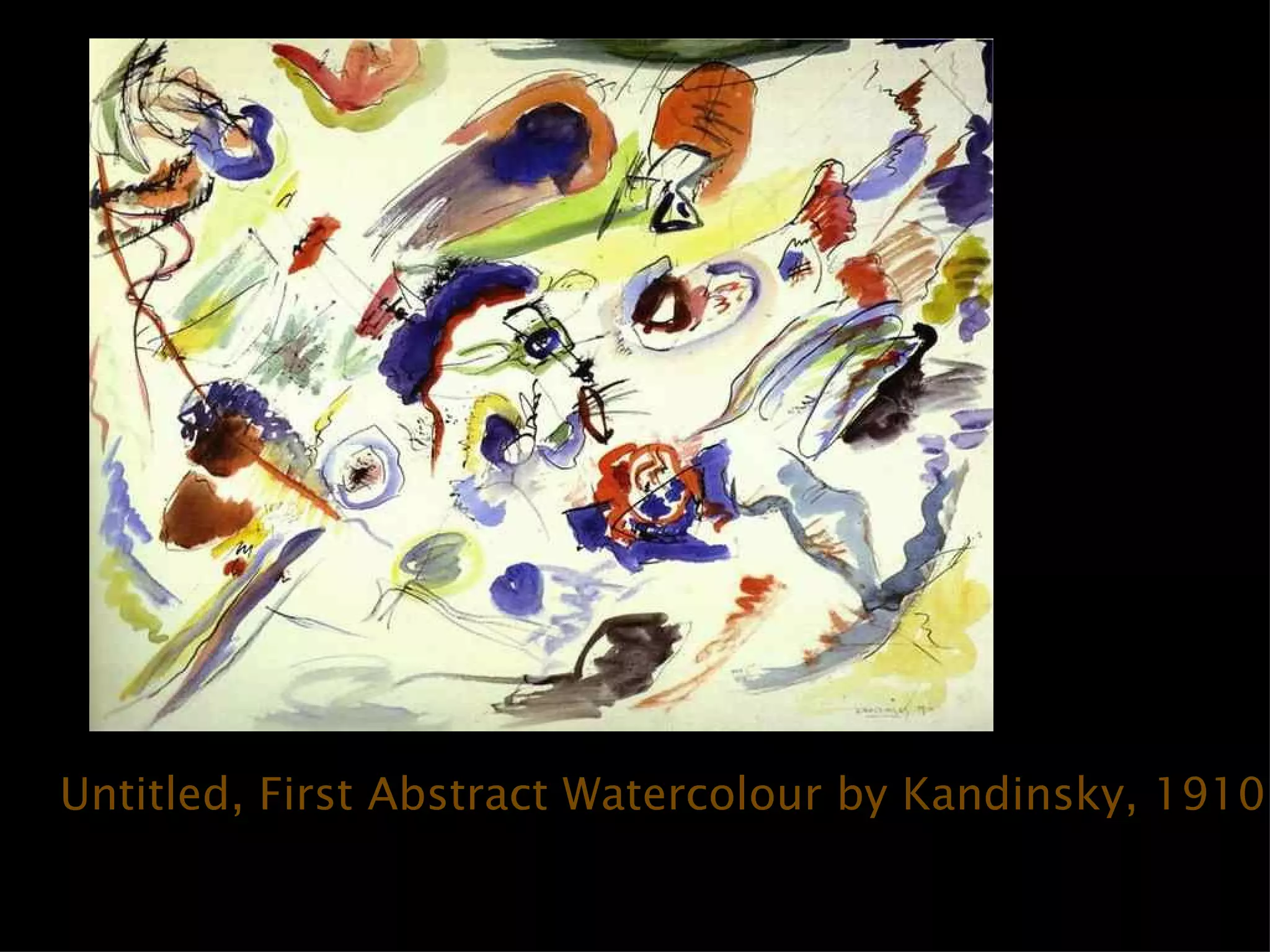
Untitled, First Abstract Watercolour by Kandinsky, 1910
Kandinsky
  •   Incorporated music into his artwork
      • ex. saturation associated with volume
         of sound
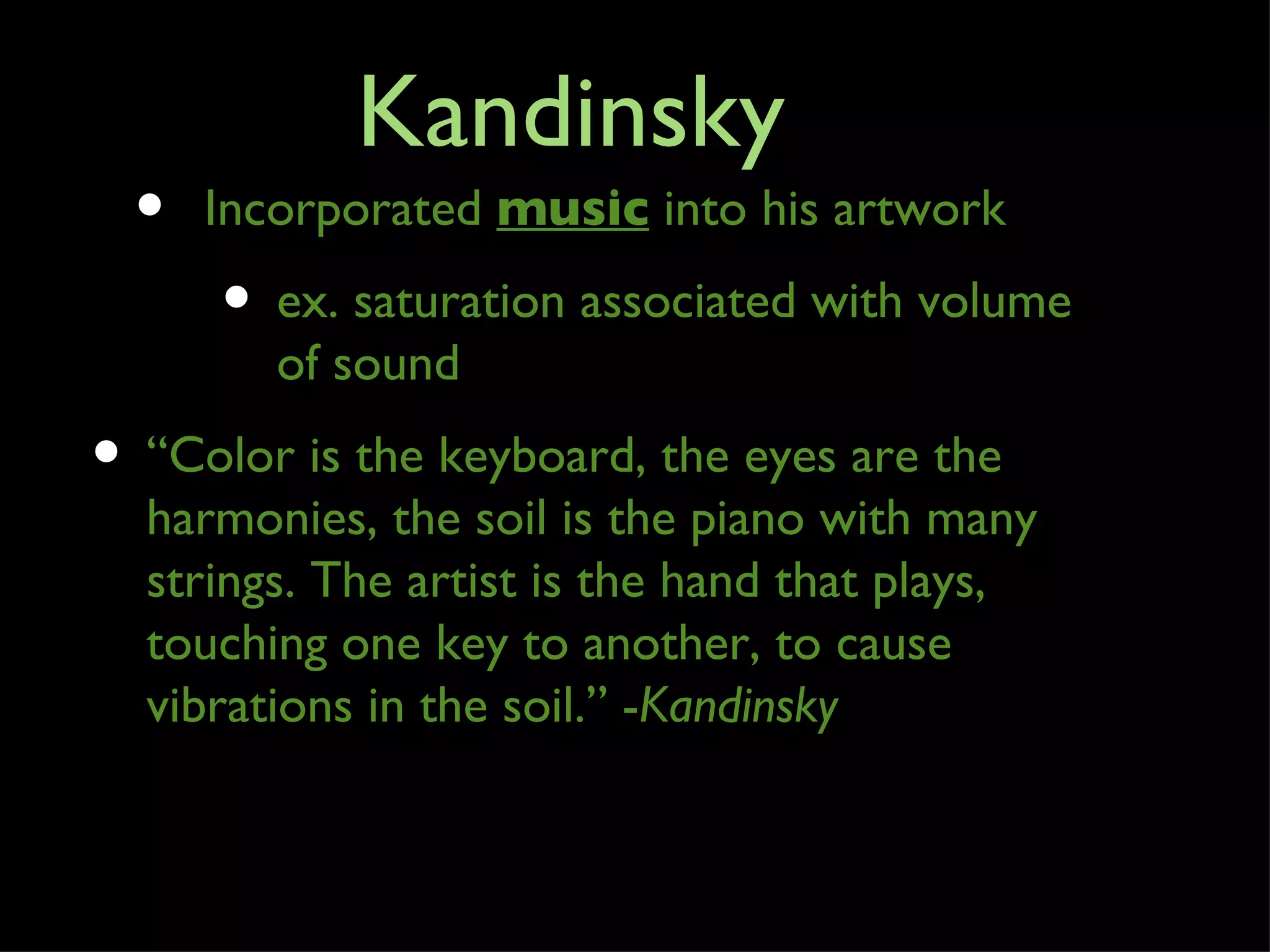
• “Color is the keyboard, the eyes are the
  harmonies, the soil is the piano with many
  strings. The artist is the hand that plays,
  touching one key to another, to cause
  vibrations in the soil.” -Kandinsky
Der Blaue Reiter
• 1911 Kandinsky organized a group called
  “Der Blaue Reiter” (The Blue Rider) - 9
  artists
• promote abstract art
• transferring spiritual experiences through
  color and sound
• published Concerning the Spiritual in Art
Concerning the Spiritual in Art

 • got all his ideas out there
   about abstract art - western
   culture
 • “inner necessity” needed for
   art
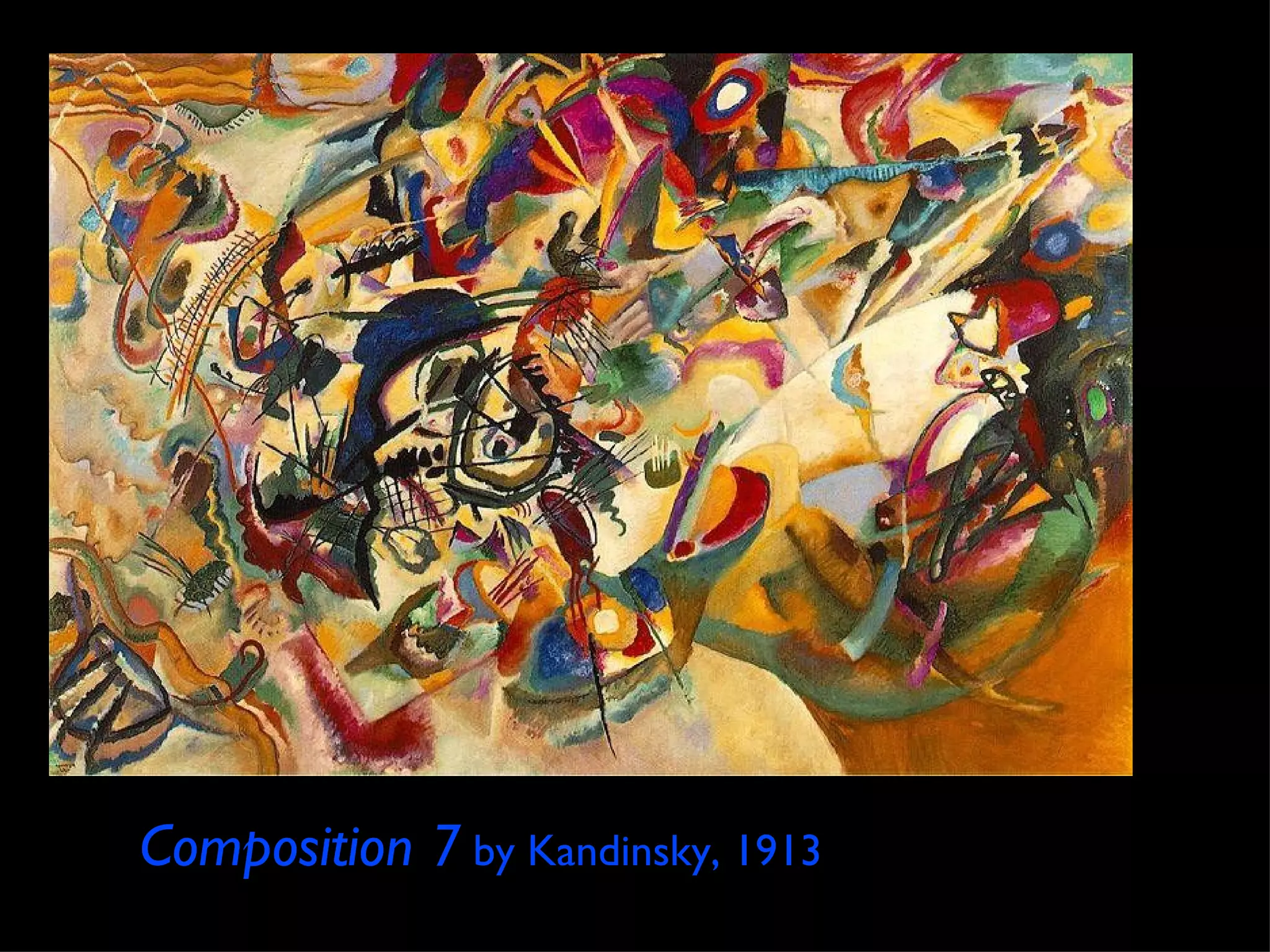
Composition 7 by Kandinsky, 1913
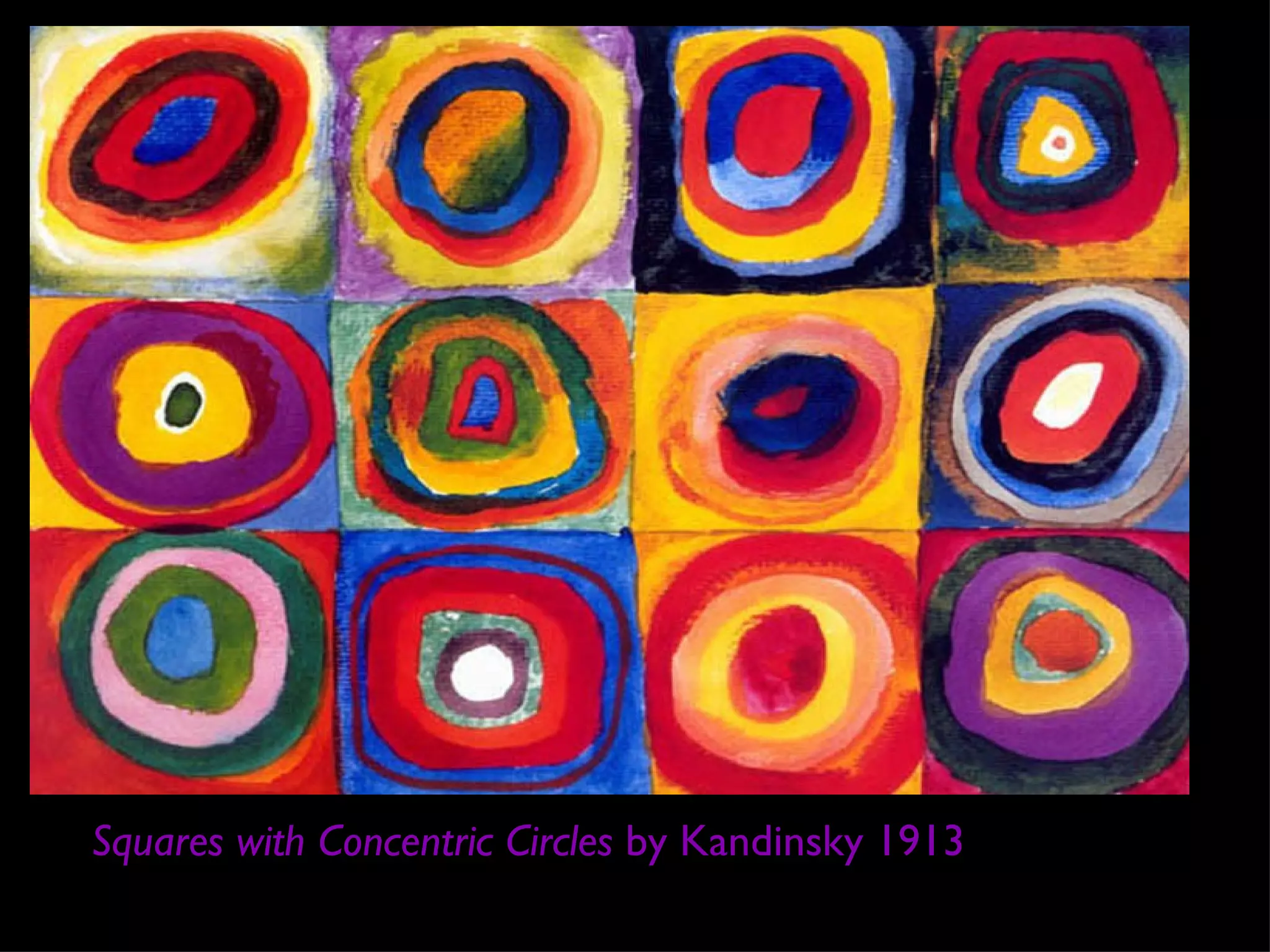
Squares with Concentric Circles by Kandinsky 1913
Teaching at the Bauhaus
     • increased his attention to
      geometry
     • paid attention to the
      relationship between the
      forms and colors
     • deeper connection with his
      work
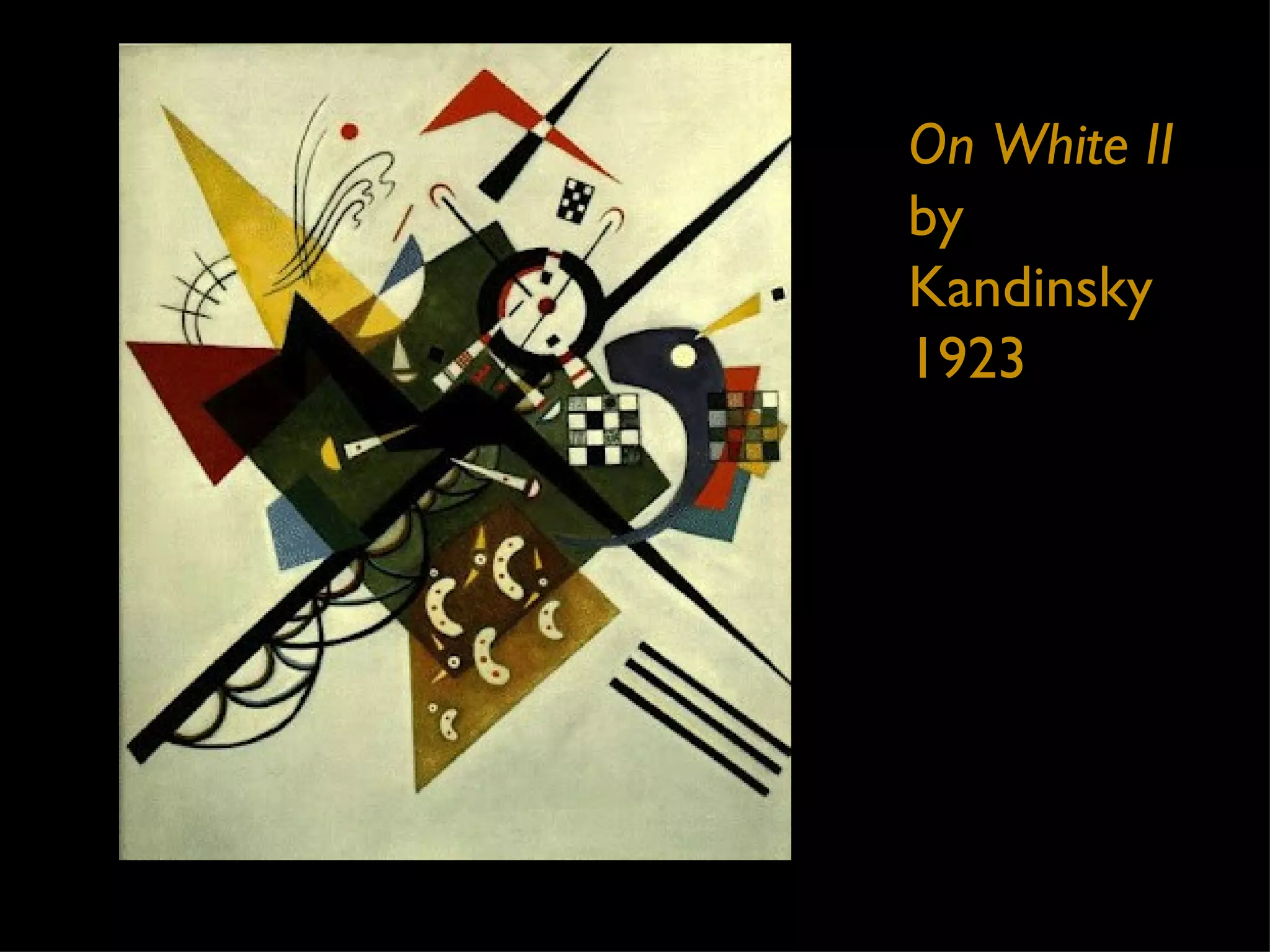
On White II
by
Kandinsky
1923
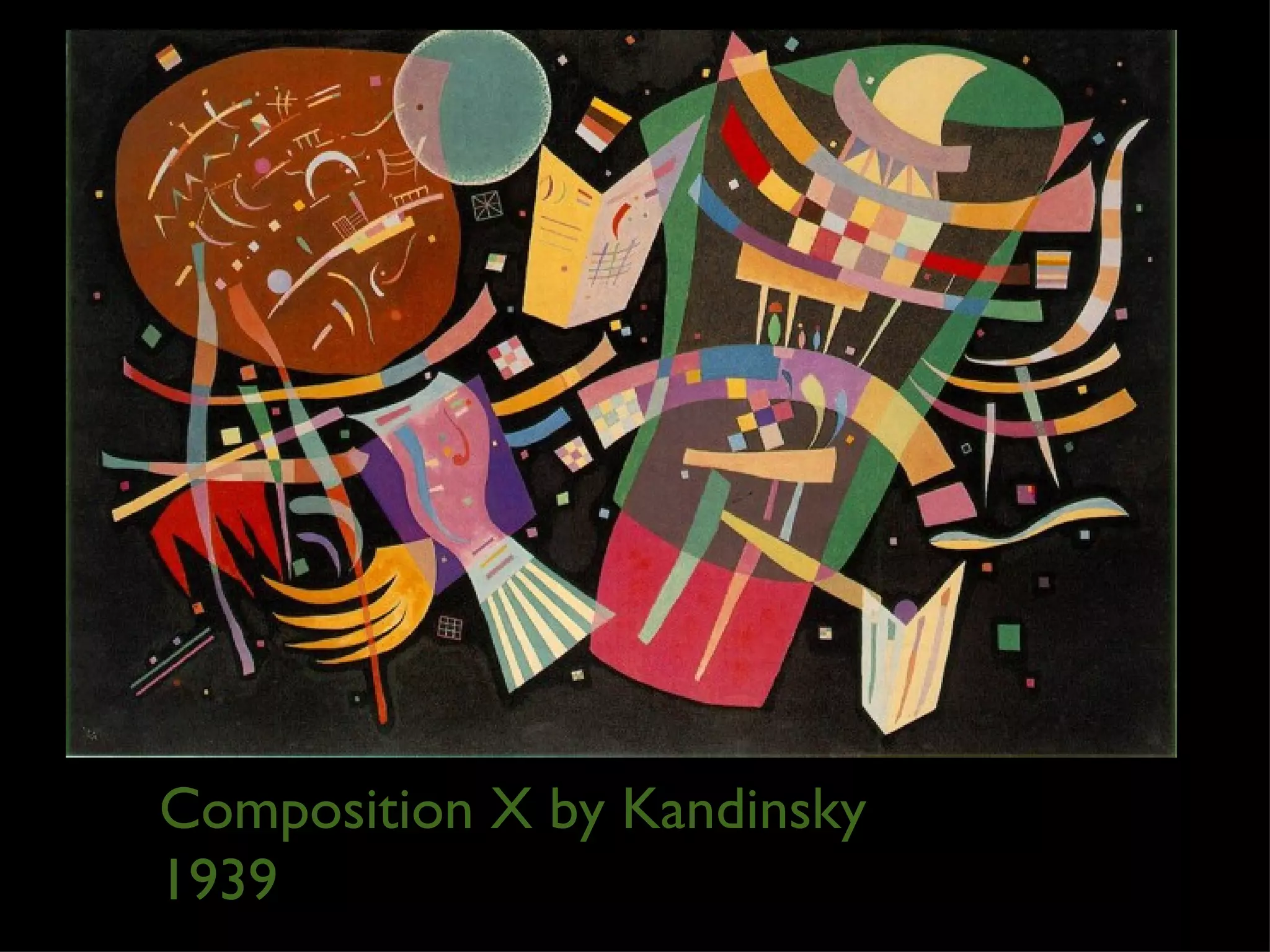
Composition X by Kandinsky
1939
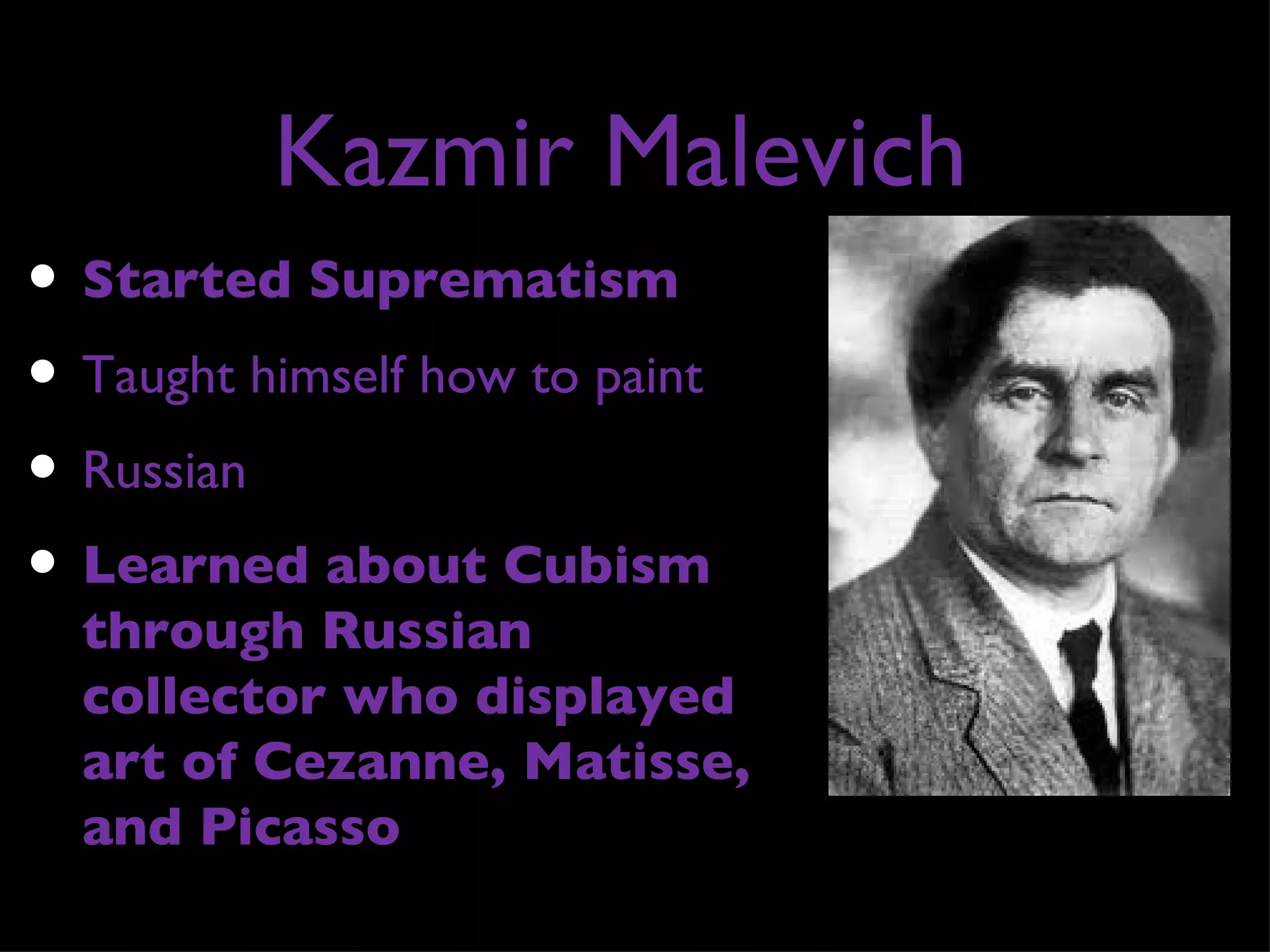
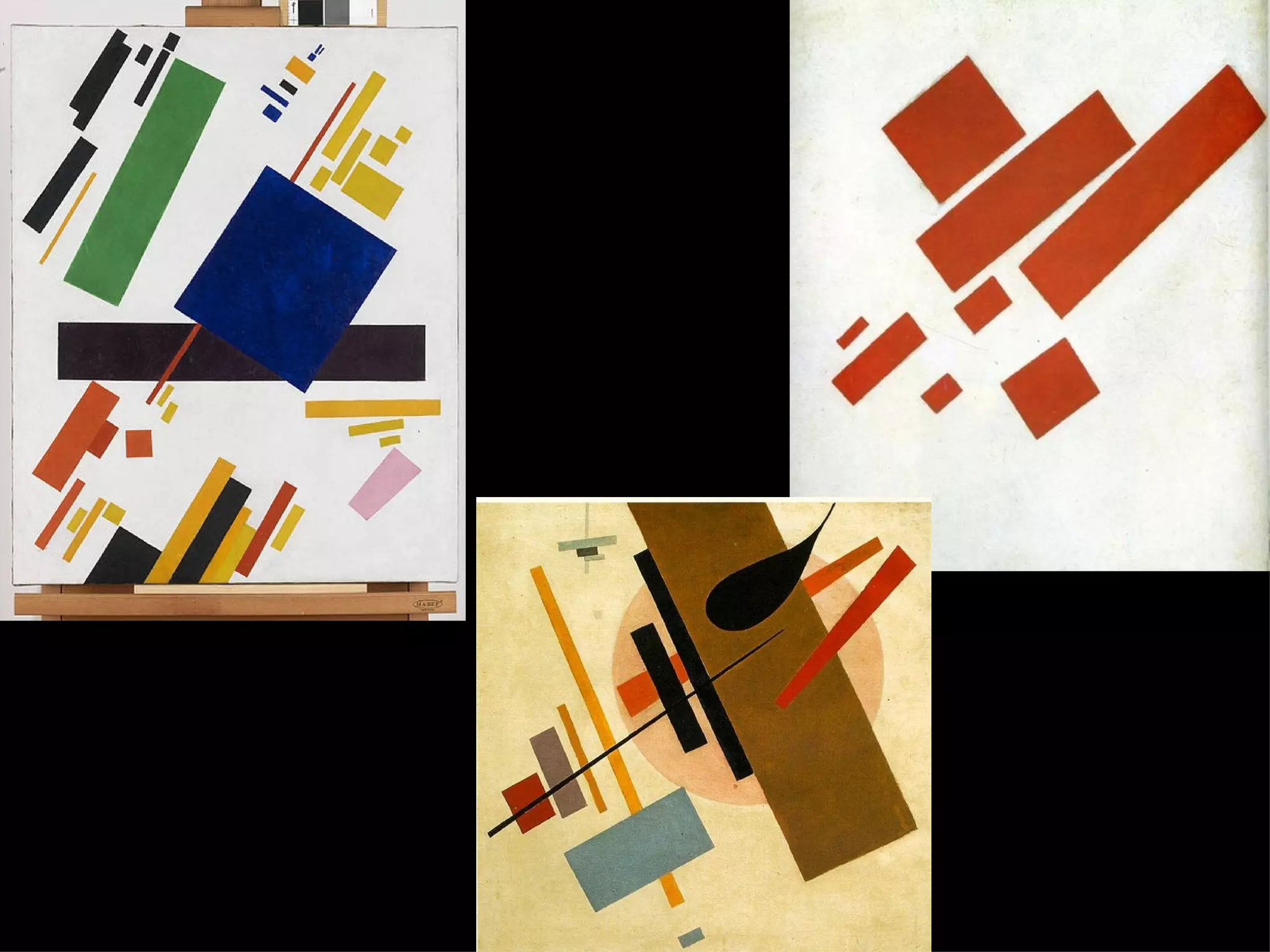
Kazmir Malevich
• Started Suprematism
• Taught himself how to paint
• Russian
• Learned about Cubism
  through Russian
  collector who displayed
  art of Cezanne, Matisse,
  and Picasso
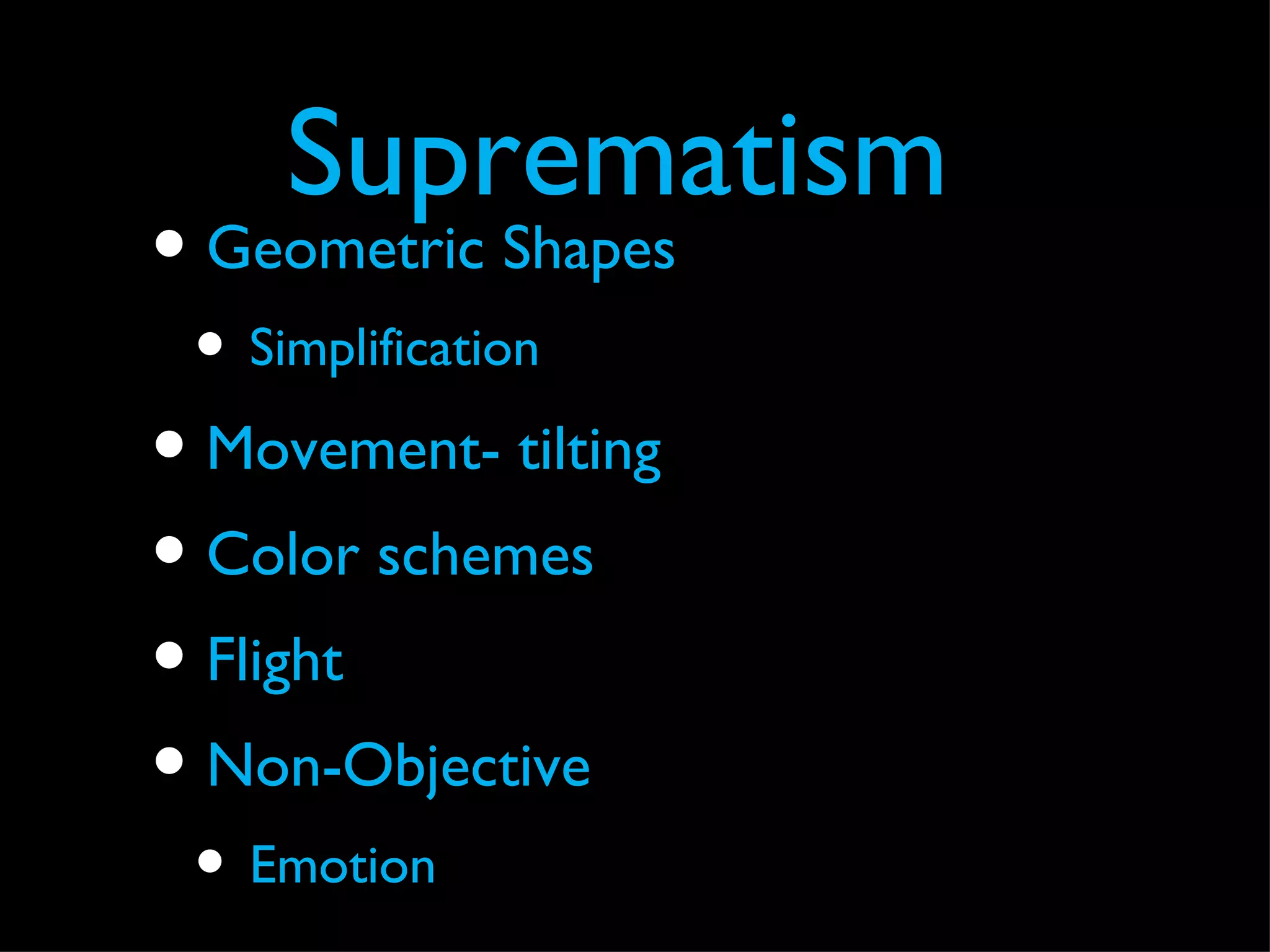
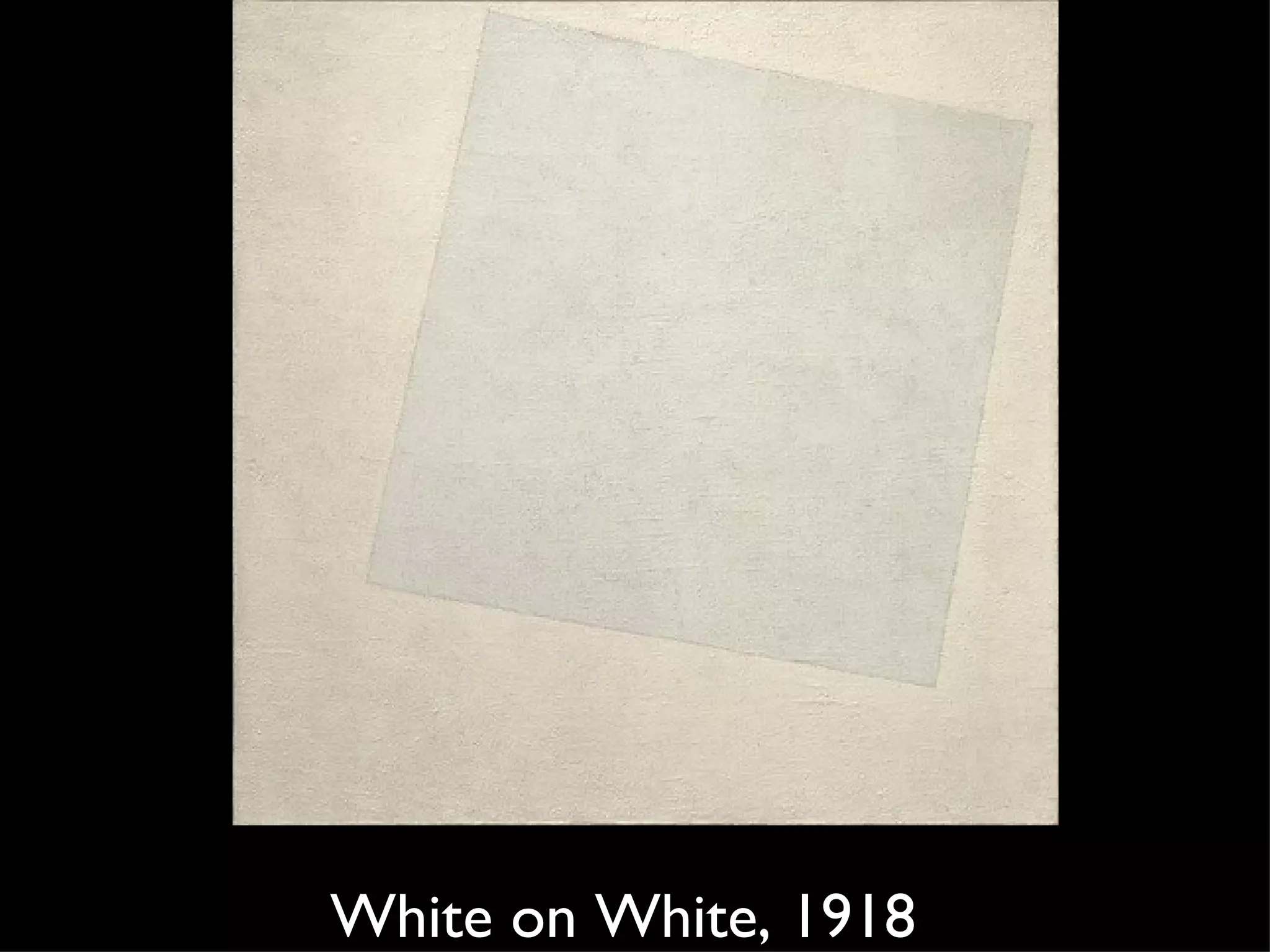
Suprematism
• Geometric Shapes
 • Simplification
• Movement- tilting
• Color schemes
• Flight
• Non-Objective
 • Emotion
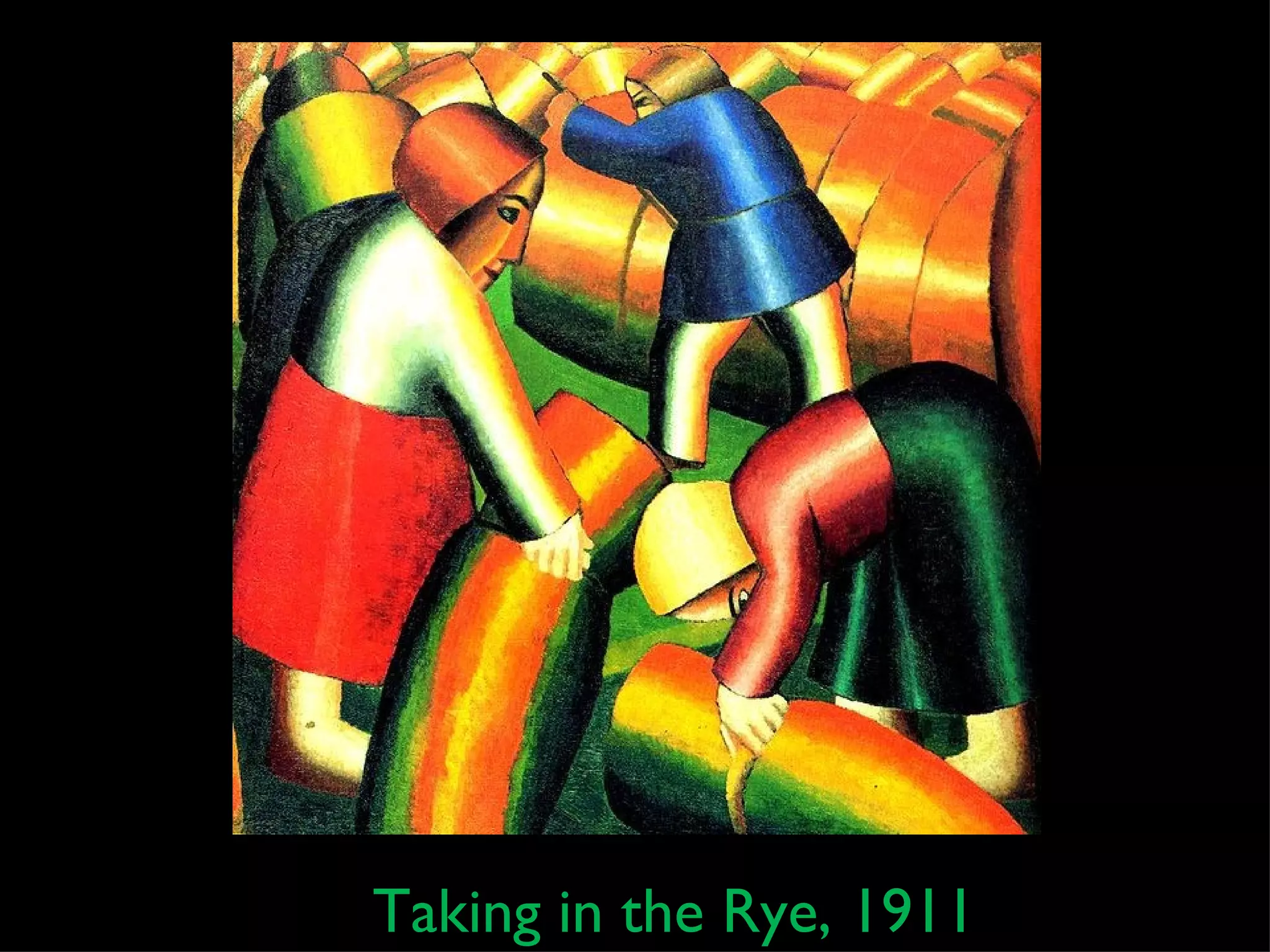
Taking in the Rye, 1911
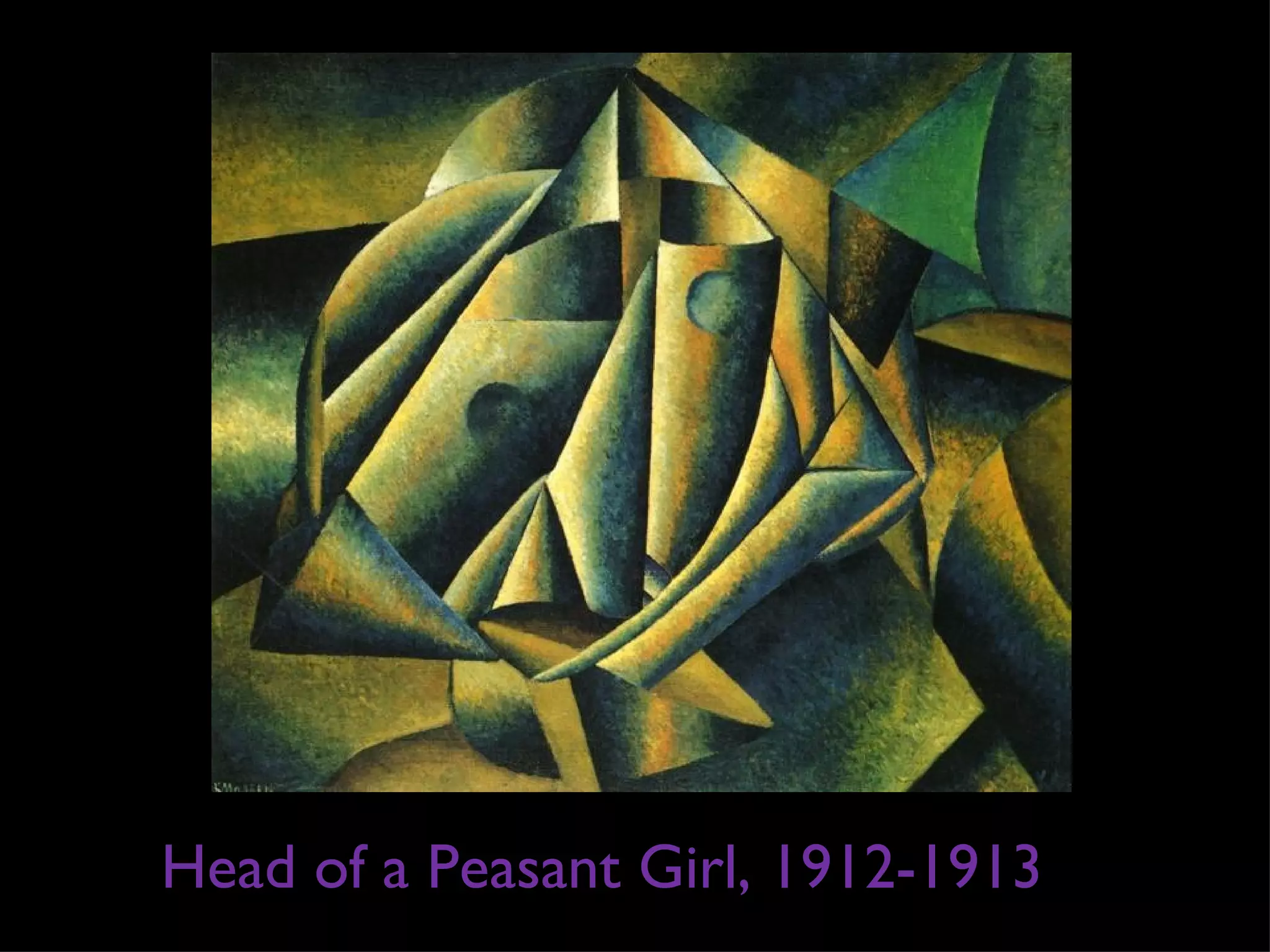
Head of a Peasant Girl, 1912-1913
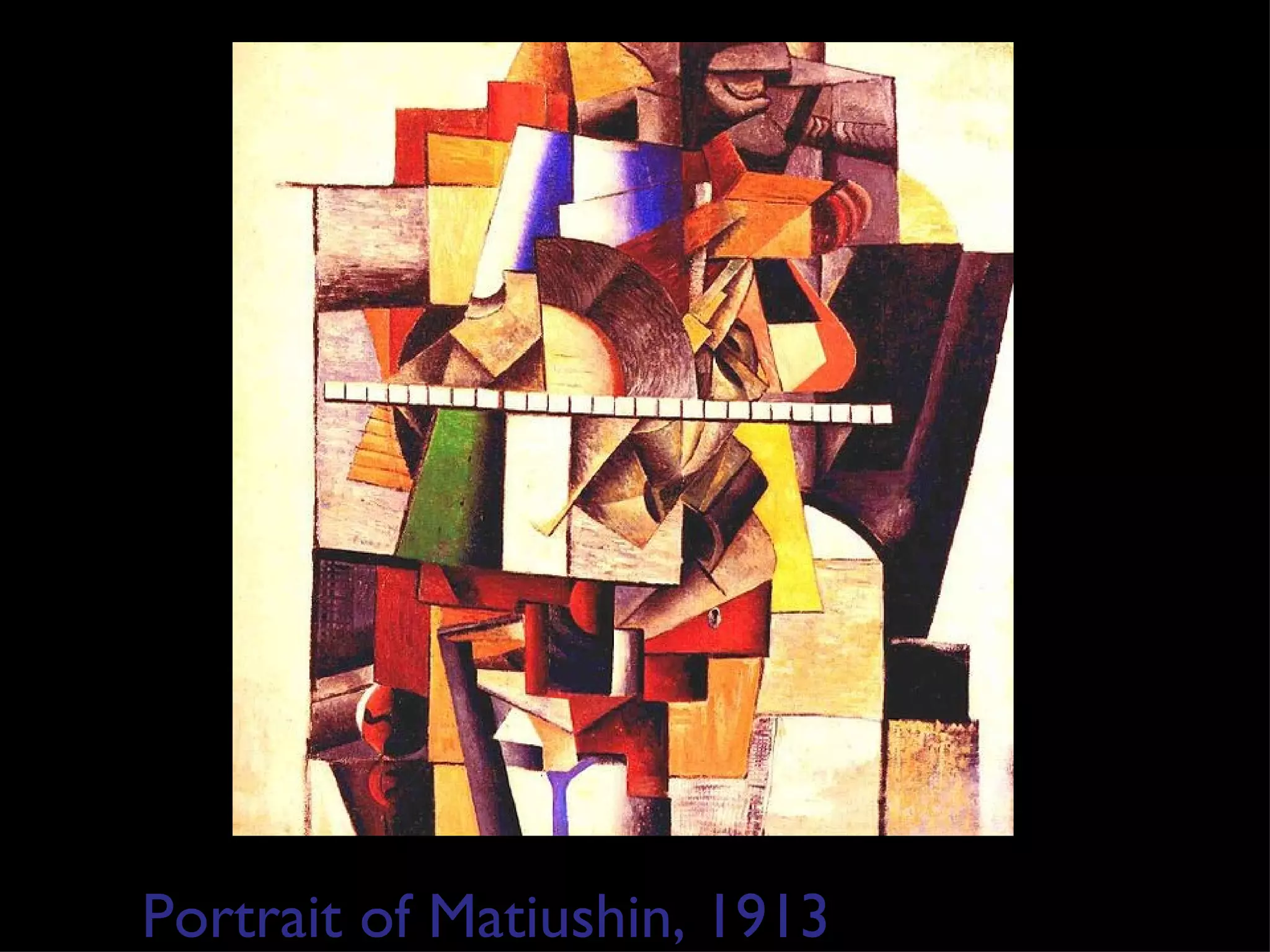
Portrait of Matiushin, 1913
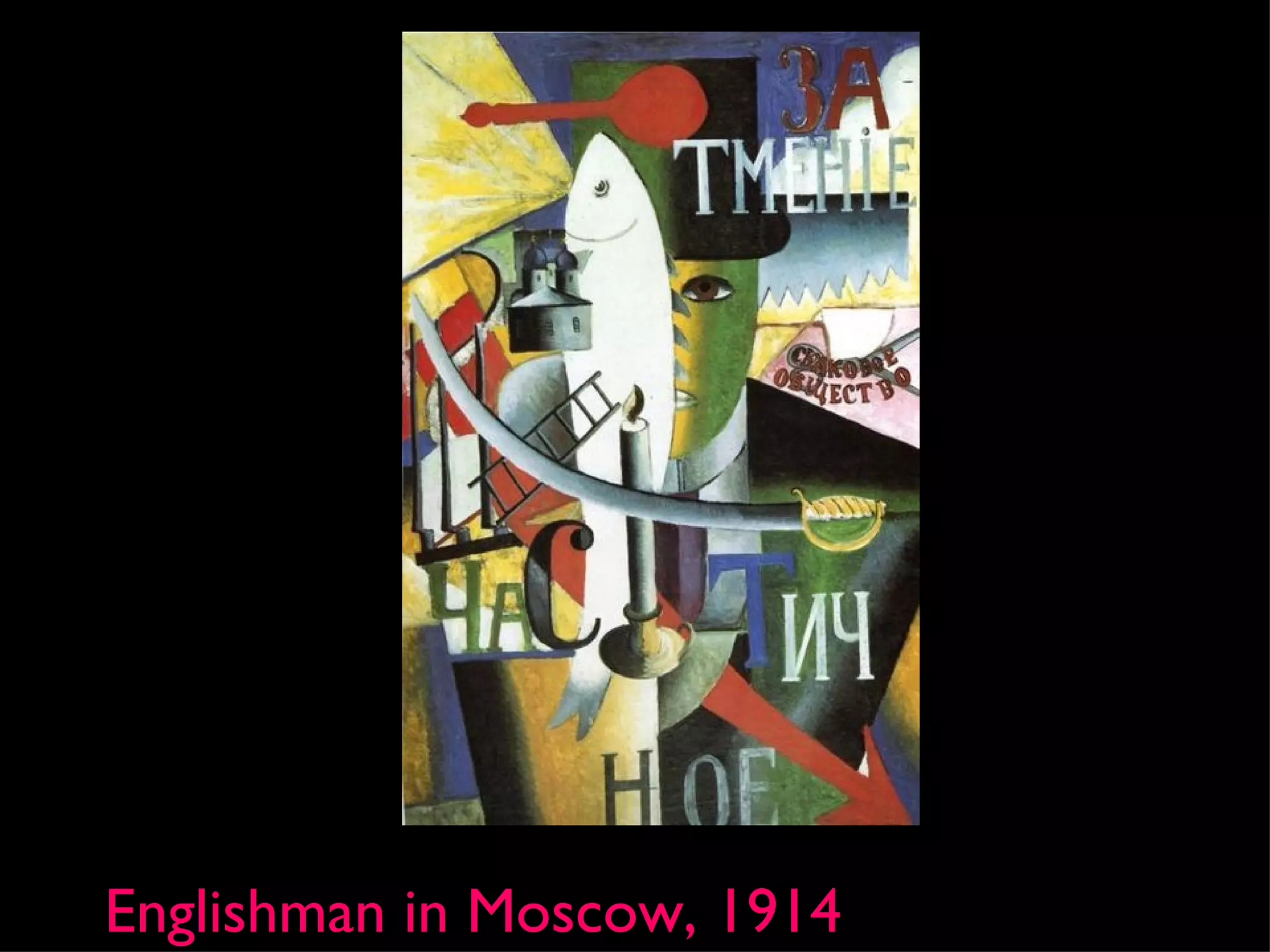
Englishman in Moscow, 1914
Influences
• Vladimir Markov
 • Non-objective
• Velimir Khelbnikov
 • Universal understanding
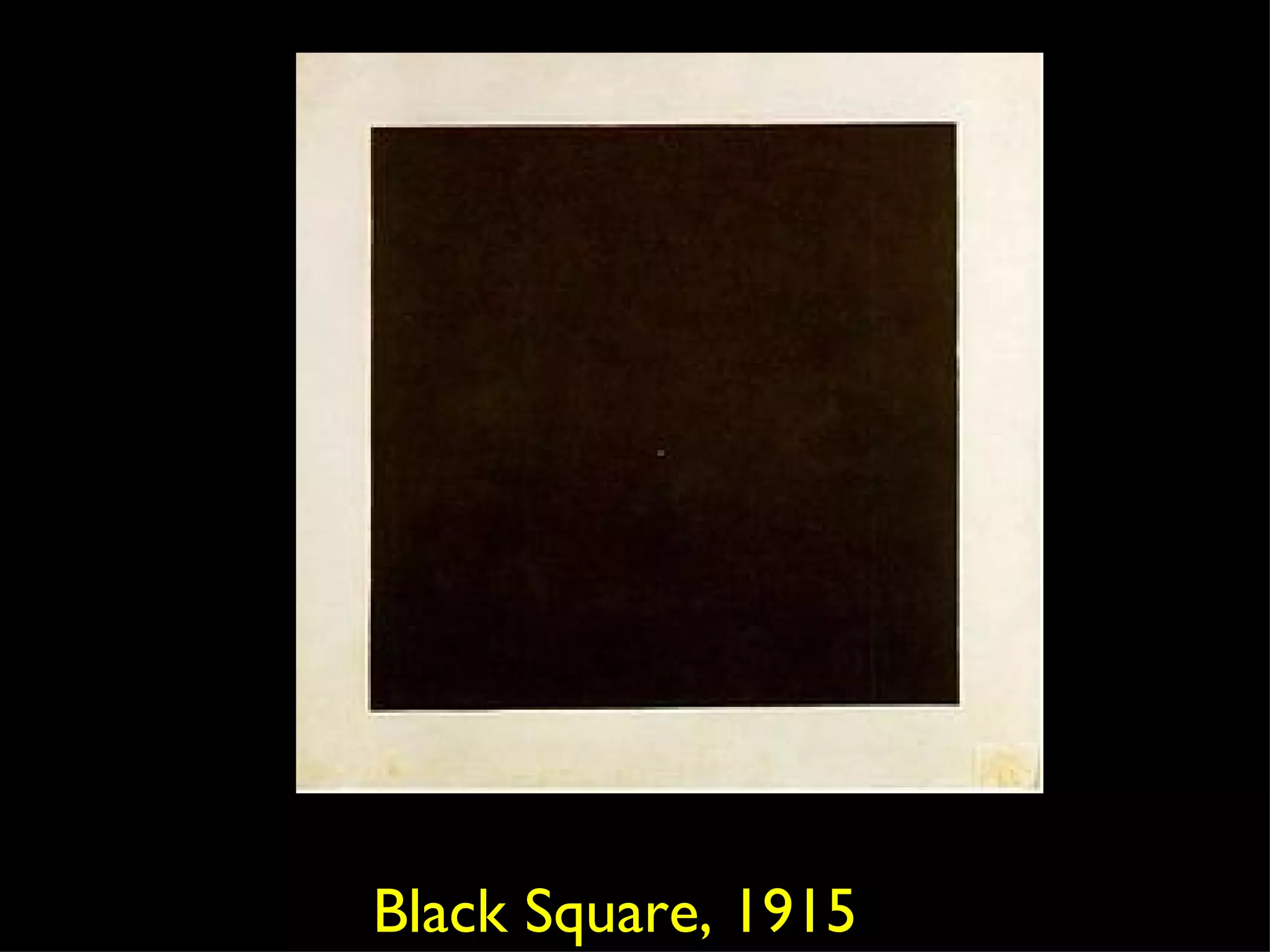
Black Square, 1915
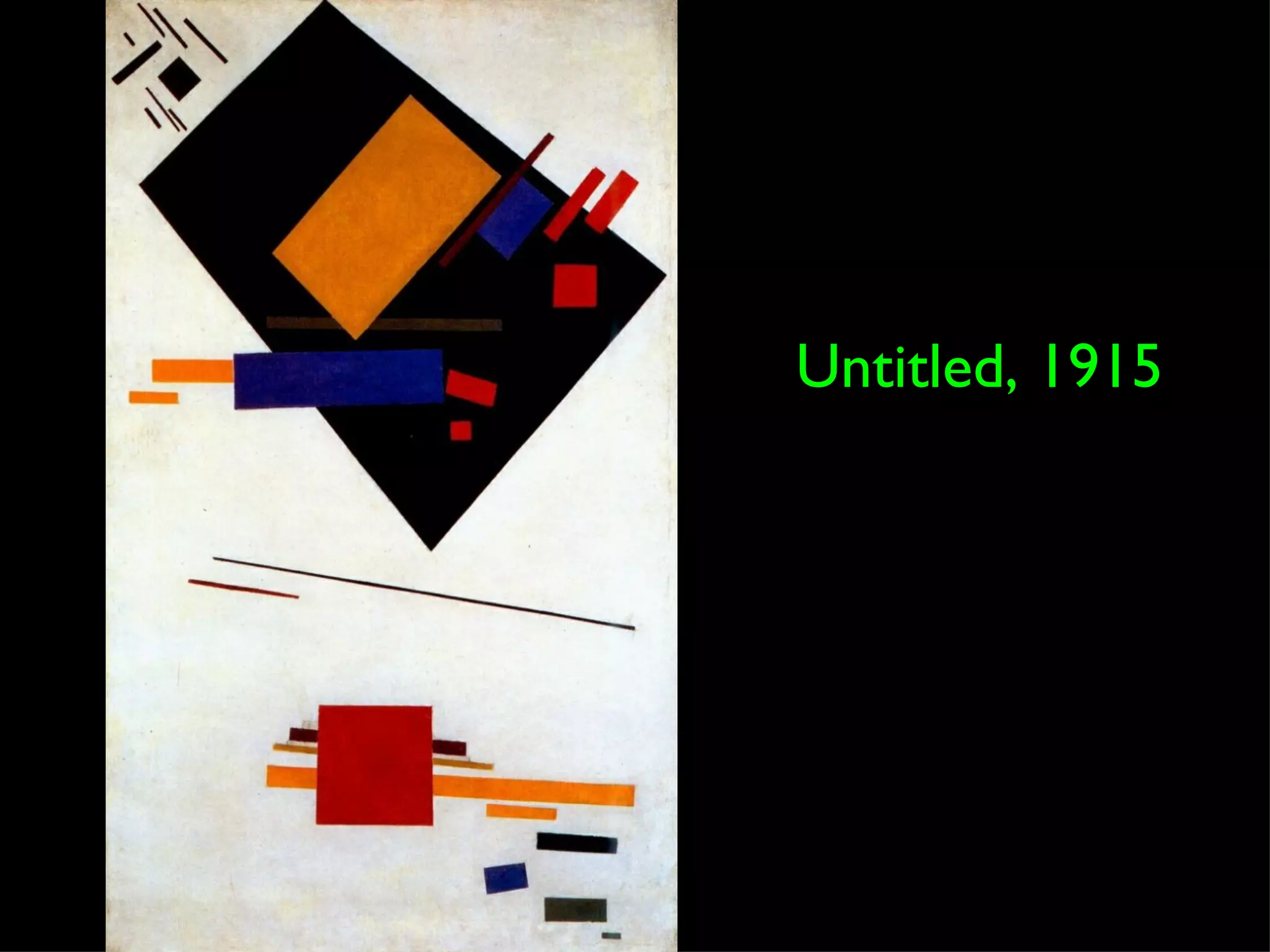
Untitled, 1915
White on White, 1918
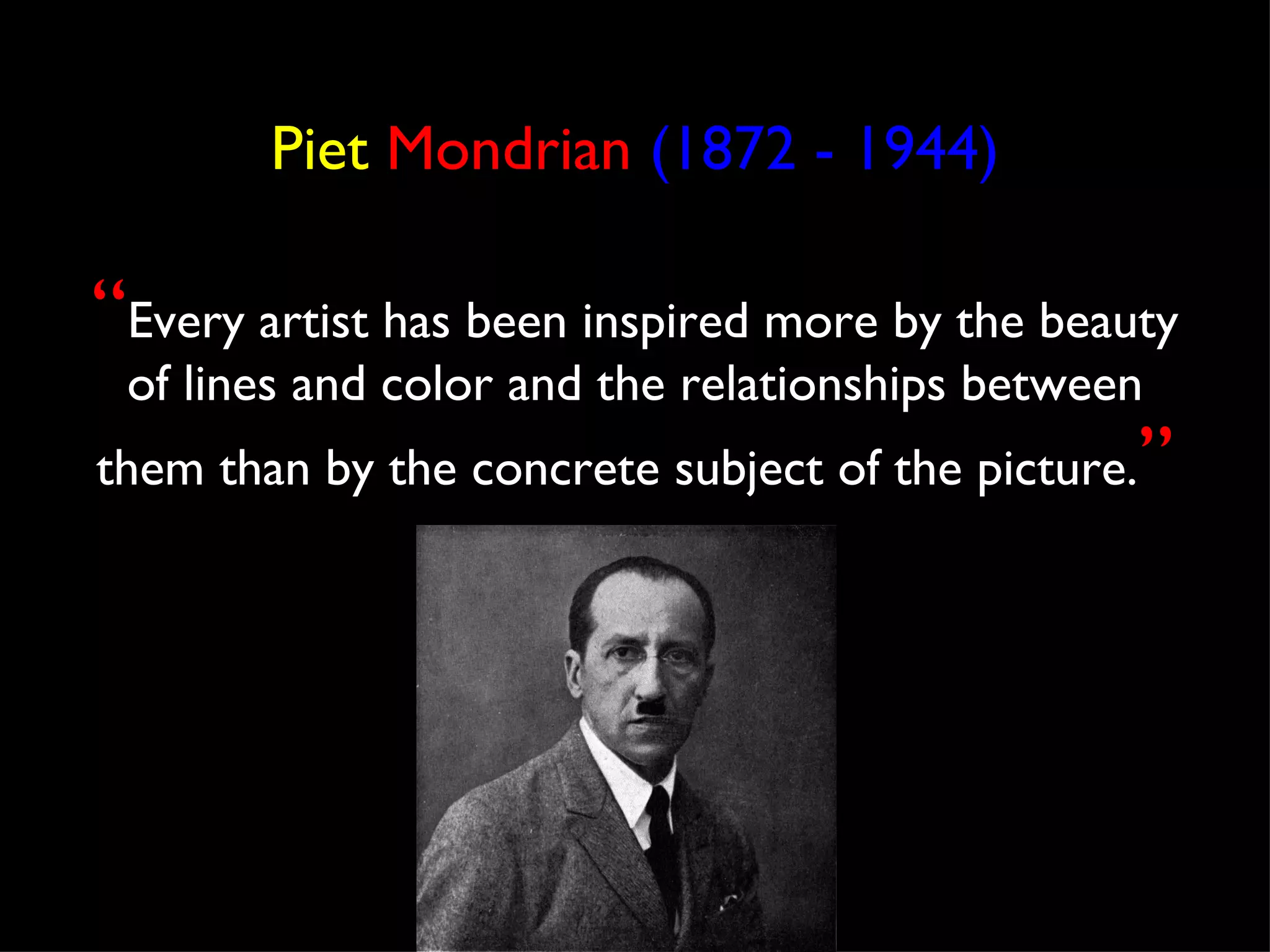
Piet Mondrian (1872 - 1944)

“Every artist has been inspired more by the beauty
 of lines and color and the relationships between
                                                ”
them than by the concrete subject of the picture.
De Stijl (1917 - 1931)
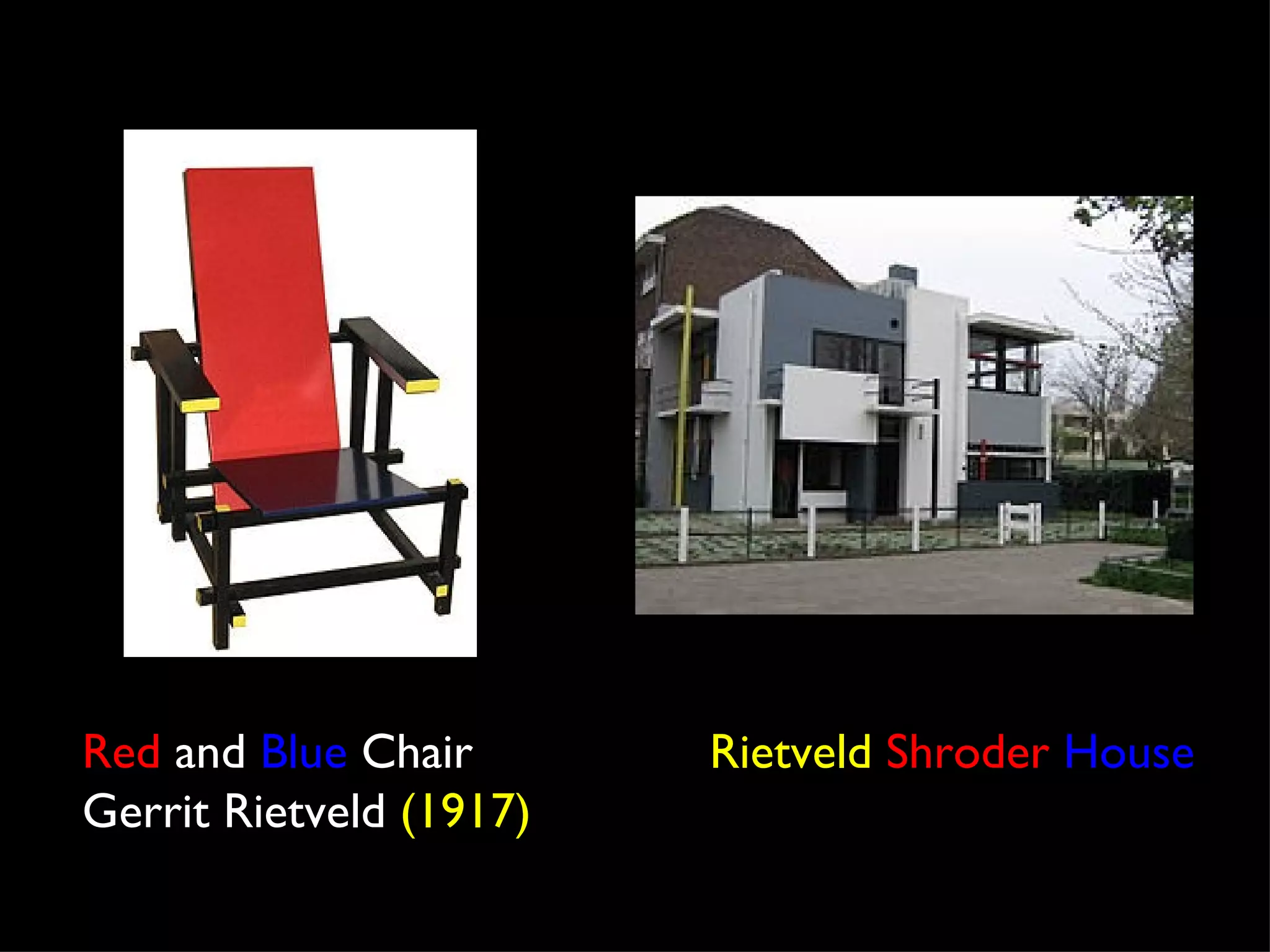
• In 1917 Mondrian helped begin the periodical art
  movement known as “De Stijl”
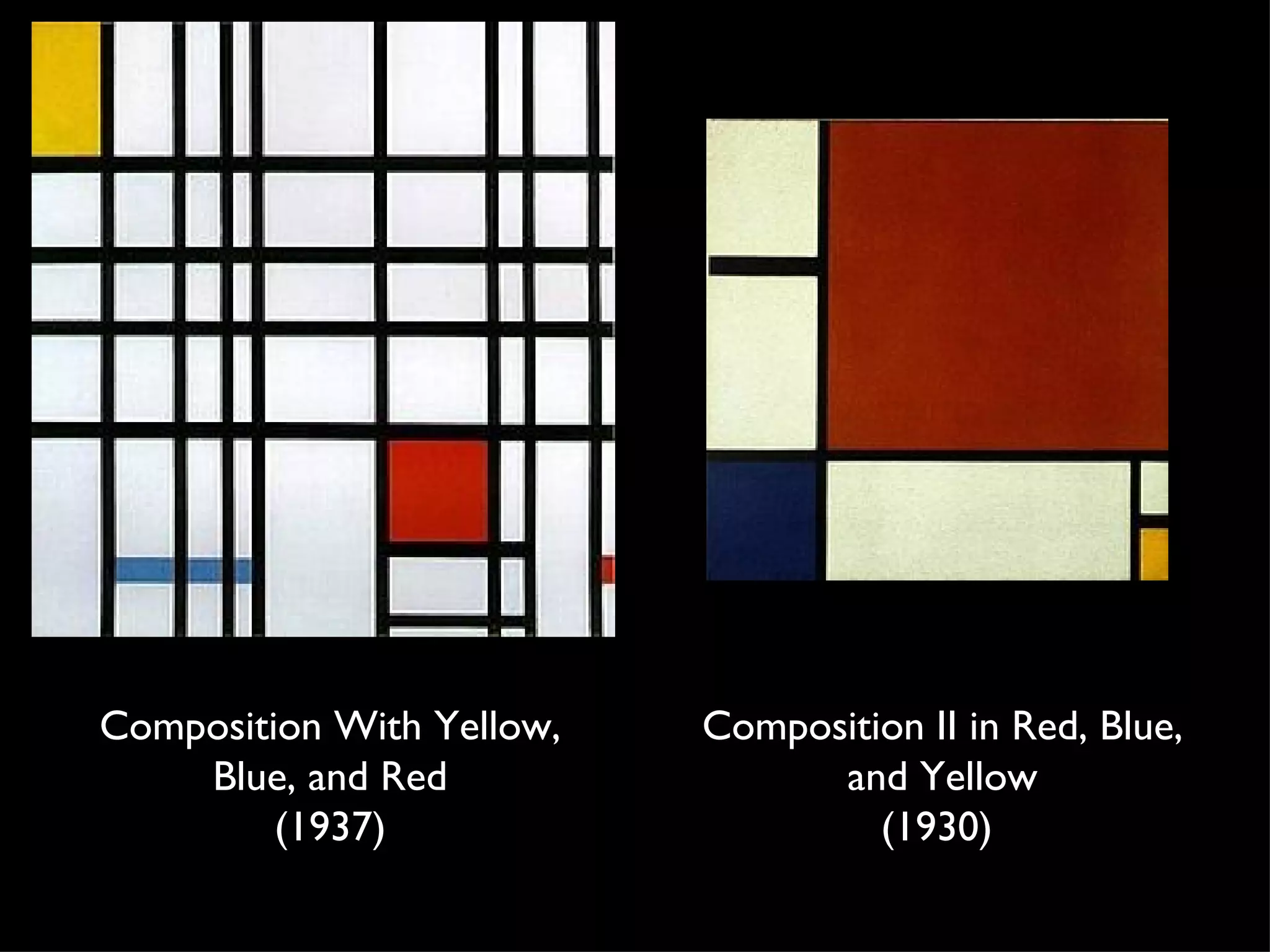
• Classified as Neoplacticism
• Complete rejection of visual reality
• Stripped art to its most basic form
• Straight lines, primary colors, and black white or
  gray
Composition With Yellow,   Composition II in Red, Blue,
    Blue, and Red                and Yellow
         (1937)                     (1930)
Red and Blue Chair       Rietveld Shroder House
Gerrit Rietveld (1917)
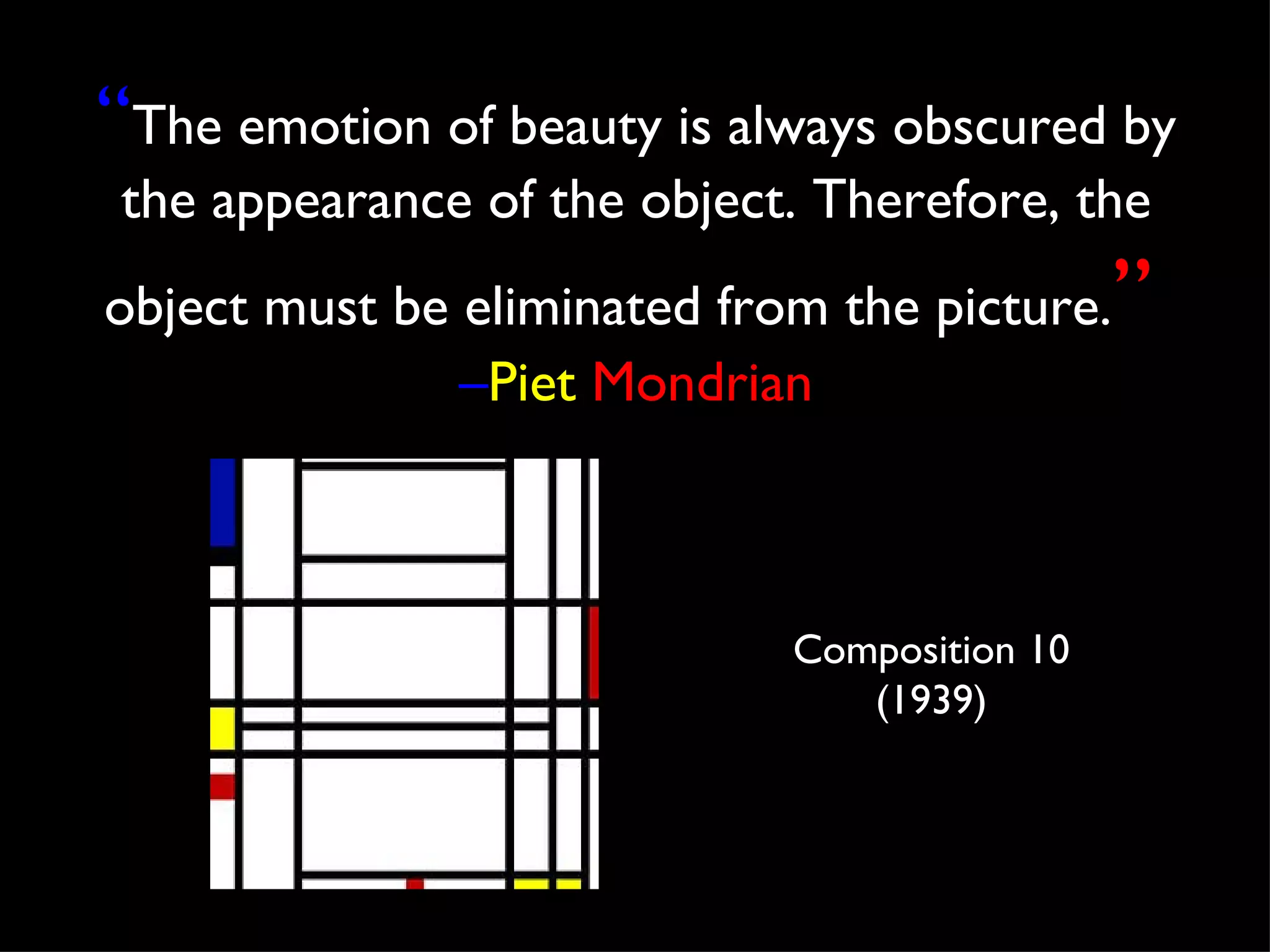
“The emotion of beauty is always obscured by
 the appearance of the object. Therefore, the
object must be eliminated from the picture.   ”
               –Piet Mondrian


                             Composition 10
                                (1939)
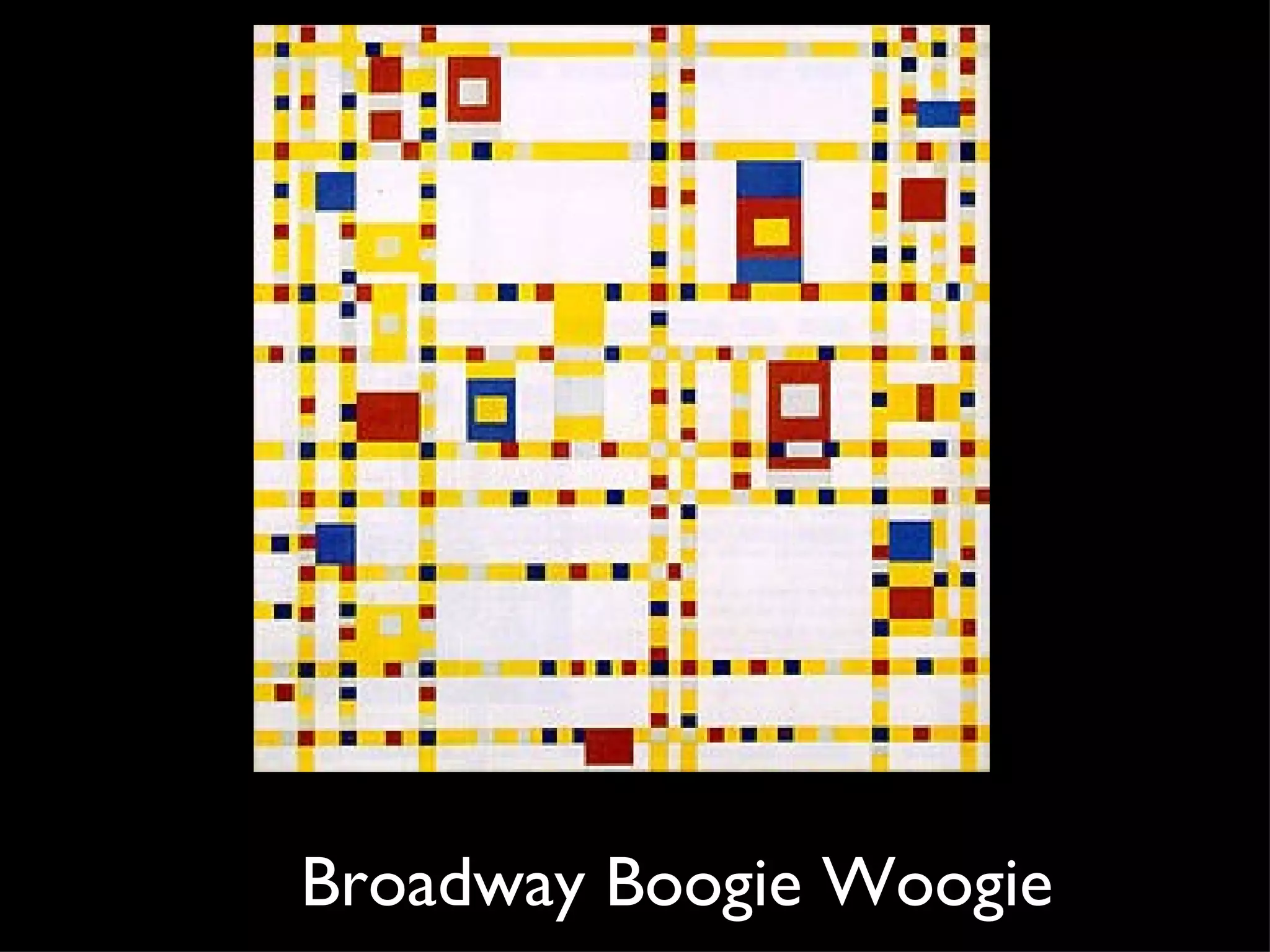
Broadway Boogie Woogie
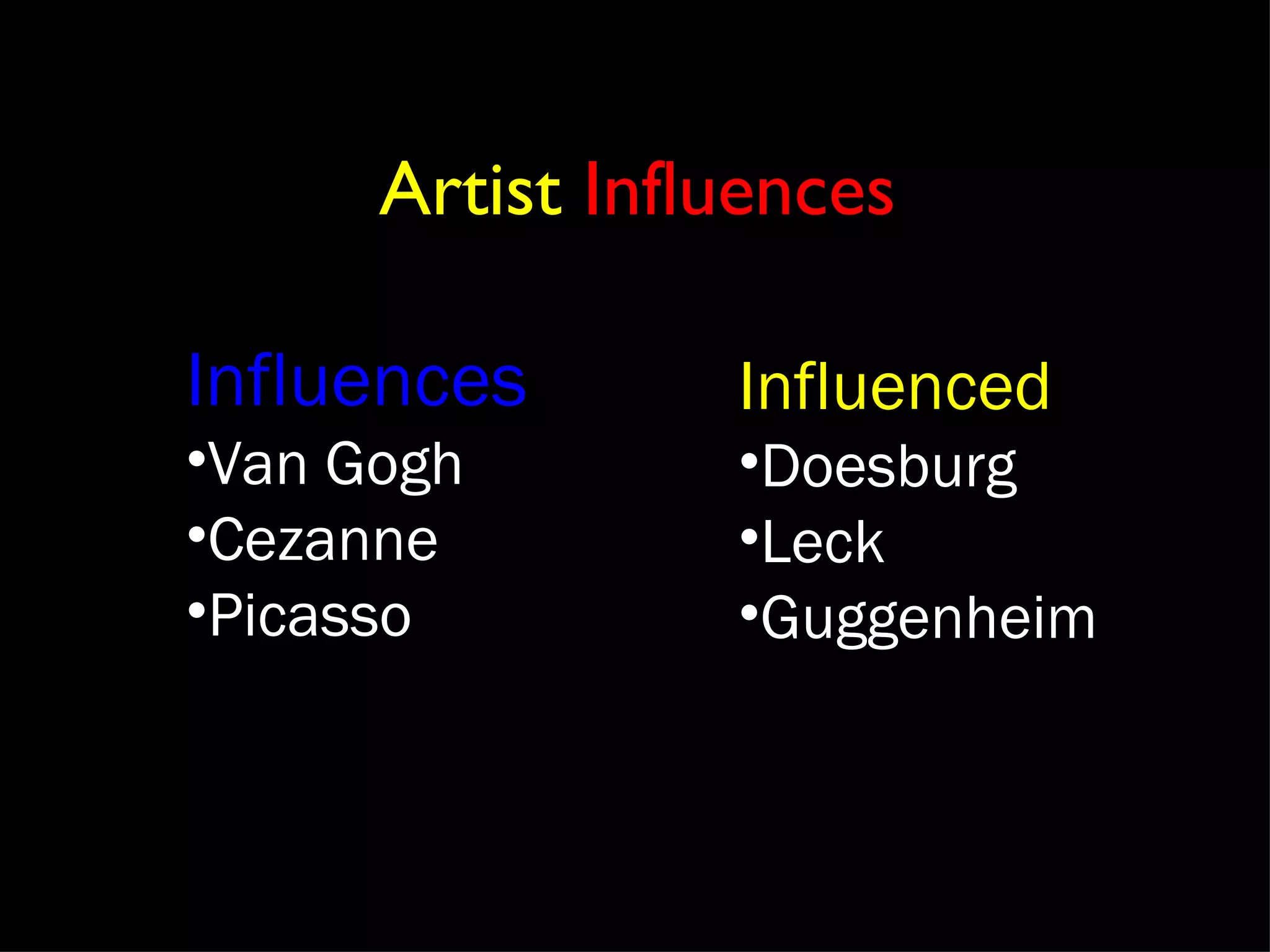
Artist Influences

Influences       Influenced
•Van Gogh        •Doesburg
•Cezanne         •Leck
•Picasso         •Guggenheim

Abstract art 4th Hour

  • 1.
    Abstract Art Sushmi Diraviam Sarban Singh Megan Blanck
  • 2.
    Wassily Kadinsky • Born in Moscow • learned music at a young age • pursuing law and teaching SO.......?
  • 3.
    Kandinsky went toan art exhibit and saw this... Haystacks at Giverny by Claude Monet
  • 4.
  • 5.
    What is AbstractArt? • nonobjective and nonrepresentational • portraying non-visual aspects of an object • color, form and line - only things that matter • took meaning out of the paintings and emphasized emotion
  • 6.
  • 7.
    Untitled, First AbstractWatercolour by Kandinsky, 1910
  • 8.
    Kandinsky • Incorporated music into his artwork • ex. saturation associated with volume of sound • “Color is the keyboard, the eyes are the harmonies, the soil is the piano with many strings. The artist is the hand that plays, touching one key to another, to cause vibrations in the soil.” -Kandinsky
  • 9.
    Der Blaue Reiter •1911 Kandinsky organized a group called “Der Blaue Reiter” (The Blue Rider) - 9 artists • promote abstract art • transferring spiritual experiences through color and sound • published Concerning the Spiritual in Art
  • 10.
    Concerning the Spiritualin Art • got all his ideas out there about abstract art - western culture • “inner necessity” needed for art
  • 11.
    Composition 7 byKandinsky, 1913
  • 12.
    Squares with ConcentricCircles by Kandinsky 1913
  • 13.
    Teaching at theBauhaus • increased his attention to geometry • paid attention to the relationship between the forms and colors • deeper connection with his work
  • 14.
  • 15.
    Composition X byKandinsky 1939
  • 16.
    Kazmir Malevich • StartedSuprematism • Taught himself how to paint • Russian • Learned about Cubism through Russian collector who displayed art of Cezanne, Matisse, and Picasso
  • 17.
    Suprematism • Geometric Shapes • Simplification • Movement- tilting • Color schemes • Flight • Non-Objective • Emotion
  • 18.
    Taking in theRye, 1911
  • 19.
    Head of aPeasant Girl, 1912-1913
  • 20.
  • 21.
  • 22.
    Influences • Vladimir Markov • Non-objective • Velimir Khelbnikov • Universal understanding
  • 23.
  • 24.
  • 26.
  • 27.
    Piet Mondrian (1872- 1944) “Every artist has been inspired more by the beauty of lines and color and the relationships between ” them than by the concrete subject of the picture.
  • 28.
    De Stijl (1917- 1931) • In 1917 Mondrian helped begin the periodical art movement known as “De Stijl” • Classified as Neoplacticism • Complete rejection of visual reality • Stripped art to its most basic form • Straight lines, primary colors, and black white or gray
  • 29.
    Composition With Yellow, Composition II in Red, Blue, Blue, and Red and Yellow (1937) (1930)
  • 30.
    Red and BlueChair Rietveld Shroder House Gerrit Rietveld (1917)
  • 31.
    “The emotion ofbeauty is always obscured by the appearance of the object. Therefore, the object must be eliminated from the picture. ” –Piet Mondrian Composition 10 (1939)
  • 32.
  • 33.
    Artist Influences Influences Influenced •Van Gogh •Doesburg •Cezanne •Leck •Picasso •Guggenheim