Lesson 9: SOUL MAKING IN ART
• INTRODUCTION
• For most of us, “soul-making” evolves something deep and spiritual. The
topic under discussion details the nature of art that can be described as
spiritual by virtue of its revelatory, revitalizing and reflective capacities.
How do the two come together, and what form does the relationship take?
If we are to define art in this case, we could say that it is the
communication of the human with the sense of existence, the discovery of
deep secrets, penetrating to the source of things of who we are, our
personality, our identity as a person. With this in mind, you will give
attention to the process of art-making as a path to discovering strong
feelings within yourselves- all of which are ways for self-insight and
enriching the “soul”.
• According to keeyaa, “Art is a way to portray human
consciousness.” It is a way to deal with our own overwhelming
self-awareness and sensitivity to the general burdens of life.
Today, art is recognized as being therapeutic — for instance, it
is used as therapy for cancer patients. It is as a way for them to
express their state of mind and a means to come to terms with
their condition. Self-expression in any form is a potent way of
understanding and calming your mind in the midst of chaos.
• Perhaps a good example of this would be my own experience.
Dance, regular workout, composing poems bring to me the kind
of comfort that helps me clear my mind, focus my thoughts and
concentrate on things other than the problems I see right before
my nose. For me , dance and art are meditation, a release from
stress, doubt and trouble.
• It is the mind that limits creativity. There are many medical
students who write or play an instrument and commerce
students who compose their own music. Even playing a sport
could be an art form, if it is respected and played out of love as
a method of release. Art in all its shapes and forms can thus be
a powerful medium of Self-realization. It is something that
everyone should have, in one way or other — a way of making
sense of yourself and the world.
• Major Points:
• According to Norman Narciso, a Filipino artist, soul making is an
alternative venue for knowing ourselves and looking into the depths and
real meaning of what we are doing for everyday life.
• It is a form of crafting stories or transforming brief moments into images
and symbols, connecting with people, understanding culture, and
embodying tolerance and peace.
• This form of art-making, develops the artist in us, awakening the art in us
that has been stagnant or undeveloped for numerous years.
• It opens the door for multiple intelligences of expression.
• An exploration and application of the imagination in an active way.
Imagination is important in creating an artwork. It varies however
from each individual since each has his/her own experience which
differs from the other. This imagination is expressed in many ways.
• Understood in this sense, soul-making is art-making. Soul-making
can be an innate gift or a learned skill, or a combination of both. As
discussed in Lesson 3, art is a uniquely human endeavor, and
therefore, we all create art.
• Everyone, can be involved in soul-making when he seeks to
experience art. Just like what has been previously said, it is an
expression of an experience. Whether you are an artist or not. You
can do it anytime you feel making art, no time reference.
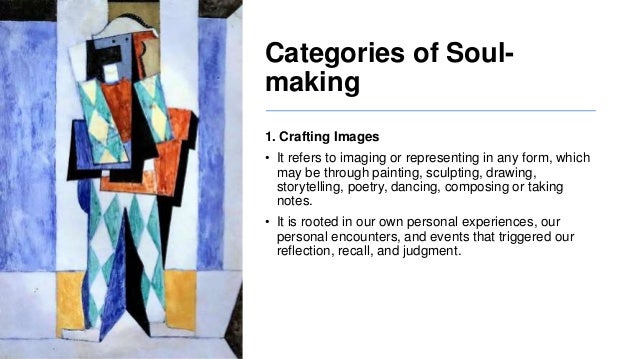
Categories of Soul-
making
1. Crafting Images
• It refers to imaging or representing in any form, which
may be through painting, sculpting, drawing,
storytelling, poetry, dancing, composing or taking
notes.
• It is rooted in our own personal experiences, our
personal encounters, and events that triggered our
reflection, recall, and judgment.
2. Crafting Stories
• The moment we write, engrave, and inscribe
our own thoughts, ideas, commentaries,
criticisms and positive and negative emotions
and feelings, we are crafting stories. These
can be presented in any form-images, words,
objects, and musical composition.
• They become our own history that can be
handed down to the family for the succeeding
generations.
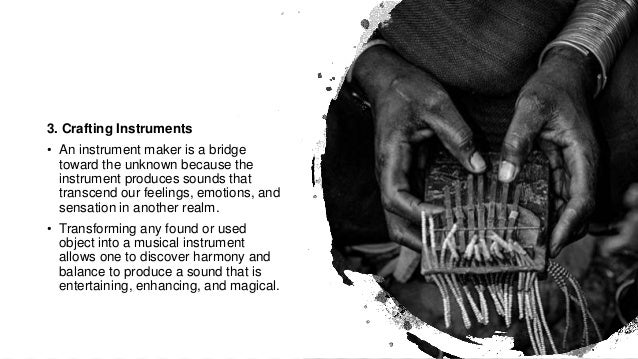
3. Crafting Instruments
• An instrument maker is a bridge
toward the unknown because the
instrument produces sounds that
transcend our feelings, emotions, and
sensation in another realm.
• Transforming any found or used
object into a musical instrument
allows one to discover harmony and
balance to produce a sound that is
entertaining, enhancing, and magical.
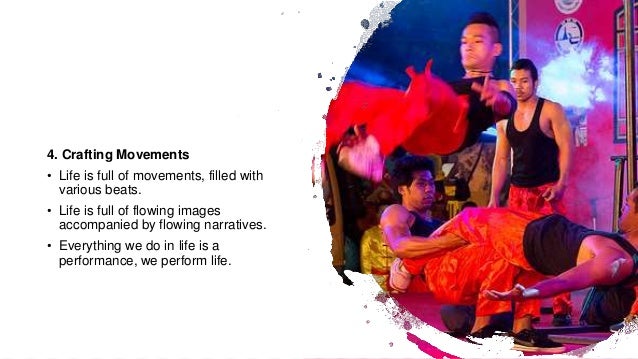
4. Crafting Movements
• Life is full of movements, filled with
various beats.
• Life is full of flowing images
accompanied by flowing narratives.
• Everything we do in life is a
performance, we perform life.
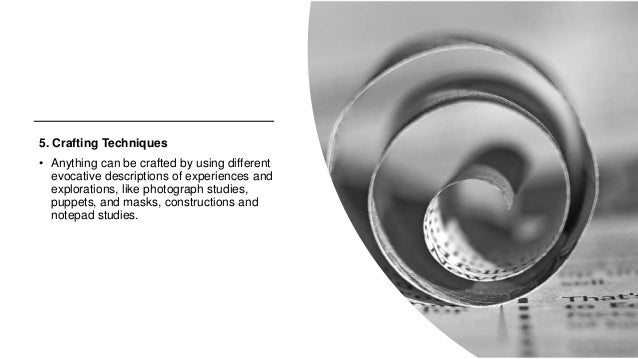
5. Crafting Techniques
• Anything can be crafted by using different
evocative descriptions of experiences and
explorations, like photograph studies,
puppets, and masks, constructions and
notepad studies.
Assessment
• A PERSONAL MANDALA
Lesson 10: Appropriation in Contemporary Art
• What is Appropriation Art?
• Appropriation is a readily acknowledged practice in the
arts, particularly in visual arts. However, this sort of art
practice has sparked controversy and debate. Certain
issues were raised when appropriation occurs in the
context of the arts. But what is appropriation?
• To give you an idea of what is appropriation in terms of
art, kindly read this article. (go to canvas)
Issue on Ownership
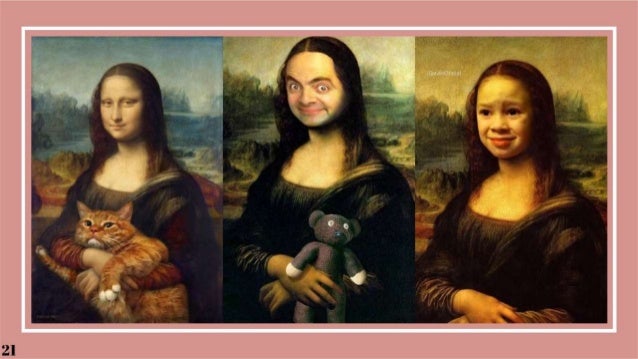
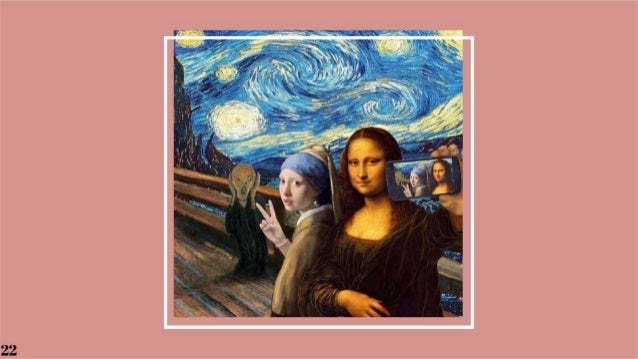
• So, consciously incorporating existing work into a new work is
part of the post-modern art form known as appropriation art.
Appropriation art borrows images and ideas from other culture,
advertising, mass media, and other artists, and incorporates
them into new works of art. In the new context, the object or
image is re-contextualized. From the artists’ perspective this is
an essential part of the artistic process, something that has
gone on since the dawn of time. As mentioned, there are
limitations --ethical issues and legal constraints--attached to it.
(To see the video, go to canvas)
• Despite of its being controversial, appropriation has held itself to be a
dominant artistic strategy especially in these present times. Unlike plain
copying and forgery, which trick us to believe to look at something unique,
appropriation relies on recognizing and acknowledging the original source
of the image and all its connotations. This can change the context of the
work (the historical and cultural background in which the original artwork
was created), but the content is the same.
• Perhaps what we can think of is the fact that these forms of art provide us
the opportunity and freedom to reexamine history and ultimately re-
evaluate traditional ideals through history making them relevant and
appropriate in the current context.
ASSESSMENT
•Appropriation Artwork

Lesson-9-AND-10-Soul-Making-Art-Appropriation_updated.pptx

  • 1.
    Lesson 9: SOULMAKING IN ART • INTRODUCTION • For most of us, “soul-making” evolves something deep and spiritual. The topic under discussion details the nature of art that can be described as spiritual by virtue of its revelatory, revitalizing and reflective capacities. How do the two come together, and what form does the relationship take? If we are to define art in this case, we could say that it is the communication of the human with the sense of existence, the discovery of deep secrets, penetrating to the source of things of who we are, our personality, our identity as a person. With this in mind, you will give attention to the process of art-making as a path to discovering strong feelings within yourselves- all of which are ways for self-insight and enriching the “soul”.
  • 2.
    • According tokeeyaa, “Art is a way to portray human consciousness.” It is a way to deal with our own overwhelming self-awareness and sensitivity to the general burdens of life. Today, art is recognized as being therapeutic — for instance, it is used as therapy for cancer patients. It is as a way for them to express their state of mind and a means to come to terms with their condition. Self-expression in any form is a potent way of understanding and calming your mind in the midst of chaos.
  • 3.
    • Perhaps agood example of this would be my own experience. Dance, regular workout, composing poems bring to me the kind of comfort that helps me clear my mind, focus my thoughts and concentrate on things other than the problems I see right before my nose. For me , dance and art are meditation, a release from stress, doubt and trouble.
  • 4.
    • It isthe mind that limits creativity. There are many medical students who write or play an instrument and commerce students who compose their own music. Even playing a sport could be an art form, if it is respected and played out of love as a method of release. Art in all its shapes and forms can thus be a powerful medium of Self-realization. It is something that everyone should have, in one way or other — a way of making sense of yourself and the world.
  • 6.
    • Major Points: •According to Norman Narciso, a Filipino artist, soul making is an alternative venue for knowing ourselves and looking into the depths and real meaning of what we are doing for everyday life. • It is a form of crafting stories or transforming brief moments into images and symbols, connecting with people, understanding culture, and embodying tolerance and peace. • This form of art-making, develops the artist in us, awakening the art in us that has been stagnant or undeveloped for numerous years.
  • 7.
    • It opensthe door for multiple intelligences of expression. • An exploration and application of the imagination in an active way. Imagination is important in creating an artwork. It varies however from each individual since each has his/her own experience which differs from the other. This imagination is expressed in many ways. • Understood in this sense, soul-making is art-making. Soul-making can be an innate gift or a learned skill, or a combination of both. As discussed in Lesson 3, art is a uniquely human endeavor, and therefore, we all create art. • Everyone, can be involved in soul-making when he seeks to experience art. Just like what has been previously said, it is an expression of an experience. Whether you are an artist or not. You can do it anytime you feel making art, no time reference.
  • 8.
    Categories of Soul- making 1.Crafting Images • It refers to imaging or representing in any form, which may be through painting, sculpting, drawing, storytelling, poetry, dancing, composing or taking notes. • It is rooted in our own personal experiences, our personal encounters, and events that triggered our reflection, recall, and judgment.
  • 9.
    2. Crafting Stories •The moment we write, engrave, and inscribe our own thoughts, ideas, commentaries, criticisms and positive and negative emotions and feelings, we are crafting stories. These can be presented in any form-images, words, objects, and musical composition. • They become our own history that can be handed down to the family for the succeeding generations.
  • 10.
    3. Crafting Instruments •An instrument maker is a bridge toward the unknown because the instrument produces sounds that transcend our feelings, emotions, and sensation in another realm. • Transforming any found or used object into a musical instrument allows one to discover harmony and balance to produce a sound that is entertaining, enhancing, and magical.
  • 11.
    4. Crafting Movements •Life is full of movements, filled with various beats. • Life is full of flowing images accompanied by flowing narratives. • Everything we do in life is a performance, we perform life.
  • 12.
    5. Crafting Techniques •Anything can be crafted by using different evocative descriptions of experiences and explorations, like photograph studies, puppets, and masks, constructions and notepad studies.
  • 13.
  • 15.
    Lesson 10: Appropriationin Contemporary Art • What is Appropriation Art? • Appropriation is a readily acknowledged practice in the arts, particularly in visual arts. However, this sort of art practice has sparked controversy and debate. Certain issues were raised when appropriation occurs in the context of the arts. But what is appropriation? • To give you an idea of what is appropriation in terms of art, kindly read this article. (go to canvas)
  • 16.
    Issue on Ownership •So, consciously incorporating existing work into a new work is part of the post-modern art form known as appropriation art. Appropriation art borrows images and ideas from other culture, advertising, mass media, and other artists, and incorporates them into new works of art. In the new context, the object or image is re-contextualized. From the artists’ perspective this is an essential part of the artistic process, something that has gone on since the dawn of time. As mentioned, there are limitations --ethical issues and legal constraints--attached to it. (To see the video, go to canvas)
  • 17.
    • Despite ofits being controversial, appropriation has held itself to be a dominant artistic strategy especially in these present times. Unlike plain copying and forgery, which trick us to believe to look at something unique, appropriation relies on recognizing and acknowledging the original source of the image and all its connotations. This can change the context of the work (the historical and cultural background in which the original artwork was created), but the content is the same. • Perhaps what we can think of is the fact that these forms of art provide us the opportunity and freedom to reexamine history and ultimately re- evaluate traditional ideals through history making them relevant and appropriate in the current context.
  • 22.