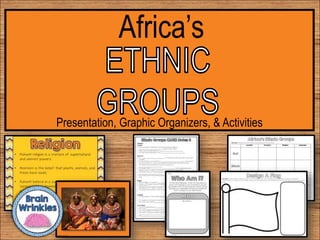
Presentation, Graphic Organizers, & Activities
Africa’s
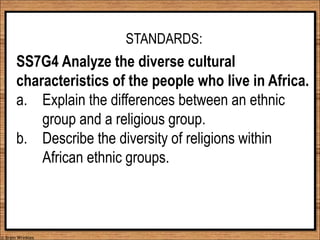
STANDARDS:
SS7G4 Analyze the diverse cultural
characteristics of the people who live in Africa.
a. Explain the differences between an ethnic
group and a religious group.
b. Describe the diversity of religions within
African ethnic groups.
© Brain Wrinkles
African
© Brain Wrinkles
Arab, Ashanti, Bantu, &
Swahili
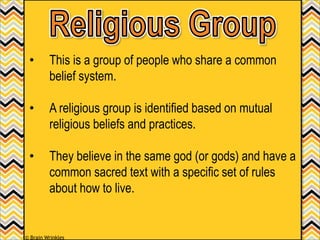
• This is a group of people who share a common
belief system.
• A religious group is identified based on mutual
religious beliefs and practices.
• They believe in the same god (or gods) and have a
common sacred text with a specific set of rules
about how to live.
© Brain Wrinkles
• Religious groups have many things in common:
• God(s), prophets, prayers, history, sacred
text, religious laws, holy days, etc.
• People from different ethnic groups may share
the same religion; however, they may be from
different cultures.
© Brain Wrinkles
© Brain Wrinkles
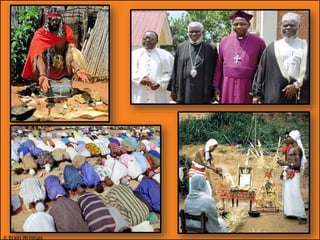
• Many Africans practice traditional religions that have
been passed down for generations.
• Traditional religions are part of everyday life in
Africa.
• These beliefs influence foods Africans eat, clothes
they wear, how they marry, treat illness, bury their
dead, etc.
© Brain Wrinkles
• Most Africans today are either Muslim or Christian.
• Arabs from Southwest Asia brought Islam to Northern
Africa around 700 CE.
• They converted many Africans and Islam slowly
spread throughout Northern Africa over time.
• Christianity first came to Africa in the middle of the first
century.
• Since then, missionaries have continued to spread
their beliefs across sub-Saharan Africa.
© Brain Wrinkles
• This is a group of people who share common
cultural characteristics.
• They are identified on the basis of religion,
race, or national origin.
• Ethnic groups can have many things in
common:
• Shared history, common ancestry, language,
religion, traditions, beliefs, holidays, food,
etc.
© Brain Wrinkles
• These characteristics have been part of their
community for generations.
• All of these things make up a common culture
that is shared by the members of the ethnic
group.
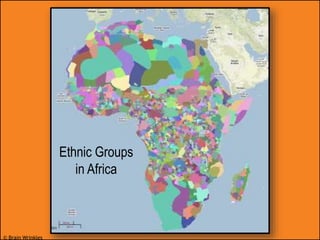
• There are more than 3,000 ethnic groups in
Africa, but some of the main ones are the
Arabs, Ashanti, Bantu, and Swahili.
© Brain Wrinkles
© Brain Wrinkles
Ethnic Groups
in Africa
© Brain Wrinkles
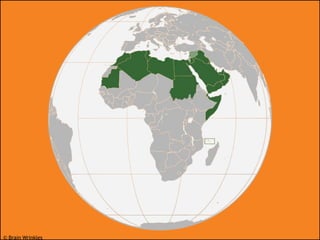
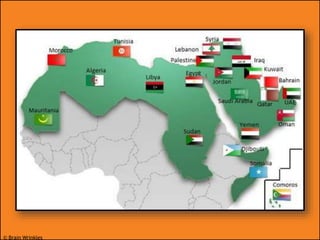
• Most of Africa’s Arab population is found in the
countries of Northern Africa.
• While the majority of Arabs are in North Africa,
the gold and salt trade spread the Arab culture
beyond the Sahara into the Sahel region and
beyond.
© Brain Wrinkles
© Brain Wrinkles
© Brain Wrinkles
• Arab people began to spread into North Africa in
the late 600s, when the first Muslim armies
arrived in Egypt.
• Arab armies, traders, and scholars soon spread
across northern Africa all the way to Morocco.
• Wherever the Arabs went, they took Islam and
the Arabic language with them.
© Brain Wrinkles
© Brain Wrinkles
• Arabic was necessary to be able to read the
Quran, Islam’s holy book.
• The Arabic language, the religion of Islam, and
many other aspects of Muslim culture became
part of Africa.
© Brain Wrinkles
© Brain Wrinkles
• Most Arabs practice Islam, while small numbers of
Arabs practice other religions.
• Not all Arabs are Muslims, and not all Muslims are
Arabs.
• Islam consists mostly of two different groups.
• The majority of Muslims practice Sunni Islam, and most
others practice Shi’a Islam.
• Sunnis and Shi’a disagree about who is in charge
of the Muslim world.
© Brain Wrinkles
© Brain Wrinkles
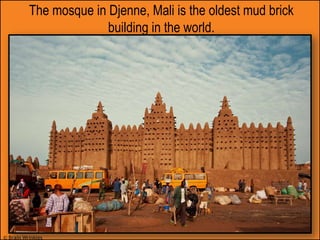
The mosque in Djenne, Mali is the oldest mud brick
building in the world.
• Sunni Islam dominates in most Arab areas,
especially in North Africa.
• Shi’a Islam is dominant among the Arab
population in most of Southwest Asia.
© Brain Wrinkles
© Brain Wrinkles
© Brain Wrinkles
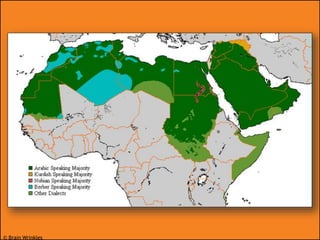
• The term “Arab” refers to an ethnic group
made up of people who speak the Arabic
language.
• Most Arabs, whether they are Muslim or
Christian, speak Arabic.
© Brain Wrinkles
© Brain Wrinkles
© Brain Wrinkles
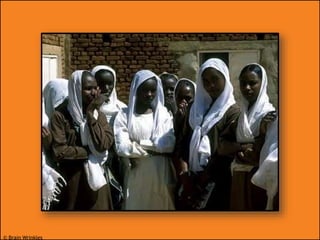
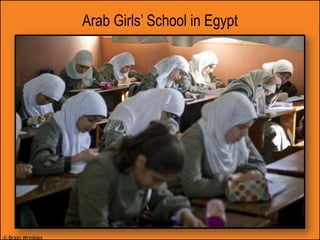
Arab Girls’ School in Egypt
• The majority of Arab people are found in
Southwest Asia and northern Africa.
• The language of the Arab people is
Arabic.
• Most Arabs, but not all, practice Islam.
© Brain Wrinkles
© Brain Wrinkles
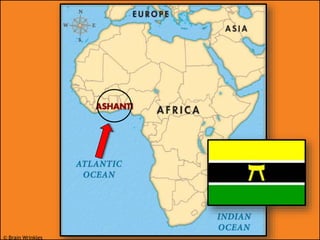
• Prior to European colonization, the Ashanti
people developed a large and influential empire
in West Africa.
• Today, they live predominately in Ghana and
Ivory Coast.
• The total Ashanti population is over 7 million.
© Brain Wrinkles
© Brain Wrinkles
• In 1701, a meeting of all the clan chiefs in the
region was held.
• In this meeting, it was said that a Golden Stool
was produced from the heavens by a priest and
landed on the lap of Osei Tutu, the first king.
• The Golden Stool was declared to be the
symbol of the new Ashanti kingdom.
© Brain Wrinkles
© Brain Wrinkles
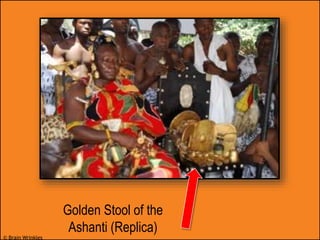
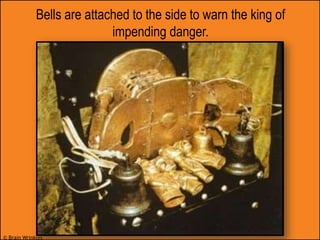
Golden Stool of the
Ashanti (Replica)
• The Golden Stool is sacred to the Ashanti, as it is
believed that the kingdom will last as long as it
remains in the hands of the Ashanti king.
• The Golden Stool is an Ashanti legend and has
only been seen by the tribe's royalty.
• Only the king and trusted advisers know the
hiding place of the stool.
© Brain Wrinkles
© Brain Wrinkles
Bells are attached to the side to warn the king of
impending danger.
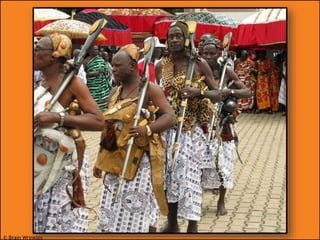
• Ashanti religion is a mixture of supernatural and
animist powers.
• Animism is the belief that plants, animals, and trees
have souls.
• Ashanti believe in a supreme god who takes on various
names depending upon the region of worship.
• They believe lower gods, like spirits, are on earth to
assist humans.
© Brain Wrinkles
© Brain Wrinkles
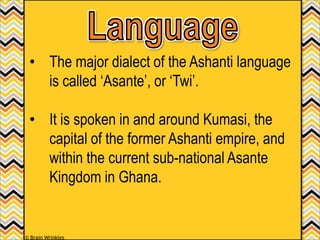
• The major dialect of the Ashanti language
is called ‘Asante’, or ‘Twi’.
• It is spoken in and around Kumasi, the
capital of the former Ashanti empire, and
within the current sub-national Asante
Kingdom in Ghana.
© Brain Wrinkles
© Brain Wrinkles
• They live predominately in Ghana and Ivory Coast.
• Most speak Twi (or Asante).
• The Ashanti religion is a mixture of spiritual and
supernatural powers.
• They believe that plants, animals, and trees have
souls (animism).
• The Golden Stool legend is very important to Ashanti
culture.
© Brain Wrinkles
© Brain Wrinkles
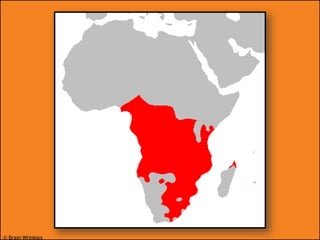
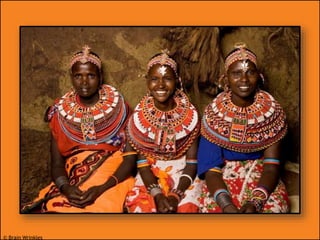
• Bantu generally refers to nearly 600 ethnic groups in
Africa who speak Bantu languages.
• The Bantu people are distributed throughout central
and southern parts of the continent.
• Bantu make up about two-thirds of Africa’s
population and cover the southern half of the
continent.
• The word “bantu” means “the people”.
© Brain Wrinkles
© Brain Wrinkles
• In Angola, archeologists have uncovered scratches
on rock, massive stone pillars, and tools that place
the Bantu people there about 50,000 BCE.
• From there, they evolved and spread eastward and
southward.
• As they spread across the continent, they met many
new people, learned new skills, and shared their
customs and beliefs.
© Brain Wrinkles
© Brain Wrinkles
• They intermarried with the people, accepting new
traditions and blending them with Bantu culture.
• Bantu-speaking people settled as far south as
the southern tip of Africa.
• The Bantu migration was one of the largest
movements of people in Africa’s history.
© Brain Wrinkles
© Brain Wrinkles
• Many Bantu people settled in areas where there was a
strong Arab presence and are now Muslim.
• Other Bantu people were influenced by missionary
efforts in Africa and are now Christian.
• Whether Muslim or Christian, many Bantu retain their
beliefs that precede both those religions.
• They believe in the power of curses and magic.
© Brain Wrinkles
© Brain Wrinkles
© Brain Wrinkles
• There are over 650 different Bantu
languages and dialects.
• Today, close to 70 million people across
the southern half of Africa speak Bantu-
based languages and share some part of
Bantu culture.
© Brain Wrinkles
© Brain Wrinkles
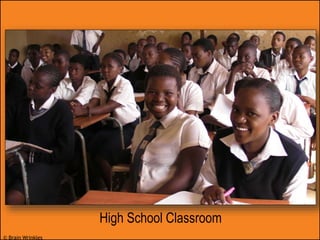
High School Classroom
• The Bantu people are found throughout Sub-
Saharan Africa.
• Bantu is a mixture of nearly 600 different ethnic
groups combined.
• There are over 650 different Bantu languages
and dialects.
• Bantu practice Islam, Christianity, & traditional
African religions.
© Brain Wrinkles
© Brain Wrinkles
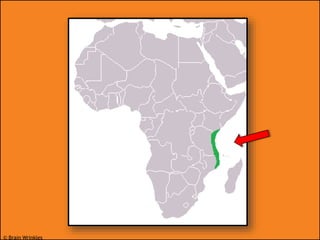
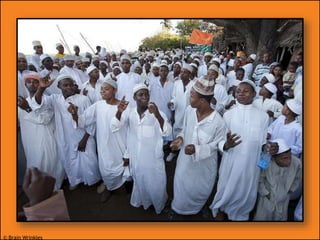
• The Swahili people mostly inhabit a narrow strip
of land along the southern coast of East Africa
(in Kenya, Tanzania, & Mozambique).
• Members also live on several nearby islands in
the Indian Ocean, including Zanzibar.
• The total population is 1,328,000.
© Brain Wrinkles
© Brain Wrinkles
• The Swahili community developed along the
coast of East Africa when Arab traders began to
settle there and intermarry with the local Bantu-
speaking population.
• The group’s name comes from the Arabic word
“Swahili,” which means “one who lives on the
coast”.
© Brain Wrinkles
© Brain Wrinkles
• Islam established its presence in the region during the
9th century, when Arab traders made contact with the
Bantu people.
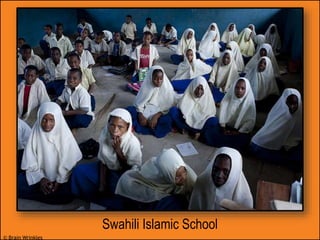
• The Swahili are all Muslims and Islam has been one of
the factors that helped create a common identity for
such a diverse group of people.
• Since Islam is a way of life, and religious holidays are
very important, the Arab culture is a vital part of Swahili
culture.
© Brain Wrinkles
© Brain Wrinkles
• The Swahili speak the Swahili language as
their native tongue.
• While the Swahili language is considered a
Bantu language, there are many Arabic words
and phrases included as a result of interactions
with early Arab traders.
• Many also speak English.
© Brain Wrinkles
© Brain Wrinkles
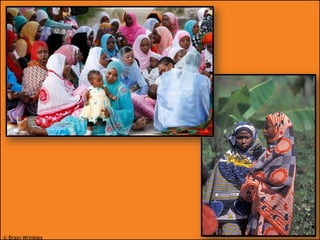
Swahili Islamic School
• The Swahili people are found in eastern
Africa (Kenya, Tanzania, & Mozambique).
• The language they speak is Swahili, which
reflects Bantu and Arab roots.
• The majority practice Islam.
© Brain Wrinkles

Ethnic and Religious Groups Student.pptx

  • 1.
    Presentation, Graphic Organizers,& Activities Africa’s
  • 2.
    STANDARDS: SS7G4 Analyze thediverse cultural characteristics of the people who live in Africa. a. Explain the differences between an ethnic group and a religious group. b. Describe the diversity of religions within African ethnic groups. © Brain Wrinkles
  • 3.
    African © Brain Wrinkles Arab,Ashanti, Bantu, & Swahili
  • 4.
    • This isa group of people who share a common belief system. • A religious group is identified based on mutual religious beliefs and practices. • They believe in the same god (or gods) and have a common sacred text with a specific set of rules about how to live. © Brain Wrinkles
  • 5.
    • Religious groupshave many things in common: • God(s), prophets, prayers, history, sacred text, religious laws, holy days, etc. • People from different ethnic groups may share the same religion; however, they may be from different cultures. © Brain Wrinkles
  • 6.
  • 7.
    • Many Africanspractice traditional religions that have been passed down for generations. • Traditional religions are part of everyday life in Africa. • These beliefs influence foods Africans eat, clothes they wear, how they marry, treat illness, bury their dead, etc. © Brain Wrinkles
  • 8.
    • Most Africanstoday are either Muslim or Christian. • Arabs from Southwest Asia brought Islam to Northern Africa around 700 CE. • They converted many Africans and Islam slowly spread throughout Northern Africa over time. • Christianity first came to Africa in the middle of the first century. • Since then, missionaries have continued to spread their beliefs across sub-Saharan Africa. © Brain Wrinkles
  • 9.
    • This isa group of people who share common cultural characteristics. • They are identified on the basis of religion, race, or national origin. • Ethnic groups can have many things in common: • Shared history, common ancestry, language, religion, traditions, beliefs, holidays, food, etc. © Brain Wrinkles
  • 10.
    • These characteristicshave been part of their community for generations. • All of these things make up a common culture that is shared by the members of the ethnic group. • There are more than 3,000 ethnic groups in Africa, but some of the main ones are the Arabs, Ashanti, Bantu, and Swahili. © Brain Wrinkles
  • 11.
    © Brain Wrinkles EthnicGroups in Africa
  • 12.
  • 13.
    • Most ofAfrica’s Arab population is found in the countries of Northern Africa. • While the majority of Arabs are in North Africa, the gold and salt trade spread the Arab culture beyond the Sahara into the Sahel region and beyond. © Brain Wrinkles
  • 14.
  • 15.
  • 16.
    • Arab peoplebegan to spread into North Africa in the late 600s, when the first Muslim armies arrived in Egypt. • Arab armies, traders, and scholars soon spread across northern Africa all the way to Morocco. • Wherever the Arabs went, they took Islam and the Arabic language with them. © Brain Wrinkles
  • 17.
  • 18.
    • Arabic wasnecessary to be able to read the Quran, Islam’s holy book. • The Arabic language, the religion of Islam, and many other aspects of Muslim culture became part of Africa. © Brain Wrinkles
  • 19.
  • 20.
    • Most Arabspractice Islam, while small numbers of Arabs practice other religions. • Not all Arabs are Muslims, and not all Muslims are Arabs. • Islam consists mostly of two different groups. • The majority of Muslims practice Sunni Islam, and most others practice Shi’a Islam. • Sunnis and Shi’a disagree about who is in charge of the Muslim world. © Brain Wrinkles
  • 21.
    © Brain Wrinkles Themosque in Djenne, Mali is the oldest mud brick building in the world.
  • 22.
    • Sunni Islamdominates in most Arab areas, especially in North Africa. • Shi’a Islam is dominant among the Arab population in most of Southwest Asia. © Brain Wrinkles
  • 23.
  • 24.
  • 25.
    • The term“Arab” refers to an ethnic group made up of people who speak the Arabic language. • Most Arabs, whether they are Muslim or Christian, speak Arabic. © Brain Wrinkles
  • 26.
  • 27.
    © Brain Wrinkles ArabGirls’ School in Egypt
  • 28.
    • The majorityof Arab people are found in Southwest Asia and northern Africa. • The language of the Arab people is Arabic. • Most Arabs, but not all, practice Islam. © Brain Wrinkles
  • 29.
  • 30.
    • Prior toEuropean colonization, the Ashanti people developed a large and influential empire in West Africa. • Today, they live predominately in Ghana and Ivory Coast. • The total Ashanti population is over 7 million. © Brain Wrinkles
  • 31.
  • 32.
    • In 1701,a meeting of all the clan chiefs in the region was held. • In this meeting, it was said that a Golden Stool was produced from the heavens by a priest and landed on the lap of Osei Tutu, the first king. • The Golden Stool was declared to be the symbol of the new Ashanti kingdom. © Brain Wrinkles
  • 33.
    © Brain Wrinkles GoldenStool of the Ashanti (Replica)
  • 34.
    • The GoldenStool is sacred to the Ashanti, as it is believed that the kingdom will last as long as it remains in the hands of the Ashanti king. • The Golden Stool is an Ashanti legend and has only been seen by the tribe's royalty. • Only the king and trusted advisers know the hiding place of the stool. © Brain Wrinkles
  • 35.
    © Brain Wrinkles Bellsare attached to the side to warn the king of impending danger.
  • 36.
    • Ashanti religionis a mixture of supernatural and animist powers. • Animism is the belief that plants, animals, and trees have souls. • Ashanti believe in a supreme god who takes on various names depending upon the region of worship. • They believe lower gods, like spirits, are on earth to assist humans. © Brain Wrinkles
  • 37.
  • 38.
    • The majordialect of the Ashanti language is called ‘Asante’, or ‘Twi’. • It is spoken in and around Kumasi, the capital of the former Ashanti empire, and within the current sub-national Asante Kingdom in Ghana. © Brain Wrinkles
  • 39.
  • 40.
    • They livepredominately in Ghana and Ivory Coast. • Most speak Twi (or Asante). • The Ashanti religion is a mixture of spiritual and supernatural powers. • They believe that plants, animals, and trees have souls (animism). • The Golden Stool legend is very important to Ashanti culture. © Brain Wrinkles
  • 41.
  • 42.
    • Bantu generallyrefers to nearly 600 ethnic groups in Africa who speak Bantu languages. • The Bantu people are distributed throughout central and southern parts of the continent. • Bantu make up about two-thirds of Africa’s population and cover the southern half of the continent. • The word “bantu” means “the people”. © Brain Wrinkles
  • 43.
  • 44.
    • In Angola,archeologists have uncovered scratches on rock, massive stone pillars, and tools that place the Bantu people there about 50,000 BCE. • From there, they evolved and spread eastward and southward. • As they spread across the continent, they met many new people, learned new skills, and shared their customs and beliefs. © Brain Wrinkles
  • 45.
  • 46.
    • They intermarriedwith the people, accepting new traditions and blending them with Bantu culture. • Bantu-speaking people settled as far south as the southern tip of Africa. • The Bantu migration was one of the largest movements of people in Africa’s history. © Brain Wrinkles
  • 47.
  • 48.
    • Many Bantupeople settled in areas where there was a strong Arab presence and are now Muslim. • Other Bantu people were influenced by missionary efforts in Africa and are now Christian. • Whether Muslim or Christian, many Bantu retain their beliefs that precede both those religions. • They believe in the power of curses and magic. © Brain Wrinkles
  • 49.
  • 50.
  • 51.
    • There areover 650 different Bantu languages and dialects. • Today, close to 70 million people across the southern half of Africa speak Bantu- based languages and share some part of Bantu culture. © Brain Wrinkles
  • 52.
    © Brain Wrinkles HighSchool Classroom
  • 53.
    • The Bantupeople are found throughout Sub- Saharan Africa. • Bantu is a mixture of nearly 600 different ethnic groups combined. • There are over 650 different Bantu languages and dialects. • Bantu practice Islam, Christianity, & traditional African religions. © Brain Wrinkles
  • 54.
  • 55.
    • The Swahilipeople mostly inhabit a narrow strip of land along the southern coast of East Africa (in Kenya, Tanzania, & Mozambique). • Members also live on several nearby islands in the Indian Ocean, including Zanzibar. • The total population is 1,328,000. © Brain Wrinkles
  • 56.
  • 57.
    • The Swahilicommunity developed along the coast of East Africa when Arab traders began to settle there and intermarry with the local Bantu- speaking population. • The group’s name comes from the Arabic word “Swahili,” which means “one who lives on the coast”. © Brain Wrinkles
  • 58.
  • 59.
    • Islam establishedits presence in the region during the 9th century, when Arab traders made contact with the Bantu people. • The Swahili are all Muslims and Islam has been one of the factors that helped create a common identity for such a diverse group of people. • Since Islam is a way of life, and religious holidays are very important, the Arab culture is a vital part of Swahili culture. © Brain Wrinkles
  • 60.
  • 61.
    • The Swahilispeak the Swahili language as their native tongue. • While the Swahili language is considered a Bantu language, there are many Arabic words and phrases included as a result of interactions with early Arab traders. • Many also speak English. © Brain Wrinkles
  • 62.
  • 63.
    • The Swahilipeople are found in eastern Africa (Kenya, Tanzania, & Mozambique). • The language they speak is Swahili, which reflects Bantu and Arab roots. • The majority practice Islam. © Brain Wrinkles