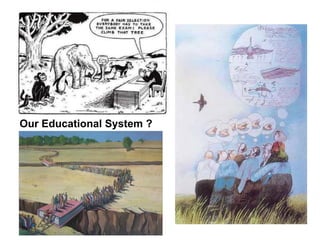
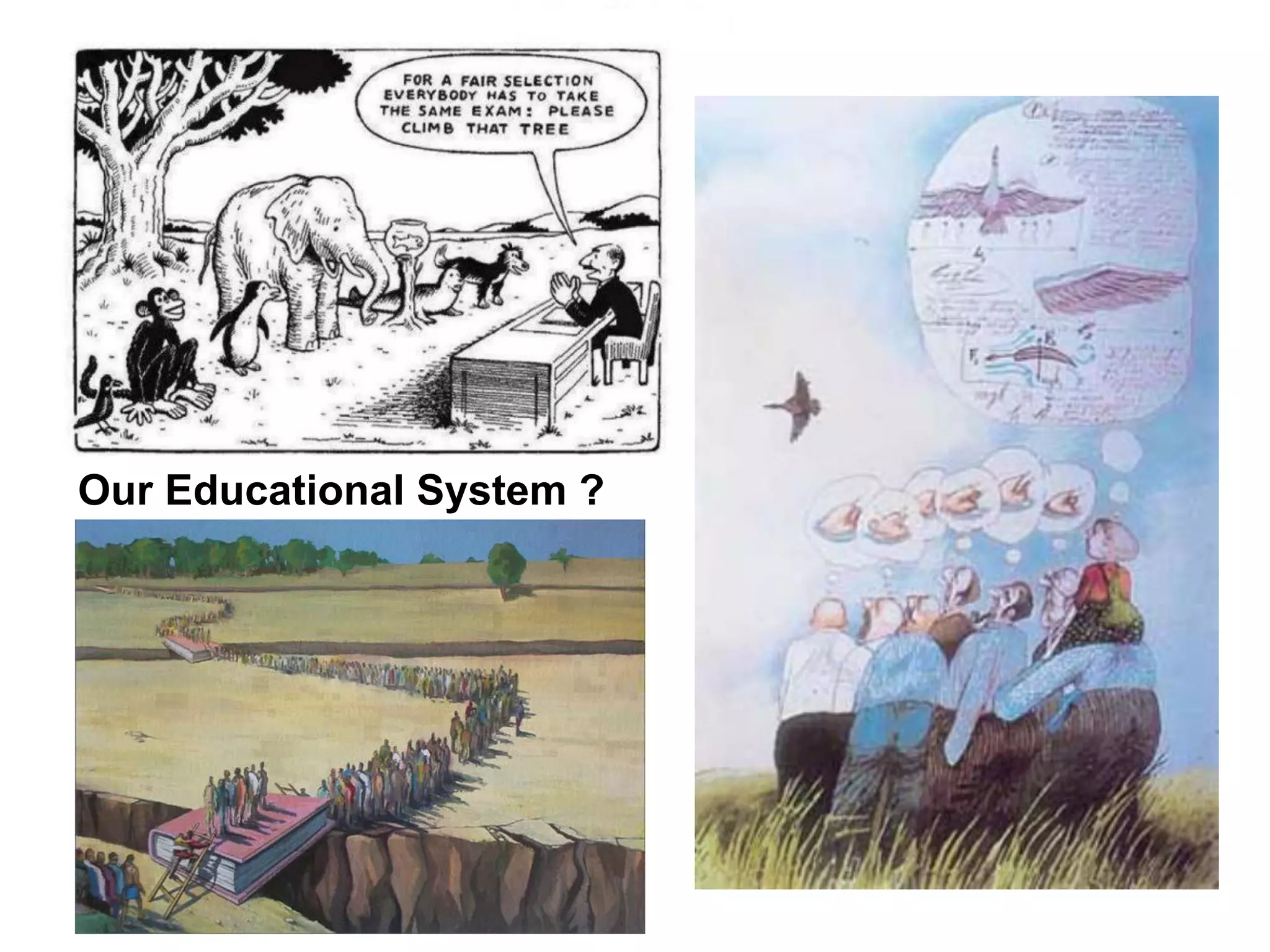
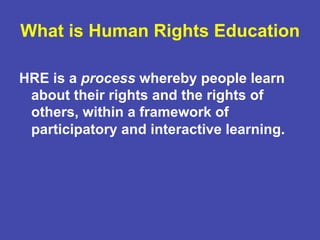
Our Educational System ?
HRE is a process whereby people learn
about their rights and the rights of
others, within a framework of
participatory and interactive learning.
What is Human Rights Education
Learning objectives in HRE:
ABOUT – FOR – THROUGH
Human Rights
• Knowledge – learning about human
rights
• Skills (learning for human rights
• Attitudes and values (learning through
and learning in human rights)
Education ABOUT human rights
•  Key concepts as freedom, equality, dignity, democracy,
responsibilities, solidarity,..
•  Idea that human rights are a frame for standars of behaviour in the
family, school, comunity and worldwide
•  Different views and experiences with human rights in different
societies and groups
•  Important social changes, historical events
•  Key international documents for protection of human rights (UDHR,
ECHR,..)
•  Regional, national and international bodies, NGO’s and individuals
that work for protection of human rights
Education FOR human rights
•  Active listening, communication and argumentation
•  Critical thinking, finding information, recognizing prejudices,
manipulations
•  Ability to cooperate and to resolve conflict in a peaceful way
•  Ability to organize and participate in social groups
•  Promotion and protection of human rights locally and globally
Education THROUGH human
rights
•  The sense of responsibility for your own actions
•  Working on personal growth
•  Working on social change
•  Curiosity, open-mindedness, respecting differences
•  Solidarity and supporting those in danger of HR violations
•  The sense of human dignity
•  The sense of fairness, freedom, equality and respect
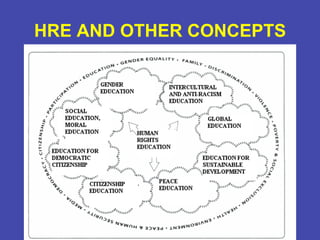
Can you connect HRE with some
other kind of education?
HRE AND OTHER CONCEPTS
WHY?......
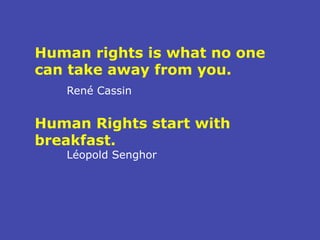
Human rights is what no one
can take away from you.
René Cassin
Human Rights start with
breakfast.
Léopold Senghor
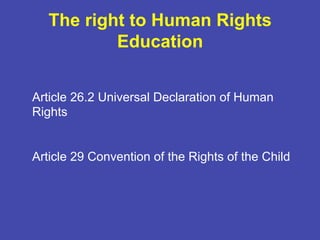
Article 26.2 Universal Declaration of Human
Rights
Article 29 Convention of the Rights of the Child
The right to Human Rights
Education
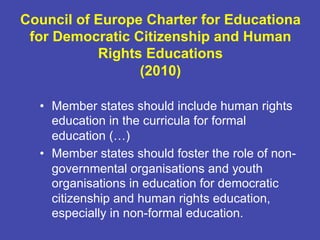
Council of Europe Charter for Educationa
for Democratic Citizenship and Human
Rights Educations
(2010)
•  Member states should include human rights
education in the curricula for formal
education (…)
•  Member states should foster the role of non-
governmental organisations and youth
organisations in education for democratic
citizenship and human rights education,
especially in non-formal education.
“Human rights education is much more than a
lesson in schools or a theme for a day; it is a
process to equip people with the tools they need to
live lives of security and dignity.”
Kofi Annan, former secretary general of United Nations (1997-2006)
For conclusion …
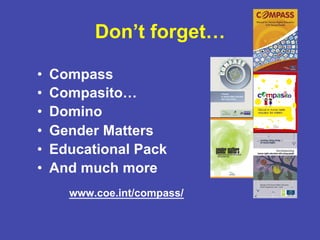
Don’t forget…
•  Compass
•  Compasito…
•  Domino
•  Gender Matters
•  Educational Pack
•  And much more
www.coe.int/compass/
Human Rights Education

Human Rights Education

  • 1.
  • 2.
    HRE is aprocess whereby people learn about their rights and the rights of others, within a framework of participatory and interactive learning. What is Human Rights Education
  • 3.
    Learning objectives inHRE: ABOUT – FOR – THROUGH Human Rights • Knowledge – learning about human rights • Skills (learning for human rights • Attitudes and values (learning through and learning in human rights)
  • 4.
    Education ABOUT humanrights •  Key concepts as freedom, equality, dignity, democracy, responsibilities, solidarity,.. •  Idea that human rights are a frame for standars of behaviour in the family, school, comunity and worldwide •  Different views and experiences with human rights in different societies and groups •  Important social changes, historical events •  Key international documents for protection of human rights (UDHR, ECHR,..) •  Regional, national and international bodies, NGO’s and individuals that work for protection of human rights
  • 5.
    Education FOR humanrights •  Active listening, communication and argumentation •  Critical thinking, finding information, recognizing prejudices, manipulations •  Ability to cooperate and to resolve conflict in a peaceful way •  Ability to organize and participate in social groups •  Promotion and protection of human rights locally and globally
  • 6.
    Education THROUGH human rights • The sense of responsibility for your own actions •  Working on personal growth •  Working on social change •  Curiosity, open-mindedness, respecting differences •  Solidarity and supporting those in danger of HR violations •  The sense of human dignity •  The sense of fairness, freedom, equality and respect
  • 7.
    Can you connectHRE with some other kind of education?
  • 8.
    HRE AND OTHERCONCEPTS
  • 9.
  • 10.
    Human rights iswhat no one can take away from you. René Cassin Human Rights start with breakfast. Léopold Senghor
  • 11.
    Article 26.2 UniversalDeclaration of Human Rights Article 29 Convention of the Rights of the Child The right to Human Rights Education
  • 12.
    Council of EuropeCharter for Educationa for Democratic Citizenship and Human Rights Educations (2010) •  Member states should include human rights education in the curricula for formal education (…) •  Member states should foster the role of non- governmental organisations and youth organisations in education for democratic citizenship and human rights education, especially in non-formal education.
  • 13.
    “Human rights educationis much more than a lesson in schools or a theme for a day; it is a process to equip people with the tools they need to live lives of security and dignity.” Kofi Annan, former secretary general of United Nations (1997-2006) For conclusion …
  • 14.
    Don’t forget… •  Compass • Compasito… •  Domino •  Gender Matters •  Educational Pack •  And much more www.coe.int/compass/