Downloaded 60 times


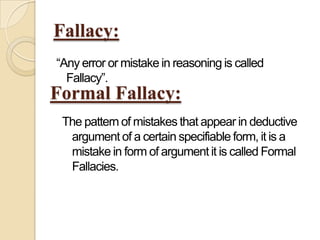
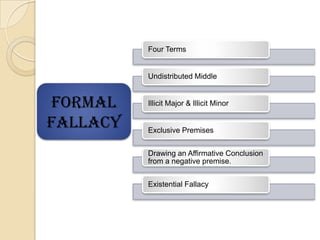
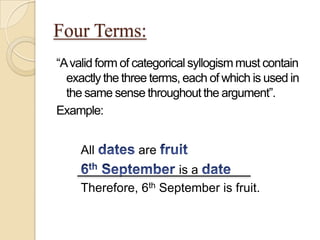
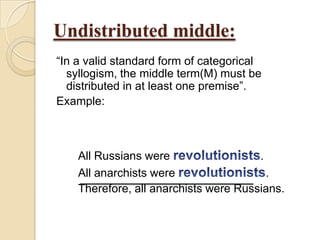
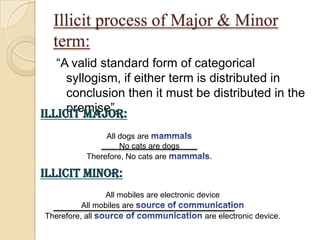
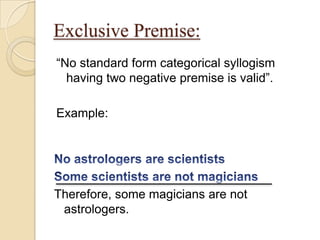
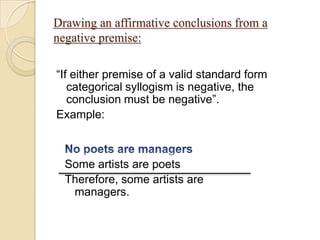
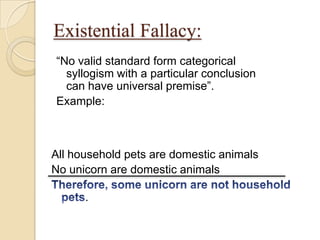


This document defines and provides examples of different types of formal fallacies: 1) Formal fallacies are mistakes in the form of a deductive argument that make the argument invalid. They include four terms, undistributed middle, illicit major/minor terms, exclusive premises, and drawing an affirmative conclusion from a negative premise. 2) Four terms fallacy occurs when a syllogism contains more than three terms. Undistributed middle fallacy is when the middle term is not distributed in at least one premise. Illicit major/minor is when a term is distributed in the conclusion but not the relevant premise. 3) Exclusive premises fallacy involves two negative premises. Drawing an affirmative


