Presented by:
Vaishnav Kumar
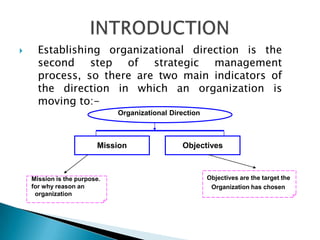
 Establishing organizational direction is the
second step of strategic management
process, so there are two main indicators of
the direction in which an organization is
moving to:-
Mission Objectives
Organizational Direction
Objectives are the target the
Organization has chosen
Mission is the purpose.
for why reason an
organization
 Organizational mission is the purpose for
which or reason why, an organization exist. in
general, a firm’s organizational mission
contains such information as what types for
products or services the organization
produces.
 To develop an appropriate organizational
mission, management should thoroughly
analyze and consider information generated
during the environmental analysis process.
 Establishing an organizational mission is an
important part of management’s job, because
the existence of a formally expressed
organizational mission generally makes it more
likely that the organization will succeed.
 Having an established and documented
organizational mission accomplishes several
important things.
 The kinds of information contained in mission
statements very somewhat form organization to
organization.
 Most mission statements seem to cover several
major topics, these topics either within
organization or contained materials that
accompany it these may include:
 Company product or service
 Market
 Technology
 Public image
 Company objectives
 This part outlines the role of organizational
direction through the use of organizational
objectives.
 Organizational objective is a target toward
which the organization direct its efforts.
 The term objective should be used some
suggest using either “objectives” or “goals”, so
this term is used to refer to target that the
organization is attempting to reach.
 the importance of establishing appropriate
objectives for an organization can not be
overemphasized. Objectives provide the
foundation for planning, organizing, motivating
and controlling. Without objectives and their
effective communication, behavior in
organizations can stray in almost any direction.
 The organization have two different types of
objectives, these are the following :
1. Short run objectives: are targets that the
organization is attempting to reach within
one year or two years.
2. Long run objectives: are targets that the
organization is trying to reach within
three to five years.
 Most organizations have focused in one primary
objective: making a profit.
 Its important that the firm’s objectives should be
focused on several areas, so there are eight key areas
in which organizational objectives should be set as:
1. Market standing
2. Innovation
3. Productivity
4. resource levels
5. Profitability
6. Manager performance and development
7. Worker performance and attitude
8. Social responsibility
 Organizational objectives exist in some form in virtually all
modern organizations, as well as high quality
objectives, so these may include the following:
1. Managers should develop organizational objectives that are
specific.
2. Managers should set organizational objectives that require
a desirable level of effort.
3. Managers should establish organizational objectives that
are flexible.
4. Managers should establish organizational objectives that
are reachable.
5. Managers should establish organizational objectives that
are measurable.
6. Managers should develop organizational objectives that are
consistent in long run and short run.
 The Process Of Establishing Organizational
Direction are three major steps:-
1) Reflecting on the results of an environmental
analysis.
2) Establishing an appropriate organizational
mission.
3) Establishing an appropriate organizational
objectives.
 Like organizational mission, organizational
objectives should reflect the environment within
which the organization operates. As indicated
earlier organizational objectives should change as
the organizational environment changes.
 Those whose establish organizational objectives
must recognize that environmental trend are then
taken shape that will affect the future relevance of
the objectives and odds of accomplishing them.
 Managers should keep track of innovations in order
to be aware of and react appropriately to any
important environmental trends that may emerge.
 Profitability objectives are organizational targets
that focus on the ability of an organization to earn
revenue dollar beyond the expenses necessary to
generate the revenue.
 Profitability objectives established in organizations
commonly include objectives related to return on
investment, net profit margin, and return in
stockholder’s equity.
 Net profit margin
 Return on investment or
return on sales
 Return in stockholder’s
equity
NET PROFIT
SALES
NET PROFIT
TOTAL ASSETS
NET PROFIT
STOCKHOLDER'S EQUITY
PROFITABILITY OBJECTIVES HOW TO CALCULATE
 Hierarch Of Objectives as set of organizational
objectives that include for the organization as a
whole and corresponding sub objectives for
significant segments of the organization.
 The purpose of establishing a Hierarch Of
Objectives is to ensure that each significant
segment of the organization knows what role it
must play, on both a long- term and short-
term basis, in order for the organization to
reach its overall objectives.
 Individual objectives are targets that specific
people within an organization are attempting to
reach, individual objectives are designed so that
accomplishing each one contributes to the
accomplishment of the broader objectives of the
department.
 The primary advantage of establishing
individual objectives is that they help individual
workers understand exactly what they are
expected to contribute to the development.
Establishing organizational direction

Establishing organizational direction

  • 1.
  • 2.
     Establishing organizationaldirection is the second step of strategic management process, so there are two main indicators of the direction in which an organization is moving to:- Mission Objectives Organizational Direction Objectives are the target the Organization has chosen Mission is the purpose. for why reason an organization
  • 3.
     Organizational missionis the purpose for which or reason why, an organization exist. in general, a firm’s organizational mission contains such information as what types for products or services the organization produces.  To develop an appropriate organizational mission, management should thoroughly analyze and consider information generated during the environmental analysis process.
  • 4.
     Establishing anorganizational mission is an important part of management’s job, because the existence of a formally expressed organizational mission generally makes it more likely that the organization will succeed.  Having an established and documented organizational mission accomplishes several important things.
  • 5.
     The kindsof information contained in mission statements very somewhat form organization to organization.  Most mission statements seem to cover several major topics, these topics either within organization or contained materials that accompany it these may include:  Company product or service  Market  Technology  Public image  Company objectives
  • 6.
     This partoutlines the role of organizational direction through the use of organizational objectives.  Organizational objective is a target toward which the organization direct its efforts.  The term objective should be used some suggest using either “objectives” or “goals”, so this term is used to refer to target that the organization is attempting to reach.
  • 7.
     the importanceof establishing appropriate objectives for an organization can not be overemphasized. Objectives provide the foundation for planning, organizing, motivating and controlling. Without objectives and their effective communication, behavior in organizations can stray in almost any direction.
  • 8.
     The organizationhave two different types of objectives, these are the following : 1. Short run objectives: are targets that the organization is attempting to reach within one year or two years. 2. Long run objectives: are targets that the organization is trying to reach within three to five years.
  • 9.
     Most organizationshave focused in one primary objective: making a profit.  Its important that the firm’s objectives should be focused on several areas, so there are eight key areas in which organizational objectives should be set as: 1. Market standing 2. Innovation 3. Productivity 4. resource levels 5. Profitability 6. Manager performance and development 7. Worker performance and attitude 8. Social responsibility
  • 10.
     Organizational objectivesexist in some form in virtually all modern organizations, as well as high quality objectives, so these may include the following: 1. Managers should develop organizational objectives that are specific. 2. Managers should set organizational objectives that require a desirable level of effort. 3. Managers should establish organizational objectives that are flexible. 4. Managers should establish organizational objectives that are reachable. 5. Managers should establish organizational objectives that are measurable. 6. Managers should develop organizational objectives that are consistent in long run and short run.
  • 11.
     The ProcessOf Establishing Organizational Direction are three major steps:- 1) Reflecting on the results of an environmental analysis. 2) Establishing an appropriate organizational mission. 3) Establishing an appropriate organizational objectives.
  • 12.
     Like organizationalmission, organizational objectives should reflect the environment within which the organization operates. As indicated earlier organizational objectives should change as the organizational environment changes.  Those whose establish organizational objectives must recognize that environmental trend are then taken shape that will affect the future relevance of the objectives and odds of accomplishing them.  Managers should keep track of innovations in order to be aware of and react appropriately to any important environmental trends that may emerge.
  • 13.
     Profitability objectivesare organizational targets that focus on the ability of an organization to earn revenue dollar beyond the expenses necessary to generate the revenue.  Profitability objectives established in organizations commonly include objectives related to return on investment, net profit margin, and return in stockholder’s equity.
  • 14.
     Net profitmargin  Return on investment or return on sales  Return in stockholder’s equity NET PROFIT SALES NET PROFIT TOTAL ASSETS NET PROFIT STOCKHOLDER'S EQUITY PROFITABILITY OBJECTIVES HOW TO CALCULATE
  • 15.
     Hierarch OfObjectives as set of organizational objectives that include for the organization as a whole and corresponding sub objectives for significant segments of the organization.  The purpose of establishing a Hierarch Of Objectives is to ensure that each significant segment of the organization knows what role it must play, on both a long- term and short- term basis, in order for the organization to reach its overall objectives.
  • 16.
     Individual objectivesare targets that specific people within an organization are attempting to reach, individual objectives are designed so that accomplishing each one contributes to the accomplishment of the broader objectives of the department.  The primary advantage of establishing individual objectives is that they help individual workers understand exactly what they are expected to contribute to the development.