 concept of universal
education; the belief that
there is essential knowledge
that everyone in a given
culture must have in order to
be a knowledgeable and fully
participating member of that
culture.
It is the school’s
responsibility to provide
that knowledge.
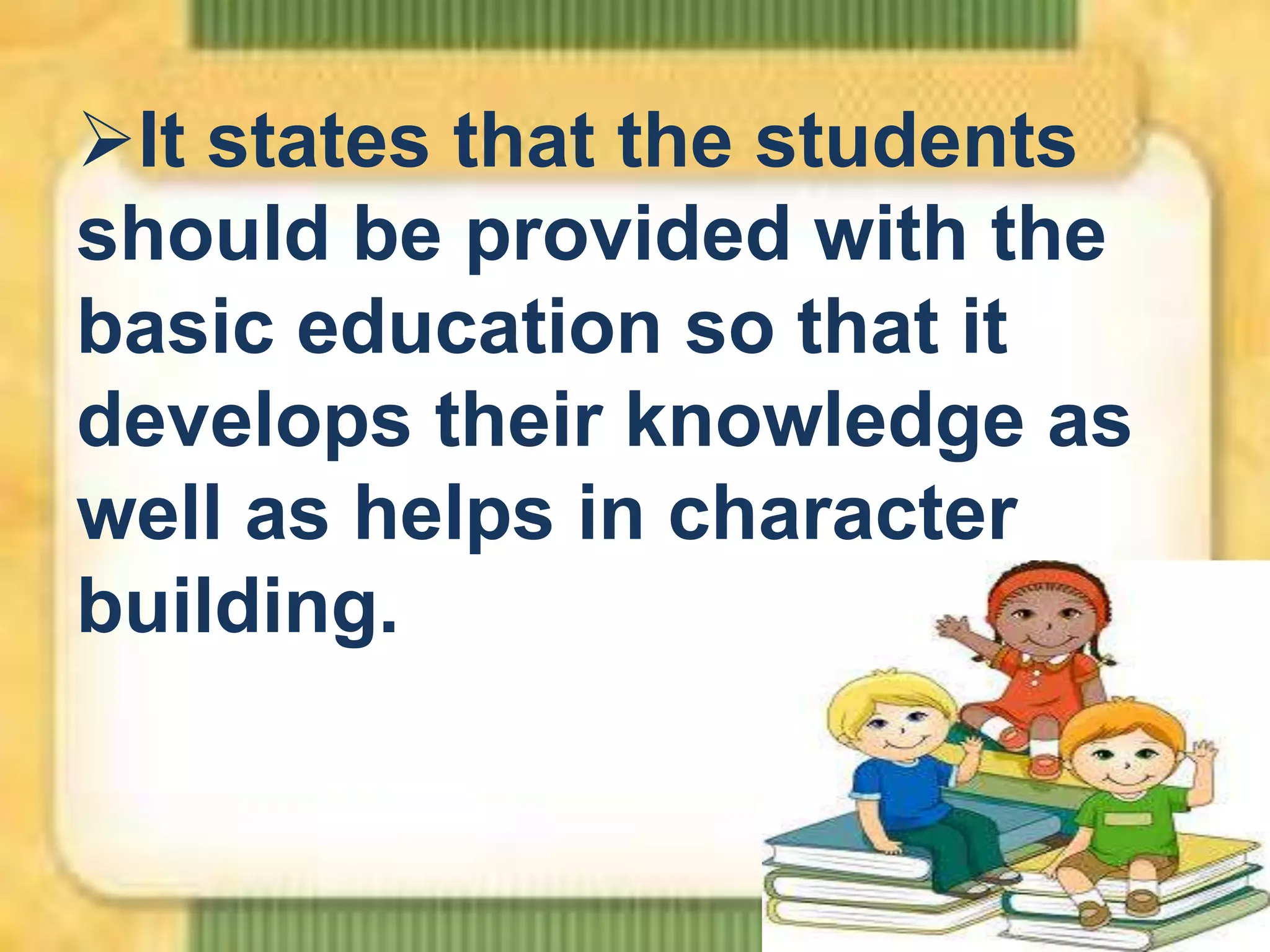
It states that the students
should be provided with the
basic education so that it
develops their knowledge as
well as helps in character
building.
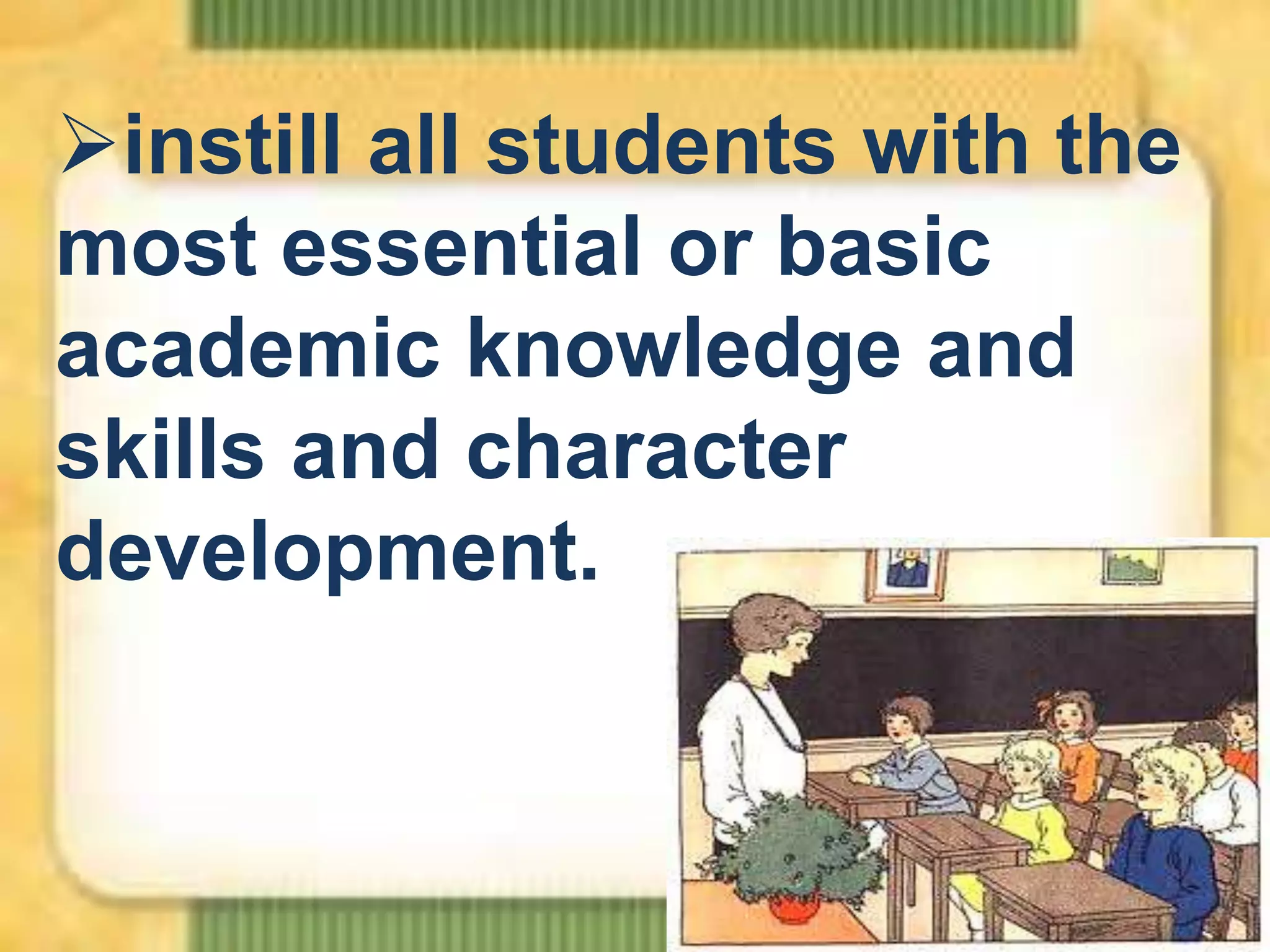
instill all students with the
most essential or basic
academic knowledge and
skills and character
development.
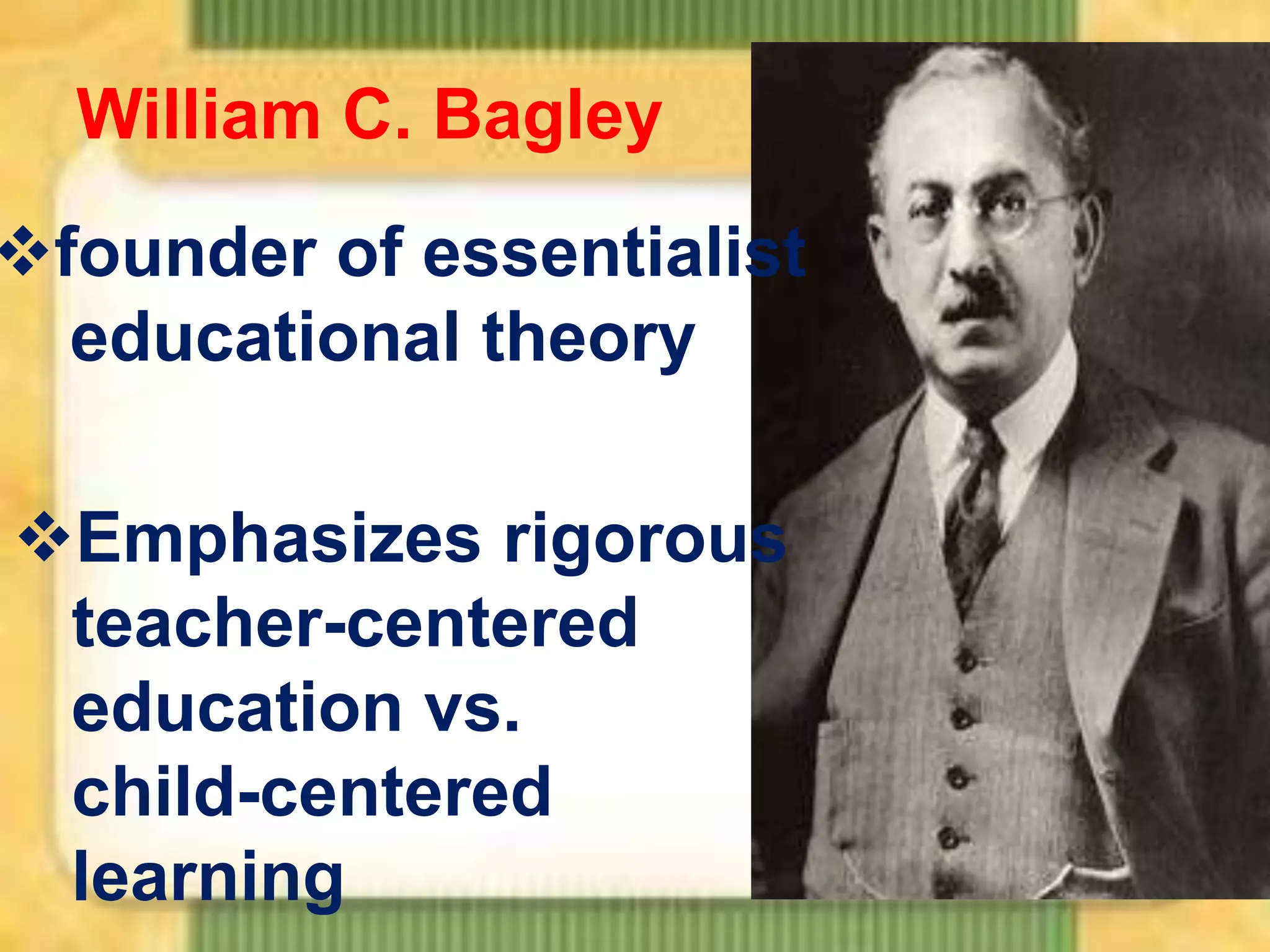
William C. Bagley

founder of essentialist
educational theory

Emphasizes rigorous
teacher-centered
education vs.
child-centered
learning
Essentialists believe……
 students

should learn
from established
fundamentals of
education
students should study
the sensible and wise
subjects like
literature, philosophy, s
cience and other
subjects related to the
great works
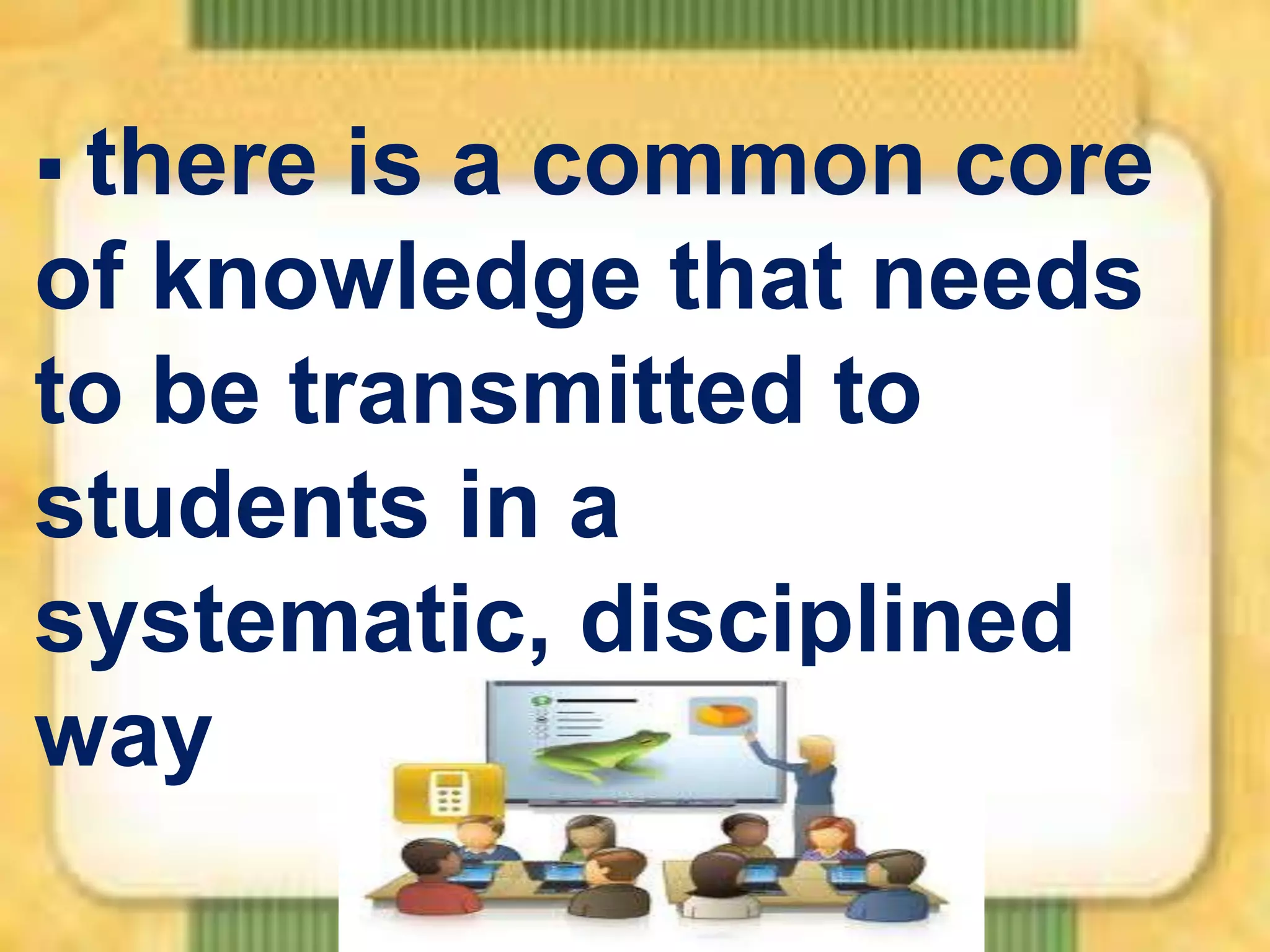
 there

is a common core
of knowledge that needs
to be transmitted to
students in a
systematic, disciplined
way
The child is a learner to be
shaped and developed
Education is a preparation
for life, it is not an imitation
of life
Curriculum….

• essential knowledge and
skills and academic rigor
• based on traditional
disciplines such as math,
natural science, history,
language, and literature
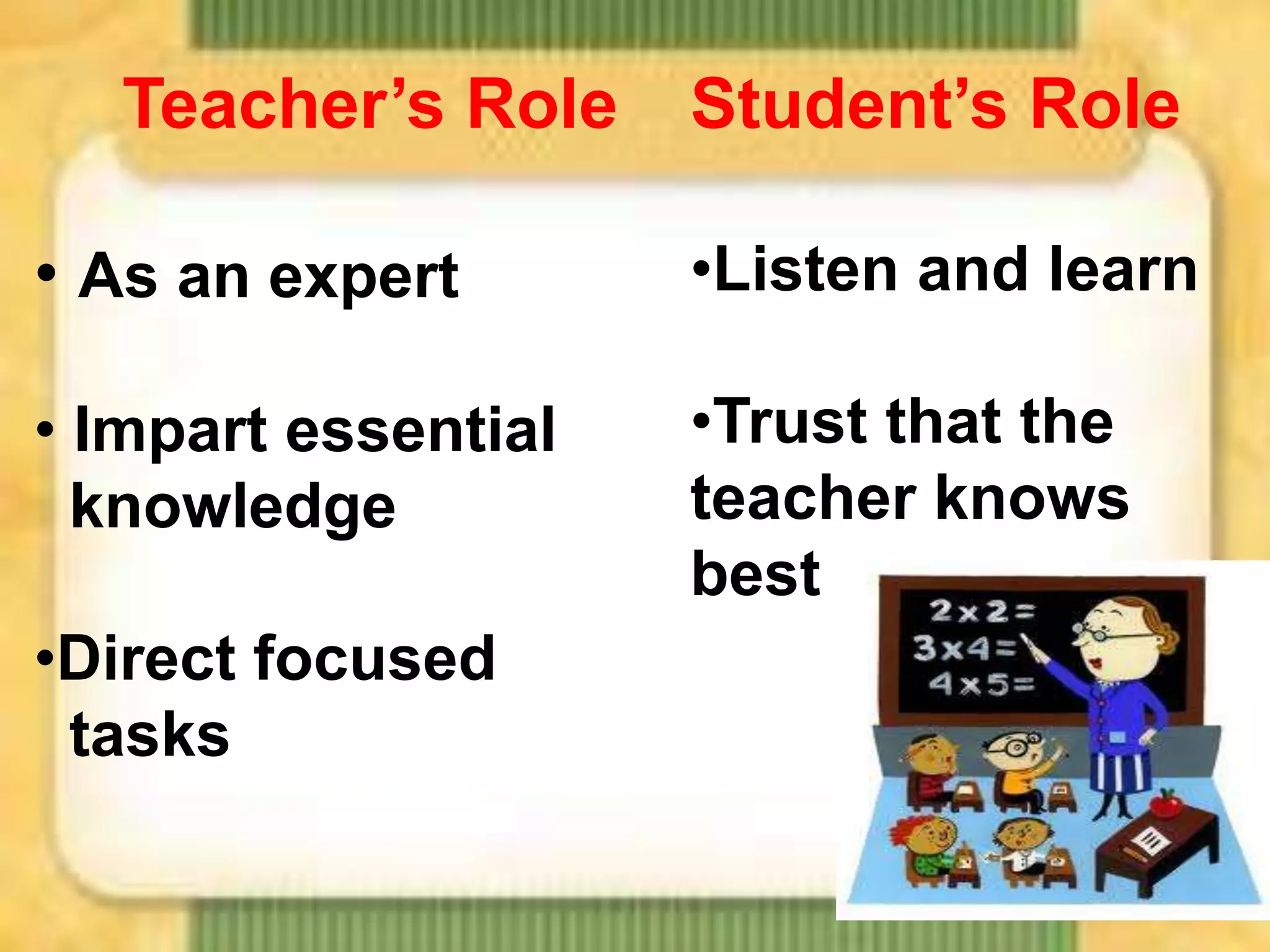
Teacher’s Role

Student’s Role

• As an expert

•Listen and learn

• Impart essential
knowledge

•Trust that the
teacher knows
best

•Direct focused
tasks
Perennialism
Perennialism means that
one should teach the things
that one deems to be of
“everlasting’’ importance to
all people everywhere.
- it says that one should
teach principles, not facts.
• a strategy that teaches

scientific reasoning, not
facts, this gives the
students a human side to
the science, and shows the
reasoning in action
•focuses first on
personal development.
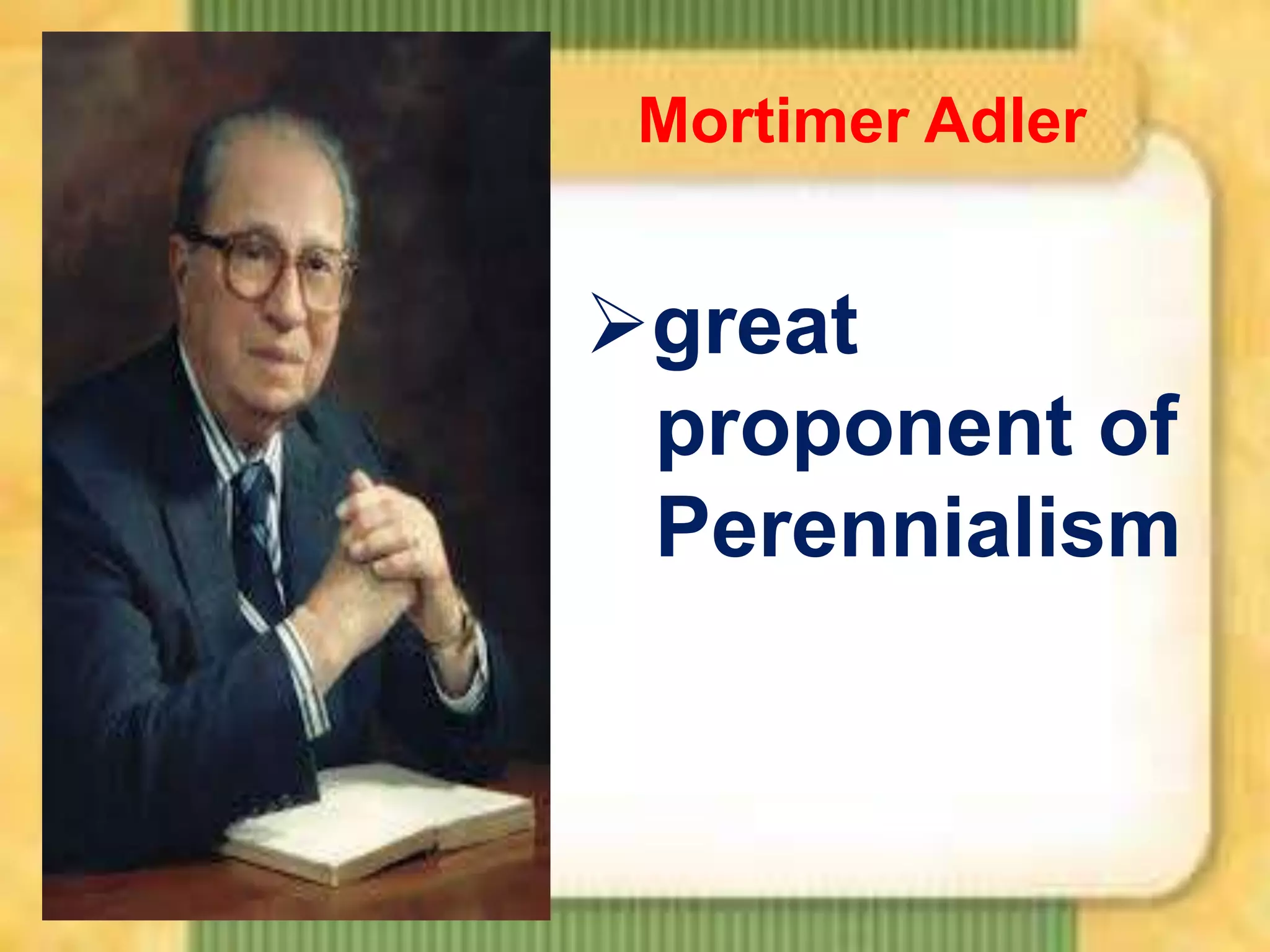
Mortimer Adler

great
proponent of
Perennialism
Perennialists believe….

 that they should teach the

things of universal
importance to the humankind
that the focus of education
should be the ideas that
have lasted over centuries.
the ideas are as relevant
and meaningful today as
when they were written
Curriculum….

•is universal and is
based on their view that
all human beings
possess the same
essential nature.
• focuses on attaining
cultural literacy,
stressing students'
growth in enduring
disciplines.
Perennialists
disapprove of teachers
requiring students to
absorb massive
amounts of
disconnected information
recommend that schools
spend more time teaching
about concepts and
explaining they are
meaningful to students
Thank You!

Essentialism and perennialism