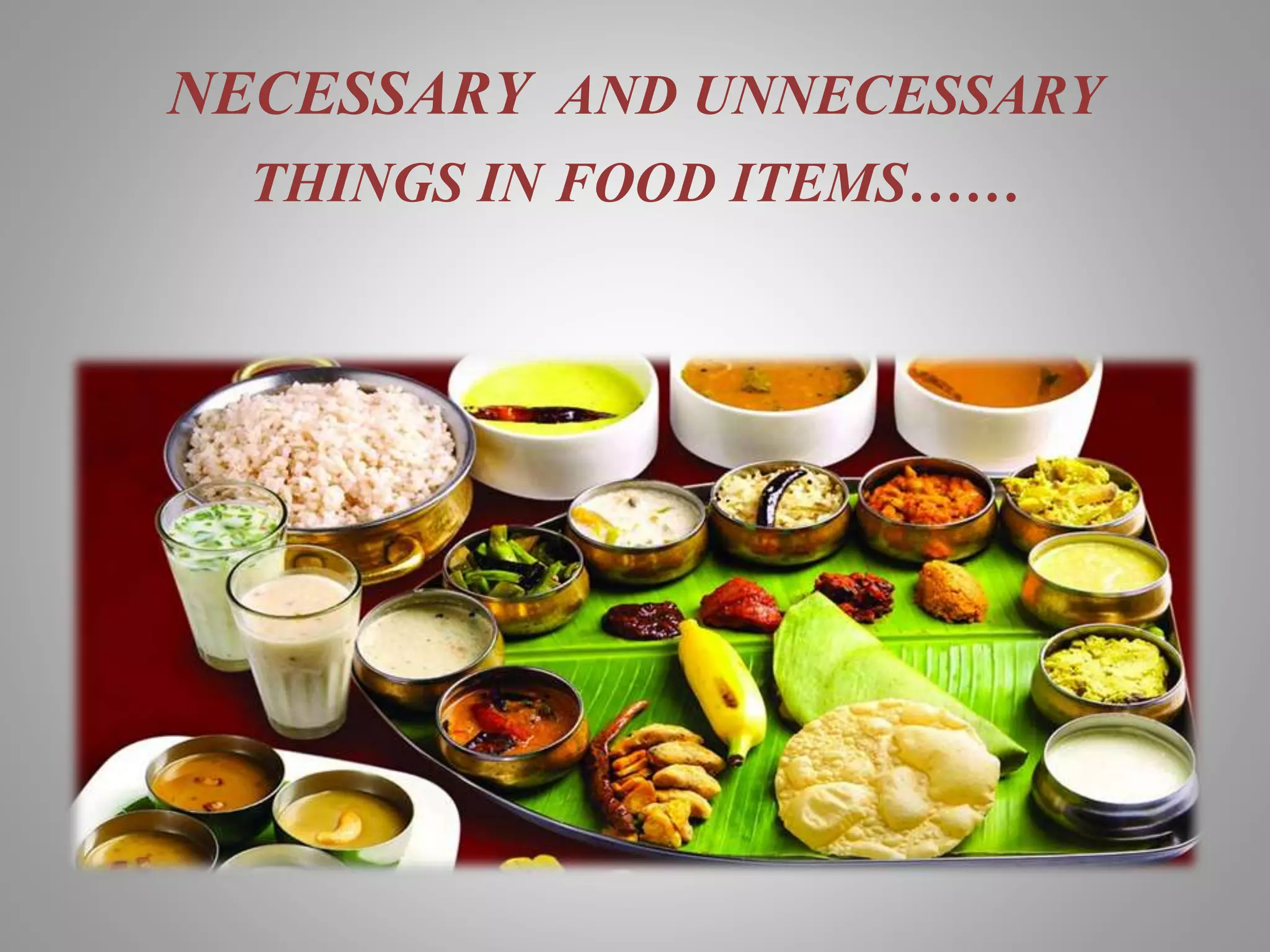
NECESSARY AND UNNECESSARY
THINGS IN FOOD ITEMS……
Foods
Foods are the collection of:
Vitamins
Fat
Protins
Minerals
Saturated & unsaturated compounds
Fatty acids
Etc………
Types
There are some things are necessary
and unnecessary things in the food
items……. In the presentation I have
compared the two foods based of few
things…
Locality food (sambar)
Fast food(chicken fried rice)
Locality food(sambar)
• History:
• According to food historian K. T. Achaya, the
earliest extant mention of sambar in
literature can be dated to the 17th
century.[1]
• Legend states that sambar was first made
accidentally by the Maratha ruler Sambhaji,
when he tried to make dal curry in absence
of his chef. He added tamarind to the dal,
resulting in the dish that later came to be
known as sambar.[2]
Ingredients& Preparations
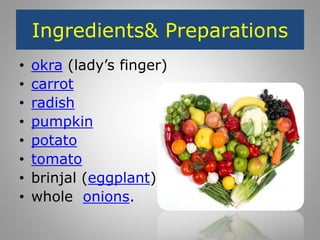
• okra (lady’s finger)
• carrot
• radish
• pumpkin
• potato
• tomato
• brinjal (eggplant)
• whole onions.
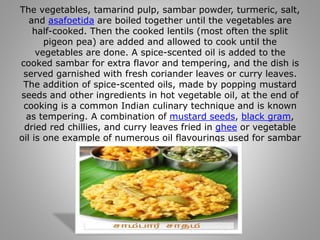
The vegetables, tamarind pulp, sambar powder, turmeric, salt,
and asafoetida are boiled together until the vegetables are
half-cooked. Then the cooked lentils (most often the split
pigeon pea) are added and allowed to cook until the
vegetables are done. A spice-scented oil is added to the
cooked sambar for extra flavor and tempering, and the dish is
served garnished with fresh coriander leaves or curry leaves.
The addition of spice-scented oils, made by popping mustard
seeds and other ingredients in hot vegetable oil, at the end of
cooking is a common Indian culinary technique and is known
as tempering. A combination of mustard seeds, black gram,
dried red chillies, and curry leaves fried in ghee or vegetable
oil is one example of numerous oil flavourings used for sambar
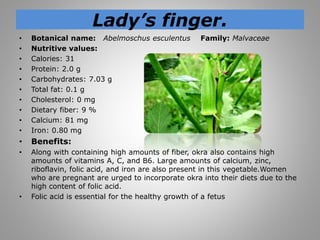
Lady’s finger.
• Botanical name: Abelmoschus esculentus Family: Malvaceae
• Nutritive values:
• Calories: 31
• Protein: 2.0 g
• Carbohydrates: 7.03 g
• Total fat: 0.1 g
• Cholesterol: 0 mg
• Dietary fiber: 9 %
• Calcium: 81 mg
• Iron: 0.80 mg
• Benefits:
• Along with containing high amounts of fiber, okra also contains high
amounts of vitamins A, C, and B6. Large amounts of calcium, zinc,
riboflavin, folic acid, and iron are also present in this vegetable.Women
who are pregnant are urged to incorporate okra into their diets due to the
high content of folic acid.
• Folic acid is essential for the healthy growth of a fetus
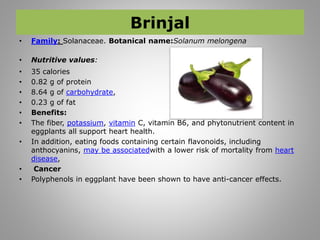
Brinjal
• Family: Solanaceae. Botanical name:Solanum melongena
• Nutritive values:
• 35 calories
• 0.82 g of protein
• 8.64 g of carbohydrate,
• 0.23 g of fat
• Benefits:
• The fiber, potassium, vitamin C, vitamin B6, and phytonutrient content in
eggplants all support heart health.
• In addition, eating foods containing certain flavonoids, including
anthocyanins, may be associatedwith a lower risk of mortality from heart
disease,
• Cancer
• Polyphenols in eggplant have been shown to have anti-cancer effects.
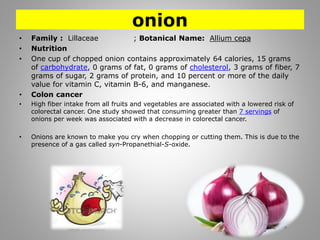
onion
• Family : Lillaceae ; Botanical Name: Allium cepa
• Nutrition
• One cup of chopped onion contains approximately 64 calories, 15 grams
of carbohydrate, 0 grams of fat, 0 grams of cholesterol, 3 grams of fiber, 7
grams of sugar, 2 grams of protein, and 10 percent or more of the daily
value for vitamin C, vitamin B-6, and manganese.
• Colon cancer
• High fiber intake from all fruits and vegetables are associated with a lowered risk of
colorectal cancer. One study showed that consuming greater than 7 servings of
onions per week was associated with a decrease in colorectal cancer.
• Onions are known to make you cry when chopping or cutting them. This is due to the
presence of a gas called syn-Propanethial-S-oxide.
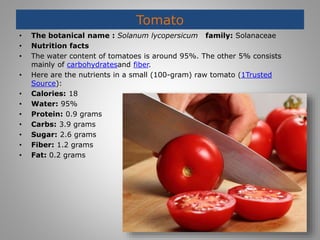
Tomato
• The botanical name : Solanum lycopersicum family: Solanaceae
• Nutrition facts
• The water content of tomatoes is around 95%. The other 5% consists
mainly of carbohydratesand fiber.
• Here are the nutrients in a small (100-gram) raw tomato (1Trusted
Source):
• Calories: 18
• Water: 95%
• Protein: 0.9 grams
• Carbs: 3.9 grams
• Sugar: 2.6 grams
• Fiber: 1.2 grams
• Fat: 0.2 grams
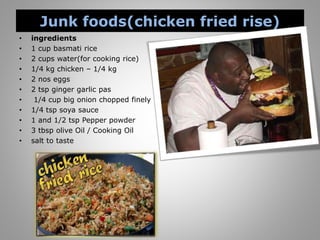
Junk foods(chicken fried rise)
• ingredients
• 1 cup basmati rice
• 2 cups water(for cooking rice)
• 1/4 kg chicken – 1/4 kg
• 2 nos eggs
• 2 tsp ginger garlic pas
• 1/4 cup big onion chopped finely
• 1/4 tsp soya sauce
• 1 and 1/2 tsp Pepper powder
• 3 tbsp olive Oil / Cooking Oil
• salt to taste
Basmati Rice
• In India Basmati Rice ( Oryza Sativa )
• The areas of basmati rice production in India are in the states
of Punjab, Haryana, Himachal Pradesh, Delhi, Uttarakhand, Uttar
Pradesh and Bihar. India's total basmati production for the July 2011–June
2012 crop year was five million tonnes.[14]
• The "Basmati Mark" is a DNA-fingerprinting-based certification done by the
laboratory of Basmati Export Development Foundation (BEDF)
• Nutrition summary:
• Calories :191
• Fat :0.61g
• Protein :5.59g
chicken
• Health:
• Chicken meat contains about two to three times as much polyunsaturated
fat as most types of red meat when measured as weight percentage.[18]
• Chicken generally includes low fat in the meat itself (castrated
roosters excluded). The fat is highly concentrated on the skin. A 100g
serving of baked chicken breast contains 4 grams of fat and 31 grams of
protein, compared to 10 grams of fat and 27 grams of protein for the
same portion of broiled, lean skirt steak.
• Calories :142(595 kJ)
Carbohydrate : 0.3(1.3 kJ)
Fat : 27.7(116 kJ) Protein :114(477 kJ)
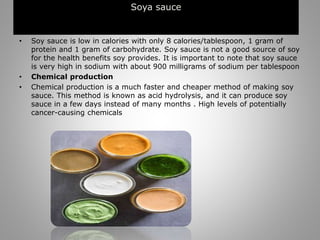
Soya sauce
• Soy sauce is low in calories with only 8 calories/tablespoon, 1 gram of
protein and 1 gram of carbohydrate. Soy sauce is not a good source of soy
for the health benefits soy provides. It is important to note that soy sauce
is very high in sodium with about 900 milligrams of sodium per tablespoon
• Chemical production
• Chemical production is a much faster and cheaper method of making soy
sauce. This method is known as acid hydrolysis, and it can produce soy
sauce in a few days instead of many months . High levels of potentially
cancer-causing chemicals
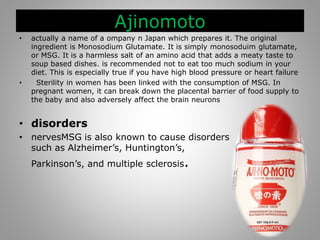
Ajinomoto
• actually a name of a ompany n Japan which prepares it. The original
ingredient is Monosodium Glutamate. It is simply monosoduim glutamate,
or MSG. It is a harmless salt of an amino acid that adds a meaty taste to
soup based dishes. is recommended not to eat too much sodium in your
diet. This is especially true if you have high blood pressure or heart failure
• Sterility in women has been linked with the consumption of MSG. In
pregnant women, it can break down the placental barrier of food supply to
the baby and also adversely affect the brain neurons
• disorders
• nervesMSG is also known to cause disorders
such as Alzheimer’s, Huntington’s,
Parkinson’s, and multiple sclerosis.
SALT
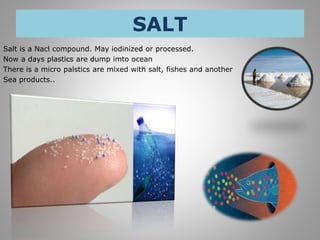
Salt is a Nacl compound. May iodinized or processed.
Now a days plastics are dump imto ocean
There is a micro palstics are mixed with salt, fishes and another
Sea products..
Department of PHYSICS
• HAVE AN INNOVATION WITH PHYSICS
• thank you!
• by
• G.Shenbaga Rajan

Essential and non essential things in food items.

  • 1.
  • 2.
    Foods Foods are thecollection of: Vitamins Fat Protins Minerals Saturated & unsaturated compounds Fatty acids Etc………
  • 3.
    Types There are somethings are necessary and unnecessary things in the food items……. In the presentation I have compared the two foods based of few things… Locality food (sambar) Fast food(chicken fried rice)
  • 4.
    Locality food(sambar) • History: •According to food historian K. T. Achaya, the earliest extant mention of sambar in literature can be dated to the 17th century.[1] • Legend states that sambar was first made accidentally by the Maratha ruler Sambhaji, when he tried to make dal curry in absence of his chef. He added tamarind to the dal, resulting in the dish that later came to be known as sambar.[2]
  • 5.
    Ingredients& Preparations • okra(lady’s finger) • carrot • radish • pumpkin • potato • tomato • brinjal (eggplant) • whole onions.
  • 6.
    The vegetables, tamarindpulp, sambar powder, turmeric, salt, and asafoetida are boiled together until the vegetables are half-cooked. Then the cooked lentils (most often the split pigeon pea) are added and allowed to cook until the vegetables are done. A spice-scented oil is added to the cooked sambar for extra flavor and tempering, and the dish is served garnished with fresh coriander leaves or curry leaves. The addition of spice-scented oils, made by popping mustard seeds and other ingredients in hot vegetable oil, at the end of cooking is a common Indian culinary technique and is known as tempering. A combination of mustard seeds, black gram, dried red chillies, and curry leaves fried in ghee or vegetable oil is one example of numerous oil flavourings used for sambar
  • 7.
    Lady’s finger. • Botanicalname: Abelmoschus esculentus Family: Malvaceae • Nutritive values: • Calories: 31 • Protein: 2.0 g • Carbohydrates: 7.03 g • Total fat: 0.1 g • Cholesterol: 0 mg • Dietary fiber: 9 % • Calcium: 81 mg • Iron: 0.80 mg • Benefits: • Along with containing high amounts of fiber, okra also contains high amounts of vitamins A, C, and B6. Large amounts of calcium, zinc, riboflavin, folic acid, and iron are also present in this vegetable.Women who are pregnant are urged to incorporate okra into their diets due to the high content of folic acid. • Folic acid is essential for the healthy growth of a fetus
  • 8.
    Brinjal • Family: Solanaceae.Botanical name:Solanum melongena • Nutritive values: • 35 calories • 0.82 g of protein • 8.64 g of carbohydrate, • 0.23 g of fat • Benefits: • The fiber, potassium, vitamin C, vitamin B6, and phytonutrient content in eggplants all support heart health. • In addition, eating foods containing certain flavonoids, including anthocyanins, may be associatedwith a lower risk of mortality from heart disease, • Cancer • Polyphenols in eggplant have been shown to have anti-cancer effects.
  • 9.
    onion • Family :Lillaceae ; Botanical Name: Allium cepa • Nutrition • One cup of chopped onion contains approximately 64 calories, 15 grams of carbohydrate, 0 grams of fat, 0 grams of cholesterol, 3 grams of fiber, 7 grams of sugar, 2 grams of protein, and 10 percent or more of the daily value for vitamin C, vitamin B-6, and manganese. • Colon cancer • High fiber intake from all fruits and vegetables are associated with a lowered risk of colorectal cancer. One study showed that consuming greater than 7 servings of onions per week was associated with a decrease in colorectal cancer. • Onions are known to make you cry when chopping or cutting them. This is due to the presence of a gas called syn-Propanethial-S-oxide.
  • 10.
    Tomato • The botanicalname : Solanum lycopersicum family: Solanaceae • Nutrition facts • The water content of tomatoes is around 95%. The other 5% consists mainly of carbohydratesand fiber. • Here are the nutrients in a small (100-gram) raw tomato (1Trusted Source): • Calories: 18 • Water: 95% • Protein: 0.9 grams • Carbs: 3.9 grams • Sugar: 2.6 grams • Fiber: 1.2 grams • Fat: 0.2 grams
  • 11.
    Junk foods(chicken friedrise) • ingredients • 1 cup basmati rice • 2 cups water(for cooking rice) • 1/4 kg chicken – 1/4 kg • 2 nos eggs • 2 tsp ginger garlic pas • 1/4 cup big onion chopped finely • 1/4 tsp soya sauce • 1 and 1/2 tsp Pepper powder • 3 tbsp olive Oil / Cooking Oil • salt to taste
  • 12.
    Basmati Rice • InIndia Basmati Rice ( Oryza Sativa ) • The areas of basmati rice production in India are in the states of Punjab, Haryana, Himachal Pradesh, Delhi, Uttarakhand, Uttar Pradesh and Bihar. India's total basmati production for the July 2011–June 2012 crop year was five million tonnes.[14] • The "Basmati Mark" is a DNA-fingerprinting-based certification done by the laboratory of Basmati Export Development Foundation (BEDF) • Nutrition summary: • Calories :191 • Fat :0.61g • Protein :5.59g
  • 13.
    chicken • Health: • Chickenmeat contains about two to three times as much polyunsaturated fat as most types of red meat when measured as weight percentage.[18] • Chicken generally includes low fat in the meat itself (castrated roosters excluded). The fat is highly concentrated on the skin. A 100g serving of baked chicken breast contains 4 grams of fat and 31 grams of protein, compared to 10 grams of fat and 27 grams of protein for the same portion of broiled, lean skirt steak. • Calories :142(595 kJ) Carbohydrate : 0.3(1.3 kJ) Fat : 27.7(116 kJ) Protein :114(477 kJ)
  • 14.
    Soya sauce • Soysauce is low in calories with only 8 calories/tablespoon, 1 gram of protein and 1 gram of carbohydrate. Soy sauce is not a good source of soy for the health benefits soy provides. It is important to note that soy sauce is very high in sodium with about 900 milligrams of sodium per tablespoon • Chemical production • Chemical production is a much faster and cheaper method of making soy sauce. This method is known as acid hydrolysis, and it can produce soy sauce in a few days instead of many months . High levels of potentially cancer-causing chemicals
  • 15.
    Ajinomoto • actually aname of a ompany n Japan which prepares it. The original ingredient is Monosodium Glutamate. It is simply monosoduim glutamate, or MSG. It is a harmless salt of an amino acid that adds a meaty taste to soup based dishes. is recommended not to eat too much sodium in your diet. This is especially true if you have high blood pressure or heart failure • Sterility in women has been linked with the consumption of MSG. In pregnant women, it can break down the placental barrier of food supply to the baby and also adversely affect the brain neurons • disorders • nervesMSG is also known to cause disorders such as Alzheimer’s, Huntington’s, Parkinson’s, and multiple sclerosis.
  • 16.
    SALT Salt is aNacl compound. May iodinized or processed. Now a days plastics are dump imto ocean There is a micro palstics are mixed with salt, fishes and another Sea products..
  • 17.
    Department of PHYSICS •HAVE AN INNOVATION WITH PHYSICS • thank you! • by • G.Shenbaga Rajan