SIGN.
LAKSHYA GUPTA
1805181030
F.O.A.P., A.K.T.U.,
LUCKNOW
ARCH. SERVICES- III
Control system of an escalator
SEM - V
SESSION 2020-21
References
RAR - 506
• https://www.mectips.com/working-of-escalators/
• http://www.madehow.com/Volume-3/Escalator.html
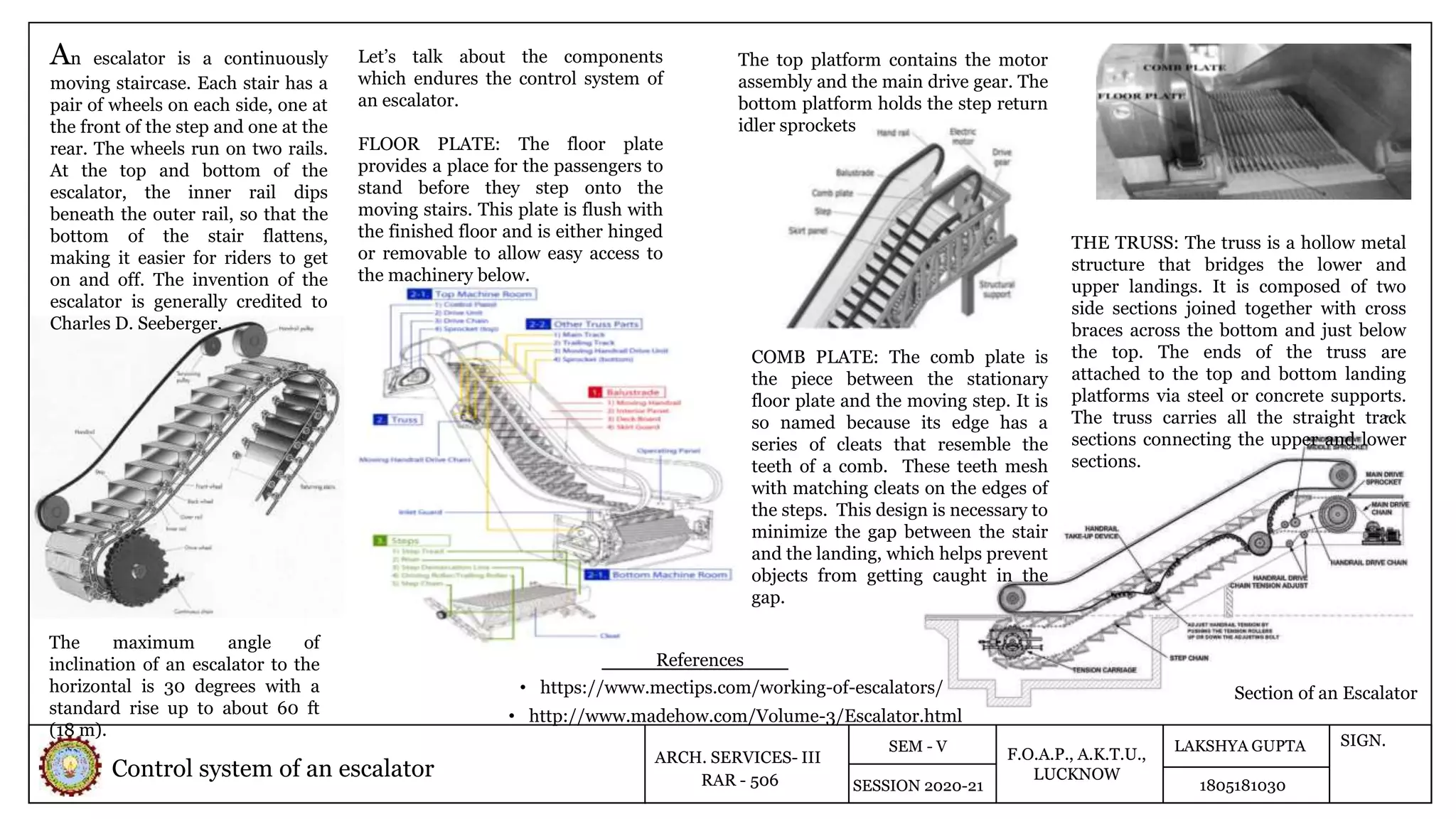
An escalator is a continuously
moving staircase. Each stair has a
pair of wheels on each side, one at
the front of the step and one at the
rear. The wheels run on two rails.
At the top and bottom of the
escalator, the inner rail dips
beneath the outer rail, so that the
bottom of the stair flattens,
making it easier for riders to get
on and off. The invention of the
escalator is generally credited to
Charles D. Seeberger.
The maximum angle of
inclination of an escalator to the
horizontal is 30 degrees with a
standard rise up to about 60 ft
(18 m).
The top platform contains the motor
assembly and the main drive gear. The
bottom platform holds the step return
idler sprockets
Let’s talk about the components
which endures the control system of
an escalator.
FLOOR PLATE: The floor plate
provides a place for the passengers to
stand before they step onto the
moving stairs. This plate is flush with
the finished floor and is either hinged
or removable to allow easy access to
the machinery below.
COMB PLATE: The comb plate is
the piece between the stationary
floor plate and the moving step. It is
so named because its edge has a
series of cleats that resemble the
teeth of a comb. These teeth mesh
with matching cleats on the edges of
the steps. This design is necessary to
minimize the gap between the stair
and the landing, which helps prevent
objects from getting caught in the
gap.
Section of an Escalator
THE TRUSS: The truss is a hollow metal
structure that bridges the lower and
upper landings. It is composed of two
side sections joined together with cross
braces across the bottom and just below
the top. The ends of the truss are
attached to the top and bottom landing
platforms via steel or concrete supports.
The truss carries all the straight track
sections connecting the upper and lower
sections.

Escalator

  • 1.
    SIGN. LAKSHYA GUPTA 1805181030 F.O.A.P., A.K.T.U., LUCKNOW ARCH.SERVICES- III Control system of an escalator SEM - V SESSION 2020-21 References RAR - 506 • https://www.mectips.com/working-of-escalators/ • http://www.madehow.com/Volume-3/Escalator.html An escalator is a continuously moving staircase. Each stair has a pair of wheels on each side, one at the front of the step and one at the rear. The wheels run on two rails. At the top and bottom of the escalator, the inner rail dips beneath the outer rail, so that the bottom of the stair flattens, making it easier for riders to get on and off. The invention of the escalator is generally credited to Charles D. Seeberger. The maximum angle of inclination of an escalator to the horizontal is 30 degrees with a standard rise up to about 60 ft (18 m). The top platform contains the motor assembly and the main drive gear. The bottom platform holds the step return idler sprockets Let’s talk about the components which endures the control system of an escalator. FLOOR PLATE: The floor plate provides a place for the passengers to stand before they step onto the moving stairs. This plate is flush with the finished floor and is either hinged or removable to allow easy access to the machinery below. COMB PLATE: The comb plate is the piece between the stationary floor plate and the moving step. It is so named because its edge has a series of cleats that resemble the teeth of a comb. These teeth mesh with matching cleats on the edges of the steps. This design is necessary to minimize the gap between the stair and the landing, which helps prevent objects from getting caught in the gap. Section of an Escalator THE TRUSS: The truss is a hollow metal structure that bridges the lower and upper landings. It is composed of two side sections joined together with cross braces across the bottom and just below the top. The ends of the truss are attached to the top and bottom landing platforms via steel or concrete supports. The truss carries all the straight track sections connecting the upper and lower sections.