10 Steps for successful ERP
Selection
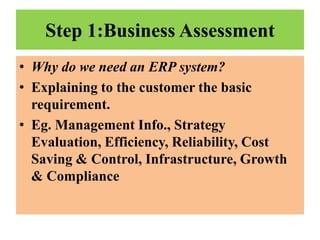
Step 1:Business Assessment
• Why do we need an ERP system?
• Explaining to the customer the basic
requirement.
• Eg. Management Info., Strategy
Evaluation, Efficiency, Reliability, Cost
Saving & Control, Infrastructure, Growth
& Compliance
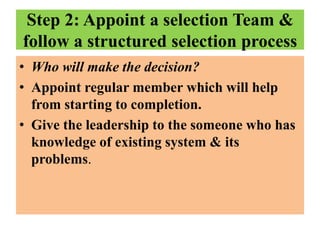
Step 2: Appoint a selection Team &
follow a structured selection process
• Who will make the decision?
• Appoint regular member which will help
from starting to completion.
• Give the leadership to the someone who has
knowledge of existing system & its
problems.
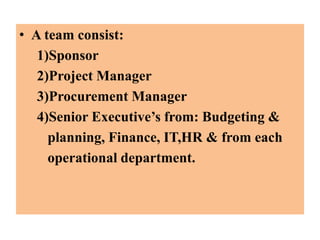
• A team consist:
1)Sponsor
2)Project Manager
3)Procurement Manager
4)Senior Executive’s from: Budgeting &
planning, Finance, IT,HR & from each
operational department.
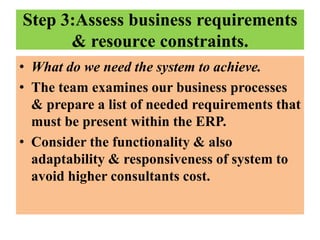
Step 3:Assess business requirements
& resource constraints.
• What do we need the system to achieve.
• The team examines our business processes
& prepare a list of needed requirements that
must be present within the ERP.
• Consider the functionality & also
adaptability & responsiveness of system to
avoid higher consultants cost.
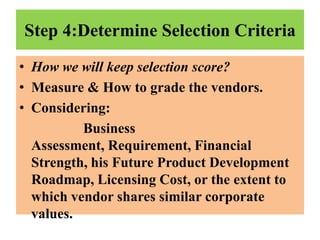
Step 4:Determine Selection Criteria
• How we will keep selection score?
• Measure & How to grade the vendors.
• Considering:
Business
Assessment, Requirement, Financial
Strength, his Future Product Development
Roadmap, Licensing Cost, or the extent to
which vendor shares similar corporate
values.
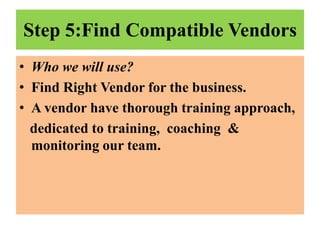
Step 5:Find Compatible Vendors
• Who we will use?
• Find Right Vendor for the business.
• A vendor have thorough training approach,
dedicated to training, coaching &
monitoring our team.
Step 6:Communicate with Potential
Vendors
• How do we begin the connection?
• Ask number of question , doubts that arises
in our mind like:
1)What application area do you cover?
2)How many clients do you have?
3)Do you have structured implementation
methodology?
Step 7:Create the request for
Information (RFI)
• How do we narrow down the competition?
• Do some basic research to understand what
is available on the market, taking reviews,
Short listing two-three vendors & then focus
on the areas that are critical to business.
Step 8:Shortlist & Demo System
• Who are the finalist?
• After narrowing down the selection process
shortlisted vendors that understand & solve
the problems, give the demo of the system
they have.
• At this stage organization will ensure that
the selected vendors understand our
problems or not, whether its product is
able to solve their problem, whether it will
provide right service.
Step 9:Select our ERP system
• Which s/w will get the chance?
• Who will become the winner?
• Who will become service provider?
Step 10:Formalise our project plan
• After choosing-what is next step?
• After selection next task is to initiate clientvendor relationship & begin the
implementation process.
• Finalizing service contract, license &
maintenance agreement.

Erp selection steps

  • 1.
    10 Steps forsuccessful ERP Selection
  • 2.
    Step 1:Business Assessment •Why do we need an ERP system? • Explaining to the customer the basic requirement. • Eg. Management Info., Strategy Evaluation, Efficiency, Reliability, Cost Saving & Control, Infrastructure, Growth & Compliance
  • 3.
    Step 2: Appointa selection Team & follow a structured selection process • Who will make the decision? • Appoint regular member which will help from starting to completion. • Give the leadership to the someone who has knowledge of existing system & its problems.
  • 4.
    • A teamconsist: 1)Sponsor 2)Project Manager 3)Procurement Manager 4)Senior Executive’s from: Budgeting & planning, Finance, IT,HR & from each operational department.
  • 5.
    Step 3:Assess businessrequirements & resource constraints. • What do we need the system to achieve. • The team examines our business processes & prepare a list of needed requirements that must be present within the ERP. • Consider the functionality & also adaptability & responsiveness of system to avoid higher consultants cost.
  • 6.
    Step 4:Determine SelectionCriteria • How we will keep selection score? • Measure & How to grade the vendors. • Considering: Business Assessment, Requirement, Financial Strength, his Future Product Development Roadmap, Licensing Cost, or the extent to which vendor shares similar corporate values.
  • 7.
    Step 5:Find CompatibleVendors • Who we will use? • Find Right Vendor for the business. • A vendor have thorough training approach, dedicated to training, coaching & monitoring our team.
  • 8.
    Step 6:Communicate withPotential Vendors • How do we begin the connection? • Ask number of question , doubts that arises in our mind like: 1)What application area do you cover? 2)How many clients do you have? 3)Do you have structured implementation methodology?
  • 9.
    Step 7:Create therequest for Information (RFI) • How do we narrow down the competition? • Do some basic research to understand what is available on the market, taking reviews, Short listing two-three vendors & then focus on the areas that are critical to business.
  • 10.
    Step 8:Shortlist &Demo System • Who are the finalist? • After narrowing down the selection process shortlisted vendors that understand & solve the problems, give the demo of the system they have.
  • 11.
    • At thisstage organization will ensure that the selected vendors understand our problems or not, whether its product is able to solve their problem, whether it will provide right service.
  • 12.
    Step 9:Select ourERP system • Which s/w will get the chance? • Who will become the winner? • Who will become service provider?
  • 13.
    Step 10:Formalise ourproject plan • After choosing-what is next step? • After selection next task is to initiate clientvendor relationship & begin the implementation process. • Finalizing service contract, license & maintenance agreement.