CONFIDENTIAL AND PROPRIETARY
Any use of this material without specific permission of Apri Technology Partners is strictly prohibited
ERP Governance
Methodology & Case Studies
By
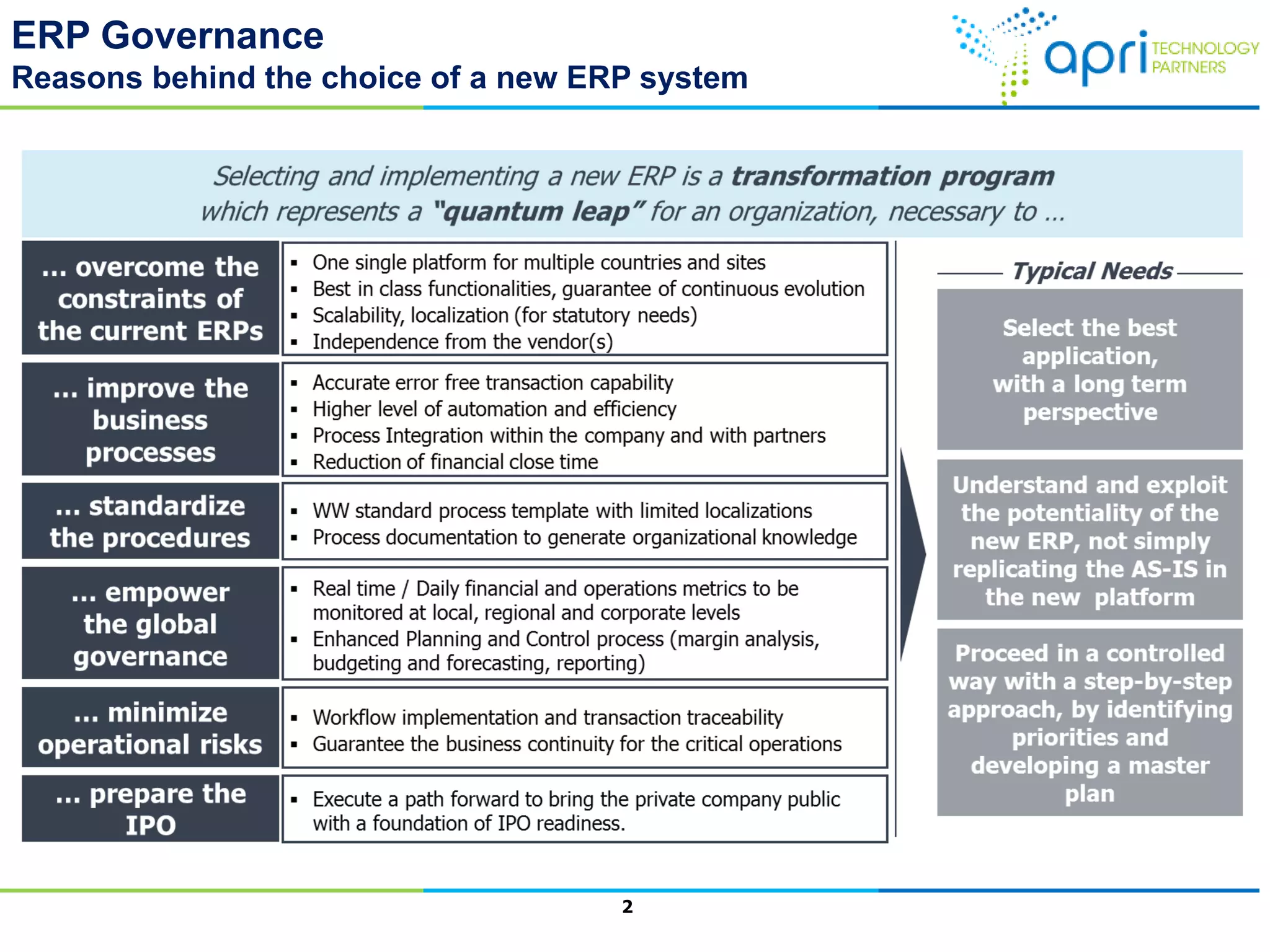
ERP Governance
Reasons behind the choice of a new ERP system
2
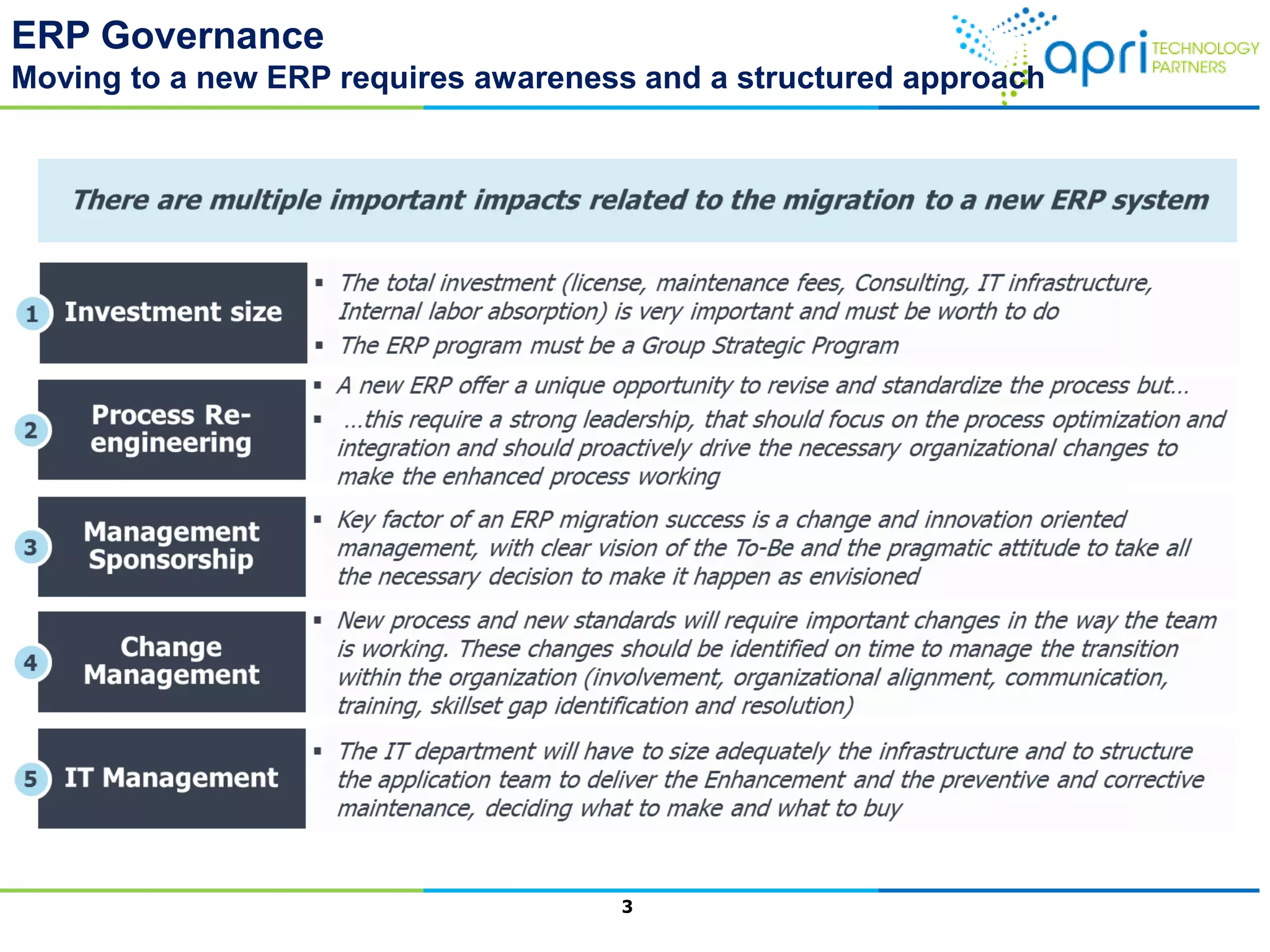
ERP Governance
Moving to a new ERP requires awareness and a structured approach
3
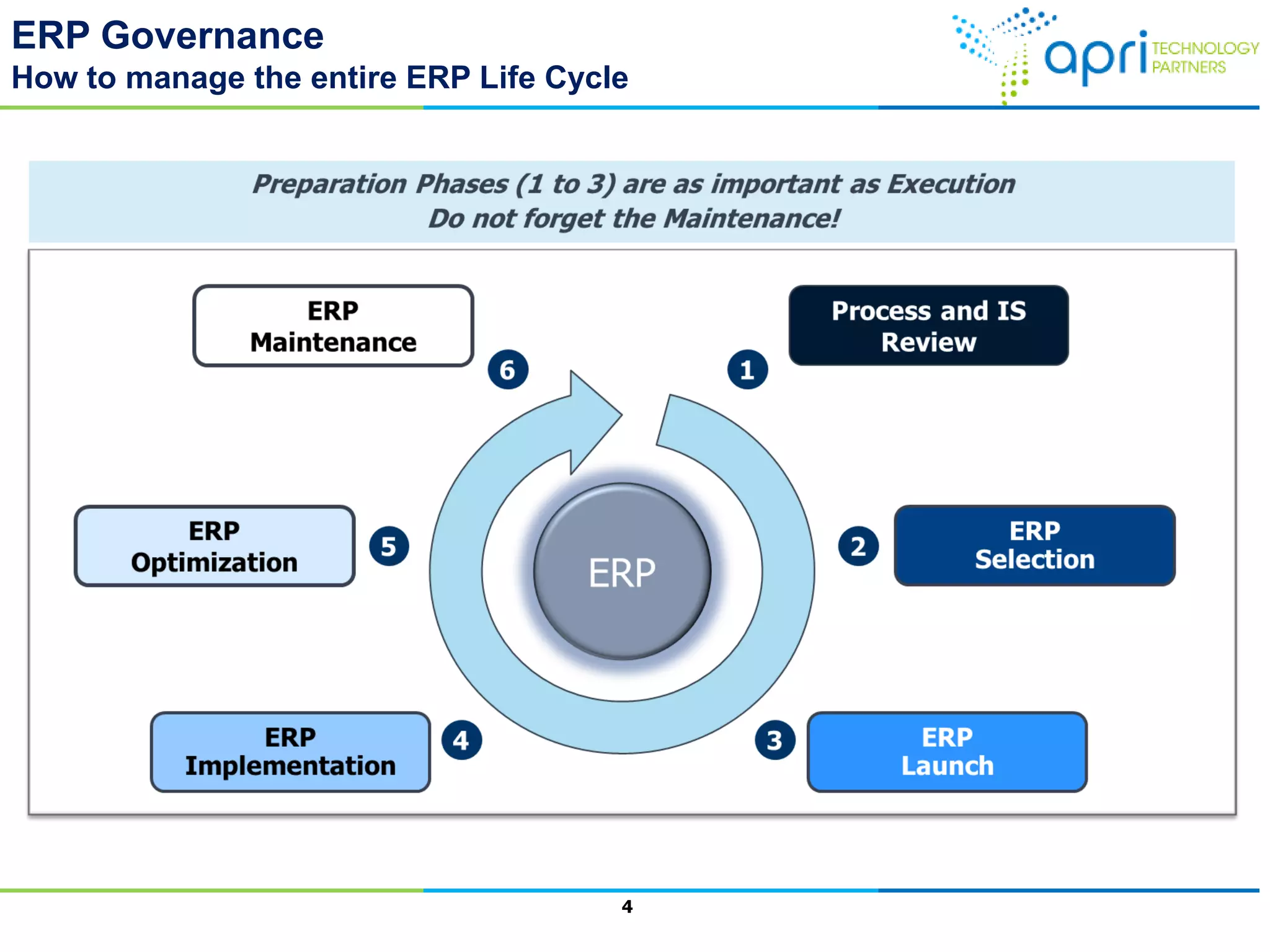
ERP Governance
How to manage the entire ERP Life Cycle
4
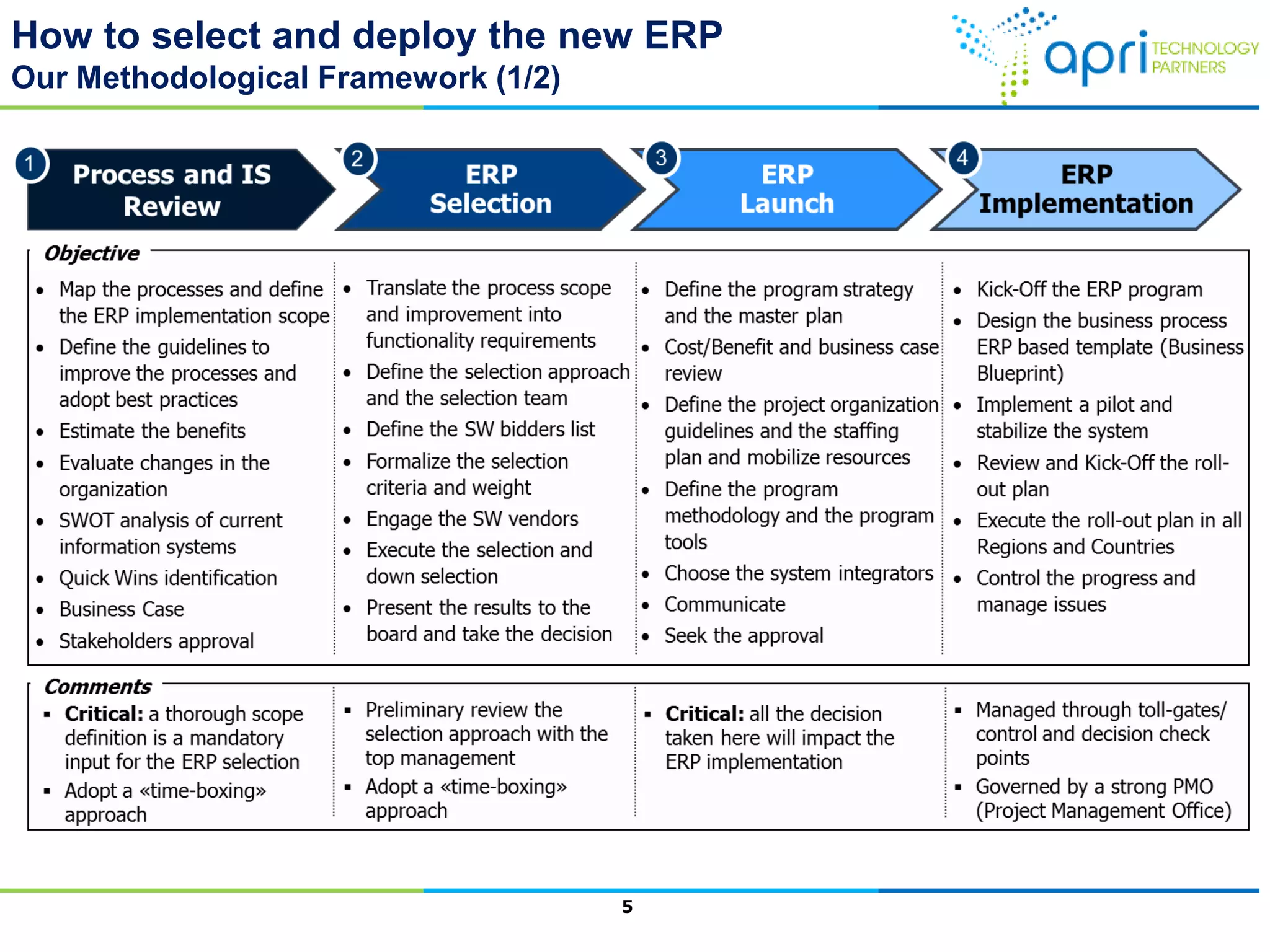
How to select and deploy the new ERP
Our Methodological Framework (1/2)
5
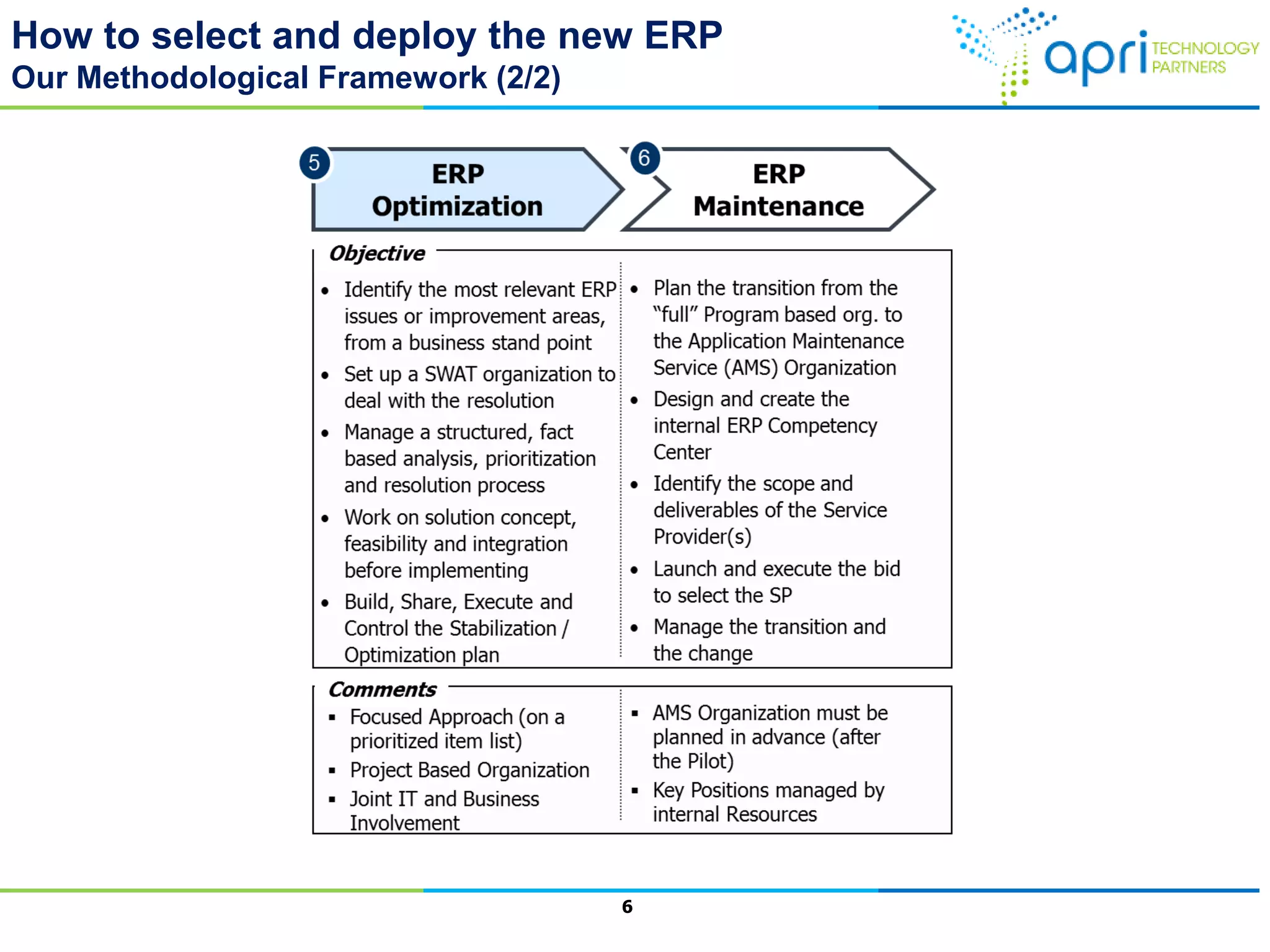
How to select and deploy the new ERP
Our Methodological Framework (2/2)
6
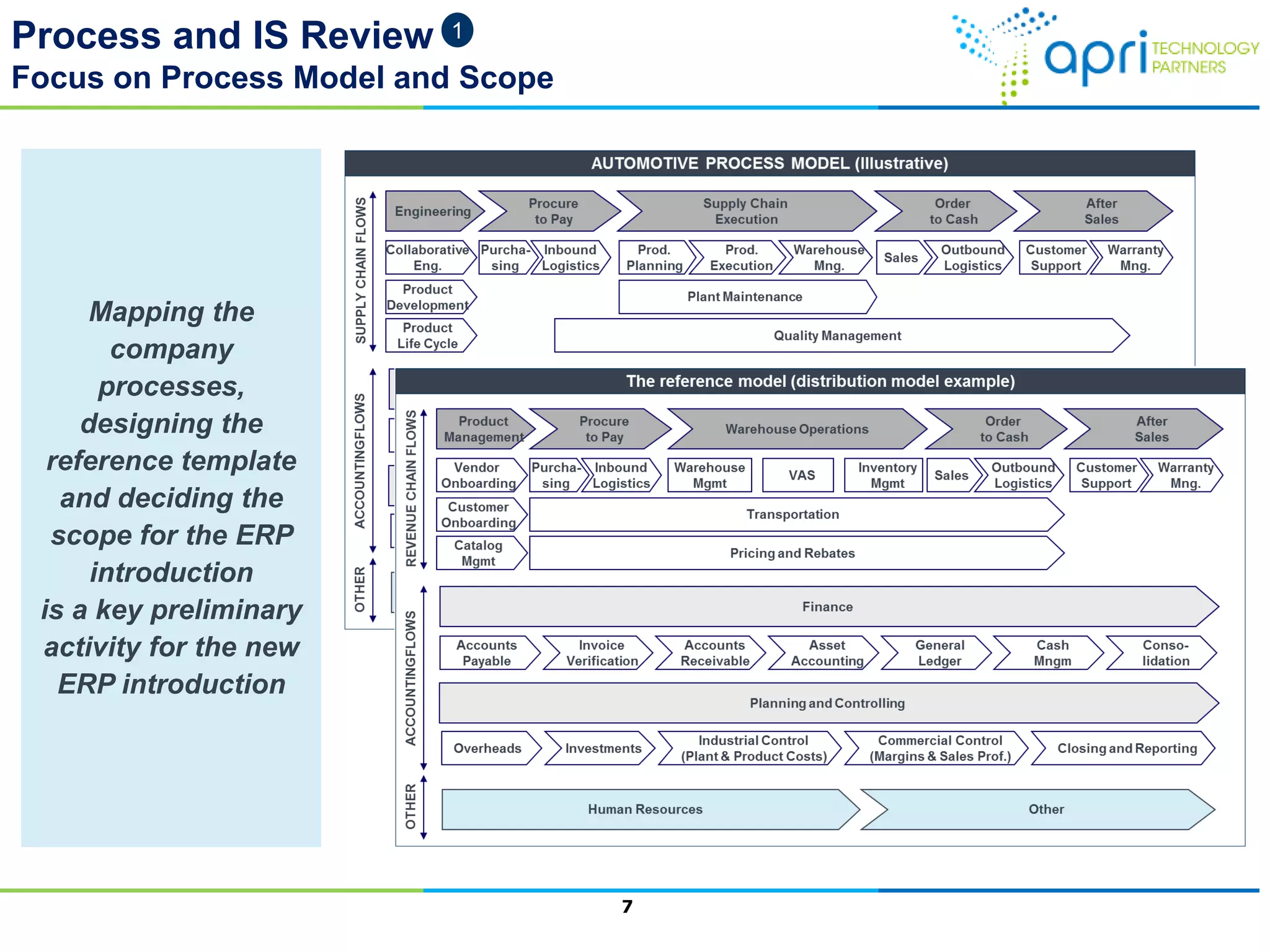
Process and IS Review
Focus on Process Model and Scope
7
Mapping the
company
processes,
designing the
reference template
and deciding the
scope for the ERP
introduction
is a key preliminary
activity for the new
ERP introduction
1
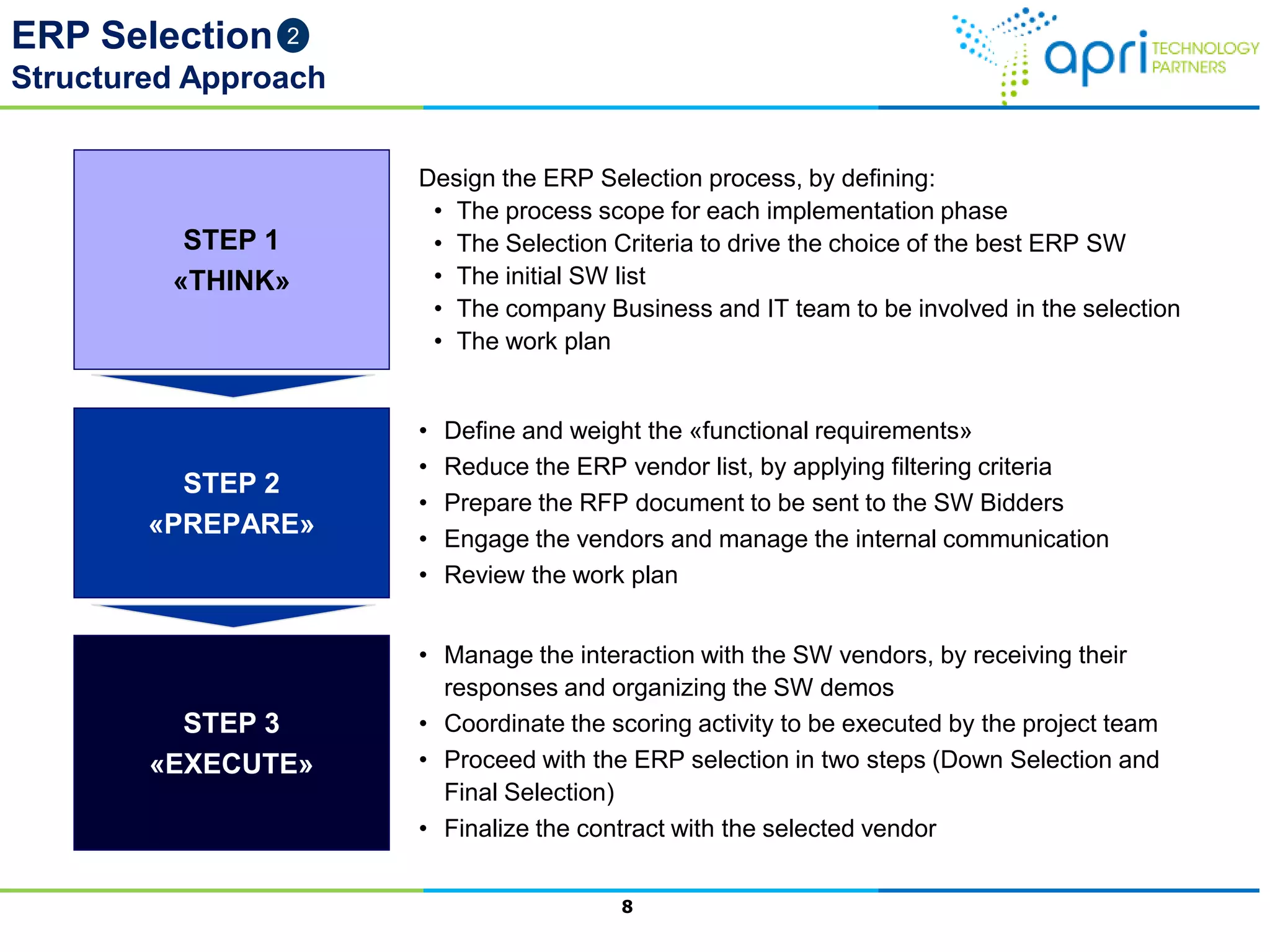
ERP Selection
Structured Approach
8
2
STEP 1
«THINK»
Design the ERP Selection process, by defining:
• The process scope for each implementation phase
• The Selection Criteria to drive the choice of the best ERP SW
• The initial SW list
• The company Business and IT team to be involved in the selection
• The work plan
STEP 2
«PREPARE»
• Define and weight the «functional requirements»
• Reduce the ERP vendor list, by applying filtering criteria
• Prepare the RFP document to be sent to the SW Bidders
• Engage the vendors and manage the internal communication
• Review the work plan
STEP 3
«EXECUTE»
• Manage the interaction with the SW vendors, by receiving their
responses and organizing the SW demos
• Coordinate the scoring activity to be executed by the project team
• Proceed with the ERP selection in two steps (Down Selection and
Final Selection)
• Finalize the contract with the selected vendor
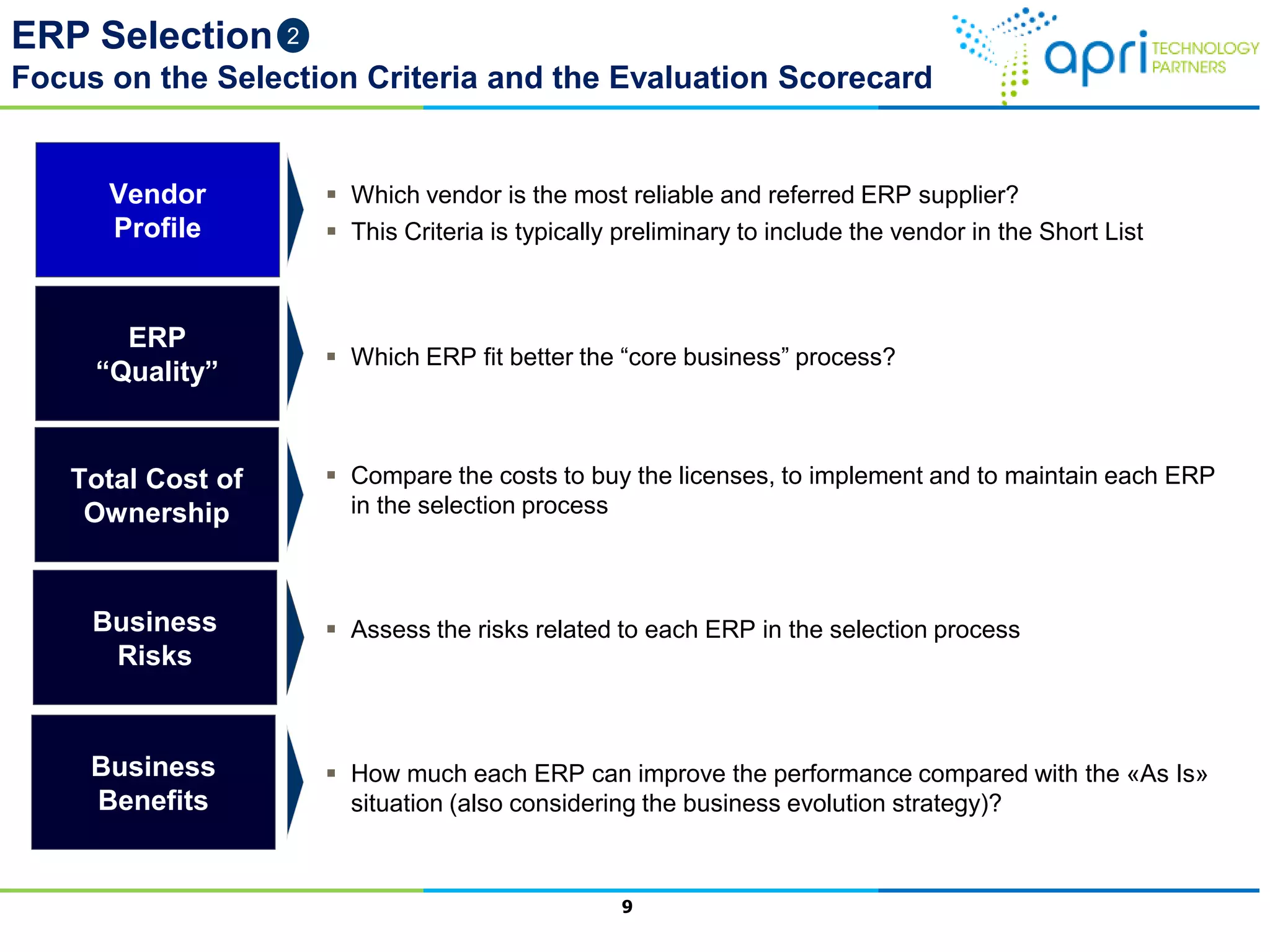
ERP Selection
Focus on the Selection Criteria and the Evaluation Scorecard
9
2
ERP
“Quality”
 Which ERP fit better the “core business” process?
Total Cost of
Ownership
ď‚§ Compare the costs to buy the licenses, to implement and to maintain each ERP
in the selection process
Business
Risks
ď‚§ Assess the risks related to each ERP in the selection process
Business
Benefits
 How much each ERP can improve the performance compared with the «As Is»
situation (also considering the business evolution strategy)?
Vendor
Profile
ď‚§ Which vendor is the most reliable and referred ERP supplier?
ď‚§ This Criteria is typically preliminary to include the vendor in the Short List
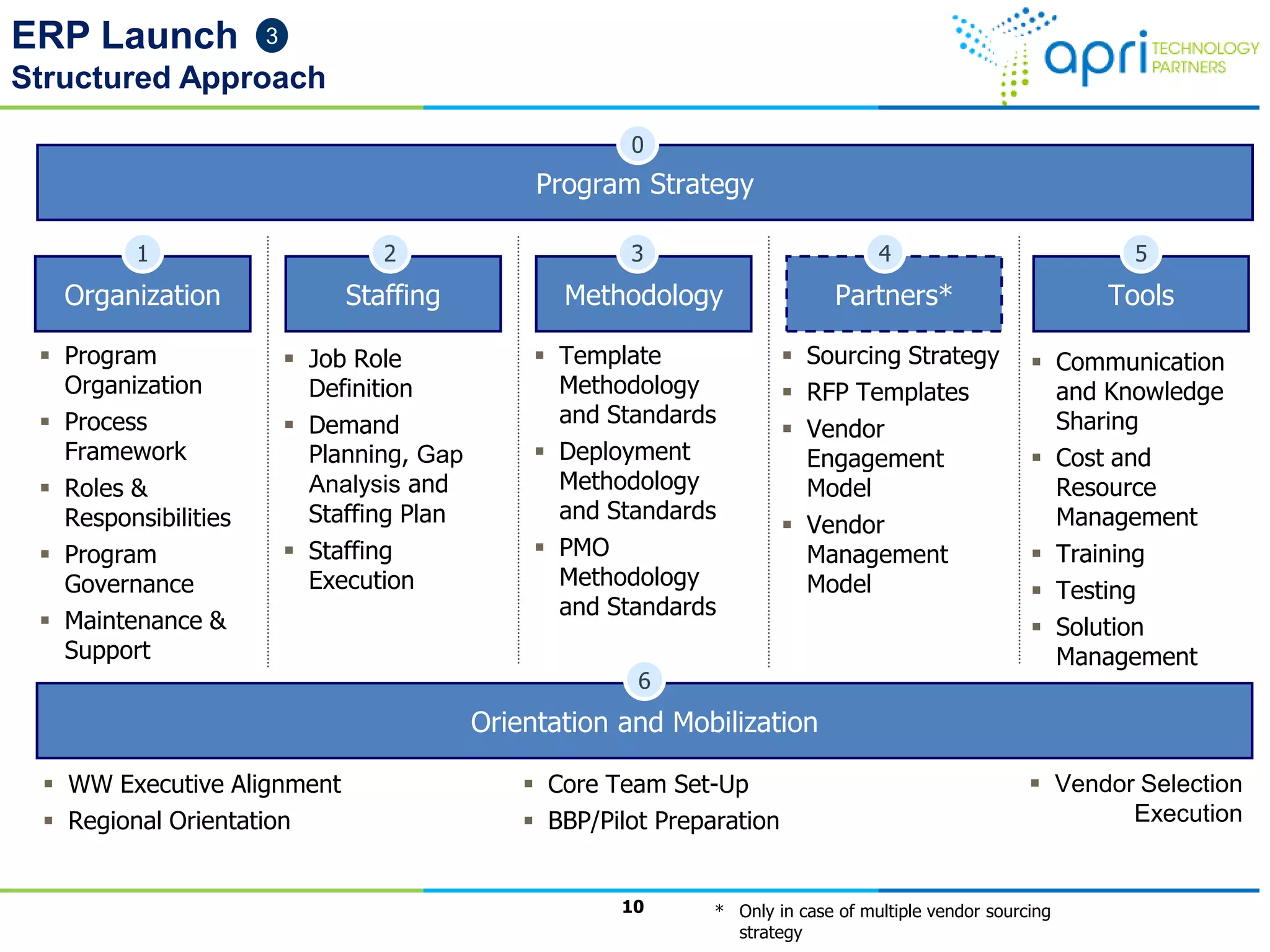
ERP Launch
Structured Approach
3
10
Organization
1
ď‚§ Program
Organization
ď‚§ Process
Framework
ď‚§ Roles &
Responsibilities
ď‚§ Program
Governance
ď‚§ Maintenance &
Support
Staffing
ď‚§ Communication
and Knowledge
Sharing
ď‚§ Cost and
Resource
Management
ď‚§ Training
ď‚§ Testing
ď‚§ Solution
Management
2
Methodology
ď‚§ Template
Methodology
and Standards
ď‚§ Deployment
Methodology
and Standards
ď‚§ PMO
Methodology
and Standards
3
Partners*
ď‚§ Sourcing Strategy
ď‚§ RFP Templates
ď‚§ Vendor
Engagement
Model
ď‚§ Vendor
Management
Model
4
Tools
ď‚§ Job Role
Definition
ď‚§ Demand
Planning, Gap
Analysis and
Staffing Plan
ď‚§ Staffing
Execution
5
ď‚§ WW Executive Alignment
ď‚§ Regional Orientation
Orientation and Mobilization
6
ď‚§ Core Team Set-Up
ď‚§ BBP/Pilot Preparation
ď‚§ Vendor Selection
Execution
Program Strategy
0
* Only in case of multiple vendor sourcing
strategy
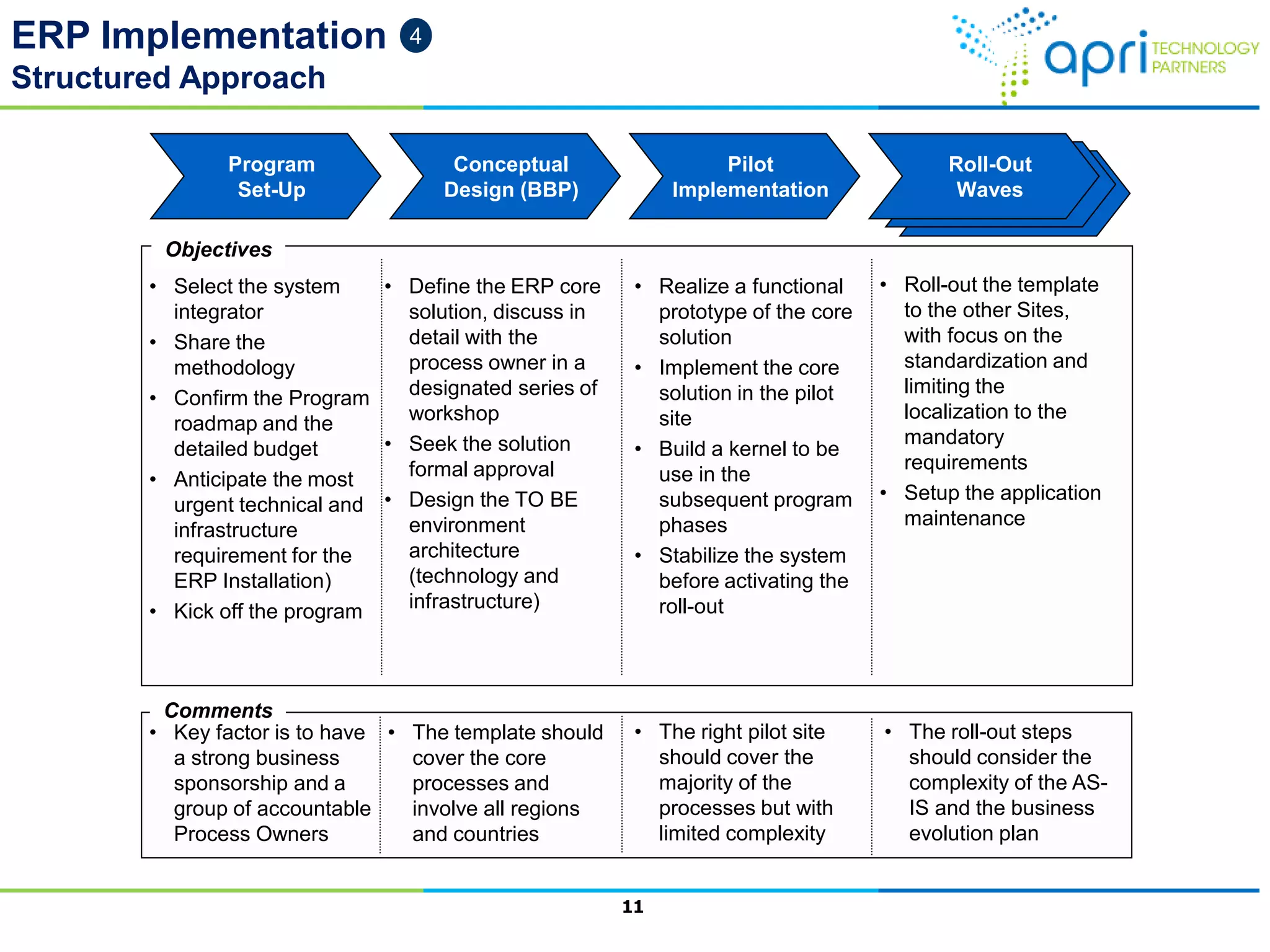
ERP Implementation
Structured Approach
4
11
Program
Set-Up
Conceptual
Design (BBP)
Pilot
Implementation Roll-Out
Waves
Roll-Out
Waves
Roll-Out
Waves
• Select the system
integrator
• Share the
methodology
• Confirm the Program
roadmap and the
detailed budget
• Anticipate the most
urgent technical and
infrastructure
requirement for the
ERP Installation)
• Kick off the program
• Define the ERP core
solution, discuss in
detail with the
process owner in a
designated series of
workshop
• Seek the solution
formal approval
• Design the TO BE
environment
architecture
(technology and
infrastructure)
• Realize a functional
prototype of the core
solution
• Implement the core
solution in the pilot
site
• Build a kernel to be
use in the
subsequent program
phases
• Stabilize the system
before activating the
roll-out
• Roll-out the template
to the other Sites,
with focus on the
standardization and
limiting the
localization to the
mandatory
requirements
• Setup the application
maintenance
Objectives
Comments
• The roll-out steps
should consider the
complexity of the AS-
IS and the business
evolution plan
• Key factor is to have
a strong business
sponsorship and a
group of accountable
Process Owners
• The template should
cover the core
processes and
involve all regions
and countries
• The right pilot site
should cover the
majority of the
processes but with
limited complexity
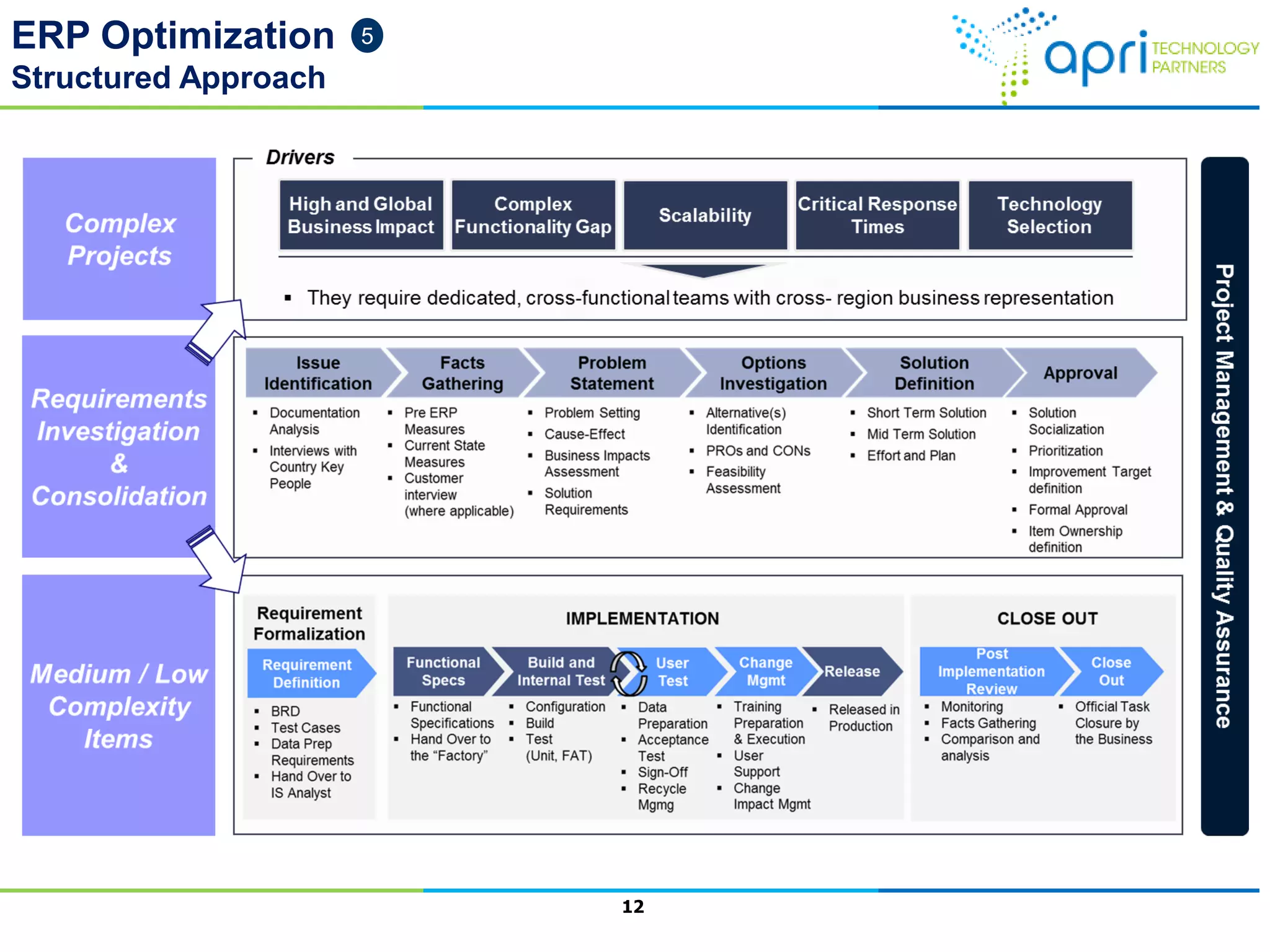
ERP Optimization
Structured Approach
5
12
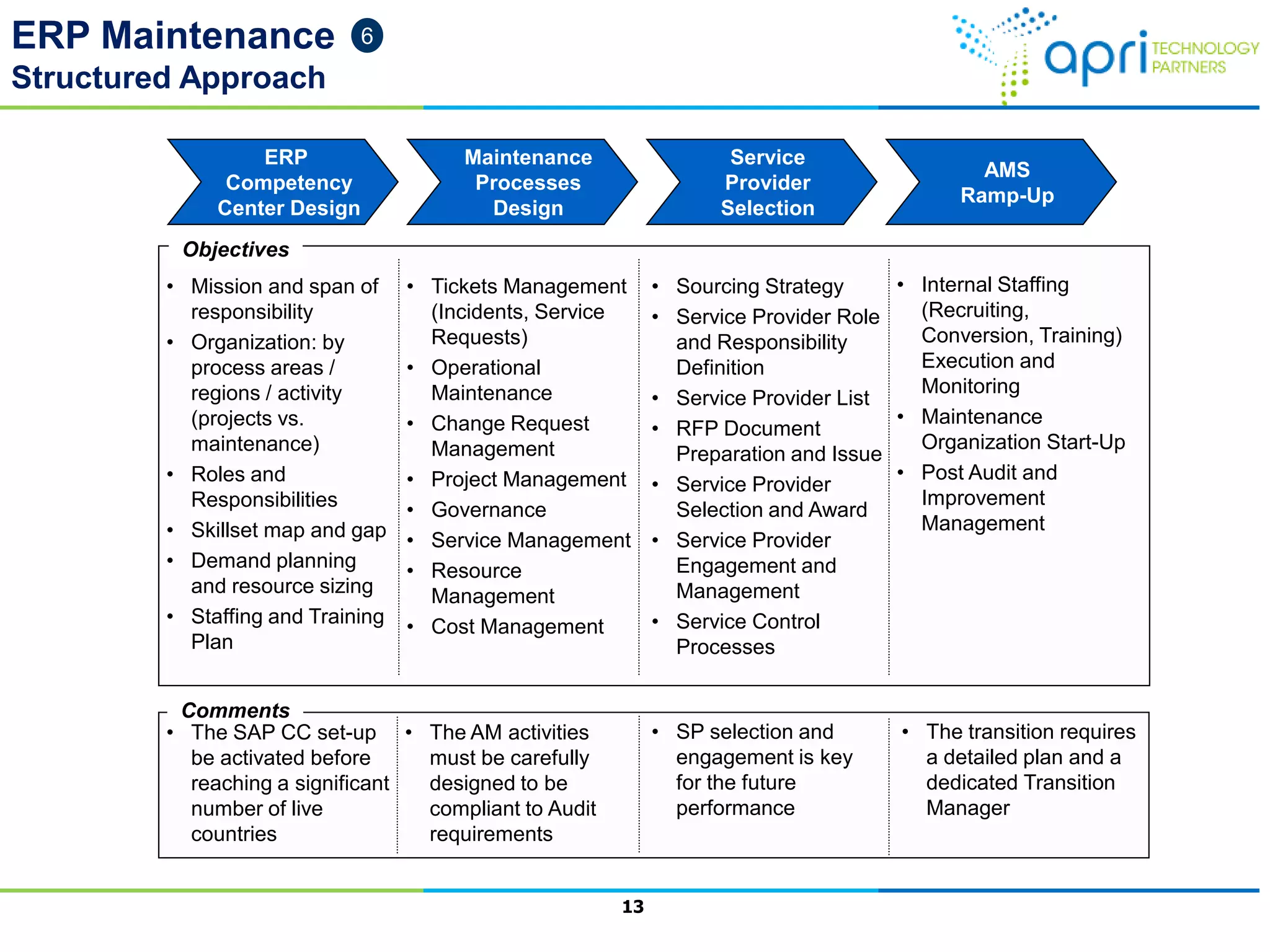
ERP Maintenance
Structured Approach
6
13
ERP
Competency
Center Design
Maintenance
Processes
Design
Service
Provider
Selection
AMS
Ramp-Up
• Mission and span of
responsibility
• Organization: by
process areas /
regions / activity
(projects vs.
maintenance)
• Roles and
Responsibilities
• Skillset map and gap
• Demand planning
and resource sizing
• Staffing and Training
Plan
• Tickets Management
(Incidents, Service
Requests)
• Operational
Maintenance
• Change Request
Management
• Project Management
• Governance
• Service Management
• Resource
Management
• Cost Management
• Sourcing Strategy
• Service Provider Role
and Responsibility
Definition
• Service Provider List
• RFP Document
Preparation and Issue
• Service Provider
Selection and Award
• Service Provider
Engagement and
Management
• Service Control
Processes
• Internal Staffing
(Recruiting,
Conversion, Training)
Execution and
Monitoring
• Maintenance
Organization Start-Up
• Post Audit and
Improvement
Management
Objectives
Comments
• The transition requires
a detailed plan and a
dedicated Transition
Manager
• The SAP CC set-up
be activated before
reaching a significant
number of live
countries
• The AM activities
must be carefully
designed to be
compliant to Audit
requirements
• SP selection and
engagement is key
for the future
performance

Erp governance methodology and case studies v rjt

  • 1.
    CONFIDENTIAL AND PROPRIETARY Anyuse of this material without specific permission of Apri Technology Partners is strictly prohibited ERP Governance Methodology & Case Studies By
  • 2.
    ERP Governance Reasons behindthe choice of a new ERP system 2
  • 3.
    ERP Governance Moving toa new ERP requires awareness and a structured approach 3
  • 4.
    ERP Governance How tomanage the entire ERP Life Cycle 4
  • 5.
    How to selectand deploy the new ERP Our Methodological Framework (1/2) 5
  • 6.
    How to selectand deploy the new ERP Our Methodological Framework (2/2) 6
  • 7.
    Process and ISReview Focus on Process Model and Scope 7 Mapping the company processes, designing the reference template and deciding the scope for the ERP introduction is a key preliminary activity for the new ERP introduction 1
  • 8.
    ERP Selection Structured Approach 8 2 STEP1 «THINK» Design the ERP Selection process, by defining: • The process scope for each implementation phase • The Selection Criteria to drive the choice of the best ERP SW • The initial SW list • The company Business and IT team to be involved in the selection • The work plan STEP 2 «PREPARE» • Define and weight the «functional requirements» • Reduce the ERP vendor list, by applying filtering criteria • Prepare the RFP document to be sent to the SW Bidders • Engage the vendors and manage the internal communication • Review the work plan STEP 3 «EXECUTE» • Manage the interaction with the SW vendors, by receiving their responses and organizing the SW demos • Coordinate the scoring activity to be executed by the project team • Proceed with the ERP selection in two steps (Down Selection and Final Selection) • Finalize the contract with the selected vendor
  • 9.
    ERP Selection Focus onthe Selection Criteria and the Evaluation Scorecard 9 2 ERP “Quality”  Which ERP fit better the “core business” process? Total Cost of Ownership  Compare the costs to buy the licenses, to implement and to maintain each ERP in the selection process Business Risks  Assess the risks related to each ERP in the selection process Business Benefits  How much each ERP can improve the performance compared with the «As Is» situation (also considering the business evolution strategy)? Vendor Profile  Which vendor is the most reliable and referred ERP supplier?  This Criteria is typically preliminary to include the vendor in the Short List
  • 10.
    ERP Launch Structured Approach 3 10 Organization 1 ď‚§Program Organization ď‚§ Process Framework ď‚§ Roles & Responsibilities ď‚§ Program Governance ď‚§ Maintenance & Support Staffing ď‚§ Communication and Knowledge Sharing ď‚§ Cost and Resource Management ď‚§ Training ď‚§ Testing ď‚§ Solution Management 2 Methodology ď‚§ Template Methodology and Standards ď‚§ Deployment Methodology and Standards ď‚§ PMO Methodology and Standards 3 Partners* ď‚§ Sourcing Strategy ď‚§ RFP Templates ď‚§ Vendor Engagement Model ď‚§ Vendor Management Model 4 Tools ď‚§ Job Role Definition ď‚§ Demand Planning, Gap Analysis and Staffing Plan ď‚§ Staffing Execution 5 ď‚§ WW Executive Alignment ď‚§ Regional Orientation Orientation and Mobilization 6 ď‚§ Core Team Set-Up ď‚§ BBP/Pilot Preparation ď‚§ Vendor Selection Execution Program Strategy 0 * Only in case of multiple vendor sourcing strategy
  • 11.
    ERP Implementation Structured Approach 4 11 Program Set-Up Conceptual Design(BBP) Pilot Implementation Roll-Out Waves Roll-Out Waves Roll-Out Waves • Select the system integrator • Share the methodology • Confirm the Program roadmap and the detailed budget • Anticipate the most urgent technical and infrastructure requirement for the ERP Installation) • Kick off the program • Define the ERP core solution, discuss in detail with the process owner in a designated series of workshop • Seek the solution formal approval • Design the TO BE environment architecture (technology and infrastructure) • Realize a functional prototype of the core solution • Implement the core solution in the pilot site • Build a kernel to be use in the subsequent program phases • Stabilize the system before activating the roll-out • Roll-out the template to the other Sites, with focus on the standardization and limiting the localization to the mandatory requirements • Setup the application maintenance Objectives Comments • The roll-out steps should consider the complexity of the AS- IS and the business evolution plan • Key factor is to have a strong business sponsorship and a group of accountable Process Owners • The template should cover the core processes and involve all regions and countries • The right pilot site should cover the majority of the processes but with limited complexity
  • 12.
  • 13.
    ERP Maintenance Structured Approach 6 13 ERP Competency CenterDesign Maintenance Processes Design Service Provider Selection AMS Ramp-Up • Mission and span of responsibility • Organization: by process areas / regions / activity (projects vs. maintenance) • Roles and Responsibilities • Skillset map and gap • Demand planning and resource sizing • Staffing and Training Plan • Tickets Management (Incidents, Service Requests) • Operational Maintenance • Change Request Management • Project Management • Governance • Service Management • Resource Management • Cost Management • Sourcing Strategy • Service Provider Role and Responsibility Definition • Service Provider List • RFP Document Preparation and Issue • Service Provider Selection and Award • Service Provider Engagement and Management • Service Control Processes • Internal Staffing (Recruiting, Conversion, Training) Execution and Monitoring • Maintenance Organization Start-Up • Post Audit and Improvement Management Objectives Comments • The transition requires a detailed plan and a dedicated Transition Manager • The SAP CC set-up be activated before reaching a significant number of live countries • The AM activities must be carefully designed to be compliant to Audit requirements • SP selection and engagement is key for the future performance