ERP IMPLEMENTATION
LIFE CYCLE
Enterprise resource planning
 ERP covers the technique and concepts
employed for the integrated management of
business as a whole,
 ERP packages are integrated software
packages that support the above ERP
concepts.
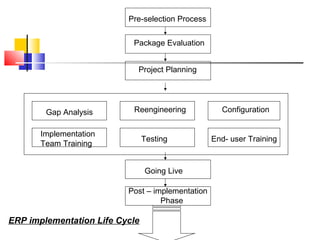
ERP LIFE CYCLE
 ERP lifecycle is in which highlights the
different stages in implementation of An ERP.
Different phases of ERP
 Pre evaluation Screening
 Evaluation Package
 Project Planning
 GAP analysis
 Reengineering
 Team training
 Testing
 Post implementation
Pre-selection Process
Package Evaluation
Project Planning
Gap Analysis Reengineering Configuration
Implementation
Team Training
Testing End- user Training
Going Live
Post – implementation
Phase
ERP implementation Life Cycle
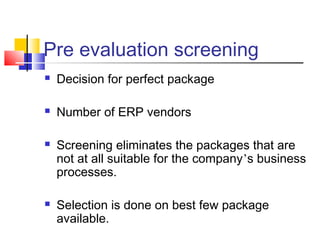
Pre evaluation screening
 Decision for perfect package
 Number of ERP vendors
 Screening eliminates the packages that are
not at all suitable for the company’s business
processes.
 Selection is done on best few package
available.
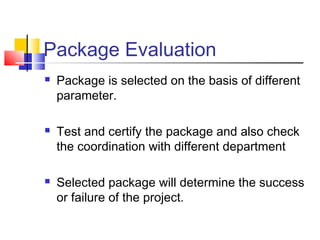
Package Evaluation
 Package is selected on the basis of different
parameter.
 Test and certify the package and also check
the coordination with different department
 Selected package will determine the success
or failure of the project.
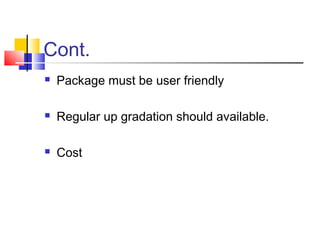
Cont.
 Package must be user friendly
 Regular up gradation should available.
 Cost
Project planning
 Designs the implementation process.
 Resources are identified.
 Implementation team is selected and task
allocated.
 Special arrangement for contegencies.
Gap analysis
 Most crucial phase.
 Process through which company can create a
model of where they are standing now and
where they want to go.
 Model help the company to cover the
functional gap
Reengineering
 Implementation is going to involve a
significant change in number of employees
and their job responsibilities.
 Process become more automated and
efficient.
Team Training
 Takes place along with the process of
implementation.
 Company trains its employees to implement
and later, run the system.
 Employee become self sufficient to implement
the software after the vendors and consultant
have left.
Testing
 This phase is performed to find the weak link
so that it can be rectified before its
implementation.
Going Live
 The work is complete, data conversion is
done, databases are up and running, the
configuration is complete & testing is done.
 The system is officially proclaimed.
 Once the system is live the old system is
removed
End User Training
 The employee who is going to use the system
are identified and trained.
Post Implementation
 This is the maintenance phase.
 Employees who are trained enough to handle
problems those crops up time to time.
 The post implementation will need a different
set of roles and skills than those with less
integrated kind of systems.
 An organization can get the maximum
value of these inputs if it successfully
adopts and effectively uses the system.
Conclusion

Erp implementation1

  • 1.
  • 2.
    Enterprise resource planning ERP covers the technique and concepts employed for the integrated management of business as a whole,  ERP packages are integrated software packages that support the above ERP concepts.
  • 3.
    ERP LIFE CYCLE ERP lifecycle is in which highlights the different stages in implementation of An ERP.
  • 4.
    Different phases ofERP  Pre evaluation Screening  Evaluation Package  Project Planning  GAP analysis  Reengineering  Team training  Testing  Post implementation
  • 5.
    Pre-selection Process Package Evaluation ProjectPlanning Gap Analysis Reengineering Configuration Implementation Team Training Testing End- user Training Going Live Post – implementation Phase ERP implementation Life Cycle
  • 6.
    Pre evaluation screening Decision for perfect package  Number of ERP vendors  Screening eliminates the packages that are not at all suitable for the company’s business processes.  Selection is done on best few package available.
  • 7.
    Package Evaluation  Packageis selected on the basis of different parameter.  Test and certify the package and also check the coordination with different department  Selected package will determine the success or failure of the project.
  • 8.
    Cont.  Package mustbe user friendly  Regular up gradation should available.  Cost
  • 9.
    Project planning  Designsthe implementation process.  Resources are identified.  Implementation team is selected and task allocated.  Special arrangement for contegencies.
  • 10.
    Gap analysis  Mostcrucial phase.  Process through which company can create a model of where they are standing now and where they want to go.  Model help the company to cover the functional gap
  • 11.
    Reengineering  Implementation isgoing to involve a significant change in number of employees and their job responsibilities.  Process become more automated and efficient.
  • 12.
    Team Training  Takesplace along with the process of implementation.  Company trains its employees to implement and later, run the system.  Employee become self sufficient to implement the software after the vendors and consultant have left.
  • 13.
    Testing  This phaseis performed to find the weak link so that it can be rectified before its implementation.
  • 14.
    Going Live  Thework is complete, data conversion is done, databases are up and running, the configuration is complete & testing is done.  The system is officially proclaimed.  Once the system is live the old system is removed
  • 15.
    End User Training The employee who is going to use the system are identified and trained.
  • 16.
    Post Implementation  Thisis the maintenance phase.  Employees who are trained enough to handle problems those crops up time to time.  The post implementation will need a different set of roles and skills than those with less integrated kind of systems.
  • 17.
     An organizationcan get the maximum value of these inputs if it successfully adopts and effectively uses the system.
  • 18.