ENTERPRISE RISK MANAGEMENT
ISO 31000 - 2009

MOHAMAD HASSAN AK., MAFIS, QIA, CRMP, CRMA
ERM - ISO 31000
DETERMINE RISK CRITERIA
• What make an ERM implementation unique to
each organization
• Influenced by business objectives as well as
external & internal context.
• By definition: ”terms of reference against which the significance
of risk is evaluated”.
• Type of risk criteria:
– Governance risk criteria
– Assessment risk criteria
Governance Risk Criteria
Risk
Capacity

Risk
Attitude

Risk
Appetite

Risk
Tolerance
Risk Capacity
• Board and senior management must understand both individual
outcomes and aggregated outcomes from multiple events that could
cause organization to cease operations.
• Not only responsible determining business objectives, but also
ensuring organization survives.

Inadequate capital
Inadequate cash flow
Violations of laws &
regulations
Damage to
reputation
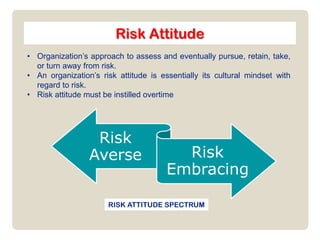
Risk Attitude
• Organization’s approach to assess and eventually pursue, retain, take,
or turn away from risk.
• An organization’s risk attitude is essentially its cultural mindset with
regard to risk.
• Risk attitude must be instilled overtime

Risk
Averse

Risk
Embracing

RISK ATTITUDE SPECTRUM
Risk Appetite
• Amount of risk, on broad level, an entity is willing to accept in pursuing
of value (COSO ERM)
• Element of risk appetite in shaping definition:

 Risk appetite is an integral part of strategic planning
 Not all risk outcomes are easily measurable; qualitative (type) and quantitative
(amount)
 Appetite may reflect the desire to pursue positive outcomes as well as to minimize
negative outcomes
 An organization must accept some level of risk to be successful

• Examples of risk appetite statements:

 Invest at least 15 percent of revenues
 Maintain a debt/equity ratio 1.5 or less
 Put no more than 50 percent capital at risk
 Not build key manufacturing plants in areas prone to floods or earthquakes
Risk Tolerance
• Readiness to bear the risk after risk treatment in order to achieve
objectives.
• Risk-taking boundaries within which managers and employees are
expected to perform in pursuing of the organization’s strategic,
operations, reporting, and compliance objectives.
• Examples:

 Annual operating results should be not be less than 90 percent of budget
 Customer satisfaction rating should meet or exceed 95 percent.
Assessment Risk Criteria
• A measure of the size of potential risk

Impact

outcomes, should event occur.
• Impact types include, but not limited to,
financial

reputational,

legal,

environmental, and safety outcomes.

• Reflects an estimate of the possibility that

Likelihood

risk events will occur are result in the
assessed risk outcomes
Inherent Criteria

Capability
Criteria

consequence

Other Risk
Assessment
Criteria

Readiness &
Preparedness

Significance

Agility

Severity

Resilience

Frequency

Controllability

Velocity

Monitorability

Volatility

Maturity

Interdependency

Degree of
Confidence

Erm tm 11

  • 1.
    ENTERPRISE RISK MANAGEMENT ISO31000 - 2009 MOHAMAD HASSAN AK., MAFIS, QIA, CRMP, CRMA
  • 2.
    ERM - ISO31000
  • 3.
    DETERMINE RISK CRITERIA •What make an ERM implementation unique to each organization • Influenced by business objectives as well as external & internal context. • By definition: ”terms of reference against which the significance of risk is evaluated”. • Type of risk criteria: – Governance risk criteria – Assessment risk criteria
  • 4.
  • 5.
    Risk Capacity • Boardand senior management must understand both individual outcomes and aggregated outcomes from multiple events that could cause organization to cease operations. • Not only responsible determining business objectives, but also ensuring organization survives. Inadequate capital Inadequate cash flow Violations of laws & regulations Damage to reputation
  • 6.
    Risk Attitude • Organization’sapproach to assess and eventually pursue, retain, take, or turn away from risk. • An organization’s risk attitude is essentially its cultural mindset with regard to risk. • Risk attitude must be instilled overtime Risk Averse Risk Embracing RISK ATTITUDE SPECTRUM
  • 7.
    Risk Appetite • Amountof risk, on broad level, an entity is willing to accept in pursuing of value (COSO ERM) • Element of risk appetite in shaping definition:  Risk appetite is an integral part of strategic planning  Not all risk outcomes are easily measurable; qualitative (type) and quantitative (amount)  Appetite may reflect the desire to pursue positive outcomes as well as to minimize negative outcomes  An organization must accept some level of risk to be successful • Examples of risk appetite statements:  Invest at least 15 percent of revenues  Maintain a debt/equity ratio 1.5 or less  Put no more than 50 percent capital at risk  Not build key manufacturing plants in areas prone to floods or earthquakes
  • 8.
    Risk Tolerance • Readinessto bear the risk after risk treatment in order to achieve objectives. • Risk-taking boundaries within which managers and employees are expected to perform in pursuing of the organization’s strategic, operations, reporting, and compliance objectives. • Examples:  Annual operating results should be not be less than 90 percent of budget  Customer satisfaction rating should meet or exceed 95 percent.
  • 9.
    Assessment Risk Criteria •A measure of the size of potential risk Impact outcomes, should event occur. • Impact types include, but not limited to, financial reputational, legal, environmental, and safety outcomes. • Reflects an estimate of the possibility that Likelihood risk events will occur are result in the assessed risk outcomes
  • 10.
    Inherent Criteria Capability Criteria consequence Other Risk Assessment Criteria Readiness& Preparedness Significance Agility Severity Resilience Frequency Controllability Velocity Monitorability Volatility Maturity Interdependency Degree of Confidence