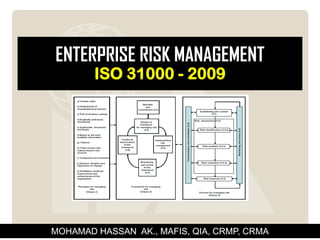
ENTERPRISE RISK MANAGEMENT
ISO 31000 - 2009

MOHAMAD HASSAN AK., MAFIS, QIA, CRMP, CRMA
ERM - ISO 31000
GETTING STARTED
Obtain Mandate
& Commitment

Building
Start ERM

Implementation

a Framework

IA Role
in getting started

Design
Framework
Implement,
Monitor, &
Improve System
Building a Framework
a set of components that provide the foundations
and organizational arrangements for designing,

implementing, monitoring, reviewing, and
continually improving risk management

throughout the organization
Building a Framework
Obtain ERM Mandate and Commitment

Design
Framework
Continuously
Improve ERM
System

Implement
ERM System

Monitor &
Review ERM
System
Obtain ERM Mandate & Commitment
Define & endorse the risk management policy
Ensure organization’s culture and RM policy aligned
Align RM object. with organization object. & strategies
Determine RM performance align with performance indicators organization
Assign accountabilities & responsibilities at appropriate levels within organization
Ensure necessary resources are allocated to risk management
Ensure legal and regulatory compliance
Communicate benefits of risk management to shareholders
Ensure framework for managing risk continues to remain appropriate
Some Considerations
Why are we
choosing implement
ERM at this time?

Where do we start?

What outcome do
we expect?
What does success
look like?

What is our scope
for implementation?

How will we roll
ERM out
enterprisewide?
Design ERM Framework
Understand the organization, its business, & context for ERM

Frameworks

Designing

Determine organizational positioning of ERM
Develop risk management policy
Assign accountability and authority
Allocate resources
Establish internal & external reporting mechanisms
Link ERM to performance appraisal process
Understanding organization, business, & context ERM
• External Factors:
– Social and cultural, political, legal, regulatory, financial,
technological, economic, natural, & competitive environment
(international, national, regional, or local).
– Key driver and trends affecting the objectives of the organization.
– Relationship with, and perception and values of, external
stakeholders.
Understanding organization, business, & context ERM
• Internal Factors:
– Governance, organizational structure, roles, & responsibilities.
– Policies, objectives, and strategies in place to achieve them.
– Capabilities & knowledge (capital, time, people, processes,
systems, and technologies).
– Information systems, information flows, & decision making
process.
– Relationship with, and perceptions and values of, internal
stakeholders.
– Organizational cultures.
– Standards, guidelines, and models adopted.
Determine organizational positioning of ERM
• No single best practices
• Challenges in perception:
– ERM reports too low; therefore no have senior management full
commitment.
– ERM focuses primarily on financial reporting risks and excludes
other important areas of risk.

• Establish a risk committee
• Key considerations:
– Reporting line should be high enough
– Sufficient span of responsibility to oversee ERM activities
– Report directly to the board
Develop Risk Management Policy
• Important elements include in policy:
– Overall rationale and objectives for, and commitment to,
implementing an effective ERM System.
– Governance responsibilities, include tone and attitude board.
– Application/scope across the organization
– Framework used that provide support ERM approach
– Authority and responsibilities for overseeing and executing ERM
System
– Commitment of Resources
– Key terms and definitions
– Limit and risk tolerance levels
– Risk management performance measures and metrics
– Expectations & practices to periodically review and update.
Implement, Monitor, & Improve
ERM System
Implement
Monitor
Improve
INTERNAL AUDIT’S ROLE IN
GETTING STARTED

Lead
ERM
Implementation

Play
Prominent

Role

• More experience, skill, & organizational perspective.
• Understand value ERM & push to get implementation.
• Steps to avoid impairment objectivity: (1) well-understood
situation & agreed, (2) involve appropriate member of
management as much as possible, (3) formal plan should be
developed, & (4) hired outside resource for assurance
• Implementing ERM; knowledge of a good ERM system looks
like.
• Conducting risk assessment; identifying, analyzing, &
evaluating risks.
• Considering risk treatment options.
• Designing risk management activities.
• Determining next steps to make ERM sustainable.
INTERNAL AUDIT’S ROLE IN
GETTING STARTED

Provide
Consulting

Support

Provide
Assurance
Implementation

• Advisory services of ERM
• Facilitation of ERM Workshops
• Instructional Services
• Coaching management risk management process
• Championing establishment of ERM

• Giving assurance of risk management process
• Giving assurance that risks correctly evaluated
• Review management of Keys Risks
• Evaluating reporting of key risks
• Evaluating risk management process

Erm tm 10

  • 1.
    ENTERPRISE RISK MANAGEMENT ISO31000 - 2009 MOHAMAD HASSAN AK., MAFIS, QIA, CRMP, CRMA
  • 2.
    ERM - ISO31000
  • 3.
    GETTING STARTED Obtain Mandate &Commitment Building Start ERM Implementation a Framework IA Role in getting started Design Framework Implement, Monitor, & Improve System
  • 4.
    Building a Framework aset of components that provide the foundations and organizational arrangements for designing, implementing, monitoring, reviewing, and continually improving risk management throughout the organization
  • 5.
    Building a Framework ObtainERM Mandate and Commitment Design Framework Continuously Improve ERM System Implement ERM System Monitor & Review ERM System
  • 6.
    Obtain ERM Mandate& Commitment Define & endorse the risk management policy Ensure organization’s culture and RM policy aligned Align RM object. with organization object. & strategies Determine RM performance align with performance indicators organization Assign accountabilities & responsibilities at appropriate levels within organization Ensure necessary resources are allocated to risk management Ensure legal and regulatory compliance Communicate benefits of risk management to shareholders Ensure framework for managing risk continues to remain appropriate
  • 7.
    Some Considerations Why arewe choosing implement ERM at this time? Where do we start? What outcome do we expect? What does success look like? What is our scope for implementation? How will we roll ERM out enterprisewide?
  • 8.
    Design ERM Framework Understandthe organization, its business, & context for ERM Frameworks Designing Determine organizational positioning of ERM Develop risk management policy Assign accountability and authority Allocate resources Establish internal & external reporting mechanisms Link ERM to performance appraisal process
  • 9.
    Understanding organization, business,& context ERM • External Factors: – Social and cultural, political, legal, regulatory, financial, technological, economic, natural, & competitive environment (international, national, regional, or local). – Key driver and trends affecting the objectives of the organization. – Relationship with, and perception and values of, external stakeholders.
  • 10.
    Understanding organization, business,& context ERM • Internal Factors: – Governance, organizational structure, roles, & responsibilities. – Policies, objectives, and strategies in place to achieve them. – Capabilities & knowledge (capital, time, people, processes, systems, and technologies). – Information systems, information flows, & decision making process. – Relationship with, and perceptions and values of, internal stakeholders. – Organizational cultures. – Standards, guidelines, and models adopted.
  • 11.
    Determine organizational positioningof ERM • No single best practices • Challenges in perception: – ERM reports too low; therefore no have senior management full commitment. – ERM focuses primarily on financial reporting risks and excludes other important areas of risk. • Establish a risk committee • Key considerations: – Reporting line should be high enough – Sufficient span of responsibility to oversee ERM activities – Report directly to the board
  • 12.
    Develop Risk ManagementPolicy • Important elements include in policy: – Overall rationale and objectives for, and commitment to, implementing an effective ERM System. – Governance responsibilities, include tone and attitude board. – Application/scope across the organization – Framework used that provide support ERM approach – Authority and responsibilities for overseeing and executing ERM System – Commitment of Resources – Key terms and definitions – Limit and risk tolerance levels – Risk management performance measures and metrics – Expectations & practices to periodically review and update.
  • 13.
    Implement, Monitor, &Improve ERM System Implement Monitor Improve
  • 14.
    INTERNAL AUDIT’S ROLEIN GETTING STARTED Lead ERM Implementation Play Prominent Role • More experience, skill, & organizational perspective. • Understand value ERM & push to get implementation. • Steps to avoid impairment objectivity: (1) well-understood situation & agreed, (2) involve appropriate member of management as much as possible, (3) formal plan should be developed, & (4) hired outside resource for assurance • Implementing ERM; knowledge of a good ERM system looks like. • Conducting risk assessment; identifying, analyzing, & evaluating risks. • Considering risk treatment options. • Designing risk management activities. • Determining next steps to make ERM sustainable.
  • 15.
    INTERNAL AUDIT’S ROLEIN GETTING STARTED Provide Consulting Support Provide Assurance Implementation • Advisory services of ERM • Facilitation of ERM Workshops • Instructional Services • Coaching management risk management process • Championing establishment of ERM • Giving assurance of risk management process • Giving assurance that risks correctly evaluated • Review management of Keys Risks • Evaluating reporting of key risks • Evaluating risk management process