

Episodic Muscle Weakness
Dr ANAND
Possible Differentials
1. Metabolic Myopathies – Glycogen Storage Diseases,Fatty Acid oxidation defect
2. Channelopathies – Calcium(Hypokalemic PP),sodium channel(Hyperkalemic
PP) defects, Potassium Channel Disorders
3. Neuromuscular Junction disorders – Myathenia Gravis,Lamberton Eaton
Myasthenic Syndrome and Congenital Myasthenic syndromes
4. Mitochondrial Myopathies
5. Malignant Hyperthermia
6. Acute Internittant Porphyria
7. HNPP
8. Drugs/toxins – Statins ,Alcohol Amphetamines Cocaine Heroin
9. Inflammatory- PM/DM, Infections
Approach
1. History
2. Examination
3. Investigations
Triggers
Meals
• Heavy Carbohydrate Meals - glycogen storage disease or hypokalemic
periodic paralysis
• Meal rich in potassium – Hyperkalemic PP
• Alcohol intake – Hypokalemic PP
• Fasting - - fatty acid oxidation disorders, hyperkalemic PP and
porphyria
Exercise
• Intense physical activity followed by a period of rest - PP
• Weakness that occurs with exercise and improves with rest- MG
• Intense exercise triggering rhabomyolysis and weakness – metabolic
myopathies(,mutations with ryanodine receptor
Time of the Day
• Weakness at mornings(after a nights rest) – PP
• Better at morning and weak at evening– MG
Temperature-
• Cold – Hyperkalemic PP, Paramyotonia and Congenita
• Weaker with Heat and better with cold - MG
Medications
Insulin,IV Glucose, corticosteroids, Diuretics -Hypokalemic PP
Potassium-Sparing diuretics – Hyperkalemic PP
Antibiotics (Aminoglycosides),muscle relaxants,corticosteroids(within
14 days) - MG
Barbiturates and Benzodiazepines – Acute Porphyria
Position and Compression- Minimal Nerve compression – Hereditary
Neuropathy with liability to pressure palsies
Myoglobinuria -
Glycolytic defect ,Fatty acid metabolism disorder,Malignant
hyperthermia,drugs,toxins.
Associated Features
Generalized involvement of muscles with painful weakness and
swelling. – Polymyositis,Infections- Pyomyositis,viral or fungal
Worsening with febrile illness – Mitochondrial myopathy,Metabolic
Myopathy and MG
Rash – Dermatomyositis(Heliotrope Rash,Shawl Sign)
Cardiac Involvement in Carnitine deficiency and Channelopathies
Hepatic involvement in mitochondrial and carnitine deficiency
Multisystem involvement with failure to hrive ,short stature,hearing
loss,cardiac conduction defects – Mitochondrial Myopathy
Duration of weakness
• Weakness lasts for few hours in Hyperkalemic PP
• Weakness lasting for several hours /days- Hypokalemic PP, MG
• Weeks/months – relapsing form of CIDP
Distribution of weakness
Weakness in thighs and calves – Hyperkalemic PP and Hypokalemic PP
Facial,extraocular muscles and respiratory muscles – MG,Congenital
Myopathy
Generalized weakness – Acute intermittent Porphyria
Other Manifestations
Myotonia/Paramyotonia – hyperkalemicPP
Myoglobinuria,muscle edema due to rhabdomyolysis – Metabolic
Myopathies and Ryanodinopathies
Acute abdominal Pain – Porphyria
Fever triggering weakness in Carnitine palmitoyltransferase 1A
deficiency
Family History
PP,Metabolic Myopathies ,acute porphyria,HNPP and Congenital
Myasthenic syndrome
Examination
Reflexes –
Reduced or absent in CIDP,Hypokalemic PP and Porphyria(during the
attacks)
Normal reflexes in MG(during and in between attacks)
Sensory Changes
HNPP,CIDP,AIP
Usually not seen in PP,Metabolic Myopathies and MG
Myotonia – Hyperkalemic PP
Exercise Intolerance
1) Cramps,myalgia and hemoglobinuria that develop after a
brief episode of intense exercise - glycogen storage disease
Second Wind Phenomemon-
Symptoms improve with sustained submaximal effort – McArdles
Disease( Glycogen Storage Disease V) Patient's better tolerance for
aerobic exercise such as walking and cycling after sustained effort. Due
to metabolic s
Out of Wind Phenomenon –
• Seen in Phosphofructokinase deficiency (GSD VII)
• Defect in glycolysis
• Providing sucrose solutions before exercise worsens the exercise
capacity due to insulin mediated suppression of lipolysis.
2) Cramps,myalgia and hemoglobinuria that develop after low intensity
sustained exercise – fatty acid oxidation disease
3)Generalized fatigue after sustained exercise but no cramps _MG
Investigations
1) Potassium Levels with TSH,Sodium,chloride,anion gap and
creatinine levels
2) Calcium and Magnesium levels
3) Creatine Kinase
Moderate elevationin acute PP
Highly elevated in metabolic myopathies (particulary during
rhabomyolysis) and Inflammatory Myopathies
4)ECG - to look for K changes in ECG and long QT
syndromes(Anderson Tawil syndrome)
5) Pulmonary function tests – MG and AIP
6) Lactate Levels- elevated in mitochondrial myopathies
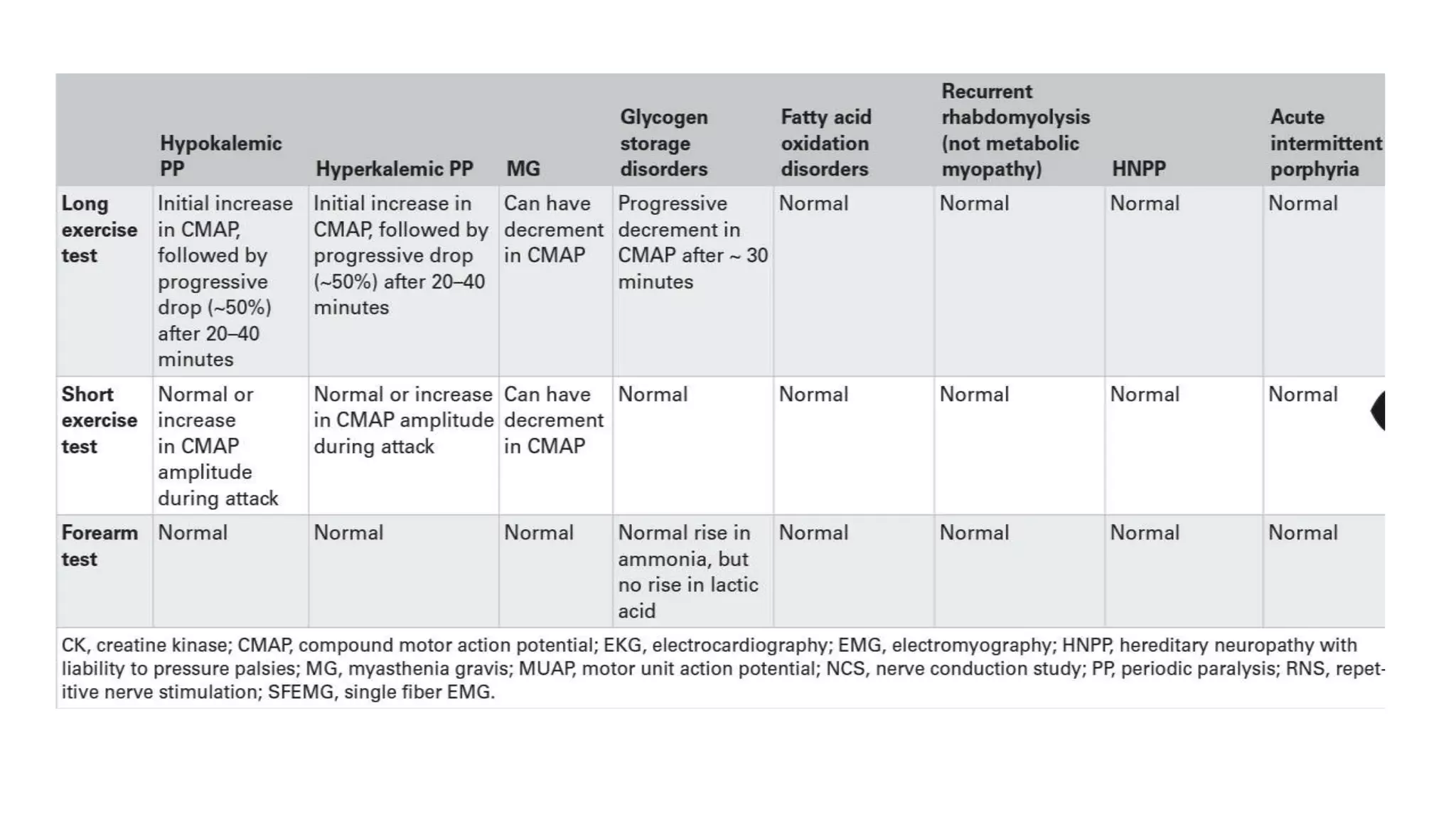
Forearm Exercise Test
For glycogen storage disease –
Forearm exercise performed after at least 15 minutes of rest
Intermittent contraction or persistent isometric contraction
Check lactate,pyruvate and ammonia measurements at baseline and
after exercise.
Patients with glycogen storage disease have no rise in lactate level
after exercise but shows increased ammonia
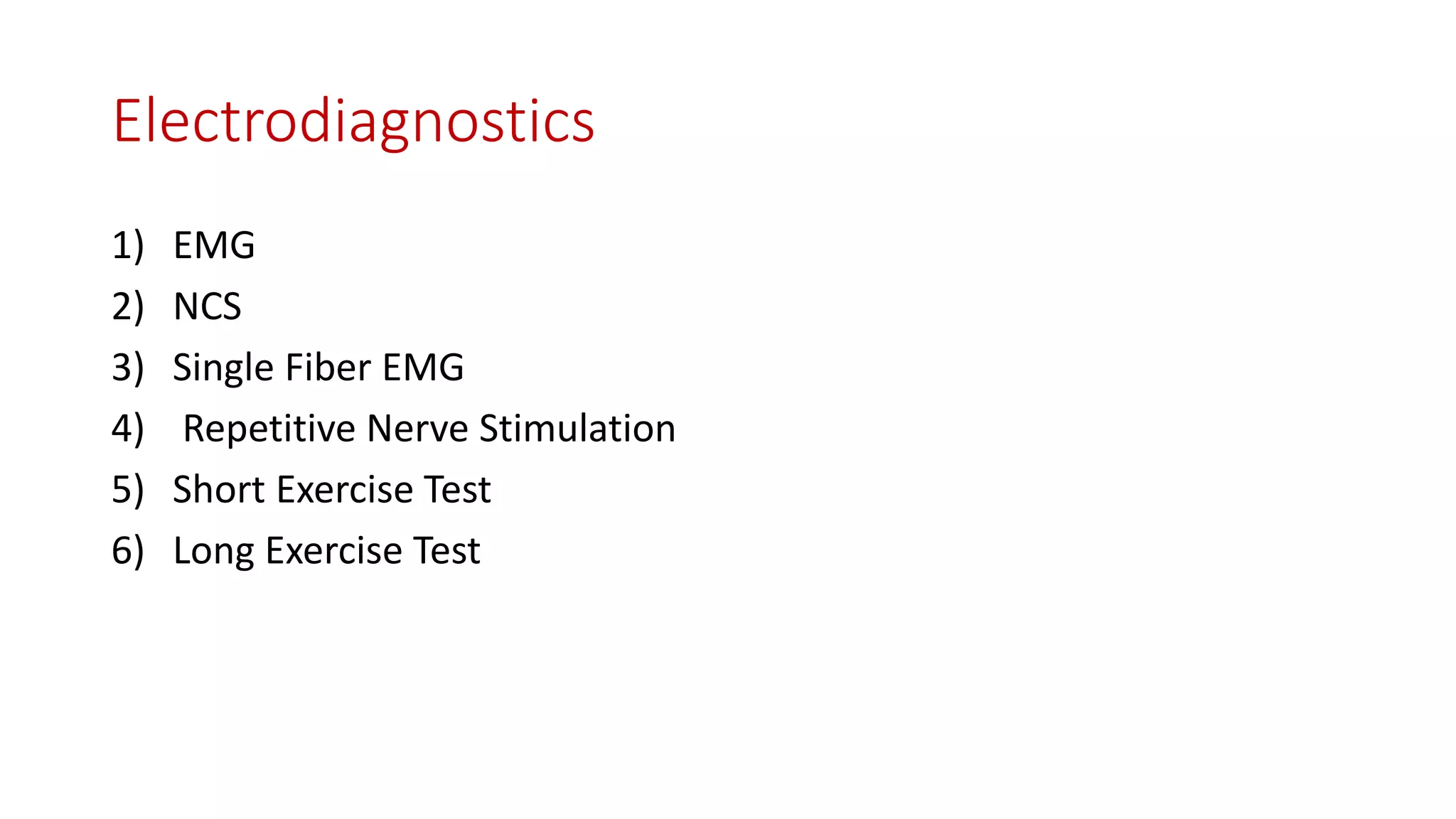
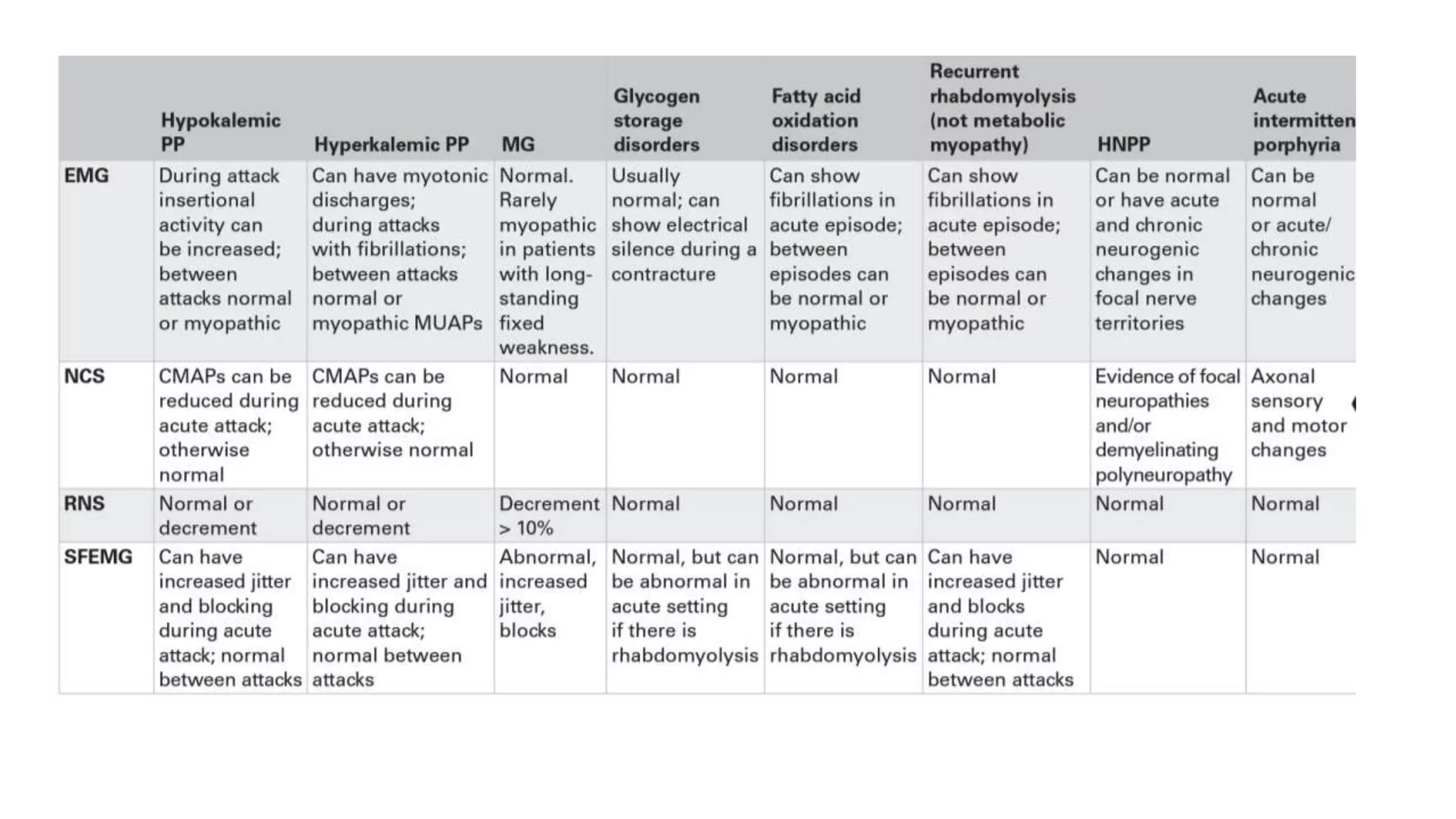
Electrodiagnostics
1) EMG
2) NCS
3) Single Fiber EMG
4) Repetitive Nerve Stimulation
5) Short Exercise Test
6) Long Exercise Test
Muscle Biopsy
Rimmed vacuoles can be seen in PP
GSD PAS staining and reduced myophorylase staining in McArdle
disease
Fatty acid oxidation – increased lipid deposits in oil red stains
Ragged red fibres in mitochondrial myopathies
Dystophic pattern in recurrent rhabdomyolysis associated with
muscular dystrophies
Genetic testing
Channelopathies
Metabolic myopathies
References
1. Bradley 8th edition
2. Neuromuscular Disorders,Nicholas Silvestri
3. Dejong’s Neurological Examination

Episodic Muscle weakness

  • 1.
  • 2.
    Possible Differentials 1. MetabolicMyopathies – Glycogen Storage Diseases,Fatty Acid oxidation defect 2. Channelopathies – Calcium(Hypokalemic PP),sodium channel(Hyperkalemic PP) defects, Potassium Channel Disorders 3. Neuromuscular Junction disorders – Myathenia Gravis,Lamberton Eaton Myasthenic Syndrome and Congenital Myasthenic syndromes 4. Mitochondrial Myopathies 5. Malignant Hyperthermia 6. Acute Internittant Porphyria 7. HNPP 8. Drugs/toxins – Statins ,Alcohol Amphetamines Cocaine Heroin 9. Inflammatory- PM/DM, Infections
  • 3.
  • 4.
    Triggers Meals • Heavy CarbohydrateMeals - glycogen storage disease or hypokalemic periodic paralysis • Meal rich in potassium – Hyperkalemic PP • Alcohol intake – Hypokalemic PP • Fasting - - fatty acid oxidation disorders, hyperkalemic PP and porphyria
  • 5.
    Exercise • Intense physicalactivity followed by a period of rest - PP • Weakness that occurs with exercise and improves with rest- MG • Intense exercise triggering rhabomyolysis and weakness – metabolic myopathies(,mutations with ryanodine receptor
  • 6.
    Time of theDay • Weakness at mornings(after a nights rest) – PP • Better at morning and weak at evening– MG Temperature- • Cold – Hyperkalemic PP, Paramyotonia and Congenita • Weaker with Heat and better with cold - MG
  • 7.
    Medications Insulin,IV Glucose, corticosteroids,Diuretics -Hypokalemic PP Potassium-Sparing diuretics – Hyperkalemic PP Antibiotics (Aminoglycosides),muscle relaxants,corticosteroids(within 14 days) - MG Barbiturates and Benzodiazepines – Acute Porphyria
  • 8.
    Position and Compression-Minimal Nerve compression – Hereditary Neuropathy with liability to pressure palsies Myoglobinuria - Glycolytic defect ,Fatty acid metabolism disorder,Malignant hyperthermia,drugs,toxins.
  • 9.
    Associated Features Generalized involvementof muscles with painful weakness and swelling. – Polymyositis,Infections- Pyomyositis,viral or fungal Worsening with febrile illness – Mitochondrial myopathy,Metabolic Myopathy and MG Rash – Dermatomyositis(Heliotrope Rash,Shawl Sign) Cardiac Involvement in Carnitine deficiency and Channelopathies Hepatic involvement in mitochondrial and carnitine deficiency Multisystem involvement with failure to hrive ,short stature,hearing loss,cardiac conduction defects – Mitochondrial Myopathy
  • 10.
    Duration of weakness •Weakness lasts for few hours in Hyperkalemic PP • Weakness lasting for several hours /days- Hypokalemic PP, MG • Weeks/months – relapsing form of CIDP
  • 11.
    Distribution of weakness Weaknessin thighs and calves – Hyperkalemic PP and Hypokalemic PP Facial,extraocular muscles and respiratory muscles – MG,Congenital Myopathy Generalized weakness – Acute intermittent Porphyria
  • 12.
    Other Manifestations Myotonia/Paramyotonia –hyperkalemicPP Myoglobinuria,muscle edema due to rhabdomyolysis – Metabolic Myopathies and Ryanodinopathies Acute abdominal Pain – Porphyria Fever triggering weakness in Carnitine palmitoyltransferase 1A deficiency
  • 13.
    Family History PP,Metabolic Myopathies,acute porphyria,HNPP and Congenital Myasthenic syndrome
  • 14.
    Examination Reflexes – Reduced orabsent in CIDP,Hypokalemic PP and Porphyria(during the attacks) Normal reflexes in MG(during and in between attacks) Sensory Changes HNPP,CIDP,AIP Usually not seen in PP,Metabolic Myopathies and MG Myotonia – Hyperkalemic PP
  • 15.
    Exercise Intolerance 1) Cramps,myalgiaand hemoglobinuria that develop after a brief episode of intense exercise - glycogen storage disease Second Wind Phenomemon- Symptoms improve with sustained submaximal effort – McArdles Disease( Glycogen Storage Disease V) Patient's better tolerance for aerobic exercise such as walking and cycling after sustained effort. Due to metabolic s
  • 16.
    Out of WindPhenomenon – • Seen in Phosphofructokinase deficiency (GSD VII) • Defect in glycolysis • Providing sucrose solutions before exercise worsens the exercise capacity due to insulin mediated suppression of lipolysis.
  • 17.
    2) Cramps,myalgia andhemoglobinuria that develop after low intensity sustained exercise – fatty acid oxidation disease 3)Generalized fatigue after sustained exercise but no cramps _MG
  • 18.
    Investigations 1) Potassium Levelswith TSH,Sodium,chloride,anion gap and creatinine levels 2) Calcium and Magnesium levels 3) Creatine Kinase Moderate elevationin acute PP Highly elevated in metabolic myopathies (particulary during rhabomyolysis) and Inflammatory Myopathies 4)ECG - to look for K changes in ECG and long QT syndromes(Anderson Tawil syndrome)
  • 19.
    5) Pulmonary functiontests – MG and AIP 6) Lactate Levels- elevated in mitochondrial myopathies
  • 20.
    Forearm Exercise Test Forglycogen storage disease – Forearm exercise performed after at least 15 minutes of rest Intermittent contraction or persistent isometric contraction Check lactate,pyruvate and ammonia measurements at baseline and after exercise. Patients with glycogen storage disease have no rise in lactate level after exercise but shows increased ammonia
  • 21.
    Electrodiagnostics 1) EMG 2) NCS 3)Single Fiber EMG 4) Repetitive Nerve Stimulation 5) Short Exercise Test 6) Long Exercise Test
  • 24.
    Muscle Biopsy Rimmed vacuolescan be seen in PP GSD PAS staining and reduced myophorylase staining in McArdle disease Fatty acid oxidation – increased lipid deposits in oil red stains Ragged red fibres in mitochondrial myopathies Dystophic pattern in recurrent rhabdomyolysis associated with muscular dystrophies
  • 25.
  • 26.
    References 1. Bradley 8thedition 2. Neuromuscular Disorders,Nicholas Silvestri 3. Dejong’s Neurological Examination