Extern conference
7th June 2017
Ext. Thanawan Sitthikarnkha
Patient profile
Case ผู้ป่วยเด็กชายไทย อายุ 5 ปี 5 เดือน
Present illness
5 hr PTA ผู้ป่วยให้ประวัติว่าถูกเสาประตูฟุตซอล ล้ม
ทับบริเวณเข่าข้างซ้าย หลังจากนั้นผู้ป่วยมีอาการปวด เดินลง
น้าหนักไม่ได้ ,งอเข่าไม่ได้ , ไม่มีบาดแผลภายนอก ไม่ชา
สามารรถกระดกข้อเท้าได้ปกติดี
Physical Examination
Primary survey
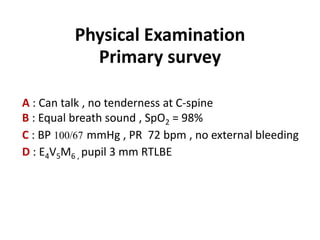
A : Can talk , no tenderness at C-spine
B : Equal breath sound , SpO2 = 98%
C : BP 100/67 mmHg , PR 72 bpm , no external bleeding
D : E4V5M6 , pupil 3 mm RTLBE
Physical Examination
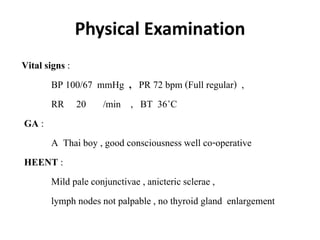
Vital signs :
BP 100/67 mmHg , PR 72 bpm (Full regular) ,
RR 20 /min , BT 36◦C
GA :
A Thai boy , good consciousness well co-operative
HEENT :
Mild pale conjunctivae , anicteric sclerae ,
lymph nodes not palpable , no thyroid gland enlargement
Physical Examination
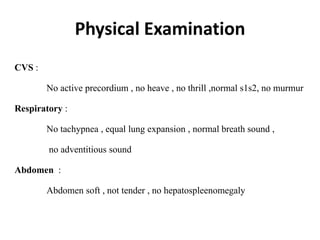
CVS :
No active precordium , no heave , no thrill ,normal s1s2, no murmur
Respiratory :
No tachypnea , equal lung expansion , normal breath sound ,
no adventitious sound
Abdomen :
Abdomen soft , not tender , no hepatospleenomegaly
Physical Examination
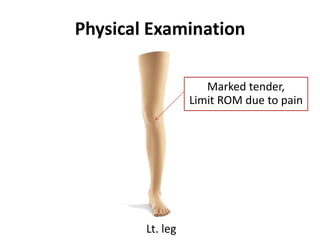
Marked tender,
Limit ROM due to pain
Lt. leg
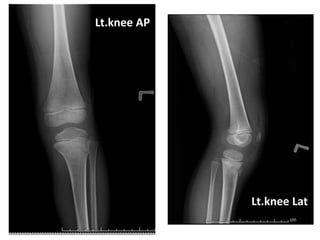
Radiographic findings
Lt.knee AP
Lt.knee Lat
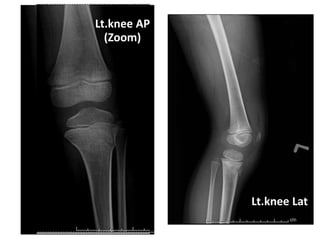
Lt.knee Lat
Lt.knee AP
(Zoom)
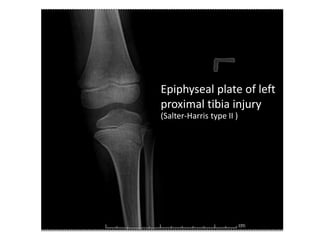
Diagnosis
Epiphyseal plate of left
proximal tibia injury
(Salter-Harris type II )
Epiphyseal plate injury
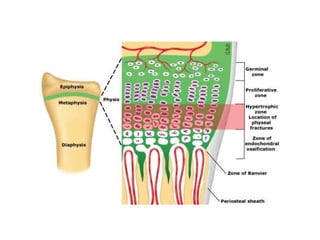
• Epiphyseal plate = growth plate = physis
• Locate at the end of the long bone
• Responsible for longitudinal growth
• Is the weakest structure of the immature
bone
Epiphyseal plate injury
The classification of the injuries is
important, because it affects patient
treatment and provides clues to possible long-
term complications
Symptoms
• A growth plate fracture usually causes persistent
or severe pain. Other common symptoms
include:
• Visible deformity
• An inability to move or put pressure on the limb
• Swelling, warmth, and tenderness in the area
around the end of the bone, near the joint
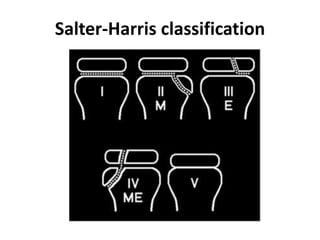
Salter-Harris classification
Epiphyseal plate injury
Type 1- Physeal separation
Type 2- Fracture traverses physis and exits metaphysis
Type 3- Fracture traverses physis and exits epiphysis
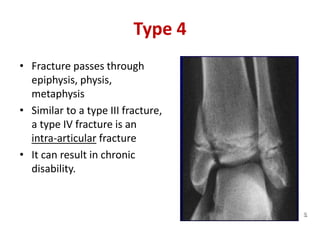
Type 4- Fracture passes through epiphysis, physis and
metaphysis
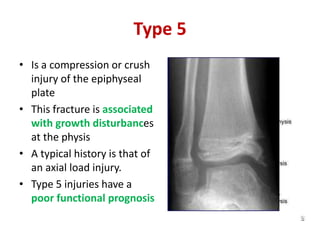
Type 5- Crush injury to physis
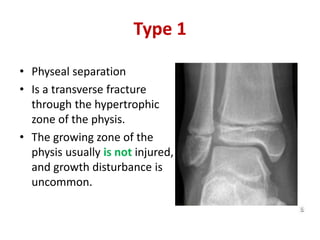
Type 1
• Physeal separation
• Is a transverse fracture
through the hypertrophic
zone of the physis.
• The growing zone of the
physis usually is not injured,
and growth disturbance is
uncommon.
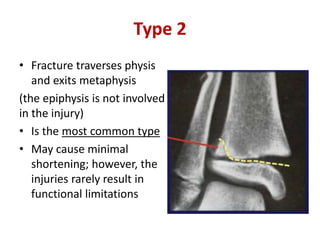
Type 2
• Fracture traverses physis
and exits metaphysis
(the epiphysis is not involved
in the injury)
• Is the most common type
• May cause minimal
shortening; however, the
injuries rarely result in
functional limitations
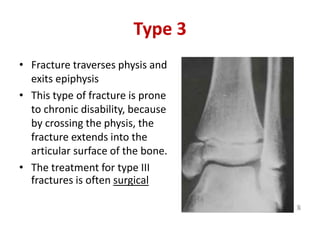
Type 3
• Fracture traverses physis and
exits epiphysis
• This type of fracture is prone
to chronic disability, because
by crossing the physis, the
fracture extends into the
articular surface of the bone.
• The treatment for type III
fractures is often surgical
Type 4
• Fracture passes through
epiphysis, physis,
metaphysis
• Similar to a type III fracture,
a type IV fracture is an
intra-articular fracture
• It can result in chronic
disability.
Type 5
• Is a compression or crush
injury of the epiphyseal
plate
• This fracture is associated
with growth disturbances
at the physis
• A typical history is that of
an axial load injury.
• Type 5 injuries have a
poor functional prognosis
Nonsurgical Treatment
Many growth plate fractures can heal
successfully when treated with immobilization: a cast
is applied to the injured area and the child limits some
types of activity.
Doctors most often use cast immobilization
when the broken fragments of bone are not
significantly out of place. A cast will protect the bones
and hold them in proper position while they heal
Surgical Treatment
If the bone fragments are displaced and the
fracture is unstable, surgery may be necessary
The most common operation used to treat
fractures is called open reduction and internal fixation.
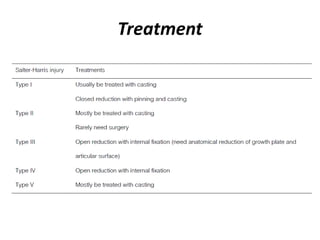
Treatment
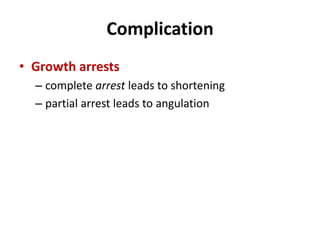
Complication
• Growth arrests
– complete arrest leads to shortening
– partial arrest leads to angulation
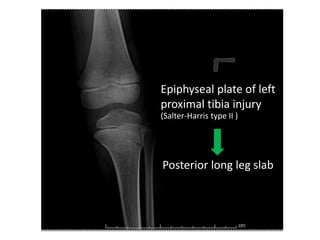
Epiphyseal plate of left
proximal tibia injury
(Salter-Harris type II )
Posterior long leg slab

epiphyseal plate injury

  • 1.
    Extern conference 7th June2017 Ext. Thanawan Sitthikarnkha
  • 2.
  • 3.
    Present illness 5 hrPTA ผู้ป่วยให้ประวัติว่าถูกเสาประตูฟุตซอล ล้ม ทับบริเวณเข่าข้างซ้าย หลังจากนั้นผู้ป่วยมีอาการปวด เดินลง น้าหนักไม่ได้ ,งอเข่าไม่ได้ , ไม่มีบาดแผลภายนอก ไม่ชา สามารรถกระดกข้อเท้าได้ปกติดี
  • 4.
    Physical Examination Primary survey A: Can talk , no tenderness at C-spine B : Equal breath sound , SpO2 = 98% C : BP 100/67 mmHg , PR 72 bpm , no external bleeding D : E4V5M6 , pupil 3 mm RTLBE
  • 5.
    Physical Examination Vital signs: BP 100/67 mmHg , PR 72 bpm (Full regular) , RR 20 /min , BT 36◦C GA : A Thai boy , good consciousness well co-operative HEENT : Mild pale conjunctivae , anicteric sclerae , lymph nodes not palpable , no thyroid gland enlargement
  • 6.
    Physical Examination CVS : Noactive precordium , no heave , no thrill ,normal s1s2, no murmur Respiratory : No tachypnea , equal lung expansion , normal breath sound , no adventitious sound Abdomen : Abdomen soft , not tender , no hepatospleenomegaly
  • 7.
  • 8.
  • 9.
  • 10.
  • 11.
  • 12.
    Epiphyseal plate ofleft proximal tibia injury (Salter-Harris type II )
  • 13.
  • 14.
    Epiphyseal plate injury •Epiphyseal plate = growth plate = physis • Locate at the end of the long bone • Responsible for longitudinal growth • Is the weakest structure of the immature bone
  • 16.
    Epiphyseal plate injury Theclassification of the injuries is important, because it affects patient treatment and provides clues to possible long- term complications
  • 17.
    Symptoms • A growthplate fracture usually causes persistent or severe pain. Other common symptoms include: • Visible deformity • An inability to move or put pressure on the limb • Swelling, warmth, and tenderness in the area around the end of the bone, near the joint
  • 18.
  • 19.
    Epiphyseal plate injury Type1- Physeal separation Type 2- Fracture traverses physis and exits metaphysis Type 3- Fracture traverses physis and exits epiphysis Type 4- Fracture passes through epiphysis, physis and metaphysis Type 5- Crush injury to physis
  • 20.
    Type 1 • Physealseparation • Is a transverse fracture through the hypertrophic zone of the physis. • The growing zone of the physis usually is not injured, and growth disturbance is uncommon.
  • 21.
    Type 2 • Fracturetraverses physis and exits metaphysis (the epiphysis is not involved in the injury) • Is the most common type • May cause minimal shortening; however, the injuries rarely result in functional limitations
  • 22.
    Type 3 • Fracturetraverses physis and exits epiphysis • This type of fracture is prone to chronic disability, because by crossing the physis, the fracture extends into the articular surface of the bone. • The treatment for type III fractures is often surgical
  • 23.
    Type 4 • Fracturepasses through epiphysis, physis, metaphysis • Similar to a type III fracture, a type IV fracture is an intra-articular fracture • It can result in chronic disability.
  • 24.
    Type 5 • Isa compression or crush injury of the epiphyseal plate • This fracture is associated with growth disturbances at the physis • A typical history is that of an axial load injury. • Type 5 injuries have a poor functional prognosis
  • 25.
    Nonsurgical Treatment Many growthplate fractures can heal successfully when treated with immobilization: a cast is applied to the injured area and the child limits some types of activity. Doctors most often use cast immobilization when the broken fragments of bone are not significantly out of place. A cast will protect the bones and hold them in proper position while they heal
  • 26.
    Surgical Treatment If thebone fragments are displaced and the fracture is unstable, surgery may be necessary The most common operation used to treat fractures is called open reduction and internal fixation.
  • 27.
  • 28.
    Complication • Growth arrests –complete arrest leads to shortening – partial arrest leads to angulation
  • 29.
    Epiphyseal plate ofleft proximal tibia injury (Salter-Harris type II ) Posterior long leg slab