Epidural steroid injection in
low back pain
DR. DARENDRAJIT MD (PMR)
Department of Physical Medicine and Rehabilitation
AIIMS, Bhubaneswar
4/27/2019 1
INTRODUCTION
 Most common and important clinical, social,
economic, and public health problem
 Life time prevalence - as high as 84%
(Ref.: Interv Neuroradiol 2009)
 Disc prolapse - common cause
 Highest prevalence of disc prolapse: 30-50
years
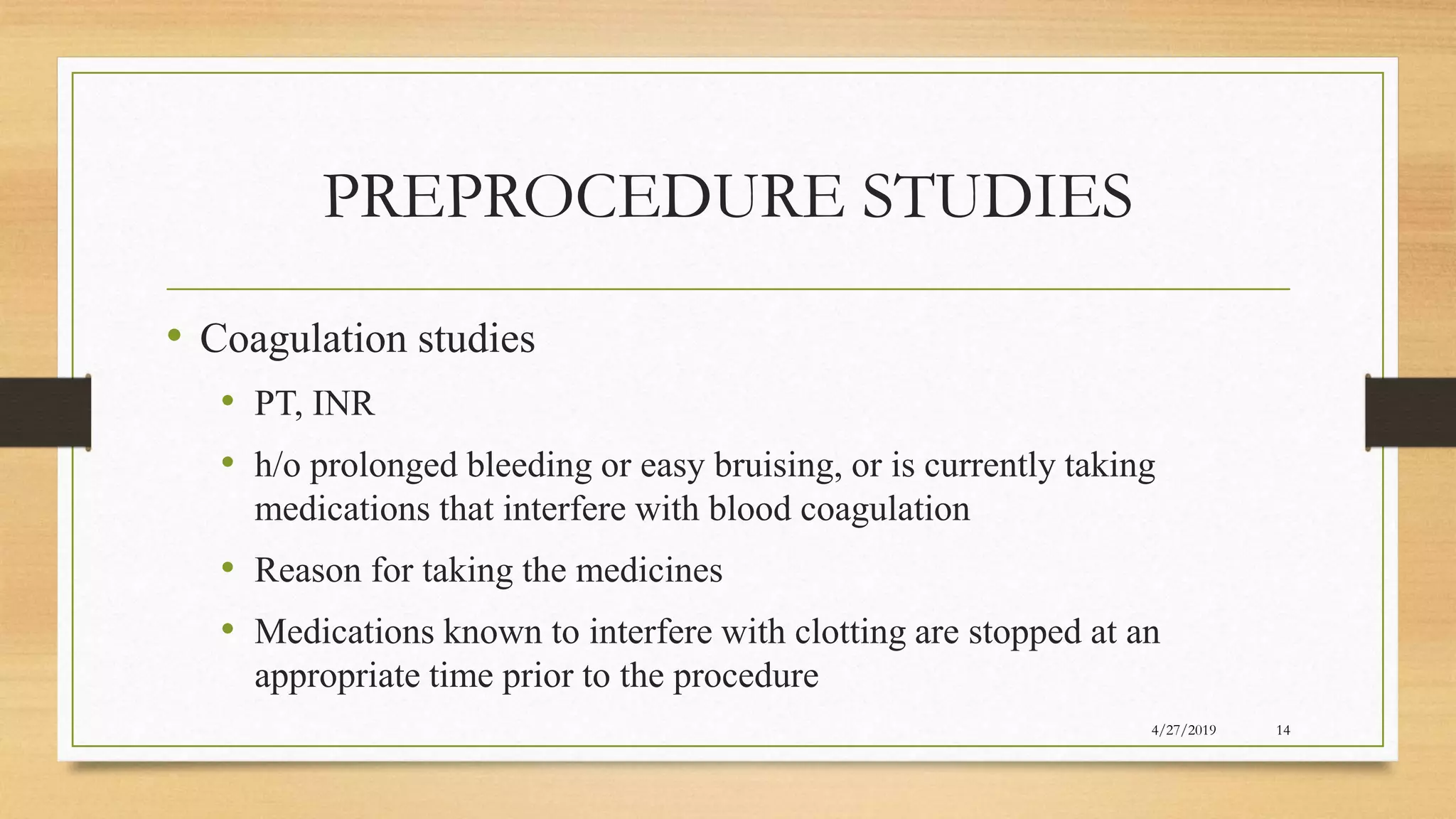
24/27/2019
INTRODUCTION
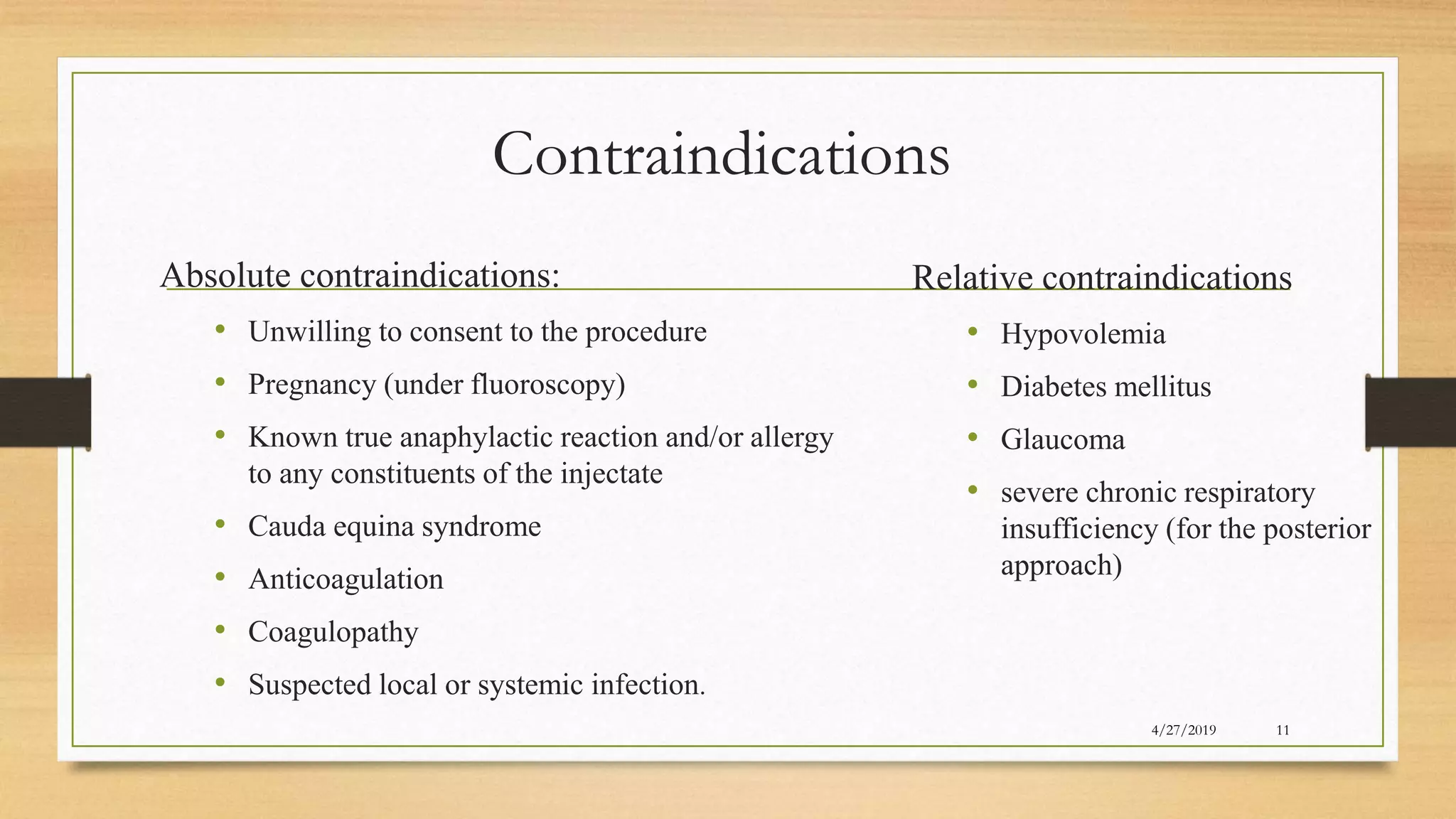
• Most episodes of acute back pain resolve on their
own in 4 to 6 weeks
4/27/2019 3
4/27/2019 4
Mechanisms Governing Pain in Radiculalgias
• Chemical phenomena
• Edematous phenomena
• Vascular phenomena
• Local inflammation
4/27/2019 5
Chemical phenomena:
• Toxic spill of inflammatory mediators
• phospholipase A-2 (PLA-2), interleukins, and
proteoglycans.
• Action of PLA-2: to release arachidonic acid from cell membranes,
so inhibiting this (which requires steroids) would help decrease the
elaboration of inflammatory mediators
4/27/2019 6
Edematous phenomena:
• Compression of the nerve causes increased permeability of the
intraneural vessels, leading to intraneural edema, and
consequently a nervous dysfunction causing pain
4/27/2019 7
Vascular phenomena
• Compression of the venous plexuses leads to dilatation and then
foraminal venous congestion, disturbing the local circulation
and producing ischemia, edema and demyelinating lesions
4/27/2019 8
Local inflammation
• An autoimmune reaction with respect to discal material causes
an inflammatory reaction with secondary development of
perineural fibrosis
• Spinal ganglion: vulnerable part of the spinal complex and its
mechanical compression can produce neuronal hyperactivity in
the nociceptive transmission system
4/27/2019 9
Epidural corticosteroids in the lumbar spine
• Specific indications
• lumbosacral radiculopathy
• lower back pain syndrome
• spinal stenosis
• post laminectomy syndrome
• phantom limb pain
• vertebral compression fractures
• diabetic polyneuropathy
• chemotherapy related peripheral
neuropathy
• post herpetic neuralgia
• complex regional pain syndrome, or
orchalgia, proctalgia
• pelvic pain syndrome
• Indicated acute pain, chronic benign pain, and cancer related pain
4/27/2019 10
Contraindications
Absolute contraindications:
• Unwilling to consent to the procedure
• Pregnancy (under fluoroscopy)
• Known true anaphylactic reaction and/or allergy
to any constituents of the injectate
• Cauda equina syndrome
• Anticoagulation
• Coagulopathy
• Suspected local or systemic infection.
Relative contraindications
• Hypovolemia
• Diabetes mellitus
• Glaucoma
• severe chronic respiratory
insufficiency (for the posterior
approach)
4/27/2019 11
Mechanism of Action of Steroids
• Anti-inflammatory, direct neuro-membrane stabilization effects, and
modulation of peripheral nociceptor input
• Blocking nociceptor C-fiber conduction and inhibiting prostaglandin
synthesis
• Inhibition of nerve root edema with resultant improved micro-
circulation
• Reduce ischemia and decrease sensitivity of the prostaglandin-
sensitized dorsal horn neurons by inhibiting inflammatory mediators
such as phospholipase A2
• Direct inhibition of C-fiber neuro-membrane excitation 4/27/2019 12
 Epidural steroid injection:
 Level 1a evidence
 83% of patients reported relief on day one
(Ref.: Kathmandu Univ Med J, 2005)
134/27/2019
PREPROCEDURE STUDIES
• Coagulation studies
• PT, INR
• h/o prolonged bleeding or easy bruising, or is currently taking
medications that interfere with blood coagulation
• Reason for taking the medicines
• Medications known to interfere with clotting are stopped at an
appropriate time prior to the procedure
4/27/2019 14
INFORMED CONSENT
• Risks of nerve damage from direct needle trauma, perforation
of the dura, infection, and bleeding
• Unrecognized, unintentional arterial injection with particulate
corticosteroids can have catastrophic sequelae and is the
possible mechanism for ischemia of the spinal cord with
paraplegia
4/27/2019 15
Approaches available to access the lumbar epidural space
1. Interlaminar: Surface landmark/ “blind” method
Fluoroscopic guided
2. Transforaminal: Fluoroscopic guided
3. Caudal: Surface landmark/ ‘blind’ method
Fluoroscopic guided
Ultrasound guided
4/27/2019 16
ANATOMY
4/27/2019 17
4/27/2019 18
4/27/2019 19
4/27/2019 20
4/27/2019 21
Epidural steroid injection
4/27/2019 22
Materials required
• 5 ml glass syringe/ three-ringed syringe
• 20G spinal needle/ Touhy needle
• 1% lidocaine
• Disposables: syringes
• Strictly aseptic conditions: sterile drapes, clothing, and gloves, and
scrupulous disinfection of the surface of the skin
4/27/2019 23
Materials required
Injectate:
• Particulate: Methylprednisolone acetate 80-120 mg (Depomedrol),
Triamcinolone acetonide (40-80 mg)
• Non-particulate: Dexamethasone acetate (8-12mg),
Betamethasone acetate(6-12mg)
4/27/2019 24
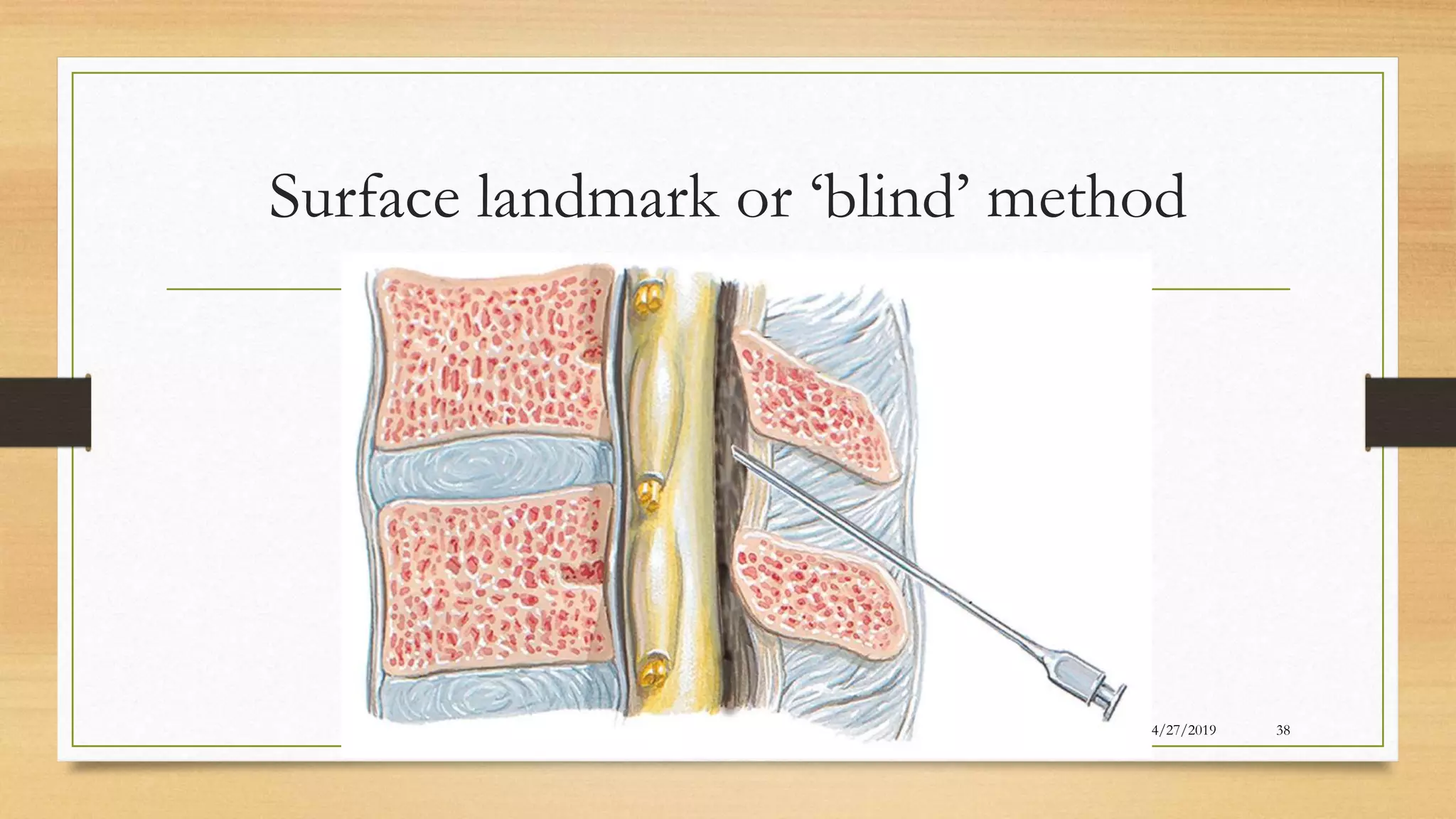
Surface landmark or ‘blind’ method
4/27/2019 25
Surface landmark or ‘blind’ method
4/27/2019 26
Surface landmark or ‘blind’ method
4/27/2019 27
Surface landmark or ‘blind’ method
4/27/2019 28
Surface landmark or ‘blind’ method
4/27/2019 29
Surface landmark or ‘blind’ method
4/27/2019 30
Surface landmark or ‘blind’ method
4/27/2019 31
Surface landmark or ‘blind’ method
4/27/2019 32
Surface landmark or ‘blind’ method
4/27/2019 33
Surface landmark or ‘blind’ method
4/27/2019 34
Surface landmark or ‘blind’ method
4/27/2019 35
Surface landmark or ‘blind’ method
4/27/2019 36
Surface landmark or ‘blind’ method
4/27/2019 37
Surface landmark or ‘blind’ method
4/27/2019 38
Look for
4/27/2019 39
Surface landmark or ‘blind’ method
4/27/2019 40
Surface landmark or ‘blind’ method
Post-procedure:
• Placed in the lateral recumbent position with the head
slightly elevated and the knees flexed for approx. ½ hrs
• May be allowed to leave in a wheelchair but must rest on the
bed for at least 2 hrs
4/27/2019 41
Complications
• Inadvertant injection of the LA either into the
subarachnoid space or into a blood vessel
4/27/2019 42
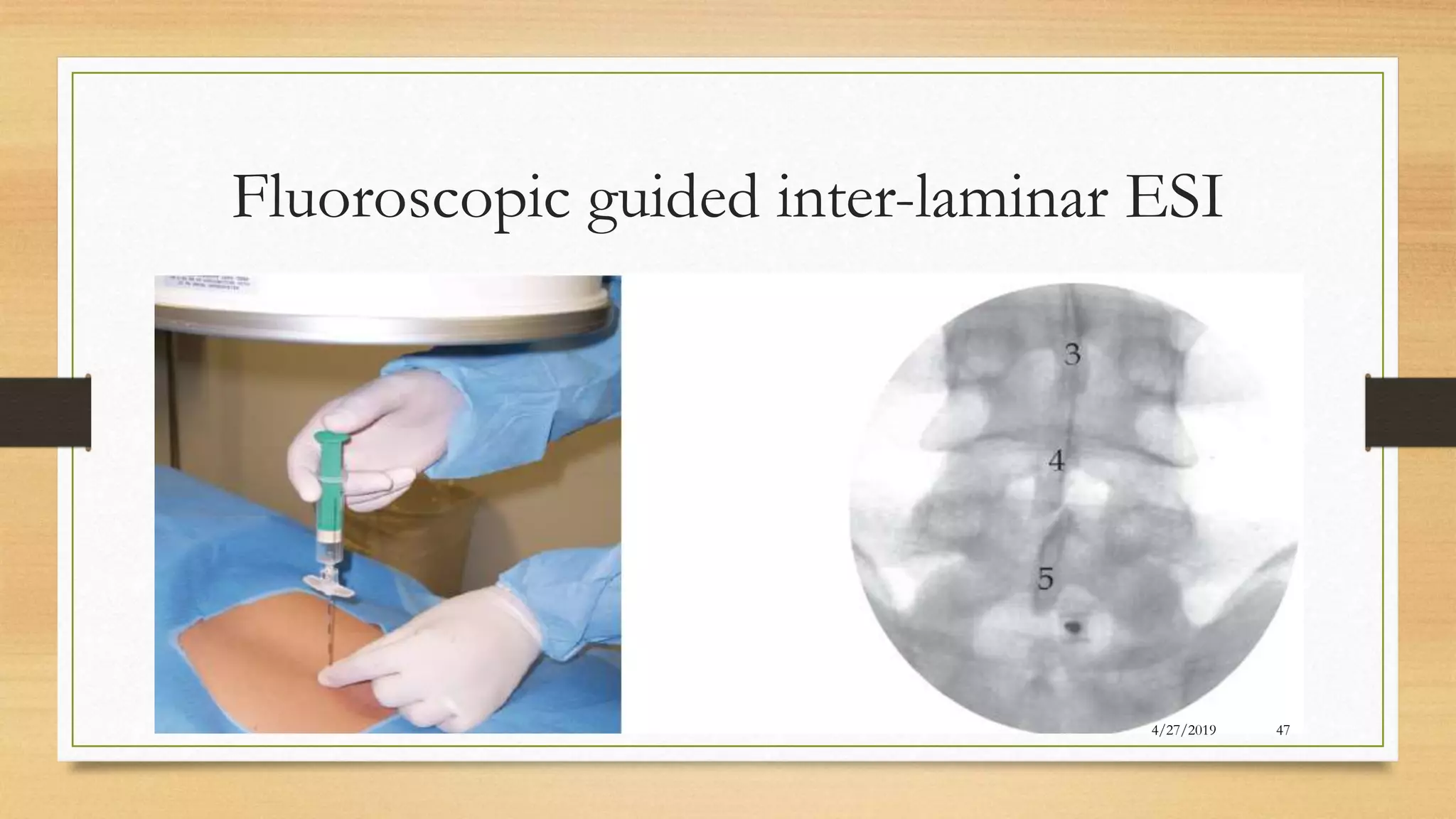
Fluoroscopic guided inter-laminar ESI
4/27/2019 43
Fluoroscopic guided inter-laminar ESI
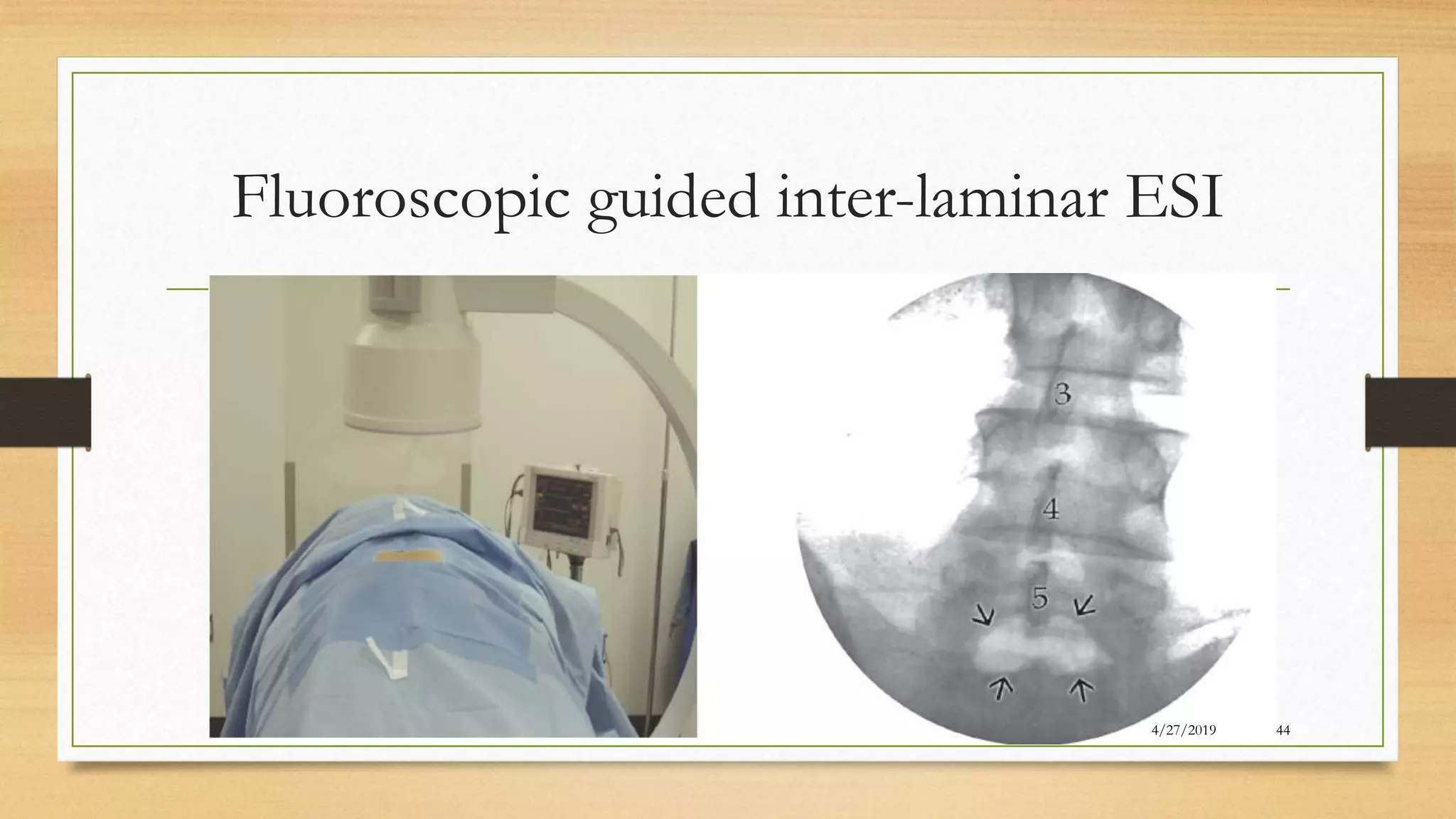
4/27/2019 44
Fluoroscopic guided inter-laminar ESI
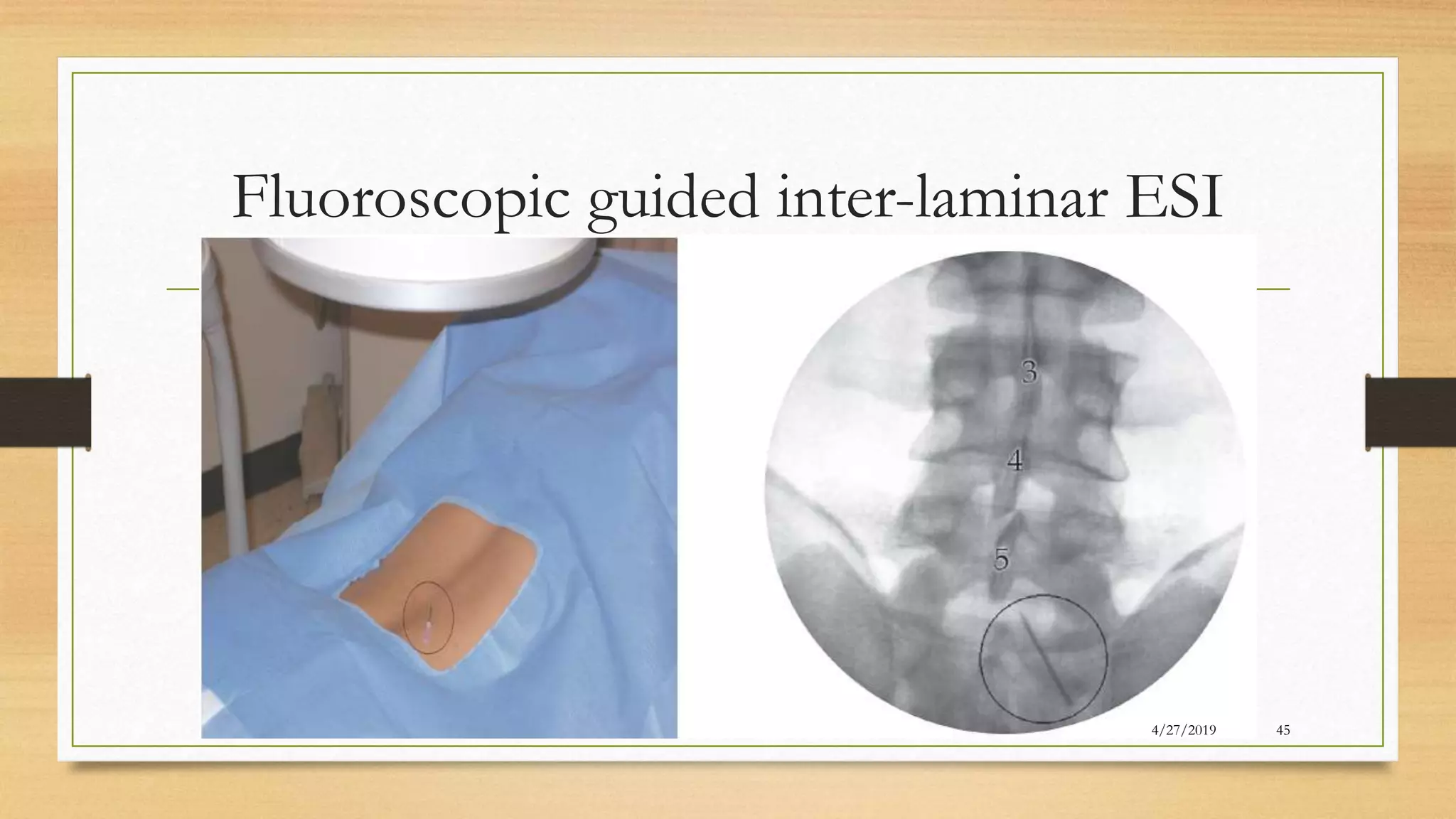
4/27/2019 45
Fluoroscopic guided inter-laminar ESI
4/27/2019 46
Fluoroscopic guided inter-laminar ESI
4/27/2019 47
Fluoroscopic guided inter-laminar ESI
4/27/2019 48
4/27/2019 49
4/27/2019 50
4/27/2019 51
4/27/2019 52
4/27/2019 53
Complications of IL ESI
• Infections:
• Epidural abscess
• Meningitis
• Osteomyelitis/discitis
• Neurologic:
• Nerve injury
• Paraesthesias
• Paralysis
• • Seizures
• • Increased sciatic pain
• • Headaches
• Ophthalmologic:
• Retinal hemorrhage
• Acute retinal necrosis
• Dural Puncture
• Epidural Hematoma
• Pain at injection site
• Anaphylaxis
• Dysphonia
• Cerebrospinal fluid—cutaneous fistula
• Corticosteroid side effects
• Local anesthetic effects
• Adverse effects of contrast media
4/27/2019 54
Table 1. Results of published reports of lumbar interlaminar ESI
4/27/2019 55
Transforaminal epidural injection
4/27/2019 56
Transforaminal epidural injection
• Purpose and Objectives
• To deliver corticosteroid close to the site of pathology,
presumably onto an inflamed nerve root
• Caudal and interlaminar lumbar epidural injections are
affected by the presence or absence of epidural ligaments or
scarring
• Prevent migration of the posteriorly administered injected
into the anterior epidural space 4/27/2019 57
“safe zone”
4/27/2019 58
Transforaminal epidural injection
4/27/2019 59
Transforaminal epidural injection
4/27/2019 60
Transforaminal epidural injection
4/27/2019 61
Transforaminal epidural injection
4/27/2019 62
Transforaminal epidural injection
4/27/2019 63
Complications Transforaminal ESI
• Neural trauma
• Vascular trauma
• Intravascular injection
• Infection
4/27/2019 64
Table 2. Results of published reports on lumbar transforaminal ESI
4/27/2019 65
Caudal ESI
4/27/2019 66
Indications: Caudal ESI
• Disk herniations, or spinal stenosis
• Sacral nerve root scarring
• Coccygodynia
• Rectal pain
• Pudendal neuralgia
• Sacral fracture
• Post radiation sacral radiculopathy
• Sacral metastasis
4/27/2019 67
4/27/2019 68
Caudal ESI
4/27/2019 69
Caudal ESI
4/27/2019 70
4/27/2019 71
4/27/2019 72
4/27/2019 73
4/27/2019 74
Ultrasound guided caudal epidural
4/27/2019 75
4/27/2019 76
Table 3. Results of published reports on caudal ESI
4/27/2019 77
Disadvantages of caudal, lumbar, interlaminar
and transforaminal epidural injections
Caudal
• Requirement of substantial volume of fluid
• Dilution of the injectate
• Extraepidural placement of the needle
• Intravascular placement of the needle
• Atypical anatomy
• Dural puncture
4/27/2019 78
Disadvantages of caudal, lumbar, interlaminar
and transforaminal epidural injections
Interlaminar
• Dilution of the injectate
• Extraepidural placement of the needle
• Intravascular placement of the needle
• Preferential cranial flow of the
solution
• Preferential posterior flow of the
solution
4/27/2019 79
• Difficult placement in postsurgical
patients
• Difficult placement below L4/5
interspace
• Deviation of needle to nondependent
side
• Dural puncture
• Trauma to spinal cord
Disadvantages of caudal, lumbar, interlaminar
and transforaminal epidural injections
Transforaminal
• Intraneural injection
• Neural trauma
• Technical difficulty in presence of fusion and/or hardware
• Intravascular injection
• Spinal cord trauma
4/27/2019 80
1. Corticosteroid mechanisms of action: direct anti-inflammatory,
neuro-membrane stabilization, and inhibition of nociceptor C-fiber
conduction
2. Specific indications for lumbar IL ESI include radiculopathy, spinal
stenosis, post laminectomy syndrome, and low back pain syndrome
3. Absolute contraindications: coagulopathy, anticoagulant medications,
sepsis, pregnancy, and local infection
4. Fluoroscopic guidance ensures proper placement, and therefore,
delivery of medications
5. Tuohy needles may decrease the risk of dural puncture because of
their blunt tips
Key points
4/27/2019 81
6. Two different techniques: loss of resistance technique with air, saline,
or the hanging drop technique
7. Basis of transforaminal ESI: To deliver corticosteroid close to the site of
pathology, presumably onto an inflamed nerve root
8. Studies have demonstrated short-term benefits from interlaminar ESI,
especially in patients with radicular pain
9. Evidence for therapeutic lumbar transforaminal ESI: strong for short-
term and moderate for long-term in managing lumbar nerve root pain,
limited in managing pain secondary to lumbar post laminectomy
syndrome and spinal stenosis
4/27/2019 82
10. Evidence of effectiveness of caudal epidural steroid injections was
strong for short-term relief and moderate for long-term relief
11. Complications related to needle placement: infection, hematoma
formation, abscess formation, subdural injection, intracranial air injection,
nerve damage, intravascular injection, vascular injury, and cerebral vascular
or pulmonary embolus
12. Complications of corticosteroid administration include suppression of
pituitary adrenal axis, Cushing’s syndrome, osteoporosis, avascular necrosis
of the bone, steroid myopathy, epidural lipomatosis, weight gain, fluid
retention, and hyperglycemia.
4/27/2019 83
4/27/2019 84

Epidural Steroid Injection in low back pain

  • 1.
    Epidural steroid injectionin low back pain DR. DARENDRAJIT MD (PMR) Department of Physical Medicine and Rehabilitation AIIMS, Bhubaneswar 4/27/2019 1
  • 2.
    INTRODUCTION  Most commonand important clinical, social, economic, and public health problem  Life time prevalence - as high as 84% (Ref.: Interv Neuroradiol 2009)  Disc prolapse - common cause  Highest prevalence of disc prolapse: 30-50 years 24/27/2019
  • 3.
    INTRODUCTION • Most episodesof acute back pain resolve on their own in 4 to 6 weeks 4/27/2019 3
  • 4.
  • 5.
    Mechanisms Governing Painin Radiculalgias • Chemical phenomena • Edematous phenomena • Vascular phenomena • Local inflammation 4/27/2019 5
  • 6.
    Chemical phenomena: • Toxicspill of inflammatory mediators • phospholipase A-2 (PLA-2), interleukins, and proteoglycans. • Action of PLA-2: to release arachidonic acid from cell membranes, so inhibiting this (which requires steroids) would help decrease the elaboration of inflammatory mediators 4/27/2019 6
  • 7.
    Edematous phenomena: • Compressionof the nerve causes increased permeability of the intraneural vessels, leading to intraneural edema, and consequently a nervous dysfunction causing pain 4/27/2019 7
  • 8.
    Vascular phenomena • Compressionof the venous plexuses leads to dilatation and then foraminal venous congestion, disturbing the local circulation and producing ischemia, edema and demyelinating lesions 4/27/2019 8
  • 9.
    Local inflammation • Anautoimmune reaction with respect to discal material causes an inflammatory reaction with secondary development of perineural fibrosis • Spinal ganglion: vulnerable part of the spinal complex and its mechanical compression can produce neuronal hyperactivity in the nociceptive transmission system 4/27/2019 9
  • 10.
    Epidural corticosteroids inthe lumbar spine • Specific indications • lumbosacral radiculopathy • lower back pain syndrome • spinal stenosis • post laminectomy syndrome • phantom limb pain • vertebral compression fractures • diabetic polyneuropathy • chemotherapy related peripheral neuropathy • post herpetic neuralgia • complex regional pain syndrome, or orchalgia, proctalgia • pelvic pain syndrome • Indicated acute pain, chronic benign pain, and cancer related pain 4/27/2019 10
  • 11.
    Contraindications Absolute contraindications: • Unwillingto consent to the procedure • Pregnancy (under fluoroscopy) • Known true anaphylactic reaction and/or allergy to any constituents of the injectate • Cauda equina syndrome • Anticoagulation • Coagulopathy • Suspected local or systemic infection. Relative contraindications • Hypovolemia • Diabetes mellitus • Glaucoma • severe chronic respiratory insufficiency (for the posterior approach) 4/27/2019 11
  • 12.
    Mechanism of Actionof Steroids • Anti-inflammatory, direct neuro-membrane stabilization effects, and modulation of peripheral nociceptor input • Blocking nociceptor C-fiber conduction and inhibiting prostaglandin synthesis • Inhibition of nerve root edema with resultant improved micro- circulation • Reduce ischemia and decrease sensitivity of the prostaglandin- sensitized dorsal horn neurons by inhibiting inflammatory mediators such as phospholipase A2 • Direct inhibition of C-fiber neuro-membrane excitation 4/27/2019 12
  • 13.
     Epidural steroidinjection:  Level 1a evidence  83% of patients reported relief on day one (Ref.: Kathmandu Univ Med J, 2005) 134/27/2019
  • 14.
    PREPROCEDURE STUDIES • Coagulationstudies • PT, INR • h/o prolonged bleeding or easy bruising, or is currently taking medications that interfere with blood coagulation • Reason for taking the medicines • Medications known to interfere with clotting are stopped at an appropriate time prior to the procedure 4/27/2019 14
  • 15.
    INFORMED CONSENT • Risksof nerve damage from direct needle trauma, perforation of the dura, infection, and bleeding • Unrecognized, unintentional arterial injection with particulate corticosteroids can have catastrophic sequelae and is the possible mechanism for ischemia of the spinal cord with paraplegia 4/27/2019 15
  • 16.
    Approaches available toaccess the lumbar epidural space 1. Interlaminar: Surface landmark/ “blind” method Fluoroscopic guided 2. Transforaminal: Fluoroscopic guided 3. Caudal: Surface landmark/ ‘blind’ method Fluoroscopic guided Ultrasound guided 4/27/2019 16
  • 17.
  • 18.
  • 19.
  • 20.
  • 21.
  • 22.
  • 23.
    Materials required • 5ml glass syringe/ three-ringed syringe • 20G spinal needle/ Touhy needle • 1% lidocaine • Disposables: syringes • Strictly aseptic conditions: sterile drapes, clothing, and gloves, and scrupulous disinfection of the surface of the skin 4/27/2019 23
  • 24.
    Materials required Injectate: • Particulate:Methylprednisolone acetate 80-120 mg (Depomedrol), Triamcinolone acetonide (40-80 mg) • Non-particulate: Dexamethasone acetate (8-12mg), Betamethasone acetate(6-12mg) 4/27/2019 24
  • 25.
    Surface landmark or‘blind’ method 4/27/2019 25
  • 26.
    Surface landmark or‘blind’ method 4/27/2019 26
  • 27.
    Surface landmark or‘blind’ method 4/27/2019 27
  • 28.
    Surface landmark or‘blind’ method 4/27/2019 28
  • 29.
    Surface landmark or‘blind’ method 4/27/2019 29
  • 30.
    Surface landmark or‘blind’ method 4/27/2019 30
  • 31.
    Surface landmark or‘blind’ method 4/27/2019 31
  • 32.
    Surface landmark or‘blind’ method 4/27/2019 32
  • 33.
    Surface landmark or‘blind’ method 4/27/2019 33
  • 34.
    Surface landmark or‘blind’ method 4/27/2019 34
  • 35.
    Surface landmark or‘blind’ method 4/27/2019 35
  • 36.
    Surface landmark or‘blind’ method 4/27/2019 36
  • 37.
    Surface landmark or‘blind’ method 4/27/2019 37
  • 38.
    Surface landmark or‘blind’ method 4/27/2019 38
  • 39.
  • 40.
    Surface landmark or‘blind’ method 4/27/2019 40
  • 41.
    Surface landmark or‘blind’ method Post-procedure: • Placed in the lateral recumbent position with the head slightly elevated and the knees flexed for approx. ½ hrs • May be allowed to leave in a wheelchair but must rest on the bed for at least 2 hrs 4/27/2019 41
  • 42.
    Complications • Inadvertant injectionof the LA either into the subarachnoid space or into a blood vessel 4/27/2019 42
  • 43.
  • 44.
  • 45.
  • 46.
  • 47.
  • 48.
  • 49.
  • 50.
  • 51.
  • 52.
  • 53.
  • 54.
    Complications of ILESI • Infections: • Epidural abscess • Meningitis • Osteomyelitis/discitis • Neurologic: • Nerve injury • Paraesthesias • Paralysis • • Seizures • • Increased sciatic pain • • Headaches • Ophthalmologic: • Retinal hemorrhage • Acute retinal necrosis • Dural Puncture • Epidural Hematoma • Pain at injection site • Anaphylaxis • Dysphonia • Cerebrospinal fluid—cutaneous fistula • Corticosteroid side effects • Local anesthetic effects • Adverse effects of contrast media 4/27/2019 54
  • 55.
    Table 1. Resultsof published reports of lumbar interlaminar ESI 4/27/2019 55
  • 56.
  • 57.
    Transforaminal epidural injection •Purpose and Objectives • To deliver corticosteroid close to the site of pathology, presumably onto an inflamed nerve root • Caudal and interlaminar lumbar epidural injections are affected by the presence or absence of epidural ligaments or scarring • Prevent migration of the posteriorly administered injected into the anterior epidural space 4/27/2019 57
  • 58.
  • 59.
  • 60.
  • 61.
  • 62.
  • 63.
  • 64.
    Complications Transforaminal ESI •Neural trauma • Vascular trauma • Intravascular injection • Infection 4/27/2019 64
  • 65.
    Table 2. Resultsof published reports on lumbar transforaminal ESI 4/27/2019 65
  • 66.
  • 67.
    Indications: Caudal ESI •Disk herniations, or spinal stenosis • Sacral nerve root scarring • Coccygodynia • Rectal pain • Pudendal neuralgia • Sacral fracture • Post radiation sacral radiculopathy • Sacral metastasis 4/27/2019 67
  • 68.
  • 69.
  • 70.
  • 71.
  • 72.
  • 73.
  • 74.
  • 75.
    Ultrasound guided caudalepidural 4/27/2019 75
  • 76.
  • 77.
    Table 3. Resultsof published reports on caudal ESI 4/27/2019 77
  • 78.
    Disadvantages of caudal,lumbar, interlaminar and transforaminal epidural injections Caudal • Requirement of substantial volume of fluid • Dilution of the injectate • Extraepidural placement of the needle • Intravascular placement of the needle • Atypical anatomy • Dural puncture 4/27/2019 78
  • 79.
    Disadvantages of caudal,lumbar, interlaminar and transforaminal epidural injections Interlaminar • Dilution of the injectate • Extraepidural placement of the needle • Intravascular placement of the needle • Preferential cranial flow of the solution • Preferential posterior flow of the solution 4/27/2019 79 • Difficult placement in postsurgical patients • Difficult placement below L4/5 interspace • Deviation of needle to nondependent side • Dural puncture • Trauma to spinal cord
  • 80.
    Disadvantages of caudal,lumbar, interlaminar and transforaminal epidural injections Transforaminal • Intraneural injection • Neural trauma • Technical difficulty in presence of fusion and/or hardware • Intravascular injection • Spinal cord trauma 4/27/2019 80
  • 81.
    1. Corticosteroid mechanismsof action: direct anti-inflammatory, neuro-membrane stabilization, and inhibition of nociceptor C-fiber conduction 2. Specific indications for lumbar IL ESI include radiculopathy, spinal stenosis, post laminectomy syndrome, and low back pain syndrome 3. Absolute contraindications: coagulopathy, anticoagulant medications, sepsis, pregnancy, and local infection 4. Fluoroscopic guidance ensures proper placement, and therefore, delivery of medications 5. Tuohy needles may decrease the risk of dural puncture because of their blunt tips Key points 4/27/2019 81
  • 82.
    6. Two differenttechniques: loss of resistance technique with air, saline, or the hanging drop technique 7. Basis of transforaminal ESI: To deliver corticosteroid close to the site of pathology, presumably onto an inflamed nerve root 8. Studies have demonstrated short-term benefits from interlaminar ESI, especially in patients with radicular pain 9. Evidence for therapeutic lumbar transforaminal ESI: strong for short- term and moderate for long-term in managing lumbar nerve root pain, limited in managing pain secondary to lumbar post laminectomy syndrome and spinal stenosis 4/27/2019 82
  • 83.
    10. Evidence ofeffectiveness of caudal epidural steroid injections was strong for short-term relief and moderate for long-term relief 11. Complications related to needle placement: infection, hematoma formation, abscess formation, subdural injection, intracranial air injection, nerve damage, intravascular injection, vascular injury, and cerebral vascular or pulmonary embolus 12. Complications of corticosteroid administration include suppression of pituitary adrenal axis, Cushing’s syndrome, osteoporosis, avascular necrosis of the bone, steroid myopathy, epidural lipomatosis, weight gain, fluid retention, and hyperglycemia. 4/27/2019 83
  • 84.

Editor's Notes

  • #4 and extensive therapeutic intervention is not necessary
  • #7 These are spilled into the epidural space, and are potent instigators of inflammation.
  • #10 . It plays an important role in expressing radicular pain.
  • #50 A. AP view with contrast injection with outlining of nerve roots. Lateral view with ventral and dorsal with double line pattern filling.
  • #51 A. AP view of lumbar epidurography with needle placement between L5 and S1 showing typical epidurographic pattern limited mostly to the left side with areolar appearance and nerve root filling. B. Lateral view of lumbar epidurography with railroad track pattern with double lines with needle placement between L5 and S1 of A. E. AP view of lumbar epidurography with needle placement between L5 and S1 with bilateral nerve root filling and areolar pattern. F. Lateral view of epidurography with needle entry between L5 and S1 contrast flow showing predominantly dorsal filling despite excellent nerve root filling noted in AP view. C. AP view of lumbar epidurography entering the epidural space between L5 and S1 with somewhat of a retrograde approach showing areolar filling pattern along with attempted nerve root filling bilaterally. D. Lateral view of C with predominant dorsal filling of the epidural space. u Fig. 9 shows various types of epidural filling patterns.
  • #52 C. AP view of lumbar epidurography entering the epidural space between L5 and S1 with somewhat of a retrograde approach showing areolar filling pattern along with attempted nerve root filling bilaterally D. Lateral view of C with predominant dorsal filling of the epidural space.
  • #53 E. AP view of lumbar epidurography with needle placement between L5 and S1 with bilateral nerve root filling and areolar pattern. F. Lateral view of epidurography with needle entry between L5 and S1 contrast flow showing predominantly dorsal filling despite excellent nerve root filling noted in AP view.
  • #54 S. Lumbar epidurography with needle placement between L3 and L4 showing good epidural filling pattern with areolar pattern. T. Lateral view with lumbar epidurography with needle placement between L3 and L4 showing a distinct double line pattern with superior dorsal epidural filling than to ventral filling.